






 Back
Back
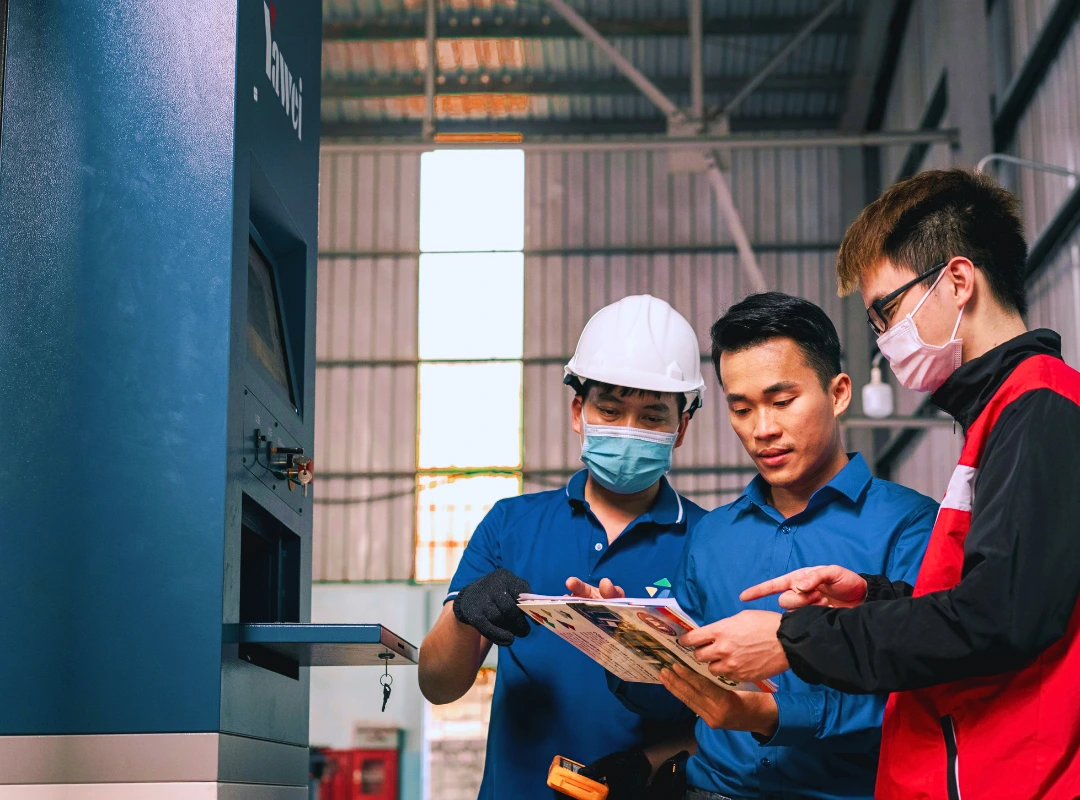

At Experion, our broader engineering portfolio spans Manufacturing, cloud and application engineering, quality engineering, connected digital systems, and ongoing support, capabilities that can support manufacturers as their technology estates become more connected and operationally critical.
There was a time when a factory’s IT environment could be discussed almost separately from production. Office systems lived on one side; machines and plant operations lived on the other. That boundary is disappearing.
Modern plants depend on ERP platforms, Manufacturing Execution Systems (MES), industrial IoT devices, cloud applications, connected equipment, analytics, supplier networks, and increasingly AI. A network problem is no longer simply an inconvenient IT ticket. In the wrong part of a factory, it can interrupt production, delay orders, or leave operations teams without the data they need to make a decision.
That has changed the conversation around IT for manufacturing. Manufacturers are looking beyond break-fix support towards continuous monitoring, cybersecurity, infrastructure management, cloud operations, user support, disaster recovery, and the management of increasingly connected IT and OT environments.
The objective is straightforward: technology should help production move, not become another source of uncertainty.
Key Takeaways
- Manufacturing IT increasingly connects the office, plant floor, cloud, machines, and supply chain.
- Managed services shift IT from reactive troubleshooting towards continuous monitoring and prevention.
- IT and OT require different security, availability, and support considerations.
- Cybersecurity and business continuity need to be designed around production realities.
- Cloud, IoT, AI, edge computing, and Industry 4.0 are increasing infrastructure complexity.
- The right managed-services model should complement internal teams rather than simply replace them.
What is Managed IT Services?
For teams asking what is managed it services, the simplest answer is this: it is an outsourced or co-managed model in which a specialist provider takes responsibility for agreed parts of an organization’s ongoing technology operations.
That might include infrastructure monitoring, service desk support, networking, cloud administration, cybersecurity, backups, identity management, devices, patches, and incident management.
Unlike an arrangement that begins only when something breaks, managed services are usually proactive. Systems are monitored continuously, defined service levels guide response, recurring problems are investigated, and maintenance happens before avoidable issues become outages.
For manufacturers operating across shifts, sites, or countries, that can also mean access to 24/7 IT operations rather than depending entirely on the availability of a small local team.
Managed IT Services vs. Traditional IT Support
Traditional IT support is often event-driven: something fails, a user calls, and somebody fixes it.
Managed IT takes a wider view. The provider monitors technology health, manages routine maintenance, tracks risks, supports users, documents recurring incidents, and works against defined service levels.
The difference is less about who answers the ticket and more about whether the technology environment is being actively managed between tickets.
Managed IT Services in Manufacturing
Manufacturing adds an important complication: IT does not stop at laptops, email, and business applications.
IT for manufacturing increasingly stretches from enterprise software to the systems that collect production data, connect plants, support machines, enable suppliers, and feed real-time information into operational decisions.
That makes IT services for manufacturing different from generic office IT support.
How Manufacturing IT Differs from Traditional IT?
A manufacturing technology environment may include production-floor systems, industrial control systems, Operational Technology (OT), connected machines, industrial IoT devices, MES platforms, ERP systems, warehouse applications, edge devices, and decades-old equipment that still performs an important production function.
Some machines cannot be patched on an ordinary corporate schedule. A network change may affect production. An old controller may depend on software that the original vendor no longer actively develops.
Supply-chain connectivity adds another layer because manufacturers exchange data with suppliers, logistics providers, distributors, customers, and enterprise platforms.
The result is an environment in which availability and change management need to reflect production schedules, safety requirements, and equipment constraints.
Why Manufacturing Requires Specialized IT Expertise?
Manufacturing support teams need to understand the relationship between digital infrastructure and physical operations.
A routine reboot is not routine if it stops a production cell. A security patch cannot always be pushed immediately if the affected system controls equipment during an active shift.
That is why IT support for manufacturing industry environments needs coordination between IT specialists, OT engineers, equipment vendors, cybersecurity teams, and plant operations.
How Managed IT Services Support Digital Transformation?
Digital transformation introduces new technology but also creates new things to operate.
Cloud migrations, connected machines, IIoT platforms, analytics, automation, and smart-factory initiatives all require monitoring, integration, security, and support once they move into production.
Well-designed managed IT solutions help make that transition sustainable by supporting both the new environment and the legacy systems that cannot disappear overnight.
Why Manufacturing Companies Need Managed IT Services?
- Digital transformation is the obvious driver, but it is not the only one.
- Manufacturers are connecting more machines, data sources, applications, and facilities. At the same time, cybersecurity risk is increasing and older infrastructure continues to require support.
- Skilled technology talent can also be difficult to maintain across networking, cloud, security, databases, ERP, OT, and end-user systems simultaneously. A plant may not need every specialist full-time, but it still needs access to that expertise when something goes wrong.
- Downtime raises the stakes. An unavailable application in an ordinary office may inconvenience a team; unavailable technology connected to production can affect throughput, schedules, inventory, and customer commitments.
- Regulatory and customer requirements add further pressure around security, auditability, access, and resilience.
For these reasons, managed IT services for manufacturers are increasingly about operational continuity as much as IT administration.
Common IT Challenges in Manufacturing and How to Overcome Them
Challenges
- Unplanned downtime remains one of the most visible problems, but its cause may sit anywhere across networks, infrastructure, software, devices, or external integrations.
- Legacy systems create another dilemma: they may be old, yet replacing them can interrupt working production processes.
- Manufacturers also face cyberattacks against industrial networks, inconsistent plant connectivity, data silos between IT and OT, cloud-migration complexity, and limited internal specialist capacity.
- Supply-chain systems create external dependencies, while rapid expansion can leave different facilities running different technology standards.
Solution
The practical response is not to replace everything at once.
Start by mapping critical systems and dependencies. Establish monitoring around production-sensitive infrastructure, standardize what can safely be standardized, isolate vulnerable legacy environments, improve backup and recovery, and introduce clear incident ownership.
A provider delivering manufacturing IT solutions should help prioritize according to operational risk rather than attempting an indiscriminate technology refresh.
Core Managed IT Services for Manufacturing
- 24/7 Infrastructure Monitoring
Continuous monitoring watches servers, networks, applications, cloud resources, and critical infrastructure for availability, capacity, errors, and abnormal behavior. The aim is to detect trouble before the plant team becomes the monitoring system. - Help Desk & Technical Support
A structured service desk gives employees a consistent route for device, application, account, and access issues. Good IT support for manufacturing also distinguishes an individual user problem from an incident that could affect production. - Network Management
Plants rely on reliable connectivity between offices, production areas, warehouses, cloud platforms, and remote locations. Network management covers performance, configuration, availability, segmentation, and troubleshooting. - Cloud Infrastructure Management
Cloud operations include resource monitoring, access, availability, cost management, backups, security configuration, and ongoing optimization across public, private, or hybrid environments. - Cybersecurity Services
Managed security may include vulnerability management, endpoint protection, network monitoring, identity controls, logging, incident response, and security assessments. - Data Backup & Disaster Recovery
Backups are useful only if systems and data can actually be restored. Recovery planning should define priorities, dependencies, recovery procedures, testing, and acceptable recovery times. - Patch Management
Patch management keeps supported operating systems, applications, and devices current while recognizing that production systems may require controlled maintenance windows and vendor validation. - Device Lifecycle Management
Devices need to be provisioned, configured, secured, supported, tracked, repaired, and eventually retired. Manufacturing environments may add rugged devices, handheld scanners, terminals, tablets, and shop-floor endpoints to the usual workplace estate. - Microsoft 365 Administration
Administration can cover users, licenses, collaboration tools, security policies, email, Teams, SharePoint, and related Microsoft cloud services. - Identity & Access Management
Identity controls determine who can access which systems and under what conditions. Role-based access, multi-factor authentication, privileged-account management, and timely offboarding reduce unnecessary exposure. - Asset Management
Asset management creates visibility across hardware, software, licenses, ownership, age, warranties, and lifecycle status. That visibility is particularly valuable across multiple plants. - Compliance & Risk Management
Managed services can help maintain security controls, evidence, policies, risk registers, audit information, and remediation plans. Accountability for compliance, however, remains with the organization.
Manufacturing Technologies Supported by Managed IT Providers
The technology estate may include ERP, MES, warehouse management, supply-chain platforms, industrial IoT, cloud services, databases, business applications, collaboration platforms, endpoint fleets, edge systems, and plant networking.
More mature providers may also support interfaces between enterprise systems and operational platforms.
This is where IT services for manufacturers become particularly valuable: the goal is not simply to keep each technology available independently, but to understand the dependencies between them.
Manufacturing-Specific Managed IT Services
Manufacturing-specific support can extend further into operations:
- OT Infrastructure Monitoring keeps visibility on production-related technology without treating it exactly like corporate IT.
- Industrial IoT Device Management covers connectivity, health, configuration, and device lifecycle.
- PLC and SCADA Network Support focuses on the networks around industrial control environments, with changes carefully coordinated with OT specialists.
- Manufacturing Execution System (MES) Support helps maintain the digital layer connecting production planning with shop-floor execution.
- ERP System Management supports business-critical planning, procurement, inventory, and finance processes.
- Shop Floor Connectivity keeps machines, terminals, edge devices, and systems connected reliably.
- Machine Health Monitoring brings machine data into monitoring and maintenance workflows.
- Edge Computing Management supports workloads that need processing close to production equipment.
- Smart Factory Enablement helps manufacturers operate the connected infrastructure introduced through Industry 4.0 programs.
Together, these services create a more useful model of manufacturing IT support than a conventional office help desk alone.
Benefits of Managed IT Services for Manufacturing
The clearest benefit is reduced operational uncertainty.
Continuous monitoring and faster escalation can reduce avoidable downtime. Defined service arrangements make IT expenditure and responsibilities more predictable. Internal teams gain access to specialized expertise without trying to recruit every skill into every location.
Stronger cybersecurity reduces exposure across increasingly connected environments. Better patching, backup, recovery, identity, and monitoring also support compliance and business continuity.
Reliable infrastructure can improve equipment availability, employee collaboration, and supply-chain visibility. Incident response becomes more structured because teams know who owns the problem and how quickly it should be handled.
For growing manufacturers, managed IT services for manufacturing companies can also provide capacity as new plants, applications, users, or cloud environments are added.
Experion has experience providing support operations and managed services for business-critical digital platforms, alongside quality engineering and application support capabilities. We can bring that operating discipline into wider transformation engagements without treating support and engineering as unrelated activities.
Manufacturing Cybersecurity: Why It Deserves Special Attention?
Manufacturing cybersecurity has an unusual constraint: security controls need to protect information and systems without creating unsafe or unnecessary production interruptions.
Common Threats
Ransomware can disrupt both corporate and plant operations. Phishing remains a common way to compromise employee accounts, while insider threats may be malicious or accidental.
Supply-chain attacks can enter through trusted vendors or software. OT attacks are particularly serious because industrial environments connect cyber systems with physical processes.
Why Manufacturers Are Prime Targets?
Manufacturers often operate continuously, depend on legacy equipment, connect multiple facilities, and maintain complex supplier ecosystems. Attackers know that downtime creates pressure to restore operations quickly.
The growing connection between IT and OT also gives compromised systems more potential pathways.
Best Security Practices
Effective security combines network segmentation, secure remote access, strong identity controls, asset visibility, vulnerability management, tested backups, logging, incident-response planning, and careful control of privileged accounts.
Security policies should also reflect production realities. Controls that plant teams routinely bypass because they interfere with work are not strong controls.
Zero Trust Security
Zero Trust follows the principle that access should be explicitly verified rather than automatically trusted because a device or user is already inside the network.
In manufacturing, implementation needs to account for machines and protocols that were never designed around modern identity controls.
Endpoint Detection and Response
EDR can help detect suspicious activity on supported endpoints and provide security teams with richer information for investigation and containment.
It should form part of a broader defense strategy rather than act as the only security layer.
Security Awareness Training
Employees remain an important part of security. Regular training should cover phishing, credentials, removable media, suspicious requests, reporting procedures, and the particular risks created by plant and vendor access.
Managed IT Services and Industry 4.0
Industry 4.0 connects production with data.
Smart factories use Industrial IoT, cloud and edge computing, artificial intelligence, predictive maintenance, digital twins, robotics, and automation platforms to create more responsive operations.
That connectivity also expands the technology estate that someone has to maintain.
Managed services can provide the monitoring, infrastructure, integration, security, and operational support needed once an Industry 4.0 initiative moves beyond a pilot. Without that foundation, organizations can accumulate smart technologies that are individually impressive but difficult to operate together.
Cloud Computing in Manufacturing
Manufacturers rarely have one universal cloud requirement.
Public Cloud can provide scalable infrastructure and managed services. Private Cloud may suit workloads requiring greater environmental control. Hybrid Cloud is common where plant systems remain local while enterprise applications and analytics move to cloud platforms.
A Multi-Cloud Strategy can reduce reliance on one environment or reflect different workload needs, although it also increases operational complexity.
Cloud Migration Best Practices include workload assessment, dependency mapping, security design, data planning, testing, phased migration, and rollback preparation.
Cloud Security should address identity, configuration, data protection, monitoring, network controls, and the shared-responsibility model.
The objective of managed IT infrastructure is not simply to move servers elsewhere. It is to make the environment observable, supportable, resilient, and cost-aware.
Compliance Standards Manufacturers Should Know
The relevant standards depend on sector, geography, customer contracts, and the type of information or systems involved.
ISO 27001 provides a framework for information security management systems.
The NIST Cybersecurity Framework provides guidance for managing cybersecurity risk.
CMMC, where applicable, is relevant to organizations participating in certain US Department of Defense supply chains.
IEC 62443 addresses cybersecurity for industrial automation and control systems.
GDPR matters when organizations process personal data within its territorial scope.
HIPAA may become relevant to medical manufacturers when their activities involve protected health information in a role covered by the regulation; being a medical manufacturer by itself does not automatically make every operation subject to HIPAA.
Customer-specific security and supply-chain requirements can be just as important as formal standards.
Managed IT Services vs In-House IT Team
| Comparison Area | Managed IT | In-House IT |
| Cost | Predictable service model based on agreed scope | Salaries, tools, training, recruitment, and retention |
| Availability | Can provide extended or 24/7 coverage | Depends on team size and shifts |
| Expertise | Access to broader specialist skills | Strong internal business knowledge |
| Cybersecurity | Specialist security resources can be included | Requires internal capability and tooling |
| Scalability | Capacity can expand with scope | Additional demand may require hiring |
| Monitoring | Typically continuous and tool-driven | Depends on internal resources |
| Support Hours | Defined through the service model | Usually tied to staffing |
| Disaster Recovery | Can be managed and tested as a service | Requires dedicated internal ownership |
| Technology Upgrades | Planned within lifecycle management | Competes with other internal priorities |
Many manufacturers use a hybrid model rather than choosing one side completely: the internal team retains business and plant ownership while a provider adds specialist capacity and continuous operations.
How AI in Managed IT Services Help Manufacturing Companies?
AI can help support teams make sense of large volumes of operational information.
AIOps tools can correlate alerts, identify unusual infrastructure behavior, summarize incidents, and help prioritize events according to likely impact. Machine learning can support capacity forecasting and predictive infrastructure monitoring.
AI can also help service desks classify tickets and surface relevant knowledge more quickly.
The important distinction is between assistance and autonomy. In production environments, AI recommendations should operate within clear controls, particularly where an action could affect plant availability.
Signs Your Manufacturing Business Needs Managed IT Services
- Frequent downtime is the most obvious signal, but others appear earlier.
- Cybersecurity incidents may be increasing.
- Infrastructure may be outdated.
- IT costs may be rising without a clear view of where the money goes.
- Support responses may be too slow because a small team is covering too much.
- Expansion into new facilities, ERP modernization, cloud migration, and growing connected-device estates can also outgrow the internal support model.
When internal specialists spend most of their time keeping systems alive rather than improving them, manufacturing IT support services may provide useful additional capacity.
How Managed IT Services Improve Manufacturing Operations?
- Production Continuity: Monitoring and faster incident response reduce preventable interruptions.
- Better Inventory Management: Reliable ERP, warehouse, and integration systems keep inventory information moving between operations.
- Faster Decision-Making: Available systems and connected data give managers a clearer operational picture.
- Improved Machine Connectivity: Managed networks and edge infrastructure provide a stronger foundation for connected equipment.
- Remote Plant Management: Central monitoring can provide visibility across multiple locations without requiring every specialist to be physically present.
- Better Data Analytics: Reliable infrastructure and integration make manufacturing data more usable for reporting, forecasting, and optimization.
Managed IT Services for Manufacturing Use Cases
A multi-site manufacturer may centralize service desk, network monitoring, identity, and cloud administration while retaining local OT teams.
A plant running older production technology may use an IT managed services for manufacturing firm model to stabilize infrastructure, segment legacy systems, improve backups, and introduce monitoring before undertaking modernization.
A growing business may require managed IT services for manufacturing firms that can support newly acquired facilities and gradually standardize their technology.
Another manufacturer may use IT managed services for manufacturing firms to extend internal coverage after hours, while its own IT team concentrates on ERP transformation and smart-factory projects.
These models are flexible because manufacturing environments rarely start from the same point.
Choosing the Right Managed IT Service Provider
The best managed IT services for the manufacturing industry are not necessarily those with the longest catalogue of technology products. They are the ones that understand how IT decisions affect production.
Look for manufacturing experience, OT awareness, cybersecurity expertise, cloud capability, service-level discipline, scalability, and evidence of ongoing support.
An IT managed services for manufacturing firm should also be comfortable working with existing plant teams and specialist equipment vendors rather than trying to own systems outside its expertise.
Use this checklist during evaluation:
- Relevant manufacturing and industrial experience
- Clear 24/7 support and escalation model where required
- IT and OT cybersecurity capability
- Defined SLAs and measurable KPIs
- Cloud and hybrid-infrastructure expertise
- Experience working around production-critical systems
- Documented backup and disaster-recovery approach
- Transparent pricing and scope
- Customer references for comparable environments
- Knowledge-transfer and continuous-improvement process
A provider offering managed IT services for manufacturing firms should be able to explain not just how it closes tickets, but how it intends to reduce recurring ones.
Future Trends in Managed IT Services for Manufacturing
Managed operations are becoming more predictive.
- AI-powered IT Operations (AIOps) will increasingly correlate events and help teams focus on issues most likely to affect operations.
- Predictive Infrastructure Monitoring will use historical patterns to identify early signs of degradation.
- Edge Computing will become more important as plants process data closer to machines.
- Digital Manufacturing and Industrial AI will increase the demand for reliable data and infrastructure.
- Autonomous Networks and Hyperautomation may reduce repetitive operational work, although production-impacting actions will still require careful governance.
- Sustainability and Green IT will add another dimension, with manufacturers looking at infrastructure efficiency, cloud consumption, device lifecycles, and energy-aware computing.
Best Practices for Successfully Implementing Managed IT Services
Start with a comprehensive assessment rather than transferring an undocumented environment to a new provider.
Align the IT strategy with production and business goals. Identify critical systems, dependencies, support gaps, and risk before deciding what to outsource.
Prioritize cybersecurity from day one and standardize hardware and software where doing so will genuinely simplify operations.
Introduce continuous monitoring and agree clear SLAs, escalation procedures, and KPIs.
Train employees on security awareness and ensure plant teams understand how incidents should be reported.
Review service performance regularly rather than waiting for contract renewal.
Most importantly, create and test disaster-recovery and business-continuity plans. Recovery procedures that exist only in a document have not yet proved that they work.
Conclusion
Manufacturing technology is becoming harder to separate from manufacturing itself.
ERP platforms influence planning. Networks connect facilities and equipment. Cloud applications support collaboration. IoT brings production data into digital workflows. Cybersecurity incidents can cross the boundary between an office system and the plant floor.
That makes reliable, secure, and scalable IT an operational requirement.
Managed IT services for manufacturing can help organizations monitor infrastructure continuously, strengthen cybersecurity, improve support, manage cloud environments, reduce avoidable downtime, and create the operational foundation required for Industry 4.0.
The right approach is not to outsource technology indiscriminately. It is to decide where external expertise, tools, and continuous coverage can strengthen the capabilities already inside the business.
For manufacturers considering managed IT services for manufacturers, manufacturing IT support, or broader managed IT solutions, Experion can bring product engineering, cloud, integration, quality engineering, and ongoing support experience to the conversation. Our approach can be shaped around the existing technology estate and operational priorities rather than assuming every manufacturer needs the same service model.
Frequently Asked Questions (FAQs)
What are managed IT services for manufacturing?
They are ongoing technology-management services designed around manufacturing environments, covering areas such as infrastructure, users, networks, cloud, cybersecurity, backup, monitoring, and support. Depending on scope, they can also extend towards plant-connected systems and OT infrastructure.
Why do manufacturers need managed IT services?
Manufacturers increasingly operate complex estates spanning enterprise IT, plants, cloud platforms, connected devices, and legacy technology. Managed IT services for manufacturing companies can add specialist capacity and continuous support without requiring every capability to be maintained internally.
How do managed IT services reduce production downtime?
They improve monitoring, incident detection, escalation, preventive maintenance, backup, and recovery. They cannot eliminate every outage, particularly failures involving physical equipment, but they can reduce avoidable IT-related disruption.
What cybersecurity services should manufacturers prioritize?
Asset visibility, network segmentation, identity protection, vulnerability management, endpoint security, secure remote access, backups, monitoring, incident response, and employee awareness are useful starting points.
Can managed IT providers support legacy manufacturing systems?
Yes, although support depends on the technology and vendor status. A responsible approach may involve monitoring, isolation, documentation, controlled maintenance, integration support, and a phased modernization plan rather than risky immediate replacement.
How do managed IT services help with Industry 4.0 initiatives?
They provide operational support for the infrastructure behind IoT, analytics, cloud, edge computing, smart factories, and connected equipment. In other words, they help turn pilots into systems that somebody can reliably operate.
What is the difference between IT and OT in manufacturing?
IT primarily manages information, applications, users, and enterprise computing. OT controls or monitors physical industrial processes and equipment. They increasingly connect, but their availability, safety, and change-management requirements can be very different.
How much do managed IT services for manufacturing cost?
There is no useful universal price. Cost depends on the number of users and plants, infrastructure, support hours, security scope, cloud estate, applications, devices, service levels, and whether OT-related support is included.
How do managed IT providers support cloud migration?
They can assess workloads, map dependencies, design target infrastructure, support migration, establish security and monitoring, and manage the resulting cloud environment. Effective migration should improve supportability rather than simply relocate existing complexity.
What should manufacturers look for when choosing a managed IT partner?
Look for industry knowledge, clear service ownership, cybersecurity capability, OT awareness, cloud and infrastructure expertise, measurable SLAs, transparent communication, disaster-recovery practices, and references from comparable environments. The right partner should provide IT support for manufacturing, not force a generic enterprise-support model onto a factory.
