





 Back
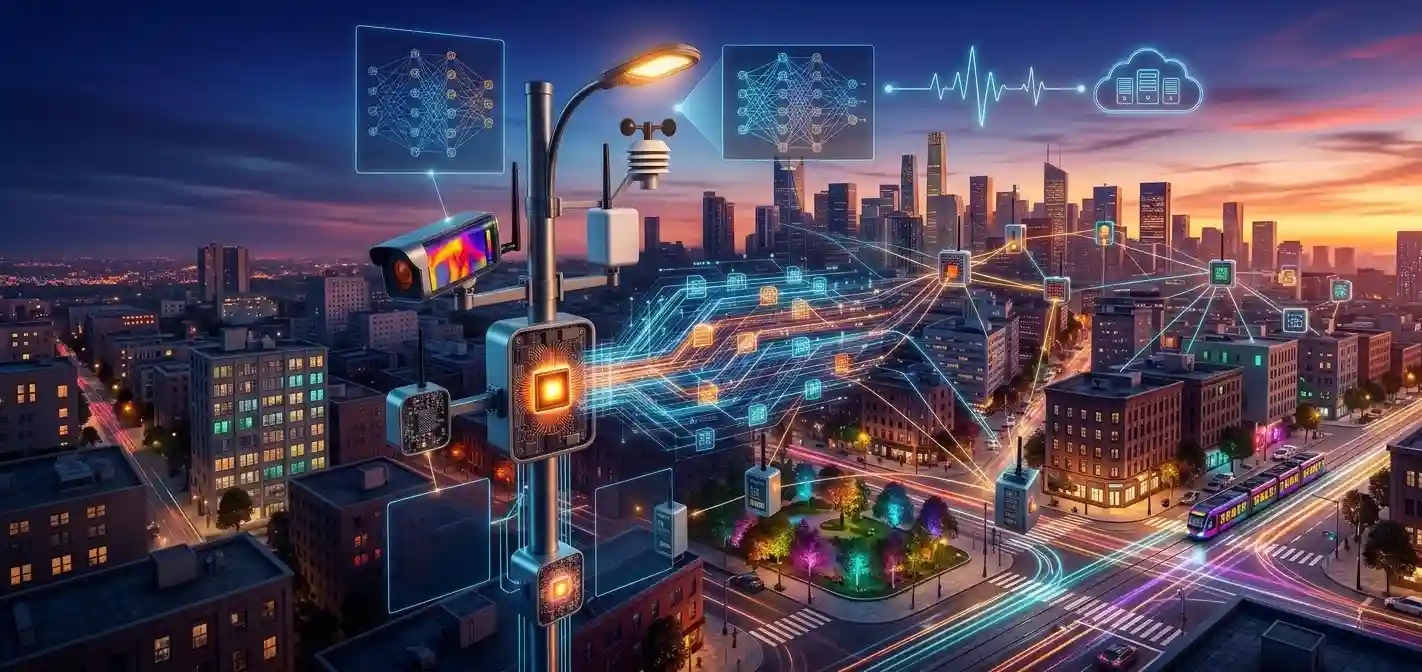
At Experion, we can design edge-first IoT solutions so that time-critical decisions happen at the device, and only the data that matters travels to the cloud.
Billions of connected sensors, machines, and wearables generate data every second. Sending all this data into a distant cloud data center is slow and often unnecessary. Instead of shipping every data point across the network, both edge computing and IoT work together for processing information close to where it is being created. Decisions take place in a matter of milliseconds.
Realizing this potential, the European Union (EU) is increasing investments in Edge Computing and IoT to build an energy-efficient and interconnected digital infrastructure. These investments aim to improve faster data processing, decentralized intelligence, and better technological autonomy across industries.
Key Takeaways
- Edge computing IoT systems can process data near the source. This cuts latency, bandwidth costs and dependency on cloud.
- Edge AI allows IoT devices run ML models locally for instant insights.
- IoT spans industries such as manufacturing, healthcare, smart cities, automotive and retail. Edge computing can be leveraged in these industries.
- IoT edge devices comprise gateways, smart sensors ,embedded systems and industrial edge computers.
- Edge computing does not replace cloud computing instead complements it. Most real world deployments adopt a hybrid approach.
- Security, distributed infrastructure management and interoperability are key challenges to address during implementation.
What are IoT and Edge Computing?
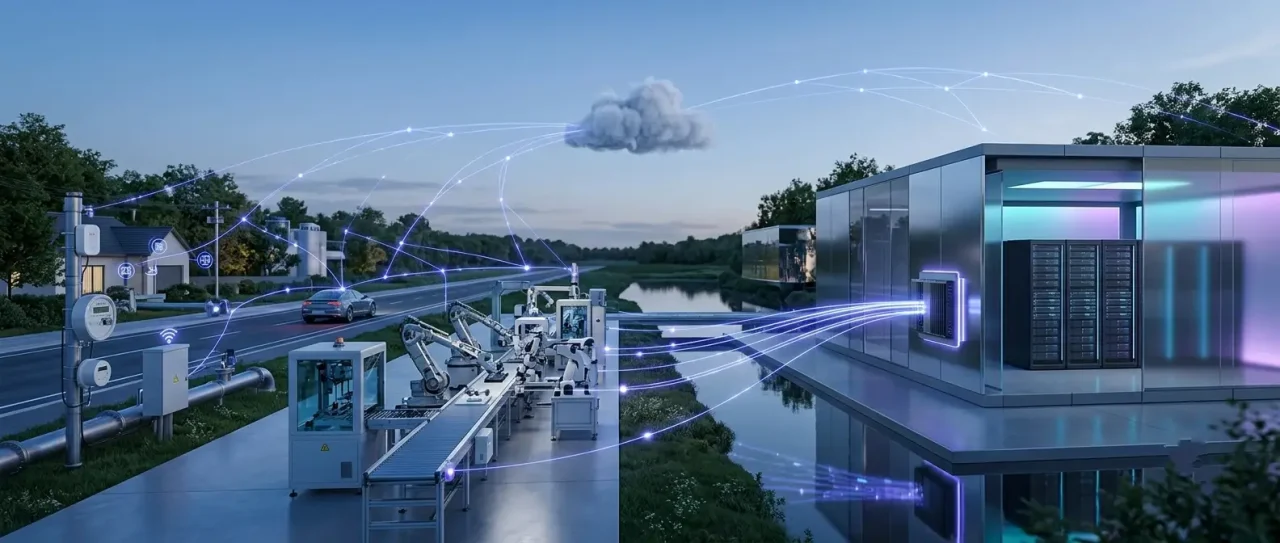
To know how these two concepts fit together, lets define each one separately.
What is the Internet of Things (IoT)?
The internet of things is a network of physical objects. It is embedded with sensors, software and connectivity that collect and exchange data. The IoT devices range from simple temperature sensors and smart meters to even to complex industrial robots and connected cars. They produce a constant stream of raw data. The insight comes analyzing that data and acting upon it.
What is Edge Computing?
Edge computing is a distributed computing model, and it moves processing, storage and analytics closer to the place of data generation. This is termed as the edge of the network. Instead of relying on a centralized cloud, edge devices deal with time sensitive work locally and share only critical data to the cloud. In short, edge computing is basically connected devices that think and respond on the spot.
How Does Edge Computing for IoT Work?
Edge computing for IoT refers to a layered relationship between three different components. IoT devices sense and collect data. Edge infrastructure such as gateways and local servers, process it nearby. Cloud platforms handle heavy analytics, long-term storage, model training, and enterprise-wide coordination.
The end-to-end workflow typically looks like this:
- Data is collected from IoT devices—Cameras, meters, machines, etc, collect data from sensors (temperature, vibration, video, etc.) and transmit it to edge devices, gateways or other devices via wireless communications (Wi-Fi, Bluetooth, Zigbee, 5G).
- The data is transmitted to nearby edge devices or gateways and is received there.
- The edge device processes the data and makes decisions based on the data.
Eg: If a pressure sensor detects pressure that exceeds safety levels, the edge device will send a signal to immediately shut down the device. This type of reaction time cannot be achieved by transmitting to a centralized data center. - Summary reports or anomalies are transmitted to the cloud for further review, reporting, etc.
This distribution of workload provides immediate decisions locally; however, it also allows organizations to utilize the capabilities of their cloud infrastructure.
How is Artificial Intelligence Used With IoT in Edge Technology?
Edge technology’s ability to perform artificial intelligence and machine learning functions is what differentiates it from simply providing data services. Running AI and machine learning models on the edge (in proximity to the data) is called Edge AI. Typically these models are created in the cloud and then deployed onto the edge for inferencing.
Here is how the AI models process IoT data locally. A camera located on a manufacturing line takes pictures of products manufactured on the line and determines whether each product meets specifications. The determination is made quickly enough so that if a product does not meet specifications it may be removed from the line prior to being shipped. Additionally, a vibration sensor attached to a motor sends its data to a model that has been trained to recognize an impending failure of bearings in motors. Heart rate is monitored continuously through wearables that are able to detect irregular rhythms of the wearer in real-time without having to wait for server acknowledgement.
Every IoT environment is different.
Book a discovery call with Experion to map out the right edge architecture for your devices, data and goals
What are Some Benefits of Edge Computing for IoT?
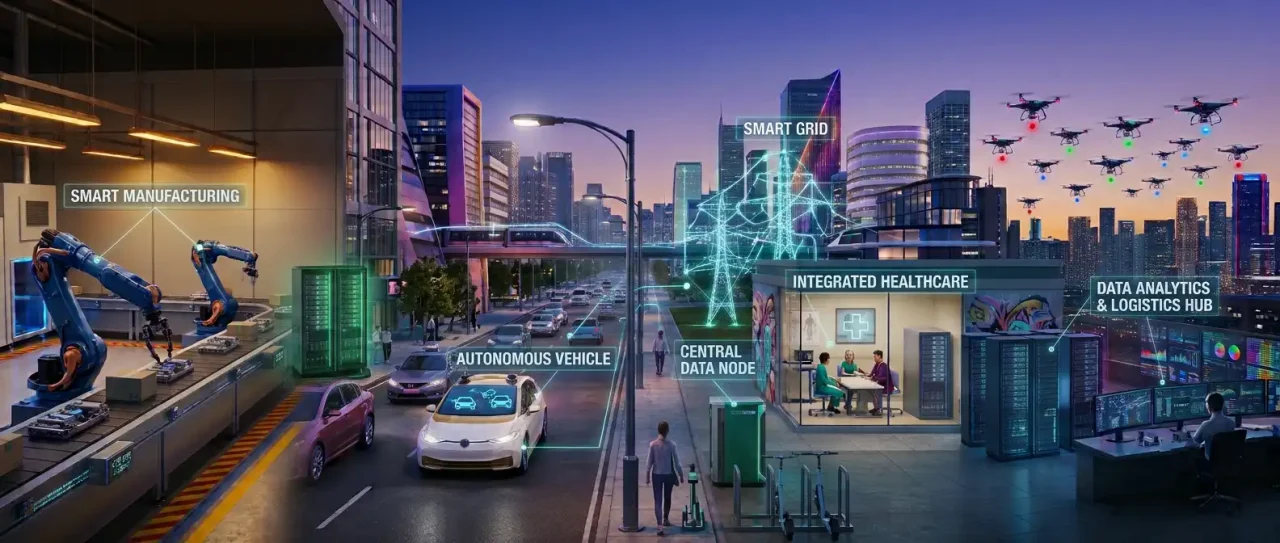
There are several benefits of edge computing for IoT, including performance, cost and risk.
- Faster response time: Processing occurs locally resulting in almost instant response times required for safety systems, robotics and real-time analytics.
- Lower bandwidth costs: Reduced amount of data sent to the cloud results in reduced network and storage costs.
- Higher reliability: Edge systems continue to operate during network failures thus ensuring critical operations do not fail due to loss of connectivity.
- Better privacy and compliance: Sensitive data such as patient medical records or video feed is processed locally and remains at the location of origin thus reducing exposure during transportation.
- Better security posture: Reducing exposure of data in transport reduces attack surface area and therefore reduces potential impact of a breach.
- Increased scalability: By distributing workload across multiple edge nodes increases number of IoT deployments that can exist without overwhelming centralized system.
Edge Computing Applications in IoT: Real-World Use Cases
While most examples demonstrate some of the best uses cases of edge computing applications in IoT, here are six notable ones.
Smart Manufacturing and Industrial IoT
Manufacturing plants produce massive amounts of machine-generated data, and even brief delays could cause waste, lost productivity or unsafe working conditions. Edge computing supports:
- Real-time monitoring of temperature, pressure and output of every piece of equipment.
- Predictive maintenance: Models identify failing parts prior to part failure.
- Automated quality inspections using computer vision at high speeds.
- Optimization of industrial processes: Control parameters adjusted in real-time to optimize yields and reduce energy consumption.
Healthcare and Remote Patient Monitoring
Speed and confidentiality are two factors that are very important in healthcare. Edge computing enables:
- Real-time patient monitoring in hospitals and at-home settings.
- Local processing of wearable device data – Protects sensitive health-related information related to patients.
- Immediate notifications regarding abnormal readings – Helps clinicians act on emergencies before they become serious situations.
Smart Cities and Infrastructure
Cities depend on thousands of distributed sensors and cameras. Edge computing powers:
- Intelligent traffic management, with signals adjusting to live congestion.
- Smart surveillance and video analytics, processing footage locally instead of streaming it all to a central server.
- Smart energy management, balancing demand across grids, buildings, and street lighting.
Automotive and Connected Vehicles
Edge computing’s primary advantage lies in the automotive and connected vehicle sector. A vehicle cannot wait for a cloud round trip when a pedestrian steps into the road. Edge computing enables:
- Real time processing of data from vehicle sensors such as camera, lidar and radar.
- ADAS and autonomous driving applications that include functions such as lane-keeping, braking and obstacle avoidance.
Retail and Inventory Management
Retailers leverage edge computing to bring precision to retail stores through:
- Smart shelves to track inventory and automatically detect stock levels.
- Real-time customer behaviour analytics that can easily optimize layouts and promotions.
- Automated checkout systems that can identify items and help complete payment processes without the hassle of queues.
Agriculture and Smart Farming
Most farms are located in remote areas, with limited connectivity. This makes it an ideal fit for edge computing. Typical use cases include:
- Soil and crop monitoring for tracking moisture and nutrients including plant health.
- Automated irrigation that waters crop only when and where it is required.
- Environmental condition monitoring protects crops from harsh weather conditions.
What are Edge IoT Devices?
IoT edge devices are the hardware that brings computing power to where the data is created. They sit between your cloud system and all of your IoT sensors as the point where all of the sensor readings will be collected, processed and sent to the cloud. Traditional IoT devices send raw data to the cloud. Traditional IoT devices have limited processing capability and therefore mostly just transmit raw data from the device to the cloud with little or no processing.
Edge devices provide local processing, storage and in some cases artificial intelligence capabilities so that they can take action on the data without first having to send it upstream for processing. Edge devices also provide filtering functionality to eliminate unnecessary readings from entering the network. Edge and IoT devices work together. The IoT sensors observe and the edge devices decide based on the observations.
Types of IoT Edge Devices
- IoT Gateways: Aggregates data from numerous sensors, translate among protocols to provide a secure bridge to the cloud.
- Edge Servers: Compact, powerful servers placed in factories, stores, or telecom sites handle heavier analytics and AI workloads.
- Smart Sensors: Sensors with built-in processors can filter or analyze readings before transmitting them.
- Embedded Edge Systems: Microcontrollers and system-on-chip hardware built into machines, appliances, and vehicles run dedicated edge logic.
- Industrial Edge Computers: Ruggedized computers designed for harsh environments process data on the factory floor, in mines, or in the field.
Edge Computing vs. Fog Computing: What’s the Difference?
While the two concepts can be viewed similarly, they do have some distinct differences. In essence, edge computing performs a function with the data being produced by a particular device (such as a sensor, gateway or local server) at the time it is generated. Fog computing includes an additional layer above the edge, which is distributed processing over a larger geographical area via a network of nodes (for example routers and local data centers).
In other words, the focus of edge computing is the specific device plus its immediate environment; whereas the focus of fog computing is the hierarchical distribution of processing through the entire network. Many large-scale IoT implementations (such as smart cities and industrial campuses) utilize a combination of both.
Planning an IoT rollout?
Talk to Experion’s engineers about where edge processing fits in your architecture
Edge Computing vs. Cloud Computing
Edge and cloud complement each other. Cloud computing comes along with unlimited storage and compute capacity. It is ideal for big data analytics and enterprise applications. Edge computing supports speed and bandwidth efficiency, making it apt for real-time responses.
- Latency: Edge supports responses in milli-seconds. Cloud responses depend on the network distance.
- Bandwidth: Edge reduces data transfer; cloud receives everything sent to it.
- Connectivity: Edge operates offline but cloud always depends on a stable connnection.
- Scale of compute: Cloud is apt for heavy and centralized workloads. Edge is limited only by local hardware.
Edge is best for time-critical decisions while cloud suits long-term storage and training. Most successful IoT and edge computing strategies combine both, using each where it performs best.
How Does Edge Computing Reduce Latency in IoT Networks?
IoT devices send data to servers located far away, which causes delays as follows: The data has to go through many “hops” of networks; it waits in lines for other requests to process first; and once processed, it goes back over the internet again to reach the local device. Each hop/line/wait is additional time. In most cases, this delay will never affect anything. However, if you are controlling a robot arm, a surgical tool, or an autonomous vehicle – there could be problems. Since edge computing processes data at the source location (not via some remote server), the total roundtrip time is now down from hundreds of milliseconds to just a few. Additionally, because the network is no longer responsible for processing each request, there is less traffic over potentially congested links.
What Challenges Exist in Deploying Edge Computing for IoT?
There are significant advantages in using edge computing for IoT; however there is also a great deal of complexity. The challenges that need to be addressed prior to deployment are:
Managing Distributed Infrastructure
You will no longer have a single centralized data center but rather tens of thousands of distributed edge nodes throughout your location. This requires robust orchestration/automation capabilities as well as remote update, health monitoring and troubleshooting functionality.
Limited Computing and Storage Resources
In comparison to cloud servers, edge devices are much smaller. Therefore, they are subject to strict limitations on both power consumption, memory and processing resources. Optimizing models and software to operate within these constrained resource parameters will be required.
Interoperability Issues
The majority of IoT ecosystems comprise a myriad of vendors, protocols and legacy equipment. As such, without established common standards, coordinating the interoperability of devices/systems will be problematic.
Data Management and Synchronization
When data is being processed across numerous edge locations, maintaining consistency of the data becomes critical. Teams will require determining what data should remain resident at each individual edge location(s), what data should be transmitted to the cloud, as well as resolving potential synchronization Issues related to reconnection.
Security and Device Management
Each new edge node represents an additional point of entry for attackers. Securing firmware, credential management, patches applied remotely to all edge devices, as well as continuously monitoring for threats across the entire fleet of edge devices represents a constant endeavor.
Experion can help enterprises work through these deployment challenges, from orchestrating large edge fleets to building secure, over-the-air update pipelines that keep distributed nodes healthy.
What is the Role of Data Preprocessing in Edge IoT?
Raw IoT data is quite voluminous and repetitive in nature. A sensor that repeats the same value creates very little value. Data preprocessing at the edge converts the raw stream of data, into useful insights before it travels anywhere else.
Common data preprocessing techniques include:
- Filtering- Removes erroneous or duplicate data.
- Aggregation- Combines many readings into counts or summaries.
- Normalization- Converts data from various sensors into a consistent structure.
- Compression- Reduces data size for saving bandwidth.
Lack of Interoperability Across IoT Devices and Systems
One of the biggest barriers to successful IoT adoption are the many different languages used by devices from multiple vendors. Legacy systems, proprietary communication protocols, and inconsistent data formatting have created separate siloed views for each operation.
Edge Computing has started to address these issues. Edge Gateways will allow users to communicate using standardized protocols (e.g. MQTT, OPC-UA, MODBUS & HTTP), standardize data format on the device prior to sending it to the cloud, and present a common interface for Cloud Platforms and Applications.
Edge IoT and Security Considerations
The Internet of Things (IoT) presents two sides to security as it relates to “edge” devices. On one hand, keeping data local reduces your exposure; however, when you have many devices located throughout the world, this creates an expanded attack vector. Your edge IoT devices are exposed due to being placed in non-secure environments, having outdated firmware versions installed on them, or using weak default passwords.
As such, several major threats exist related to the above. These threats include tampering with edge devices, unauthorized access to edge devices, intercepting data transmitted via these devices, and malware spreading from edge device-to-edge device across multiple systems.
A comprehensive security plan begins by implementing device identification/authentication and/or identity management. Each device must be uniquely identified prior to joining the network. A common method of providing this verification is through the use of a certificate and/or a hardware-based trust module. This ensures that only trusted devices are allowed onto the network. Additional key security best-practices including encrypting all data both in-transit and at-rest, employing a “zero-trust” model for all network traffic.
Emerging Trends in Edge Computing and IoT
AI Acceleration at the Edge
Specialized chips such as NPUs,GPUs and TPUs can bring powerful inference to low power devices. This enables advanced vision and language models practical for edge computing.
Blockchain Integration
Blockchain enables tamper-proof logging, device identity and data exchange between IoT participants. Blockchain integration is valuable for supply chains and energy trading.
5G and Ultra-Low-Latency Networks
5G, when paired with multi-access edge computing, enables connected vehicles, remote surgery and smart factories. 5G networks also deliver higher bandwidth, low latency and support for massive device density.
Digital Twins and Edge Computing
Digital twins are basically the virtual replicas of physical assets. Live data is fed from edge devices to let organizations predict and optimize performance in near real time.
Edge-to-Cloud Integration
The device layer, edge layer and cloud layer all work together as one continuous system. They are connected and share data. Businesses no longer require isolated systems, instead they wish to combines the speed of edge computing with the scalability and computing power of the cloud.
Every IoT environment is different.
Book a discovery call with Experion to map out the right edge architecture for your devices, data and goals
Understanding IoT Edge Computing Architectures
Edge computing architectures for IoT have many deployment options. Which option to use will depend on how much latency is acceptable, how sensitive the data is, how connected your environment is, and what you are willing to spend.
Pure Edge Architecture (On-Premises Computing)
With the pure edge model all data processing occurs solely within an organizations own premises. None of this process requires interaction with the cloud for operational purposes. Organizations that require the utmost level of control, that have very specific concerns regarding data sovereignty, or operate in areas where there is limited to no internet access (i.e., mine sites, ships, secure facilities etc.) would find it most suitable to implement the pure edge model.
Cloud-Integrated Edge Architecture
This model provides both edge-based processing capabilities and centralized cloud-based analytics and data storage. Workloads are intentionally distributed: time critical processes such as control loops, alerting and real time inference occur at the edge; long term data storage, cross site analysis, dash boards and model training occur in the cloud. While it does offer some trade-off regarding processing speed versus processing scalability, it represents a reasonable compromise between these two competing demands.
Hybrid Edge Architecture
The hybrid model uses a combination of on-premise, edge and cloud based processing platforms. Those work loads which are either highly sensitive or latency critical remain on premise; those workloads which require access to regional resources utilize regional edge based services; and those workloads which do not lend themselves to being processed regionally (due to their high volume nature), are processed by the cloud on an as needed basis. It provides the greatest amount of flexibility among the three models described above and is typically used by larger organizations who have varied and multiple requirements.
Role of Machine Learning in IoT Edge Architectures
Machine Learning plays a key role in today’s edge computing architectures. Training machine learning models takes place in the cloud utilizing large volumes of historical data. After the training has been completed the trained models are then deployed on edge devices. Upon successful deployment edge devices will perform inference locally on real time data without having to make a round trip back to the cloud. This allows for a number of use cases including: anomaly detection, potential security breaches, or determining if there are any unusual trends in patient readings); predictions/classifications (in real time).
Our engineers can build the full loop: training models in the cloud, optimizing them for resource-constrained devices, and deploying them at the edge for real-time inference.
Frequently Asked Questions (FAQs)
What is the difference between IoT and edge computing?
IoT connects devices to collect and share data. Edge computing allows you to do something with that data on or near the data source. The data originates from IoT, while edge computing immediately figures out what must be done with the data.
How does edge computing work with IoT devices?
Edge gateways or servers nearby receive data from IoT devices and send it to them. Locally, these edge nodes sort, analyze, and act on the data. They then send only the most important data to the cloud.
What are the main applications of edge computing in IoT?
Smart manufacturing, remote patient monitoring, smart cities, connected vehicles, retail inventory management, and precision agriculture are some of the most important uses.
What are the benefits of IoT edge computing?
The benefits include lower latency, reduced bandwidth costs, better reliability, improved privacy, stronger security, and easier scaling.
What is the difference between edge computing and cloud computing in IoT?
Edge computing processes data near the source for fast, local decisions. Cloud computing processes data in centralized data centers for large-scale storage and analytics. Most IoT systems use both.
Can IoT edge devices work without an internet connection?
Yes, edge devices can work offline because they process data and make decisions locally. They can sync up with the cloud when they can reconnect.
How does edge computing improve IoT security?
Processing sensitive data locally reduces how much of it travels over networks, limiting exposure. Combined with strong authentication, encryption, and update management, it can improve overall security, though edge devices themselves must be protected.
What is the role of AI in edge computing for IoT?
AI lets edge devices analyze data and make decisions on their own, such as detecting defects, predicting failures, or recognizing anomalies, without needing constant cloud access.
What industries benefit most from edge computing and IoT?
Industries such as manufacturing, healthcare, energy, retail, agriculture, logistics, and smart cities see strong returns.
How does edge computing help with IoT scalability?
Processing is spread across many local nodes and by sharing less data to central systems, edge computing lets organizations add devices and sites without overloading networks.