





 Back

At Experion, our healthcare and life sciences capabilities span product engineering, data, AI, interoperability, cloud-native platforms, and quality engineering, including work across pharmaceutical, biotech, medtech, diagnostics, and related healthcare environments.
A modern laboratory produces far more than test results. Samples move through different stages, instruments generate large volumes of data, analysts follow defined methods, inventory has to be tracked, and every important action may need to be traceable later. Managing all of that through spreadsheets, paper records, and disconnected applications quickly becomes difficult.
A laboratory information management system brings these activities into one environment. It helps laboratories keep track of samples, tests, results, instruments, users, documents, workflows, and records while giving teams a clearer view of what is happening across the lab.
Demand for these systems is rising as laboratories automate more work, move data to cloud environments, handle larger and more complex datasets, and face growing expectations around traceability and compliance. Grand View Research estimates the global LIMS market at $2.2 billion in 2026 and projects it to reach $3.5 billion by 2033. Its research points to laboratory automation, pharmaceutical and biotechnology R&D, and cloud adoption as important growth drivers.
The scale of modern laboratory networks is also changing. For example, Labcorp announced in October 2026 that it plans to expand access to FDA-approved HPV testing across a network serving more than 850,000 physicians and healthcare providers and more than 2,200 patient service centers. That announcement is not a LIMS implementation story, but it illustrates the growing operational complexity behind large-scale diagnostic testing.
Key Takeaways
- LIMS connects samples, tests, instruments, workflows, data, inventory, users, and reporting.
- The value goes beyond storing results; traceability and process control are equally important.
- Cloud, automation, instrument integration, and AI are changing how laboratories use LIMS.
- Regulatory requirements depend on the laboratory and industry, so compliance should be designed around the actual operating environment.
- Ready-made platforms suit many standard laboratory workflows, while custom development becomes more relevant when processes or integrations are highly specific.
- Data quality, validation, user adoption, and workflow design often matter as much as the software itself.
What is a Laboratory Information Management System (LIMS)?

A Laboratory Information Management System (LIMS) is software used to manage laboratory samples, tests, data, workflows, and related operational information.
In simple terms, a laboratory information management system software platform follows the sample through its lifecycle. It can record where the sample came from, assign tests, capture results, connect instrument data, record approvals, generate reports, and maintain the history required to understand what happened.
This is what people generally mean by LIMS laboratory information management system or laboratory information management system LIMS. The terminology varies, but the core idea remains the same: laboratory information and processes are managed through one connected system.
The purpose of LIMS software is not simply to replace spreadsheets. It gives laboratories a structured way to manage data, people, instruments, and workflows while maintaining traceability.
What are the Key Components of a LIMS Solution?
Sample management is usually at the center of a LIMS solution. Each sample receives an identity that can be followed through receipt, preparation, testing, storage, and disposal.
Workflow management controls what needs to happen next and who is responsible. Data management stores results and associated records, while inventory functions help laboratories track reagents, consumables, standards, and other materials.
Quality-control functions can record checks, exceptions, approvals, and corrective actions. Reporting tools bring results and operational information together, while permissions determine who can view, change, approve, or release information.
Together, these components make lab management software useful both at the bench and at the management level.
Difference Between LIMS, Laboratory Information System (LIS), and Electronic Lab Notebook (ELN)
| System | Primary Focus |
| LIMS | Samples, testing workflows, laboratory operations, traceability, and data |
| Laboratory Information System | Commonly focused on clinical or diagnostic laboratory processes and patient-related results |
| ELN | Experimental documentation, observations, methods, and research notes |
The categories can overlap. A laboratory information system used in clinical diagnostics may share several capabilities with LIMS, while an ELN may integrate with LIMS in research environments.
The distinction is therefore less about labels and more about the job the system is expected to perform.
LIMS vs. Spreadsheets and Traditional Laboratory Management Methods
| Traditional Methods | LIMS |
| Manual sample logs | Central sample records |
| Multiple spreadsheets | Shared database |
| Manual data entry | Automated or integrated capture |
| Paper-based approvals | Digital workflows |
| Difficult history retrieval | Searchable records |
| Manual status checking | Workflow visibility |
| Limited auditability | Controlled access and audit trails |
| Separate instrument files | Instrument integration where supported |
Spreadsheets remain useful for analysis and ad hoc work. The problem is using them as the operating backbone of a laboratory that handles large numbers of samples, users, instruments, approvals, and regulated records.
Types of LIMS Solutions: Which Deployment Model Fits You?
Cloud-based LIMS systems are hosted in cloud environments and can simplify access, infrastructure management, and scaling.
On-premises systems run within the organization’s own technology environment and may suit laboratories with specific infrastructure, security, or data-control requirements.
Hybrid models combine both approaches.
Commercial off-the-shelf LIMS software can cover many common workflows quickly, while a custom LIMS is built around the laboratory’s own processes, integrations, and data model.
The right model depends on the laboratory rather than on a general preference for cloud or on-premises technology.
How Does Laboratory Information Management System LIMS Work?
The End-to-End LIMS Workflow
A typical workflow begins when a sample is registered or received. The system creates its record and may generate a barcode or another identifier so it can be tracked without relying on handwritten labels.
Tests are then assigned according to the sample type and requested analysis. During preparation and testing, technicians can record work against the sample while connected instruments may send data directly into the LIMS system.
Results then move through validation and quality checks before being approved or released. Reports can be generated for internal teams, customers, clinicians, researchers, or regulators depending on the laboratory.
The system can continue tracking the sample after testing, including storage location, retention periods, and eventual disposal. This chain of events is how laboratory information management systems (LIMS) create traceability from receipt to final outcome.
What are the Key Features and Functionalities of LIMS Software?
The most important feature is sample lifecycle management, but a capable platform usually goes much further. Testing and experimental workflows can be configured, tasks automated, and laboratory resources allocated more consistently.
Inventory capabilities can track materials and reagents. Instrument management maintains equipment information, while integrations can capture data directly from supported devices.
Quality and compliance functions can record approvals, exceptions, audit trails, and required documentation. Dashboards help managers understand sample volumes, turnaround times, backlogs, resource use, and other operational measures.
Role-based access protects sensitive information, while notifications and task management help keep work moving without constant manual follow-up.
How Does LIMS Integrate with Existing Laboratory Systems?
A LIMS rarely operates alone.
It may connect with instruments, ERP platforms, electronic lab notebooks, clinical systems, document-management applications, quality systems, inventory tools, billing applications, data platforms, or external portals.
The objective is not to connect everything simply because an API exists. Integration should remove duplicate work and preserve reliable data movement between systems.
What Problems Does LIMS Solve in Laboratory Operations?
Common Challenges in Laboratories Without a LIMS
Without a connected system, sample information often becomes fragmented. One spreadsheet contains sample details, another tracks results, instrument data sits somewhere else, and paper records fill the gaps.
This increases the chance of identification errors, duplicate entry, missed steps, and delayed reporting. Administrative work grows as staff manually transfer information and search for records.
Managers may also struggle to see which samples are waiting, which tests are delayed, or where capacity is under pressure. Inventory becomes harder to coordinate, while historical information may take time to retrieve when an audit, investigation, or customer request occurs.
How Lab Information Management System Software Addresses These Challenges
A LIMS creates a common record around the sample and the work associated with it.
Barcodes or other identifiers improve tracking. Workflow rules reduce dependence on memory. Instrument integration reduces manual transcription, while centralized data makes records easier to find.
A well-designed laboratory information management system (LIMS) software solutions environment also gives managers a clearer picture of workloads and exceptions without asking every team for an update.
What are the Business Benefits and Advantages of Implementing a LIMS?
The benefit most laboratories notice first is operational consistency. Staff spend less time locating information, rewriting data, and manually updating status.
Sample traceability improves because the history travels with the record. Turnaround time can improve when bottlenecks and pending work become easier to see.
Digital records can also make regulatory preparation and evidence retrieval more manageable. Better data access supports analytics, while workflow automation allows laboratories to handle higher testing volumes without increasing administrative effort at the same rate.
Experion’s healthcare capabilities include product engineering, data-driven workflows, interoperability, cloud-native platforms, and quality engineering, which are relevant when organizations are modernizing connected healthcare or life sciences systems.
Who Needs a Laboratory Information Management System?
Laboratory information management systems are used well beyond pharmaceutical laboratories.
Pharmaceutical and biotechnology companies use them for R&D, quality, testing, sample tracking, and regulated data. Hospitals and diagnostic laboratories use laboratory systems to manage high-volume testing and results.
Food and beverage manufacturers, environmental laboratories, chemical companies, universities, oil and gas organizations, agricultural laboratories, veterinary laboratories, contract research organizations, and independent testing labs all have their own versions of the same problem: large amounts of laboratory information need to remain connected to the samples and processes that produced it.
For readers asking what is lims in the pharma industry, it is essentially the laboratory data and workflow platform that helps pharmaceutical teams manage samples, testing, specifications, results, quality records, traceability, and associated processes in a controlled digital environment.
When Should an Organization Invest in LIMS Software?
The trigger is usually visible in the workarounds.
Sample volumes have grown. Staff are maintaining several spreadsheets. Data is being entered more than once. Instrument results still have to be transferred manually. Reporting takes too long, or retrieving historical information has become difficult.
Those are signs that the laboratory may have outgrown informal information management.
What are the Regulatory and Compliance Requirements for Laboratory Information Management System Software?
There is no single compliance checklist that applies to every LIMS. Requirements depend on the industry, geography, data, and purpose of the laboratory.
For FDA-regulated environments, 21 CFR Part 11 can apply when required records are maintained electronically. FDA guidance emphasizes trustworthy and reliable electronic records and addresses areas such as electronic signatures, record controls, and audit trails.
Testing and calibration laboratories may also work within ISO/IEC 17025, the international standard covering competence, impartiality, and consistent operation of laboratories.
Depending on the environment, laboratories may also need to consider GxP requirements, privacy obligations, data integrity, retention policies, validation, access controls, and industry-specific standards.
Compliance therefore needs to be mapped to the laboratory’s actual regulatory obligations rather than assumed from the software category.
How to Choose the Right Laboratory Information Management System LIMS?
Start with workflows, not product demonstrations.
Document how samples arrive, how tests are assigned, which instruments are used, where approvals occur, what must be reported, and which systems already hold important information.
Then evaluate workflow configurability, instrument integration, reporting, sample traceability, inventory, security, auditability, deployment model, usability, scalability, and vendor support.
Cloud-Based vs. On-Premises vs. Hybrid LIMS: Which Is Right for Your Organization?
Cloud LIMS can make infrastructure management and multi-location access easier. On-premises platforms may provide more direct infrastructure control. Hybrid approaches can help organizations modernize gradually while maintaining selected local systems.
Grand View Research reported that cloud-based deployment represented the largest LIMS deployment share in 2025, reflecting the wider move toward cloud laboratory environments.
The right choice still depends on security, connectivity, data residency, integrations, validation, and internal IT capabilities.
Custom LIMS vs. Ready-Made LIMS: Which Offers Better Long-Term Value?
Ready-made platforms make sense when laboratory processes fit established industry workflows. They can shorten deployment and place more of the product roadmap and maintenance responsibility with the vendor.
Custom laboratory information management software becomes more relevant when laboratory workflows are highly specialized, instrument integrations are unusual, or the system must fit deeply into proprietary research or operating processes.
Neither is automatically better. Long-term value depends on fit, maintenance effort, flexibility, and total cost.
How Much Customization Does Your Laboratory Information Management System Software Need?
A custom laboratory information management system does not need every feature to be built from scratch.
Customization may focus only on workflows, data models, interfaces, instrument connections, reporting, or specialized compliance requirements.
The useful question is where standard configuration stops supporting the laboratory effectively. That boundary should determine how much custom work is justified.
How Scalable is an Enterprise LIMS Software?
Scalability means more than adding users.
An enterprise LIMS may need to support multiple laboratories, locations, instruments, sample types, regulatory environments, languages, and large datasets.
Architecture, database design, integration performance, permissions, workflow configuration, and reporting all affect whether the system continues to perform as volume grows.
Why Partner with a Custom LIMS Software Development Company?
Developing a LIMS combines laboratory workflow design with software architecture, data management, integration, UX, security, testing, and potentially regulatory validation.
A development partner can help translate laboratory processes into a digital product rather than simply recreating paper forms on a screen.
When Do You Need a Dedicated LIMS Development Partner?
A dedicated partner becomes more useful when standard products require extensive workarounds, when several laboratory and enterprise systems need integration, or when the organization wants greater ownership of the product roadmap.
It may also be appropriate when a custom LIMS needs to support proprietary workflows or evolve into a product used across several sites or customers.
What to Look for in a LIMS Software Development Partner?
Look for strong product engineering, integration, data, cloud, security, UX, and quality-engineering capabilities.
The partner should also be comfortable working with domain experts. Laboratory software cannot be designed well if technical teams make assumptions about scientific workflows without involving the people who actually perform them.
What is the LIMS Software Implementation Process and What to Expect?
Implementation normally begins with workflow assessment and requirements gathering. The team then defines the architecture, deployment model, data structure, interfaces, and user experience.
Configuration or custom development follows, together with instrument and third-party integration. Historical data must be cleaned before migration rather than moved simply because it exists.
Functional, integration, performance, and user-acceptance testing are particularly important. Regulated environments may also require validation appropriate to their obligations.
After deployment and training, teams should monitor usage, data quality, workflow bottlenecks, and support issues rather than treating go-live as the end of the project.
How Long Does It Take to Implement a LIMS System?
There is no standard timeline. A single-site system with limited integration is fundamentally different from a global rollout across laboratories, instruments, workflows, and regulated processes.
Data migration, validation, interfaces, customization, and user training often determine the schedule more than the basic software installation.
Common LIMS Implementation Challenges and How to Avoid Them
Common problems include poorly documented workflows, inconsistent master data, underestimated instrument integration, excessive customization, migration issues, and low user adoption.
The safest approach is to pilot realistic laboratory workflows early, involve end users, clean data before migration, and test exceptions rather than only ideal scenarios.
What is the Future of Laboratory Information Management Systems?
Emerging Technologies Transforming LIMS Software
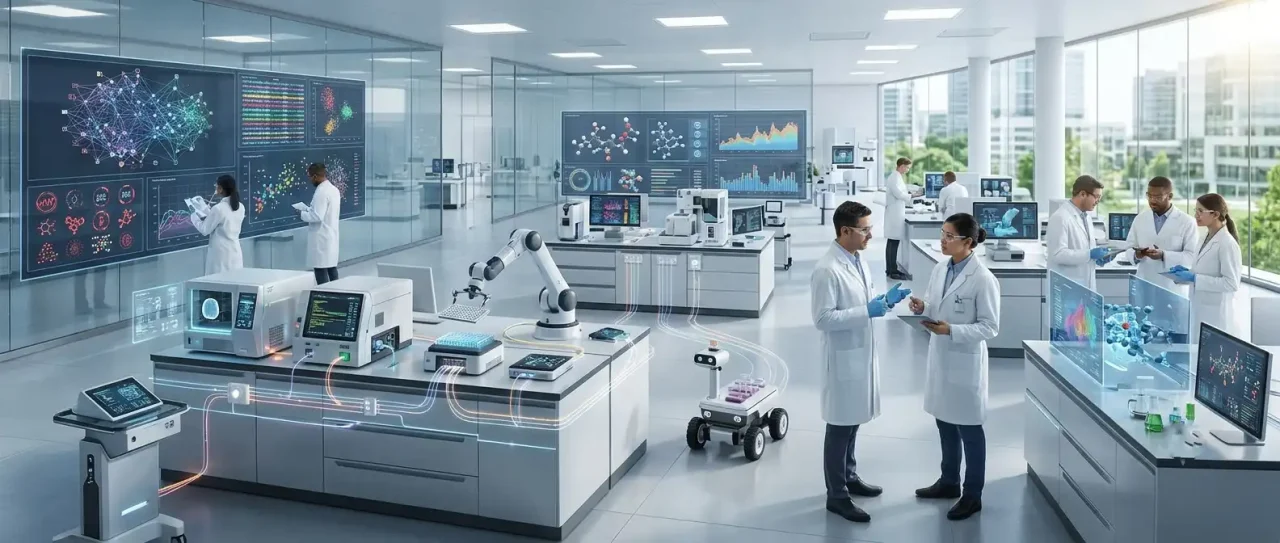
AI and machine learning are beginning to support analysis, anomaly detection, and decision support. Predictive analytics can help identify quality or operational patterns earlier.
IoT-connected instruments can provide more continuous equipment and environmental information, while robotic process automation can handle repetitive administrative work.
Cloud platforms are making laboratory information easier to connect across locations. Digital twins may eventually help teams model laboratory processes, capacity, and equipment behavior before changing the physical environment.
AI in LMS: How AI Is Improving Laboratory Information Management?
AI can help laboratories work with information that is already being generated but difficult to review manually.
Models may identify unusual results, surface patterns across historical data, forecast workload, assist with document review, or highlight samples and processes that deserve attention.
The system still needs human oversight. Scientific conclusions, quality decisions, and regulated approvals should not become unreviewed model outputs simply because AI can generate them quickly.
Conclusion
So, what is a lab information management system? At its simplest, it is the digital backbone used to keep laboratory samples, data, workflows, people, and records connected.
How to use LIMS software depends on the laboratory, but the basic principle is consistent: register the work, track the sample, manage testing, capture results, review them, and retain the history.
How does a LIMS system work? It creates a structured flow from sample receipt through testing, validation, reporting, storage, and disposal.
And what is LIMS database in practical terms? It is the structured data layer holding laboratory records and the relationships between samples, tests, results, users, instruments, and other laboratory information.
The answer to what is the purpose of laboratory software is therefore broader than digitization. It is about making laboratory work easier to trace, manage, retrieve, and understand.
That is also why should you invest in a LIMS: when the cost and risk of managing laboratory information manually become greater than the effort of building a connected process.
Experion can support laboratory and life sciences modernization through relevant capabilities in product engineering, data, AI, interoperability, cloud platforms, UX, and quality engineering, with the technology shaped around the organization's actual workflow and regulatory environment rather than a generic laboratory model.
Frequently Asked Questions (FAQs)
What is a laboratory information management system (LIMS) and how does a LIMS system work?
It manages samples, tests, workflows, laboratory data, instruments, approvals, and records through a connected digital process.
How LIMS improve lab efficiency?
It reduces repetitive data entry, improves sample tracking, automates workflows, and makes status and historical information easier to retrieve.
What is the role of laboratory information management system in data management?
It provides a structured environment for storing, linking, controlling, and retrieving laboratory information.
How laboratory information management system helps in workflow automation?
Tasks, approvals, test assignments, notifications, and status changes can be triggered through configured workflows.
What are the essential features of LIMS software?
Common capabilities include sample management, testing workflows, instrument integration, inventory, reporting, audit trails, security, and quality management.
Which industries use Laboratory Information Management Systems?
Pharma, biotechnology, diagnostics, food, environmental testing, chemicals, research, mining, agriculture, CROs, and testing laboratories are common users.
How much does LIMS software cost?
Cost depends on users, laboratories, deployment, integrations, validation, customization, instruments, data migration, and support.
Can LIMS software integrate with laboratory instruments?
Yes. Integration can automate data capture and reduce manual transcription where instruments and interfaces support it.
Can LIMS manage multiple laboratories and locations?
Many enterprise LIMS systems can support multiple sites, although architecture, permissions, data governance, and local requirements need careful design.
Can AI be integrated into a laboratory information management system?
Yes. AI can support analytics, anomaly detection, forecasting, document intelligence, and workflow assistance when implemented with appropriate validation, governance, and human oversight.