






 Back
Back


With over two decades of software engineering experience, Experion can bring deep technical expertise to every proptech engagement, from AI-driven automation to complex system integrations.
Real estate has come a long way from paper leases and filing cabinets. Now a tenant can renew a lease, book an amenity, and pay rent all from the same phone screen. Proptech software development is what makes it possible. It provides property businesses with faster operations, better resident service, and data-driven decisions instead of guesswork.
What is Proptech Software Development?
Proptech software development refers to designing, building, and maintaining the web apps, mobile apps, and cloud platforms that modernize how real estate is bought, sold, managed, leased, and lived in. Basically, Proptech software development requires a real understanding of how property operations and modern engineering.
Understanding Property Technology
Property technology, or proptech for short, covers the digital tools that touch every stage of the real estate lifecycle. The lifecycle comprises Consumer marketplaces, Back-office property management, Smart-building systems, and financial tools for investors and lenders.
Early property software was little more than a digitized spreadsheet. It was an on-premises system that stored records but automated nothing. Traditional property management systems (PMS) handled rent rolls and general ledgers. Unfortunately, they are painful to integrate and built for back-office staff rather than residents. On the other hand, Modern proptech software is cloud-native, API-first, mobile-friendly, and more AI-powered.
What Does Proptech Solutions Involve?
A complete proptech offering usually combines the following.
- Web applications handle the operational backbone for managers and administrators.
- Mobile apps put self-service leasing, payments, and communication in residents’ hands.
- Cloud infrastructure lets a portfolio scale from a few hundred units to a few hundred thousand without a rebuild along the way.
- AI combines prediction, personalization, and automation on top of all that.
- SaaS packaging turns it into a solution customers can subscribe to and start using quickly.
- API integrations tie the platform into the accounting tools, payment gateways, smart locks, and CRMs that property businesses already depend on.
The Current Landscape of Property Technology Software
Property management consists of numerous challenges that need to be solved. Among them are manual leasing, slow maintenance, opaque financials, high tenant churn, and energy waste.
Once these workflows are automated and the underlying data is surfaced, margins and tenant satisfaction both move in the right direction.
A few segments are especially software-driven right now.
Property management technology automates leasing, maintenance dispatch, and accounting. It replaces phone calls and paperwork with structured digital workflows. Contech and smart buildings lean on IoT sensors for facility management and energy analytics, tracking everything from HVAC performance to occupancy.
Turn your property portfolio into a data-driven business.
Talk to our engineering team today
Why the Real Estate Industry is Investing in Proptech?
Changing Buyer and Tenant Expectations
Renters and buyers expect the same easy digital experience they already get from their bank or a ride-hailing app. Users wish to tour a property virtually. Sign a lease from a phone. Get a maintenance update without calling anyone.
Increasing Operational Complexity
Once a portfolio spans regions, asset classes, and regulatory regimes, managing it manually turns difficult. Proptech platforms centralize operations and give teams a single view across thousands of units.
Demand for Data-Driven Decisions
Owners and asset managers want real-time visibility into occupancy, revenue, and cost. Stakeholders want it in real-time rather than at quarter-end. Proptech software turns scattered operational data into dashboards and forecasts that influence pricing, capital planning, and portfolio decisions.
Sustainability and Smart Building Initiatives
Gone are the days when environmental performance is not just a reputational one. It is now a financial and regulatory issue. Smart-building software helps operators track and cut energy use, automate ESG reporting, and keep up with efficiency standards that keep getting stricter.
How Can Property Managers Improve Resident Experience with Technology?
Resident retention starts with digital convenience. When lease renewals, payments, and service requests are effortless, residents stay longer and even recommend their connections. Hence, improving resident experience with technology has become a core part of property strategy. A single, well-built proptech app pulls all of this into one place. Lease renewals with e-signatures, self-service maintenance tickets with live tracking around the clock, and keyless entry tied to amenity bookings.
Self-Service Resident Portals
A resident portal lets tenants handle their whole relationship with a property, from viewing statements to updating details to submitting requests and messaging management, without waiting on office hours.
Mobile Maintenance Requests
Residents can report an issue in seconds, attach a photo, and track it from “received” to “resolved” while the system dispatches the right vendor on its own.
Smart Access Control
Keyless, phone-based entry lets residents unlock doors, grant guests’ temporary access, and skip the cost of replacing lost keys.
Digital Visitor Management
Digital visitors can easily log in, so pre-authorized guests can avoid time-consuming processes at the front desk. This gives guests and deliveries a smoother first impression of the building.
Community Engagement Features
Proptech apps build stronger tenant communities through in-app notice boards, event listings, and localized discount perks that make a building feel like a neighborhood rather than a set of units.
Online Rent Collection
Automated, mobile rent payment with reminders and recurring options reduces late payments and eliminates the friction of checks and manual processing.
Real-Time Notifications
Push notifications keep residents informed about package deliveries, maintenance windows, amenity availability, and building announcements.
Personalized Resident Services
By analyzing usage data, platforms can recommend relevant amenities, services, and offers. Turn a generic app into a personalized concierge.
Smart access and IoT-enabled amenities
Connected amenities, be it smart gyms or bookable co-working spaces, let residents reserve and access shared resources seamlessly, increasing usage and perceived value.
Predictive maintenance for faster issue resolution
IoT sensors and AI models flag equipment likely to fail, so managers fix problems before residents even notice them, cutting downtime and emergency costs.
Personalization through data insights
Every interaction generates data that, used responsibly, helps operators anticipate needs, tailor communication, and continuously improve the resident journey.
Types of Proptech Software Solutions
Property Management Software
Most properties comprise core back-office functions- leasing, rent collection, accounting, and maintenance coordination. Property Management Software can automate core back-office functions across residential or commercial portfolios.
Real Estate Marketplace Platforms
These platforms connect buyers, sellers, renters, and agents with rich listings, search, and transaction tools.
Smart Building Management Systems & IoT integration
Monitors and controls building systems, optimizing energy use, security, and comfort.
Construction Technology Platforms
Digitizes project planning, site management, and collaboration across the development lifecycle.
Tenant Experience Applications
Works to improve the overall tenant experience. It can deliver resident-facing portals, communication, and services that drive user retention.
Facility Management Software
Facility Management Software coordinates assets, work orders, vendors, and preventive maintenance schedules.
Investment and Portfolio Management Platforms
Platforms that give owners and asset managers visibility into performance, valuation, and returns.
Real Estate Marketplaces & Listing Platforms
Marketplaces power discovery and lead generation for brokers and property owners.
Lease & Document Management Systems
Centralize contracts, automate renewals, and keep documents audit-ready and compliant.
Essential Features of Modern Proptech Software
Modern proptech software can combine property operations, resident services, and data management into a digital platform. Solutions may vary based on business needs, but the most effective property technology software includes a core set of features that enhance user experiences.
Property Listings and Search
For rental platforms, property listing and search capabilities are crucial. It should let users filter properties by location, price, property type, availability, and amenities. Saved searches and interactive maps further enhance the discovery experience.
Online Leasing and Digital Contracts
The rental process of yesteryear was strictly confined to paper-based agreements. It has now been replaced with secure electronic documentation. Features such as e-signatures, automated lease generation, document storage, identity verification, and renewal reminders
Tenant Portal
Basically, refers to a self-service tenant portal. Provides residents with a centralized place to manage all interactions with property managers. Tenants can pay rent, view all lease documents, book amenities, and communicate with management. The tenant portal thereby creates a seamless resident experience.
Owner Dashboard
A dashboard designed especially for property owners who need visibility into portfolio performance without overreliance on manual reports. KPIs such as occupancy rates, rental income, lease expirations, financial performance, and property-specific metrics can be viewed. Owners can thereby make informed investment decisions.
Maintenance Request Management
Maintaining property is a common challenge for property managers. Residents submit maintenance requests using web or mobile apps, upload images, monitor request status, and receive regular updates. Automation on the operations side helps streamline the entire maintenance lifecycle, automating work order development, vendor assignment, scheduling, and completion tracking.
Payment Processing
Integrated payment capabilities simplify rent collection and increase cash flow. Most modern proptech platforms allow tenants to pay rent online, set up regular payments, handle security deposits, calculate late fees, issue digital receipts, and accept several forms of payment, all while ensuring the highest level of security and compliance.
Smart Device Integration
With the proliferation of smart buildings, integration with linked devices has become ever more valuable. Today’s platforms may integrate with smart locks, thermostats, lighting systems, video cameras, occupancy sensors, parking systems and energy management devices to remotely monitor and automatically operate a property.
Analytics and Reporting
Real-time analytics convert operational data into actionable business intelligence. Customized dashboards allow management, owners and other stakeholders to monitor occupancy, maintenance performance, revenue trends, leasing activity, operational expenses, and tenant satisfaction. Advanced reporting capabilities can also support financial projections, sustainability initiatives, and ESG reporting.
Third Party Integrations
Successful property technology software development needs to involve effortless integration with existing systems. APIs support connectivity with accounting platforms, CRM systems, ERP solutions, payment gateways, identity verification services, document management systems, and smart building technologies.
AI-powered Recommendations
AI adoption is growing across industries, and proptech is no exception. AI can recommend properties based on user preferences.
It can forecast occupancy rates, identify maintenance issues before they become critical, and optimize pricing strategies. Virtual assistants can answer resident inquiries around the clock.
Automated rent collection & payments
Collecting rent manually is time-consuming and prone to errors. Modern software can automate the payment process by incorporating online rent payments, managing security deposits, calculating late fees, recurring billing, and automating payment reminders. Tenants can pay through a variety of payment methods. Property managers gain real-time visibility into transaction history and outstanding balances.
Maintenance request tracking
Tenants can easily submit maintenance requests. On the management side, these requests can be prioritized, assigned to maintenance staff or external vendors, and tracked until completion. Service history and performance reporting can support proactive maintenance.
Resident/tenant communication portals
Built-in communication tools help centralize interactions between residents, owners, property managers, maintenance teams, and vendors. Features such as in-app messaging, automated notifications, email and SMS alerts, community announcements, and event management improve transparency while strengthening resident engagement.
Property Operations
The majority of property operations consist of a never-ending list of tasks and reminders. Rent reminders, payment reconciliation, lease renewals, maintenance scheduling, vendor dispatch, inspection workflows, document generation, and compliance tracking are just a few of the everyday tasks that modern proptech platforms can automate.
User Access & Mobile
Users of today expect access from anywhere. A responsive web application that is supported by native iOS and Android apps enables property managers, maintenance staff, owners, and residents to complete tasks on the go.
Sensitive property and financial information remains secure with role-based access controls.
From MVP to full-scale rollout
Partner with Experion to bring your proptech vision to life
AI in Proptech: Transforming the Future of Real Estate
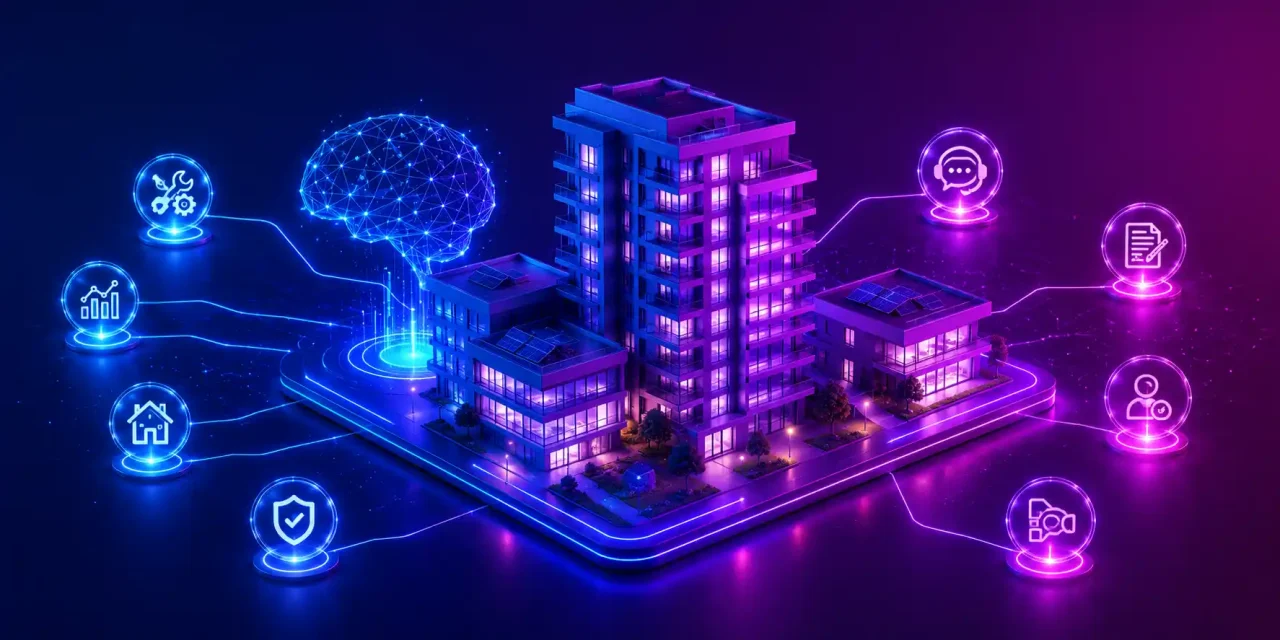
AI in proptech has moved from experiment to expectation. It’s built into everyday property operations now.
Predictive Maintenance
Most maintenance is still reactive. Something breaks, then somebody fixes it — that’s the default. Predictive maintenance breaks that cycle by accessing IoT sensor data, service history, and equipment performance to look for early tells. A pump running slightly hot for three days straight. A compressor cycling more than it used to. Catch that, and you’re scheduling the repair on your terms instead of the equipment’s.
AI Chatbots for Tenant Support
Chatbots used to mean a clunky FAQ bot that couldn’t parse a typo. Not anymore. The current generation holds context across a whole conversation, remembers what a resident asked last month, and handles lease questions, tour bookings, maintenance requests, payment reminders, renewals, amenity bookings, visitor sign-ins — the list keeps growing.
Automated Property Valuation
Valuing a building used to take an appraiser and a few days. AI models now go through historical sales, neighborhood trends, property specifics, demand signals, and macro indicators and display a number in minutes. This is a good starting point. But a much better starting point than a guesstimate, and buyers, lenders, and investors are leaning on it more every quarter.
Personalized Property Recommendations
Think Netflix, but for apartments. Search history, budget, neighborhood preference, must-have amenities, what someone actually clicked on last time. All of it feeds a model that surfaces listings a person is likely to need, instead of three hundred results sorted by price. People decide faster when they’re not wading through noise.
AI-Based Lease Analysis
Nobody enjoys reading a forty-page lease. AI pulls out the important terms—renewal dates, weird clauses, compliance red flags—and hand you a summary instead of a stack of fine print. Legal teams still review it. They just start from a much shorter list of things worth arguing about.
Occupancy Forecasting
Keep occupancy healthy, keep the revenue healthy. Models look at historical occupancy, upcoming lease expirations, seasonality, local market shifts, pricing history, demographic data, and produce a forecast that’s actually worth planning around. Marketing budgets get redirected before a vacancy problem shows up.
Smart Energy Optimization
HVAC, lighting, elevators, and water systems are all watched continuously. The system learns the building’s rhythm (when people show up, when they leave, how the weather’s behaving) and adjusts consumption on its own. Nobody notices the comfort level has changed. The utility bill notices. So does whoever file the ESG report.
AI-driven chatbots for tenant support
AI-powered chatbots are transforming tenant communication by providing instant, around-the-clock assistance. They can answer frequently asked questions, assist with lease inquiries, schedule property tours, process maintenance requests, provide payment reminders, and guide residents through common tasks.
Automated leasing and screening
Screening applicants by hand is slow and inconsistent, frankly. AI handles the verification grind — background checks, income verification, identity checks, eligibility — and can even suggest lease terms or walk an applicant through the application itself. Less paperwork for staff. Faster yes-or-no for the applicant, which they tend to appreciate more than you’d think.
Energy optimization through AI/IoT
AI and IoT work together to create more intelligent buildings. Connected sensors continuously collect operational data from HVAC systems, lighting, water usage, occupancy, and environmental conditions. AI analyzes this information to optimize resource consumption.
Smart pricing
Rent pricing is a moving target: demand, occupancy, location, season, what the building down the street just dropped its price. AI models track all of that at once and recommend a number that balances filling units against not leaving money on the table. Change the market, and the price adjusts within days, not at the next lease renewal cycle six months out.
Tenant sentiment analysis
Satisfaction is now a tracked number. Sentiment models read through surveys, reviews, support tickets, emails, even social media mentions, and catch a recurring complaint before it turns into three non-renewals in a row.
Automated Underwriting & Risk Assessment
Financial records, property performance, tenant profiles, market trends, occupancy history, macro risk factors — a model can analyze all of it and flag concerns in a fraction of the time a person needs.
Experion’s team of experts combine real estate domain knowledge with modern cloud, AI, and mobile engineering, so the platforms we build fit how property businesses operate.
Choosing Between Off-the-Shelf and Custom Proptech Platform Development
One of the earliest and most consequential decisions is whether to buy a packaged tool or invest in a custom proptech platform.
| Off-the-Shelf Software | Custom Proptech Platform |
| Faster deployment | Tailored workflows |
| Limited customization | Built around business processes |
| Subscription costs | Long-term scalability |
| Generic features | Competitive differentiation |
| Vendor dependency | Full ownership |
Off-the-shelf tools win on speed and predictable upfront cost. But they trade away flexibility, can lock you into a vendor’s roadmap, and rarely scale gracefully once your needs diverge from the average customer’s. Custom development asks for more time and money up front. Still, it delivers workflows that match how you actually operate, full data ownership, and room to evolve later without asking permission. A simple checklist helps here: your integration needs, your requirements around data ownership, your compliance obligations, and how well a given path lines up with your long-term roadmap.
Benefits of Custom Proptech Software Development
Workflow Automation
Workflow automation removes repetitive manual tasks and frees staff to focus on residents instead of paperwork.
Better Customer Experience
Since the platform is built for your actual users, the overall customer experience is better.
Higher Scalability
Higher scalability means the platform grows with your portfolio instead of becoming the factor that holds you back.
Seamless Third-Party Integrations
Third-party integrations connect to the systems you already run on.
Enhanced Data Security
Stronger data security lets you set controls that match your specific compliance environment rather than the lowest common denominator.
AI Readiness
AI readiness means the architecture can pick up new AI features as they mature, without needing a rebuild every time.
Competitive Advantage
Custom software development enables you to create a platform your competitors on generic tools genuinely can’t replicate.
Proptech SaaS Development: Why Cloud-First Solutions are Winning?
Proptech SaaS development has become the dominant delivery model.
Multi-Tenant Architecture
Multi-tenant architecture lets a single platform serve many customers while keeping their data properly isolated from each other.
Subscription-Based Revenue Models
Subscription-based revenue creates predictable, recurring income for software providers.
Automatic Updates
Automatic updates mean every customer runs the latest, most secure version.
Scalability Across Regions
Scalability across regions supports global growth on elastic cloud infrastructure.
Lower Infrastructure Costs
Lower infrastructure costs eliminate the need for on-premises hardware.
Enterprise Security
Enterprise security, including encryption, access controls, and compliance certifications, gets delivered consistently to every tenant rather than negotiated tenant by tenant.
Monetization Models
Cloud-first models open up flexible monetization: tiered subscriptions, transaction fees, paid API access. Providers can price closer to the value each customer actually gets instead of charging everyone for the same flat rate.
Technologies used in Proptech Software Development
Building modern property technology software draws on a fairly broad stack.
- AI & Machine Learning: AI and machine learning power prediction, personalization, and automation.
- IoT: IoT connects sensors and devices across a building
- Cloud Computing: Cloud computing provides scalable, resilient infrastructure underneath all of it.
- GIS & Mapping: GIS and mapping add location intelligence and spatial search on top
- Digital Twins: Digital twins create virtual replicas of physical assets for simulation and monitoring.
- AR/VR: AR/VR delivers immersive virtual tours and design visualization.
- Blockchain: Blockchain brings a layer of transparency to transactions and records
- Big Data Analytics: Big data analytics processes the sheer volume of operational data properties generate.
- Mobile Technologies: Mobile technologies ensure the experience reaches residents and staff wherever they happen to be.
Custom Proptech Platform Development Process
Discovery & Requirement Gathering
Every project starts by defining user personas, landlords, tenants, facility managers, and the core compliance standards that apply, such as SOC 2 and GDPR. This is where the technical plan gets lined up with actual business goals.
UX/UI Design for Property Stakeholders
Since many users aren’t technical, design has to work equally well for a first-time resident and a seasoned operator, across mobile and web alike.
Architecture & Tech Stack Selection
Here we choose cloud frameworks that balance scalability, security, and cost. This leaves room for AI and integration needs the business hasn’t thought of yet.
Development & Third-Party Integrations
Engineering proceeds in iterative sprints, building core modules while connecting the platform to accounting tools, payment gateways, smart devices, and CRMs.
QA, Compliance & Data Security
QA covers penetration testing, data encryption, and validating every third-party integration before launch.
Deployment & Ongoing Support
After launch, the focus shifts to monitoring user telemetry, resolving issues, and improving performance and features based on how people are using the platform.
Common Integrations for Proptech Platforms
Proptech platforms rarely operate in isolation. Common integrations include:
- CRM systems – For managing prospects and residents.
- ERP platforms – For enterprise finance and operations
- Payment gateways – For rent and fees.
- Identity verification – For screening.
- Smart locks and IoT devices – Connects proptech platforms with the physical building.
- Accounting software – Keeps financials in sync.
- Digital signature platforms – Powers paperless leasing.
- Mapping APIs – Enables location features.
- Communication tools – Centralize messaging across email, SMS, and in-app channels.
Challenges in Proptech Software Development
Legacy System Integration
Legacy system integration is often the most difficult problem of all, since older PMS and accounting systems were never designed to share data with anything
Data Privacy and Security
Data privacy and security matter enormously given the sensitive personal and financial information involved.
Regulatory Compliance
Regulatory compliance, from fair housing rules to regional data laws, adds complexity that has to be engineered in from day one rather than patched in later.
User Adoption
User adoption can stall a project if interfaces aren’t genuinely easy for non-technical staff and residents.
Scalability
Scalability must be designed early to avoid a costly re-architecture down the road
Managing Large Property Portfolios
Managing large property portfolios demands performance and data models that hold up across tens of thousands of units without falling over.
Future Trends in Property Technology
A handful of forces are shaping where property technology goes next: AI, automation, connected infrastructure, and better use of data. Real estate is investing accordingly.
AI-Powered Property Operations
AI is showing up in nearly every layer of a modern proptech platform now. It automates routine admin work, helps optimize leasing, analyzes property performance, forecasts occupancy, catches maintenance problems before they escalate, and surfaces recommendations from historical and real-time data.
Autonomous Buildings
Autonomous buildings can continuously monitor occupancy, lighting, HVAC, security, and energy without the need for human intervention at a control panel. Buildings are now managing themselves owing to the rise of IoT devices, AI, and automation. They can make adjustments to reduce expenses and maintain a base level of occupant comfort.
Digital Twins
Digital twins are nothing but a virtual replica of a real building. Connected sensors and building systems continuously feed data into it. These models can be utilized by owners and facility managers to monitor performance in real time. Maintenance scenarios can be tested; energy use can be regularized and problems identified before occupants even notice them. For complex commercial properties especially, this is turning into a genuinely useful management tool.
Predictive Analytics
Predictive Analytics does not just consider historical reports. Instead, it combines both historical and real-time data to forecast upcoming events. Be it, maintenance needs, equipment failures, occupancy trends, rental pricing or even operating expenses.
ESG-Focused Property Management
Property management technology now tracks energy use, water consumption, carbon emissions, waste, and other sustainability metrics. Automated reporting takes a lot of the trouble out of ESG compliance for investors and regulators alike.
Hyper-Personalized Resident Experiences
Residents expect more than basic property management now. Proptech software can now tailor recommendations, communication, and even suggest amenities based on how a person uses the building. A hyper personalized resident experience is enabled by AI and behavioral analytics. Once this is done well, it shows up in the form of higher satisfaction and better renewal rates.
Spatial Computing and AR
Spatial computing and AR are changing how properties get marketed, managed, and maintained. A prospective tenant can take a virtual tour without visiting in person; a maintenance tech can overlay building systems onto what they’re looking at during a repair. Architects, developers, and property managers are using the same tools to test planning and renovation decisions before anyone touches a wall.
Rise of AI copilots for property managers
AI copilots are showing up as assistants for property managers, not replacements for them. Essentially acting as assistants that can do all the work. Tenant communications can be summarized easily, lease documents drafted in a matter of minutes, and it can even answer routine resident questions. On the operations side, it flags maintenance priorities, schedules inspections and even pulls operational insights out of data that sits unused. Expect more of these built into proptech platforms as generative AI keeps improving.
Blockchain for lease/transaction transparency
Blockchain’s advantage in real estate is transparency. This refers to tamper-proof digital records both sides can trust. Think of lease agreements, rent payments and ownership transfers, and the first thing that comes to mind, is tons of paperwork. Smart contracts can completely eliminate this. Its adoption is still early, but document management and transaction verification look like the places it takes hold first.
Sustainability and smart-building tech
Smart building technology keeps expanding past basic automation. Connected sensors, smarter HVAC, occupancy monitoring, smart lighting, and energy management platforms pull double duty. This is heading toward standard issue rather than premium, for commercial and residential properties alike.
Automation of Property Management
Automation is cutting down the manual effort of running a large portfolio. Rent collection, lease renewals, maintenance scheduling, vendor coordination, document generation, compliance tracking, resident communication. All of it can move through automated workflows now. That frees property managers to spend time on strategy and actual relationships instead of paperwork.
Tokenization and Fractional Ownership
Tokenization splits real estate assets into digital ownership shares using blockchain, so multiple investors can buy in with smaller amounts of capital. Regulation is still catching up, but fractional ownership could genuinely open up liquidity and access in a market that’s traditionally required a lot of capital upfront.
AI underwriting
AI is changing how lenders and investors size up real estate deals.
Underwriting models can pull through property performance, financial records, market conditions, tenant behavior, and risk indicators quickly. This is significantly more than a person working through it manually, which tends to make investment decisions more consistent.
Interoperability standards
The more software platforms an organization runs, the more interoperability matters. Standardized data models and communication frameworks let different systems talk to each other.
- OSCRE Industry Data Model (IDM): The OSCRE Industry Data Model (IDM) provides standardized data definitions for real estate. With a common data structure in place, organizations can integrate property management, finance, facilities, and investment systems more easily, with fewer data silos and simpler enterprise-wide reporting.
- Project Haystack: The goal of Project Haystack, an open standard, is to enhance the compatibility of IoT devices with building automation systems. It makes it simpler to combine sensors, HVAC systems, lighting, and energy management technologies into a single platform for analytics and automation by standardizing the naming and organization of operational building data.
Digital Twin
Digital twins are being used at every stage of a property’s lifespan, from design and building to operations and renovation, going beyond facility management. Building Information Modeling (BIM), IoT sensor data, and AI-driven analytics can be combined to improve planning, predictive maintenance, and capital investment decisions.
How to Choose the Right Proptech Software Development Partner?
Choosing a partner matters just as much as choosing technology. Look for:
- Industry experience & domain expertise: A development partner with experience in real estate and property technology will have a better understanding of industry workflows, user expectations, and operational challenges.
- Custom development capabilities: Look for a partner that can design and build a custom proptech platform tailored to your workflows.
- Cloud and AI expertise: The software partner should be able to architect secure cloud-native platforms.
- Security & compliance: Proptech platforms manage sensitive financial and property data. Your development partner should prioritize robust security practices. This includes encryption, role-based access controls, and secure authentication.
- Integration experience: A seasoned partner should be able to integrate your platform with digital signature platforms, IoT devices, payment gateways, CRM systems, accounting software, and smart building technologies.
- Agile development methodology: Software can change through iterative enhancements and feedback when an agile development methodology is used.
- Long-term support and scalability: Select a partner that provides technical assistance, security upgrades, and continuous maintenance.
- Post-launch support and scalability planning: Finally, a trustworthy development partner should keep an eye on platform performance, incorporate user input, and design a strategy for future implementation.
Key Questions to Ask a Development Partner:
Some questions to ask your development partner :
- Do you have experience with IoT/hardware integrations for smart buildings?
- How do you approach data privacy and multi-tenant cloud architecture?
- What is your strategy for scaling our custom platform?
A strong partner answers each of these with concrete examples, not generalities.
Pricing Models & Timeframes
Proptech pricing varies with the model.
SaaS product typically charges subscription fees, often per unit or per door.
Custom development gets priced either time-and-materials or fixed-scope.
As a rough guide, a well-defined MVP usually takes three to six months to deliver, and a full-featured platform commonly runs nine to eighteen months depending on how many integrations are involved and how complex they are.
Bottom line: actual timelines depend on scope, compliance needs, and integration depth.
Ready to modernize your property operations?
Let’s build the platform your residents and teams actually need
Key Components of Proptech Software Development
A complete platform brings several layers together.
- Core modules encompass leasing, maintenance, accounting, and CRM.
- Resident-facing features include portals, mobile applications, payments, and community tools for residents.
- Operations capabilities comprise workflow automation, vendor management, and reporting dashboards.
- Data and integrations ensure effortless data exchange across the ecosystem by relying on APIs, MLS and ERP connectors, and IoT sensors.
- Underneath every layer sits security and compliance: data protection and role-based access that isn’t optional or an afterthought.
Best Practices for Proptech Software Development Services
The strongest projects tend to follow a few consistent principles.
- Adopt an agile, MVP-first approach so you can validate with real users early on.
- Design for both residents and staff, with accessibility and mobile-first thinking incorporated from the start. Build an integration-first architecture with a clear API strategy.
- Embed data governance and security by design instead of bolting them on once something’s already live.
- Define KPIs upfront: customer satisfaction (CSAT), time-to-resolution, occupancy, Net Promoter Score (NPS), and cost-per-work-order.
Example Use Cases
Real-life use cases can better demonstrate the effectiveness of Proptech software development.
- Reducing maintenance resolution time with predictive analytics: Using predictive analytics to shorten maintenance resolution times: A residential operator was coping with a constant barrage of tenant complaints and sluggish, reactive maintenance. Predictive maintenance models in conjunction with IoT sensors identified malfunctioning equipment early and automatically dispatched providers. Faster repairs, fewer emergency call-outs, and significantly higher resident satisfaction ratings are the outcomes.
- Increasing ancillary revenue through marketplace integrations: An operator wanted revenue beyond rent, so the proptech app added a marketplace of local services and amenities with in-app booking. That brought in more ancillary revenue per unit and stronger resident engagement alongside it.
- Improving resident retention with a personalized engagement app: Profitability was negatively impacted by high churn. Data insights were employed by a tailored engagement software to customize community events, communications, and benefits for each resident. Turnover costs decreased as renewal rates increased.
Conclusion
Proptech software is letting real estate organizations run efficiently, treat residents better, and make decisions based on real data instead of instinct. This is all done at a scale that simply wasn’t practical ten years ago.
Whether you’re building a custom platform, a resident-facing app, or a cloud-native SaaS product, the priorities stay the same: scale design, insist on interoperability, and build in AI readiness from day one rather than retrofitting it later. The operators who treat property technology as core to the business, not a side project, are the ones who’ll be ahead of everyone else in five years.
Experion is well-positioned to partner with property businesses to turn proptech ambition into working software — from first discovery call to post-launch support.
Frequently Asked Questions (FAQs)
What is the difference between proptech and property management software?
Property management software is one category within proptech, focused specifically on back-office tasks like leasing, rent collection, and maintenance. Proptech is the broader umbrella, and it also covers marketplaces, smart buildings, real estate fintech, and tenant-experience apps.
How much does custom proptech development cost?
It varies widely with scope, integrations, and compliance needs. A focused MVP is a smaller investment than a full enterprise platform, and pricing is usually structured as time-and-materials or fixed-scope. Honestly, a scoped proposal is the only reliable way to get an accurate figure; anything else is a guess.
Can AI improve resident satisfaction?
Yes, generally. AI powers 24/7 chatbots, predictive maintenance that fixes issues before residents notice them, and personalized services, and all three tend to improve resident experience and retention over time.
How long does it take to implement a proptech platform?
An MVP typically takes three to six months. A full platform commonly takes nine to eighteen months, depending largely on how many integrations are involved.
What technologies are used in proptech platforms?
Common technologies include AI and machine learning, IoT, cloud computing, GIS and mapping, digital twins, AR/VR, blockchain, big data analytics, and mobile technologies.
How does AI improve property management technology?
It automates leasing and screening, predicts maintenance needs, optimizes energy use, enables smart pricing, and analyzes tenant sentiment. It also speeds up underwriting. Put together, that cuts costs and improves service quality across the board.
Is custom proptech software better than off-the-shelf tools?
Depends on your needs, really. Off-the-shelf tools deploy faster and cost less upfront. Custom software offers tailored workflows, full data ownership, deeper integrations, and long-term scalability. Custom tends to win when differentiation and scale actually matter to the business.
What is proptech SaaS development?
It's the creation of cloud-based, subscription-delivered property software, typically multi-tenant, that customers access online, get automatic updates for, and pay for through subscription tiers, transaction fees, or API access.
What is a proptech app?
A mobile application that lets residents and property managers handle tasks like leasing, payments, maintenance requests, keyless entry, and community engagement from their phones.
Why invest in property technology software development?
Investment in property technology software development reduces operating costs through automation, meets rising resident expectations, enables data-driven decisions, supports sustainability goals, and creates competitive differentiation in a real estate market that's gone mostly digital, whether operators are ready for it or not.
