






 Back
Back
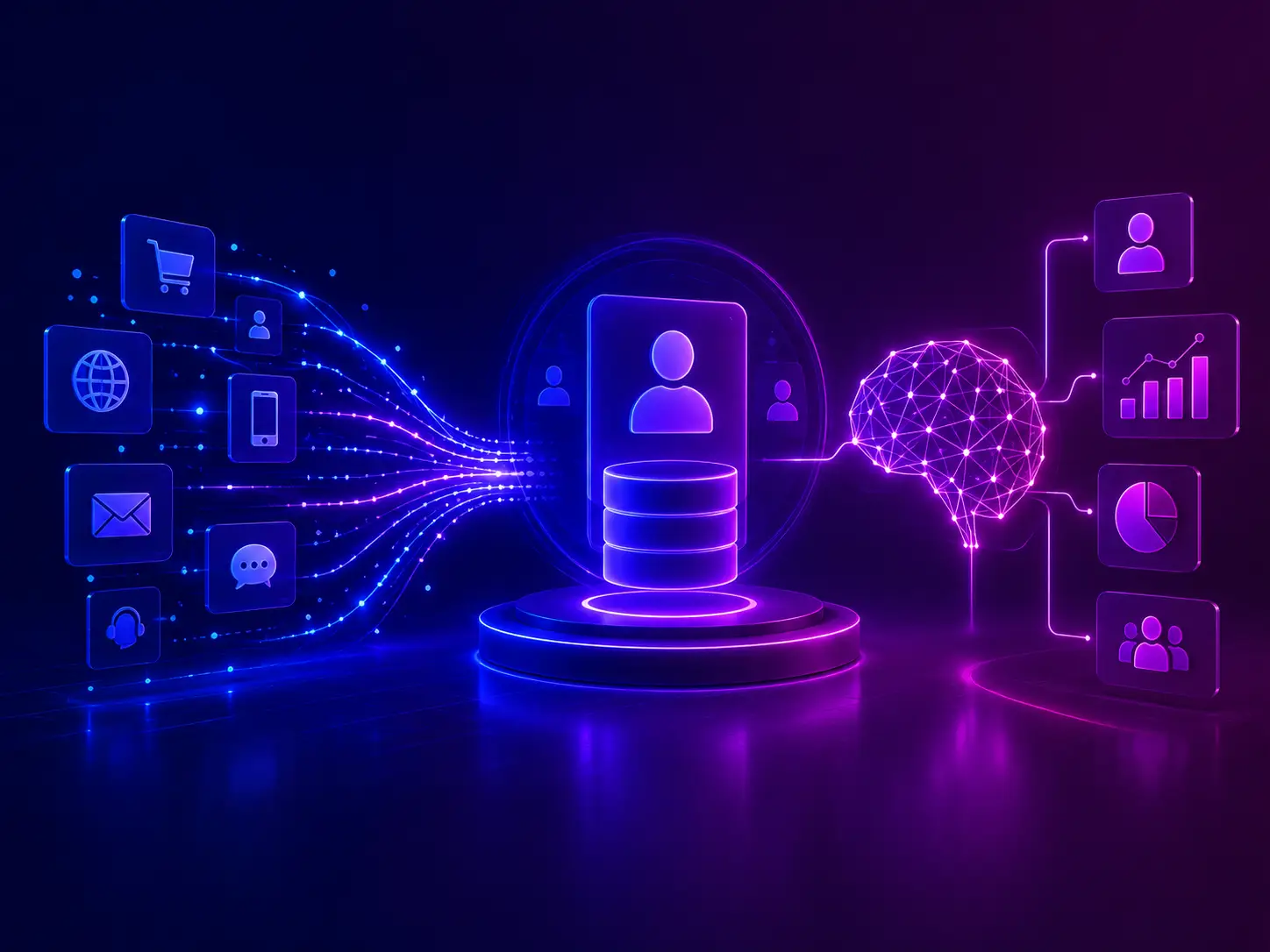
With expertise across AI, data, and enterprise technology, Experion can help organizations move from fragmented customer data to connected, intelligence-driven customer experiences.
Companies now collect vast amounts of customer data but struggle to turn it into insights. Every click, purchase, support ticket, and social mention adds another layer to an already sprawling data landscape. CRM systems, marketing platforms, e-commerce tools, and contact centers—each holds a fragment of the customer story. Using customer intelligence can improve retention, personalization, and product decisions, while strengthening support and service operations.
Key Takeaways
- A customer intelligence platform unifies data from CRM, web, mobile, transactions, support, and social channels into a single customer view.
- Unlike a CRM, which stores customer records, a Customer Intelligence Platform analyzes and predicts customer behavior.
- AI and machine learning are now central to customer intelligence platforms, powering predictions like churn risk, purchase intent, and next-best actions.
- The customer intelligence platform market is expanding quickly, driven by AI adoption, CDP/CI convergence, and rising demand for personalization.
- Enterprises use customer intelligence software across marketing, sales, service, product, and strategy functions.
- Choosing the best customer intelligence platform means weighing data integration, unified profiles, predictive analytics, and governance together. Not one of these in isolation.
What is a Customer Intelligence Platform?
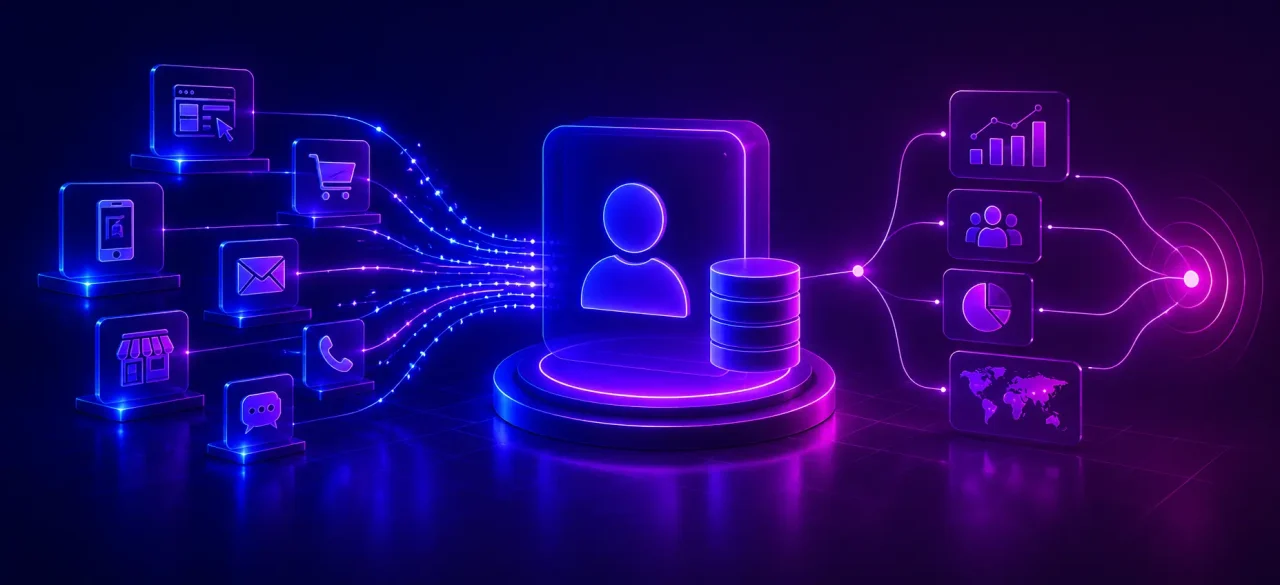
A customer intelligence platform collects customer data from multiple sources, unifies it into a single profile per customer, and applies analytics and AI to turn that data into insight enterprises can act on. A spreadsheet or a basic database stores information. A customer intelligence platform interprets it.
Raw customer data vs. Actionable customer intelligence
Raw data is the outcome of every individual customer interaction.
Common examples include:
- A page visit logged on a website.
- A purchase recorded in an order system.
- A call transcript stored in a contact center database.
Individually, these data points reveal little. Customer intelligence is what you get once you clean, connect, and analyze that raw data.
For example, take a customer who’s browsed a product three times, opened two related emails, and called support last week about a shipping delay. Viewed separately, those are three unrelated data points. Viewed together, that’s a customer showing purchase intent and frustration at the same time, which is a completely different situation than either signal alone suggests. Catching that combination, and knowing what to do with it, forms the essence of customer intelligence. Because customer behavior touches nearly every part of a business, these platforms end up serving more than one team almost by necessity.
How Does a Customer Intelligence Platform Work?
The six stages include:
- Data collection: The platform pulls information from CRM systems, websites, mobile apps, transaction records, support interactions, surveys, and social media. Each channel captures a different slice of behavior, and no single one tells the full story.
- Data integration: Once collected, data from these different systems has to get connected, which is usually the hardest technical step. Formats, identifiers, and update frequencies vary a lot between a CRM, an e-commerce platform, and a contact center tool. Solid APIs make this manageable; weak ones make it a permanent headache.
- Customer data unification: After integration, the platform resolves identities across systems, matching an email in the CRM to a device ID on the website to a phone number in the support system, until you end up with one coherent profile per customer instead of a dozen disconnected fragments.
- Analysis and intelligence: With unified profiles in place, the platform looks for patterns across the customer base: Recurring behaviors, shifting preferences, signals of intent that would take a human analyst weeks to find manually across thousands or millions of records, if they found them at all.
- AI-powered predictions: Machine learning models forecast what’s likely to happen next: churn risk, purchase probability, the next-best action for a given customer, the likely lifetime value of a new segment.
- Activation: The final stage pushes intelligence into marketing automation, sales workflows, service dashboards, and engagement channels, so the right action happens at the right moment instead of staying static in a report.
Why are Customer Intelligence (CI) Solutions Important for Enterprises?
For years, enterprises ran on reactive reporting. Customer intelligence solutions are what a shift away from that backward-looking habit looks like once you put it into practice.
This matters because customer expectations have moved faster than most legacy systems could follow. People expect personalization and fast resolution in the moment. An enterprise leaning purely on historical reporting just cannot hit that bar, structurally, no matter how good its analysts are. A modern customer intelligence platform closes that gap by continuously ingesting new data and updating predictions in near real time, so a team can act while a customer’s intent is still live instead of reconstructing it after the moment’s gone.
Customer Intelligence Platform Market Overview
This market has gone from a niche analytics category to a core piece of enterprise data infrastructure. AI adoption is the most obvious one.
Generative AI and Machine Learning keep getting embedded directly into customer intelligence tools, which puts predictive insight within reach of teams that used to need a dedicated data science group just to ask the question. Second, customer data platforms (CDPs) and customer intelligence tools are converging. The line between “unifying data” and “analyzing data” is getting blurry, and many vendors now offer both under one roof. Third, privacy-first data strategies are pushing enterprises toward platforms with consent management and governance built in, rather than bolted on afterward. And then there’s plain old demand for personalization, since consumers now expect every brand interaction to feel like it was made for them specifically.
Adoption isn’t even across the board. Large enterprises, with multi-channel customer bases and more mature data infrastructure, tend to move first and go deepest, often rolling a platform out across several business units at once. Mid-market companies are more cautious, usually starting with one use case; churn prediction is a common entry point, before expanding from there. By industry, retail and e-commerce, banking and financial services, telecom, and SaaS are moving fastest.
Your customer data has more to tell you. Are you ready to uncover it?
Discover what a custom customer intelligence platform intelligence can do
Key Features of a Customer Intelligence Platform
Not every platform in this category is built the same way. Here’s what separates a useful platform from one that just stores customer records with extra steps.
Customer Data Integration
This is the foundation. The platform needs to connect to wherever customer data already lives: CRM, ERP, marketing automation, e-commerce, contact center software, web and app analytics. The quality of this layer determines everything downstream. Good platforms lean on well-documented APIs and real-time or near-real-time sync.
Weak integration is the most common reason these initiatives stall. Fragmented or delayed data poisons every analysis you try to build on top of it.
Unified Customer Profiles
Once the data is integrated, it needs to collapse into one profile per customer, pulling identifiers, transaction history, engagement data, and behavioral signals from every connected channel into a single record. This is what makes a real 360-degree view possible.
A service agent, a marketer, and a sales rep should all see the same picture, not just their own department.
Customer Segmentation
Segmentation is how you turn a mass of individuals into groups you can act on strategically.
Modern platforms segment across various demographics, behavior, transaction history, engagement, value, and intent. Good platforms do so dynamically. Instead of static groups set once and forgotten, segments shift as behavior shifts, so a customer moving from “browsing” to “high intent” gets reflected almost immediately rather than at next month’s review.
Customer Journey Analytics
Journey analytics tracks how a customer moves through every touchpoint, from first awareness through consideration, purchase, onboarding, and whatever comes after. It is especially good at surfacing friction: The step-in checkout where people bail, the support call that precedes a cancellation, and the onboarding stage where new users quietly stop showing up.
That gives you a concrete list of what to fix.
Predictive Analytics
This is where the platform stops describing the past and starts pointing at the future. Churn prediction, propensity scoring, purchase prediction, and lifetime value forecasting all fall under this umbrella. The value is in the timing: you can reach an at-risk customer before they leave, rather than writing a postmortem after they’re already gone.
AI-Powered Customer Insights
AI matters here mainly because it catches patterns across huge, messy datasets that a person would never find by scrolling through spreadsheets. Natural-language querying lets a business user ask a question in plain English instead of writing a query.
Real-Time Customer Intelligence
Some use cases just don’t work if they’re slow. Real-time customer intelligence uses live behavioral signals to trigger action the moment it happens, not the next business day. A cart gets abandoned, and a re-engagement email fires. A customer’s behavior suggests an unresolved problem and a service team gets alerted. A prospect keeps hitting the pricing page and sales teams gets notified.
Dashboards and Reporting
All this intelligence still needs somewhere to live that people will check, not just something built to exist. Real-time dashboards covering core KPIs, segment performance, campaign results, and engagement trends give teams a shared, current picture instead of a report that’s already out of date by the time anyone opens it.
Data Privacy and Governance
The more sensitive data a platform centralizes, the less optional governance becomes. Access controls, real data security, consent management that respects how a customer opted in in the first place, compliance with GDPR, CCPA, and whatever else applies, and ongoing data quality work to keep the whole system trustworthy over time.
For enterprises looking to operationalize customer intelligence, Experion can help connect data, analytics, and AI capabilities into a more actionable intelligence layer.
Customer Intelligence Use Cases
Personalized Marketing
Marketing teams move beyond broad campaigns to audience segmentation and personalization built on real behavior: next-best offers for individual customers and behavioral targeting that matches messaging to where someone is in their journey.
Customer Churn Prediction
Probably the most widely adopted use case. The platform catches early warning signals- declining engagement, a support complaint, usage dropping off- well before someone formally cancels. That buys time to prioritize at-risk accounts and trigger a retention play while it can still work.
Sales Intelligence
Sales teams get high-intent prospects flagged based on behavioral signals, so reps stop guessing where to spend their time. The same intelligence surfaces next-best actions for existing accounts and expansion opportunities- customers whose usage pattern suggests they’re ready for more.
Customer Service and Support
Agents see a customer’s full history the second an interaction starts. They can anticipate likely service needs, spot recurring issues across the base, and generally resolve things faster with a customer who feels heard rather than one who has to re-explain their whole situation from scratch.
Product and Experience Optimization
Product teams analyze feature usage, identify pain points that show up as friction or drop-off, track adoption patterns for new features, and prioritize the roadmap based on what’s really affecting behavior rather than relying on a feedback survey.
E-commerce and Retail
Product recommendations built on browsing and purchase behavior, deeper purchase analysis, segmentation for targeted promotions, and abandoned-cart or re-engagement campaigns that claw back revenue that would otherwise just disappear.
Turn customer signals into experiences that drive action.
Explore smarter customer intelligence strategy with Experion
The Rise of AI-Powered Customer Engagement Platforms
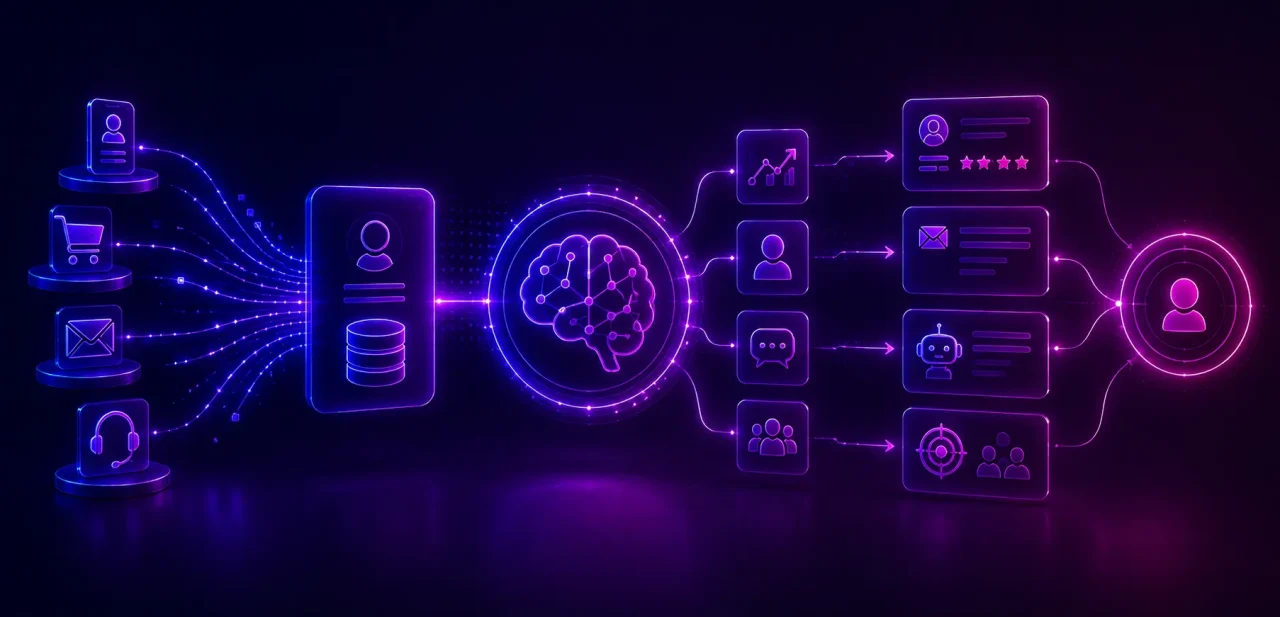
Not every platform that touches customer data earns the label “AI customer intelligence platform.” What decides it is how central AI is to what the platform does. A real one doesn’t just store data and generate static reports. It uses machine learning to generate predictions, catch patterns on its own, and keep getting better as new data comes in. If the “intelligence” part is just a set of dashboards someone built by hand, that’s a reporting tool with better branding.
Generative AI has stacked a new layer on top of traditional predictive analytics. Enterprises now use it inside these platforms to automatically summarize customer interactions, draft personalized outreach from a customer’s profile and history, answer plain-English questions about segments without pulling in an analyst, and generate synthetic personas to test strategies before committing to them.
Put it all together, and you get a real shift in category: AI-powered customer engagement platforms for enterprises. These go further than traditional customer intelligence software because they don’t stop at generating insight; they act on it. Additionally, when evaluating the best AI-powered customer engagement platforms for enterprises, look beyond dashboards and chatbots.
Customer Intelligence Platform vs. CRM: What’s the Difference?
A CRM is a system of record. It stores contact details, interaction history, and deal or ticket status. A customer intelligence platform is a system of insight. It analyzes data, often including data pulled straight from the CRM, to surface patterns, predictions, and recommendations.
| Aspect | CRM | Customer Intelligence Platform |
| Primary purpose | Record and manage customer relationships and transactions | Analyze customer data to generate insight and predictions |
| Data scope | Primarily first-party data entered by sales/service teams | Data unified from CRM, web, app, transactions, support, social, and more |
| Core function | Track interactions, pipeline, and account status | Segment, predict, and recommend based on behavior |
| Output | Records, activity logs, pipeline reports | Predictive scores, segments, next-best actions, insights |
| AI role | Often limited or add-on | Central to the platform’s function |
| Typical users | Sales and service teams | Marketing, sales, service, product, and strategy teams |
In practice, these two aren’t competing; they’re complementary. Many customer intelligence platforms pull data straight from a CRM as one of several sources, then feed insights back in so sales and service can act on them without leaving the tool they already live in.
Customer Intelligence Tools vs. Software vs. Solutions — Is There a Difference?
Anyone digging into this space runs into three overlapping terms: tools, software, solutions. Casually, people use them interchangeably, but there are shades of meaning worth knowing.
- “Tool” usually implies something narrower, a point solution, a single segmentation or churn-scoring tool, not a full platform.
- “Software” is the general category term, with no real scope implied either way.
- “Solution” leans toward the vendor’s packaged offering, often the software plus services, implementation help, and ongoing optimization.
In practice, all three describe the same category, and vendors themselves flip between the terms in their own marketing without much consistency. When you’re evaluating something, focus on capabilities: integration depth, how sophisticated the AI really is, what the governance looks like.
Customer Intelligence vs. Business Intelligence
Both terms are often used interchangeably. Business Intelligence (BI) acts as the litmus test of the business as a whole. Whether it’s revenue, operating costs, supply chain performance, sales pipeline, or headcount. All the KPIs leadership needs to track. It’s mostly historical and mostly aggregate, built to answer “how are we doing” across the organization. Customer intelligence is narrower and more specific. It’s built to answer “what does this customer, or this segment, actually want and do next,” using behavioral and transactional data tied to individual people rather than the business as a whole.
The two complement each other. A BI dashboard might include a customer metric like retention rate or average order value. A customer intelligence platform goes much deeper on that same territory, unifying data at the individual customer level and layering AI on top to predict behavior, not just report on what already happened.
KPIs to Measure Customer Intelligence Success
None of this is worth doing if you can’t measure whether it worked. These are the KPIs enterprises track most:
- Customer lifetime value (CLV): Calculates the total revenue that can be expected from a customer over the whole relationship. This KPI helps prioritize where to invest.
- Customer retention rate: The percentage of customers that the organization retains over a given period. A KPI that directly shows whether retention efforts are landing.
- Churn rate: The inverse of customer retention rate, tracking how many customers you’re losing and whether churn prediction is bending that number down.
- Customer acquisition cost (CAC): Measures what it costs to land a new customer, which should drop as targeting gets sharper.
- Conversion rate: Tracks how well personalized campaigns and next-best offers move people toward a purchase.
- Customer engagement rate: How actively people interact with the brand across channels; a decent leading indicator for retention and revenue.
- Customer satisfaction (CSAT): Direct feedback on service quality, often better once agents have full context.
- Net Promoter Score (NPS): Broader loyalty signal, how likely someone is to recommend you.
- Average revenue per customer: Whether personalization and upsell recommendations are raising per-customer value in practice, not just on paper.
- Cross-sell/upsell revenue: Revenue you can trace directly back to intelligence-driven recommendations.
- Campaign ROI: Return on campaigns built from customer intelligence segmentation, versus a generic blast.
- Customer journey conversion: How well people move through each stage of the journey, which shows exactly where journey analytics is cutting drop-off.
Track these before and after implementation, and you have an actual case for ROI, instead of a vague sense that things feel better now.
Types of Customer Intelligence Analytics
A few distinct types of analytics get bundled under “customer intelligence,” and each adds something different.
- Demographic data includes age, location, income, job role, and other basic structural details.
- Psychographic intelligence goes further and looks at values, interests, lifestyle, motivations, and the why behind a decision.
- Behavioral intelligence tracks what people do—browsing patterns, clicks, feature usage, and how often they show up.
- Transactional intelligence works through purchase history, order value, frequency, and payment patterns.
- Product intelligence zooms in on how someone uses a product day-to-day, which features get used and which ones are ignored.
- Sentiment analysis reads the emotional tone in reviews, support tickets, and social posts using NLP, catching frustration or satisfaction that a spreadsheet of numbers would never show on its own.
Put together, that’s a genuinely multidimensional read on a customer: who they are, why they act, what they do, what they buy, how they use what they bought, and how they feel about the whole thing.
The Future of Customer Intelligence
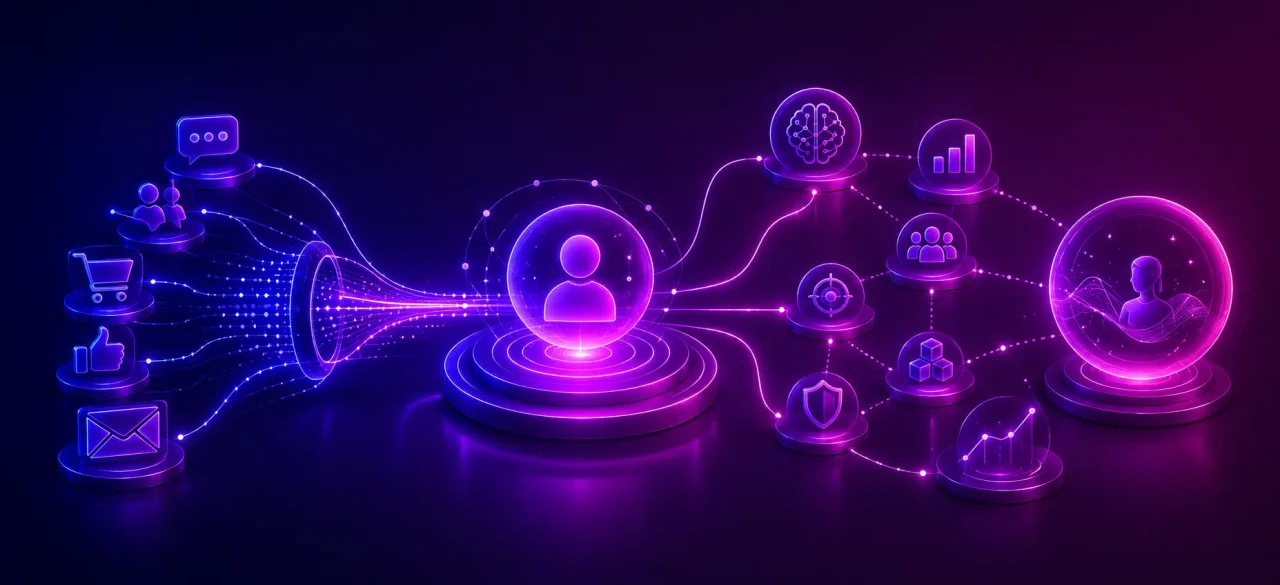
A few trends are worth noting.
- AI-based customer understanding: Gone are the days of segmenting customers based on demographics, purchase history, and basic behavior patterns. AI has taken customer understanding beyond that. Customer intelligence platforms now use AI to build better customer profiles. These models can now identify customer intent and changes in customer needs in real time.
Stakeholders can now ask, “What is this customer likely to need next?” instead of “Which segment does this customer belong to?”
- Autonomous and semi-autonomous customer engagement: Customer intelligence is shifting from mere insight generation to action. The platforms will be able to recommend the next best course of action and even execute it automatically. For example, an AI-powered system can clearly identify the stage at which a customer is showing signs of churn and intervene with appropriate actions. This avoids manual work for marketers.
- Predictive Customer Journeys: Journey analytics focuses on the customer journey. Where they entered, who they interacted with, and where they dropped off. Predictive customer journey intelligence lets you stay a step ahead by estimating where a customer is likely to move next. Create business opportunities to influence the journey even before they reach the outcome.
- Hyper-personalization: Personalization focuses on delivering experiences based on the individual’s current behavior and context. As a result, two customers who used to belong to the same segment can receive different experiences. This is based on how their behavior evolves. A customer profile in the system changes dynamically as their interactions and preferences change. Hyper-personalization makes customer engagement relevant.
- Real-time decisioning: As this feature improves, customer intelligence platforms will be expected to operate at the speed of customer interactions. As customer intelligence moves from periodic analysis to real-time decision-making, AI uses live signals to support recommendations.
- Multi-modal customer intelligence: The ability to analyze different data types—text, images, voice, reviews, and behavioral data—all together. Combining these signals gives businesses a complete view of customer needs. Multimodal eliminates the need to analyze each source separately.
- Responsible and privacy-preserving AI: As AI-driven customer intelligence grows rapidly, businesses will need stringent control over data privacy, security, and governance. Customer expectations will make responsible use of customer data important. Organizations would need to balance privacy and personalization, with human oversight being important for high-impact decisions.
- Convergence of Customer Intelligence and Customer Platforms: The boundaries between periodic analysis and real-time decision-making are blurring. With the incorporation of AI, this convergence will increase, making it difficult to distinguish between systems that store customer data and ones that act on it.
- Insights to continuous intelligence: AI creates a continuous loop of intelligence that shifts occasional insights to a continuous cycle of observe → understand → predict → act → learn. This loop enables enterprises to deliver personalized customer experiences.
The next customer insight could be your next business opportunity.
Turn customer data into business value with Experion
Conclusion
Most organizations don’t face a shortage of customer data; instead, they lack a way to turn it into valuable insights. That is where a customer intelligence platform comes in. It turns fragmented, siloed information from numerous sources such as CRM systems, websites, transactions, and support interactions into a single view everyone can work from. If your organization has a huge volume of customer data, then it is time to consider leveraging the power of a Customer Intelligence Platform.
Experion is well-positioned to build custom customer intelligence platforms engineered around your specific data sources and business rules—because generic analytics tools were never designed to capture the nuance that drives real enterprise decisions.
Frequently Asked Questions (FAQs)
What is a customer intelligence platform?
It can be defined as a system that collects customer data from numerous sources and unifies it into a single profile. It then leverages AI and analytics to generate insights that can be used to guide business decisions.
What is the difference between customer intelligence and customer experience?
Customer intelligence is the data and insight behind understanding customer behavior. Customer experience refers to the actual interactions a customer has with your brand across different touchpoints of the customer journey. Customer intelligence ultimately improves customer experience.
How big is the customer intelligence platform market?
It's been growing at a steady pace. The market is now pushed by AI adoption, the convergence of CDPs with intelligence tools, and the increasing demand for personalization. The enterprise and mid-market adoption are expanding. This is especially relevant in the retail, BFSI, telecom, and SaaS domain.
How much does a customer intelligence platform cost?
The cost varies and depends on various factors: How much data integration is required, the number of sources you are connecting, complexity of AI features incorporated and whether the solution is custom or off the shelf.
Is a CDP the same thing as a customer intelligence platform?
No. A CDP mainly collects and unifies various customer data. On the other hand, a customer intelligence platform involves that layer but moves one step ahead by adding deeper analytics, predictions and AI . Many modern platforms now blend the features of both a CDP and a customer intelligence platform.
What is an AI customer intelligence platform?
As the name suggests, an AI customer intelligence platform is one that is AI-native. This refers to how AI and Machine learning are crucial to how the platform generates insights and predicts churn risk and purchase intent. By incorporating AI, the reliance on manually built reports reduces significantly.
How do customer intelligence platforms improve customer engagement?
Customer engagement is all about timely and relevant intervention. By catching behavioral signals in real time, detecting a high purchase intent or a service issue, customer intelligence platforms promote this in the best way.
What is the difference between customer intelligence and customer data?
Customer data is the raw material, and customer intelligence is the data that has been unified, analyzed and transformed into decisions that can guide a decision.
What feature does the best customer intelligence platform include?
A combination of features separates one of the best customer intelligence tools from mediocre ones. This includes solid data integration, predictive analytics, unified profiles, real-time activation apart from privacy, and governance.
How does a customer intelligence platform improve customer experience?
The platform improves customer experience by providing every customer-facing team, marketing, sales, and product with a complete view of each customer. Hence, interactions stay relevant and consistent across every touchpoint.