






 Back
Back

Experion helps enterprises modernise complex payment ecosystems across processing, reconciliation, settlement, cross-border payments and treasury visibility, turning fragmented payment journeys into connected digital experiences.
A digital payment may take only seconds, but its success depends on a coordinated flow of authentication, authorisation, processing, settlement and reconciliation. For businesses, digital payment services are no longer just a way to collect money. They influence conversion, cash flow, customer trust, operational efficiency and the ability to enter new markets.
Key Takeaways
The right strategy connects customer experience with the processes behind every transaction.
- Digital payment services connect customers, merchants, banks, payment networks and business systems so funds and transaction data move together.
- Payment performance depends on the full lifecycle, including routing, fraud controls, retries, refunds, settlement and reconciliation.
- APIs and payment orchestration can reduce provider dependency and create one operational view across channels.
- Custom digital payment software is valuable when standard products cannot support complex workflows, regional requirements or differentiated customer journeys.
What are Digital Payment Services?
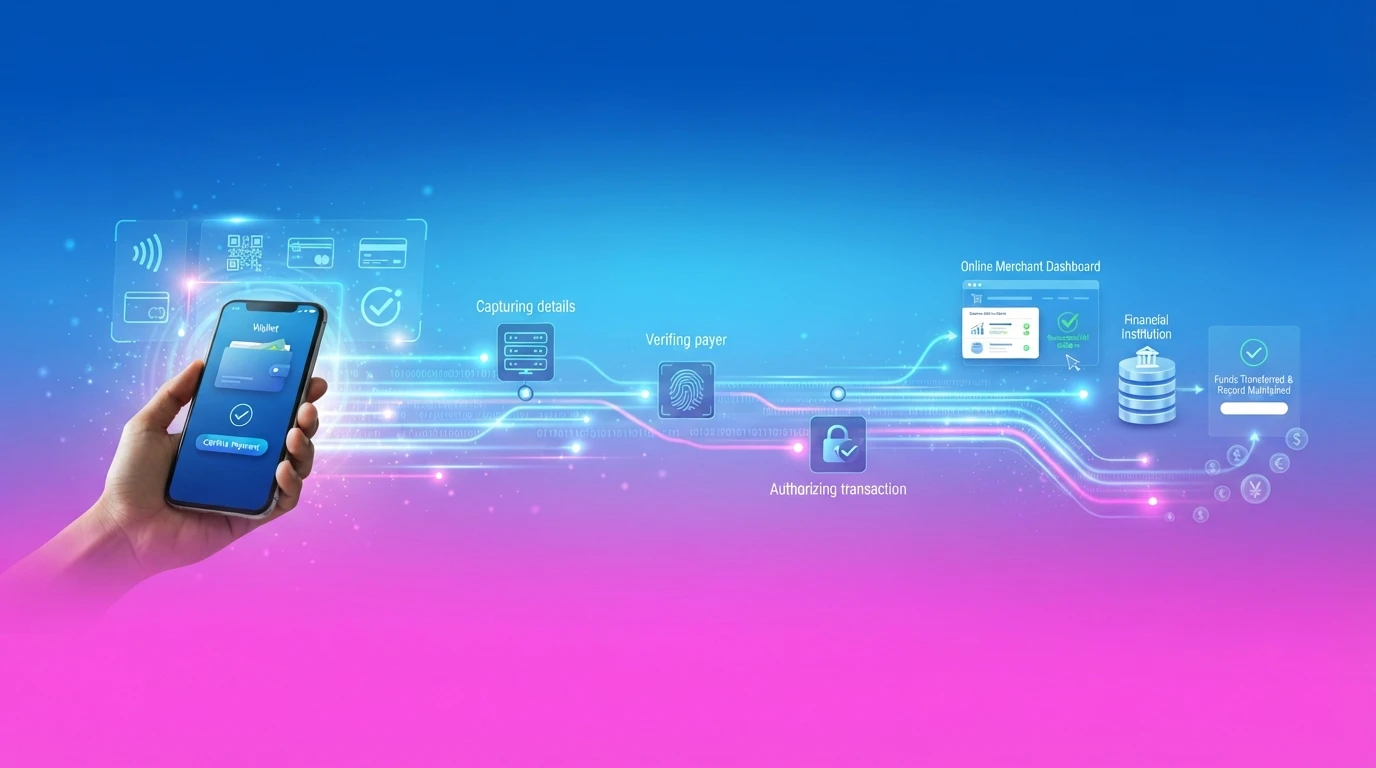
Understanding digital payments begins with seeing them as an end-to-end business capability rather than a checkout feature.
A digital payment services provide the technology and connections needed to transfer money electronically. They link the customer’s chosen payment method with the merchant, bank or financial institution receiving the funds. They support the technology and operational steps required to capture payment details, verify the payer, authorise the transaction, transfer funds, confirm status and maintain an accurate financial record.
Customers expect to pay quickly through familiar methods. Businesses need each transaction to be secure, traceable and connected to orders, invoices, accounts and customer service. A well-designed digital payments solution brings these needs together.
Why do Businesses Need Digital Payment Services and Solutions?
Digital payment solutions help businesses collect revenue across channels, offer customers more choice and reduce the manual effort involved in processing and tracking transactions. They can also support faster fulfilment, clearer financial visibility and expansion into new markets.
How Digital Payments Differ From Traditional Payment Methods?
Cash and paper-based payments usually require physical handling and delayed record updates. Digital payments create machine-readable events that can trigger fulfilment, update balances, send notifications, support fraud checks and feed reconciliation workflows.
Digital Payment Services vs. Traditional Payment Processing
Traditional payment processing mainly focuses on authorisation and settlement. Modern digital payments services extend across checkout, stored credentials, recurring billing, intelligent routing, refunds, analytics, fraud management and integration with the wider business.
Digital Payment Service vs. Digital Payment Software vs. Payment Gateway vs Payment Processor
These terms describe different parts of the payment ecosystem.
| Term | Primary role |
| Digital payment service | Provides an end-to-end capability for accepting, managing and tracking electronic payments. |
| Digital payment software | Manages payment methods, workflows, status, refunds, reporting and integrations. |
| Payment gateway | Securely passes payment information between the customer-facing channel and processing systems. |
| Payment processor | Routes transaction messages among merchants, banks and networks and supports authorisation and settlement. |
| Payment service provider | May combine gateway access, processing connections, payment methods, risk services, reporting and settlement support. |
Digital Payment Service Provider (PSP) vs Payment Gateway
A payment gateway primarily transfers payment information securely between the customer-facing channel and the processor. A payment service provider usually offers a broader set of capabilities, which may include gateway access, payment processing, merchant services, reporting and settlement support.
Who Uses Digital Payment Services?
Digital payment services are used by any organisation that needs to collect, send or manage payments electronically. Businesses and merchants use them to accept payments and manage refunds, while banks and financial institutions rely on them to facilitate secure money movement. E-commerce companies, retailers and D2C brands use digital payments to create smoother checkout experiences across channels.
SaaS and subscription businesses depend on them for recurring billing, while marketplaces and digital platforms use them to manage payments and payouts between multiple parties. Government agencies, educational institutions, healthcare providers, and travel and hospitality businesses also use these services to simplify collections, improve payment visibility and connect transactions with their wider operational systems.
How Does a Digital Payment Work?
A digital payment securely transfers transaction information between the customer, merchant, payment provider and financial institutions. Within seconds, these systems verify the payer, check the availability of funds, assess risk and return an approved or declined response. The transaction is then settled and matched with the relevant order, invoice and financial records.
The Complete Digital Payment Flow
The following flow shows how a digital payment moves from customer initiation to final reconciliation:
Payment initiated → Details encrypted or tokenised → Customer authenticated → Transaction sent to the payment gateway or PSP → Issuing bank authorises or declines the payment → Confirmation returned to the customer and merchant → Funds cleared and settled → Payment matched with the order, invoice and bank records
What Happens After a Customer Clicks “Pay”?
The checkout encrypts or tokenises the relevant data and sends a request to the gateway or payment service provider. The request is validated, assessed for risk and routed through the processor, payment network or bank. The issuer or account provider then returns an approved, declined or pending result.
Payment Authorisation, Authentication and Settlement
Authentication checks whether the payer is legitimate. Authorisation confirms whether the transaction can proceed. Clearing calculates what participating institutions owe, while settlement transfers the funds.
Where Banks, Payment Networks, PSPs and Merchants Fit Into the Process
The merchant initiates the request. The gateway or PSP connects it to the relevant payment rail. Payment networks exchange the transaction messages, while the issuing and acquiring institutions authorise and settle the funds.
What Happens When a Payment is Declined?
The platform should interpret the response, show the customer a clear next step and determine whether to retry, request another method or stop. Soft declines may be recoverable through additional authentication or a well-timed retry. Hard declines generally require customer action or a different method.
What Happens When a Payment is Successful but the Order Fails?
Payment and order systems can fall out of sync because of timeouts, delayed events or application errors. Idempotency controls, webhooks, status verification and compensating actions such as an automatic void or refund help prevent duplicate charges and unresolved cases.
Payment Reconciliation After the Transaction
The business must match the payment with the order or invoice, processor settlement, fees, refunds and bank receipt. This final control confirms that a successful customer payment became correctly recorded revenue.
What Types of Digital Payments Can Businesses Accept?
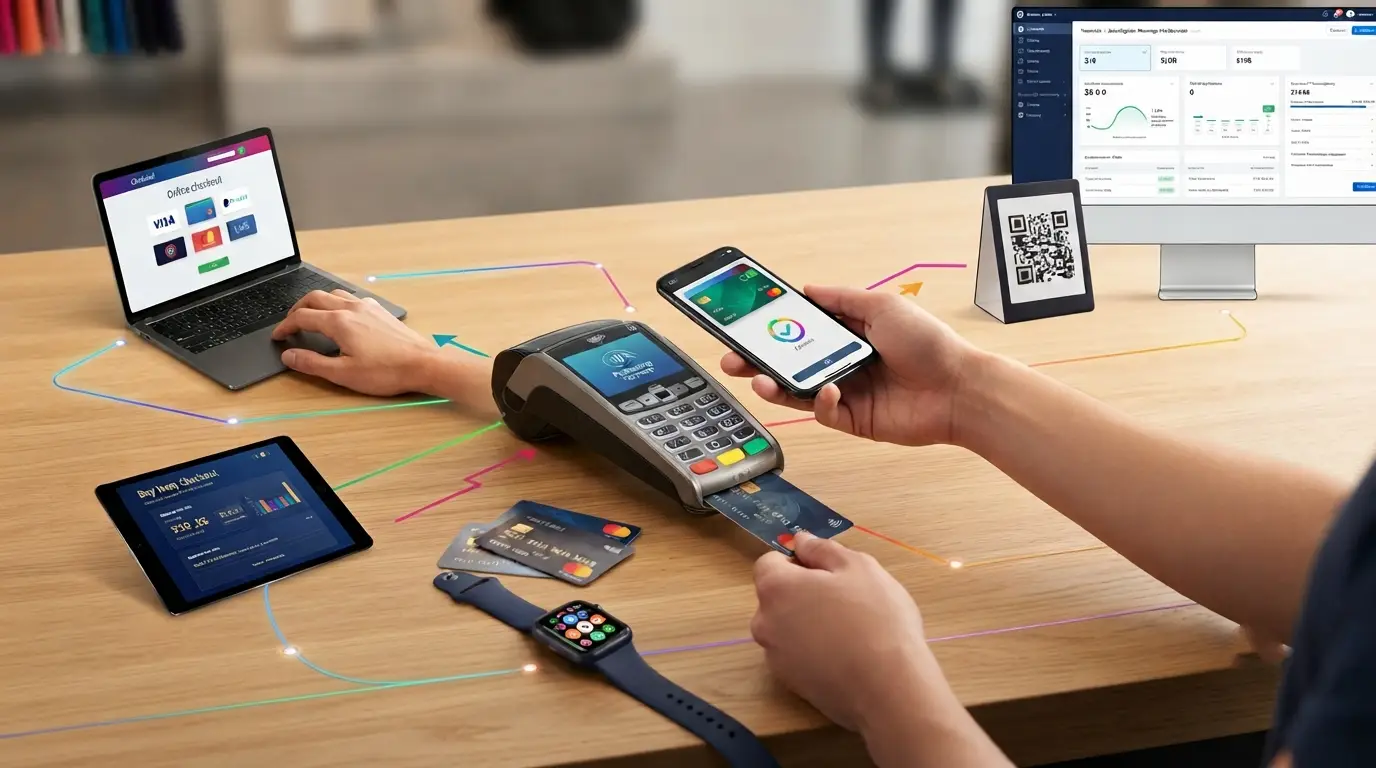
The right mix depends on customer preference, transaction value, geography, speed, cost and the level of payment certainty required.
| Payment type | Where it adds value |
| Credit and debit card payments | Familiar payments across online, mobile and in-person channels. |
| Bank transfers | Direct account-based transfers, often suited to invoices and higher-value transactions. |
| Account-to-account payments | Bank-connected payments that move funds directly between accounts. |
| Real-time payments | Rapid funds movement and status confirmation through supported domestic rails. |
| Digital wallets | Faster checkout using stored credentials and device-based authentication. |
| QR code payments | Convenient payments initiated by scanning merchant- or customer-presented codes. |
| Mobile payments and NFC | Contactless payments through phones, cards and wearable devices. |
| Buy now, pay later | Instalment options for eligible customers under provider terms. |
| Direct debit and ACH payments | Account-based collections, recurring bills and domestic transfers. |
| Recurring and subscription payments | Scheduled or usage-based collections for ongoing services. |
| Payment links | Remote collection without a complete checkout integration. |
| Virtual account payments | Identifiable account details that simplify matching funds to customers or invoices. |
| Cross-border payments | Collections and payouts across currencies, banks and jurisdictions. |
| Cashless point-of-sale payments | In-store acceptance connected to sales, inventory, loyalty and accounting. |
Online, Mobile and In-Person Digital Payments Services
Payment channels should feel consistent to customers while sharing security, data and operational visibility behind the scenes.
- Online payment services for websites: Support secure checkout, stored methods and localised payment options for browser-based commerce.
- Mobile payment services for apps: Bring payment capabilities into mobile journeys, often using biometrics and digital wallets.
- In-store and point-of-sale payments: Manage card-present, contactless and QR payments in physical locations.
- Omnichannel payment services: Connect payment methods, customer records, receipts and refunds across digital and physical channels.
- Embedded payments within business applications: Place payment, payout or financing capabilities directly inside a non-financial product journey.
- Payment services for marketplaces: Support seller onboarding, split payments, commissions, reserves and payouts.
- B2B digital payment services: Connect account-based payments with invoices, approvals, remittance data and reconciliation.
- B2C digital payment services: Create fast and familiar payment journeys that reduce customer effort.
What Does Digital Payment Software Include?
A complete platform combines customer-facing payment journeys with the controls needed to operate them reliably.
| Capability | What it enables |
| Payment processing engine | Validates transactions and routes them to the appropriate provider or rail. |
| Payment gateway integration | Connects customer channels with external payment acceptance systems. |
| Merchant account and acquiring integration | Supports merchant acceptance, acquiring relationships and settlement. |
| Payment method management | Configures methods by customer, currency, channel, region or transaction type. |
| Customer and payment data management | Maintains permitted customer, consent, token and payment-reference data. |
| Transaction management | Provides a controlled record of payments and related actions. |
| Payment status tracking | Shows whether payments are approved, declined, pending, reversed, refunded or settled. |
| Refund and cancellation management | Supports controlled full, partial and rules-based refunds or voids. |
| Settlement management | Tracks expected funds, fees, timing and settlement outcomes. |
| Reconciliation module | Matches payment, order, settlement and bank records. |
| Reporting and analytics | Measures approval, failure, cost, fraud and settlement performance. |
| Notification and alert management | Informs customers and teams when an event requires attention. |
| User and role management | Restricts sensitive functions according to job responsibility. |
| API and webhook management | Connects business systems and distributes payment events in near real time. |
What are the Essential Features to Look for in Digital Payment Services?
A digital payment service should support the payment methods, currencies and regions relevant to the business. It should also provide real-time transaction status, recurring payment management, secure refunds, payment recovery, settlement tracking, customer payment history and reliable reporting.
For growing enterprises, automated reconciliation, multi-merchant support, role-based access, audit trails, APIs and webhooks are equally important. Together, these capabilities reduce manual effort, strengthen operational control and make it easier to introduce new providers, channels and payment experiences as the business evolves.
How do Recurring and Subscription Payments Work?
Recurring payments replace repeated checkout with permission-based collections, but they require careful handling of consent, credentials, failures and cancellations.
| Element | How it works |
| One-time vs. recurring payments | A one-time payment is individually initiated, while recurring payments follow an agreed schedule or usage rule. |
| Subscription billing | The billing platform calculates the amount due and automatically triggers collection. |
| Card-on-file payments | A reusable token supports future transactions under agreed customer terms. |
| Mandates and e-mandates | Recorded authorisation permits account-based or recurring collections. |
| Tokenisation | Tokens reduce exposure of the underlying payment credentials. |
| Expired or replaced cards | Account-updater or network-token services can help legitimate subscriptions continue. |
| Failed payment recovery | Notifications, self-service updates and targeted retries help recover revenue. |
| Retry strategies | Response codes, timing and customer context determine whether and when to retry. |
| Cancellations and refunds | Clear proration, cancellation and refund rules help prevent disputes. |
Payment Security: How Are Digital Payments Protected?
Payment security requires overlapping controls across data, identity, software, infrastructure, transactions and operations.
- Encryption protects sensitive information while it moves between systems and while it is stored.
- Tokenisation replaces valuable credentials with limited-use tokens, reducing exposure during mobile and e-commerce transactions.
- PCI DSS provides baseline technical and operational requirements for protecting payment-account data.
- 3-D Secure authentication shares transaction and device data with issuers to authenticate cardholders and reduce card-not-present fraud.
- Multi-factor authentication strengthens access and transaction approval for sensitive activity.
- Fraud detection and transaction monitoring combine rules, risk models, network intelligence and human review.
- Device and behavioural risk signals add context such as device history, location and unusual interaction patterns.
- Address and identity verification compares supplied details with trusted records where appropriate.
- Velocity and transaction limits restrict unusual payment frequency, value or patterns.
- Chargeback prevention combines clear billing information, evidence and responsive customer service.
- Secure API authentication protects system-to-system access through strong credentials and controlled permissions.
- Data protection in transit and at rest requires encryption, access management, monitoring and sound key management.
Why Businesses Should Avoid Storing Sensitive Card Data Directly?
Direct storage expands the systems, people and processes exposed to payment data, increasing risk and compliance scope. Tokenisation and provider-hosted capture can reduce that exposure, although organisations must still validate their PCI DSS responsibilities.
Experion can help enterprises engineer security and compliance into payment architecture, integrations, workflows and observability from the beginning rather than adding controls after the platform is built.
What are the Benefits of Digital Payment Services for Consumers?
Customers experience the value of digital payments through convenience, choice, clearer records and stronger protections.
- Convenience and speed: Customers can pay through familiar devices and methods without handling cash.
- Cashback, rewards and discounts: Eligible payment methods can connect purchases with loyalty benefits and offers.
- Better expense tracking: Digital records help customers review purchases, subscriptions, refunds and account activity.
- Enhanced security compared with cash: Authentication, tokenisation, alerts and dispute processes provide protections that physical cash cannot offer.
Digital Payment Fraud and Common Security Risks
Fraud controls must protect customers and revenue without making legitimate payments unnecessarily difficult.
| Risk | What it involves |
| Payment fraud | Unauthorised or deceptive activity intended to obtain funds, goods or services. |
| Card-not-present fraud | Misuse of card credentials when the physical card is not inspected. |
| Account takeover | An attacker gains control of a customer or merchant account. |
| Credential theft | Card, bank, wallet or authentication details are captured and misused. |
| Phishing and fake requests | Customers or employees are directed towards fraudulent payment journeys. |
| Duplicate transactions | Retries or integration errors process the same intended payment more than once. |
| Friendly fraud and chargebacks | A legitimate cardholder disputes a purchase through confusion, dissatisfaction or deliberate misuse. |
| Payment API abuse | Attackers exploit weak authentication, exposed endpoints or automated credential testing. |
How Businesses Can Reduce Payment Fraud?
Businesses should combine secure development, tokenisation, strong authentication, transaction monitoring, device and behavioural signals, velocity rules and human review for high-risk cases. Fraud losses should be measured alongside approval rates and false declines so stronger controls do not drive away genuine customers.
Common Reasons for Payment Failure
A failed payment is both a technical event and a customer moment, so recovery must be clear and proportionate.
Common causes include insufficient funds, bank or network declines, authentication failure, expired credentials, API errors, timeouts and connectivity issues. Soft declines may be recoverable, while hard declines usually require customer action.
Smart retries use response codes, timing and transaction context rather than repeatedly submitting every failure. Alternative routing or another payment method may help when a provider is unavailable. Clear notifications also help customers and service teams understand what to do next.
What Happens When a Digital Payment Fails?
The platform should preserve a definitive transaction state, prevent duplicate fulfilment, record the failure and offer an appropriate recovery option. If the outcome is uncertain, the system should verify the status before asking the customer to pay again.
Payment Reconciliation: Connecting Payments With Business Records
Payment reconciliation is the process of matching customer payments with orders, invoices, provider settlements and bank records. It helps businesses confirm that every transaction has been received and recorded correctly while identifying missing, duplicated or mismatched payments. Reconciliation verifies that what customers paid, what providers processed, what banks settled and what the business recorded all agree.
Why Manual Reconciliation Becomes Difficult at Scale
Different identifiers, settlement cycles, currencies and fee structures make matching increasingly difficult. Refunds, chargebacks, partial payments, reversals and timing differences create further exceptions.
A well-designed reconciliation workflow must support:
- Matching payments with orders and invoices
- Matching settlements with bank statements
- Handling partial payments
- Handling refunds and reversals
- Identifying unmatched transactions
- Automating matching and exception workflows
Experion proof in practice: Experion has applied AI-based reconciliation and financial process automation to an environment processing more than 170,000 transactions a day, improving payment accuracy, reducing discrepancies and helping teams focus on exceptions that require human judgement. Read more
How do Digital Payment Services Integrate with Business Systems?
Integration turns payment status into coordinated action across the organisation.
| Integration | Business value |
| Payment APIs | Embed initiation, status and refund functions into business workflows. |
| Payment gateways | Connect customer-facing channels with payment providers. |
| REST APIs | Provide standardised access to payment-processing capabilities. |
| Webhooks | Distribute real-time status, settlement, refund and dispute updates. |
| E-commerce platforms | Connect payments with carts, orders, inventory, fulfilment and returns. |
| ERP systems | Link receivables, fees, settlements and ledger processes. |
| CRM systems | Give authorised service teams relevant payment context. |
| Accounting software | Update invoices, fees, deposits and reconciliation records. |
| Billing platforms | Coordinate plans, invoices, collections, retries and entitlements. |
| POS systems | Connect in-store payments with receipts, loyalty and inventory. |
| Banking systems | Support account validation, transfers, statements and settlement. |
| Customer portals and apps | Enable self-service payments, receipts, refunds and status tracking. |
REST APIs embed payment functions into these systems, while webhooks distribute asynchronous events such as settlement, refund, or dispute updates. Reliable integrations also need consistent transaction identifiers, idempotency, authentication, monitoring, and retry controls.
Experion’s payment engineering experience includes a global hub integrating 40+ banks, 10+ PSPs and acquirers across 80 countries, creating centralised visibility across a highly distributed payment landscape.
Payment Architecture for Modern Businesses
Payment architecture provides the technical foundation connecting customer channels, payment services and internal business systems.
A modern payment architecture connects websites, mobile applications and point-of-sale systems with gateways, processors, banks and payment networks. Behind the transaction, it must also exchange accurate information with order management, billing, finance, ERP and customer service systems.
As payment needs grow, reusable services for tokenisation, payment status, refunds, reconciliation and reporting can reduce duplicated integrations across channels. APIs and event-driven communication help these services exchange information without tightly coupling every business system to a specific payment provider.
A well-designed architecture should make it easier to:
- Add payment methods, channels and markets.
- Protect sensitive payment data.
- Maintain consistent transaction records.
- Scale during periods of high demand.
- Isolate failures before they affect the wider payment journey.
- Connect payments with orders, invoices and financial records.
Cloud and microservices can support scalability and faster change, but they do not guarantee resilience on their own. Security, observability, data consistency, recovery and clear ownership must be designed across the complete payment lifecycle.
Payment Orchestration for Businesses Using Multiple Payment Providers
While architecture defines how the payment ecosystem is built, orchestration determines how each transaction moves through it.
Payment orchestration provides a common layer between customer channels and multiple gateways, processors, acquirers or payment methods. It allows a business to manage routing rules, provider availability and transaction outcomes without embedding provider-specific logic into every channel.
Why Businesses Use Multiple Payment Providers?
Businesses may use several providers to expand geographic coverage, support local payment methods, meet regulatory requirements, negotiate costs and reduce dependence on a single provider. The operational challenge is managing these connections without creating fragmented reporting, inconsistent payment states or duplicated workflows.
Intelligent Payment Routing
Intelligent routing selects an appropriate provider or payment route based on factors such as location, currency, payment method, transaction value, provider availability and past performance. Routing decisions must remain transparent, auditable and aligned with regulatory and commercial requirements.
- Provider failover: Redirects eligible transactions to a backup provider when the primary service is unavailable.
- Local payment method routing: Connects customers with locally preferred payment methods and providers.
- Cross-border payment routing: Selects suitable routes based on currency, geography and regulatory requirements.
- Transaction optimisation: Uses payment context and provider performance to improve approval rates and control costs.
- Centralised reporting across providers: Brings transaction, settlement and exception data into one operational view.
The goal is not simply to add more providers. It is to give customers a dependable payment experience while giving business teams greater control over what happens behind the scenes.
Digital Payment Services for Different Business Models
Every business accepts payments differently. The right digital payment solution should reflect how customers buy, how revenue is collected and how transactions connect with wider operational systems.
| Business model | What the payment solution needs to support |
| E-commerce businesses | Fast checkout, local payment methods, fraud controls, refunds and reliable order confirmation. |
| SaaS companies | Usage-based or recurring billing, plan changes, invoicing and revenue visibility. |
| Subscription businesses | Credential management, automated renewals, failed-payment recovery and clear cancellations. |
| Marketplaces | Seller onboarding, split payments, commissions, reserves, refunds and multi-party payouts. |
| Retail businesses | Connected in-store, online and mobile payments with loyalty, inventory and returns integration. |
| Banks and financial institutions | Secure payment processing, account services, regulatory controls, clearing and settlement. |
| Insurance companies | Premium collections, renewals, refunds and claims payouts connected with policy systems. |
| Healthcare organisations | Patient payments, billing, refunds and payment visibility across care and administrative systems. |
| Education and EdTech providers | Tuition fees, instalments, subscriptions, scholarships and student refunds. |
| Travel and hospitality businesses | Deposits, cards on file, multi-currency payments, cancellations and partner settlements. |
| Logistics and transportation companies | Invoice collections, carrier payments, cross-border transactions and receivables matching. |
| Professional services firms | Retainers, milestone payments, recurring fees and invoice-based collections. |
| Government and public services | Accessible payment channels, strong auditability, secure collections and dependable reconciliation. |
The technology may be similar, but the payment journey should never be treated as one-size-fits-all. A solution that reflects the realities of the business is easier for customers to use and easier for internal teams to manage.
Digital Payment Services for B2B Transactions
B2B payments involve more than transferring funds. They must also account for invoices, approval levels, payment terms, remittance details and reconciliation across finance systems.
| Area | How digital payment services help |
| B2B payment challenges | Reduce delays caused by manual approvals, fragmented systems and missing payment information. |
| Invoice-based payments | Connect each payment with the correct invoice, customer and outstanding balance. |
| Account-to-account payments | Move funds directly between bank accounts, supporting efficient higher-value transactions. |
| Recurring business collections | Automate collections for contracted services, memberships and scheduled payments. |
| Automated receivables | Match incoming funds with open invoices and update balances with less manual effort. |
| Payment approval workflows | Apply approval limits, role-based controls and audit trails before payments are released. |
| Bulk payments | Process multiple approved payments efficiently while maintaining individual transaction records. |
| Vendor and supplier payments | Connect approved obligations with payment execution and remittance information. |
| Payment reconciliation for finance teams | Match invoices, payment records, bank statements, fees and adjustments. |
| ERP-connected B2B payments | Keep payment activity and accounting records synchronised across the transaction lifecycle. |
By connecting payments with invoices, approvals and financial records, businesses can reduce administrative effort, improve cash visibility and give finance teams greater control over every transaction.
What Does a Digital Payment Service Cost?
The real cost combines provider pricing with the internal effort, risk, and technology required to operate the service. Businesses should compare transaction, gateway, processing, currency conversion, settlement, chargeback, refund, monthly, and platform fees. They should also consider integration, migration, security, testing, reporting, and support costs.
Potentially overlooked costs include foreign-exchange markups, reserves, payout delays, data-access charges, non-refundable processing fees, token portability, PCI responsibilities, and the cost of leaving a provider. Higher volume may improve negotiated pricing, but it also magnifies small inefficiencies in declines, fraud, and reconciliation.
How to Choose a Digital Payment Service Provider?
The right provider should fit the business being built, not only the payment methods needed today.
Evaluate geographic and method coverage, approval performance, settlement timing, fraud controls, PCI support, availability, APIs, webhooks, reconciliation data, reporting, service responsiveness, pricing transparency, token portability, and exit options.
Test partial refunds, delayed events, disputes, uncertain transaction states, downtime, volume spikes, and reconciliation exceptions before committing. The best provider is one that performs reliably and gives teams enough data and control to resolve problems.
Custom Digital Payment Software vs Off-the-shelf Software?
The choice depends on whether payments are a standard support function or a differentiated business capability.
| Consideration | Off-the-shelf software | Custom digital payment software |
| Best fit | Standard journeys and rapid launch | Complex workflows, multiple providers, or differentiated experiences |
| Time to market | Usually faster | Requires discovery, engineering, testing, and rollout |
| Flexibility | Defined by the provider’s roadmap | Designed around the business model and target architecture |
| Control | Greater provider dependency | Greater control, with responsibility for security and maintenance |
| Integration | Works well with supported systems | Can connect specialised, legacy, or industry-specific workflows |
A hybrid model is often practical. Businesses can use regulated providers and proven rails for money movement while engineering the orchestration, experience, integration, and intelligence layers that differentiate them.
What are the Common Digital Payment Implementation Challenges?
Most problems appear at the boundaries between providers, channels, records, regulations, and operational ownership.
- Multiple providers: APIs, data models, status codes, and settlement files must be normalised.
- Failures and declines: Recovery requires reason-aware actions and clear customer communication.
- Fraud and chargebacks: Controls must reduce loss without damaging approval rates or customer experience.
- Compliance: PCI DSS, privacy, sanctions, authentication, licensing, and local rules must be mapped to the operating model.
- Reconciliation: Identifiers, fees, refunds, and settlement timing often differ across systems.
- Cross-border payments: Currency, correspondent paths, regulation, data, cost, and settlement speed vary by market. The BIS 2025 monitoring update confirms that improving cross-border payments remains a global priority.
- Legacy integration: Older cores may rely on files, batches, and inflexible data structures.
- Peak demand: Capacity, provider limits, queues, and downstream systems must be tested together.
- Provider downtime: Resilience requires status verification, safe retry, failover, and customer communication.
- Fragmented visibility: A common transaction identity and observability model are needed from initiation through settlement.
Digital Payment Services for Enterprises
Enterprise payments require a connected operating model across markets, brands, legal entities, channels, providers, and finance systems.
Instead of adding gateways one project at a time, enterprises can establish shared services for provider integration, token handling, routing, security, refunds, reconciliation, and reporting. This creates reusable governance while allowing products and regions to deliver locally relevant experiences.
Experion brings financial-services domain knowledge, product engineering, cloud modernisation, data engineering, APIs, experience design, and AI-assisted operations together to modernize this foundation. Its global payment work across 40+ banks and 80 countries demonstrates the value of designing for integration and visibility at scale.
Future of Online Payment Services
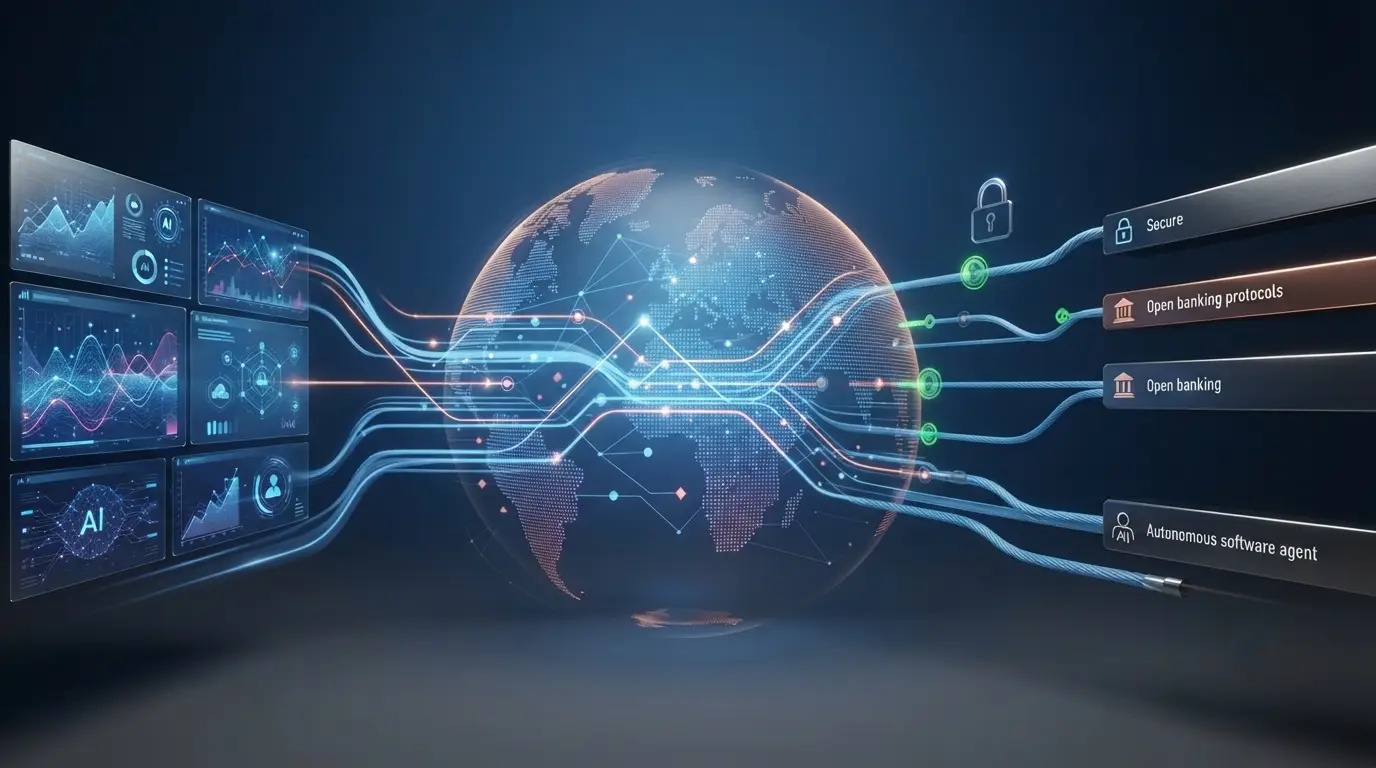
Digital payments will become more embedded and automated, while expectations for identity, transparency, and control will continue to rise.
- AI-powered fraud detection and operations will identify complex patterns, classify reconciliation exceptions, and prioritise cases, but will require governed data and human oversight.
- Intelligent routing will use performance and transaction context to select suitable providers within approved business and risk rules.
- Real-time, embedded, and account-to-account payments will make payments less visible as separate steps while increasing expectations for immediate status and continuous operations.
- Open banking and network tokenization will support bank-connected journeys, reduce credential exposure, and improve payment continuity.
- Autonomous and agentic payments may let software agents initiate approved actions, but limits, consent, traceability, and exception controls must come first.
- Cross-border modernization and unified experiences will target better speed, cost, transparency, and continuity across channels.
Experion is well positioned to help enterprises translate these shifts into secure, scalable products by combining payment modernization with API-led integration, cloud engineering, data platforms, experience design, and AI-assisted reconciliation.
Turn Payment Complexity Into Business Confidence
The right digital payment strategy is not simply about processing transactions faster. It is about reducing friction for customers, giving finance teams greater control and enabling the business to enter new markets without adding operational complexity.
Whether you are modernising a legacy platform, connecting multiple payment providers or improving reconciliation, Experion can help you identify the right starting point and build around your business priorities. Talk to our payment engineering experts to turn payment complexity into a secure, connected experience that supports sustainable growth.
Frequently Asked Questions (FAQs)
What is a digital payment services provider?
A digital payment services provider enables businesses to accept or send electronic payments and may offer gateway, processing, payment methods, merchant services, fraud tools, reporting and settlement support.
What is the difference between a payment gateway and a payment service provider?
A gateway securely passes transaction information to processing systems. A PSP typically provides a broader package that may include gateway access, processing relationships, risk tools, reporting and merchant support.
What is digital payment software?
Digital payment software manages payment initiation, routing, status, refunds, settlement, reconciliation, reporting and integration with customer and business systems.
Are digital payments secure?
They can be secure when designed and operated with encryption, tokenisation, authentication, access controls, monitoring and applicable payment-security standards. No single control removes every risk.
What is PCI DSS in digital payments?
PCI DSS is a global payment-account data security standard that defines technical and operational requirements for protecting payment data.
Can digital payment services support recurring payments?
Yes. They can support stored tokens, mandates, scheduled billing, automated collection, retries, cancellations and refunds, subject to regional and payment-method rules.
How are failed payments handled?
The platform records the result, interprets the response, prevents duplicate action and provides an appropriate recovery option, such as authentication, another payment method or a controlled retry.
Should a business build or buy payment software?
Buy when requirements are standard and speed is the priority. Build or customise when payments require differentiated journeys, multiple providers, complex workflows or greater operational control. Many enterprises use a hybrid approach.
What should businesses consider when choosing a payment service provider?
Consider coverage, reliability, approval performance, settlement, security, integration, reporting, reconciliation data, support, total cost, token portability and exit options.
Can digital payment services be customised for specific industries?
Yes. Payment journeys, schedules, approvals, refunds, payouts, reconciliation, reporting and integrations can be adapted to different operating and regulatory needs.