

Experion Technologies supports enterprises in connecting fragmented data through intelligent integration approaches that can improve data accessibility, consistency, and decision readiness.
Modern enterprises are sitting on an unprecedented volume of data. Cloud platforms, SaaS applications, IoT devices, data lakes, legacy systems, and partner ecosystems are generating information at scale and speed. While data availability has increased, data usability has not kept pace.
Traditional data integration approaches, largely built on rigid ETL pipelines and manual rule configuration, struggle to keep up with today’s dynamic environments. Schema changes, real-time data needs, unstructured formats, and distributed ownership have exposed the limits of legacy integration tools.
This is where AI data integration becomes transformative. By applying artificial intelligence to how data is ingested, mapped, cleansed, and orchestrated, organizations move from brittle pipelines to adaptive, self-learning systems. The result is faster insights, higher data trust, lower operational cost, and the foundation for advanced analytics, automation, and AI initiatives.
What is AI Data Integration?
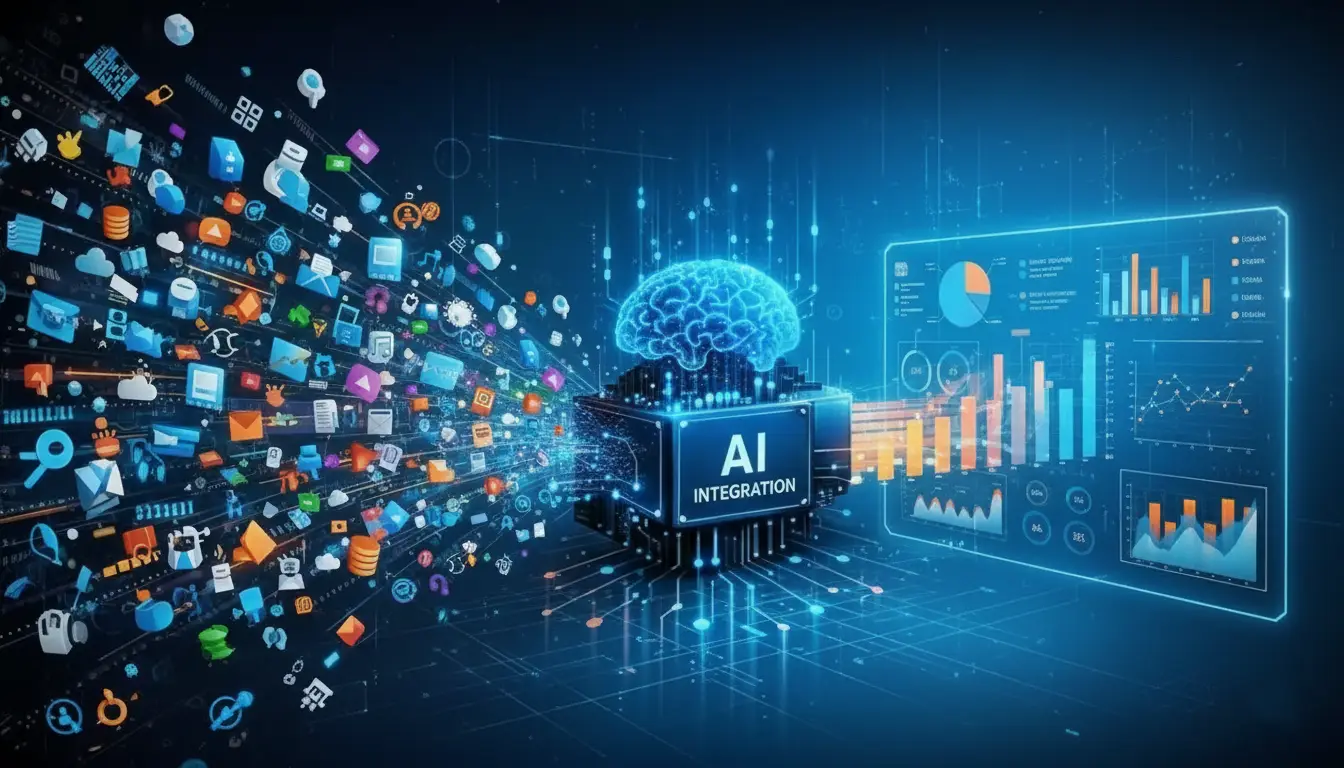
AI data integration refers to the use of artificial intelligence to automate, optimize, and continuously improve the way data is connected, transformed, and managed across diverse sources and systems. These sources may include cloud platforms, SaaS applications, on-prem databases, IoT devices, partner systems, and legacy infrastructure.
For business leaders, AI data integration represents a shift from rigid, manually configured pipelines to intelligent systems that can understand data patterns, adapt to change, and scale with business growth. Unlike traditional data integration tools that rely on predefined rules and fixed schemas, artificial intelligence data integration uses learning-based techniques to handle complexity and variability in modern data environments.
By embedding intelligence into the integration layer, organizations gain resilient data pipelines that evolve as data sources, formats, and business requirements change. This makes AI-driven data integration a foundational capability for analytics, automation, and enterprise-wide AI initiatives.
Role of Machine Learning, NLP, and Automation in Integration
Machine learning plays a central role in AI data integration by learning relationships between data fields across different systems. Instead of requiring manual mapping, ML models automatically identify similarities, recommend mappings, and refine transformations over time as more data is processed.
Natural language processing enhances integration by interpreting metadata such as column names, descriptions, logs, and documentation. NLP allows systems to understand the intent and context of data elements, making integration more accurate even when naming conventions differ across systems.
Automation ties these capabilities together by orchestrating end-to-end workflows. Automated pipelines handle ingestion, transformation, validation, and delivery while continuously monitoring performance. When failures or anomalies occur, automation triggers corrective actions, reducing downtime and manual intervention.
Together, machine learning, NLP, and automation turn data integration into a self-improving system rather than a maintenance-heavy technical task.
AI Data Integration vs AI-Powered Analytics
AI data integration and AI-powered analytics serve distinct but complementary roles within an enterprise data ecosystem.
AI data integration focuses on making data usable, reliable, and connected. It ensures that data from multiple sources is accurately ingested, standardized, enriched, and delivered in a form that analytics and AI systems can trust.
AI-powered analytics, on the other hand, focuses on extracting insights, predictions, and recommendations from that data. Advanced analytics models, dashboards, and decision-support systems depend on high-quality, well-integrated data to perform effectively.
In practice, AI-powered analytics cannot succeed without intelligent data integration. Poor data quality, inconsistent definitions, and fragmented pipelines constrain the value of even the most advanced AI models. AI data integration provides the stable, intelligent foundation that enables analytics and AI initiatives to scale and deliver business impact.
Why is Artificial Intelligence Data Integration Now a Business Priority?
 Organizations across industries are becoming increasingly data-driven, yet many struggle to turn data into timely action. Data fragmentation across cloud services, SaaS tools, and legacy systems slows decision-making and creates blind spots.
As business intelligence, real-time analytics, and enterprise AI become central to competitive advantage, data integration must evolve alongside them. Artificial intelligence data integration enables organizations to support real-time operations, predictive analytics, and AI-driven automation without constantly reengineering pipelines.
AI-driven data integration reduces reliance on highly specialized engineering teams by automating complex integration tasks. It shortens time to insight by accelerating data onboarding and transformation. It also enables scalable data operations across cloud, hybrid, and on-prem environments, supporting global growth and digital transformation.
As companies adopt AI across functions such as finance, operations, customer experience, and supply chain, data integration becomes the critical backbone that determines whether these initiatives succeed or stall. Intelligent data integration ensures that AI investments are built on trusted, accessible, and continuously optimized data foundations.
Move from brittle ETL to intelligent data integration with Experion
How AI in Data Integration Works: Step-by-Step Architecture
Intelligent Data Ingestion
AI-powered data integration platforms connect structured, semi-structured, and unstructured data from databases, APIs, SaaS tools, IoT streams, and files. Automated source profiling and schema detection eliminate manual configuration. Organizations can support both real-time and batch ingestion with minimal setup.
AI-Driven Data Mapping and Transformation
Machine learning models automate field mapping across systems, even when naming conventions differ. When schema drift or format changes occur, the system adapts without breaking pipelines. Transformation logic becomes self-learning rather than rule-bound.
Data Quality, Cleansing, and Enrichment
AI detects anomalies, duplicates, and inconsistencies automatically. Validation and normalization rules evolve over time. Contextual enrichment pulls in reference data to improve accuracy and usability.
Metadata Management and Lineage Tracking
AI generates metadata automatically and maintains end-to-end data lineage. This enables trust, compliance, and impact analysis across downstream systems.
Continuous Monitoring and Optimization
AI monitors pipeline health, predicts failures, and applies self-healing actions. Performance tuning becomes adaptive, reducing downtime and maintenance overhead.
AI Data Integration vs Traditional Data Integration
Traditional data integration was designed for a more predictable world. It relies heavily on manually defined rules, static ETL pipelines, and scheduled batch processing. While this approach worked when data sources were limited and change was infrequent, it struggles in today’s dynamic environments where cloud platforms, SaaS tools, APIs, and streaming data constantly evolve.
AI-powered data integration introduces intelligence into the integration layer itself. Instead of rigid mappings, self-learning models recognize patterns across datasets and automatically adapt to schema changes. Adaptive workflows adjust to data volume, velocity, and variety without manual reconfiguration. Automation reduces operational overhead by detecting failures early and applying corrective actions in real time.
The differences become most visible as organizations scale. AI-driven data integration delivers higher accuracy by continuously improving data mappings, faster onboarding of new data sources, and significantly lower maintenance effort. Legacy ETL tools often fail when data velocity increases or when environments change frequently. Intelligent data integration platforms are designed to absorb change, not resist it, making them essential for modern digital enterprises.
Key Technologies in AI Data Integration
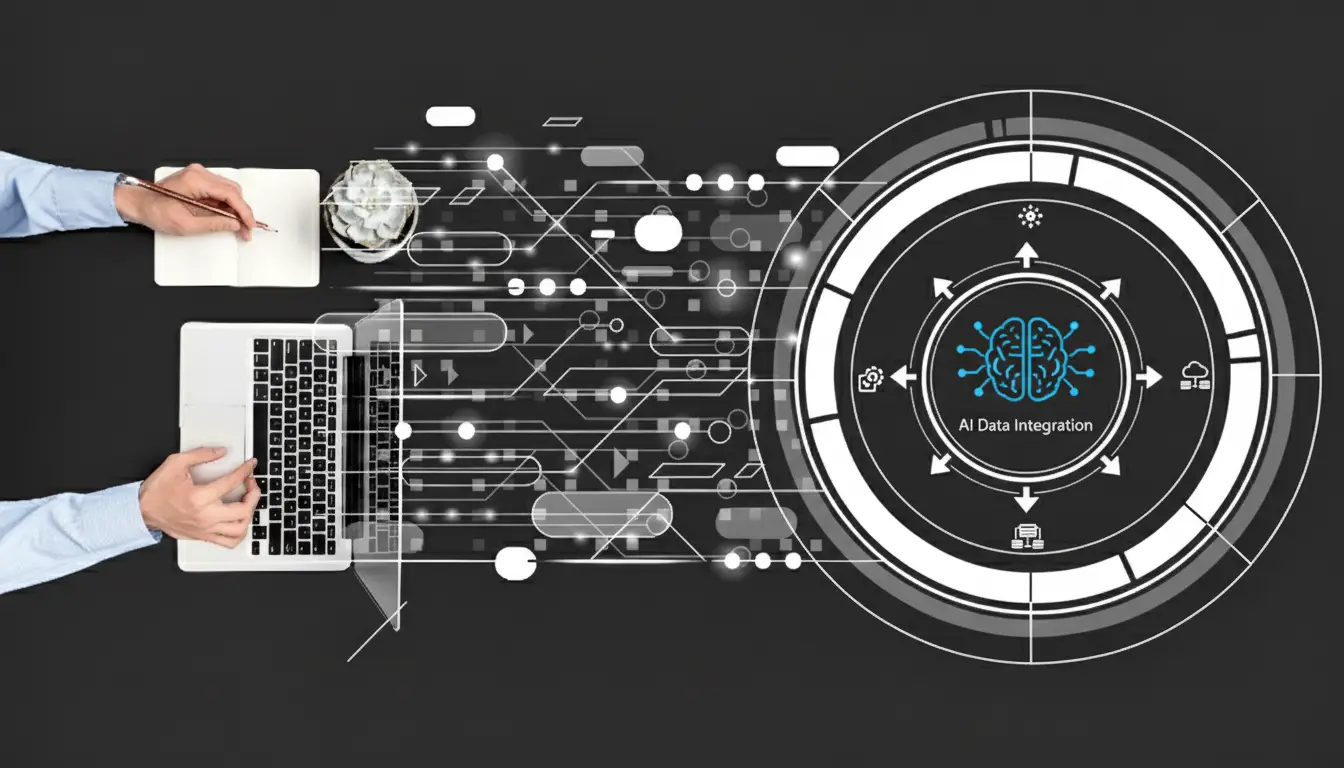
AI data integration is powered by a combination of advanced technologies working together as a unified ecosystem. Machine learning enables automated data mapping, classification, and anomaly detection. Automation orchestrates complex workflows and ensures reliability at scale.
Metadata intelligence plays a critical role by automatically generating and managing metadata, improving transparency and trust in data pipelines. Cloud-native architectures provide elasticity and global scalability, while API-driven connectivity allows seamless integration across SaaS applications, on-prem systems, and partner platforms.
Orchestration engines coordinate ingestion, transformation, validation, and delivery processes end to end. Together, these technologies create resilient, scalable, and self-optimizing integration environments that support both real-time and batch data use cases.
Key Business Benefits of AI Data Integration
AI-powered data integration delivers tangible business value across the organization. Faster time to insight allows leaders to respond quickly to market shifts and operational signals. Improved data accuracy increases confidence in analytics, reporting, and AI initiatives.
Organizations benefit from reduced integration and maintenance costs as self-learning systems replace manual rule management. Scalability across cloud and hybrid environments ensures that data integration keeps pace with business growth. Support for real-time and predictive analytics enables proactive decision-making rather than reactive reporting.
At Experion, we help enterprises move beyond fragmented data landscapes by building reliable, intelligent data foundations. These foundations power analytics, automation, and AI initiatives that scale with business ambition.
AI-Driven Data Integration Across Industries
Financial Services
In financial services, AI data integration unifies transactional systems, customer interactions, and external data sources to enable real-time risk analysis and fraud detection. By creating a single, trusted customer view, institutions improve compliance, personalize offerings, and enhance operational resilience.
Healthcare and Life Sciences
Healthcare organizations rely on AI-driven data integration to connect EHRs, medical devices, laboratory systems, and operational platforms. This unified data foundation supports predictive care models, improves clinical outcomes, and strengthens regulatory compliance across complex ecosystems.
Manufacturing and Supply Chain
In manufacturing and supply chain operations, AI integration connects IoT sensor data with ERP and MES systems. This enables predictive maintenance, accurate demand forecasting, and end-to-end operational visibility. Manufacturers gain the ability to optimize performance while reducing downtime and waste.
Retail and E-commerce
Retailers use AI-powered data integration to unify omnichannel customer data, inventory systems, and pricing engines. This supports personalized customer experiences, optimized inventory management, and data-driven pricing strategies that respond to demand in real time.
Enterprise SaaS and IT Operations
For enterprise SaaS providers and IT operations teams, AI-driven data integration delivers unified operational intelligence. By correlating events across systems, organizations automate incident detection, reduce mean time to resolution, and improve service reliability.
Transform data integration into a strategic advantage today
AI-Powered Data Integration for Real-Time and Streaming Data
Modern enterprises operate in environments where decisions must be made in seconds rather than hours. Customer interactions, IoT signals, transactions, and operational events generate continuous streams of data that lose value if not processed immediately. AI-powered data integration enables organizations to act on this information in real time.
Event-driven architectures form the foundation of real-time integration by capturing and responding to events as they occur. AI-driven stream processing adds intelligence on top of these architectures, allowing systems to filter noise, detect patterns, and correlate events across multiple data sources. This ensures that only meaningful, actionable data flows into analytics platforms and operational systems.
Artificial intelligence enhances streaming data integration by adapting to changing data patterns and volumes. Machine learning models identify anomalies, predict trends, and adjust processing rules dynamically without manual intervention. Contextual enrichment further improves decision quality by combining streaming data with historical records, reference datasets, and external signals.
By using AI-powered data integration for real-time and streaming data, organizations gain immediate visibility into operations, improve responsiveness, and enable predictive and automated actions. This capability is critical for use cases such as fraud detection, predictive maintenance, personalized customer engagement, and real-time operational monitoring, where speed and accuracy directly impact business outcomes.
Role of AI and Data Integration in Modern Data Architectures
 Modern data architectures are no longer built around a single centralized system. Enterprises today operate cloud-native ecosystems that include data lakes for raw data storage, data warehouses for structured analytics, and lakehouses that combine the strengths of both. AI data integration is the connective tissue that makes these architectures usable, reliable, and scalable.
By intelligently connecting data across cloud platforms, SaaS applications, and on-prem systems, AI-driven data integration ensures that data flows seamlessly into BI tools, AI and machine learning models, and advanced analytics platforms. It removes friction between data producers and data consumers, allowing insights to travel faster across the organization.
AI data integration also plays a foundational role in enabling modern strategies such as Data Mesh and Data Fabric. In a Data Mesh approach, intelligent integration supports decentralized ownership while maintaining governance and interoperability. In a Data Fabric model, AI continuously discovers, connects, and contextualizes data assets across the enterprise. In both cases, AI transforms integration from a technical dependency into a strategic enabler of enterprise intelligence.
Data Governance, Security, and Compliance in AI Data Integration
As data volumes grow and regulations tighten, governance and security can no longer be manual or reactive. AI-powered data integration embeds governance directly into data pipelines, ensuring policies are enforced automatically as data moves across systems.
Role-based access controls restrict data usage based on identity and context. AI-driven data masking and anonymization protect sensitive information while preserving analytical value. Continuous monitoring detects policy violations, unusual access patterns, and compliance risks in real time.
Audit readiness becomes a built-in capability rather than a last-minute effort. End-to-end lineage tracking, automated documentation, and AI-assisted compliance reporting provide transparency and trust for regulators, partners, and internal stakeholders. This shift allows organizations to scale data usage without increasing risk exposure.
Challenges in AI Data Integration and How to Overcome Them
Despite its benefits, implementing AI data integration comes with challenges. Data silos remain a major obstacle when ownership is fragmented across teams and systems. AI helps by automatically discovering and connecting data assets, but organizational alignment is equally critical.
Data quality issues can undermine trust in AI-driven pipelines. These are addressed through automated validation, anomaly detection, and continuous feedback loops that improve accuracy over time. Model transparency is another concern, especially in regulated environments. Explainable AI techniques ensure integration decisions are auditable and understandable.
Legacy system integration often requires careful planning. Phased adoption, API enablement, and hybrid architectures help modernize integration without disrupting operations. Change management is essential to ensure teams trust and adopt intelligent data integration rather than reverting to manual workarounds.
AI Data Integration Implementation Best Practices
Successful AI data integration initiatives begin with clearly defined, high-impact use cases. Organizations should focus first on data flows that directly support business outcomes such as analytics, automation, or customer insights.
Building reusable integration components accelerates scaling and reduces duplication. Governance should be established early to define ownership, access rules, and quality standards. Success must be measured using clear KPIs related to data reliability, speed, and business impact.
Continuous improvement is critical. AI-driven pipelines should learn from errors, usage patterns, and performance metrics, enabling integration systems to evolve alongside business needs rather than requiring constant redesign.
Measuring ROI of AI Data Integration
The ROI of AI data integration is both immediate and long-term. In the short term, organizations see reduced integration and maintenance costs as automation replaces manual effort. Analytics delivery becomes faster, enabling quicker decision-making and operational response.
Over time, improved decision speed and data reliability translate into greater business agility. Teams spend less time aligning data and more time putting insights into action. The strategic value lies in building scalable, future-ready data foundations that support advanced analytics, AI initiatives, and digital transformation at enterprise scale.
AI data integration ultimately turns data from a fragmented resource into a continuously optimized asset that fuels innovation and competitive advantage.
How to Choose the Right AI Data Integration Platform?
Selecting the right AI data integration platform is a strategic decision that directly impacts scalability, agility, and long-term return on investment. Organizations should begin by assessing whether the platform can scale across growing data volumes, new sources, and expanding business units without introducing performance bottlenecks.
Cloud and hybrid support are essential, as most enterprises operate across a mix of cloud-native applications, on-prem systems, and third-party platforms. Ease of use matters not only for data engineers but also for analytics teams and business users who rely on timely, reliable data.
Strong governance capabilities should be built into the platform, including data lineage, access control, and compliance monitoring. Finally, organizations must evaluate the total cost of ownership rather than just licensing fees, factoring in implementation effort, ongoing maintenance, and operational efficiency.
The best data integration platforms with AI capabilities strike the right balance between intelligence and simplicity. They deliver advanced automation and adaptability while remaining manageable, transparent, and cost-effective at enterprise scale.
Accelerate insights and reduce integration complexity with Experion
How Can Experion Help in AI Data Integration?
Experion partners with enterprises to design and implement AI-powered data integration solutions that align with business goals, data maturity, and technology landscapes. Our approach begins with strategy and architecture, ensuring data integration supports analytics, automation, and AI initiatives from day one.
We build intelligent data pipelines that connect cloud platforms, SaaS applications, legacy systems, and real-time data streams. By embedding AI-driven automation, governance, and monitoring into integration workflows, we help organizations reduce complexity while improving reliability and performance.
From implementation and optimization to continuous improvement, Experion enables organizations to unlock the full value of their data and build integration foundations that scale with future innovation.
Future Trends in AI Data Integration
AI data integration continues to evolve rapidly as enterprises demand greater autonomy, speed, and intelligence from their data platforms.
Autonomous data pipelines
Autonomous data pipelines will increasingly self-configure, self-heal, and self-optimize with minimal human intervention. Generative
Generative AI for integration logic
AI for integration logic will simplify complex transformations by generating mappings and workflows dynamically.
Natural language-driven data orchestration
Natural language-driven data orchestration will allow users to define integration requirements using conversational interfaces rather than technical configurations.
Integration as a service
Integration as a Service will evolve into more intelligent, modular platforms that combine integration, governance, and analytics capabilities.
Increased convergence of integration, analytics, and AI
Most importantly, there will be deeper convergence between data integration, analytics, and AI, creating unified intelligence platforms that support real-time decision-making and continuous learning across the enterprise.
Conclusion: Why AI Data Integration Is the Foundation of Intelligent Enterprises
AI data integration is no longer optional for organizations seeking to compete in a data-driven economy. It is the foundation that enables analytics, automation, and enterprise AI to operate at scale and speed.
By transforming rigid data pipelines into intelligent, adaptive systems, organizations gain faster access to insights, higher trust in data, and the agility to respond to constant change. AI-driven data integration shifts data from a technical burden to a strategic asset that fuels innovation and growth.
Key Takeaways
- AI data integration replaces brittle, rule-based pipelines with adaptive, self-learning intelligence that evolves with changing data environments
- Intelligent data integration accelerates analytics, automation, and enterprise AI initiatives by ensuring trusted, connected data
- AI-driven data integration significantly lowers operational and maintenance costs by reducing manual intervention and rework
- Real-time and streaming data integration enables faster, more accurate decision-making across business functions
- Built-in governance, lineage, and security make compliance continuous rather than reactive
- AI-powered platforms scale seamlessly across cloud, hybrid, and legacy environments
- Modern data architectures such as Data Mesh and Data Fabric depend on intelligent data integration as a core foundation
- Enterprises that invest in AI data integration gain agility, resilience, and long-term competitive advantage
- Experion helps enterprises design and implement scalable, secure, and future-ready AI data integration ecosystems that unlock the full value of data
Turn your data into an intelligent business asset with Experion Technologies.