






 Back
Back
At Experion, we have experience in engineering financial platforms involving payments, payment integrations, Open Banking, APIs, cloud modernization, and cross-border transaction workflows.
Paying for something has become remarkably uneventful. That is probably one of the clearest signs of how far digital payments have come.
A customer taps a phone, scans a QR code, sends money to a friend, approves an online transaction with a fingerprint, or pays an invoice without thinking much about what happens next. The expectation is simple: the money should move quickly, securely, and without confusion.
Behind that seemingly ordinary moment sits a complicated network of banks, payment processors, gateways, identity services, fraud controls, settlement systems, and regulatory requirements.
The scale is becoming difficult to ignore. According to NPCI’s official UPI statistics, India’s UPI processed 23.2 billion transactions in May 2026, with 720 banks live on the network. In Europe, payment service providers in the euro area have been required since October 2025 to enable customers to send instant euro payments and provide verification of the intended beneficiary.
For businesses, payment app development is therefore no longer limited to putting a payment button inside a mobile application. It can mean creating an entire transaction experience around a marketplace, digital bank, retail platform, SaaS product, healthcare service, or enterprise ecosystem.
The challenge is not simply moving money. It is making a complicated financial process feel simple without compromising security, compliance, or reliability.
What is Payment App Development?
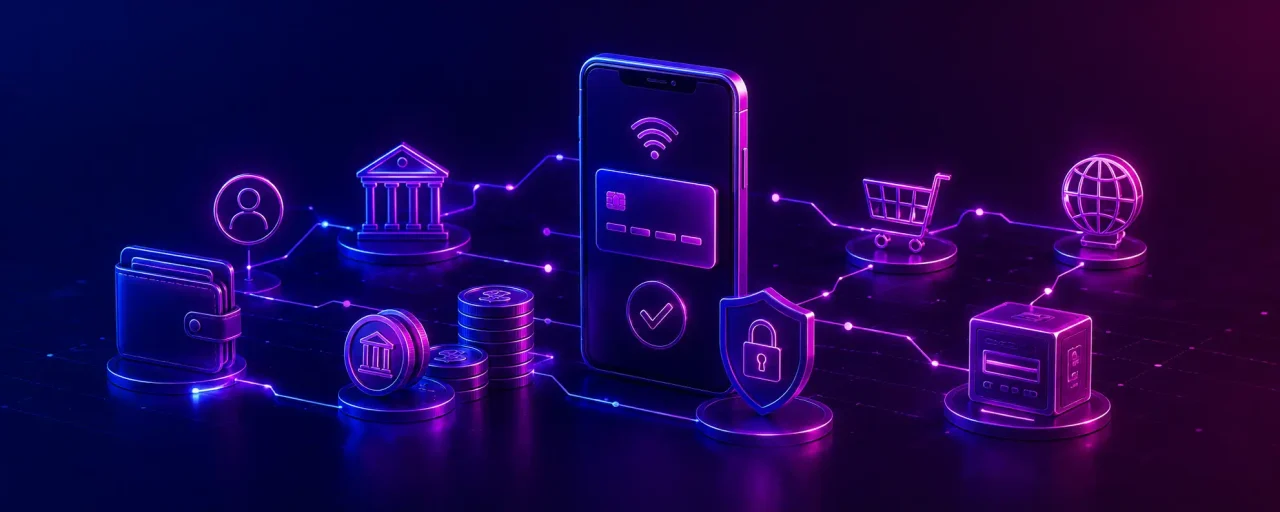
Payment application development is the process of designing and engineering software that allows users or businesses to initiate, receive, manage, track, or reconcile digital transactions.
A payment application can be as straightforward as a mobile checkout experience or as complex as a platform that manages user balances, multiple banks, fraud controls, reconciliation, international currencies, disputes, recurring payments, and transaction reporting.
An application for payment usually connects a user with one or more financial rails: cards, bank accounts, payment gateways, instant-payment networks, wallets, or other payment service providers.
Understanding how to build such a product begins with the movement of money itself. Who is paying whom? Which institution holds the funds? Which system authorizes the transaction? How is fraud assessed? What happens if a transaction succeeds at one stage but fails at another?
Payment apps are also not necessarily the same as digital wallets. A wallet usually stores payment credentials, tokens, or monetary value. A payment application may simply initiate and process transactions. Many current products combine both experiences.
Types of Payment Application
Peer-to-peer applications allow users to transfer money directly to one another. p2p payment app development usually involves onboarding, recipient discovery, payment requests, authentication, transaction history, fraud controls, limits, and dispute handling. Reliable payment p2p app development also needs to account for the less convenient scenarios: payments sent to the wrong person, compromised accounts, failed transfers, or money apparently caught between systems.
Merchant payment apps enable businesses to accept payments through cards, QR codes, bank transfers, NFC, wallets, or other supported methods.
Mobile banking applications combine payments with account management, transfers, statements, cards, and wider banking functionality. Digital wallet applications focus more heavily on stored payment credentials or balances.
Cross-border payment apps introduce additional concerns around currency conversion, international settlement, sanctions screening, and local regulation.
Other models include cryptocurrency payment apps, Buy Now Pay Later applications, enterprise payment solutions, and B2B payment and invoicing platforms that connect invoicing with payment approval, settlement, reconciliation, and reporting.
Why Businesses Invest in Developing Payment App?
Businesses rarely invest in payments simply because the technology is interesting. Usually, there is a very practical problem behind the decision.
Benefits for Businesses
- Faster payment processing can improve cash movement and reduce waiting periods between purchase and settlement.
- A smoother checkout can improve the customer experience, particularly when users can choose familiar payment methods without entering the same information repeatedly.
- Digital payments can also create additional commercial opportunities through subscriptions, merchant services, transaction fees, embedded finance, international payments, or value-added financial services.
- Automation reduces operational work around reconciliation, transaction tracking, and reporting. Payment data can also provide a clearer picture of customer preferences, payment failures, transaction patterns, and operational bottlenecks.
- For businesses operating internationally, a flexible payments architecture makes it easier to add currencies, payment providers, or local rails without rebuilding the product each time.
Benefits for Users
- Users want speed, clarity, and confidence.
- A thoughtfully designed payment app can provide quick transfers, secure authentication, multiple payment choices, transaction records, contactless payments, scheduled transfers, and spending visibility.
- That is one reason mobile payment app development should pay as much attention to communication as functionality. A vague message saying that “something went wrong” is particularly frustrating when the thing that went wrong involves somebody’s money.
Market Trends Driving Payment Application Development
The payment landscape is changing in several directions at once.
AI-powered fraud detection is allowing financial platforms to evaluate larger volumes of transaction signals and identify patterns that fixed rules may miss.
Embedded finance is moving payments into marketplaces, mobility platforms, retail products, and SaaS applications. Increasingly, the customer does not leave the original experience to “go and pay”; the payment becomes part of the experience itself.
Open Banking is creating another route into financial services through consent-based API connectivity. The latest UK Open Banking API specification, published on 18 March 2026, covers payment initiation, information sharing, identity, security, and related API interactions.
Banking-as-a-Service is enabling non-bank businesses to introduce financial capabilities through regulated partners. Blockchain-based payments, biometrics, voice payments, NFC, wearables, and super apps are also influencing product design.
CBDCs remain an evolving area. A 2025 Bank for International Settlements Survey found that 85 of 93 surveyed central banks were exploring either a retail CBDC, a wholesale CBDC, or both. The stages and intended uses vary substantially, so CBDCs should be viewed as an emerging integration consideration rather than an immediate replacement for existing payment rails.
Must-Have Features of a Modern Payment App
User Features
- A modern app generally begins with registration, profile management, and secure login. Depending on the product and jurisdiction, onboarding may also involve identity verification, device registration, biometrics, or multi-factor authentication.
- Users may need a digital wallet, bank-account linking, card management, money transfers, QR payments, NFC payments, and bill payment capabilities.
- Transaction history and notifications help customers understand what has happened to their money. Contact management, payment requests, split payments, and scheduled payments make recurring everyday transactions easier.
- Products designed for international users may also provide international transfers and currency conversion.
- Rewards and cashback can support engagement where they make commercial sense, while expense analytics can help users make sense of their transaction history. AI-powered spending insights may identify recurring expenses, spending changes, or patterns that would otherwise remain buried in a transaction list.
Admin Features
- The administrative side of a payment app is considerably less glamorous, but it is where much of the operational work happens.
- Teams may require user management, transaction monitoring, payment-settlement visibility, reports, analytics, customer-support tools, dispute management, and chargeback management.
- Risk teams need access to fraud monitoring, AML information, KYC verification, alerts, and suspicious transaction workflows.
- Compliance teams need reporting and usable audit trails.
- A well-designed administration layer should reflect these different responsibilities rather than presenting every internal user with the same oversized dashboard.
How Payment Applications Work?
Step-by-Step Payment Flow
- A transaction generally begins with user authentication.
- During payment initiation, the user chooses the amount, recipient or merchant, and payment method.
- The request then moves through payment gateway processing or another connected financial rail.
- Where applicable, tokenization replaces sensitive credentials with a token so that the underlying payment information is not repeatedly exposed.
- Fraud screening assesses transaction, account, device, and behavioral signals.
- During authorization, the relevant bank, processor, or financial institution decides whether the transaction can proceed.
- Settlement moves the funds according to the rules of the chosen payment rail.
- The user receives a notification, and transaction recording preserves the information required for reconciliation, support, history, reporting, and audit.
- The underlying sequence sounds simple when reduced to nine steps. The engineering challenge lies in what happens when one of those steps does not behave as expected.
Payment App Architecture
- The Frontend Layer provides the user-facing mobile or web experience.
- The Backend Layer handles payment instructions, accounts, transaction states, business rules, and operational workflows.
- The API Layer connects the application with banks, payment gateways, identity providers, fraud platforms, and other partners.
- The Payment Gateway or direct payment-rail connection manages the appropriate transaction routing, while Banking APIs support relevant account and payment functions.
- The Database stores transactional and operational records based on the product’s consistency, availability, and retention requirements.
- The Security Layer covers authentication, authorization, encryption, secrets, monitoring, and audit controls.
- Cloud Infrastructure can provide scalability and resilience. A dedicated Monitoring Layer helps engineering and operations teams understand transaction states, failures, latency, infrastructure health, and unusual behavior.
Technologies Used in Payment App Development
There is no universal technology stack for payment products.
Swift and Kotlin are widely used for native mobile development, while Flutter and React Native can be appropriate when a cross-platform strategy makes sense.
An android payment app may require deeper integration with Android biometrics, NFC capabilities, device security, and supported wallet services.
Backend platforms are commonly built using Java, .NET, Go, Python, or Node.js, depending on requirements and engineering capability.
Relational databases are often important for transaction-critical records. Streaming, caching, and analytics technologies can support higher volumes and reporting.
Cloud platforms such as AWS, Microsoft Azure, and Google Cloud can provide infrastructure services, although simply moving a payment product to the cloud does not automatically make it scalable or resilient.
Good digital payment app development also requires API management, observability, secure deployment, automated testing, infrastructure management, and disciplined release engineering.
Payment Gateway Integration
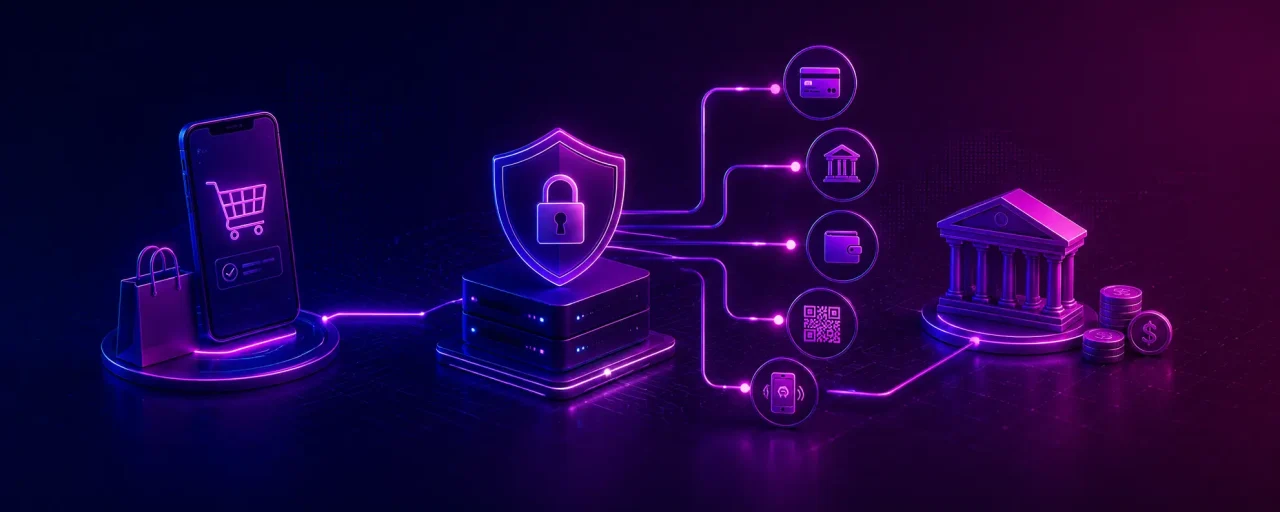
What is a Payment Gateway?
A payment gateway helps transfer payment information securely between the application or merchant environment and the systems responsible for processing the transaction.
Its exact role differs according to the payment model. A card transaction does not follow exactly the same path as an account-to-account payment, wallet transaction, or local real-time transfer.
Gateway Selection Criteria
Security is the first consideration, but it should not be the only one.
Businesses also need to examine geographic availability, supported payment methods, transaction fees, currencies, settlement timelines, API quality, documentation, fraud capabilities, refund support, chargeback processes, availability, and technical support.
Companies searching for custom fintech app development payment gateway integration services should therefore look beyond whether a development team knows how to connect an API. The real work includes security, payment workflows, failure handling, reconciliation, testing, monitoring, and long-term integration maintenance.
Experion’s documented financial-services capabilities include payment-gateway and acquirer integrations, real-time payment engineering, ISO 20022, SWIFT integration, cross-border payments, and cloud modernization.
Payment Methods to Support
The correct payment mix depends on who will use the application and where.
The product may support credit cards, debit cards, UPI, Net Banking, ACH, wire transfers, digital wallets, Apple Pay, Google Pay, Samsung Pay, QR Code Payments, and NFC Payments.
Cryptocurrency Payments may be relevant in selected products and jurisdictions, but they should not be included simply for feature completeness.
There is rarely a reason to integrate every available payment method at launch.
A better strategy is to support the methods that matter to the first group of customers while ensuring that the architecture can accommodate additional payment rails later.
Security and Regulatory Compliance in Payment App Development
Payment security cannot be added during the final sprint.
Sensitive information needs appropriate encryption. APIs need authentication and access controls. Permissions should follow least-privilege principles. Secrets require controlled storage, and important actions should leave useful audit trails.
Payment applications also require secure software development, vulnerability management, monitoring, incident response, backup, and recovery procedures.
Where cardholder data is involved, PCI DSS is an important baseline. The PCI Security Standards Council currently lists PCI DSS v4.0.1 as its published PCI DSS version. The current PCI SSC document library is available here.
Actual regulatory obligations differ by geography, payment model, data handled, licensing arrangement, and the organization’s role in the transaction chain. Compliance specialists therefore need to be involved early enough to influence the design.
KYC & Identity Verification
Know Your Customer processes help regulated businesses establish who is using a financial service and assess relevant risk.
Verification can involve identity documents, address information, database checks, biometrics, sanctions screening, and additional review where risk is higher.
The product experience needs balance.
Ask too much too early and legitimate customers may abandon onboarding. Verify too little and the business can expose itself to fraud and regulatory risk.
The right design introduces the appropriate level of verification at the point where the risk justifies it.
Fraud Prevention Strategies
Common Fraud Types
Payment apps may face account takeover, identity theft, friendly fraud, chargeback fraud, card testing, synthetic identity fraud, phishing, and social engineering.
These do not all look alike.
Card testing may involve many small automated transactions. Account takeover can begin with a new device or unusual login. Social engineering may involve a perfectly legitimate user willingly sending money after being deceived.
That makes fraud prevention a combination of technology, operational intelligence, and customer safeguards.
Prevention Techniques
AI-based fraud detection can identify patterns across large transaction datasets.
Device intelligence provides information about how and where an account is being accessed.
Velocity checks flag unusually frequent activity, while transaction monitoring evaluates movement of funds across users and accounts.
Behavioral analytics can identify significant departures from established patterns. Geolocation verification provides another useful risk signal where appropriate.
Real-time alerts allow suspicious activity to be challenged, escalated, or investigated before the consequences become more difficult to reverse.
AI in Payment Apps
AI has several useful payment applications, but it works best when it solves a specific problem.
- Fraud detection is the obvious example. Machine-learning models can evaluate more signals than a manual review team could realistically process.
- AI can also support spending predictions, customer-service chatbots, smart budgeting, personalized recommendations, and transaction categorization.
- Where lending is connected to payments, AI may contribute to credit-risk analysis under appropriate governance.
- Payment optimization is another useful area. Systems can use transaction history and context to make better routing, retry, or payment-method decisions.
- The goal should not be to make a payment product appear “AI-powered.” The better question is whether AI makes the transaction safer, easier, faster, or more useful.
Open Banking & API Integration in Payment Platforms
What is Open Banking?
Open Banking allows customers to authorize regulated providers to access defined bank-account information or initiate supported financial services through secure APIs.
The customer’s consent remains central to the relationship.
Benefits
Open Banking can support account-to-account payments, financial aggregation, consent-based data access, and embedded financial experiences.
For customers, it may reduce repetitive manual entry. For businesses, it creates another way to connect applications with banking infrastructure.
API Standards
Open Banking standards vary between markets.
The current UK specifications include APIs that enable authorized third parties to access information or initiate payments by connecting securely with account-servicing payment service providers with customer consent.
Banking Integrations
A good banking integration needs to account for both successful and unsuccessful interactions.
Consent can expire. APIs may change. Banks can experience temporary outages. Authentication can fail. Responses may be delayed.
External banking APIs should therefore be treated as evolving dependencies rather than perfect, permanent components.
Cross-Border Payment App Development
Challenges
Cross-border payments introduce currencies, local payment systems, correspondent relationships, international regulation, sanctions controls, and additional fraud concerns.
Currency Conversion
Exchange-rate information should be clear before the transaction is approved.
Customers should understand the rate used, applicable fees, and the amount that the recipient is expected to receive.
International Regulations
Licensing, AML requirements, privacy rules, data-residency obligations, and consumer-protection laws vary between jurisdictions.
Settlement
Cross-border settlement may involve several financial institutions or service providers.
That makes transaction tracking, exception handling, and reconciliation particularly important.
Compliance
International expansion should be planned market by market.
A domestic payment workflow should not simply be reproduced in another jurisdiction without assessing the regulatory and operational differences.
Payment App Development Process
- Business Analysis: Define who is moving money, why, through which parties, and under which commercial and regulatory model.
- Market Research: Understand customers, competitors, preferred payment methods, and existing friction.
- Requirement Gathering: Translate the concept into functional, security, integration, operational, and compliance requirements.
- UI/UX Design: Design onboarding, payment, confirmation, history, failure, cancellation, and support experiences.
- Architecture Planning: Define APIs, transaction data, security, infrastructure, integrations, resilience, and monitoring.
- MVP Development: Build enough to validate the core transaction model rather than filling the first version with every possible feature.
- Payment Gateway Integration: Connect the required gateways, banks, or payment rails.
- Security Implementation: Apply authentication, authorization, encryption, fraud controls, and monitoring throughout development.
- Testing: Validate successful transactions as well as timeouts, failures, reversals, and interrupted flows.
- Compliance Review: Assess the application and operating model against relevant requirements.
- Deployment: Release with monitoring, incident processes, and rollback strategies.
- Maintenance: Continue updating integrations, security, infrastructure, compliance, and the customer experience.
For a business looking to build a p2p payment app, this sequence helps avoid starting with screens before understanding the actual transaction model.
It is equally applicable when the goal is to build payment app functionality into an existing platform rather than create a standalone product.
Testing Payment Applications
- Functional testing checks payments, transfers, refunds, reversals, balances, and other transaction workflows.
- Security testing examines authentication, access, APIs, sensitive data, vulnerabilities, and abnormal behavior.
- Load testing shows whether the system can handle high transaction volumes, while performance testing identifies latency across customer and backend interactions.
- Compatibility testing verifies the experience across supported devices and platforms.
- Usability testing explores whether customers understand recipients, amounts, fees, status messages, and errors.
- Compliance testing validates applicable controls and requirements.
For financial applications, some of the most valuable test cases begin with one question: what happens if this fails halfway through?
Mobile Payment App UI/UX Best Practices
- Payment design should reduce hesitation without concealing important information.
- Navigation needs to be simple, and checkout should avoid unnecessary steps.
- Accessibility should influence text, contrast, touch targets, error messages, and support for assistive technologies.
- Dark Mode can be offered where it suits the overall product experience.
- Real-Time Feedback is particularly important. Users should know whether a transaction has succeeded, failed, been reversed, or is still being processed.
- One-Handed Usage matters because mobile payments often happen while customers are shopping, travelling, or doing something else.
- Personalization can make frequent recipients or payment methods easier to access, but amounts, accounts, fees, and transaction states should always remain explicit.
Common Challenges in Payment Application Development
Payment software depends on systems the application team often does not control.
Banks can be unavailable. Gateways can time out. An API can change. A customer can lose connectivity during confirmation. A payment can be accepted by one system while another is still waiting for an update.
Security threats continue evolving, while fraud controls must avoid blocking too many genuine transactions.
Compliance becomes more complicated as the product enters additional markets.
Scalability, third-party integrations, cross-platform compatibility, user trust, cross-border regulations, and performance optimization all require deliberate engineering.
Money makes ordinary software problems feel much less ordinary.
Payment App Development Cost
There is no responsible universal payment app development cost.
A simple application connected to an established payment service provider is fundamentally different from a regulated P2P product with KYC, AML, multiple banks, transaction ledgers, fraud analytics, reconciliation, disputes, and international payments.
Factors Affecting Development Cost
- Features are usually the most visible cost driver, but they are not the only one.
- The target platform matters. Building for both iOS and Android may require different effort depending on whether the application is native or cross-platform.
- Security and compliance requirements can significantly affect architecture, development, testing, and documentation.
- Integrations also matter. Connecting one established gateway is different from supporting several banks, financial institutions, or regional payment rails.
- Team size, technology stack, infrastructure, testing requirements, product design, data architecture, and post-launch support all contribute.
A useful cost estimate therefore begins with the payment operating model, not a generic price attached to the words “payment app.”
How Long Does it Take to Build a Payment App?
Discovery Phase
Discovery defines the business model, users, transaction flows, target market, integrations, risks, and regulatory responsibilities.
Design Phase
Design turns those findings into user journeys and prototypes while uncovering workflow questions before they become expensive engineering problems.
Development Phase
Development should begin with the transaction-critical components and expand towards the remaining product features.
Testing Phase
Testing runs throughout development, with dedicated security, integration, performance, and transaction testing before release.
Launch Phase
Launch includes deployment, mobile-app distribution where necessary, monitoring, operational readiness, and support preparation.
Post-launch Support
A payment product continues changing because everything around it continues changing.
APIs are upgraded. Fraud patterns change. Operating systems evolve. Security vulnerabilities appear. Customers want additional payment methods.
Post-launch engineering should therefore be considered part of the product lifecycle rather than a separate maintenance activity.
Why Custom Payment App Development Matters?
Not every business needs to create its own payment infrastructure.
When the payment requirement is relatively standard, an established solution may be the most sensible option.
Custom payment app development becomes more relevant when payments form an important part of the organization’s product, workflow, or competitive experience.
A custom payment app gives the organization more control over transaction journeys, integrations, financial partners, reporting, security rules, operational workflows, and the future roadmap.
It can also make sense when existing payment products cannot accommodate a specialized business model.
Custom development brings more flexibility, but also more responsibility. The decision should therefore begin with the business case rather than a preference for owning more software.
Payment App Development for Different Industries
- Retail: QR payments, wallets, loyalty, contactless checkout, and refunds.
- E-commerce: Cards, digital wallets, BNPL, bank payments, merchant settlement, and refunds.
- Banking: Account transfers, bill payments, payment rails, cards, and account services.
- FinTech: P2P payments, wallets, embedded finance, lending, and specialist transaction models.
- Healthcare: Patient payments, bills, recurring balances, and financial reconciliation.
- Insurance: Premium payments, refunds, recurring collection, and claims disbursement.
- Logistics: Driver payments, partner payouts, invoices, and B2B settlement.
- Education: Tuition, fees, subscriptions, and institutional reconciliation.
- Hospitality: Reservations, deposits, refunds, commissions, and international payments.
- SaaS Platforms: Subscription billing, usage-based charging, embedded checkout, and payouts.
How to Choose the Right Payment App Development Services Company?
A good payment application is not evidence that the development partner has a good design portfolio. It is evidence that the team understands financial software.
When evaluating a payment app development company, ask about payment workflows, security, reconciliation, integrations, transaction failures, monitoring, and production support.
Providers offering payment app development services should understand both application engineering and the wider transaction environment.
Review industry expertise, security experience, compliance knowledge, architecture capability, technology choices, gateway and banking integration experience, quality engineering practices, and relevant delivery history.
Client reviews and references can help, but so can the questions the development team asks during discovery.
Post-launch support is especially important because payment systems require ongoing security work, API updates, monitoring, performance optimization, and product evolution.
Common Mistakes to Avoid
Ignoring compliance until the end can force expensive redesign.
Weak authentication creates unnecessary account and transaction risk.
Poor UI/UX makes customers uncertain at precisely the point where clarity matters most.
Choosing a payment gateway only because it has the lowest fee can create problems with authorization, geography, settlement, reliability, or technical support.
Other mistakes include underestimating scalability, testing only successful scenarios, neglecting disaster recovery, ignoring analytics, and designing tightly coupled APIs that make future integrations difficult.
The most damaging mistake may be assuming that a successful payment is the only flow worth designing.
Future of Payment App Development
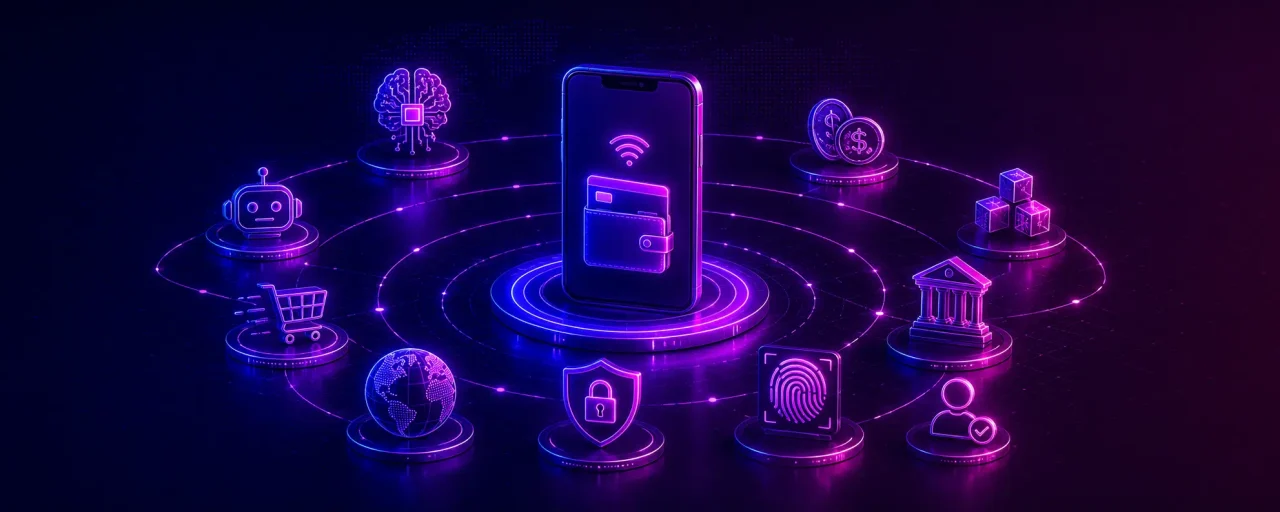
The future of payments may be defined by how little of the payment process customers actually see.
- AI-native payment experiences could make fraud screening, financial assistance, and transaction routing more contextual.
- Autonomous payments may eventually allow authorized systems or software agents to initiate specific transactions within carefully defined limits.
- Invisible checkout will continue reducing the distance between purchase intent and payment.
- Embedded finance will place payment capabilities deeper inside non-financial products.
- Digital identity may simplify authentication and onboarding. Tokenized assets may create additional settlement models.
- Real-time global payments will continue raising customer expectations around availability and transaction visibility.
- CBDCs could eventually become another payment or settlement rail in selected markets rather than universally replacing cards, bank transfers, or existing instant-payment systems. Current central-bank activity shows significant exploration but considerable variation in approach.
- Biometric authentication will continue moving deeper into mobile payment journeys, while hyper-personalized experiences may make payment options more contextual to each user.
- The technology will continue changing. The enduring challenge will be knowing which changes actually improve the experience.
Conclusion
The user sees a button.
The engineering team sees authentication, APIs, payment rails, fraud controls, transaction states, security, settlement, reconciliation, monitoring, and recovery.
Bridging that gap is what good payment app development is really about.
The strongest payment experiences make complicated infrastructure feel ordinary. The amount is clear. The right person receives the money. Security works without constantly interrupting the user. And when something does fail, the customer understands what happened and what to do next.
AI, Open Banking, embedded finance, instant-payment infrastructure, cloud platforms, and digital identity are expanding what these products can do. They do not remove the fundamentals: secure architecture, sensible compliance, reliable integrations, good operational design, and a clear customer experience.
For organizations asking how to build a p2p payment app or preparing to build a p2p payment app, features should not be the first question. Start by understanding who is moving money, through which financial rail, under whose responsibility, and what should happen when the normal transaction path breaks.
That gives us a practical foundation for supporting organizations exploring new payment capabilities or modernizing an existing payments estate, while shaping the solution around the actual business, transaction model, integration landscape, and long-term roadmap.
Experion’s relevant experience includes payment platform engineering, Open Banking integrations, APIs, cloud modernization, reconciliation, and cross-border payment workflows. In one documented engagement, Experion worked on modernizing a B2B hospitality-payments platform with cloud-native and microservices-based architecture supporting complex multi-currency and international payment operations.