





 Back
Back
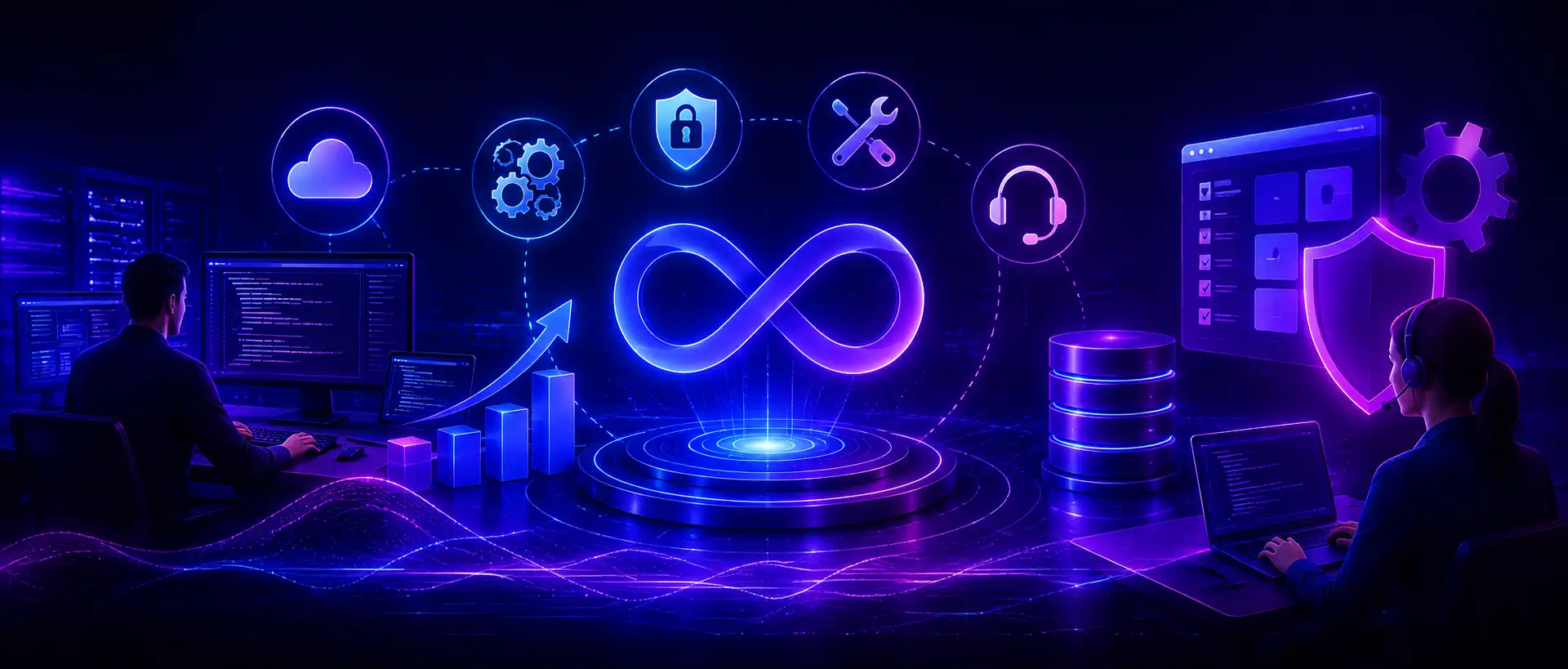

At Experion, we support software products across their lifecycle through product engineering, modernisation, cloud, quality engineering, data, AI, and managed support capabilities.
Launching a software product is not the end of the journey. It is the beginning of a much longer one.
A product must adapt to evolving technologies, consumer demands, laws, security risks, operating systems, cloud platforms, and third-party services once it is on the market. Modern technologies might become challenging to maintain. Features that once set the product apart could now be considered standard. Mature items are particularly affected by this issue. Even though they have years of operational data, significant business logic, and steady clients, they still have problems with sluggish releases, expensive infrastructure, recurrent bugs, out-of-date frameworks, and knowledge concentrated among a small number of engineers.
Such a product might be costly and disruptive to replace. It can be just as dangerous to keep on without a defined plan for progress. Product support and sustainability are crucial in this situation. Fixing problems is only one aspect of maintaining a product. It is the ongoing engineering work needed to maintain a product’s dependability, security, scalability, and commercial value.
Key Takeaways
- Product sustenance goes beyond routine maintenance.
- It combines support, security, modernisation, optimisation, and feature evolution.
- Mature products can often be improved without complete replacement.
- Proactive monitoring and automation reduce operational risk.
- Business and technical outcomes should be measured together.
- AI and cloud technologies are reshaping product support.
What is Product Sustenance and Support?
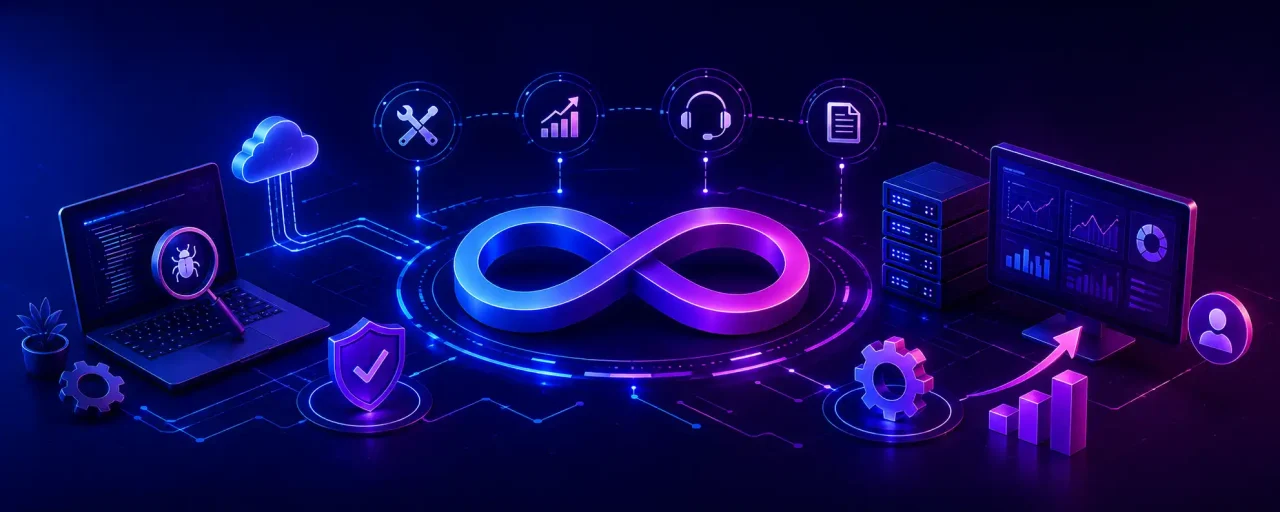
The continuous process of preserving, enhancing, safeguarding, and developing a software product following its initial release is known as product sustenance and support.
Defect resolution, performance optimization, infrastructure management, security patching, feature enhancement, technology upgrades, customer support, release management, and documentation are all included.
Thus, the maintenance of software products is at the nexus of engineering, operations, product management, security, and user experience.
Despite their frequent interchangeability, nourishment, maintenance, and support are not the same.
Technical modifications made after a product is released, such as bug repairs, compatibility updates, patches, and minor enhancements, are typically referred to as software maintenance.
Users and real operations are the main emphasis of product support. It covers ticket management, incident response, troubleshooting, and assisting clients in making efficient use of the product.
These domains are integrated into a more comprehensive lifecycle strategy through product sustenance. It inquires not only about the software’s functionality but also about its continued security, scalability, commercial relevance, and readiness for new requirements.
Understanding the Product Lifecycle
Every software product moves through a lifecycle. These stages may overlap, and products can return to growth after modernisation or repositioning.
Different Stages
Product Development
The first stage in creating a product is identifying a market opportunity, business problem, or customer need.
During ideation, teams define the target market, value proposition, business plan, and expected outcomes. The concept is transformed into requirements, architecture, user journeys, and interfaces through design. Development turns these designs into working software, while testing verifies usability, functionality, security, and performance.
At this point, the first substantial operational data and client input are also generated.
Product Growth
The product gains more consumers, enters new markets, and accommodates additional use cases as it grows.
The evolution of features quickens. Integrations, reporting, mobile experiences, localization, and administrative tools can all be added by teams.
Additionally, infrastructure, architecture, and support operations are strained by growth. Systems built for lower volumes could start to exhibit scalability or performance issues.
Product sustenance engineering now aids in striking a balance between feature delivery, automation, testing, and performance enhancement.
Product Maturity
A mature product typically has years of entrenched business logic, a consistent workflow, and an established customer base.
Retention, efficiency, dependability, and selected innovation become more important.
Additionally, technical debt becomes more apparent at this point. The product can rely on out-of-date libraries, manually deployed software, tightly connected design, or inadequately described code.
Good software product maintenance and support services lower the risks associated with aging while preserving the product’s value.
Product Decline
When a product’s uptake declines, consumers depart, operating expenses increase, or the underlying technology becomes more challenging to maintain, it enters decline.
Stronger rivals, out-of-date user interfaces, few integrations, poor performance, or technology that no longer meets business requirements can all contribute to decline.
The decision to retire, replace, modernize, consolidate, or reposition the product must subsequently be made by the organization.
At this point, sustainability aids in maintaining vital business logic, stabilizing operations, and establishing a controlled route towards modernization or retirement.
Role of Product Sustenance in Every Stage
Product sustenance is important at every stage of the lifecycle. It promotes maintainable architecture, documentation, testing, and operational preparedness during development.
It facilitates controlled feature extension, performance, and scale during growth. It lowers technical debt and boosts productivity as it matures. It safeguards consumers and business continuity while the product is updated or replaced during decline or transformation.
Why Product Sustenance Matters More Than Ever?
- Customer Retention and Trust
Customers quickly lose confidence in products that are repeatedly unavailable, slow, insecure, or difficult to use.
Trust is built through consistent performance, reliable updates, and responsive support.
- Increasing Customer Expectations
Users now expect fast, accessible, mobile-friendly, and intuitive digital experiences across industries.
A mature product does not need to follow every design trend, but it must continue reducing friction.
- Rapid Technology Evolution
Programming languages, databases, frameworks, cloud platforms, browsers, devices, and APIs evolve constantly.
Without regular product sustenance services, a product can gradually become disconnected from the wider technology environment.
- Security Threats
Even when the product itself remains unchanged, new vulnerabilities appear.
Dependency updates, access reviews, vulnerability scanning, safe configuration, testing, and monitoring are all necessary components of ongoing security management.
- Regulatory Compliance
Products in healthcare, finance, insurance, education, retail, and other regulated sectors must adapt to changing privacy, accessibility, reporting, and security obligations.
- Business Continuity
Essential processes are supported by numerous established products. Revenue, productivity, consumer confidence, and service quality can all be impacted by downtime.
Through capacity planning, monitoring, resilience, backups, and disaster recovery, sustainability enhances continuity.
Product Sustenance vs. Product Maintenance
| Area | Product Maintenance | Product Sustenance |
| Focus | Bug fixes | Continuous improvement |
| Approach | Reactive | Proactive |
| Enhancements | Small changes | Product evolution |
| Technology | Keeps current systems running | Supports upgrades and modernisation |
| Scope | Limited | Complete lifecycle support |
| Objective | Resolve issues | Optimise long-term business value |
Conventional maintenance frequently starts after a problem arises. A flaw is reported, looked into, resolved, and made available.
Product sustainability searches for recurrent reasons. Teams boost monitoring, update dependencies, modernize unstable components, increase test coverage, and lower the likelihood of future failures.
Because addressing individual flaws does not address issues like slower releases, inadequate scalability, increased infrastructure costs, security holes, or antiquated architecture, businesses are increasingly opting for sustainability.
Core Components of Product Sustenance Engineering Services
Bug Fixes and Defect Management
Defects should be prioritised according to severity, customer impact, security exposure, and business criticality.
Teams should also examine why the issue occurred. Repeated defects may indicate unstable architecture, weak testing, or unclear requirements.
Performance Optimisation
Performance problems often emerge as users, data, integrations, and features increase.
Teams may improve application code, database queries, caching, background processing, and infrastructure configuration.
Security Management
Security work includes patching, dependency scanning, vulnerability management, access reviews, penetration testing, encryption, logging, and incident response planning.
Feature Enhancements
Mature products still need to evolve.
Enhancements may come from customer feedback, regulatory changes, operational needs, or market demand. They should be introduced without destabilising existing workflows.
Technology Upgrades
Technology upgrades prevent the product from becoming dependent on unsupported frameworks, databases, APIs, or operating systems.
Cloud Optimisation
Cloud environments require active management.
Teams can review compute, storage, networking, database usage, and licensing to improve performance and reduce unnecessary costs.
Infrastructure Support
Infrastructure support includes availability, capacity, backups, recovery, deployment environments, monitoring, and network configuration.
Customer Support Integration
Support tickets reveal recurring usability problems, missing features, and confusing workflows.
Connecting support insights with engineering priorities helps teams address root causes rather than repeatedly treating symptoms.
Documentation Management
Accurate documentation reduces dependency on individual employees.
Architecture diagrams, runbooks, deployment instructions, integration details, business rules, and release notes should be maintained continuously.
Different Types of Product Sustenance Services
Corrective Maintenance
Faults discovered after release, such as flawed workflows, mistakes, unsuccessful integrations, and inaccurate computations, are addressed by corrective maintenance.
Adaptive Maintenance
Adaptive maintenance helps the product work within a changed environment, such as a new operating system, API, browser, regulation, or payment standard.
Perfective Maintenance
Improved performance, usability, workflows, reporting, or features are some of the ways that perfective maintenance enhances an already functional product.
Preventive Maintenance
Preventive maintenance reduces future risk through refactoring, dependency updates, improved testing, security hardening, and documentation.
Key Challenges Without Software Product Sustenance
- Increasing Technical Debt: When short-term delivery choices lead to long-term complexity, technical debt increases. Teams eventually devote more time to identifying vulnerable areas than to making improvements.
- High Maintenance Costs: Aging systems may require specialised skills, expensive licences, manual deployment, and inefficient infrastructure.
- Security Risks: Unsupported components and delayed patches increase exposure to known vulnerabilities.
- Poor Customer Experience: Recurring defects, slow performance, and confusing workflows gradually weaken customer confidence.
- Downtime: Without monitoring and resilience, small failures can become significant service disruptions.
- Compatibility Issues: Changes in browsers, devices, APIs, databases, and operating systems can affect functionality.
- Compliance Risks: Outdated processes and weak audit records can create regulatory exposure.
- Developer Productivity Decline: Poor documentation, tightly coupled code, and limited automation make development slower and riskier.
Signs Your Product Needs Sustenance Support
When consumer complaints and support issues start to rise, a product could require organized assistance.
Clear warning indicators include old technology, security flaws, sluggish performance, frequent outages, and growing infrastructure costs.
Difficult releases, manual testing, limited scalability, frequent production problems, inadequate documentation, and reliance on a small number of engineers are additional signs.
The organization will have more possibilities for modernization the sooner these problems are resolved.
Benefits of Product Sustenance and Support
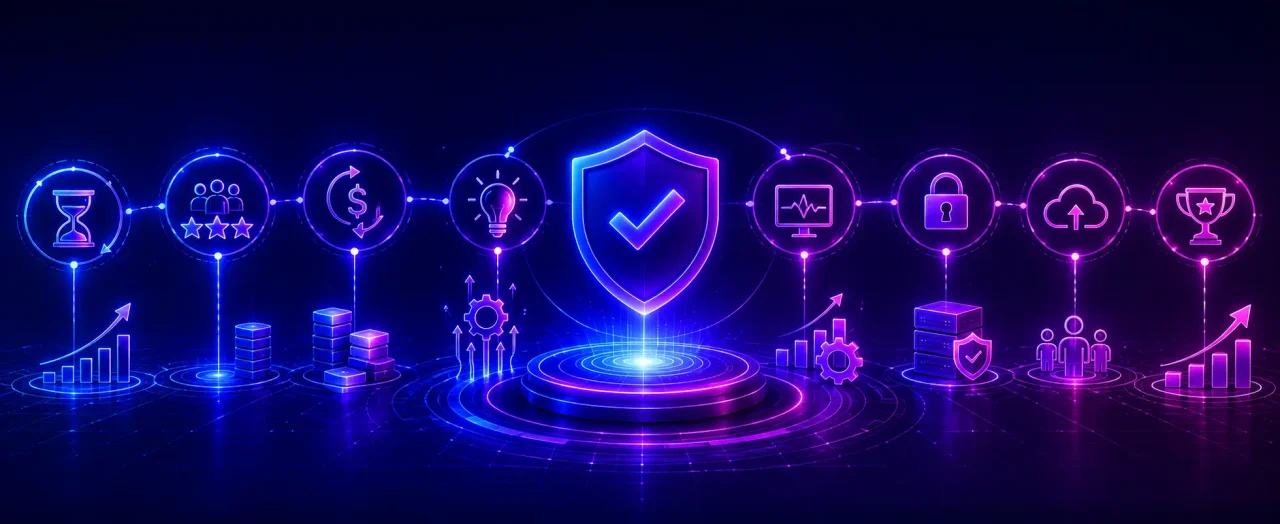
- Longer Product Lifespan: Sustenance helps organisations preserve valuable software while modernising the highest-risk components.
- Better Customer Satisfaction: reliability, faster resolution, and continuous enhancement create a better user experience.
- Reduced Operational Costs: Automation, cloud optimisation, and defect prevention reduce the cost of operating the product.
- Faster Innovation: Removing technical constraints allows teams to release new features more efficiently.
- Improved Product Stability: Testing, monitoring, and preventive engineering reduce recurring incidents.
- Enhanced Security: Continuous vulnerability management helps the product respond to evolving threats.
- Increased Scalability: Architecture and infrastructure improvements prepare the product for additional users and data.
- Higher ROI: A product that remains useful and reliable continues generating value from the original investment.
- Better Brand Reputation: Customers often associate product quality directly with the organisation behind it.
Product Sustenance Best Practices
- Monitor Product Health Continuously: Monitoring should cover availability, response time, errors, integrations, infrastructure, and critical user journeys.
- Automate Testing: Regression, integration, API, security, and performance testing make mature products safer to change.
- Keep Dependencies Updated: Regular upgrades are easier and less risky than waiting several years between major changes.
- Invest in Documentation: Documentation should be updated as part of delivery, not postponed until a later date.
- Adopt DevSecOps: Security checks should be integrated into design, development, testing, deployment, and monitoring.
- Perform Regular Code Reviews: Code reviews improve quality, knowledge sharing, security, and consistency.
- Prioritise Customer Feedback: Support requests, reviews, interviews, and usage analytics should influence the product roadmap.
- Use Predictive Monitoring: Predictive monitoring can identify behaviour that may indicate an upcoming failure or capacity issue.
Experion approaches sustenance as part of the wider product engineering lifecycle, combining modernisation, cloud, quality engineering, integration, managed support, and ongoing optimisation.
Modern Technologies Used in Product Sustenance
Artificial Intelligence
AI can analyse logs, incidents, code, support tickets, and performance data.
Predictive maintenance identifies signs that a component may fail. Intelligent monitoring filters meaningful anomalies from normal variation. AI-assisted root cause analysis can connect alerts, logs, and deployment events to suggest likely causes.
Machine Learning
Machine learning can support failure prediction and anomaly detection by identifying unusual patterns in application behaviour, traffic, transactions, or infrastructure usage.
Cloud Platforms
Cloud platforms provide scalable infrastructure, managed services, automated backups, and stronger monitoring capabilities.
Containerisation
Containers package applications with their dependencies and create more consistent deployment across environments.
They can also support gradual modernisation of legacy products.
Observability Platforms
Observability combines logs, metrics, traces, and events to show how issues move across the product environment.
CI/CD
Continuous integration and delivery automate testing, validation, deployment, and rollback.
This allows teams to release smaller changes more safely and frequently.
Product Sustenance for Different Industries
- Healthcare: Healthcare products require privacy, security, reliability, interoperability, and regulatory compliance.
- Banking and Financial Services: Financial products demand high availability, transaction accuracy, fraud controls, and secure integration with complex ecosystems.
- Retail and Ecommerce: Retail platforms must handle seasonal demand, payment systems, inventory updates, and rapidly changing customer journeys.
- Manufacturing: Manufacturing platforms often connect with equipment, factories, suppliers, and enterprise systems.
- Logistics: Logistics products depend on real-time data, mobile applications, external partners, and location services.
- Education: Education platforms must support different devices, accessibility requirements, seasonal demand, and student data protection.
Product Sustenance for Legacy Software
Legacy software often contains years of valuable business logic. Age alone is not a reason to replace it.
Common Legacy Challenges
Typical problems include unsupported technologies, outdated frameworks, weak documentation, tightly coupled architecture, manual deployment, limited testing, and difficult integrations.
Modernisation Approaches
- Refactoring: Refactoring improves the internal structure of code without significantly changing how the product behaves.
- Replatforming: Replatforming moves the product to a more modern environment while preserving much of the existing application.
- Rearchitecting: Rearchitecting changes the structure of the product, such as breaking a monolith into modular services.
- Containerisation: Containerisation can create deployment consistency and provide an intermediate step towards cloud-native architecture.
- Cloud Migration: Cloud migration can improve scalability, resilience, and observability, but simply moving an old application to the cloud may not solve its deeper problems.
Outsourcing Product Sustenance Services
Why Companies Outsource?
In order to free up internal teams to concentrate on strategic product development, organizations frequently outsource software product support.
Monitoring, issue response, testing, infrastructure, upgrades, and specific improvements can all be handled by a specialist partner.
Cost effectiveness, access to specialized talents, increased support coverage, quicker problem solving, and the capacity to scale the team as needed are all benefits of outsourcing.
What to Look for in a Partner?
Domain experience, technological know-how, security procedures, explicit SLA guarantees, open communication, committed support teams, and a successful worldwide delivery model are all characteristics of a strong partner.
Instead of handling each support request as a separate ticket, the partner should also comprehend the product plan.
Measuring Product Sustenance Success
Business KPIs
Useful business measures include customer retention, customer satisfaction, Net Promoter Score, revenue growth, product adoption, and feature usage.
Technical KPIs
Technical measures include uptime, Mean Time to Resolution, deployment frequency, incident rate, response time, error rate, and performance.
Operational KPIs
Operational measures include support ticket volume, average resolution time, SLA compliance, infrastructure costs, and documentation coverage.
The strongest measurement model connects technical improvements with customer and business outcomes.
Common Mistakes to Avoid
The organization has fewer options if it waits for systems to fail.
Ignoring technological debt, putting off upgrades, keeping inadequate documentation, depending solely on reactive maintenance, ignoring security updates, failing to measure KPIs, and leaving out user feedback from the roadmap are some other typical errors.
Treating sustenance as low-value labor is another error. Decisions about product support have a direct impact on architecture, future development, revenue, customer retention, and security.
Future Trends in Product Sustenance and Support
- AI-Driven Product Maintenance: AI will increasingly support incident classification, code analysis, test generation, log summarisation, and issue diagnosis.
- Shift-Left Security: Security testing will move earlier into design and development.
- Predictive Analytics: Operational data will help predict capacity issues, failures, support demand, and customer churn.
- Self-Healing Systems: Some systems will automatically restart services, adjust resources, reroute traffic, or restore configurations when known failures occur.
- Autonomous Monitoring: Monitoring platforms will group alerts, identify likely impact, and recommend actions.
- Digital Twins: Digital twins may help teams test infrastructure and architecture changes before applying them to live environments.
- Hyperautomation: AI, workflow automation, testing, infrastructure management, and support operations will become more connected.
- Sustainable Software Engineering: Teams will pay greater attention to energy usage, cloud efficiency, and unnecessary data storage.
- Cloud-Native Product Sustenance: To enhance recovery, releases, and scalability, cloud-native sustenance will make use of containers, orchestration, managed services, automated infrastructure, and observability.
From platform scaling and new product development to legacy modernization, sustenance engineering, and managed maintenance, Experion’s product engineering methodology can support the entire lifecycle.
Conclusion
The mere fact that a software product was well-designed and constructed does not guarantee its continued success. Its surroundings shift. Consumer expectations are rising. Threats to security change with time. Technologies are no longer supported. Rules change. New demands are introduced by business models.
Product sustenance offers a methodical approach to handling this transition.
It enhances security, performance, scalability, usability, and cost effectiveness while safeguarding day-to-day operations. It enables businesses to maintain important business logic without being constrained by antiquated technology.
The most effective sustenance strategies link product development with support. The roadmap is informed by customer concerns. Architecture is shaped by operational data. Delivery now includes security. Instead than waiting for a catastrophe, modernization occurs gradually.
Product Sustenance and Support is more than just a means of extending software life for companies that manage mature or business-critical products. It is a means of guaranteeing that the product will continue to provide value.
Experion can support this journey through product sustenance, modernisation, cloud engineering, quality engineering, integration, AI-enabled operations, and managed product support, shaped around the product’s current condition and long-term roadmap.
Frequently Asked Questions (FAQs)
What is product sustenance and support?
It is the ongoing work required to keep a software product stable, secure, scalable, relevant, and aligned with customer and business needs.
How is product sustenance different from software maintenance?
Maintenance mainly focuses on fixing issues. Sustenance also includes modernisation, optimisation, security, architecture improvement, and long-term product evolution.
What services are included in product sustenance?
Typical product sustenance engineering services include bug fixing, monitoring, testing, security updates, feature enhancement, infrastructure support, cloud optimisation, upgrades, and documentation.
When should organisations look for product sustenance partners?
Businesses should consider a partner when support demand rises, releases slow down, specialist skills are unavailable, or technical debt begins affecting product growth.
How much does product sustenance cost?
Cost depends on product complexity, support hours, technology, incident volume, infrastructure, compliance, and required team size.
Can legacy software be sustained instead of replaced?
Yes. Many legacy products can be stabilised and modernised through refactoring, replatforming, APIs, cloud migration, and modularisation.
How are upgrades and performance improvements managed?
Teams begin with impact assessment, testing, dependency analysis, monitoring, and staged implementation to reduce disruption.
What industries benefit most?
Healthcare, banking, insurance, retail, manufacturing, logistics, education, and enterprise software businesses benefit significantly.
Should product sustenance be outsourced?
Outsourcing can be valuable when it provides specialist expertise, structured support, extended coverage, and scalable engineering capacity.
How do AI and automation improve product sustenance?
They support anomaly detection, predictive monitoring, incident classification, test automation, code analysis, and faster root cause investigation.
