

At Experion Technologies, we build secure, scalable Assisted Living Software platforms that help senior care providers modernize operations, improve resident outcomes, and ensure regulatory compliance.
The demand for assisted living and senior care services is growing rapidly across the globe. Aging populations, longer life expectancy, and increasing preference for community-based care are driving expansion in assisted living facilities and senior living communities. At the same time, providers face stricter regulatory requirements, staffing shortages, and rising operational complexity.
Senior care operators must manage medication administration, care documentation, staff scheduling, compliance reporting, family communication, and financial operations seamlessly. Manual processes and paper-based systems no longer meet these demands. The shift toward person-centered care models further requires real-time visibility into resident health, preferences, and outcomes.
Technology is redefining assisted living operations. Modern assisted living software solutions provide integrated tools that streamline workflows, enhance care quality, and enable data-driven decision-making. From adaptive assisted living software that personalizes care plans to senior living software solutions that manage multi-location facilities, digital transformation is becoming essential in aged care and senior living environments.
Key Takeaways
- Assisted Living Software improves operational efficiency and resident care quality.
- Assisted living management software supports compliance and medication safety.
- Senior living software solutions enable scalable, multi-location oversight.
- Technology adoption is critical for modern assisted living facilities.
- Adaptive assisted living software supports person-centered care models.
What is Assisted Living Software?

Assisted Living Software is a specialized digital platform designed to manage the operational, clinical, and administrative functions of assisted living facilities and senior care communities. It centralizes resident records, care plans, medication management, scheduling, billing, compliance tracking, and communication into a single system.
The core purpose of software for assisted living facilities is to streamline daily operations while enhancing the quality of care delivered to residents. Unlike generic management tools, assisted living facility software is tailored to the unique needs of aged care and residential assisted living environments.
Upgrade your assisted living facility software for better care and compliance.
How it Differ from Senior Living Software?
Although often used interchangeably, assisted living software and senior living software can differ based on scope and care level.
Senior living software typically encompasses independent living, assisted living, and sometimes memory care communities. It may focus more on community engagement, lifestyle management, and occupancy tracking.
Assisted living management software, on the other hand, emphasizes:
- Medication administration
- Clinical documentation
- Compliance management
- Care planning and ADL tracking
Residential assisted living software often integrates deeper clinical workflows compared to broader senior living software solutions.
Types of Assisted Living Software
- All-in-One Management Platforms : These platforms combine resident management, billing, compliance, and scheduling in a unified system. They are often considered the best assisted living software for multi-service communities seeking comprehensive oversight.
- Clinical Care-Focused Systems: Designed for facilities with higher medical care requirements, these systems prioritize clinical documentation, medication tracking, and regulatory reporting.
- Operations and Billing Solutions: These platforms focus primarily on financial management, invoicing, and occupancy tracking.
- Resident Engagement Platforms: These solutions emphasize communication, activity scheduling, and family portals to enhance the resident experience.
Key Features of Assisted Living Software
Resident Management
Digital resident records allow facilities to maintain comprehensive profiles including medical history, preferences, and care requirements.
Core capabilities include:
- Care plans and assessments
- Medication tracking
- Incident reporting
Assisted living facilities software centralizes this information for easy access by caregivers and administrators.
Care Planning and Clinical Documentation
Person-centered care is the foundation of modern assisted living and senior care environments. Every resident has unique medical conditions, personal preferences, mobility levels, and cognitive abilities. Assisted Living Software plays a critical role in translating these individual needs into structured, actionable care plans that guide caregivers on a daily basis.
Unlike paper-based systems or fragmented documentation tools, assisted living management software centralizes clinical documentation, ensures accuracy, and supports continuity of care across shifts and departments.
Care Plan Creation and Updates
Care plans are living documents that define how each resident’s physical, emotional, and social needs are addressed. Assisted living facility software allows administrators and clinical staff to create comprehensive digital care plans that include:
- Medical history and diagnoses
- Medication schedules
- Dietary requirements
- Mobility and assistance levels
- Behavioral and cognitive support needs
- Personal preferences and lifestyle routines
With residential assisted living software, care plans can be updated in real time as a resident’s condition changes. This ensures that caregivers always have access to the most current instructions, reducing miscommunication and improving consistency of care.
Goal-Setting and Outcome Tracking
Person-centered care emphasizes measurable goals. Assisted living software solutions enable facilities to define short-term and long-term care objectives for each resident.
For example:
- Improving mobility after a fall
- Stabilizing blood pressure levels
- Supporting cognitive engagement activities
- Reducing hospital readmissions
Senior living software solutions track outcomes against these goals, allowing staff to evaluate progress and adjust interventions accordingly. This structured approach enhances accountability and promotes continuous improvement in aged care settings.
Activities of Daily Living Assessment and Charting
Activities of Daily Living, commonly referred to as ADLs, are a core component of assisted living documentation. These involve essential daily functions like bathing, dressing, eating, toileting, transferring, and continence.
Assisted living facilities software enables caregivers to:
- Chart ADL assistance levels digitally
- Record changes in independence status
- Identify trends in functional decline
- Generate reports for compliance and audits
Automated ADL charting through adaptive assisted living software reduces manual paperwork and improves accuracy in documenting care delivery.
Fall Risk and Skin Integrity Assessments
Falls and skin breakdown are among the most significant risks in senior care environments. Assisted living management software incorporates standardized assessment tools to evaluate fall risk factors and skin integrity concerns.
Features may include:
- Fall risk scoring tools
- Automated alerts for high-risk residents
- Pressure ulcer risk assessments
- Scheduled reassessments
- Incident documentation with root cause tracking
By digitizing these assessments, software for assisted living facilities improves preventive care and supports regulatory compliance.
Progress Notes and Incident Documentation
Clear documentation is essential for legal protection, compliance, and care continuity. Assisted living software solutions allow caregivers to enter progress notes directly into digital resident profiles.
Benefits include:
- Time-stamped documentation
- Structured templates for consistency
- Immediate visibility across departments
- Audit-ready records
Incident reporting modules enable staff to document events such as falls, medication errors, or behavioral incidents. Senior living software ensures that these records are securely stored and accessible for compliance review.
Wound Care Tracking
Wound management requires detailed monitoring, particularly for residents with diabetes or limited mobility. Assisted living facility software supports wound care documentation through:
- Image uploads for visual tracking
- Measurement and healing progress logs
- Treatment documentation
- Automated follow-up reminders
This structured approach enhances care quality and reduces risk of complications.
Adaptive Care Plan Adjustments
One of the most powerful capabilities of adaptive assisted living software is its ability to respond to changing resident conditions. When new assessments, medication updates, or incident reports are logged, the system can trigger care plan updates or alerts.
For example:
- Increased fall risk may prompt additional monitoring
- Medication changes may update administration schedules
- Declining mobility may trigger revised ADL assistance levels
By integrating real-time data with care planning workflows, assisted living management software supports proactive, responsive care delivery rather than reactive adjustments.
Strengthening Person-Centered Senior Care
Care planning and clinical documentation modules within assisted living software solutions ensure that resident needs remain at the center of operations. They empower caregivers with accurate, accessible information and provide administrators with oversight into care quality and compliance.
In an environment where resident safety and dignity are paramount, digital care documentation through modern assisted living facilities software becomes a critical enabler of high-quality, person-centered senior care.
Medication Management
Medication errors pose significant risks in senior care environments. Assisted living management software includes:
- eMAR integration
- Automated reminders
- Drug interaction alerts
- Compliance documentation
These features reduce errors and support regulatory alignment.
Scheduling and Staff Management
Staff shortages are a common challenge in aged care. Assisted living scheduling software optimizes workforce management by providing:
- Automated staff scheduling
- Shift tracking
- Credential management
- Performance tracking
Efficient scheduling improves care consistency and staff accountability.
Billing and Financial Management
Financial management is one of the most complex and sensitive aspects of operating assisted living and senior care facilities. From resident billing and insurance claims to payroll coordination and regulatory reporting, the financial side of assisted living requires precision, transparency, and efficiency.
Modern Assisted Living Software simplifies and automates these processes, reducing manual errors and strengthening revenue cycle management. By centralizing billing and accounting workflows, software for assisted living facilities ensures accurate invoicing, faster payments, and improved financial oversight.
Automated Invoicing
In assisted living environments, billing structures can vary significantly. Charges may include:
- Base accommodation fees
- Care level adjustments
- Medication management services
- Therapy sessions
- Special dietary services
- Ancillary services such as transportation
Manually calculating these charges for each resident increases the risk of errors and delays. Assisted living management software automates invoice generation based on predefined billing rules and care plans.
Key capabilities include:
- Recurring billing automation
- Customizable fee structures
- Prorated billing for mid-month admissions or discharges
- Automatic updates when care levels change
With residential assisted living software, invoices are generated consistently and accurately, reducing disputes and administrative workload.
Insurance Claims Processing
Many assisted living facilities work with long-term care insurance providers or government reimbursement programs. Managing claims manually can be time-consuming and error-prone.
Assisted living facilities software integrates billing modules with insurance workflows to:
- Generate standardized claim forms
- Track submission status
- Flag missing documentation
- Automate reimbursement reconciliation
By integrating clinical documentation with billing data, assisted living software solutions ensure that claims are supported by accurate records, improving approval rates and reducing delays.
Payment Tracking
Timely payment collection is critical for maintaining stable cash flow. Assisted living software provides transparent tracking of:
- Outstanding balances
- Payment histories
- Partial payments
- Overdue accounts
Automated reminders can be sent to families or responsible parties, reducing the need for manual follow-ups. Senior living software solutions also support multiple payment methods, including electronic transfers and online payment portals.
This level of visibility strengthens financial accountability and reduces revenue leakage.
Financial Reporting Dashboards
Data-driven financial management is essential for both single facilities and multi-location operators. Assisted living management software includes reporting dashboards that provide real-time insights into:
- Monthly revenue performance
- Occupancy-related income trends
- Outstanding receivables
- Service-specific profitability
- Expense breakdowns
These dashboards enable administrators to make informed decisions about pricing strategies, staffing levels, and operational improvements.
For multi-facility operators, senior living software solutions consolidate financial data across locations, providing centralized oversight and performance benchmarking.
Reducing Administrative Burden
Manual billing systems often require repetitive data entry and cross-checking between departments. Assisted living scheduling software and care modules can automatically update billing when service levels change, eliminating redundant work.
By reducing paperwork and minimizing errors, assisted living facility software frees administrative teams to focus on strategic planning rather than transactional processing.
Improving Cash Flow Visibility
Cash flow stability is essential for sustaining high-quality senior care. Automated billing, real-time payment tracking, and integrated financial reporting provide clear visibility into revenue streams and outstanding receivables.
This improved visibility allows operators to:
- Forecast revenue accurately
- Identify financial bottlenecks
- Adjust pricing or service models
- Plan capital investments confidently
Supporting Growth and Scalability
As senior living communities expand, financial complexity increases. Adaptive assisted living software scales to support additional residents, service packages, and facilities without overwhelming accounting teams.
By streamlining billing and financial management processes, assisted living software solutions not only improve operational efficiency but also strengthen the financial foundation of assisted living and aged care organizations.
Empower your caregivers with adaptive assisted living software built for today’s challenges.
Compliance and Regulatory Tools
Assisted living facility software must meet strict compliance standards. Features include:
- Audit trails
- HIPAA-compliant data storage
- State reporting tools
- Risk management alerts
These capabilities ensure regulatory readiness.
Communication and Family Portals
Transparent communication improves family trust. Senior living software solutions often include:
- Family updates
- Secure messaging
- Activity calendars
- Emergency notifications
Reporting and Analytics
Data-driven insights empower administrators to monitor performance through:
- Occupancy tracking
- Revenue forecasting
- Care quality metrics
- Customizable dashboards
Benefits of Assisted Living Software Solutions
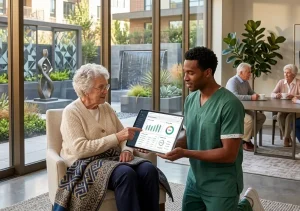
Implementing assisted living software solutions delivers measurable advantages:
- Improved operational efficiency
- Enhanced resident care quality
- Reduced medication errors
- Better compliance management
- Data-driven decision-making
- Improved family satisfaction
- Scalability for multi-location operators
Who Uses Assisted Living Software?
Assisted living management software serves multiple stakeholders:
- Assisted living facility administrators
- Caregivers and nurses
- Billing departments
- Compliance officers
- Multi-facility operators
- Families and residents
At Experion Technologies, we design adaptive assisted living software platforms that align with the operational realities of senior care providers while maintaining regulatory compliance and scalability.
Partner with us to build custom assisted living software tailored to your community.
Assisted Living Software vs Nursing Home Software: Key Differences
Although assisted living and nursing homes both fall under the broader senior care ecosystem, their operational requirements differ significantly. Understanding these differences is critical when selecting assisted living facilities software.
Level of Medical Care Required
Assisted living communities typically provide support with Activities of Daily Living such as bathing, dressing, medication reminders, and mobility assistance. Nursing homes provide higher acuity medical care, including 24/7 skilled nursing supervision.
As a result, assisted living management software focuses on care coordination, medication management, scheduling, and resident engagement. Nursing home systems often require deeper clinical charting, physician documentation modules, and advanced medical billing functionality.
Regulatory Differences
Regulations for assisted living vary by state and region, while nursing homes are subject to stricter federal healthcare standards in many countries. Assisted living facility software must support state-specific compliance, reporting, and licensing requirements.
Senior living software solutions for nursing homes may require integration with additional regulatory frameworks tied to skilled nursing reimbursement models.
Clinical Documentation Depth
Residential assisted living software generally includes documentation tools for ADL tracking, fall assessments, medication administration, and progress notes. Nursing home software requires more extensive clinical modules such as treatment plans, physician orders, and skilled therapy documentation.
Choosing the best assisted living software depends on aligning system complexity with the level of care delivered.
Integration Requirements
Assisted living software solutions may require integration with pharmacy systems, EHR platforms, payroll systems, and accounting software. Nursing home platforms often require deeper hospital-grade integrations.
Understanding the operational scope of your community ensures you select the appropriate software for assisted living rather than an overbuilt system.
Must-Have Integrations for Senior Care
Technology in senior living environments must operate as an integrated ecosystem. Standalone systems create inefficiencies and data silos.
Electronic Health Records (EHR)
Integration with EHR systems ensures that resident medical information is updated in real time. Assisted living facility software must support secure health record exchange and standardized data formats.
Pharmacy Systems
Medication management modules should connect directly with pharmacy providers to ensure accurate dispensing, refill tracking, and drug interaction alerts.
Accounting Software
Financial operations become more efficient when assisted living management software integrates with accounting platforms for automated billing, payroll processing, and reporting.
Payroll Systems
Integration with payroll ensures accurate staff compensation tied to scheduling and attendance tracking.
CRM Systems
Senior living software solutions often connect with CRM systems to manage prospective resident pipelines, occupancy tracking, and marketing performance.
IoT and Remote Monitoring Devices
Wearable devices, fall detection systems, and remote monitoring sensors can integrate with adaptive assisted living software to provide real-time alerts and proactive care management.
Modern assisted living software solutions must operate within a connected digital ecosystem to maximize efficiency and care quality.
How to Choose the Best Assisted Living Software?
Selecting the best assisted living software requires a structured evaluation process.
Step 1: Define Your Facility’s Needs
Assess the size of your senior living community, the level of care provided, and budget constraints. Small communities may prioritize inventory tracking and scheduling, while larger multi-location operators require enterprise-level senior living software solutions.
Step 2: Evaluate Core Features
Ensure that assisted living facilities software includes:
- Resident management
- Care planning tools
- Medication tracking
- Assisted living scheduling software
- Financial management modules
Also evaluate scalability, customization options, and whether cloud-based or on-premise deployment fits your operational model.
Step 3: Check Compliance Standards
Verify that the system supports HIPAA compliance and state-specific reporting requirements. Compliance is non-negotiable in aged care environments.
Step 4: Assess Vendor Support
Successful implementation depends on training, onboarding, and ongoing support. Look for vendors that offer structured implementation roadmaps and responsive technical assistance.
Step 5: Review Pricing Models
Pricing structures may include subscription-based models, per-resident pricing, or enterprise licensing for multi-facility operators. Compare total cost of ownership rather than focusing solely on initial licensing fees.
Implementation Strategy for Assisted Living Software Platform
Transitioning to digital systems requires careful planning.
- Conduct Internal Process Audit: Evaluate current workflows, documentation practices, and compliance processes to identify gaps.
- Involve Stakeholders Early: Engage administrators, caregivers, billing staff, and IT teams to ensure system alignment with operational needs.
- Data Migration Planning: Migrating from paper-based or legacy systems requires secure and accurate data transfer. Structured data mapping reduces risk.
- Staff Training Programs: Comprehensive training ensures adoption. Assisted living scheduling software and medication modules must be intuitive and well-understood by staff.
- Pilot Testing: Deploy the system in one department or facility before full-scale rollout. Pilot testing helps identify workflow improvements.
- Go-Live Strategy: Define clear timelines, communication plans, and support structures during launch.
- Post-Implementation Monitoring: Continuous monitoring ensures that assisted living management software continues to meet evolving needs.
Common Challenges in Adopting Software for Assisted Living
Despite clear benefits, facilities may face:
- Resistance to Change: Staff accustomed to paper records may hesitate to adopt digital systems.
- Data Migration Complexities: Historical records may require manual validation and digitization.
- Integration Limitations: Legacy hardware or outdated systems may complicate integration.
- Staff Training Gaps: Insufficient training can delay adoption.
- Budget Constraints: Smaller facilities may struggle with upfront investment costs.
Addressing these challenges proactively ensures smoother implementation.
Future Trends in Assisted Living Facilities Software

Technology continues to evolve rapidly in senior care.
AI-Driven Predictive Care
AI models analyze resident data to predict falls, infections, or hospitalizations before they occur.
Remote Health Monitoring
Wearable integration allows caregivers to monitor vital signs and mobility patterns in real time.
Wearable Device Integration
Smart devices track health metrics and feed data into senior living software solutions.
Voice-Enabled Documentation
Caregivers can document care activities hands-free, improving efficiency.
Automation in Medication Dispensing
Integrated systems reduce human error in medication management.
Cloud-Native Platforms
Cloud-based assisted living facility software enables secure remote access and multi-location management.
Cybersecurity Advancements
Enhanced encryption and multi-factor authentication protect sensitive resident data.
Cost of Developing an Assisted Living Software
Average Pricing Range
Costs vary widely depending on feature scope, integration requirements, and customization. Subscription-based systems may range from moderate monthly fees per resident to enterprise-level pricing models.
Factors Affecting Cost
- Customization requirements
- Integration complexity
- Compliance standards
- Data migration needs
- Multi-location deployment
ROI Calculation Methods
Facilities can measure ROI by evaluating reduced medication errors, improved occupancy rates, staff efficiency gains, and reduced compliance risks.
Long-Term Savings Potential
Although initial implementation may require investment, assisted living software solutions reduce administrative overhead, improve operational visibility, and enhance resident satisfaction over time.
Conclusion
Assisted Living Software is transforming the way senior care facilities operate. From medication management and scheduling to compliance reporting and family engagement, modern assisted living management software enables operational excellence.
Technology adoption is no longer optional for assisted living communities aiming to provide safe, efficient, and person-centered care. Whether you manage a single community or multiple senior living facilities, the right assisted living facilities software supports growth, compliance, and improved resident outcomes.
At Experion Technologies, we partner with senior care providers to design secure, scalable assisted living software solutions that enhance care quality, streamline operations, and prepare organizations for the future of senior living.
Frequently Asked Questions (FAQ’s)
- What is the best assisted living software?
The best assisted living software depends on facility size, level of care, and integration needs. Comprehensive assisted living management software with scheduling, medication tracking, and compliance tools is often preferred. - Is assisted living software HIPAA compliant?
Yes, most modern assisted living software solutions include HIPAA-compliant data storage and encryption. - What is the difference between assisted living and senior living software?
Assisted living software focuses more on clinical care coordination and compliance, while senior living software may include broader community management tools. - How much does an assisted living solution cost?
Costs vary based on features, customization, and deployment model. - Can small facilities afford assisted living software?
Yes. Inventory management and assisted living scheduling software modules can be scaled for small communities. - Does assisted living software integrate with EHR systems?
Yes, integration with EHR systems is a common feature. - Is there AI-driven assisted living software for predictive health monitoring?
Yes, adaptive assisted living software increasingly includes AI-driven predictive analytics. - Can assisted living management software help reduce medication errors and improve safety in senior care facilities?
Yes, features like eMAR integration and automated alerts significantly reduce errors. - What are the top features of assisted living software?
Resident management, care planning, medication tracking, scheduling, billing, compliance tools, and analytics. - How long does assisted living software solution implementation take?
Implementation timelines depend on facility size and complexity, typically ranging from several weeks to a few months. - How to migrate from paper-based records to digital assisted living software without disrupting resident care?
Plan phased migration, conduct data validation, and provide staff training to ensure smooth transition. - Does assisted living software provide business intelligence and occupancy analytics for multi-location operators?
Yes, senior living software solutions offer dashboards and analytics for occupancy and revenue tracking. - What is the best assisted living software for small facilities?
Inventory and scheduling-focused assisted living facility software tailored for small communities can be ideal. - How to choose the right assisted living software development firm?
Evaluate industry experience, compliance knowledge, customization capability, and long-term support offerings.
At Experion Technologies, we combine domain expertise and modern engineering practices to deliver adaptive assisted living software that empowers senior care providers to operate efficiently, remain compliant, and deliver exceptional resident experiences.