

Experion combines deep engineering precision with innovative digital strategy to build custom construction estimating software that eliminates guesswork and secures project profitability from day one.
Modern construction projects are growing in complexity, involving intricate global supply chains, fluctuating material costs, and stringent regulatory requirements. In this high-stakes environment, inaccurate estimates remain the industry’s biggest profit killer, often leading to cost overruns that can derail even the most promising developments. To stay competitive, digital transformation is reshaping construction cost estimating, moving the industry away from error-prone manual calculations toward integrated, data-driven systems.
What is Construction Estimating Software?
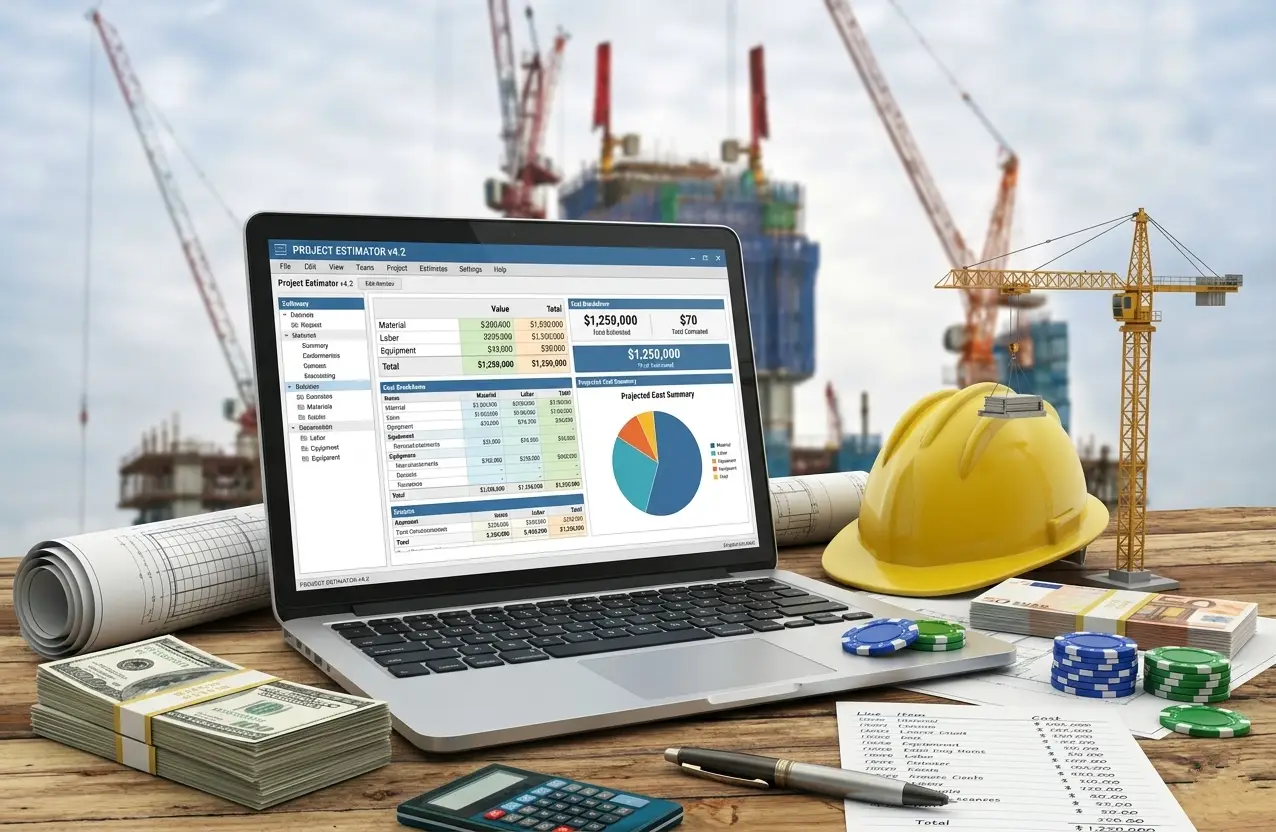
Construction estimating software is a specialized digital solution designed to calculate the total projected costs of a building project. The core purpose of estimating software is to provide an accurate breakdown of labor, materials, equipment, and overhead, allowing firms to submit competitive bids while maintaining healthy margins.
Key Users Using Estimating Software
A robust construction estimation software platform serves as a single source of truth for various stakeholders:
- Estimators: Use the estimation software to perform digital takeoffs and apply current market pricing to project specifications.
- Project Managers: Rely on construction estimator software to set budget baselines and track potential variances during the build phase.
- Contractors: Utilize software for construction estimates to manage bidding processes and ensure all subcontractors are aligned with the budget.
- Subcontractors: Leverage construction estimating software for small business needs to provide quick, accurate quotes for specialized trades like electrical or plumbing.
Integration with Project Management and ERP Systems
The best construction estimating software does not exist in a silo. Modern cloud based construction estimating software is designed to integrate seamlessly with Project Management tools and Enterprise Resource Planning (ERP) systems. This connectivity ensures that once an estimate is approved, the data flows directly into procurement and scheduling, maintaining financial consistency throughout the project lifecycle.
What are a Few Construction Cost Estimating Methods?
Effective construction cost estimating software often supports multiple calculation methodologies to suit different project stages:
- Unit Cost Estimating: Assigning a fixed price to specific units of work (e.g., cost per square foot).
- Stick Estimating: A highly detailed method where every single piece of material and every hour of labor is accounted for manually.
- Parametric Estimating: Using statistical modeling and historical data from previous projects to forecast costs for new builds.
- AI Construction Estimating Software: Leveraging machine learning to analyze massive datasets and predict future price fluctuations or hidden risk factors.
Why Traditional Estimating Methods Fail?
While many firms still rely on legacy processes, estimating software for construction has highlighted the critical vulnerabilities of manual workflows.
- Human Error and Version Control Issues: Spreadsheets are notorious for broken formulas and “v2_final_final” file naming confusion. Unlike a dedicated construction estimate software, manual files lack the audit trails needed for high-stakes bidding.
- Inconsistent Pricing Data: Without building construction cost estimating software, estimators often rely on outdated price books. Cloud based construction estimating software can pull real-time data from supplier databases to ensure accuracy.
- Time-Consuming Calculations: Manual takeoffs can take days. The best estimating software for construction automates these calculations, allowing teams to turn around bids in a fraction of the time.
- Difficulty Managing Multi-Location Projects: Traditional methods struggle to account for regional differences in labor rates or taxes. Commercial construction estimating software handles these variables automatically across different geographies.
- Limited Collaboration: Standard spreadsheets make it difficult for multiple team members to work on a bid simultaneously. Modern estimator software for construction allows for real-time collaboration, ensuring that the structural, MEP, and finish teams are always in sync.
Key Features of Construction Estimate Software
The best construction estimating software makes the bidding process easier and more efficient. It does this by automating tasks that you have to do over and again and by keeping all your data in one place. This means your construction cost estimating is both fast and accurate.
Digital Takeoff Tools
Modern construction estimating software lets you stop using paper blueprints and scale rulers.
- Blueprint Uploads: You can easily import PDF, CAD or BIM files directly into the estimation software.
- Automated Quantity Takeoffs: The software automatically calculates counts, lengths and areas from drawings.
- Material Measurements: You can instantly generate lists of required materials like how many linear feet of piping you need or how many cubic yards of concrete.
Cost Database Management & Pricing Engine
A good pricing engine is at the heart of construction estimation software.
- Real-Time Material Pricing: You can connect to live supplier feeds to make sure your construction estimate software has the prices.
- Labor Rate Libraries: You can. Update complex labor costs, including union wages, benefits and local taxes.
- Equipment Cost Tracking: You can factor in rental rates, fuel consumption and maintenance for heavy machinery.
Bid Management
Construction estimate software makes it easier to manage vendors.
- Subcontractor Quote Comparisons: You can compare bids side by side to choose the competitive and qualified ones.
- Proposal Generation: You can create documents directly from your software for construction estimates.
- Bid Tracking Dashboards: You can monitor the status of every proposal and incoming quote in one place.
Integration Capabilities
The best construction estimating software works with your other business tools.
- Accounting Software: You can sync budgets with platforms like QuickBooks or Sage.
- ERP Platforms: You can make sure estimates align with your companys planning.
- Scheduling Tools: You can push estimated labor hours directly into project timelines.
- BIM Compatibility: You can extract data directly from 3D models for construction cost estimating.
Reporting & Analytics
Construction estimate software gives you insights to help you refine bids.
- Forecasting: You can predict cash flow requirements throughout the project.
- Cost Variance Analysis: You can compare estimated costs to spend to identify problems.
- Profit Margin Predictions: You can see how a discount or a material price hike impacts your bottom line.
Cloud Collaboration
Cloud-based construction estimating software helps the office and the job site work together. Field teams can view the estimate to ensure they are building within scope while the office gets real-time updates on material usage.
AI and Automation Features
The next generation of construction estimating software uses intelligence.
- Auto-Categorization: Artificial intelligence. Labels line items based on historical patterns.
- Predictive Cost Modeling: Machine learning forecasts price trends for materials like lumber and steel.
- AI-Assisted Scope Review: The system flags omissions or problems in the project specs before you submit them.
Stop losing profits to inaccurate estimates, Schedule a Free Demo with us!
Types of Construction Estimating Software
Choosing the type of construction estimating software is important.
Cloud Based Construction Estimating Software: This is the popular choice because it is flexible.
- Remote Collaboration: You can access estimating software from any device with an internet connection.
- Updates: You always have the latest features and security patches.
- Subscription Pricing: You have upfront costs and predictable monthly or annual fees.
On-Premise Software: This is favored by companies with strict internal rules.
- Data Control: All project information is stored on your servers.
- Custom Deployment: You can tailor the software environment to your IT requirements.
- Higher Upfront Costs: You need to make an initial investment in hardware and licenses.
Industry-Specific Estimating Tools: Not all construction estimator software is the same.
- Residential Construction Estimating Software: This is tailored for homebuilders. Focuses on kitchen and bath takeoffs and local residential codes.
- Commercial Construction Estimating Software: This is built for office, retail and multi-use projects, with heavy mechanical, electrical and plumbing requirements.
- Civil & Infrastructure Projects: This is designed for large-scale earthworks, paving and bridge construction where volume-based calculations are important.
How Construction Estimating Software Works?
Construction estimating software for construction is really helpful. It replaces a lot of paper and manual work with a workflow that is easy to use. Here is how a contractor uses it to make a bid from a blueprint.
Step 1: Importing Plans and Drawings
The process starts with uploading project documents into the construction estimation software. This software can handle all kinds of files like PDFs, CAD files and BIM models. It is like a place where all project visuals are stored.
Step 2: Performing a Digital Takeoff
Once the plans are uploaded the estimator software for construction allows users to do a ” takeoff”. This means they can click and drag to measure things on the screen. The best construction estimating software can even do this automatically. It can find every door, window and light fixture in the drawings.
Step 3: Applying Costs from a Database
After the quantities are found the estimation software looks at a cost database to find the prices. This database can be a library of industry prices or a list of prices from a supplier. This way every material is given the market price.
Step 4: Adding Labor, Equipment and Markups
Construction estimating software does more than just calculate material costs. It also adds labor hours, equipment rentals and other costs. Users can add profit margins or contingency markups to protect against price changes.
Step 5: Generating and Sending a Formal Bid
Finally the system puts all the data into a professional proposal. With a clicks the software generates a bid that can be sent to the client. This bid has a breakdown of costs and terms.
Benefits of Construction Estimating Software
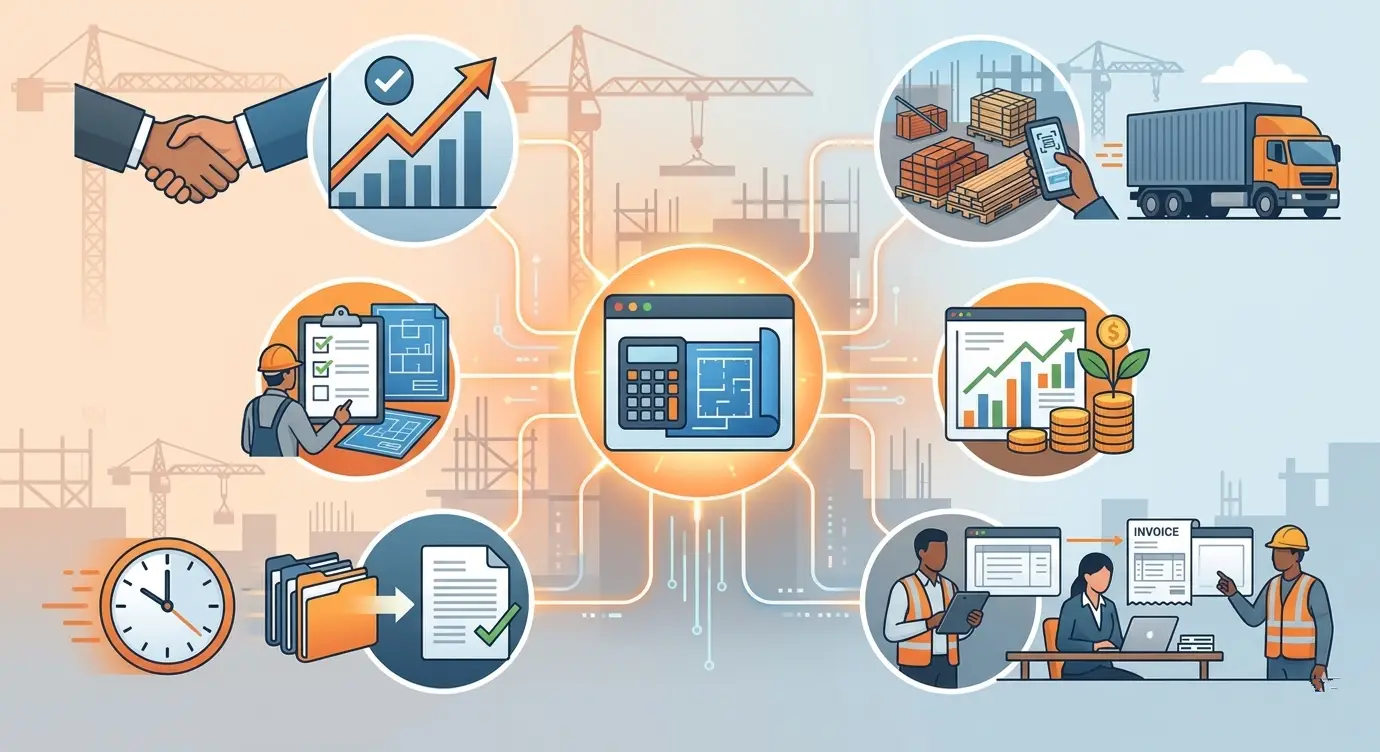
- Construction estimating software makes bids more accurate. It eliminates errors and broken spreadsheet formulas. This reduces the risk of math mistakes.
- Construction estimating software also makes bid preparation faster. What used to take days now takes hours. This means companies can respond to requests without hiring more staff.
- Construction estimating software helps avoid project overruns. It finds the material needs during the estimating phase. This avoids emergency orders during the build.
- Construction estimating software also helps with forecasting. It shows real-time data on projected spending versus spending. This helps companies stay cash-flow positive.
- Construction estimating software improves collaboration. It keeps everyone on the page. The field crew can check the scope and the accounting department can verify vendor quotes.
- Construction estimating software increases win rates. When bids are accurate, professional and submitted on time companies build a reputation for reliability. This leads to awarded contracts.
- Construction estimating software is really helpful for construction companies. It makes the bidding process easier and more accurate. Construction estimating software is a tool, for construction companies.
Experion builds construction estimator software that acts as a strategic engine for growth, allowing your team to bid more aggressively while maintaining total control over project margins.
How Construction Cost Estimating Software Helps Increase Profit?
In the construction business profit margins are really small. So construction cost estimating is very important to protect your companys money. If you use estimating software you can get back some of the money you lost. This software helps in a ways:
- It helps you find costs that you missed. For example you might forget to include the cost of permits or special equipment. Construction cost estimating software can help you find these costs before you sign a contract.
- It helps you avoid bidding low on a project. Sometimes people make mistakes when they do estimates by hand. This can cause you to win a project. Actually lose money on it. Construction estimate software makes sure you include everything, like the cost of materials and labor.
- It helps you use your workers in the way. The estimating software for construction lets you try different crew sizes and skill levels to find the most cost-effective way to finish a project.
- It helps you track how money you are spending in real time. With cloud-based construction estimating software you can compare how much you thought a project would cost to how much it’s actually costing. This helps you make changes before you lose a lot of money.
The Role of Artificial Intelligence in Modern Estimating
Artificial intelligence is changing the way we do estimating. It is turning estimators into analysts.
- Artificial intelligence can automatically detect quantities. It can look at blueprints. Count things like fixtures or measure slab volumes. This reduces the chance of error.
- It can make predictions based on projects. It looks at how past projects went and suggests accurate estimates for future projects.
- It can help you price things based on risk. For example it can flag things that’re risky like the price of copper or lumber. This helps you adjust your prices accordingly.
- It can help you model scenarios. For example you can see what would happen if the price of steel went up 10%. This helps you understand how different market conditions will affect your project.
Factors That Affect the Cost of Estimating Software for Construction
When you are budgeting for construction estimator software there are a few things that affect the total cost.
- How you get the software. If you get it online it usually costs upfront. If you have to install it on your computers it costs more at first.
- How many people will use it. Some companies charge based on how many people will be using the software.
- What features it has. Basic software for construction is usually cheaper, than software for commercial construction that has a lot of advanced features.
- If you need to connect it to software. If you need to connect it to accounting or business software it might cost more.
How to Choose the Best Construction Estimating Software for Your Construction Business?
When you are looking for construction estimating software you need to think about what you need and what you will need in the future.
Define What Your Construction Business Needs
- Company Size: If you have a construction business you need construction estimating software that is fast and easy to use. If you have a construction company you need software that can handle a lot of users.
- Project Types: You need to make sure the software is good for the kind of projects you do. For example if you do construction you need residential construction estimating software. If you do infrastructure projects you need software that can handle that.
- Budget Constraints: You need to think about how much the software costs to buy and how much it will cost to update and maintain it over time.
Look at the Main Features of the Construction Estimating Software
- Ease of Use: If the software is too hard to use your team will just go back to using spreadsheets.
- Customization Options: Can you make your cost lists and reports?
- Integration Flexibility: Can the software work with the tools you use to manage your construction projects and do your accounting?
Check if the Construction Estimating Software Can Grow with Your Business
- Multi-Project Handling: The best construction estimating software should be able to handle a lot of projects at the same time without slowing down.
- Multi-Location Support: If your construction business is growing and you have projects in places you need software that can handle different tax codes and labor rates.
Look at the Support and Training You Get from the Vendor
- Implementation Support: Does the vendor help you set up the software?
- Ongoing Maintenance: Do they keep the software up to date and fix any problems that come up?
- Customer Service Quality: Can you get help when you need it?
Implementation Best Practices for Construction Estimator Software
- Internal Workflow Audit: Look at how you do things before you start using the new software. This will help you make sure the new way is better not worse.
- Data Migration Planning: Clean up your cost lists before you move them to the new software.
- Team Training: Take the time to train your estimators and project managers on the software.
- Change Management Strategies: Tell your team why the new software is a thing and will help your construction business.
- Pilot Testing Before Full Rollout: Try out the software on a small project before you start using it for everything.
Common Challenges and How to Overcome Them
- Resistance to Change: Get your team involved in choosing the software so they feel like they are part of the process.
- Data Accuracy Issues: Check your cost lists regularly to make sure they are accurate.
- Integration Roadblocks: Work with a vendor who can help you get the software to work with your tools.
- Cost Concerns: Think about how money the software can save you in the long run. If you can avoid underbidding on one project that can pay for the software for a time.
Experion can help you switch to construction estimating software that works well and provides good technical support to integrate new features directly into your bidding process, for your construction business.
Future Trends in Construction Estimating
The landscape of construction cost estimating is moving beyond static spreadsheets and into the realm of intelligent, immersive technology. These innovations are designed to make estimating software more proactive than ever before.
AI-Powered Predictive Cost Modeling
Next-generation ai construction estimating software can analyze historical project data alongside current market trends to predict price fluctuations. This allows firms to “future-proof” their bids against sudden spikes in material costs.
BIM Integrated Real-Time Cost Simulation
Building Information Modeling (BIM) is evolving into 5D BIM, where cost is the fifth dimension. By integrating estimation software directly into a 3D model, any change to the design, such as swapping a material or altering a wall’s height, instantly updates the project estimate in real-time.
VR/AR Takeoffs: Immersive Site Modeling
Virtual and Augmented Reality are transforming the digital takeoff process. Estimators can use AR headsets on-site to overlay digital blueprints onto physical spaces, allowing for hyper-accurate measurements of existing conditions before the first brick is laid.
Mobile-First Estimating
Modern cloud based construction estimating software is prioritizing the mobile experience. This allows field teams to perform quick construction cost estimating for change orders directly from a tablet, ensuring that additional work is documented and priced immediately.
Sustainability Cost Tracking
With the rise of green building mandates, best construction estimating software now includes features to track the carbon footprint and “green premium” of materials, helping clients balance environmental goals with budget realities.
IoT-Based Cost Updates
Internet of Things (IoT) sensors on heavy machinery can feed real-time usage data back into the construction estimator software. This provides a more accurate picture of fuel consumption and maintenance costs compared to traditional flat-rate estimates.
Construction Estimating Software vs. Project Management Software
While they often work together, these two types of software for construction estimates and operations serve distinct purposes:
| Feature | Construction Estimating Software | Project Management Software |
| Primary Focus | Pre-construction, bidding, and budgeting. | Execution, scheduling, and site safety. |
| Core Goal | Winning the contract at a profitable price. | Delivering the project on time and within scope. |
| Key Output | Detailed cost proposals and takeoffs. | Gantt charts, RFI logs, and daily reports. |
How They Complement Each Other
You need both to ensure a successful project lifecycle. The estimating software sets the financial “ceiling,” while the project management software tracks the daily “burn rate.” When integrated, the estimate becomes the baseline budget that the project manager uses to measure financial health.
How Experion Can Offer Support in Developing Estimating Software for Construction?
Experion’s technical expertise ensures that your custom construction estimating software is not only technologically superior but also deeply aligned with the unique operational nuances of the building industry.
We specialize in building best estimating software for construction tailored to high-growth firms. Our team can help you:
- Develop Custom AI Models: Integrate predictive analytics into your estimation software to mitigate market volatility.
- BIM & ERP Integration: Bridge the gap between your 3D models and your financial backend for seamless data flow.
- Scalable Cloud Architecture: Build a cloud based construction estimating software that supports multi-region labor rates and global collaboration.
- Legacy Modernization: Transform your outdated, spreadsheet-based construction cost estimating into a modern, automated platform.
Conclusion
Implementing a robust construction estimating software solution is no longer an optional upgrade, it is a survival requirement in a competitive, low-margin industry. By moving away from manual methods, firms gain improved accuracy, faster bid turnaround times, and significantly reduced project overruns.
Digital construction cost estimating empowers your team to bid with confidence, knowing that every linear foot and labor hour is backed by data. Whether you are looking for residential construction estimating software or a massive commercial platform, the right technology turns your bidding process into a powerful competitive advantage.
Frequently Asked Questions (FAQ’s)
- What is construction estimating software?
It is a digital platform used by contractors to calculate the total cost of a project, including materials, labor, and overhead, to create an accurate bid. - How much does construction estimation software cost?
Costs vary from affordable monthly subscriptions for construction estimating software for small business users to larger capital investments for custom enterprise estimation software. - Is construction estimating software worth it for small contractors?
By reducing human error and speeding up the bidding process, even a basic construction estimate software often pays for itself within the first few successfully awarded bids. - Can construction estimate software integrate with accounting systems?
Most best construction estimate software options offer direct integrations with platforms like QuickBooks, Sage, and various enterprise ERPs. - What features to look for in construction estimating software?
Key features include digital takeoff tools, live cost databases, bid management, and cloud-based collaboration. - How does AI construction estimating software improve accuracy?
AI construction estimating software uses historical data and machine learning to flag potential errors and predict future price changes that manual methods miss. - What is the difference between residential and commercial construction estimating software? Residential construction estimating software focuses on home-building specifics like room takeoffs, while commercial construction estimating software handles complex MEP systems and large-scale subcontractor management.
- How does it help reduce project overruns?
By providing a more accurate “bill of materials” during the construction cost estimating phase, it prevents the mid-project surprises that lead to unbudgeted expenses. - How is custom construction estimating software beneficial compared to ready-made software? Custom estimator software for construction is built around your specific workflow, proprietary cost data, and unique integration needs, offering a level of efficiency that “off-the-shelf” tools cannot match.
- How long will it take to develop and implement?
A pilot version of a custom construction estimation software can often be deployed in 3–6 months, depending on the complexity of the integrations required.
Experion provides a strategic partnership that extends beyond development, offering continuous innovation to keep your construction estimating software at the cutting edge of the industry.