

Strengthening global infrastructure resilience with Experion’s engineering-led digital transformation
Infrastructure today is more complex and interconnected than ever. Public works, utilities, transportation networks, smart cities, logistics hubs, and industrial facilities all depend on thousands of physical assets that must be monitored, maintained, and managed across long lifecycles. As cities expand, regulations tighten, and sustainability goals accelerate, organizations are turning to smarter, more automated solutions to oversee their infrastructure.
Differences in global infrastructure maturity also shape technology adoption.
- North America prioritizes modernization of aging utilities, highways, and public works.
- Europe and the UK emphasize compliance, sustainability, and climate resilience.
- The Middle East accelerates mega-projects, futuristic cities, and high-value assets requiring advanced monitoring.
- India and APAC focus on scalability, cost efficiency, and digitization of rapidly growing infrastructure networks.
Amid these variations, one common truth emerges: organizations everywhere need robust infrastructure asset management software to optimize maintenance, reduce lifecycle costs, improve public safety, and make smarter, data-driven decisions.
What Is Infrastructure Asset Management?
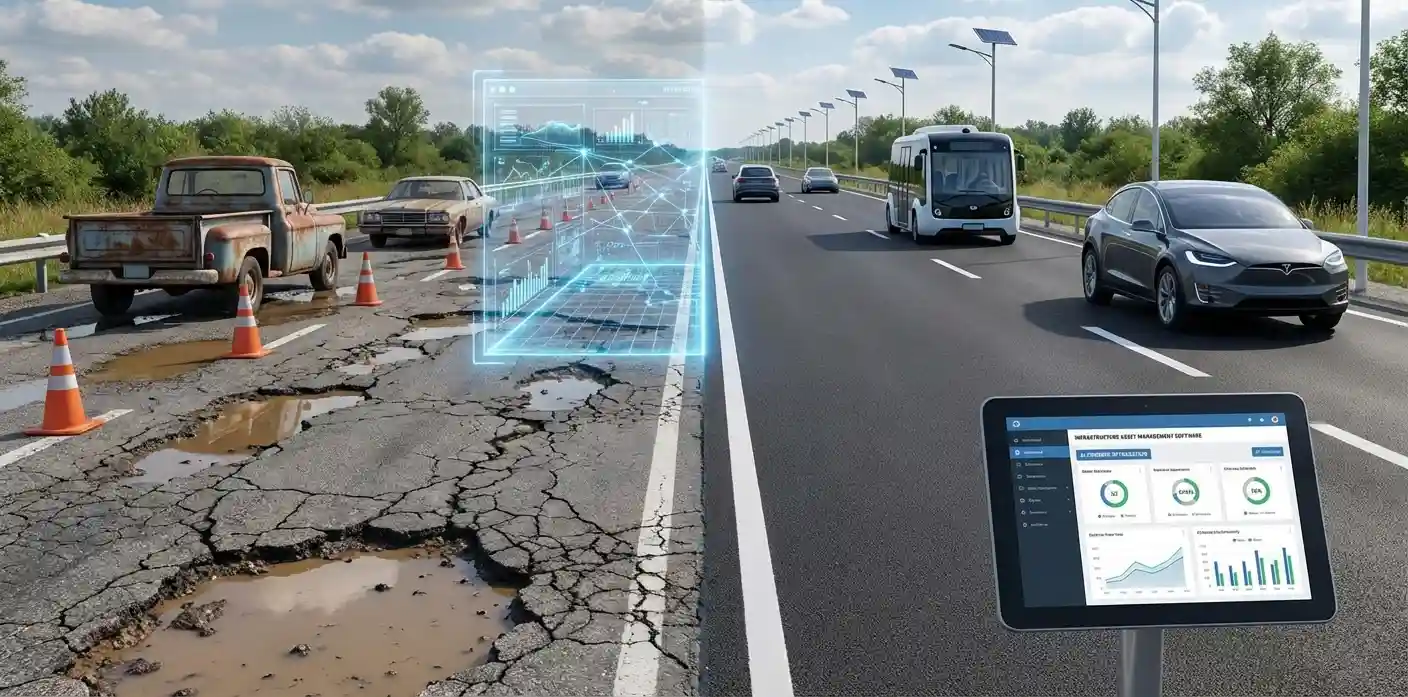
Infrastructure asset management refers to the strategic and data-driven process of maintaining, operating, and optimizing physical infrastructure assets across their entire lifecycle. While the concept sounds simple, the diversity of infrastructure makes it highly complex.
Every asset category behaves differently:
- Roads and highways degrade due to traffic load, weather, and structural stress.
- Bridges require monitoring for corrosion, vibration, and structural fatigue.
- Railways demand continuous inspection of tracks, switches, and rolling stock.
- Water networks face leak risks, pressure imbalances, and contamination threats.
- Electric grids must withstand fluctuating loads, storms, and equipment aging.
- Ports and airports rely on the efficiency of runways, cranes, conveyors, and logistics machinery.
Without a modern infrastructure management system, organizations are left reacting to failures rather than preventing them. Infrastructure asset management allows teams to plan maintenance proactively, allocate budgets effectively, and ensure safety and service reliability over decades.
Transform your infrastructure with data driven intelligence. Talk to Experion today.
The Shift from Manual Systems to Intelligent Digital Asset Platforms
For decades, infrastructure management relied on spreadsheets, paper logs, field notebooks, and siloed systems operated independently by maintenance, engineering, and finance teams. These traditional approaches created inconsistencies, blind spots, and delays.
Pain Points With Legacy Tools and Siloed Processes
Most organizations face similar issues:
- Disconnected data stored across spreadsheets, emails, and local servers
- No real-time visibility into asset condition
- Reactive maintenance triggered only after failures
- Difficulty prioritizing which assets need investment
- Inability to track historical maintenance or total lifecycle cost
- Manual reporting and compliance audits that consume valuable time
Such limitations lead to poor asset performance, budget overruns, and service disruptions.
Why Governments, Municipalities, and Enterprises Are Migrating to Digital-First Platforms?
Digitization is no longer an optional upgrade. It is now an operational necessity.
Modern infrastructure asset management software delivers:
- Real-time condition monitoring
- AI driven insights
- Predictive maintenance planning
- Mobile apps for field inspections
- Integration with GIS, ERP, IoT, and SCADA
- Automated reporting for compliance and audits
- Higher asset lifespan and improved cost predictability
Governments adopt these platforms to provide better public services.
Utilities adopt them to minimize outages and improve grid reliability.
Enterprises adopt them to eliminate inefficiencies and gain operational control.
Geographical Trends Shaping the Evolution of Infrastructure Asset Management
Every region is investing in digital infrastructure, but motivations differ.
- United States and Canada: Smart City Upgrades
Cities across North America are modernizing transportation networks, replacing aging pipelines, and adopting IoT sensors for bridges, roads, and water systems. - UK and European Union: Compliance and Sustainability
Stringent regulations around environmental impact, carbon reduction, and safety drive the adoption of infrastructure asset management solutions. - Middle East: Mega-Projects and Rapid Expansion
Countries like UAE and Saudi Arabia are building smart mega-cities that depend heavily on digital twins, IoT networks, and intelligent maintenance systems. - India and APAC: Scalability and Cost Efficiency
With rapid urban growth, APAC nations need scalable asset management software for roads, water supply, railways, and energy networks.
These global shifts demonstrate a universal need for a modern infrastructure asset management system capable of scaling with regional demands and long-term infrastructure visions.
Understanding Infrastructure Asset Management Software
 Infrastructure asset management software is a digital platform that centralizes asset data, monitors asset condition, automates maintenance workflows, and uses analytics to optimize lifecycle performance. It acts as the operational backbone for teams managing thousands of physical assets dispersed across cities, campuses, or industrial facilities.
Why it matters today:
- Infrastructure is deteriorating more quickly than it is being repaired..
- Regulatory expectations are rising.
- Citizens expect better service reliability.
- Climate risks demand stronger resilience.
- Budgets are tighter and need data-supported justification.
A modern infrastructure asset management solution brings intelligence, foresight, and operational efficiency to these challenges.
Core Capabilities of Infrastructure Asset Management Solutions
A modern infrastructure asset management software platform must go beyond simple asset tracking. It should deliver a unified, intelligent ecosystem that connects field operations, engineering, finance, and leadership teams while supporting long-term infrastructure strategies. The best infrastructure asset management solutions combine advanced analytics, digital workflows, mobility, and integrations to deliver operational, financial, and regulatory excellence.
Below are the essential capabilities that define a next-generation infrastructure asset management system.
Asset Lifecycle Tracking
Track every asset from acquisition to retirement.
Organizations can maintain a complete record of:
- Installation details
- Condition history
- Maintenance logs
- Repair costs
- Utilization metrics
- Replacement planning
Lifecycle visibility allows accurate budgeting and prevents premature asset failure.
Predictive Maintenance
AI powered predictive insights help teams shift from reactive fixes to proactive maintenance planning. Real-time condition data enables:
- Detection of early performance anomalies
- Prediction of degradation patterns
- Scheduling maintenance at optimal intervals
Predictive maintenance optimizes cost, safety, and uptime across all infrastructure categories.
Condition Monitoring
Continuous monitoring through IoT sensors provides real-time updates on:
- Structural load
- Vibration
- Temperature
- Leakage
- Pressure
- Electrical irregularities
Condition data supports automated alerts and risk prioritization.
GIS and Digital Twins
Geospatial intelligence is critical for infrastructure.
GIS mapping allows organizations to visualize assets across cities, campuses, and distributed networks.
Digital twins provide virtual replicas of bridges, pumps, substations, rail lines, and HVAC systems, enabling:
- Simulation
- Scenario planning
- Emergency response modeling
- Climate-resilience assessments
Digital twins are becoming central to the future of infrastructure asset management.
Inventory and Workforce Management
An integrated infrastructure management system coordinates materials, tools, and human resources. It ensures:
- Accurate inventory counts
- Optimized workforce scheduling
- Reduced operational delays
- Quicker response workflows
This is crucial for utilities, municipalities, and logistics operators.
Work Order Automation
Instead of relying on manual instructions or paperwork, intelligent platforms automatically:
- Generate work orders
- Assign tasks
- Schedule maintenance
- Track completion in real time
This digital workflow improves transparency and reduces administrative time.
Performance Analytics
Data-driven insights help teams analyze performance trends, budget needs, and failure patterns.
Analytics dashboards enable:
- Cost forecasting
- Condition trend analysis
- Priority scoring
- Capital planning
This transforms raw data into actionable strategy for long-term asset health.
Compliance Reporting
Infrastructure teams must meet national, regional, and industry-specific regulatory standards.
Software simplifies compliance with:
- Automated reporting
- Documented work histories
- Condition audits
- Inspection proof and timestamps
- Risk scoring
This supports government agencies, utilities, and regulated private entities.
Mobility and Field Apps
Field teams use mobile devices to:
- Conduct inspections
- Update asset condition
- Upload photos and videos
- Complete digital checklists
- Receive work orders
- Access manuals and SOPs
Mobile functionality bridges the gap between field execution and office planning.
Integration with ERP, SCADA, IoT, and BIM Systems
Seamless integrations are essential for large-scale digital ecosystems.
Modern asset management platforms integrate with:
- ERP systems for financial governance
- SCADA systems for control and supervision
- IoT sensors for automation
- BIM for building and infrastructure design data
- CMMS for maintenance execution
This makes the entire infrastructure ecosystem intelligent and connected.
Build a smarter, safer, future ready infrastructure ecosystem with Experion.
How Infrastructure Asset Management Software Works Across Key Sectors?
Infrastructure spans multiple sectors, each with unique operational challenges. Below are detailed real-world applications of asset management software for infrastructure.
- Transportation: Roads, Highways, Bridges, Railways
Transportation networks support millions of users daily and demand continuous monitoring.
Common issues:
- Cracks, potholes, or asphalt fatigue
- Structural corrosion in bridges
- Track misalignment on railways
- Wear on signaling and electrical systems
- Weather-induced damage
Software applications:
- IoT sensors for bridge vibration analysis
- Drones for roadway inspections
- Track condition monitoring for rail systems
- Automated defect scoring
- Predictive maintenance planning
This reduces accidents, improves public safety, and extends infrastructure lifespan.
- Utilities: Electricity, Water, Gas
Utilities require real-time intelligence to ensure uninterrupted service.
Key use cases:
- Smart meter integration
- Leak detection in water networks
- Grid performance monitoring
- Pressure and temperature monitoring
- Pipeline corrosion detection
An intelligent infrastructure asset management solution improves reliability, reduces environmental risk, and supports sustainable energy strategies.
- Municipalities and Smart Cities
Cities rely on thousands of public assets.
Software helps manage:
- Streetlights
- Traffic signals
- Public parks
- Waste collection systems
- Urban drainage systems
Smart cities use IoT sensors and digital twins to enhance planning, safety, and service delivery.
- Ports and Airports
Critical logistic hubs depend on asset reliability to maintain safety and operational flow.
Use cases:
- Tracking cargo handling equipment
- Monitoring cranes and conveyors
- Runway condition assessment
- Terminal facility maintenance
- Regulatory compliance
Software helps ports and airports boost throughput and reduce operational disruptions.
- Real Estate and Industrial Facilities
Buildings and facilities need continuous maintenance to ensure safety and energy efficiency.
Examples:
- HVAC system monitoring
- Elevator lifecycle management
- Asset tracking across campuses
- Fire safety and alarm systems
- Water and power system monitoring
Facilities benefit from improved energy management, reduced maintenance costs, and safer environments.
Why Organizations Worldwide Are Adopting These Asset Management Software?
The global shift toward digital infrastructure management is driven by:
- Aging assets requiring smarter oversight
- Rising urban populations
- Climate risks demanding resilience
- Budget limitations requiring smarter planning
- Increased regulatory requirements
- Push for sustainability and carbon reduction
Whether for utilities in the US, rail networks in Europe, smart cities in the Middle East, or public works in APAC, the need for powerful infrastructure asset management software has become universal.
Benefits of Infrastructure Asset Management Software
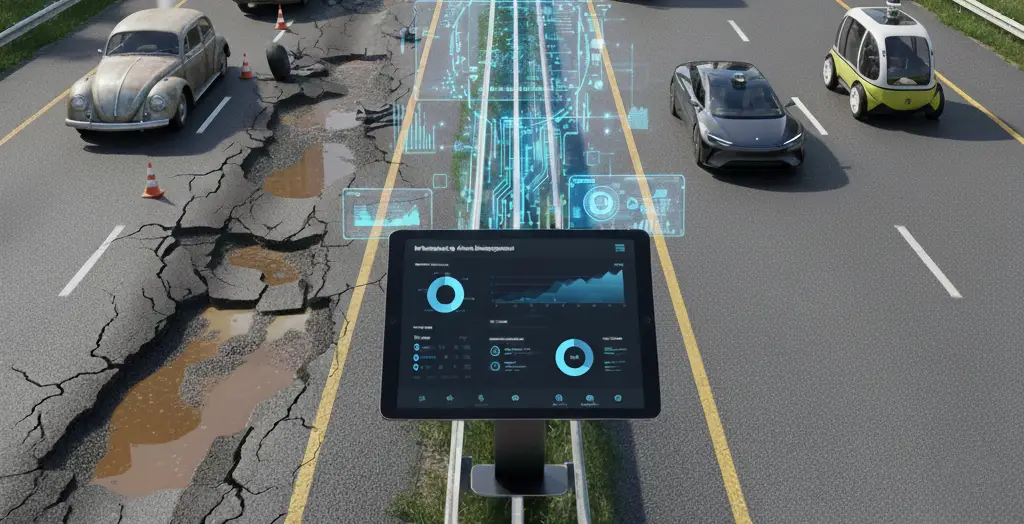
Infrastructure owners and operators face rising pressure to reduce lifecycle costs, maintain reliability, improve safety, and justify budgets with data. A modern infrastructure asset management software platform delivers significant improvements across financial planning, operational efficiency, public service delivery, and compliance readiness.
Below is a detailed breakdown of the key benefits organizations experience after adopting infrastructure asset management solutions.
- Financial Optimization and Cost Savings
Shift from Reactive to Proactive Maintenance
Most organizations still rely on reactive fixes or rigid preventive schedules. These approaches lead to costly emergency repairs, downtime, and premature asset failure.
AI powered predictive maintenance within an infrastructure asset management system helps organizations:
- Identify early warning signs
- Prevent expensive breakdowns
- Extend asset lifespan
- Reduce spare parts consumption
- Minimize overtime labour
This dramatically lowers operational and maintenance expenses.
Extended Asset Lifespan
By tracking degradation patterns and condition history, the software helps teams choose the best time to repair or replace assets, ensuring maximum return on investment.
Optimized Resource Allocation
Asset management software improves planning for:
- Workforce scheduling
- Equipment deployment
- Material procurement
Organizations gain more predictable budgets and fewer cost overruns.
- Improved Service Delivery and Public Safety
Consistent Level of Service (LOS)
Whether managing roads, pipelines, grids, or public utilities, software ensures infrastructure meets performance standards demanded by citizens and regulators.
Faster Response Times
Real-time asset condition data helps teams respond immediately to:
- Failures
- Outages
- Safety risks
- Environmental threats
Mobile apps and IoT sensors shorten the time it takes to detect and resolve issues.
Mitigation of Risk
Risk scoring helps identify high-risk assets so organizations can prioritize repairs, preventing major incidents such as bridge collapses, pipeline leaks, machinery breakdowns, or city-wide outages.
- Enhanced Compliance and Transparency
Infrastructure industries operate under strict regulations.
Asset management software simplifies compliance by offering:
- Automated documentation
- Maintenance history logs
- Inspection reports
- Activity timestamps
- Failure analysis reports
These audit ready records improve transparency for government bodies, regulators, and stakeholders.
Justifying Capital Investments
Performance data helps organizations create strong business cases for funding requests.
Cities, utilities, and enterprises can demonstrate:
- Why upgrades are needed
- Which assets pose the greatest risk
- The financial benefit of replacement vs. continued maintenance
- Data-Driven Decision Making
Siloed information has historically hindered decision-making.
Infrastructure asset management platforms break these silos by centralizing:
- Asset inventories
- IoT data
- GIS data
- Work order histories
- Financial insights
- Performance dashboards
This empowers leadership to plan long-term capital improvement strategies with full visibility.
Upgrade from spreadsheets to intelligent infrastructure management. Let’s get started.
Benefits Across Different Teams
One of the strengths of a modern infrastructure management system is that it supports every team involved in asset operations, planning, and maintenance.
For Operations Teams
- Reduced firefighting
- More efficient work order management
- Better visibility into asset health
- Data backed maintenance decisions
For Finance and Strategy Leaders
- Accurate forecasting of lifecycle costs
- Improved ROI on infrastructure investments
- Stronger justification for capital budgets
- Better alignment of maintenance planning with financial planning
For Field Technicians
- Digital work orders
- Real-time updates
- GPS-based task assignment
- Mobile documentation with photos and videos
- Reduced paperwork
For Citizens and End Users (Indirect Benefit)
- Fewer outages
- Safer transport routes
- More reliable public services
- Improved overall quality of life
Challenges and Solutions in Infrastructure Asset Management Adoption
Despite the long-term benefits, some organizations face hurdles when adopting digital asset management technologies. Below are common challenges and proven solutions.
- High Upfront Costs
Some municipalities or utilities hesitate due to initial investment.
Solution:
Phased implementation, starter modules, or government grants provide smaller entry points before large scale rollout.
- Data Quality Issues
Incomplete or inaccurate asset inventories reduce software effectiveness.
Solution:
- Asset digitization
- Field surveys
- AI based cleansing tools
- Standardized data governance policies
- Skill Gaps
Teams may lack training in digital platforms, IoT, or predictive analytics.
Solution:
Partner with implementation experts, conduct staff training programs, and build a competency roadmap.
- Interoperability With Legacy Systems
Older ERP, SCADA, or GIS systems may not integrate easily.
Solution:
Adopt open API frameworks, use middleware layers, and follow global standards such as CoBie, BIM levels, and FIATECH guidelines.
- Cybersecurity Concerns
Infrastructure is a prime target for cyberattacks.
Solution:
Zero trust security models, encryption, network segmentation, and regular vulnerability assessments.
The Future of Infrastructure Management: AI, IoT, and Digital Twins
The next decade will redefine how organizations manage infrastructure.
Predictive and Prescriptive Maintenance
AI and machine learning will go beyond prediction to recommend:
- Optimal repair schedules
- Replacement timelines
- Cost saving strategies
This turns infrastructure into a self-optimizing ecosystem.
IoT Sensor Networks
Sensors for vibration, corrosion, pressure, load, temperature, and energy consumption will deliver real-time intelligence across entire cities, utility grids, and industrial facilities.
Digital Twins for Entire Cities
Digital twins will become foundational for:
- Emergency response modeling
- Climate resilience planning
- Damage simulation
- Flood risk assessment
- Traffic and mobility optimization
Cities like Singapore, Dubai, Helsinki, and Orlando already use digital twins for city-wide planning.
Autonomous Workflows
AI will help automate:
- Work order assignment
- Risk analysis
- Asset scoring
- Condition forecasting
This dramatically reduces manual workload and speeds up maintenance cycles.
How to Choose the Right Infrastructure Asset Management Software Development Provider?

Choosing the right partner to build or customize an infrastructure asset management software platform is critical for long-term success. Infrastructure projects require deep domain understanding, scalable architecture design, strong integration capabilities, and a commitment to continuous improvement.
Below are essential questions and evaluation factors organizations should consider.
What Questions Should Buyers Ask?
- Will this platform work for city-wide or multi-location assets?
The solution must support thousands of assets across large geographies, including remote sites, campuses, and distributed networks.
- Can it integrate with existing GIS systems?
Most public works and utilities rely on GIS mapping. The software must synchronize geospatial data without manual workarounds.
- Does the system support regional regulations and compliance needs?
Infrastructure requirements vary across the US, UK, EU, Middle East, India, and APAC. Compliance alignment ensures smoother audits and reporting.
- How easily can the system scale?
Infrastructure needs expand over time. Scalability should support new asset types, new locations, and additional users.
- Is the system cloud ready?
Cloud based deployment improves agility, accessibility, security, and disaster readiness.
- Does the vendor support mobile-first field operations?
Technicians require mobile apps for inspections, photos, GPS tracking, and digital checklists.
Key Evaluation Factors
When selecting a partner for custom infrastructure asset management solutions, evaluate:
- Scalability – Ability to support thousands of assets and multi-region deployments.
- Deployment Flexibility – Cloud, hybrid, or on-premise based on regulatory and operational needs.
- Integration Ecosystem – Open APIs to connect with ERP, SCADA, IoT, BIM, GIS, and CMMS.
- AI Readiness – Predictive maintenance, risk scoring, and autonomous workflows must be part of the roadmap.
- Security and Compliance – Zero trust architecture, encryption, role-based access, and adherence to regional compliance mandates.
- Multi-Region Adaptability – Support for multiple languages, regulations, and operational models across global infrastructure markets.
Infrastructure Asset Management System Implementation Roadmap for Organizations
A successful implementation requires a phased, structured approach. Below is a proven roadmap for deploying a modern infrastructure management system.
- Asset Inventory Digitization
Create a complete digital inventory of all physical assets with standardized attributes, condition scores, and geospatial mapping.
Unify data from spreadsheets, legacy systems, SCADA, ERP, GIS, and IoT sensors into a centralized platform.
- IoT Enablement
Deploy vibration, pressure, temperature, acoustic, and load sensors for real-time monitoring.
- Staff Onboarding
Train operational teams, engineers, and technicians on digital workflows, dashboards, and mobile tools.
- Predictive Analytics Deployment
Activate AI based predictive maintenance models to forecast failures, prioritize repairs, and extend asset lifespan.
- Continuous Optimization
Use performance dashboards and risk scoring to refine asset strategies and capital planning.
How Experion Can Help in Developing Infrastructure Asset Management Software?
Experion Technologies helps global enterprises, smart cities, utilities, and infrastructure operators modernize asset ecosystems with intelligent, scalable, and future ready solutions.
Our capabilities include:
- Custom infrastructure asset management software development
- Digital twins for infrastructure planning and simulation
- IoT integrations for real-time monitoring
- GIS enablement and geospatial analytics
- Mobile-first field inspection tools
- Predictive maintenance and AI powered risk scoring
- Cloud-native platforms built for multi-region deployment
With deep engineering expertise and a people-first delivery model, Experion ensures organizations gain full visibility, control, and predictive intelligence across their infrastructure networks.
Case Study

Experion modernized iROADS, a comprehensive road asset management system that digitizes 31,000 km of roads and enables data-driven maintenance at scale. The upgraded platform unifies workflows, improves real-time issue reporting through a citizen mobile app, accelerates resolutions by 83%, and supports large datasets, GIS layers, and multi-asset planning. With enhanced performance, AI-powered inspections, and strong data governance, iROADS now delivers smarter, faster, and more transparent infrastructure management for a major public-sector road authority, built to scale globally.
Conclusion: The Global Mandate for Intelligent Infrastructure Management
As infrastructure expands and ages simultaneously, the need for accurate data, predictive intelligence, and unified management becomes unavoidable. Governments, utilities, and enterprises are increasingly relying on infrastructure asset management software to extend the life of critical assets, reduce operational risk, and improve service delivery.
Digital transformation in infrastructure is no longer a future goal. It is a global priority today. The integration of AI, IoT, geospatial intelligence, and digital twins is reshaping how infrastructure is maintained, governed, and improved.
Experion supports this global evolution by delivering engineering-driven, innovative, and scalable digital solutions that help organizations manage infrastructure smarter, safer, and more sustainably.
Key Takeaways
- Infrastructure asset management helps organizations maximize asset life, reduce downtime, and improve service delivery.
- Intelligent platforms unify data across transportation, utilities, smart cities, industrial facilities, ports, and airports.
- Predictive maintenance and IoT sensors enable proactive risk reduction.
- Digital twins support planning, climate resilience, and emergency management.
- Modern systems offer strong compliance support and audit readiness.
- Benefits extend across management teams, field technicians, finance leaders, and citizens.
- Future trends include AI automation, digital twins, and autonomous maintenance.
Experion provides scalable, secure, and modern infrastructure asset management solutions for global clients.
FAQ’s
- What is infrastructure asset management software and how is it used by city and county governments?
It centralizes asset data, automates maintenance planning, and provides real-time health monitoring for roads, utilities, public facilities, and transportation networks.
- Do small municipalities need infrastructure asset management software?
Yes. Even small cities benefit from better planning, fewer outages, reduced costs, and improved compliance.
- How much does infrastructure asset management software cost for small cities?
Cost varies by size, asset complexity, integrations, and hosting model. Modular deployments help reduce initial investment.
- What are the federal compliance requirements for infrastructure asset management software?
Requirements often involve condition reporting, maintenance documentation, safety standards, and audit trails in line with DOT, EPA, and regional mandates.
- How does predictive maintenance really work?
It uses IoT sensors and AI models to detect anomalies and forecast asset failures before they occur.
- How do cities calculate ROI when investing in infrastructure asset management software?
ROI comes from reduced downtime, extended asset lifespan, fewer emergency repairs, and better capital planning.
- How long does it take to implement infrastructure asset management software?
Timelines range from 3 to 12 months based on scope, data quality, and integrations.
- Can the asset management software be integrated with legacy systems?
Yes. Modern platforms use APIs and middleware to integrate with ERP, GIS, SCADA, and CMMS.
- Is the infrastructure asset management software cloud based or on premise?
Organizations can choose either, but cloud based solutions offer better scalability and security.
- How do cities benefit from digital twins?
Digital twins support scenario planning, climate resilience, emergency readiness, and long-term infrastructure optimization.