

Experion develops performance last mile delivery software. This software helps logistics by combining strong engineering with easy design. It solves fulfillment problems.
The modern logistics world is under a lot of pressure. Global distribution networks are stretched to their limits. The “Amazon effect” has changed expectations. Ecommerce has risen fast. “Quick commerce”. Delivery within minutes. Is emerging. Same-day delivery is becoming standard. Businesses must rethink their supply chain.
The “last mile”. The movement of goods from a retail hub or warehouse to the customer. Is the most expensive and complex stage. It often accounts for over 50% of shipping costs. Traffic congestion, failed delivery attempts and multi-stop routing puzzles make it hard. A dedicated last mile delivery software solution is needed.
- Last mile delivery is key to customer satisfaction.
- Automation through delivery management software reduces last-mile delivery costs.
- Real-time visibility via mile delivery tracking software reduces customer anxiety and support tickets.
- Data-driven last mile delivery logistics solutions help businesses scale without increasing
What is Last Mile Delivery Software?
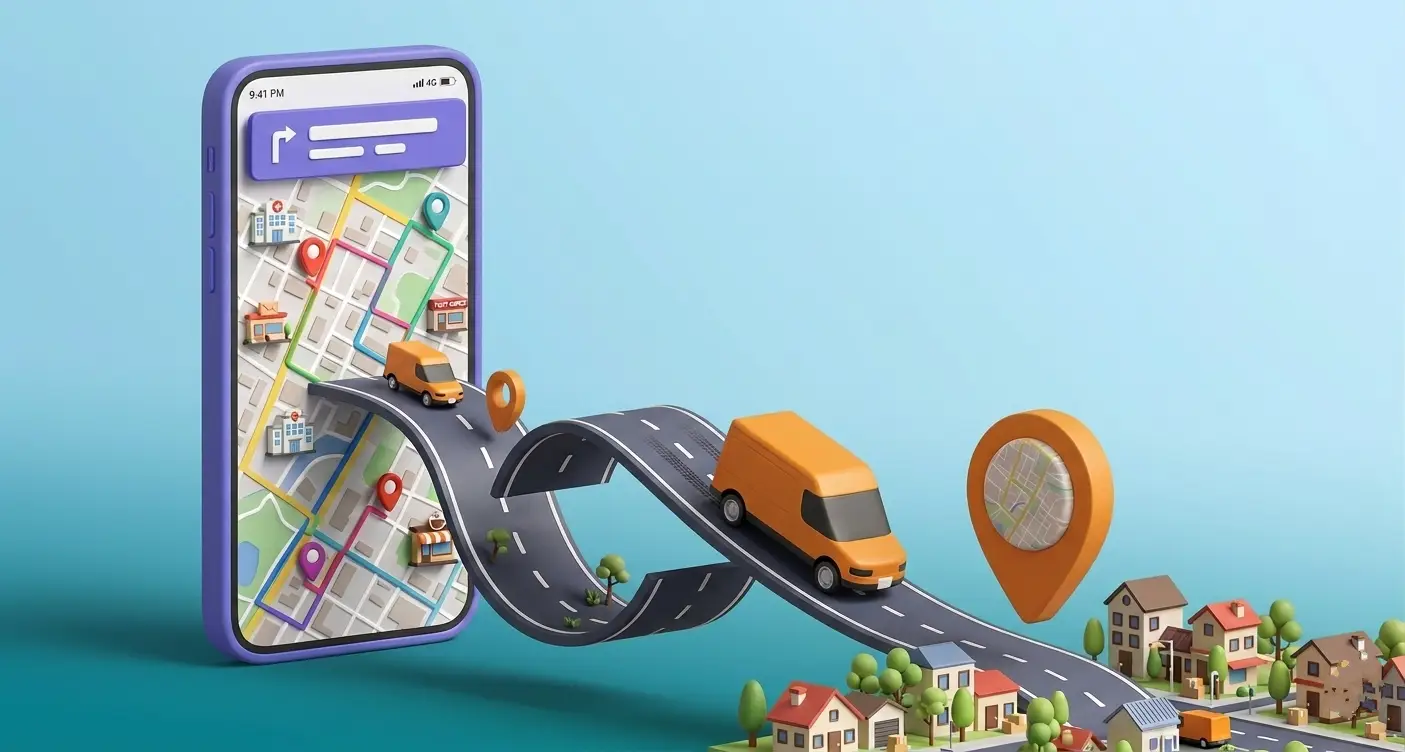
It’s a platform that manages, automates and optimizes the final delivery stage. It acts as the “brain” of the final-mile operation. Goods move from the distribution center to the customers doorstep with precision.
Core Objective of Last Mile Delivery Managemnet Software
The main goal of mile delivery management software is to make a chaotic manual process a streamlined digital workflow. Key objectives include:
- Reduce delivery costs by optimizing fuel consumption and reducing time.
- Improve route efficiency using algorithms to find the sequence of stops.
- Enhance customer experience with transparency through a last mile delivery app.
- Increase visibility and control with a “Gods eye view” of the fleet.
How Final Mile Delivery Software Fits Into the Supply Chain?
A mile delivery solution must integrate with other core systems:
- Warehouse Management Systems (WMS) to ensure orders are ready for dispatch.
- Transportation Management Systems (TMS) to hand off long-haul freight data.
- ERP & CRM Connectivity to sync customer data and financial records.
Why Businesses Need Mile Delivery Software?
In a competitive market relying on paper manifests or basic GPS is not enough. Businesses turn to last-mile delivery solutions to combat pain points:
- Rising Customer Expectations: Shoppers expect to see their package moving on a map in time.
- High Operational Costs: Fuel, labor and vehicle maintenance make last-mile delivery without optimization.
- Lack of Visibility: Managers can’t tell if a delay is due to traffic, a breakdown or driver inefficiency.
- Scalability Challenges: Manual courier dispatch software processes break down during peak seasons.
Transform your final mile with real-time tracking and AI routing: Explore Our Solution.
Key Features of Mile Delivery Software
The best software incorporates advanced technology to handle the final mile:
- Intelligent Route Optimization: Uses AI-driven dynamic routing to account for traffic patterns and weather.
- Real-Time Tracking & Visibility: Live GPS tracking provides a dashboard for fleet monitoring.
- Inventory Sync: Integrations: Ensures inventory levels are updated across all sales channels.
- Automated Dispatch Management: Uses driver allocation to assign jobs to the nearest or most cost-effective driver.
- Electronic Proof of Delivery (ePOD): Includes signatures, photo confirmation and barcode scanning.
- Customer Communication Portals & Tools: Sends automated notifications. Provides two-way communication.
- Analytics & Reporting: Generates delivery performance metrics, fleet utilization reports and cost analysis dashboards.
- Reverse Logistics Management: Handles the ” mile” of returns, with automated pickup scheduling and returns handling.
How Mile Delivery Software Works?
Last mile delivery software is like a team leader that coordinates all the different parts of the delivery process in real time. Here is what happens when you use mile delivery management platform:
- Order Intake: The process starts when someone places an order on a website or a system that manages orders. The last mile delivery software automatically gets all the details about the delivery, including the size and weight of the package and what the customer wants.
- System Assigns Nearest Driver: The software uses an algorithm to find the best driver for the job based on how close they are how much they can carry and how much time they have left to work.
- Route is Optimized: of just going from point A to point B the last mile delivery software plans the best route that includes all the stops taking into account traffic, road closures and when the customer wants the package.
- Driver Receives Delivery Instructions: The driver gets all the information they need like directions, special instructions and any codes they need to enter, on their phone.
- Customer Receives Live Tracking Link: The customer gets a link that shows where their package is so they can track it and know when it will arrive.
- Proof of Delivery Captured: When the driver arrives the last mile delivery software records that the package was delivered, with a signature, a photo or a scan.
- Data Recorded for Reporting: The software saves all the information about the trip so it can be used to see how well the drivers are doing how many packages are being delivered on time and how much time is being wasted.
Industries That Benefit from Mile Delivery Software Solutions
Lots of different industries use last mile delivery software to get their products to customers quickly.
Retail
For stores last mile delivery is the last chance to make a good impression on the customer. Good software helps keep promises to deliver packages on time.
Food and Grocery Delivery
When people order food or groceries they want it fast. Last mile delivery software helps companies deliver quickly and keep track of their packages.
Healthcare and Pharmaceuticals
When it comes to delivering medicine it is very important that it gets to the person on time. Last mile delivery software helps make sure that happens.
Courier and Logistics Providers
Companies that deliver packages use mile delivery software to manage their drivers and make sure they can handle a lot of packages.
Manufacturing and Distribution
Companies that make things use mile delivery software to get parts and materials to their factories or construction sites so they can keep working.
Benefits of Implementing Last Mile Delivery Software
Using last mile delivery software can help businesses do better than their competitors.
- Reduced Delivery Costs: By planning the routes businesses can save money on fuel and reduce waste.
- On-Time Delivery Rate: The software helps drivers find the best route so they can deliver packages on time.
- Enhanced Customer Satisfaction: When customers can track their packages they are happier and less likely to call with questions.
- Better Fleet Productivity: Drivers can deliver packages in a day which makes the business more efficient.
- Data-Driven Decision Making: The software gives businesses information they can use to make decisions.
- Lower Carbon Footprint via Optimized Routing: By driving businesses can reduce their impact on the environment.
Common Challenges Without Automation
If a business does not use mile delivery software they may have problems.
- Manual Route Planning Errors: People can make mistakes when planning routes, which can waste time and fuel.
- Delayed Deliveries: Without the software drivers may get stuck in traffic and deliver packages late.
- Poor Customer Communication: If customers do not get updates on their packages they may get frustrated.
- High Return Rates: If it is hard for customers to return packages they may not be happy, with the business.
- Inefficient Driver Management: Without the software it can be hard to pay drivers and keep track of their performance.
Maximize delivery efficiency and slash operational costs. Connect with our Expert.
AI and Automation in Modern Last Mile Delivery
The integration of Artificial Intelligence is what separates a basic dispatch application from a high-performance last mile delivery management platform. By leveraging machine learning, businesses can transition from reactive logistics to proactive fulfillment.
Predictive Delivery Time Estimation
AI algorithms analyze historical data, real-time traffic, and even the average time a driver takes to find parking in specific neighborhoods. This allows the last mile delivery tracking software to provide customers with hyper-accurate ETAs, moving beyond broad “4-hour windows” to precise 15-minute arrival slots.
Demand Forecasting
By analyzing seasonal trends and historical order volumes, ecommerce last mile delivery software can predict spikes in demand before they happen. This enables companies to scale their fleet and ensure enough drivers are logged into the dispatch driver app ahead of peak periods like Black Friday or holiday sales.
Smart Load Distribution
AI-driven last mile delivery solutions ensure that no vehicle is underutilized or over capacity. The system calculates the volume and weight of every package to automate smart load distribution, ensuring the right mix of parcels is assigned to the right vehicle type—from bikes for small parcels to vans for heavy goods.
Machine Learning for Continuous Optimization
The best last mile delivery software learns from every trip. If a specific route consistently takes longer than mapped, the last-mile delivery software adjusts future paths automatically. This “self-healing” logistics loop is the cornerstone of long-term last-mile delivery cost reduction.
How to Choose the Right Last Mile Delivery Platform?
Selecting a last mile delivery software solution is a critical business decision. To ensure your investment yields the highest return, evaluate vendors based on these six pillars:
- Scalability & Customization: Can the delivery management software grow with your business? Ensure the platform can handle an increase from 10 to 10,000 deliveries a day without a drop in performance.
- Integration Capabilities: A siloed system is a liability. Your final mile delivery software must offer robust APIs to sync with your existing WMS, TMS, and POS systems.
- User-Friendly Interface: If the last mile delivery app is too complex, driver adoption will plummet. Look for intuitive designs that require minimal training for your courier team.
- Cloud vs. On-Premise Deployment: Most modern enterprises prefer a cloud based last mile delivery management software for its lower upfront costs, automatic updates, and remote accessibility.
- Data Security & Compliance: Ensure the last mile delivery platform complies with local data protection laws (like GDPR or CCPA), especially since it handles sensitive customer addresses and contact details.
- Vendor Support & SLA: Logistics never sleeps. Choose a partner that offers 24/7 support and guaranteed uptime to ensure your courier dispatch software stays online during critical delivery windows.
Should You Develop Custom Last Mile Delivery Software?
One of the most frequent dilemmas for logistics leaders is the “Build vs. Buy” debate. Both paths offer distinct advantages depending on your business model.
When to Buy Off-the-Shelf
Buying a last mile delivery solution makes sense for businesses looking for a fast “Go-To-Market” strategy. These platforms are tried and tested, offering standard features like last mile delivery tracking software and ePOD right out of the box with lower initial capital expenditure.
When Custom Development Makes Sense
Experion specializes in building bespoke last mile delivery software for organizations with unique workflows, complex multi-vendor ecosystems, or proprietary delivery logic that off-the-shelf tools cannot accommodate. Custom development is ideal if you require specialized last mile delivery software with driver payouts and management logic or need to integrate proprietary hardware that standard last mile delivery apps don’t support.
Cost Comparison
- Off-the-Shelf: Lower upfront cost, but recurring monthly per-user or per-delivery fees can become expensive as you scale.
- Custom Development: Higher initial investment in engineering, but zero licensing fees and complete ownership of the intellectual property, leading to lower total cost of ownership (TCO) at high volumes.
Long-Term ROI Analysis
The long-term ROI of a custom last mile delivery logistics solution often surpasses “boxed” software because it is built to eliminate your specific inefficiencies. By targeting your exact bottlenecks, custom software drives deeper last-mile delivery cost reduction and provides a unique competitive advantage that competitors using standard tools cannot replicate.
Implementation Best Practices for Last-Mile Delivery Software Development
Transitioning to a digital last mile delivery solution requires more than just installing an app; it requires a strategic rollout to ensure long-term last-mile delivery cost reduction and operational harmony.
- Start with a Pilot Project: Before a full-scale launch, deploy the last mile delivery management software in a single high-density zone. This allows you to fine-tune the dispatch driver app settings and route logic based on real-world feedback without disrupting your entire network.
- Train Drivers and Dispatch Teams: The best last mile delivery software is only as good as the people using it. Comprehensive training on the last mile delivery app ensures couriers know how to capture proof of delivery accurately, while dispatchers learn to use the centralized dashboard for fleet monitoring.
- Integrate with Existing Systems: To avoid data silos, ensure your last-mile delivery software is fully synced with your WMS and ERP. This integration ensures that ecommerce last mile delivery software can trigger inventory updates and customer notifications automatically.
- Monitor KPIs Continuously: Use the analytics provided by your last mile delivery management platform to track performance from day one. Identifying bottlenecks early allows for the continuous optimization of your delivery management software.
- Gather Customer Feedback: Use the communication tools within the last mile delivery platform to send post-delivery surveys. Understanding the customer’s perspective on the tracking experience and delivery speed is vital for improving your last mile delivery logistics solutions.
Key Metrics to Track Last Mile Delivery App
To measure the ROI of your last mile delivery software solution, businesses must focus on data-driven performance indicators:
- On-Time Delivery Rate: The percentage of orders that reach the customer within the promised window, a direct reflection of the efficiency of your final mile delivery software.
- Cost per Delivery: A critical metric for last-mile delivery cost reduction, calculating the total expense (fuel, labor, vehicle) for each successful drop.
- First-Attempt Delivery Success Rate: High success on the first attempt reduces the need for expensive reverse logistics management and re-delivery trips.
- Average Delivery Time: Measuring the time from the moment the courier leaves the hub to the moment the last mile delivery app records the proof of delivery.
- Driver Utilization Rate: Tracking how much of a driver’s shift is spent on active deliveries versus idling or manual courier dispatch software tasks.
- Customer Satisfaction Score (CSAT): Captured through the dispatch application, this measures the quality of the “final mile” experience from the user’s perspective.
Future Trends in Last Mile Delivery
The landscape of last mile delivery is evolving rapidly, with emerging technologies promising to further automate the journey from warehouse to doorstep.
Autonomous Vehicles
Self-driving vans and sidewalk robots are being integrated into last mile delivery management software to handle short-distance “hyperlocal” drops, significantly reducing labor costs in urban centers.
Drone Deliveries
For lightweight parcels and medical supplies, drones offer a way to bypass ground traffic entirely. The best last mile delivery software of the future will likely coordinate a mix of ground and aerial assets within a single last mile delivery platform.
Crowdsourced Deliveries
Much like ride-sharing, businesses are increasingly using a “gig economy” model for last mile delivery. A flexible dispatch driver app allows independent contractors to pick up delivery jobs on-demand, providing massive scalability during peak seasons.
Electric Fleets
Sustainability is becoming a core part of last mile delivery logistics solutions. Many companies are transitioning to EVs, using last-mile delivery software to optimize routes specifically for charging station proximity and energy efficiency.
Hyperlocal Fulfillment Centers
To achieve the speeds required by quick commerce, businesses are moving inventory closer to the customer. Last mile delivery software manages the flow from these “dark stores” or micro-fulfillment centers to ensure ultra-fast turnaround times.
AI-Driven Predictive Logistics
Future last mile delivery solutions will move beyond tracking and into prediction. By using machine learning, a last mile delivery management platform can anticipate order volumes and pre-position inventory before the customer even clicks “buy,” representing the ultimate evolution of last mile delivery tracking software.
Experion is at the forefront of these innovations, engineering last mile delivery software that is future-ready and capable of integrating with drones, autonomous fleets, and AI-driven forecasting models.
Smarter routing, happier customers, and lower costs: Contact Us Today.
How Experion Can Help in Developing Mile Delivery Software?
At Experion we know that the last mile is the important part of the supply chain. We are good at making last mile delivery software that makes logistics easier. Our way of doing things combines our knowledge of the field with technologies like artificial intelligence, internet of things and cloud computing to build a last mile delivery management platform that can handle a lot of work and is strong.
Whether you are a logistics company or a fast growing online shopping brand Experion helps you from start to finish. From the first meeting and designing the system to making a fast dispatch driver app and connecting it to your existing systems. We focus on making mile delivery logistics solutions that save money on the last mile and make sure customers know what is happening so your technology helps your business grow.
Conclusion: Turning the Mile into a Competitive Advantage
The last mile of delivery is not just something you have to do it is a way to make your brand stand out. Using last mile delivery software gives you many benefits. From saving fuel with smart routes to making your fleet work better with automatic dispatch management.
People expect clear delivery so a smooth last mile delivery experience is what sets you apart. By using technology in logistics businesses can stop doing things manually and start using data to manage the last mile. In a time when people want things fast those who are good at the mile will save money and keep their customers happy. Experion can help with mile delivery software and last mile delivery is very important for businesses. Last mile delivery software, from Experion makes last mile delivery easy and efficient.
Frequently Asked Questions (FAQ’s)
- What is last mile delivery software and how does it matter today?
Last mile delivery software is a digital platform that manages the movement of goods from a local hub to the final destination. It matters today because rising e-commerce demands and expectations for same-day delivery make manual tracking impossible to scale efficiently. - How do last mile delivery software solutions solve operational bottlenecks?
A last mile delivery solution automates task assignments, optimizes routes to avoid traffic, and provides real-time visibility. This eliminates manual errors in courier dispatch software and reduces the time drivers spend idling or searching for addresses. - How much does last mile delivery software cost?
The cost varies based on whether you choose an off-the-shelf last mile delivery management software (typically a monthly subscription) or a custom last mile delivery software solution. Custom builds have higher upfront costs but offer better long-term ROI by eliminating per-transaction licensing fees. - Can it integrate with ERP systems?
Yes. The best last mile delivery software is designed with robust APIs to sync seamlessly with ERP, CRM, and Warehouse Management Systems (WMS) for end-to-end data flow. - What are the must-have features of last mile delivery software?
Essential features include intelligent route optimization, a dedicated dispatch driver app, real-time GPS tracking, electronic proof of delivery (ePOD), and automated customer notifications. - How does last mile delivery software with real-time fleet tracking improve operations?
Last mile delivery tracking software allows dispatchers to monitor the fleet in real-time, enabling them to reroute drivers around accidents or delays and providing customers with hyper-accurate ETAs. - Is it suitable for small businesses?
Absolutely. Small businesses can use a last mile delivery app to compete with larger retailers by offering professional-grade tracking and reliable delivery windows without needing a massive dispatch team. - What benefits does last mile delivery software provide for delivery businesses?
Key benefits include significant last-mile delivery cost reduction, improved on-time delivery rates, higher driver productivity, and a reduction in failed delivery attempts. - Can a single last-mile platform manage both human drivers and autonomous delivery robots (ADRs) or drones?
Modern, forward-looking last mile delivery solutions are being built to coordinate a hybrid fleet, managing both human-led vehicles and autonomous assets within a single last mile delivery management platform. - How does route optimization reduce costs?
By calculating the most efficient path for multiple stops, last mile delivery software reduces total mileage, lowers fuel consumption, and decreases vehicle wear and tear. - What questions to ask before choosing last mile delivery software for scaling startups?
Startups should ask about the platform’s scalability, the ease of integration with their current ecommerce last mile delivery software, and the level of technical support provided by the vendor. - What are the advantages of building a custom last-mile delivery software?
Custom last-mile delivery solutions allow for total ownership of data, zero recurring licensing fees, and features tailored specifically to your unique business logic and customer needs. - What is the ROI timeline?
Most businesses see a positive ROI within 6 to 12 months due to immediate fuel savings, reduced labor hours in dispatch, and a decrease in customer service costs related to “where is my order?” inquiries.
Experion’s goal is to ensure your investment in last mile delivery software delivers measurable business value from day one, backed by a roadmap for continuous digital innovation.