

Experion uses its expertise to build custom queue management solutions. These solutions change waiting areas into smooth customer journeys.
In today’s fast-paced market, time is very valuable. Many businesses struggle with queues and long customer wait times. This is a problem in stores and busy clinics. Bad queue handling does more than just frustrate visitors; it hurts customer experience and efficiency. When people see a line, they think a brand doesn’t value their schedule. This often leads to people leaving and lost revenue.
Understanding Queue Management
Queue management is about controlling and optimizing the flow of people as they wait for service. In the past this meant barriers and paper tickets. Now traditional methods are being replaced by a solution called a Queue Management System (QMS). A QMS streamlines customer flow from arrival to service.
By using a queue management system, you replace congestion with organized virtual waitlists. These systems track real-time data. This helps businesses predict hours and allocate staff better.
Industries Revolutionizing Customer Flow
Many service businesses can benefit. Several sectors are leading the way in using queue management system software:
- Healthcare: A patient queue management system helps reduce infection risks and manage walk-ins. Small clinics and large facilities use a hospital queue management system. This ensures emergency cases are prioritized while keeping a flow for routine check-ups.
- Finance: A queue management system in bank branches lets customers book appointments online. This reduces lobby crowding and improves teller productivity.
- Retail: A retail queue management system helps high-traffic stores manage returns and checkout lines. This supports a smoother shopping experience.
- Support: Call centre queue management software and a call queue management system route phone enquiries to the right agent. This reduces hold times.
The Evolution: From Paper to AI
A digital queue management system has made things more convenient. Businesses now want a scalable and intelligent system.
- Cloud-Based Accessibility: A cloud-based queue management system lets managers monitor branches from one dashboard. This provides real-time analytics on wait times and service speeds.
- Smart and Automated Features: An automated queue management system sends SMS notifications to customers. This frees them to browse or wait elsewhere. A smart queue management system uses modeling to alert managers before a bottleneck occurs.
- Security and AI Integration: The latest development is the AI queue management security system. This uses computer vision to detect crowd density and support safety protocols in real time.
Whether you need an electronic queue management system for a government office or a customer queue management system for a boutique, the goal is the same. The goal is to make the “wait” a seamless part of the service. Implementing a queuing management system is about respecting your customer’s time and maximizing your team’s potential.
What is a Queue Management System?
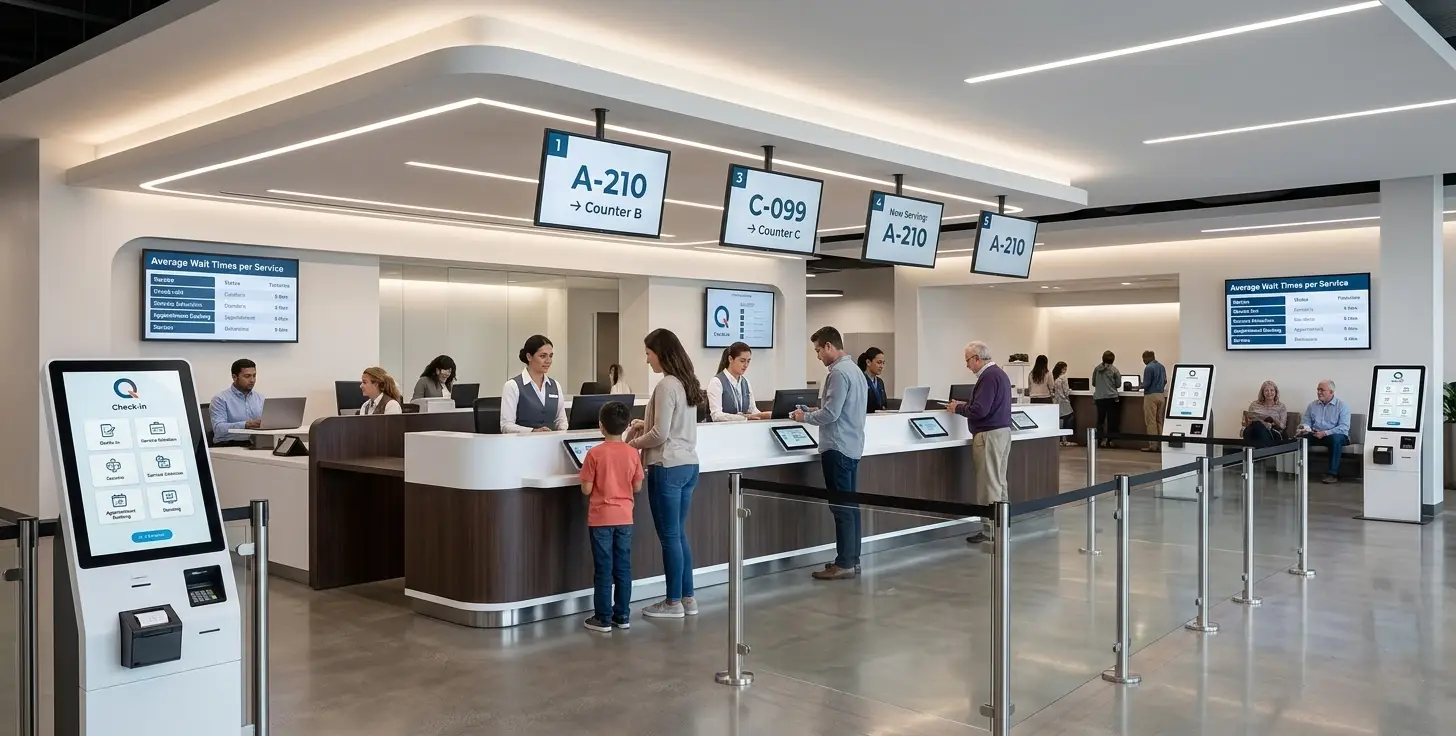
A Queue Management System is a way to manage people waiting in line. It is a combination of hardware and software that helps track and organize people from the moment they arrive until they are served. The main goal of this system is to make sure people do not have to wait in a line.
By using a Queue Management System, businesses can change the way they handle customers. Instead of having people wait in a physical line, businesses can use a digital system to direct customers to the right service point. This can be used in stores or hospitals.
Traditional Queues vs Digital Queue Management
The way of doing things is very different from the new way. The old way is frustrating because you have to wait in line and you do not know how long it will take. The new way is better because it is transparent and you can see what is going on.
Traditional queues follow the old way of managing customer flow. You have to be in person and take a number. Someone has to monitor the line and manage the flow manually. This can be a problem because people might get tired of waiting and leave. You do not get any information about what is going on.
A digital queue management system offers a more modern way to manage customer flow. Customers can check in from their phone using a QR code or digital token. You can get updates on what’s happening, and you can wait wherever you want. This can make the waiting experience more flexible and comfortable.
Why are Businesses Changing to Automated Queue Systems?
Businesses are changing to automated systems because they need to be able to handle people. The old way is prone to mistakes because people can make errors. An automated system can make decisions based on rules. It can balance the workload. With a cloud-based system you can see what is going on from anywhere.
Why Businesses Need Queue Management Software?
Nowadays people expect things to happen quickly. Queue management software is necessary for businesses to run smoothly.
Impact on Customer Experience
A Queue Management System can change how customers think about your business. If businesses can tell customers how long they have to wait and provide a digital ticket, customers may feel more informed.
When customers can wait comfortably, time may seem to pass more easily. Timely service and clear updates can make customers feel more valued. If you can keep them informed, they will not feel lost.
Operational Efficiency
Queue management systems can help businesses run efficiently.
By looking at data managers can see when they need staff and when they need less. This means that no one is idle when it is slow and no one is overwhelmed when it is busy.
If you can reduce the number of people waiting in line, it is safer and quieter. A smart system can send customers to the person who can best help them.
Business Performance
A good Queue Management System can help businesses do better. It can track how long people have to wait and how fast service is. It can also get feedback from customers to see what they think.
Ultimately, whether it is a simple system or a complex one, a Queue Management System can help businesses run more smoothly. It can help improve safety, service visibility, and customer satisfaction.
What are the Key Components of a Queue Management System Software?
A modern Queue Management System is no longer just about managing lines—it’s about orchestrating customer flow intelligently across digital and physical touchpoints. Today’s queue management system software is powered by a mix of cloud, mobile, IoT, and AI technologies that enable real-time visibility, automation, and seamless customer experiences.
What technology powers digital queue systems?
Most digital queue management systems are built on:
- Cloud-based platforms for scalability and centralized control
- AI and machine learning for predictive wait times and smart routing
- IoT-enabled devices like kiosks and display systems
- Mobile and SMS integrations for remote queue participation
- Data analytics engines for performance insights
This combination powers smart queue management systems that reduce wait times, improve service efficiency, and enhance customer satisfaction.
Self-Service Kiosk or Customer Check-in Interface
A self-service queue system typically begins with a kiosk or digital check-in interface. Customers can:
- Select services
- Generate tokens
- Enter personal details
In environments like a hospital queue management system or a queue management system in banks, kiosks reduce manual intervention and speed up intake. These interfaces are often integrated with electronic queue management systems for real-time updates.
Power your operations with AI-driven queue management.
Connect with our experts today!
Queue Display Systems
Queue display systems are the visual backbone of any queuing management system. They:
- Show token numbers and service counters
- Provide estimated wait times
- Offer announcements or alerts
In high-traffic areas like retail or healthcare, digital queue management systems use dynamic displays to keep customers informed and reduce perceived wait times.
Staff Dashboard
Robust queue management software includes a staff-facing dashboard that enables the following:
- Real-time queue monitoring
- Customer prioritization
- Service allocation
For instance, in a patient queue management system, staff can prioritize emergency cases, while in a call queue management system, agents can manage inbound requests efficiently.
SMS or Mobile Notification Systems
Modern mobile queue systems allow customers to join queues remotely and receive updates via SMS or apps. These systems:
- Notify customers when their turn is near
- Allow virtual waiting
- Reduce physical crowding
This is especially useful in retail queue management systems and healthcare environments where minimizing congestion is critical.
Analytics and Reporting
Advanced queue management system software includes analytics capabilities that track:
- Average wait times
- Peak hours
- Staff performance
- Customer behavior
With a cloud-based queue management system, businesses gain actionable insights to optimize operations and deliver better service outcomes.
Different Types of Queue Management Systems
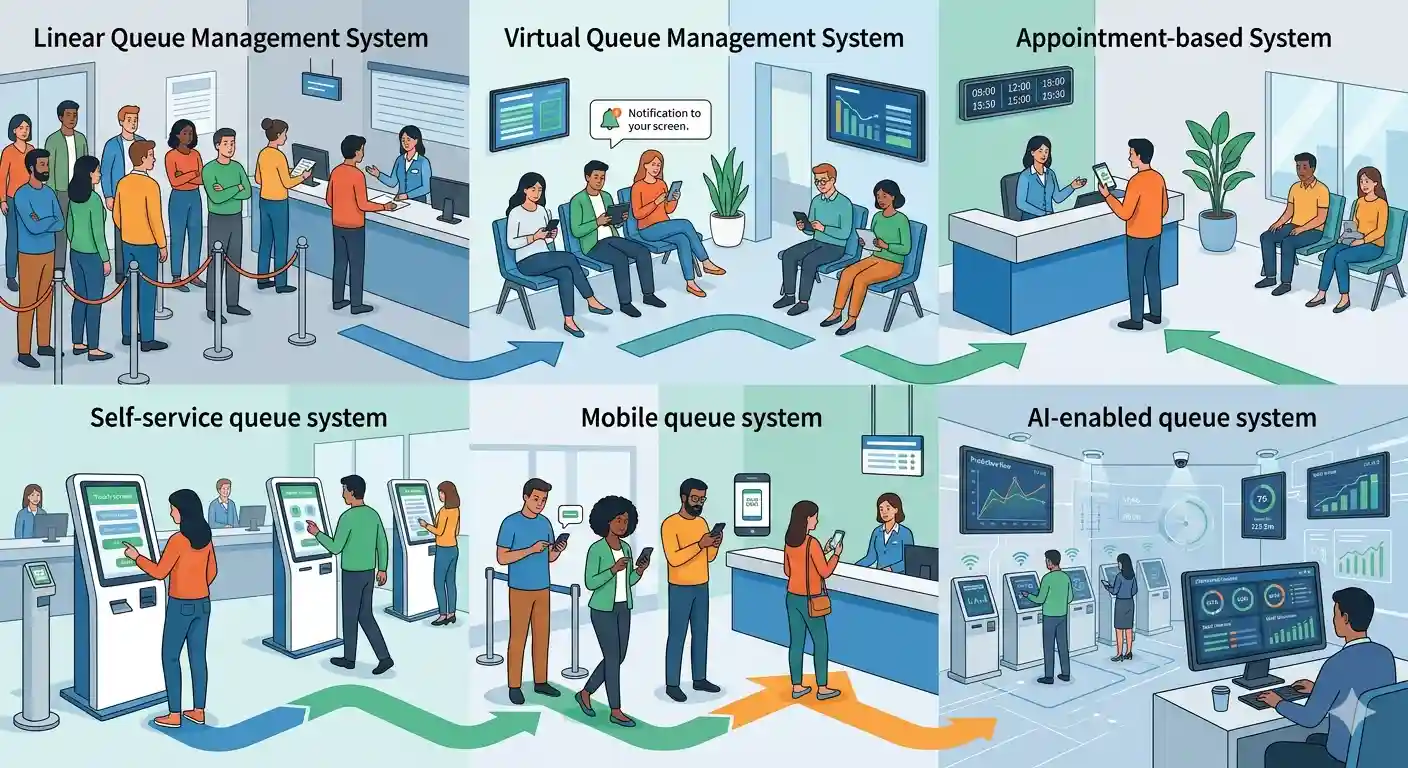
Not all queues are created equal. Depending on the use case, businesses can choose from different types of queue management systems.
Linear Queue Management
This is the traditional “first-come, first-served” approach.
- Customers wait in a physical line
- Minimal technology involved
While simple, it lacks the efficiency of an automated queue management system and is gradually being replaced by digital alternatives.
Virtual Queue Management System
A virtual queue management system allows customers to join a queue remotely via mobile or web.
- No physical waiting
- Real-time updates
- Improved customer convenience
This is a core feature of smart queue management systems and widely used in retail and service industries.
Appointment-Based Queue Systems
These systems combine scheduling with queue management.
- Customers book time slots in advance
- Reduces uncertainty and wait times
Common in healthcare, a queue management system in hospitals often integrates appointment-based workflows with walk-in queues.
Self-Service Queue Systems
Driven by kiosks or apps, these systems empower customers to manage their own check-ins.
- Faster onboarding
- Reduced staff workload
They are essential in customer queue management systems across banking, retail, and healthcare.
Mobile Queue Systems
A mobile queue system allows customers to:
- Join queues via smartphones
- Track wait times
- Receive notifications
This type of digital queue management system enhances flexibility and user experience.
AI-Enabled Queue Systems
The most advanced form of queue management system software, these systems use AI to
- Predict wait times
- Optimize staff allocation
- Detect anomalies (e.g., in an AI queue management security system)
AI-driven systems are increasingly seen as the best queue management systems for enterprises aiming for efficiency and personalization.
Queuing Management System vs Appointment Management System
While both systems aim to streamline customer flow, they serve different purposes. Here’s a clear comparison:
| Feature | Queue Management System | Appointment Management System |
| Primary Function | Manages real-time customer flow | Schedules future interactions |
| Customer Entry | Walk-in or virtual queue | Pre-booked time slots |
| Flexibility | High (supports dynamic queues) | Limited to scheduled times |
| Wait Time Handling | Optimizes and reduces wait times | Eliminates wait if schedule is followed |
| Technology Use | Includes kiosks, displays, SMS, AI | Focuses on calendars and scheduling tools |
| Use Cases | Banks, hospitals, retail, call centers | Clinics, consultations, service bookings |
| Integration | Can integrate with appointments | Rarely includes queue handling |
In many modern setups, businesses combine both systems; for example, a hospital queue management system may handle both walk-ins and appointments seamlessly.
How Does a Queue Management System Work?
The journey from arrival to service is not a mystery anymore. A modern digital queue management system makes the process clear and organized which is good for both the visitor and the service provider.
Here is how a smart queue management system works in practice:
- Registration: The customer starts the process by checking in at a self-service kiosk using an app or scanning a QR code at the entrance.
- Ticket Issuance: The queue management software quickly processes the request and gives the customer a unique queue number, which is often based on the specific service they need, like “Account Inquiry” or “Cash Deposit” at a bank. The customer can wait in a lounge or another suitable area while tracking their progress on their phone.
- Instant Notification: When a service agent is available, the digital queue management system sends an alert to a display board, makes a voice announcement, or sends a push notification or SMS to the customer.
- Service Delivery: The customer goes to the designated counter or room. Because the customer queue management system already knows what they need, the staff member is ready to help.
- Data Capture: After the interaction is over, the automated queue management system records the service time and transaction details and adds this information to a central database to improve things in the future.
Key Features of Modern Queue Management Systems
Experion can support the design of queue management systems with integration capabilities for existing technology environments, helping improve customer-flow visibility and service efficiency.
A good queue management system needs to offer more than ticket dispensing. It needs to have features like the following:
- Real-Time Queue Monitoring: Managers can see live dashboards to know how many people are waiting at any given time. This is important for a hospital queue management system, where a lot of patients may arrive suddenly and staff needs to be adjusted.
- Appointment Scheduling: A smart queue management tool lets customers book appointments in advance. This helps spread out the number of people coming in throughout the day.
- Mobile Queue Management: By using the customer’s device, queue management systems reduce the need for extra equipment and crowded waiting areas.
- Customer Notifications: Keeping customers informed through SMS, email or WhatsApp reduces the number of people who do not show up and improves customer satisfaction.
- Multi-Location Queue Management: For companies, a cloud-based queue management system lets headquarters monitor wait times and service quality at many locations around the world.
- Integration with CRM and ERP Systems: A good queue management system works with Customer Relationship Management tools so a bank teller or doctor can see the customer’s profile when they are called to the desk.
- Data Analytics and Reporting Dashboards: A good queue management system provides data from average wait time to staff performance scores, which helps businesses make informed decisions about hiring, training and expanding.
Upgrade your customer flow with an intelligent queue management system today
Benefits of Implementing a Queue Management System
Investing in a queue management system is a smart move. It helps make every interaction within your digital space better. Whether you are using a queue management system or a basic one, the good things about it are clear and easy to see.
You can reduce the time customers wait in line. A queue management system helps you find problems and fix them right away. This means customers do not have to wait long.
Customers are also happier when they can join a line. They feel more in control and respected. This is what makes a queue management system great.
The staff is also more productive. They do not have to worry about managing the crowd. They can focus on the person they are helping. The queue management system takes care of who’s next.
You can make decisions with the data from the queue management system. You can see how many people are coming in and when. This helps you decide how much staff you need and evaluate service performance.
You can also see what is happening in real time. This means you can respond quickly if something unexpected happens.
The queue management system helps you get more done. It makes sure you are using your time and resources well.
It also creates a safer and more organized environment. You do not have a crowd of people waiting. This is especially important for places like banks and hospitals.
Industries That Benefit from Queue Management Systems
All kinds of businesses need order and organization. Some industries really benefit from queue management systems.
Healthcare
A queue management system is very important in healthcare. It helps hospitals manage patients and make sure people who need help right away receive timely attention. It also helps with things like picking up medicine and getting lab tests.
Banking and Financial Services
Banks use queue management systems to help their customers. They can let important customers go ahead of others or make sure simple tasks do not get stuck behind complicated ones.
Retail
A queue management system helps stores manage customers. It lets customers check in and then keep shopping until it is their turn.
Government Services
Government offices can be very busy and often have long lines. A queue management system helps organize these places. Makes them more efficient.
Airports and Transportation
Airports use queue management systems to manage crowds and make sure people get to their flights on time.
Telecommunications
Service centers use queue management systems to help customers who come in or call for help. It makes sure the customer gets help no matter how they contact the company.
Hospitality and Restaurants
Restaurants and hotels use queue management systems to manage tables and food orders, helping customers have a smoother experience from the start.
Role of AI and Automation and Features in Smart Queue Management System
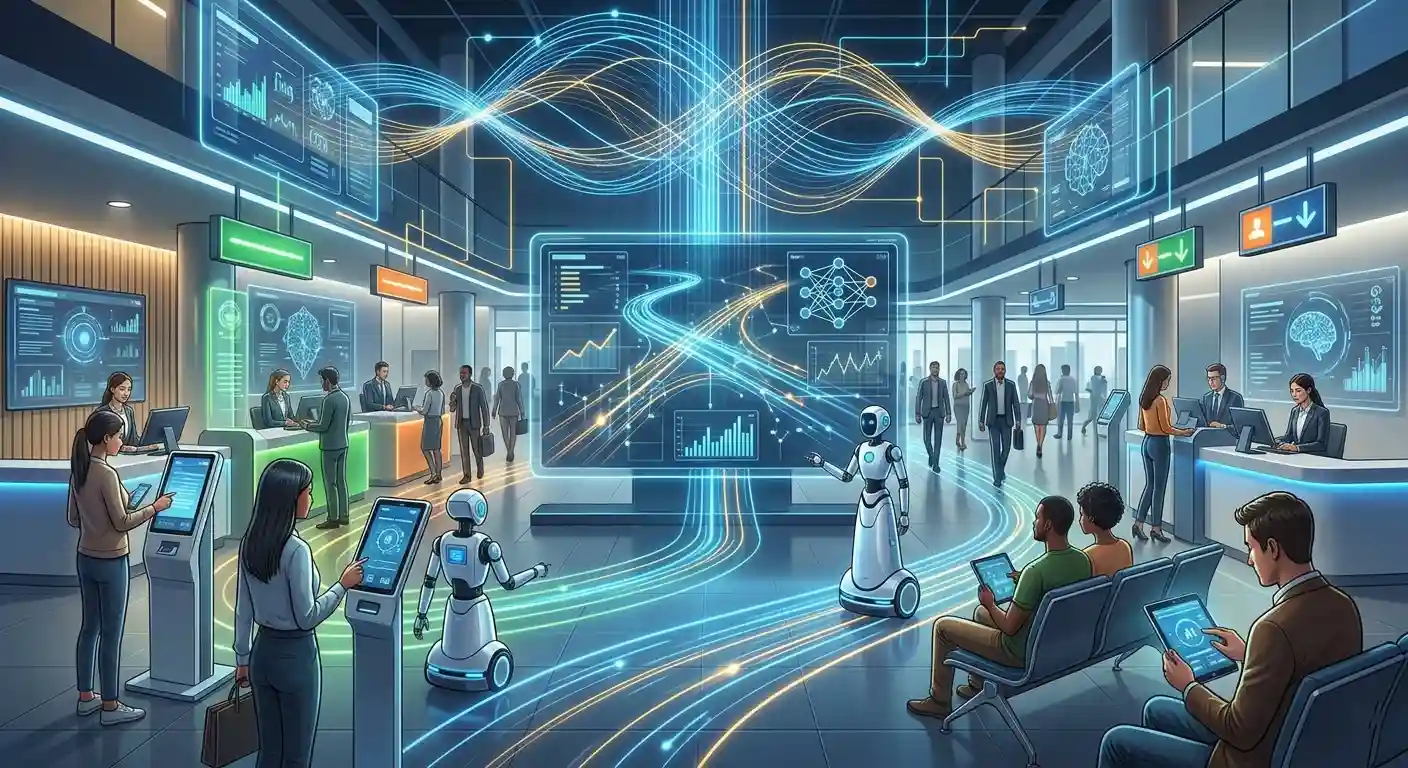
The evolution of the Queue Management System has been significantly shaped by AI and automation. Today’s smart queue management systems go beyond simple token management—they intelligently predict, adapt, and optimize customer flow in real time.
By leveraging AI, queue management system software can enhance both operational efficiency and customer experience across industries like banking, healthcare, retail, and call centres.
AI-Based Wait Time Prediction
AI algorithms analyze historical data, real-time queue length, and service speed to predict accurate wait times.
- Reduces uncertainty for customers
- Helps manage expectations
- Improves planning in environments like hospital queue management systems
AI-Based Customer Routing
An advanced automated queue management system can route customers to the most appropriate service agent based on the following:
- Query type
- Priority level
- Agent expertise
This is especially critical in call queue management systems and customer queue management systems.
Demand Forecasting
AI enables queue management systems to forecast demand based on patterns such as:
- Time of day
- Seasonal trends
- Customer behavior
Businesses can proactively prepare, making this a key feature of the best queue management systems.
Smart Staff Allocation
With AI-driven insights, organizations can dynamically allocate staff where needed.
- Reduces idle time
- Prevents bottlenecks
- Enhances service delivery
This is particularly valuable in queue management systems in banks and retail environments.
Chatbots for Queue Inquiries
AI-powered chatbots integrated into a digital queue management system can:
- Answer customer queries
- Provide queue status updates
- Assist with bookings
This reduces pressure on support staff and improves responsiveness.
Mobile Queue Booking
A key feature of mobile queue systems, this allows customers to:
- Book slots remotely
- Join virtual queues
- Receive updates
This is widely used in retail queue management systems and healthcare setups.
Customer Feedback Integration
Modern queue management software integrates feedback collection into the journey.
- Capture real-time satisfaction data
- Identify service gaps
- Improve decision-making
CRM Integration
Integration with CRM systems enables the following:
- Personalized customer experiences
- Access to customer history
- Better service prioritization
This is a hallmark of enterprise-grade queue management system software.
Multi-branch Queue Monitoring
A cloud-based queue management system allows centralized monitoring across multiple locations.
- Real-time visibility
- Consistent service standards
- Efficient management of distributed operations
Cloud-Based Queue Management
Cloud technology powers scalable, flexible, and secure queue management systems.
- Remote access
- Easy updates
- Lower infrastructure costs
Cloud-based solutions are increasingly preferred for smart queue management systems.
Challenges Without a Queue Management System
Without a proper queuing management system, businesses face several operational and customer experience challenges:
- Long waiting times
Unstructured queues lead to delays and inefficiencies. - Customer frustration
Lack of transparency and long waits negatively impact satisfaction. - Staff inefficiency
Poor allocation of resources results in underutilization or overload. - Poor service experience
Disorganized processes reduce service quality and brand perception. - Lack of operational data
Without analytics, businesses cannot identify bottlenecks or optimize performance.
How to Choose the Best Queue Management System
Selecting the best queue management system requires careful evaluation of multiple factors:
- Business size and footfall
Choose a system that can handle your current and future volume. - Scalability
Ensure the solution grows with your business. - Industry requirements
For example, a patient queue management system differs from call centre queue management software. - Ease of integration
The system should integrate with CRM, ERP, and other tools. - Mobile compatibility
Essential for modern digital queue management systems. - Customization capabilities
Tailor workflows, interfaces, and reporting. - Data analytics and reporting
Look for actionable insights and dashboards. - Multi-location support
Critical for enterprises with distributed operations. - Security and compliance
Especially important in healthcare and financial sectors. - Cloud vs On-premise deployment
Cloud-based solutions offer flexibility, while on-premise may suit specific compliance needs.
Implementation Best Practices and Process
Successfully deploying a queue management system software requires a structured approach:
- Assess current queue management challenges
Identify inefficiencies and pain points. - Define service workflows
Map customer journeys and service steps. - Train staff
Ensure teams are comfortable with the new system. - Integrate with existing systems
Connect CRM, scheduling, and backend systems. - Hardware installation (kiosks, displays)
Set up physical infrastructure for electronic queue management systems. - Testing and deployment
Validate system performance before full rollout. - Monitor and continuously optimize performance
Use analytics to refine and improve over time.
Turn long queues into seamless customer experiences with smart queue management
Future Trends in Queue Management Systems
The future of queue management systems is driven by innovation and customer-centric design.
AI-Driven Queue Prediction
Advanced AI models will provide hyper-accurate predictions, further reducing wait times.
Facial Recognition Check-Ins
Contactless check-ins using facial recognition will enhance convenience and security in AI queue management security systems.
Mobile-First Queue Systems
Mobile interfaces will become the primary interaction channel for customers.
Smart City Queue Integration
Queues across public services will be interconnected as part of smart city ecosystems.
Personalized Customer Experiences
AI and CRM integration will enable tailored services based on individual preferences.
IoT-Enabled Service Management
IoT devices will provide real-time updates and automate service workflows.
Omnichannel Queueing Systems
Customers will interact with queues across multiple channels—mobile, web, in-store, and call centres—seamlessly.
Conclusion
A modern Queue Management System is essential for businesses aiming to deliver efficient, seamless, and customer-centric services. From reducing wait times to improving staff productivity, queue management systems play a critical role in operational success.
Digital and cloud-based queue management systems significantly enhance customer experience by enabling transparency, flexibility, and real-time engagement.
As AI and automation continue to evolve, smart queue management systems will become even more intelligent, predicting demand, personalizing interactions, and optimizing every aspect of customer flow.
At Experion, we help businesses design and implement scalable, AI-powered queue management solutions tailored to their unique operational needs.
Frequently Asked Questions (FAQs)
- What is a queue management system, and how does it improve customer service in businesses?
A queue management system is a software solution that organizes customer flow, reduces wait times, and improves service efficiency through automation and real-time tracking. - Why should businesses invest in queue management technology?
It enhances customer experience, optimizes staff productivity, and provides valuable operational insights. - What are the key features to look for in a queue management system?
Key features include AI-based routing, mobile integration, analytics, CRM integration, and multi-location support. - How long does it take to implement a queue management system?
Implementation can range from a few weeks to a few months, depending on complexity and scale. - What are the different types of queue management systems?
They include linear, virtual, appointment-based, mobile, self-service, and AI-enabled systems. - Which industries use queue management systems?
Banking, healthcare, retail, telecom, and call centres widely use queue management systems. - What is the difference between queue management and appointment systems?
Queue systems manage real-time customer flow, while appointment systems schedule future interactions. - What are the benefits of implementing a queue management system in retail stores?
It reduces wait times, improves customer satisfaction, and increases conversion rates in retail queue management systems. - What technologies are used in modern AI-powered queue management systems?
Technologies include AI/ML, cloud computing, IoT, mobile apps, and analytics platforms. - How to choose the best queue management system for a business?
Evaluate scalability, integration capabilities, industry fit, analytics features, and deployment options to select the best queue management system.