

Experion can help in the development of construction ERP software solutions that can help connect site operations and back-office functions into a more unified, data-driven ecosystem.
The construction industry faces a unique set of challenges, from volatile material costs and labor shortages to stringent regulatory compliance. For many firms, the biggest hurdle is internal: fragmented workflows. When procurement, finance, and project management operate in silos, the result is often delayed timelines and eroded margins.
As projects grow in complexity, there is a burgeoning need for centralized digital systems. Construction ERP software serves as an integrated operational platform, helping contractors, builders, developers, and infrastructure firms synchronize every moving part of their business. By implementing dedicated construction industry ERP software, companies can transition from reactive troubleshooting to proactive, streamlined management.
What is Construction ERP Software?
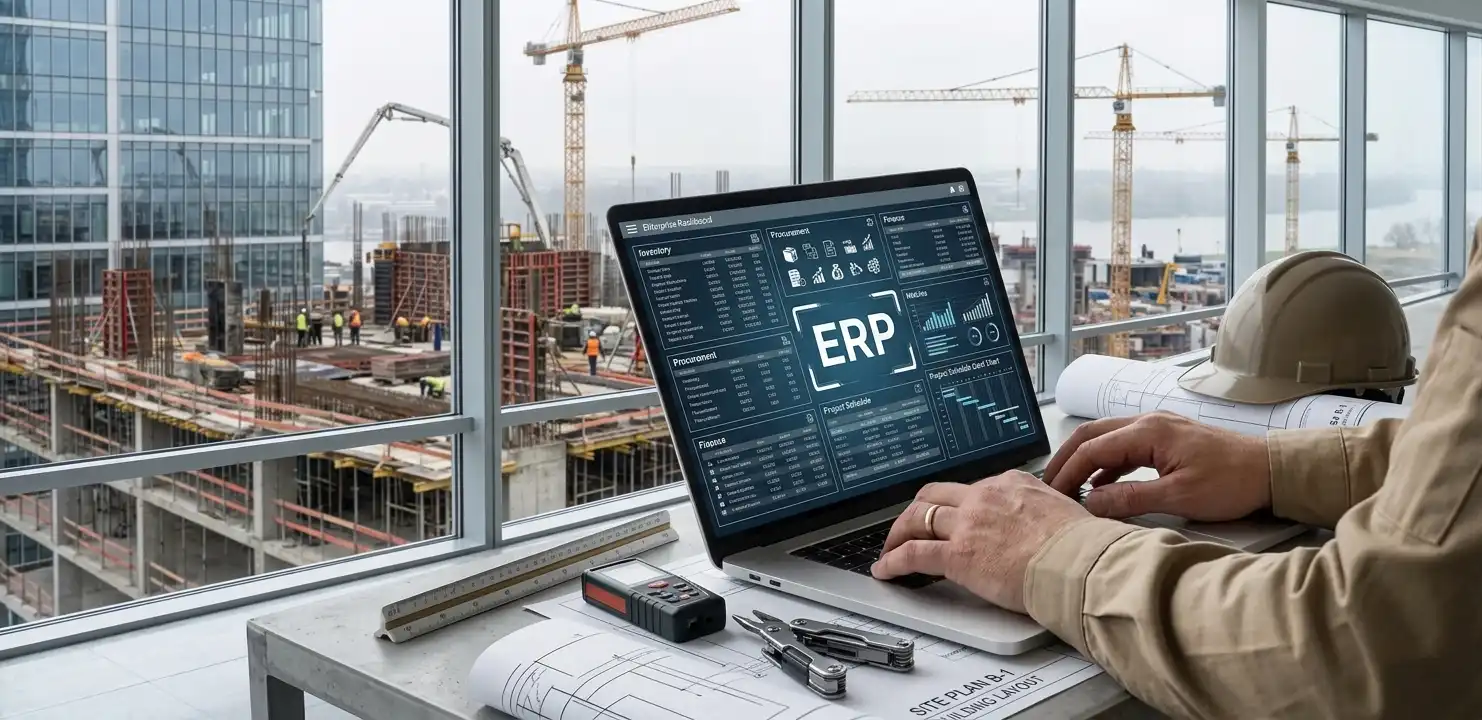
Construction ERP software is a set of tools that helps construction companies manage their business. It is different from business tools because it is designed to handle the unique needs of the construction industry.
Construction ERP software acts as a platform that combines important functions like finance and accounting, procurement, project planning, human resources and payroll and asset management.
For example, it can help with the following:
- Finance and Accounting: managing bills and invoices for projects
- Procurement: getting supplies from start to finish
- Project Planning: making sure projects are on schedule
- HR and Payroll: managing workers and making sure the company is following the rules
- Asset Management: keeping track of machinery and making sure it is well maintained
Using Construction ERP software helps everyone involved in a project see the same information so the person in charge of the project and the person in charge of money can both see the same numbers.
Why Generic ERP Systems Are Not Enough?
Some companies try to use ERP software, but it does not work well for the construction industry. The best Construction ERP software is special because it can handle the needs of the construction industry.
For instance, it can handle the following:
- Construction workflows: like tracking requests for information and managing submittals
- Project-based accounting: tracking costs and revenue for each project, not the whole company
- Field workforce management: managing workers who are in different places and move around a lot
- Contract and subcontractor tracking: managing complex contracts and insurance certificates
Unify your field and office with one powerful digital backbone
Why Your Business Needs Construction Management ERP Software?
Implementing Construction ERP software is no longer a luxury; it is necessary to stay competitive.
It can help with:
- Real-time visibility: seeing how every project is doing at all times
- Eliminating data silos: making sure information flows easily between parts of the company
- Improved compliance: automating tracking of safety certifications and regulatory filings
- Scalability: growing the company without having to hire administrators
Construction ERP software is like a tool that helps construction companies manage their business better. It is a tool for any construction company that wants to stay competitive.
Key Features of Construction ERP Software
The best construction ERP software acts as a digital system. It helps every department from the job site to the office use the information in real-time.
Project Management and Scheduling
Construction project management software helps managers align timelines with resources. They can track milestones, manage paths and adjust schedules as site conditions change.
Financial Management and Job Costing
Construction accounting software provides job costing. It tracks every dollar spent against work breakdown structures. This allows for profitability analysis at the project level.
Procurement and Supply Chain
Modern ERP software for construction automates the procurement process. It manages vendor relationships, tracks lead times for materials and ensures that inventory is delivered on time.
Contract and Subcontractor Management
An ERP construction software suite simplifies managing partners. It centralizes contract documents, tracks insurance compliance and automates progress billing and lien waiver collections.
Equipment and Asset Management
A construction ERP system tracks equipment location, fuel consumption and engine hours. This ensures that preventive maintenance is scheduled automatically.
Workforce and Payroll Management
Managing field crews involves rules. An ERP system for construction automates time-tracking and payroll processing. This ensures workers are paid accurately and on time.
Document Management
Construction generates a lot of paperwork. Construction software ERP modules provide a repository for documents. This ensures that the latest version is accessible to everyone.
Bidding (Pre-Construction)
The best ERP software for construction helps estimators build bids. It uses data and converts winning bids into active project budgets.
Reporting, Analytics and BI Dashboards
Top construction ERP software turns data into insights. BI dashboards provide a view of KPIs like cash flow, safety incidents and project health.
Stop managing silos and start scaling your construction empire
Benefits of Implementing ERP Software for Construction

Construction ERP solutions empower leadership with visibility. This ensures that every project drives growth.
- Improved Project Visibility: A construction ERP solution helps stakeholders see where a project stands. They can view progress and financial health.
- Cost and Budget Accuracy: ERP software for construction eliminates budget surprises. It flags cost variances as they occur.
- Enhanced Collaboration: A centralized construction management software platform ensures that the field, warehouse and office are in sync. This reduces rework and miscommunication.
- Better Documentation: Automated workflows in a construction ERP system ensure that safety logs, permits and tax documents are audit ready.
- Improved Decision Making: With real-time data from an ERP system, construction executives can make informed decisions.
Key Modules in Construction ERP Systems
A high-performance ERP software construction suite has modules. These modules can be scaled as the business grows:
- Project Planning Module: Handles the build schedule and resource allocation.
- Financial Accounting Module: Manages accounts receivable and general ledger.
- Procurement and Vendor Module: Manages purchases and vendor performance.
- Equipment Management Module: Monitors equipment health and ROI.
- HR and Workforce Module: Manages recruitment, certifications and labor compliance.
- Quality and Safety Management Module: Ensures projects meet build standards and tracks HSE metrics.
- Reporting and Analytics Module: Synthesizes data from all modules into reports.
Construction ERP vs. Regular Accounting Software
While both systems handle financial data, a construction ERP system is fundamentally different from generic accounting packages like QuickBooks or Xero. Standard accounting software focuses on the general ledger, accounts payable, and accounts receivable across the entire company.
In contrast, construction accounting and project management software are built for “job costing”. It allows you to track expenses, labor, and equipment down to a specific sub-task within a single project. A construction ERP also integrates non-financial data, such as site photos, RFI logs, and weather delays, directly into the financial record, providing a context that regular accounting software simply cannot offer.
Types of ERP Software for Construction Industry
Selecting the best construction ERP software requires understanding which architecture and scale fit your specific business model.
By Deployment: Cloud vs. On-Premise vs. Hybrid
- Cloud-Based ERP Solution: This is the modern standard for ERP software for the construction industry. It offers remote access for field teams via mobile devices, automatic updates, and lower upfront infrastructure costs.
- On-Premise ERP: Preferred by some massive enterprises that require total physical control over their data and have the IT staff to maintain internal servers.
- Hybrid ERP: A mix where core financial data stays on-premise, while project management and field modules live in the cloud for better accessibility.
By Company Size: SMB, Mid-Market, Enterprise
- SMB: Focuses on ease of use and core features like payroll and job costing. ERP software for construction company needs at this level is often about replacing manual spreadsheets.
- Mid-Market: Adds layers of complexity, such as multi-entity management and more robust construction project management ERP software features.
- Enterprise: Top construction ERP software for global firms includes multi-currency support, advanced BI analytics, and deep integration with complex supply chains.
By Specialty: GC, Homebuilder, Specialty Trade, Civil/Infrastructure
The best ERP software for construction is often tailored to a niche. A General Contractor (GC) needs heavy subcontractor management, while a homebuilder needs “sales to service” workflows. Civil and infrastructure firms require ERP construction software that excels in heavy equipment tracking and high-volume material procurement.
Best-of-Breed vs. All-in-One Platform
- All-in-One Platform: A single construction management ERP software that handles everything from HR to Estimating.
- Best-of-Breed: Using a specialized ERP system in construction for finance but integrating it with a different, specialized tool for field productivity.
Who Needs a Construction ERP Solution?
If your business is struggling with manual data entry, mismatched reports, or lack of site visibility, you likely need a dedicated ERP software construction platform.
- Small Construction Firms: Even small teams benefit from ERP software for construction by professionalizing their bidding and ensuring they don’t lose money on untracked change orders.
- Mid-Size Contractors: As you juggle more projects, a construction ERP solution becomes the only way to maintain a “single version of truth” across growing teams and multiple sites.
- Large Construction Enterprises: For global players, a high-end ERP system for construction is a non-negotiable requirement for regulatory compliance, risk management, and multinational financial reporting.
- Infrastructure Developers: Firms managing long-term, high-capital projects need construction management software to track complex funding, long-lead procurement, and multi-year timelines.
Experion provides the technical bridge between your current operational hurdles and a high-performance construction ERP system, ensuring your software scales at the same pace as your ambition.
Real-time site visibility and total cost control, all in one place
Construction ERP Cost Breakdown & ROI Analysis
Selecting the best construction ERP software is a significant investment that goes beyond the initial price tag. Understanding the Total Cost of Ownership (TCO) is essential for long-term financial planning.
Experion has the capability to support construction ERP solution development with a focus on improving operational visibility, cost control, and delivery efficiency.
- Total Cost of Ownership: What You’re Really Paying: Beyond the ERP software construction license or subscription fee, TCO includes implementation, data migration, hardware upgrades (if on-premise), and ongoing maintenance.
- Hidden Costs Most Contractors Miss: Many firms overlook the cost of internal staff time dedicated to the rollout, specialized training for field crews, and potential custom API development to link the construction ERP system with legacy tools.
- Quantifiable ROI: Where Savings Actually Come From: Real value is found in last-mile delivery cost reduction (within the supply chain module), the elimination of manual data entry errors, and a significant decrease in unbilled change orders.
- Sample ROI Calculator Framework: To estimate value, firms should measure the reduction in “Days Sales Outstanding” (DSO) and the percentage increase in labor productivity enabled by construction accounting and project management software.
- Typical Payback Period: Most companies implementing a top construction ERP software see a full return on investment within 18 to 24 months, driven by improved resource utilization and reduced material waste.
How Construction ERP Software Improves Project Lifecycle Management
An ERP solution does more than just handle accounting; it keeps track of a project’s progress from start to finish.
Pre-construction Phase
- During this stage the ERP software for construction acts like a database of projects.
- Estimators use data from builds to create accurate bids.
- The construction software then turns these bids into budgets and schedules for buying materials as soon as a contract is awarded.
Construction Phase
- This is where construction project management ERP software really helps.
- It keeps track of labor hours, material deliveries, and equipment usage in real time.
- If a project starts to go over budget, the ERP solution alerts you right away.
- This allows you to make changes before costs get out of control
Post-construction Phase
- When the project is finished, the ERP system gathers all the drawings, warranty information and maintenance manuals.
- This makes it easy to hand over the project to the client and gives the firm a complete set of data to improve the next project.
Emerging Technologies in ERP Construction Software
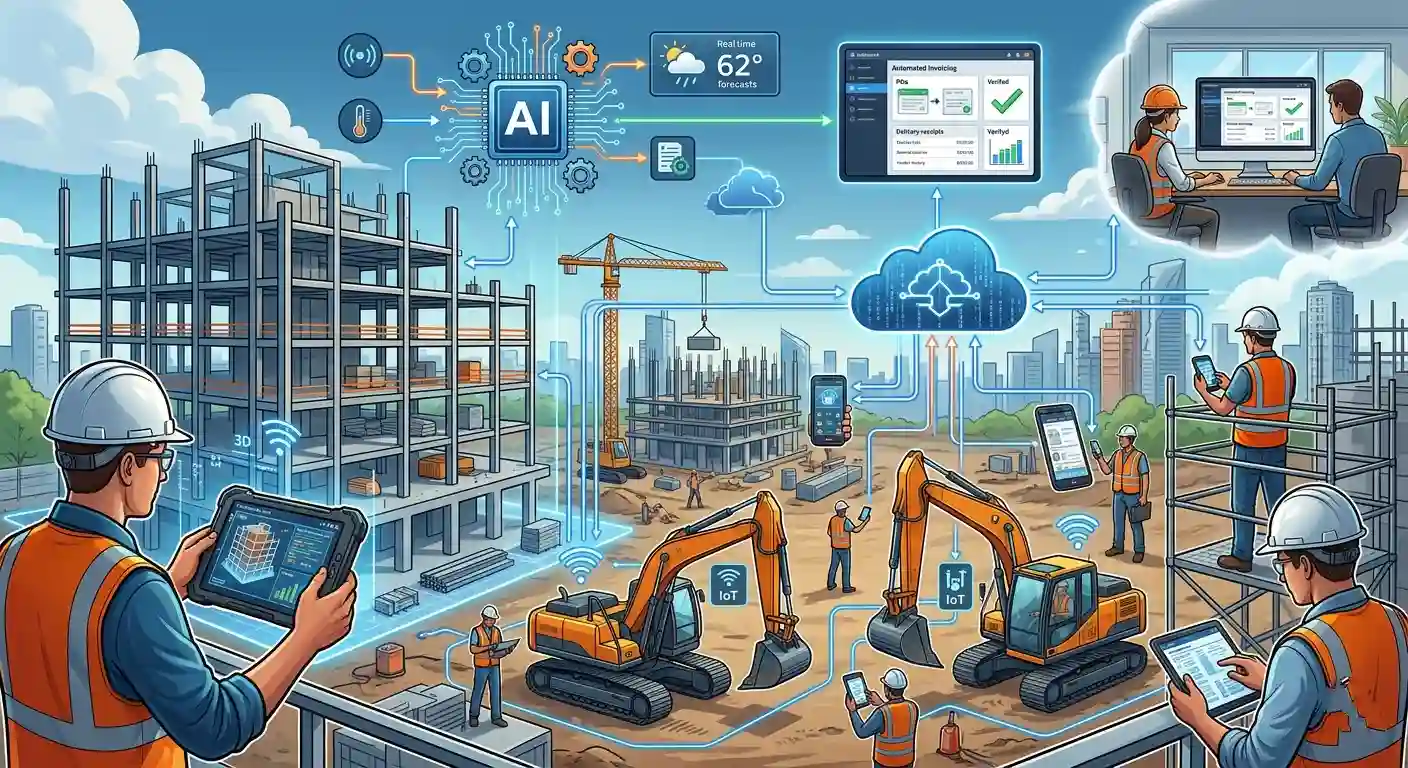
The best ERP software for construction is evolving with Intelligent ERP features.
Artificial Intelligence
- AI in ERP software for construction can predict project delays by looking at weather patterns and past vendor performance.
- It also automates invoicing and checks for discrepancies between purchase orders and delivery receipts.
Cloud ERP Platforms
- Moving to cloud-based construction ERP software has made it easier to access project data on site.
- Now you can get the up-to-date information on a smartphone at the job site or a desktop in the office.
IoT Integration
- By connecting ERP construction software with sensors on heavy equipment, firms can track fuel consumption and equipment performance.
- This helps manage maintenance logs and reduces the risk of equipment breaking down during a project.
Digital Twin Integration
- Modern ERP systems for construction are starting to work with digital twins, which are virtual models of the physical build.
- This allows managers to see logistical data directly on a 3D model of the structure.
Mobile ERP Applications
- A construction management ERP software is only useful if people actually use it.
- Mobile apps let field supervisors submit logs, take site photos and approve timecards instantly.
- This ensures the back office always has the latest data.
Common Challenges in Construction ERP Implementation
Even the top construction ERP software can fail without a strategic implementation plan. Recognizing these hurdles early is the key to success:
- Resistance to Digital Transformation: Cultural pushback is common. Overcome this by highlighting how the ERP software construction tools make daily tasks—like reporting or tracking hours—easier for the field team.
- Data Migration from Legacy Systems: Moving decades of messy data into a clean construction ERP system is a massive task. It requires a dedicated data-scrubbing phase before the “Go-Live” date.
- Integration with Existing Tools: Roadblocks often occur when trying to link new ERP software for construction company operations with specialized third-party tools for CAD or HR.
- Training Field Teams: If the construction management software is too complex, adoption will stall. Implementation must include tiered training sessions tailored to different user roles, from executives to foremen.
How to Implement an ERP System for Construction?
A successful rollout of construction ERP software is a marathon, not a sprint. Following a structured implementation lifecycle ensures that your ERP solution delivers value without disrupting active project sites.
Phase 1 — Discovery & Requirements Gathering
Before looking at vendors, identify your specific pain points. Are you struggling with labour tracking or inaccurate job costing? Mapping out your current “as-is” processes helps define the “to-be” state for your new construction industry ERP software.
Phase 2 — Vendor Selection and Contract Negotiation
Evaluate top construction ERP software based on their ability to handle your specific niche – whether that is civil infrastructure or residential building. Ensure the contract includes clear milestones for deployment and long-term support for your ERP construction software.
Phase 3 — Data Migration and System Configuration
This is the most technical stage. You must scrub your legacy data before moving it into the new construction ERP system. Simultaneously, configure the software settings to match your company’s unique work breakdown structures and approval hierarchies.
Phase 4 — Training and Change Management
A construction management ERP software is only as good as the people using it. Conduct tiered training sessions for office staff and field foremen, emphasizing how the ERP software for construction will make their daily reporting easier.
Phase 5 — Go-Live and Hypercare Period
Switching to the new system requires a “Hypercare” window where technical support is available 24/7. This ensures that any initial friction with the ERP system in construction is resolved immediately before it affects payroll or procurement.
Common Implementation Mistakes to Avoid
- Over-Customization: Trying to make the ERP software construction suite perfectly mimic your old manual habits can lead to bugs and high costs.
- Underestimating Data Cleanup: Importing “dirty data” into a new construction ERP solution will lead to inaccurate reporting from day one.
Best Practices for Successful ERP Software Implementation
Experion partners with construction leaders to ensure that every ERP software for construction industry rollout is backed by a robust change management strategy and deep technical integration.
- Conduct Workflow Analysis Before Deployment: Understand exactly how information moves from the site to the office to ensure the ERP system for construction optimizes rather than complicates your path.
- Choose Scalable ERP Architecture: Your best construction ERP software should be able to handle a 10x increase in project volume without requiring a complete system overhaul.
- Invest in Employee Training: Digital literacy is the backbone of successful construction software ERP adoption; don’t skimp on user workshops.
- Ensure Strong Data Governance: Establish clear rules for who can enter data and how it is categorized within the ERP software for the construction company database.
- Use Phased Implementation Strategies: Instead of a “big bang” rollout, consider deploying the financial module first, followed by project management and HR in later stages.
Key Factors to Consider When Choosing Construction ERP Software
Choosing the best ERP software for the construction industry requires looking beyond the sales pitch to the underlying technical and functional capabilities.
- Industry-Specific Functionality: Does the ERP construction software natively handle lien waivers, AIA billing, and union payroll, or will you need expensive add-ons?
- Integration Capabilities: Ensure the construction management software offers open APIs to talk to your existing CAD, BIM, and estimating tools.
- Cloud vs. On-Premise Deployment: Most modern firms prefer cloud-based construction ERP software for its superior field accessibility and lower maintenance overhead.
- Scalability and Customization: Look for a construction ERP system that can be tailored to your unique branding and reporting needs while growing with your fleet and workforce.
- Vendor Expertise in Construction Technology: Choose a partner who speaks “construction”, not just “software”. Understanding the difference between a submittal and an RFI is vital for a successful ERP software for the construction industry partnership.
Future Trends in Construction ERP
The next generation of construction industry ERP software is moving beyond data entry and into the realm of intelligent, autonomous operations. These trends are redefining how the best construction ERP software adds value to the job site.
AI-Driven Project Forecasting
By leveraging machine learning, modern ERP software for construction can analyze thousands of historical data points to predict potential schedule slips or budget overruns months in advance. This allows for proactive resource levelling that traditional construction management software cannot provide.
Autonomous Construction Equipment Integration
As self-driving machinery becomes more common, the ERP system in construction will act as the command centre. It will track the productivity of autonomous excavators and haulers in real-time, syncing their output directly with the project schedule and fuel procurement modules.
Predictive Maintenance for Machinery
By connecting ERP construction software to IoT sensors on heavy equipment, firms can move from reactive repairs to predictive maintenance. The system identifies mechanical wear before a breakdown occurs, automatically ordering parts and scheduling a mechanic through the construction ERP solution.
Real-Time Supply Chain Monitoring
Global volatility requires ERP software for the construction industry that monitors the entire supply chain. Using GPS and blockchain integration, contractors can track the exact location of critical materials, from the factory to the port to the site, ensuring the construction ERP system always has an accurate “Estimated Time of Arrival”.
Real-World Use Cases of Construction ERP
An ERP solution is adaptable across various scales and sectors, providing a “single version of truth” for diverse project types:
- Large Infrastructure Projects: Managing the multi-year lifecycles of bridges or highways requires the robust construction project management ERP software capabilities found in enterprise systems to handle thousands of subcontractors and massive material volumes.
- Residential Construction Projects: Homebuilders use ERP software for construction company needs to manage high-volume “production” building, syncing sales office data with site-level procurement and trade scheduling.
- Commercial Real Estate Development: For office or retail builds, top construction ERP software manages complex financing, tenant improvements, and the transition from construction to facility management.
- Government Construction Programs: Public works require the extreme transparency and auditability offered by an ERP system for construction to ensure compliance with strict tax-funded reporting requirements.
Build smarter with a construction ERP designed for global scale
The Business Impact of Construction ERP
The shift to an ERP software construction platform delivers measurable improvements to the corporate bottom line:
- Reduced Project Delays: Integrated scheduling and real-time communication ensure that the right resources are always in the right place, minimizing “wait time” on-site.
- Increased Operational Transparency: With construction management ERP software, executives no longer have to wait for end-of-month reports to see the health of a project; every data point is live.
- Improved Financial Accuracy: Automated construction accounting and project management software eliminates the manual entry errors that lead to tax penalties or unpaid vendor disputes.
- Higher Project Profitability: By tightening cost controls and reducing material waste, the best ERP software for construction protects margins that are often lost to inefficiency.
How Can Experion Offer Support in Building Construction ERP Software?
Experion provides the technical backbone for construction digital transformation, engineering custom ERP systems that harmonize complex site data with enterprise-level financial strategy.
Our team specializes in the following:
- Custom ERP Development: Building a bespoke construction ERP system that fits your exact workflow, rather than forcing you to adapt to “out-of-the-box” limitations.
- Legacy Modernization: Seamlessly migrating your data from fragmented spreadsheets or outdated tools into a modern cloud-based construction ERP software.
- Advanced Analytics Integration: Layering AI and BI tools onto your ERP construction software to provide predictive insights and automated reporting.
- Mobile & IoT Connectivity: Ensuring your construction management software is accessible in the field and connected to your physical assets.
Conclusion
Digital transformation is no longer a choice in the building industry; it is the primary driver of survival and growth. Construction ERP software serves as the vital link between the physical work on the ground and the financial strategy in the office. By adopting an integrated ERP solution, companies can move away from fragmented silos and toward a future of high-efficiency, data-driven success.
Key Takeaways
- Centralization is the cure for fragmented site data.
- ERP system for construction: ROI is driven by improved accuracy and reduced delays.
- AI and IoT are making the best construction ERP software more predictive and less reactive.
Ready to unify your operations?
Contact Experion Today for a consultation on building a future-ready construction ERP platform
Frequently Asked Questions (FAQs)
- What is construction ERP software, and how does it work?
It is a centralized digital platform that integrates all business processes—finance, HR, procurement, and project management—into one system specifically tailored for the building industry. - Why do construction companies need ERP software?
To eliminate data silos, improve job costing, and ensure that projects stay within budget and on schedule through real-time visibility. - How is construction ERP different from standard ERP systems?
A construction ERP system includes industry-specific features like AIA billing, lien waiver tracking, and subcontractor management that generic systems lack. - What is the difference between construction ERP and construction management software?
Construction software ERP includes the back-office financial and HR functions, whereas standard management software often focuses only on site-level execution and scheduling. - What features should construction ERP software include?
Essential features include job costing, automated procurement, field reporting, document management, and robust BI dashboards. - How does AI improve construction ERP systems?
AI within an ERP system in construction can predict schedule delays, automate data entry for invoices, and provide risk-based pricing for new bids. - How much does construction ERP software cost?
Costs depend on the deployment (Cloud vs. On-premise) and the number of users, with most firms seeing a positive ROI within 18 to 24 months. - Is it possible to integrate cloud ERP with construction accounting software?
Yes. Modern ERP software for construction is designed with open APIs to sync perfectly with existing accounting and estimating tools. - How is custom construction estimating software beneficial compared to ready-made software?
Custom builds allow you to own the source code, eliminate recurring seat licenses, and perfectly mirror your proprietary internal workflows.
Experion’s commitment to construction technology ensures your ERP platform remains an asset that evolves alongside the changing demands of the global infrastructure market.