




Enterprise Business Intelligence Platforms

In today’s data-driven world, leveraging the right tools for business intelligence (BI) is essential for organizations aiming to stay ahead. Enterprise Business Intelligence Platforms (EBIP) empower businesses to make informed decisions, optimize operations, and gain a competitive edge.


What is Enterprise Business Intelligence?

Enterprise Business Intelligence Platforms

Enterprise Business Intelligence (BI) refers to a set of technologies, tools, and practices used by organizations to collect, integrate, analyze, and present business data to support decision-making processes. These platforms are designed to help businesses make sense of large volumes of data from multiple sources, including internal systems like CRM, ERP, and databases, as well as external data sources.

In the context of today’s fast-paced and data-driven world, it’s more critical than ever for businesses to leverage data effectively. Enterprise BI solutions provide the infrastructure necessary to manage this complexity, offering a centralized platform where users can access data and insights at their fingertips.

Importance of Data-Driven Decision-Making for Enterprises

Data-driven decision-making has become a fundamental requirement for enterprises striving to maintain a competitive advantage. By using data to guide their decisions, organizations can move away from intuition-based decisions and towards strategies grounded in facts and insights. This approach allows enterprises to mitigate risks, optimize operations, identify new opportunities, and improve overall performance.

With custom enterprise business intelligence platforms, organizations can align their data strategy with business objectives, ensuring that decisions are based on comprehensive, real-time insights. This leads to faster, more accurate decision-making, allowing businesses to remain agile and responsive to market changes.

Key Role BI Platforms Play in Modern Business Environments

Enterprise BI platforms are the backbone of modern data analytics, providing businesses with the necessary tools to make informed decisions. These platforms support the transformation of raw data into actionable insights, helping organizations improve processes and enhance their decision-making capabilities.

In today’s competitive environment, businesses cannot afford to operate without leveraging the power of data. Enterprise BI solutions centralize data from multiple sources, making it easier for teams to access and analyze information quickly. Real-time access to data through advanced analytics tools and interactive dashboards enables organizations to monitor performance, identify trends, and act proactively.

Enterprise BI platforms help businesses streamline operations, automate reporting, and enhance collaboration across teams. Whether it’s through providing instant insights into customer behavior, sales performance, or operational efficiency, BI platforms ensure that the organization stays informed, aligned, and on the path to growth.

Moreover, custom enterprise business intelligence platforms offer the flexibility to adapt to specific business needs. These tailored solutions enable organizations to focus on their unique challenges, integrate seamlessly with existing systems, and provide a more personalized experience that enhances the value of business intelligence.


What Are Enterprise Business Intelligence Platforms?
Enterprise Business Intelligence Platforms

Enterprise Business Intelligence (BI) platforms are powerful, all-encompassing software solutions designed to manage, analyze, and present large volumes of data across an organization. These platforms integrate multiple data sources, enabling businesses to derive actionable insights that support strategic decision-making at all levels of the organization.

In essence, an enterprise BI platform acts as the central hub for an organization’s data ecosystem, providing a unified view of key performance indicators (KPIs), metrics, and trends. By consolidating data from various systems—such as Customer Relationship Management (CRM), Enterprise Resource Planning (ERP), databases, and external sources—these platforms allow businesses to create comprehensive reports, dashboards, and visualizations that are accessible to decision-makers across departments.

Real-Time Data Access and Analysis

One of the defining features of enterprise business intelligence platforms is their ability to provide real-time access to data. In today’s fast-moving business environment, decisions must be made quickly, and having instant access to up-to-date data is critical. Enterprise BI platforms ensure that business leaders can access the most current information from a variety of sources, enabling faster, more accurate decision-making.

For example, a sales team can access up-to-the-minute performance data to adjust strategies or react to changes in market conditions. Similarly, the finance department can quickly assess financial data, enabling them to make timely forecasts or adjustments. The ability to process and analyze data in real time gives organizations a significant advantage over competitors who are relying on outdated or incomplete information.

Data Integration Across Multiple Sources

Enterprise business intelligence platforms excel at integrating data from disparate sources. In large organizations, data is often scattered across various departments and systems, creating silos that hinder effective analysis. BI platforms break down these barriers by connecting data from a wide range of sources into a single platform.

For example, an enterprise BI solution can pull data from ERP systems for financial insights, from CRM systems for customer-related information, and from external sources like market data or social media feeds to provide a complete view of the business landscape. By centralizing this data, organizations can gain a more holistic understanding of their operations, uncover hidden patterns, and make more informed decisions that drive growth and efficiency.

Scalable and Flexible for Enterprise Needs

Enterprise BI platforms are built to scale with an organization’s growth. As a company expands and the volume of data increases, the BI platform can accommodate this growth without compromising performance. Whether an organization has thousands of employees or operates across multiple regions, an enterprise BI solution can scale to meet the evolving needs of the business.

This flexibility is especially important for companies looking for long-term solutions. With the rise of big data and emerging technologies, an enterprise BI platform ensures that businesses are equipped to handle increasing data volumes, more complex analysis, and greater demands for real-time insights.

Collaboration and Sharing of Insights

Enterprise BI platforms are not just tools for individual users; they are designed to foster collaboration across teams and departments. Through shared dashboards, reports, and interactive visualizations, these platforms enable teams to collaborate more effectively by providing a centralized view of key data.

For instance, a marketing team can use the platform to track campaign performance, while the finance team can review budget utilization, and the sales team can monitor lead conversion rates—all using the same data set. This collaborative approach ensures alignment across departments, leading to better decision-making and more effective execution of business strategies.

Enterprise BI Solutions That Drive Efficiency

An enterprise BI platform’s ability to automate data processing, reporting, and analysis is a major driver of efficiency. By automating these tasks, organizations can significantly reduce the manual effort involved in data management and reporting. This automation leads to faster reporting cycles, more accurate data insights, and fewer errors in decision-making processes.

Custom enterprise business intelligence platforms take this efficiency even further by tailoring features to meet the specific needs of the organization. By aligning the platform with the company’s goals and workflows, businesses can ensure that their BI solution is optimized for maximum impact, helping to drive growth, enhance performance, and boost overall efficiency.

Unlocking the Potential of Enterprise Business Intelligence Software

Enterprise Business Intelligence (BI) software has undergone a significant transformation over the years, evolving from basic reporting tools to sophisticated platforms that integrate vast and diverse data sources. Today, these enterprise business intelligence platforms are crucial for organizations that want to harness the full potential of their data, gain predictive insights, and drive smarter decision-making. With advanced analytics, real-time processing, and interactive visualizations, these platforms help businesses unlock valuable insights from their data, empowering them to make informed, data-driven decisions.

Difference Between Traditional BI Tools and Modern Enterprise BI Platforms

Traditional BI tools were often limited in their ability to handle large volumes of data, scale with the growing demands of modern businesses, or integrate seamlessly with new and varied data sources. These tools usually required manual data extraction and were often siloed within specific departments or systems, which meant slower insights and inefficient reporting processes.

In contrast, modern enterprise BI platforms offer scalability and flexibility, enabling them to handle the vast amounts of data that organizations generate daily. They integrate with a wide range of data sources, whether on-premise or cloud-based, and provide real-time data processing for faster insights. The advanced capabilities of modern enterprise BI platforms also include interactive dashboards, predictive analytics, and AI-driven insights, which go far beyond the capabilities of traditional BI tools. This evolution has drastically improved businesses’ ability to leverage data for strategic planning and operational efficiency.

By adopting these advanced enterprise business intelligence solution, companies can break down data silos and create a unified view of their operations, leading to more agile and informed decision-making. The benefits are clear: faster insights, better predictions, and a more responsive approach to market demands.

Custom Enterprise Business Intelligence Platforms

Not all businesses have the same needs when it comes to business intelligence. While many enterprise platforms offer off-the-shelf solutions, custom enterprise business intelligence platforms are tailored to meet the unique requirements of specific organizations. These custom-built solutions allow businesses to fine-tune their BI platforms to align with their data sources, workflows, and decision-making processes.

A custom enterprise BI platform ensures that businesses can maximize the value of their BI investments by integrating proprietary or specialized data sources, optimizing workflows, and providing the specific tools needed for their industry or market segment. This tailored approach means that businesses don’t have to rely on generalized BI tools but instead can create a business intelligence solution that addresses their exact needs, making it more effective and efficient in driving business outcomes.


Key Features of Enterprise BI Platforms
Enterprise Business Intelligence Platforms

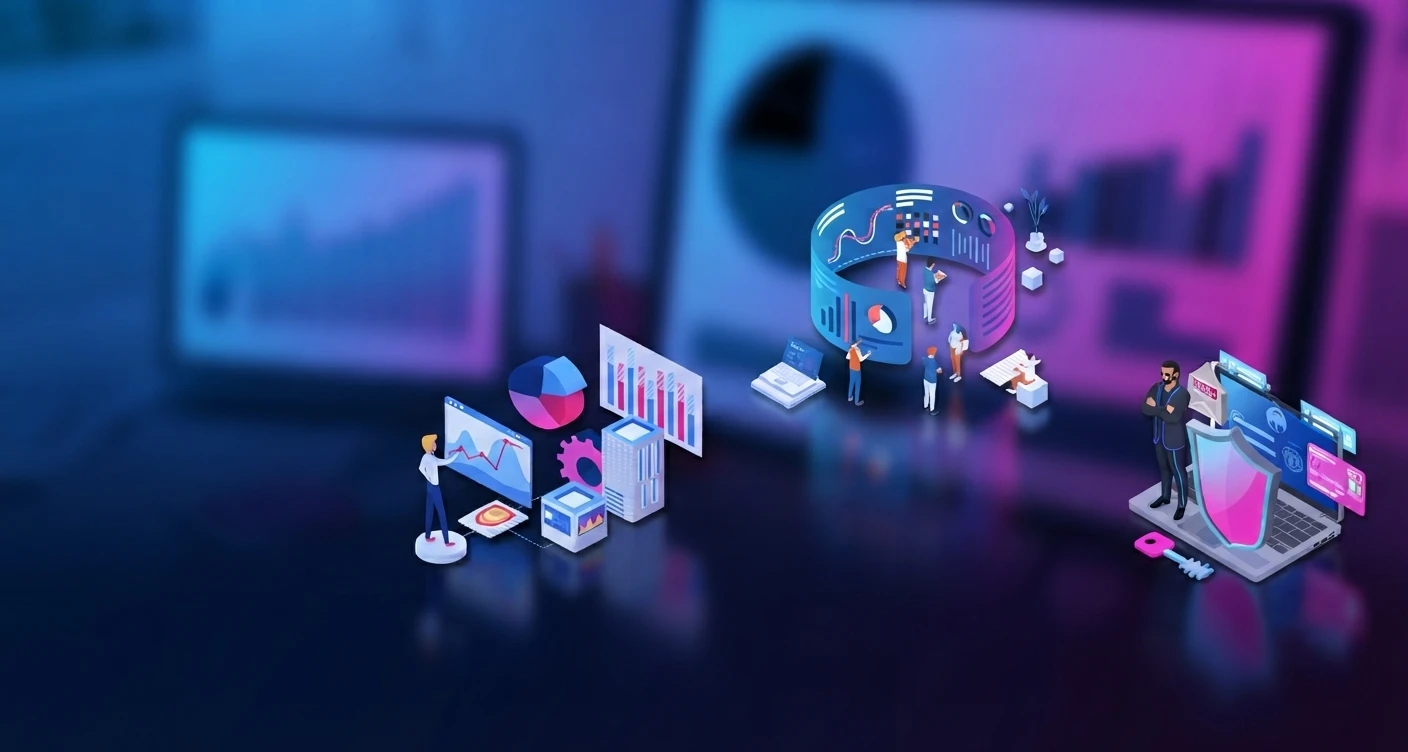
  1. Data Integration and ETL (Extract, Transform, Load)

A core feature of enterprise business intelligence platforms is their ability to seamlessly integrate data from multiple sources. Whether it’s data from Customer Relationship Management (CRM) systems, Enterprise Resource Planning (ERP) software, or databases, enterprise BI platforms are designed to connect and unify this data for comprehensive analysis. Using the ETL process—Extract, Transform, and Load—these platforms collect data, standardize it, and store it in a centralized data warehouse.

The ability to perform real-time or batch processing allows businesses to access accurate and up-to-date data at any time, providing the agility needed for rapid decision-making. Enterprise business intelligence solutions that support smooth data integration ensure that organizations can break down data silos and get a holistic view of their operations.

  1. Interactive Dashboards and Data Visualization

One of the most important aspects of any enterprise BI platform is its ability to present data in a clear and actionable way. Interactive dashboards and advanced data visualizations play a key role in making data more accessible and understandable to users at all levels of the organization.

Customizable dashboards allow users to set up their own preferred data views, enabling them to focus on the metrics that matter most. With tools like heatmaps, dynamic charts, and graphs, users can easily interpret complex datasets, uncover trends, and make data-driven decisions quickly. Best business intelligence platforms are equipped with these advanced visualization features, ensuring that businesses can leverage data insights effectively for competitive advantage.

  1. Advanced Analytics and AI/ML Integration

Modern enterprise business intelligence platforms go beyond just reporting by offering advanced analytics capabilities. These platforms enable businesses to perform a variety of analyses, from descriptive analytics (which helps organizations understand what happened in the past) to diagnostic analytics (which explains why something happened) and predictive analytics (which forecasts future trends).

AI and machine learning (ML) integration further enhances these capabilities, allowing the BI platform to automatically generate insights, recommendations, and even identify patterns that humans might miss. This not only speeds up the decision-making process but also ensures that businesses can anticipate market shifts, customer behaviors, and operational inefficiencies, thereby optimizing strategies.

By incorporating AI and ML, these enterprise BI solutions help organizations stay ahead of the curve, making faster and more accurate decisions based on predictive data. The use of AI-driven insights also adds an element of automation, ensuring that decision-makers receive timely recommendations that drive efficiency and growth.

  1. Collaboration and Sharing

Collaboration is an essential part of today’s business environment, and enterprise BI platforms facilitate this through shared dashboards, reports, and alerts. Real-time collaboration features allow teams across departments to work together by sharing the same insights and metrics, helping them stay aligned in decision-making.

For example, the marketing team can analyze customer engagement data, the finance department can review budget allocations, and the operations team can track supply chain performance—all using the same platform. By having a unified view of key business metrics, teams can work together more effectively, improving alignment and decision-making throughout the organization.

  1. Data Security and Governance

Data security and governance are paramount when dealing with sensitive business data. Enterprise BI platforms implement strong security protocols to protect data privacy and ensure compliance with regulations such as GDPR, HIPAA, and others. These platforms offer role-based access controls, audit trails, and encryption to secure sensitive information.

Moreover, enterprise business intelligence solutions provide businesses with tools to maintain proper data governance, ensuring that only authorized users have access to specific data. By managing data securely and maintaining a transparent audit trail, these platforms help organizations mitigate risks and ensure compliance with industry standards.


Benefits of Implementing Enterprise BI Platforms

  • Enhanced Decision-Making
    In today’s fast-paced business environment, making timely and informed decisions is paramount. Enterprise Business Intelligence (BI) platforms provide organizations with real-time access to data, enabling decision-makers to base their strategies on accurate and up-to-date insights. By utilizing data analytics, businesses can identify emerging trends, potential risks, and opportunities, ensuring decisions are not made on intuition but on solid data. This leads to better outcomes across various operational areas, from marketing to financial planning, fostering growth and profitability.
  • Improved Operational Efficiency
    Traditionally, gathering and analyzing data involved labor-intensive processes, often requiring manual reporting. With enterprise BI platforms, reporting, data collection, and analytics become automated, reducing the time spent on these tasks. This streamlining enhances operational efficiency, allowing teams to focus on more strategic initiatives. Additionally, automation in reporting ensures faster response times, empowering employees to make quicker decisions that align with the organization’s overall strategy.
  • Better Customer Understanding
    Understanding customer behavior is key to staying competitive. With enterprise business intelligence solutions, organizations can dive deeper into customer interactions, segment audiences, and analyze buying patterns. This data allows businesses to tailor products, services, and marketing strategies to meet the needs and preferences of their customers. By unlocking deeper customer insights, enterprises can build stronger, more personalized relationships, improving customer satisfaction and loyalty.
  • Scalability and Flexibility
    As businesses grow, so does their data. Traditional systems may struggle to handle vast amounts of data, but enterprise BI platforms are designed with scalability in mind. These platforms can adapt to growing data volumes and evolving business needs, ensuring that organizations can continue to gain insights as they expand. Whether a company operates on a local or global scale, an enterprise BI platform can scale to accommodate data from multiple sources, offering businesses the flexibility they need to succeed in a rapidly changing market.
  • Cost Savings
    Implementing an enterprise BI platform can also help organizations reduce operational costs. By automating data analysis and reporting, businesses can free up resources that would otherwise be spent on manual processes. Moreover, these platforms provide insights that can help streamline processes, identify inefficiencies, and optimize resource allocation. For example, businesses can reduce inventory costs by better predicting demand patterns or improve staffing efficiency through data-driven workforce management.

Experion Technologies helps businesses harness the full potential of enterprise business intelligence platforms by offering tailored solutions that align with each organization’s unique data needs. Our expert team ensures that our clients receive actionable insights to drive growth and improve operational performance.


Challenges in Adopting Enterprise Business Intelligence Platforms

  1. Data Silos
    One of the biggest challenges organizations face when implementing enterprise BI platforms is the existence of data silos. Data silos occur when different departments or business units store their data in separate, unconnected systems. This fragmentation can lead to incomplete insights, making it difficult for decision-makers to get a comprehensive view of the organization’s operations. To unlock the full potential of BI, businesses need to integrate disparate data sources, ensuring that data flows seamlessly across the enterprise.
  2. User Adoption and Training
    For an enterprise BI platform to succeed, user adoption is critical. Resistance to new technologies and inadequate training can hinder the effectiveness of BI tools. Employees need to be familiar with how to use the system, how to interpret data, and how to leverage the platform’s capabilities to make informed decisions. Organizations must invest in training and ensure that users at all levels are comfortable with the platform to reap the full benefits of the investment.
  3. Data Quality Issues
    The effectiveness of enterprise business intelligence is only as good as the quality of the data it relies on. Inconsistent, incomplete, or outdated data can lead to inaccurate insights and decisions. It is crucial for businesses to have data governance processes in place to maintain high-quality, reliable data. This includes cleaning and validating data before it is used for analysis, as well as continuously monitoring and improving data quality over time.
  4. High Implementation Costs
    The upfront investment required to implement enterprise BI platforms can be a significant barrier, especially for smaller organizations. Along with the cost of the software, businesses must also consider the costs of customization, integration with existing systems, and ongoing maintenance. While these platforms offer long-term benefits, such as improved decision-making and cost savings, the initial investment may deter some companies from making the leap. However, organizations should view the adoption of BI tools as an investment in their future growth, as the value of insights provided by these platforms typically far outweighs the implementation costs.
  5. Security and Compliance Concerns
    As businesses gather and store large amounts of sensitive data, ensuring security and compliance with industry regulations becomes a priority. Enterprise BI platforms must be equipped with robust security measures, such as encryption, role-based access controls, and audit trails. Furthermore, organizations must ensure that the BI tools they use comply with regulatory standards, such as GDPR or HIPAA, to avoid potential legal and financial penalties.


Top Trends in Enterprise Business Intelligence Platforms
Enterprise Business Intelligence Platforms

AI and Machine Learning Integration

Artificial Intelligence (AI) and Machine Learning (ML) are transforming enterprise BI platforms by providing advanced analytics capabilities. These technologies enable businesses to automate insights, forecast trends, and uncover patterns that would otherwise go unnoticed. By integrating AI and ML into their BI platforms, organizations can make more accurate predictions, optimize business processes, and gain a competitive advantage by reacting faster to changes in the market.

Self-Service BI

One of the major trends in enterprise BI platforms is the shift toward self-service BI. This trend empowers non-technical users to create their own reports, dashboards, and data visualizations without relying on IT departments. Self-service BI tools offer intuitive interfaces that allow users to access and analyze data independently, speeding up decision-making processes and reducing the strain on IT teams. This trend helps democratize data within an organization, enabling more employees to make data-driven decisions.

Cloud-Based BI Solutions

Cloud-based enterprise BI platforms are gaining popularity due to their scalability, flexibility, and cost-efficiency. These platforms allow businesses to access data from anywhere, collaborate in real time, and scale resources as needed. Cloud solutions also reduce the need for expensive on-premises infrastructure, making them an attractive option for businesses seeking to optimize their BI strategy while reducing costs.

Embedded Analytics

Embedded analytics integrates BI functionalities directly into an organization’s existing applications, such as ERP or CRM systems. By embedding real-time data insights within the tools employees already use, businesses can enhance the decision-making process without having to switch between different applications. This improves efficiency, promotes data-driven decision-making, and provides seamless access to insights.

Augmented Analytics

Augmented analytics leverages AI and natural language processing (NLP) to provide automated insights and recommendations. By analyzing data patterns and trends, augmented analytics can uncover hidden opportunities or risks and present them to users in an easily digestible format. This enables businesses to make informed decisions faster, boosting operational agility and enhancing overall performance.


Future of Enterprise Business Intelligence Platforms

The future of enterprise BI platforms will be shaped by emerging technologies like the Internet of Things (IoT) and edge computing, which enable businesses to gather and analyze data from a variety of new sources. As more devices and sensors are connected, the volume and complexity of data will increase, making advanced analytics even more critical. Additionally, there is a growing emphasis on data democratization, where more employees across the organization are empowered to use enterprise BI platforms for decision-making. This shift, coupled with ongoing advancements in AI and automation, will continue to transform how businesses analyze, interpret, and leverage data.


How Experion Can Help You With Enterprise BI Platforms


At Experion Technologies, we specialize in delivering custom enterprise business intelligence platforms tailored to meet your organization’s specific data needs. Our deep expertise in data integration, advanced analytics, and real-time decision-making enables businesses to unlock the full potential of their data, empowering growth and operational efficiency.


Conclusion

In today’s fast-paced business world, adopting the right enterprise business intelligence platform is crucial for organizations seeking to stay ahead. By leveraging data to drive strategic decisions, improve efficiency, and gain insights into customer behavior, businesses can maintain a competitive edge. With enterprise BI platforms, companies can unlock the full potential of their data, optimize operations, and enhance performance, positioning themselves for long-term success.

Key Takeaways

  • Enterprise BI platforms are essential for data-driven decision-making.
  • Custom enterprise BI solutions are built to align with specific organizational goals.
  • Adopting the right enterprise BI platform improves efficiency, customer understanding, and scalability.
  • AI and Machine Learning integration enhances predictive analytics and business insights.
  • Self-service BI tools allow users without technical expertise to work with data independently, speeding up decision-making.
  • Cloud-based BI solutions provide scalability, flexibility, and cost-efficiency for modern businesses.
  • Data democratization promotes a culture of transparency by making insights available to employees’ organization-wide.
  • Embedded analytics integrates data insights into everyday tools, improving workflow efficiency.
  • Augmented analytics, powered by AI and NLP, uncovers hidden insights and helps businesses make faster, informed decisions.
  • Security and compliance are critical to ensuring data integrity and meeting industry standards.

Sustainable Product Development

A bustling eCommerce platform seamlessly handling millions of transactions daily, powered by energy-efficient algorithms, hosted on renewable-energy-based cloud servers, and designed to leave a minimal carbon footprint – This is not just a vision of the future but a rapidly growing expectation in today’s market.

As consumers become increasingly eco-conscious, the spotlight is turning towards software product sustainability that align with environmental priorities. Businesses that adopt such practices gain more than just public goodwill; they secure stronger brand loyalty by appealing to customer values, reduce costs by optimizing energy and resource usage, and ensure they meet the rising tide of regulatory standards. This shift marks a transformative moment in the software industry, where sustainability is no longer optional but a necessary cornerstone of development.


What Is Sustainable Product Development?

Sustainable Product Development

Sustainable Product Development is a forward-thinking design methodology that emphasizes creating products with minimal environmental impact while maximizing societal and economic benefits. It involves a holistic approach that considers a product’s entire lifecycle – from conception and manufacturing to usage and eventual disposal – ensuring sustainability at every stage.

Key Principles of Sustainable Product Development

Eco-design
Eco-design integrates environmental considerations into the product design process to minimize its ecological footprint.

  • Material Selection: Using sustainable, renewable, and recyclable materials to reduce reliance on finite resources and lower carbon emissions.
  • Energy Efficiency: Developing products that consume less energy during operation, ensuring they are efficient without compromising performance.
  • Reduced Waste: Streamlining manufacturing processes to minimize material wastage and designing products that generate less waste during use.

Circular Economy
The circular economy focuses on maximizing the longevity and utility of materials and products throughout their lifecycle.

  • Reuse: Designing for multiple uses and ensuring products can be reused in various contexts.
  • Repair: Enabling easy repairs to extend product lifespan and delay obsolescence.
  • Recycling: Facilitating easy disassembly and recycling of components to reintroduce materials into the production cycle, reducing the need for virgin resources.

Lifecycle Thinking
Lifecycle thinking evaluates the environmental and social impacts at each phase of a product’s journey, from raw material extraction to disposal.

By identifying improvement opportunities at every stage, businesses can reduce energy consumption, emissions, and waste, leading to a smaller ecological footprint.

Custom Sustainable Product Development

Sustainable Product Development

Custom Sustainable Product Development is a tailored approach that combines sustainability with innovation to meet unique customer requirements. This method not only aligns with environmental priorities but also delivers products that are highly functional and customized to specific needs, creating value for both businesses and consumers.

Benefits of Custom Sustainable Product Development

    1. Energy Efficiency
      Products are optimized for performance while minimizing energy consumption, ensuring they deliver top-tier functionality with a lower environmental impact.
      Example: Energy-efficient appliances designed to meet both sustainability goals and user needs for high performance.
    2. Durability
      Long-lasting products reduce the need for frequent replacements, cutting down on waste and resource use.
      Example: Modular smartphones where components can be upgraded or replaced without discarding the entire device.
    3. Repairability
      Products designed for easy repair reduce the environmental burden by extending product life.
      Example: Home appliances with easily replaceable parts and widely available repair manuals.
    4. Recyclability
      Incorporating recyclable materials and designing products for straightforward disassembly enable efficient recycling at the end of a product’s lifecycle.
      Example: Furniture made from sustainable wood or plastics designed for full material recovery.

Integrating Sustainability into Product Development

To integrate sustainability into product development, businesses can adopt these key strategies:

Sustainability Assessments:

  • Life Cycle Assessment (LCA): Analyze and measure the environmental impact of a product at every stage of its lifecycle, from raw material extraction to disposal.
  • Material Health Assessment: Assess the environmental and health effects of materials used.

Sustainable Design Principles:

  • Eco-Design: Focus on energy efficiency, sustainable materials, and waste reduction.
  • Modular Design: Enable easy repair, upgrades, and recycling.
  • Biomimicry: Draw inspiration from nature for sustainable innovations.

Sustainable Material Selection:

  • Use bio-based, recycled, and ethically sourced materials.

Sustainable Manufacturing Processes:

  • Implement lean and green manufacturing practices to reduce waste and improve efficiency.

Sustainable Packaging:

  • Opt for minimal, recyclable, or compostable packaging materials.


Green Engineering

Green engineering is the practice of designing products and processes that prioritize environmental responsibility throughout their entire lifecycle, from conception to disposal. It integrates sustainability into engineering principles to create eco-friendly and efficient solutions.

Key goals of green engineering include:

  • Reducing Pollution: Limiting the release of harmful substances into air, water, and soil.
  • Conserving Resources: Maximizing the efficient use of energy, water, and raw materials.
  • Minimizing Waste: Reducing waste production during manufacturing, use, and disposal.
  • Promoting Sustainability: Designing products that are long-lasting, repairable, and recyclable.

Examples of Eco-Friendly Software

  1. Open-Source Software:
    • Open-source projects, like Linux, are continuously improved for efficiency by large developer communities, reducing resource usage.
  2. Energy-Efficient Applications:
    • Eco friendly apps like Ecosia, a search engine that plants trees with ad revenue, demonstrate how software can directly contribute to environmental initiatives and promote the demand for application sustainability.
  3. Green IT Certifications:
    • Software certified by organizations like the Green Grid ensures compliance with energy and sustainability standards.
  4. Cloud Platforms:
    • Providers like Google Cloud and AWS use renewable-powered data centers, offering energy-efficient solutions for businesses.
  5. Carbon-Tracking Tools:
    • Tools like Cloud Carbon Footprint help organizations monitor and optimize their energy usage for cloud services, reducing their environmental impact.


Why Sustainability Matters?

Sustainable Product Development

Impact on the Environment

The products we use daily leave a deep and lasting impact on the environment, from the energy consumed during production to the waste generated at the end of their lifecycle. This impact is driving the urgent need for sustainability.

  • Climate Change:
    Greenhouse gas emissions from industries, transportation, and energy production have led to rising sea levels, extreme weather events, and biodiversity loss. Businesses that integrate sustainable practices into product development, like using renewable energy or energy-efficient designs, can significantly reduce their carbon footprint and contribute to global climate goals.
  • Resource Depletion:
    Natural resources such as fossil fuels, minerals, and even freshwater are being consumed faster than they can regenerate. Unsustainable extraction disrupts ecosystems, endangers wildlife, and threatens long-term resource availability. Transitioning to renewable resources, recycled materials, and sustainable sourcing practices can alleviate the burden on these dwindling reserves.
  • Pollution and Waste:
    From single-use plastics polluting oceans to toxic electronic waste, the improper disposal of products and by-products poses serious environmental and health risks. Sustainable product design emphasizes reducing waste through recyclable materials, biodegradable components, and closed-loop systems to minimize environmental damage.

Consumer Demand for Eco-Friendly Products

Sustainability is not just a trend; it’s becoming a key driver of consumer behavior.

  • Growing Awareness of Environmental Issues:
    Modern consumers are well-informed about the consequences of unsustainable practices, thanks to widespread media coverage and advocacy campaigns. They’re demanding products that reflect their values and minimize harm to the planet.
  • Preference for Sustainable Brands:
    Businesses that prioritize sustainability, like Patagonia and IKEA, gain consumer trust by transparently demonstrating their commitment to environmental stewardship. These brands have become icons for eco-conscious consumers who see their purchases as a reflection of their values.
  • Willingness to Pay a Premium:
    A growing number of consumers are willing to pay more for products that have been ethically and sustainably made. This shift allows businesses to invest in sustainable software and innovation without sacrificing profitability.

Regulatory Pressures and Industry Standards

Governments and industries are stepping up to address environmental challenges through stricter regulations and standards.

  • Stricter Environmental Regulations:
    Policies like the European Union’s Green Deal or China’s carbon neutrality targets require companies to reduce emissions, manage waste responsibly, and adopt sustainable energy practices. Businesses that proactively meet these regulations can avoid penalties and gain a competitive edge.
  • Industry-Specific Standards:
    Different sectors are developing tailored sustainability benchmarks. For instance, the automotive industry is focusing on electric vehicles (EVs) and low-emission technologies, while the electronics sector prioritizes e-waste reduction and energy efficiency.
  • Pressure from Investors and Stakeholders:
    Sustainability is now a key metric for investors assessing a company’s long-term viability. Businesses that align with Environmental, Social, and Governance (ESG) criteria not only attract investment but also build stronger stakeholder relationships.


Importance of Sustainable Product Innovation

Sustainable product innovation is where creativity and responsibility intersect to create solutions that benefit both businesses and the environment.

  • Stay Ahead of Competition:
    In a market where sustainability is increasingly becoming the norm, early adopters can position themselves as leaders. Businesses that integrate sustainable innovation into their strategy differentiate themselves from competitors who lag behind.
  • Attract Environmentally Conscious Consumers:
    Eco-conscious buyers are loyal to brands that align with their values. By offering products that are not only functional but also sustainable, businesses can secure a dedicated customer base.
  • Meet Regulatory Requirements:
    Regulatory compliance doesn’t have to be reactive. Sustainable innovation helps businesses proactively meet—and even exceed—current and future environmental standards, ensuring seamless market operations.
  • Reduce Costs and Improve Efficiency:
    Sustainable practices like energy-efficient manufacturing, waste reduction, and resource optimization lead to leaner operations and significant cost savings in the long run.


Key Strategies for Sustainable Product Development

Sustainable Product Development

  1. Material Selection

The choice of materials sets the foundation for sustainable product development.

  • Bio-Based Materials:
    Materials derived from renewable sources, such as plant-based plastics, algae-derived components, and mushroom-based packaging, are biodegradable and have a much smaller environmental footprint compared to traditional petroleum-based materials.
  • Recycled Materials:
    Reusing materials like recycled metals, plastics, and glass reduces waste and minimizes the extraction of virgin resources. For example, companies like Adidas use ocean plastic to create high-performance sneakers, turning waste into value.
  • Sustainable Sourcing:
    Ethical sourcing ensures that materials are obtained in ways that minimize environmental harm and respect human rights. Certifications like Fairtrade and FSC (Forest Stewardship Council) provide assurance of responsible sourcing practices.
  1. Energy-Efficient Design

Designing products to consume less energy is a key step toward sustainability.

  • Energy-Efficient Components:
    Incorporating low-power processors, energy-saving sensors, and efficient motors into products reduces energy consumption during operation without compromising performance.
  • Optimized Product Design:
    Simplified designs minimize material usage and manufacturing complexity, reducing energy consumption in production. Lightweight designs in industries like automotive and aerospace are great examples of this principle.
  • Renewable Energy Sources:
    Powering production facilities with solar, wind, or hydropower reduces emissions. Companies like Tesla use renewable energy in their Gigafactories to align their operations with sustainability goals.
  1. Lifecycle Assessment (LCA)

Lifecycle Assessment measures a product’s environmental impact throughout its entire life cycle, from creation to disposal.

  • Identifying Environmental Hotspots:
    Pinpointing stages with the highest environmental impact—such as raw material extraction or disposal—helps businesses target improvements effectively.
  • Reducing Environmental Impact:
    Strategies like adopting energy-efficient manufacturing methods or switching to recyclable packaging materials can drastically lower a product’s footprint.
  • End-of-Life Considerations:
    Products designed for easy recycling or safe disposal ensure minimal waste. For example, modular smartphones allow users to replace components, extending the product’s life and reducing waste.
  1. Circular Economy Principles

The circular economy focuses on creating systems where materials are reused and waste is minimized.

  • Design for Disassembly:
    Products that can be taken apart easily enable efficient recycling and material recovery. This approach ensures valuable resources aren’t wasted at the end of a product’s life.
  • Modular Design:
    Modular designs allow users to repair or upgrade specific parts rather than replacing the entire product, significantly reducing waste. Fairphone’s modular smartphones are a leading example of this principle in action.
  • Product as a Service:
    Shifting from selling products to offering services (e.g., leasing equipment or subscription-based usage) ensures materials stay within a closed-loop system, reducing waste and promoting reuse.


Benefits of Sustainable Product Development

Environmental Impact

Sustainable product development delivers measurable environmental benefits.

  • Reduced Carbon Footprint:
    Energy-efficient processes, renewable energy, and sustainable materials significantly reduce emissions across the product lifecycle.
  • Conserved Resources:
    Recycling and bio-based materials reduce the strain on natural resources, ensuring their availability for future generations.
  • Minimized Waste and Pollution:
    Circular design principles and end-of-life planning ensure less waste ends up in landfills or pollutes ecosystems.

Business Benefits

Sustainability offers businesses much more than a cleaner conscience—it brings tangible, long-term benefits that enhance financial performance, brand equity, and customer engagement. By embedding sustainability into their operations, companies position themselves as leaders in a competitive, eco-conscious marketplace.

Cost Savings

Sustainability and cost efficiency go hand in hand. Sustainable practices like energy optimization, waste reduction, and resource efficiency result in significant savings over time. For instance, transitioning to energy-efficient technologies and renewable energy sources may require an upfront investment but drastically reduce operating costs in the long run. Lean manufacturing processes also minimize waste, ensuring that every material or resource serves its full potential. For example, automating energy use in smart factories or adopting green coding practices in software can dramatically cut down resource consumption. Businesses that prioritize sustainability find that these measures not only improve their bottom line but also reduce dependencies on volatile resource markets.

Improved Brand Reputation

A company’s reputation is one of its most valuable assets, and sustainability directly influences how stakeholders perceive a brand. Businesses that champion sustainability are seen as responsible, innovative, and aligned with the values of modern consumers. Companies like Unilever and Patagonia, for example, have gained global recognition for their transparent and committed approach to sustainability. Such brands often become aspirational, drawing positive attention from investors, customers, and industry peers. In contrast, businesses that fail to address sustainability risk reputational damage, especially in the age of social media, where public accountability is heightened. A strong reputation as a sustainable leader not only boosts sales but also attracts top talent, as employees increasingly prefer working for purpose-driven companies.

Increased Customer Loyalty

Eco-conscious consumers are reshaping the business landscape, with many choosing to support brands that reflect their values. When businesses demonstrate genuine commitment to sustainability, they foster deeper connections with customers. These connections go beyond transactional relationships, creating loyal advocates who consistently choose a brand over competitors. For example, companies that offer sustainably produced goods or services, such as reusable packaging or ethically sourced materials, often build a dedicated customer base that resonates with their values. This loyalty translates into repeat purchases, positive word-of-mouth marketing, and customer retention—all critical to long-term success in today’s competitive markets.

New Market Opportunities

The demand for green products is on the rise, unlocking significant opportunities for businesses willing to innovate sustainably. The transition to sustainable solutions often opens up entirely new revenue streams, such as eco-friendly product lines, renewable energy services, or circular economy models like subscription-based or rental services. For instance, Tesla has not only revolutionized the automotive industry with electric vehicles but has also expanded into solar energy solutions. Similarly, startups focusing on biodegradable alternatives to plastic are capturing growing market share as governments and consumers seek replacements for traditional materials. Early adopters of sustainability can carve out niches in these growing markets, staying ahead of competitors and tapping into a loyal customer base eager to embrace green solutions.

Reduced Regulatory Risks

Governments worldwide are implementing stringent regulations to address environmental concerns, and businesses must adapt to avoid penalties or operational disruptions. Companies that proactively meet or exceed sustainability standards position themselves as industry leaders and mitigate potential risks. For example, regulations around emissions, waste disposal, or packaging materials are becoming increasingly common. Businesses that integrate sustainable practices into their operations are not only prepared for these changes but often find themselves benefiting from smoother compliance processes. Additionally, aligning with sustainability standards enhances investor confidence, as stakeholders are more likely to trust companies that demonstrate environmental responsibility. By prioritizing sustainability, businesses ensure compliance while strengthening their reputation as forward-thinking, reliable partners.


Challenges and Solutions

Common Challenges

While sustainability offers immense benefits, businesses often face several challenges on their journey toward greener practices.

  • Higher Initial Costs

Adopting sustainable materials or technologies often requires significant upfront investment, which can deter businesses from taking the first step. For instance, shifting from traditional plastics to biodegradable alternatives or implementing renewable energy systems involves additional expenses. These costs may strain smaller businesses or those operating on tight budgets, even though the long-term savings often outweigh the initial expenditure. Moreover, sustainable certifications and audits may also add to short-term financial burdens. Without adequate financial planning or external support, businesses may struggle to justify these expenses to stakeholders who prioritize immediate returns.

  • Technical Limitations

Achieving the perfect balance between sustainability, performance, and durability is a challenge that often demands extensive research and development (R&D). For example, designing energy-efficient electronics that deliver the same performance as traditional devices requires specialized expertise and time. Similarly, creating biodegradable packaging that maintains product safety and longevity can be complex. Many industries, such as automotive and technology, require high-performing materials that are also eco-friendly—a combination that is still evolving. The limited availability of mature technologies in some areas, coupled with a lack of expertise, can slow progress and delay adoption.

  • Consumer Education

While consumer interest in sustainability is growing, many still lack a full understanding of its benefits or the value it adds to products. This knowledge gap can make eco-friendly alternatives seem less appealing, especially when priced higher than traditional options. For example, consumers might be unaware of the long-term savings and reduced environmental impact associated with energy-efficient appliances. Brands often face the additional challenge of dispelling misconceptions, such as the belief that sustainable products compromise on quality. Without clear communication and engagement, businesses may struggle to gain customer buy-in, making it harder to achieve widespread adoption.

Potential Solutions

Despite these challenges, strategic actions can pave the way for successful and sustainable business transformations.

  • Government Incentives

Governments worldwide recognize the importance of sustainability and provide financial support to encourage businesses to adopt greener practices. Tax breaks, grants, and subsidies help offset the high initial costs of sustainable investments. For instance, programs that support renewable energy installations or provide rebates for energy-efficient equipment can significantly reduce financial barriers. Businesses should actively explore these incentives, ensuring they leverage available resources to implement sustainability initiatives without overextending their budgets. By aligning with governmental priorities, companies also strengthen their position as responsible corporate citizens.

  • Industry Collaborations

Collaboration among businesses, research institutions, and industry organizations can accelerate the adoption of sustainable technologies. Shared resources, such as open-source innovations or pooled R&D efforts, help reduce costs and promote faster innovation. For example, partnerships in the automotive sector have driven advancements in electric vehicle infrastructure, benefiting all stakeholders involved. By working together, companies can overcome technical limitations, access new expertise, and create industry-wide shifts toward sustainability. Collaborative efforts also signal a united commitment to solving global challenges, enhancing the reputation of all participating businesses.

  • Consumer Education and Engagement

Businesses can bridge the knowledge gap by communicating the value of sustainability through transparent and engaging campaigns. Highlighting the environmental and social benefits of products can resonate with eco-conscious customers and help them understand why sustainable options are worth the investment. For example, brands like Lush use storytelling to share their ethical sourcing practices and eco-friendly packaging initiatives. Additionally, providing clear labels, certifications, and comparisons can make it easier for customers to make informed choices. By focusing on education, businesses can inspire consumers to prioritize sustainability in their purchasing decisions.

  • Long-Term Planning

Integrating sustainability into every phase of product development ensures that short-term challenges lead to long-term gains. Businesses can adopt an incremental approach, starting with low-hanging fruits like energy-efficient operations or sustainable packaging before expanding to larger initiatives. This phased strategy allows companies to spread costs over time while gradually building expertise and consumer trust. Long-term planning also involves anticipating future trends and regulations, ensuring businesses remain ahead of market demands and compliance requirements. By thinking ahead, companies can create a roadmap for sustainable growth that balances environmental responsibility with business objectives.


How Experion Can Assist You with Sustainable Product Development


At Experion, sustainability is at the heart of our innovation. Guided by our commitment to Environmental, Social, and Governance (ESG) principles, we empower businesses to create products that are both impactful and eco-friendly.

  • Energy-Efficient Design: We develop optimized software and hardware solutions that reduce energy consumption and operational costs.
  • Sustainable Material Guidance: Our experts recommend bio-based, recycled, and ethically sourced materials for greener product development.
  • Lifecycle Thinking: From design to disposal, we ensure your product minimizes waste and supports circular economy principles like modular design and recyclability.
  • Digital Tools for Sustainability: We deliver smart solutions, including carbon tracking tools and IoT-enabled systems, to help measure and enhance sustainability efforts.
  • Regulatory Compliance: We align your products with global sustainability standards, ensuring ESG adherence and regulatory compliance.


Conclusion

Sustainable product development is no longer a choice; it’s the defining direction for businesses committed to making a difference. As technology becomes an integral part of solving global challenges, the synergy between innovation and sustainability offers endless possibilities. This shift is not just about meeting market demands; it’s about building solutions that leave a lasting impact on the planet and its people.

Endpoint Management Software

In today’s digital-first world, where remote work and diverse device ecosystems are the norm, managing endpoints has become a critical task for businesses. Endpoint Management Software offers a centralized approach to monitor, manage, and secure endpoints, ensuring seamless operation and enhanced security.


Why Managing Endpoints is Crucial in the Digital Age?

Endpoint Management Software

In the modern business landscape, where digital transformation is accelerating at an unprecedented pace, managing endpoints has become more critical than ever. Endpoints—ranging from desktops, laptops, and smartphones to tablets, IoT devices, and wearable technology—serve as the gateways to an organization’s network and data. As the number of these devices grows exponentially due to the rise of remote work, Bring Your Own Device (BYOD) policies, and the proliferation of Internet of Things (IoT) devices, businesses are increasingly exposed to operational and security challenges.

Effective endpoint management ensures that all devices connected to the network remain:

  • Secure: Protecting sensitive data from cyber threats such as malware, ransomware, and phishing attacks.
  • Compliant: Adhering to industry regulations and standards, such as GDPR, HIPAA, and ISO standards, which mandate strict data protection and privacy practices.
  • Functional: Ensuring devices perform optimally through regular updates, patch management, and issue resolution.

By establishing a centralized system to oversee these endpoints, businesses gain greater visibility and control over their IT environment. This is no longer a luxury but a necessity to maintain operational efficiency and safeguard critical assets in today’s interconnected world.

Benefits of Endpoint Management for Businesses

Endpoint Management Software delivers transformative benefits that span across industries and organizational sizes. Here’s a detailed look at how it drives value:

  1. Streamlined IT Processes

Managing hundreds or even thousands of devices manually can be a daunting task for IT teams. Endpoint Management Software simplifies this by automating routine tasks such as:

  • Device configuration and deployment.
  • Software installation and updates.
  • Policy enforcement and compliance monitoring.

With tools like Unified Endpoint Management (UEM), businesses can manage multiple device types from a single console, reducing complexity and improving IT team efficiency.

  1. Enhanced Security Posture

Endpoints are often the first targets for cyberattacks. Without proper management, a single compromised device can lead to data breaches and operational disruptions. Endpoint Management Software helps businesses:

  • Enforce security protocols such as encryption, multi-factor authentication (MFA), and secure VPNs.
  • Detect and respond to threats proactively with real-time monitoring and alerts.
  • Integrate seamlessly with security tools like antivirus software, firewalls, and Security Information and Event Management (SIEM) systems for layered protection.
  1. Cost Optimization

Inefficient endpoint management can lead to costly downtimes, operational delays, and data recovery expenses. By automating processes and ensuring device reliability, Endpoint Management Software helps businesses:

  • Minimize downtime through proactive issue resolution.
  • Optimize resource allocation by reducing manual interventions.
  • Lower operational costs through efficient use of IT infrastructure and personnel.
  1. Support for Custom Needs

Every business has unique operational challenges and requirements. Custom Endpoint Management Software allows organizations to tailor features and functionalities to suit their specific needs, such as:

  • Supporting legacy systems or specialized devices.
  • Enforcing industry-specific compliance standards.
  • Integrating with niche IT tools and platforms.
  1. Future-Proofing IT Infrastructure

With technology evolving rapidly, businesses need scalable and adaptable solutions to stay ahead. Endpoint Management Software:

  • Provides scalability to accommodate growing IT environments.
  • Adapts to emerging technologies like IoT and AI-powered devices.
  • Helps businesses stay flexible and maintain a competitive edge in a constantly evolving market.

Effective endpoint management is more than a technical necessity—it’s a strategic enabler for businesses striving for operational excellence, robust security, and long-term growth. By leveraging solutions such as custom endpoint management software, organizations can address immediate challenges while laying the groundwork for future innovation.


Key Features of the Best Endpoint Management SoftwareEndpoint Management Software

To address the diverse and complex needs of modern IT environments, the best endpoint management software incorporates several essential features. These features not only simplify device management but also enhance security and operational efficiency. Let’s explore these in detail:


Unified Endpoint Management (UEM)

Unified Endpoint Management (UEM) represents a significant advancement in endpoint management, enabling businesses to control and monitor various device types—Windows, macOS, Android, iOS, Linux, and IoT devices—from a single, centralized dashboard.

  • Simplified Management: IT teams can deploy applications, enforce policies, and perform updates across all devices without switching between multiple tools.
  • Diverse Device Support: Whether it’s an employee’s smartphone, a remote worker’s laptop, or IoT devices in a manufacturing unit, UEM provides visibility and control over all endpoints.
  • Improved User Experience: A unified system ensures that end-users receive consistent support and uninterrupted productivity, regardless of their device or location.

Automation and Policy Enforcement

Automation is a cornerstone of effective endpoint management. The best solutions minimize manual intervention by automating routine tasks such as:

  • Patch Management: Automatically deploying updates and security patches to keep devices protected against vulnerabilities.
  • Policy Enforcement: Ensuring all devices comply with corporate and regulatory standards by automating policy checks and remediation.
  • Configuration Management: Setting up devices with pre-approved configurations and software, saving time and reducing errors.
    This automation reduces the burden on IT teams while ensuring consistency and compliance across the organization.

Real-time Monitoring and Alerts

Proactive monitoring is vital for maintaining the health and security of endpoints. Endpoint Management Software provides:

  • Continuous Monitoring: Tracks device performance, application usage, and network activity in real-time.
  • Instant Alerts: Sends notifications for issues such as unauthorized access attempts, unusual behavior, or device failures.
  • Proactive Resolutions: Enables IT teams to address potential issues before they escalate, minimizing downtime and operational disruptions.

Integration with Security Tools

Security is a critical aspect of endpoint management, and seamless integration with existing security infrastructure is essential. Top solutions offer:

  • Antivirus and Firewall Integration: Ensures endpoints are protected against malware and unauthorized access.
  • SIEM Integration: Facilitates centralized logging and analysis of security events for comprehensive threat detection and response.
  • Threat Intelligence: Leverages external and internal data sources to identify and mitigate emerging threats.

This integration creates a cohesive security ecosystem, enhancing the organization’s ability to detect and respond to threats effectively.

Scalability and Flexibility

Businesses need solutions that grow with their operations. The best endpoint management software:

  • Adapts to Growth: Supports additional devices and users as the business expands.
  • Accommodates Diverse Environments: Provides compatibility with hybrid setups, including on-premise, cloud-based, and remote endpoints.
  • Customizable Workflows: Allows organizations to tailor functionalities to their unique needs, ensuring relevance and efficiency.

By being both scalable and flexible, these solutions ensure businesses can manage their evolving IT ecosystems seamlessly.


How Endpoint Management Enhances Security

Endpoint Management Software

In an era of escalating cybersecurity threats, Endpoint Management Software serves as a critical defense mechanism. It strengthens an organization’s security posture by addressing vulnerabilities and enforcing best practices.

  1. Mitigating Cybersecurity Threats and Reducing Attack Surfaces

Endpoints are often the entry points for cyberattacks. Without proper management, devices can be compromised, leading to data breaches or system outages. Endpoint Management Software helps by:

  • Reducing the risk of unpatched vulnerabilities through automated updates.
  • Monitoring for unusual behavior that might indicate a compromise.
  • Detaching infected devices to inhibit malware spread.
  1. Securing Remote Devices with Encryption, MFA, and VPNs

The rise of remote work has increased the reliance on endpoints located outside secure office environments. Endpoint Management Software ensures these devices remain protected by:

  • Encryption: Protecting sensitive data stored on devices and during transmission.
  • Multi-factor Authentication (MFA): Adding an extra layer of security to access endpoints and applications.
  • Virtual Private Networks (VPNs): Securing communications between endpoints and corporate networks, especially over public or unsecured Wi-Fi connections.
  1. Ensuring Compliance with Industry Standards

Many industries are subject to stringent regulatory requirements like GDPR, HIPAA, PCI DSS, and ISO 27001, which mandate specific security measures for data protection. Endpoint Management Software assists in:

  • Monitoring compliance with industry and organizational policies.
  • Generating reports for audits and regulatory submissions.
  • Automating compliance enforcement to minimize manual oversight.

A Holistic Approach to Endpoint Security

By incorporating advanced features like UEM, real-time monitoring, automation, and security tool integration, Endpoint Management Software delivers a holistic solution for managing and securing endpoints. It not only addresses current security challenges but also prepares businesses to tackle future risks and complexities.

At Experion Technologies, we specialize in providing customizable and scalable endpoint management solutions that prioritize security and operational efficiency, ensuring your business stays protected in an ever-changing digital landscape.


Challenges in Endpoint Management

While Endpoint Management Software provides essential solutions for managing devices and ensuring security, businesses face several challenges in its implementation and maintenance. These challenges can impact operational efficiency and the ability to fully leverage endpoint management tools.

  1. Managing Diverse Device Types and Operating Systems

With the increase in BYOD (Bring Your Own Device) policies and the proliferation of IoT devices, IT teams must manage a vast array of devices running on different operating systems, such as Windows, macOS, Linux, Android, and iOS.

  • Challenges: Inconsistent performance, varying security requirements, and frequent updates across platforms can complicate management.
  • Solutions: Unified Endpoint Management (UEM) tools are designed to provide seamless management across heterogeneous environments.
  1. Balancing Security with User Experience

Organizations must secure endpoints without compromising the productivity and experience of their users.

  • Challenges: Overly restrictive policies or frequent disruptions due to updates can frustrate users, leading to non-compliance or workarounds.
  • strong>Solutions: Smart policy enforcement, automated updates during off-hours, and intuitive self-service portals help maintain a balance.
  1. Addressing Compatibility with Legacy Systems

Many businesses still rely on legacy systems for critical operations, making integration with modern endpoint management solutions difficult.

  • Challenges: Compatibility issues, outdated protocols, and limited support from vendors can hinder endpoint management implementation.
  • Solutions: Custom endpoint management solutions tailored to integrate with legacy systems can ensure continuity while planning for modernization.
  1. Operating Within Budget Constraints

Endpoint management involves significant costs, including software licensing, IT resources, and infrastructure upgrades.

  • Challenges: Small and medium-sized businesses (SMBs) may struggle to allocate sufficient budgets for comprehensive solutions.
  • Solutions: Scalable, cloud-based solutions with subscription pricing models can help businesses adopt endpoint management within budget.


Future Trends in Endpoint Management

Endpoint Management Software

As technology evolves, endpoint management is adapting to meet emerging demands and challenges. Here are some key trends shaping the future:

  1. AI and Machine Learning

AI-powered solutions bring predictive and proactive management capabilities to endpoint management.

  • Predictive Maintenance: Machine learning algorithms analyze device usage patterns to predict potential failures or security breaches.
  • Automated Resolutions: AI enables automated responses to common issues, reducing the burden on IT teams.
  • Improved Threat Detection: Real-time analysis of endpoint activity helps identify anomalies and mitigate risks proactively.
  1. Zero Trust Architecture

The Zero Trust model assumes that every device or user attempting to access the network could be a potential threat.

  • Enhanced Security: It enforces strict identity verification, least-privilege access, and continuous monitoring of endpoints.
  • Role in Endpoint Management: Incorporating Zero Trust principles into endpoint management strengthens protection against sophisticated attacks.
  1. IoT Management

The rapid growth of IoT devices introduces new challenges in endpoint management.

  • Complexity: IoT endpoints often lack standard security features, making them vulnerable.
  • Solutions: Endpoint management systems are evolving to include specialized tools for IoT device monitoring, configuration, and security.
  1. Cloud-Native Solutions

Cloud-native endpoint management solutions offer unparalleled flexibility and scalability.

  • Benefits: Simplified deployment, centralized control, and the ability to manage endpoints across geographically dispersed locations.
  • Relevance: Cloud solutions are particularly valuable for businesses with hybrid or fully remote workforces.


How to Choose the Right Endpoint Management Software

Selecting the right Endpoint Management Software requires careful evaluation of both technical and business requirements. Here’s a breakdown of key considerations:

Key Factors to Consider

  1. Compatibility with Current Infrastructure
    •  Ensure the solution integrates seamlessly with your existing IT environment, including devices, operating systems, and security tools.
    •  Verify support for legacy systems and newer technologies like IoT devices.
  2. Customization and Scalability Options
    •  Look for software that can be tailored to your organization’s unique needs, such as industry-specific compliance requirements or specialized workflows.
    •  Opt for solutions that scale with your business, accommodating growth and future technological advancements.
  3. Preference for Cloud-Based or On-Premise Solutions
    •  Cloud-based solutions offer flexibility, ease of deployment, and cost-effectiveness for remote or distributed teams.
    •  On-premise solutions may be preferable for industries with stringent data security requirements.
  4. Ease of Use and Reporting Capabilities
    •  A user-friendly interface ensures that IT teams can quickly adopt and utilize the software.
    •  Robust reporting features provide actionable insights into device health, compliance, and performance metrics.

Evaluating Vendors

  1. Industry Reputation and Customer Reviews
    •  Research vendors with a proven track record in endpoint management and positive customer testimonials.
    •  Explore industry-relevant case studies and success stories.
  2. Support and Training Offerings
    •  Ensure the vendor provides comprehensive training and ongoing support to help your team maximize the software’s capabilities.
    •  Look for additional resources like knowledge bases, user forums, and dedicated account managers.
  3. Integration with Other IT Tools
    •  The software should integrate seamlessly with your existing IT tools, including antivirus, firewalls, and IT service management (ITSM) platforms.
    •  Consider APIs or connectors that allow custom integrations to address specific needs.


How Experion Can Help You with Endpoint Management Software

At Experion Technologies, we understand the intricacies of endpoint management and the challenges businesses face. Our tailored solutions are designed to address compatibility, scalability, and security needs while delivering exceptional user experiences. By leveraging the latest trends like AI, Zero Trust, and cloud-native technologies, Experion helps businesses stay ahead in a dynamic digital landscape.

We are committed to helping businesses navigate the complexities of modern IT environments through robust and customizable Endpoint Management Software solutions. Our expertise spans across industries, enabling us to design and implement solutions tailored to your unique operational requirements. Here’s how we can empower your business:

  1. Tailored Solutions for Your Unique Needs

Every organization is different, with its own set of requirements and objectives. Experion specializes in creating custom endpoint management solutions that address:

  • Industry-specific compliance requirements (e.g., GDPR, HIPAA).
  • Integration with legacy systems and modern IT tools.
  • Specialized workflows and operational needs.
  1. Seamless Integration Across Your IT Infrastructure

Experion’s Endpoint Management Software ensures compatibility with your existing systems, providing a smooth transition without disrupting operations. Key integration capabilities include:

  • Support for diverse operating systems and device types.
  • Compatibility with existing security tools, such as antivirus, firewalls, and SIEM platforms.
  • APIs and custom connectors for unique IT environments.
  1. Advanced Features for Enhanced Efficiency

Our solutions incorporate advanced features to simplify endpoint management and improve IT team productivity:

  • Automation: Automate routine tasks like patch management, configuration enforcement, and compliance checks.
  • Unified Endpoint Management (UEM): Manage all devices, including desktops, mobile devices, and IoT endpoints, from a single console.
  • Real-Time Monitoring and Alerts: Proactively address issues to minimize downtime and ensure seamless operations.
  1. Scalable and Future-Ready Solutions

Experion designs solutions that grow with your business. Whether you’re a small startup or a large enterprise, our endpoint management tools are built to scale. Our focus on future-ready technologies, such as AI and cloud-native architecture, ensures your IT infrastructure remains agile and adaptable to emerging trends.

  1. Ongoing Support and Expertise

Our partnership doesn’t end at deployment. Experion provides comprehensive support, training, and regular updates to ensure you continue to maximize the benefits of your endpoint management solution. Our team of experts is always available to address any challenges and help you navigate evolving IT needs.


Conclusion

In today’s rapidly evolving digital landscape, Endpoint Management Software is no longer a luxury but a necessity for businesses striving to maintain a secure, efficient, and resilient IT infrastructure. As the number and diversity of devices in the workplace continue to expand—spanning desktops, laptops, smartphones, IoT devices, and beyond—the challenges of managing them securely and efficiently have become increasingly complex.

By investing in a robust endpoint management solution, organizations can address these challenges head-on and unlock significant operational and strategic benefits:

  • Safeguard Their Assets: Protect sensitive data and endpoints from evolving cybersecurity threats, unauthorized access, and compliance violations.
  • Streamline Operations: Automate routine tasks, centralize control, and optimize IT workflows, enabling teams to focus on strategic initiatives rather than manual maintenance.
  • Drive Long-Term Success: Build an IT environment that is not only scalable and compliant but also adaptable to future technological advancements and business needs.

At Experion Technologies, we recognize the vital role endpoint management plays in driving business success. With our tailored solutions, we empower organizations to navigate the complexities of modern IT environments, ensuring seamless integration, advanced automation, and fortified security. Our expertise enables businesses to tackle today’s challenges while remaining agile and prepared for the future. By partnering with Experion, you gain more than just software—you gain a trusted ally committed to your success.

Key Takeaways

  • Endpoint Management Software is essential for businesses navigating today’s complex IT environments.
  • Managing diverse devices, including desktops, smartphones, tablets, and IoT devices, requires centralized control and visibility.
  • Unified Endpoint Management (UEM) simplifies device management by providing a single dashboard for all endpoints.
  • Automation of tasks like patch management and policy enforcement improves IT efficiency and reduces manual workloads.
  • Endpoint Management Software enhances security by mitigating threats, securing remote devices, and enforcing compliance with regulations.
  • Scalability and flexibility in endpoint management solutions are vital to accommodate business growth and evolving IT landscapes.
  • Challenges such as managing diverse operating systems, balancing security with user experience, and integrating legacy systems can be addressed with custom solutions.
  • Future trends like AI-powered management, Zero Trust architecture, IoT integration, and cloud-native solutions are shaping endpoint management practices.
  • Choosing the right endpoint management software involves evaluating compatibility, scalability, user-friendliness, and vendor reputation.
  • Experion Technologies offers tailored endpoint management solutions designed to optimize IT infrastructure, enhance security, and drive operational success.

The Role of AI and Data Governance in Modernizing BFSI

As the Banking, Financial Services, and Insurance (BFSI) sector navigates its digital transformation journey, Artificial Intelligence (AI) and data governance emerge as pivotal components. Adopting AI technologies and implementing robust data governance policies can drive innovation and ensure compliance in the financial industry. This blog discusses the transformative potential of AI in BFSI and underscores the importance of data governance in realizing these benefits.


Evolving into an AI-First Bank

AI has the potential to revolutionize banking by enhancing customer experiences, improving operational efficiency, and uncovering new opportunities. According to McKinsey, AI could add up to $1 trillion in value annually to global banking. Banks that successfully integrate AI into their operations are well-positioned to lead in this evolving landscape.

Let us look at a few key areas in a diagram where AI can improve the customer experience while simplifying backend processes.

The Role of AI and Data Governance in Modernizing BFSI


Key Areas Where AI Can Make an Impact

Personalized Services

AI customizes product recommendations and services for each customer, enhancing satisfaction and fostering loyalty. Through extensive data analysis, it gains insights into customer behaviors, preferences, and needs. This enables banks to offer personalized financial advice, customized product offerings, and proactive customer service, resulting in enhanced customer experiences. For example, AI-driven chatbots provide instant customer support, addressing queries and offering personalized financial advice based on individual spending patterns and financial goals.

Operational Efficiency

Automation reduces errors and optimizes resource utilization. AI-driven automation streamlines back-office operations, reduces manual intervention, and minimizes human error. This leads to faster processing times, cost savings, and improved accuracy in tasks such as data entry, document verification, and transaction processing.

Example: Robotic Process Automation (RPA) can handle routine tasks such as account opening, loan processing, and compliance reporting, freeing up human employees to focus on more strategic activities.

Risk Management

AI enhances fraud detection, credit risk assessment, and compliance monitoring. By leveraging machine learning algorithms and predictive analytics, AI can identify unusual patterns and behaviors indicative of fraudulent activity. Additionally, AI can assess credit risk more accurately by analyzing a wider range of data points, including non-traditional data sources.

Example: AI-powered systems can monitor transactions in real-time, flagging suspicious activities and preventing potential fraud before it occurs. In credit risk assessment, AI models can evaluate the creditworthiness of borrowers more precisely, leading to better-informed lending decisions.


Importance of Data Governance in BFSI Institutions

The BFSI (Banking, Financial Services, and Insurance) sector manages extensive amounts of sensitive data, necessitating strong data governance frameworks. Robust data governance is vital for ensuring compliance with regulatory standards, protecting data security, and maintaining high data quality. These elements are crucial for upholding trust, ensuring operational integrity, and enhancing the overall efficiency of BFSI institutions.

Core Principles of Data Governance

1. Comprehensive Data Quality Management (DQM)

  • Continuous Assessment: Regular monitoring and assessment of data quality to identify and rectify inaccuracies, inconsistencies, and incompleteness.
  • Improvement Processes: Implementation of strategies and tools for continuous data quality improvement, ensuring data remains reliable and accurate over time.
  • Data Standards: Establishing and enforcing data standards and guidelines to maintain consistency and reliability across all data sources.

2. Stringent Security Measures

  • Data Protection: Implementing advanced security measures such as encryption, access controls, and multi-factor authentication to safeguard data against breaches and unauthorized access.
  • Incident Response: Developing and maintaining an effective incident response plan to quickly address and mitigate any security breaches or vulnerabilities.
  • Risk Management: Continuously assessing and managing risks associated with data security to preemptively address potential threats.

3. Regulatory Compliance

  • Adherence to Regulations: Ensuring compliance with regulations like GDPR (General Data Protection Regulation) and CCPA (California Consumer Privacy Act), which govern data privacy and protection.
  • Audit Trails: Maintaining detailed audit trails and documentation to demonstrate compliance with regulatory requirements and to facilitate regulatory audits.
  • Regular Audits: Conducting regular internal and external audits to ensure ongoing compliance with relevant regulations and standards.

4. Efficient Data Access

  • Role-Based Access: Implementing role-based access controls to ensure that data is accessible only to authorized users based on their roles and responsibilities.
  • Data Availability: Ensuring data is readily available to authorized users when needed, supporting timely decision-making and operational efficiency.
  • User-Friendly Interfaces: Developing intuitive and user-friendly data access interfaces to facilitate easy and efficient data retrieval.

5. Data Lifecycle Management

  • Data Creation and Acquisition: Implementing standardized processes for data creation and acquisition to ensure data integrity from the outset.
  • Data Maintenance: Regularly updating and maintaining data to ensure its accuracy and relevance.
  • Data Disposal: Establishing secure data disposal practices to safely and effectively remove data that is no longer needed, ensuring compliance with data retention policies and regulations.

6. User Education and Accountability

  • Training Programs: Conducting regular training programs to educate users about data governance policies, procedures, and their responsibilities.
  • Policy Awareness: Ensuring all users are aware of and understand the data governance policies and the importance of adhering to them.
  • Accountability Mechanisms: Implementing mechanisms to hold users accountable for their data-related actions, encouraging responsible data handling and usage.


Conclusion

By embracing AI and implementing robust data governance frameworks, BFSI institutions can unlock new growth opportunities and enhance customer experiences. AI-driven analytics can provide deeper insights, improve decision-making, and drive innovation. Effective data governance ensures these AI initiatives are built on a foundation of high-quality, secure, and compliant data.

A successful legacy modernization involves developing a scalable, reliable, and maintainable enterprise data strategy. This strategy not only supports current operational needs but also prepares the institution for future growth and regulatory changes. By staying relevant and increasing growth through these means, BFSI institutions can maintain their competitive edge in an evolving financial landscape.

Ultimately, robust data governance combined with advanced AI capabilities positions BFSI institutions to thrive in the digital age, ensuring they remain compliant, secure, and customer-focused.

5G Technology Solutions

5G Technology Solutions

The journey of cellular technology has been nothing short of transformative. From the humble beginnings of 2G, where texting became a revolutionary way to communicate, to the advent of 3G, which brought the internet to our pockets, and 4G, which turned our devices into streaming powerhouses, each generation has reshaped the way we connect. The advent of 5G signals the start of a revolutionary era in how we connect and innovate.

Building on the progress of earlier generations, 5G is not just about faster speeds—it’s about unlocking new possibilities. With data speeds up to 100 times faster than 4G, ultra-low latency, and the ability to connect billions of devices, 5G solutions are set to transform industries and improve everyday life.

From autonomous vehicles to smart cities and immersive AR/VR experiences, 5G has the potential to reshape how we live and work. It’s more than an upgrade; it’s the foundation for a more connected and innovative future.

What Sets 5G Apart?

5G’s advancements go far beyond speed. Its transformative potential lies in its ability to enable groundbreaking applications and improve efficiency in various domains.

Enhanced Connectivity
5G ensures robust, high-speed connections, paving the way for seamless communication and efficient data transfer. These capabilities are vital for:

  • Remote Work: Reliable and fast networks enable uninterrupted video conferencing, efficient file sharing, and smooth access to cloud-based tools, allowing teams to collaborate effectively regardless of location.
  • Online Education: Virtual classrooms are elevated with real-time interactive lessons, multimedia content, and stable connectivity, creating an engaging and immersive learning environment.
  • Telemedicine: From high-resolution video consultations to remote patient monitoring, 5G enhances the accessibility and efficiency of healthcare services.

Ultra-Low Latency
The near-instant response times of 5G unlock new possibilities for real-time applications that require precision and speed, such as:

  • Autonomous Vehicles: Low latency allows vehicles to communicate with one another and with traffic systems in real-time, enabling safer navigation and reducing accidents.
  • Remote Surgery: Surgeons can perform delicate procedures using robotic systems from remote locations, supported by instantaneous feedback and data transfer.
  • AR and VR Innovations: Applications in augmented and virtual reality become more responsive, delivering immersive experiences in fields ranging from gaming to professional training.

Massive IoT (Internet of Things)
With its unparalleled capacity, 5G supports billions of interconnected devices, driving the next generation of IoT solutions. This includes:

  • Smart Cities: Technologies like intelligent traffic systems, automated waste management, and environmental monitoring become more effective, enhancing urban living.
  • Smart Homes: Connected appliances and devices work together seamlessly, creating convenience and energy efficiency.
  • Industrial Automation: Factories leverage IoT-powered systems for real-time monitoring, predictive maintenance, and streamlined production processes.

Experion’s expertise in delivering 5G enterprise solutions ensures that your organization achieves new heights of efficiency, connectivity, and growth.

5G in Business Applications

The potential of 5G for business operations is so massive that it enables organizations to enhance productivity, innovate, and stay competitive. Key use cases include:

  • Smart Manufacturing: Real-time data analytics, automated workflows, and predictive maintenance powered by 5G lead to increased productivity, reduced downtime, and streamlined operations in manufacturing facilities.
  • Remote Collaboration: High-quality video conferencing, instantaneous file sharing, and enhanced connectivity foster collaboration among distributed teams, improving efficiency and communication.
  • IoT for Smart Cities: 5G accelerates the implementation of smart city initiatives, enabling technologies like intelligent traffic management, energy optimization, and advanced public safety systems.

This is only the beginning of what 5G can achieve. The journey into this advanced connectivity landscape promises to explore innovative solutions, overcome challenges, and unlock unparalleled opportunities. Stay tuned as we delve deeper into the potential of 5G technology and its far-reaching impact.


What are 5G Technology Solutions?

5G Technology Solutions

5G represents a transformative step in wireless communication technology. Building on the foundation laid by earlier generations, 5G promises not just faster speeds but also a redefinition of how we connect and interact in a digital-first world.

5G vs. Previous Generations

While 4G and LTE brought significant advancements in mobile internet, 5G is designed to address the limitations of its predecessors and push boundaries further. Here’s how 5G excels:

  1. Speed
    5G offers data speeds many times faster than 4G, supporting seamless downloads, uploads, and high-definition streaming. This enhanced speed enables advanced applications, such as ultra-HD video conferencing, instant cloud-based access to large files, and real-time gaming experiences without lag.
  2. Latency
    One of 5G’s standout features is its drastically reduced latency—the time it takes for data to travel between devices. With response times as low as one millisecond, 5G is vital for applications requiring near-instantaneous feedback, such as the following:
  • Virtual Reality (VR) and Augmented Reality (AR): For immersive, real-time experiences.
  • Autonomous Vehicles: Where rapid decision-making ensures safety and efficiency.
  • Telemedicine: Enabling life-saving remote surgeries and monitoring with no delay.
  1. Capacity
    5G networks can accommodate significantly more connected devices, which is critical for the exponential growth of IoT. From smart homes to smart cities, 5G ensures reliable connectivity for billions of devices, supporting advancements in automation, energy management, and urban infrastructure.

Core Technologies Driving 5G

What makes 5G revolutionary is its reliance on an ecosystem of breakthrough technologies.

  1. Small Cells
    Small cells are compact, low-power base stations that enhance 5G coverage and capacity. They are particularly effective in densely populated areas, ensuring stable and high-speed connections in challenging environments like city centres, malls, and stadiums.
  2. Millimeter Wave (mmWave)
    Millimetre wave technology operates at higher frequencies, offering exceptional bandwidth for data transmission. This allows 5G to deliver lightning-fast speeds and support large-scale device connectivity. However, mmWave signals are more easily obstructed by physical barriers like walls, requiring advanced placement of small cells for optimal performance.
  3. Network Slicing
    Through network slicing, a single 5G infrastructure can host several distinct virtual networks. With network slicing, operators can establish distinct virtual networks on a single 5G physical infrastructure. Each slice can be tailored to specific needs, offering unparalleled flexibility:
  • IoT Applications: Optimized for low-power and high-reliability connectivity.
  • Mobile Broadband: Delivering high-speed access for consumers and businesses.
  • Critical Communications: Ensuring ultra-reliable connections for industries like healthcare, emergency services, and manufacturing.


5G Technology Solutions Across Industries

5G Technology Solutions

Healthcare

The integration of 5G into healthcare is setting new benchmarks for innovation, accessibility, and efficiency. By leveraging its high speeds, low latency, and immense data-handling capabilities, 5G is transforming patient care and medical practices:

  • Real-time remote surgeries: Surgeons can now perform intricate procedures remotely using robotic systems, guided by high-definition video and haptic feedback. This advancement reduces the geographical barriers to specialized care, enabling patients in remote or underserved areas to receive life-saving interventions from world-class surgeons.
  • Enhanced telehealth applications: With 5G, telehealth services are no longer limited by bandwidth or connectivity issues. High-quality video consultations, remote diagnostic tools, and real-time patient monitoring become seamless, providing efficient and accessible healthcare services to patients from the comfort of their homes.
  • Wearable health monitoring systems: Advanced wearable devices, powered by 5G, collect and transmit critical health data such as heart rate, blood pressure, and glucose levels in real time. This continuous data flow allows healthcare providers to detect potential health issues early, personalize treatment plans, and improve overall patient outcomes.

Manufacturing and Industry 4.0

5G is a driving force behind the evolution of smart manufacturing and Industry 4.0, facilitating advanced connectivity and automation. Its ability to support large-scale device integration and ultra-reliable communication is reshaping the industrial landscape:

  • Smart factories: By enabling seamless communication between machines, robots, and sensors, 5G enhances automation and real-time decision-making. The result is optimized production lines, reduced operational costs, and improved efficiency, all critical to maintaining a competitive edge in modern manufacturing.
  • Predictive maintenance with URLLC (Ultra-Reliable Low Latency Communication): With 5G’s ability to support reliable, low-latency communication, predictive maintenance becomes more precise. Real-time data collected from IoT-enabled machinery can be analyzed to forecast potential breakdowns, allowing manufacturers to address issues proactively, minimize downtime, and extend equipment lifespans.

Transportation and Logistics

The transportation and logistics industry is undergoing a digital transformation, with 5G serving as the backbone of connected mobility and operational efficiency:

  • Autonomous vehicles and V2X communication: Vehicle-to-everything (V2X) communication relies on 5G’s ultra-low latency and high reliability to enable autonomous vehicles to interact with other vehicles, traffic infrastructure, and pedestrians. This connectivity ensures faster decision-making, enhances road safety, and improves traffic flow, paving the way for a smarter, more efficient transportation system.
  • Real-time tracking and fleet management: 5G-powered GPS and IoT devices offer unparalleled precision in tracking the location and status of vehicles and shipments. This enables logistics companies to manage their fleets more effectively, optimize delivery routes, and provide accurate delivery updates to customers, thereby improving operational efficiency and customer satisfaction.

Entertainment and Media

The entertainment and media industry is undergoing a profound transformation with the integration of 5G technology. Its high speeds, low latency, and ability to handle large amounts of data are reshaping how content is created, delivered, and consumed:

  • 4K/8K streaming and AR/VR: 5G’s immense bandwidth ensures smooth streaming of ultra-high-definition (UHD) video content, such as 4K and 8K resolutions, without buffering or interruptions. Additionally, 5G enhances augmented reality (AR) and virtual reality (VR) applications, enabling more immersive experiences in gaming, live events, and virtual tours. These developments address the growing appetite for dynamic and readily available content.
  • Gaming with ultra-low latency: For online gaming, even a fraction of a second of lag can disrupt the experience. 5G’s ultra-low latency significantly reduces delays, providing gamers with a responsive and seamless gaming environment. This is particularly impactful for competitive and cloud-based gaming, where split-second decisions are critical.

Smart Cities

5G is the backbone of smart cities, enabling the integration of connected systems that make urban living more sustainable, efficient, and safe. Its capacity to support numerous devices and real-time data processing drives these advancements:

  • Efficient energy management: 5G-powered smart grids use real-time data from sensors and IoT devices to monitor energy consumption and distribution. By dynamically adjusting supply to meet demand, these grids reduce energy waste, optimize efficiency, and promote the use of renewable energy sources.
  • Smart traffic systems and public safety solutions: Advanced 5G-connected traffic management systems use real-time data to optimize traffic flow, reduce congestion, and minimize travel times. These systems can also coordinate with emergency services, ensuring faster response times in critical situations. Additionally, 5G enables public safety solutions like surveillance systems and environmental monitoring, enhancing the security and liveability of urban areas.


How 5G Technology Impacts Business

5G technology is more than just a communication upgrade; it is a strategic enabler for businesses, driving innovation, efficiency, and customer satisfaction. By leveraging 5G’s capabilities, organizations can unlock unprecedented opportunities and address challenges in the evolving digital landscape.

Benefits of Embracing 5G Technology Solutions

  1. Enhanced Productivity and Efficiency
    5G’s high-speed connectivity and ultra-low latency pave the way for more efficient operations. Businesses can:
  • Automate complex processes and workflows, reducing manual intervention and operational errors.
  • Utilize real-time data from IoT devices to optimize decision-making and resource allocation.
  • Minimize downtime in critical systems through predictive maintenance and immediate troubleshooting, resulting in improved productivity and cost savings.
  1. Creation of New Business Models and Opportunities
    The advanced features of 5G enable the creation of innovative business models and open doors to entirely new markets. Examples include:
  • Remote Monitoring: Industries like agriculture, energy, and logistics can leverage 5G for real-time monitoring of assets and processes.
  • Autonomous Vehicles: Businesses in transportation and logistics can develop safer, more efficient solutions for autonomous mobility.
  • Virtual and Augmented Reality Applications: Sectors like education, retail, and entertainment can enhance user engagement with immersive experiences powered by 5G’s high bandwidth and low latency.
  1. Improved Customer Experiences Across Sectors
    5G empowers businesses to deliver superior customer experiences tailored to specific needs:
  • Retail: With 5G, retailers can provide highly personalized shopping experiences through AR fitting rooms, interactive displays, and instant product recommendations.
  • Healthcare: Providers can offer robust telemedicine services, enabling remote consultations, real-time patient monitoring, and quicker diagnoses.
  • Financial Services: Banks and fintech companies can enhance mobile transactions, secure remote services, and enable advanced features like AI-driven financial advising.


Challenges in Implementing 5G Technology Solutions

Despite its transformative potential, deploying 5G technology comes with notable challenges that businesses must navigate:

  1. Infrastructure Requirements
    The deployment of 5G networks demands extensive investments in infrastructure, including:
  • Building new cell towers and upgrading existing ones to accommodate higher frequencies.
  • Allocating the necessary spectrum for 5G operations, often requiring coordination with government and regulatory bodies.
  • Establishing small cells in urban areas to overcome coverage gaps caused by 5G’s limited range.
  1. High Implementation Costs
    The costs associated with implementing 5G can be prohibitive, especially for small and medium-sized enterprises (SMEs). Expenses include:
  • Upgrading legacy systems and devices to be compatible with 5G networks.
  • Training employees to work with advanced technologies enabled by 5G.
  • Maintenance and operation of newly deployed infrastructure.
  1. Security and Privacy Concerns
    As 5G connects an expanding array of devices and systems, the potential for cyberattacks increases. Businesses must:
  • Adopt robust cybersecurity measures to safeguard sensitive data and systems.
  • Address vulnerabilities in IoT devices, which often lack standardized security protocols.
  • Educate employees and customers on best practices to minimize risks related to data breaches and privacy issues.
  1. Regulatory and Policy Hurdles
    Clear policies and regulations are essential for the successful deployment and use of 5G technology. Challenges include:
  • Navigating varying government regulations across regions, which can delay network rollout.
  • Addressing concerns related to spectrum allocation and interference management.
  • Ensuring compliance with data protection laws as businesses implement 5G-enabled solutions.

By understanding and addressing these challenges, businesses can fully harness the power of 5G technology to transform their operations and stay ahead in an increasingly competitive environment.


Future Trends in 5G Technology Solutions

5G Technology Solutions

The future of 5G is shaping up to be dynamic and transformative, with several key trends leading the way:

  • Integration with Emerging Technologies
    5G is poised to work hand-in-hand with technologies like AI, IoT, and cloud computing, creating new opportunities. AI will help fine-tune network performance, IoT devices will rely on 5G’s speed and low latency, and cloud computing will benefit from edge computing powered by 5G.
  • Expansion of Private 5G Networks
    Private 5G networks are becoming a game-changer for businesses, offering better control, stronger security, and greater adaptability. This trend is expected to grow, particularly in industries like healthcare, manufacturing, and logistics, where reliable and tailored connectivity is crucial.
  • Advancements in Edge Computing
    With 5G’s speed and low latency, edge computing will take a significant leap forward. By processing data closer to its source, it will enable faster decision-making and real-time applications, such as autonomous vehicles and augmented reality, to function seamlessly.
  • Laying the Groundwork for 6G
    5G is paving the way for the next leap in connectivity—6G. With its promise of even higher speeds and lower latency, 6G will open doors to innovations like holographic communication, immersive extended reality, and advanced AI-driven solutions.

These trends highlight how 5G is not just a technological upgrade but a foundation for the future of connectivity.


Conclusion

5G technology marks a turning point in how industries operate, innovate, and connect. Its transformative impact spans from healthcare to manufacturing, entertainment to smart cities, redefining possibilities through faster speeds, real-time responsiveness, and unparalleled capacity. As businesses look to leverage 5G technology solutions, they unlock opportunities to streamline operations, create immersive experiences, and pioneer smarter, more sustainable practices.

While challenges like infrastructure demands and security concerns exist, the potential of 5G enterprise solutions far outweighs the barriers. For organizations ready to embrace this leap, 5G isn’t just a technological upgrade—it’s the foundation for future growth and competitiveness.

At Experion, we believe in empowering businesses to lead in this dynamic landscape. With our forward-thinking 5G solutions for business, we craft strategies that turn ambitious visions into actionable results. As 5G continues to shape the world, let Experion be your partner in innovation, ensuring that your journey is seamless, impactful, and built for the future.

Key Takeaways

  • 5G delivers faster speeds, ultra-low latency, and greater capacity, transforming industries like healthcare, manufacturing, and transportation.
  • It enables groundbreaking applications such as remote surgeries, smart factories, autonomous vehicles, and real-time fleet management.
  • Businesses benefit from enhanced productivity, innovative business models, and improved customer experiences across various sectors.
  • Challenges like infrastructure demands, implementation costs, and security concerns require careful planning and robust strategies.