





Embedded Software Development Tools

As we stand at the threshold of 2024, the embedded software development landscape is poised for remarkable transformations. In this exploration, we’ll delve into the emerging trends that are set to redefine embedded software development, focusing on the tools and services that will shape the industry in the coming year.


What is Embedded Software Development?

Embedded software development is a nuanced process involving the creation of microprocessor-based hardware and software tailored to execute specific functions within larger systems or autonomously. It encompasses the strategic utilization of firmware stored in read-only memory, enabling communication with external peripherals and optimizing computer hardware resources. 


Navigating Types of Embedded Systems

  • Independent Embedded Systems: These operate autonomously, providing outputs to connected devices based on processed input data. 
  • Real-time Embedded Systems: Essential for time-sensitive tasks, real-time embedded systems offer flexibility regarding deadlines, accommodating both soft and hard variants. 
  • Small-scale Embedded Systems: Powered by 8-bit or 16-bit microcontrollers and operating on battery power, these devices leverage various programming languages and tools. 
  • Medium-scale Embedded Systems: Utilizing 16 or 32-bit microcontrollers, DSPs, or RISCs, medium-scale embedded systems offer versatility in development. 

From consumer electronics such as digital cameras and high-definition televisions to critical systems in medical devices and industrial automation, embedded systems seamlessly integrate into various industries. They form the backbone of daily functionality. 


Emerging Embedded Software Development Tools and Services

  1. Multicore Microcontrollers for Enhanced Performance: The surge in demand for parallel processing has led to the rise of multicore microcontrollers, significantly enhancing real-time performance in embedded systems.
  2. Container Adoption for Streamlined Development: Containers are becoming integral in embedded software development, addressing challenges related to toolchain variations. This streamlined approach ensures a unified environment for developers and facilitates efficient development. 
  3. Agile Methodologies and Comprehensive Services: The evolution of Agile methodologies continues to gain momentum, with an increasing focus on deployment and continuous integration. Comprehensive embedded software development services now incorporate concepts like deployment, continuous integration, and a range of tools to ensure reliable software delivery. 
  4. Programming Language Dynamics and Expert Services: Debates over programming languages, particularly the choice between C++ and Rust, are shaping the industry. Embedded software development services now include expertise in these languages, ensuring optimal choices based on system objectives and team proficiency. 
  5. Security-Centric Tools and Services: As connectivity increases, security takes center stage. Embedded software development tools and services now emphasize the adoption of memory-safe languages and advanced microcontroller features to fortify the security of embedded systems. 
  6. Integration of Multicore Processors: The integration of multicore processors is a pivotal trend, providing embedded systems with increased processing capabilities to manage multiple workloads concurrently. 
  7. System on Chip (SoC) Integration for Compact Solutions: SoC integration condenses essential components onto a single chip, resulting in more compact, energy-efficient, and budget-friendly embedded systems. 
  8. Reconfigurable Computing Tools and Services: Reconfigurable computing, exemplified by FPGA technology, offers tools and services that allow hardware adjustments without disruption, catering to systems requiring adaptability. 
  9. Firmware Languages and Development Services: While low-level languages like C and assembly persist, higher-level languages like Python and C++ are gaining traction. Embedded software development services now encompass expertise in diverse firmware languages, ensuring optimal development approaches. 
  10. Real-time Operating Systems (RTOS) Integration: As embedded systems demand better performance guarantees, the integration of real-time operating systems (RTOS) is on the rise. Embedded software development services now include expertise in RTOS to ensure deterministic scheduling for timely task completion. 
  11. AI and ML Integration Expertise: Embedded software development services now incorporate expertise in integrating artificial intelligence (AI) and machine learning (ML) applications, enhancing intelligence and autonomy across various embedded systems.


The Future Landscape of Embedded Software Development

The widespread applications of embedded systems across industries indicate rapid growth, creating numerous career opportunities in embedded software development services. As these systems continue to embed themselves in our daily lives, they shape a more efficient, connected, and secure society. 

As we venture into the dynamic realm of embedded software development in 2024, the convergence of industry trends with a comprehensive suite of tools and services is evident. Each team’s journey is unique, emphasizing the importance of tailored services to meet specific needs for success in the upcoming year. Anticipate a future marked by cutting-edge tools and services, propelling embedded systems into new dimensions of efficiency, connectivity, and security. 
Ecommerce Microservices Architecture : All You Need to Know

Imagine the bustling world of online shopping during the holiday season – a flurry of eager shoppers hunting for the perfect gifts and flooding your e-commerce platform. But, amidst the festive chaos, a critical concern emerges – scalability. How can your ecommerce system gracefully handle this surge in traffic without breaking a virtual sweat?

Traditionally, ecommerce systems encompass various components like inventory management, shopping cart, checkout, payment gateway, and more. If the demand for your e-commerce platform fluctuates or grows rapidly, microservices allow you to scale specific functionalities independently, optimizing resource usage. In this blog post, we’ll explore how the adoption of microservices is revolutionizing the ecommerce landscape, providing businesses with unparalleled flexibility, scalability, and the ability to enhance the overall shopping experience.


Monolithic to Microservices

Several years ago, monolithic architectures could suffice for most online retailers’ needs, but today, they may lack the required degree of agility. In the monolithic model, the ecommerce solution is a unified and singular mechanism, regardless of its built-in features. It connects to an enterprise database and typically encompasses a user interface (for a mobile or a web app), a data access point, and a business logic point. While considered slightly outdated, the monolithic approach allows for a straightforward and quick development process. Its major drawback lies in the close connection between system components, making functional updates risky due to the potential to unintentionally impact the entire system’s integrity and stability. However, monolithic architecture remains suitable for simple platforms, whereas microservices provide a better option for complex and scalable solutions.


Microservices Architecture for Ecommerce

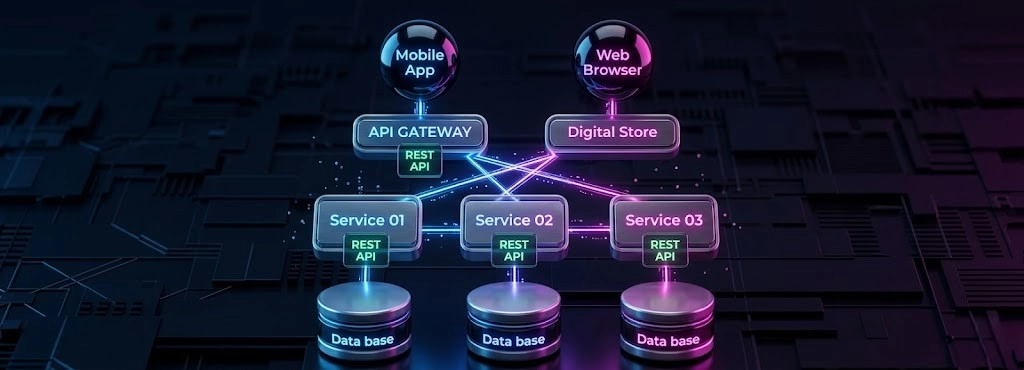
In a microservices architecture, each service is an autonomous unit that can be developed and deployed independently of other services. These microservices communicate through multiple API interfaces, each operating as a subsystem with its own business logic and architecture. This approach provides the main advantage of easy modification and replacement of any element within the solution. This modularity promotes flexibility in managing and updating the application. Because microservices break down these components into separate entities, allowing multiple development teams to contribute concurrently.

Here’s a depiction illustrating the components and interactions within a microservices architecture:

Ecommerce Microservices Architecture : All You Need to Know

Unlike monolithic architectures, where changes can lead to tight coupling issues, microservices enable independent development, allowing teams to work simultaneously on different services without impacting others. Microservices play a crucial role in the architecture of an ecommerce system, where each microservice handles a specific aspect of functionality.


Breaking Free from Technological Shackles

Microservices liberate ecommerce development from the constraints of a rigid technology stack. Unlike monolithic platforms that require a uniform technology throughout, microservices empower development teams to choose the best-suited technologies for different services. With microservices, this diversity is not only possible but encouraged, and it fosters innovation and efficiency.


Parallel Development for Swift Market Entry

One of the significant advantages of microservices in e-commerce is the ability to have small development teams working simultaneously on different services. Picture a team refining the checkout process while another focuses on optimizing the product catalog. This parallel development accelerates the pace of implementation and swiftly allows businesses to enter the market with feature-rich and well-refined applications.


Modular Migration for Seamless Upgrades

Transitioning to a modular e-commerce architecture no longer needs to be a daunting task. Microservices enable businesses to invest in upgrades gradually, rebuilding and modernizing their solutions step-by-step. This approach is similar to upgrading a building block at a time, starting with areas where custom workflows or design improvements can significantly impact customer experience and, subsequently, sales.


Scalability on Demand

A key advantage of microservices is the ability to deploy changes independently. This means that modifications to one microservice can be rolled out without impacting others. This independence in deployment facilitates the continuous delivery of new features or fixes for a specific service, streamlining the development process without necessitating comprehensive system-wide deployments. Microservices usher in a new era of scalability for ecommerce applications. During peak seasons or promotional events, the surge in user traffic can be seamlessly handled by independently scaling the relevant microservices. For instance, payment processing or inventory management services can be dynamically scaled to meet the increased demand.


Fault Isolation for Reliability

Imagine a scenario where a recommendation engine service encounters a temporary malfunction. With microservices, this hiccup doesn’t bring the entire e-commerce application to a standstill. Users can continue browsing, searching, and making purchases, highlighting the fault isolation capability of microservices that contributes to improved reliability and availability.


Resource Optimization for Cost-Efficiency

Microservices, being cloud-native, allow for optimal resource utilization. Each service can be hosted on different cloud instances based on its specific requirements. For instance, computational-intensive tasks like image processing can be assigned to instances optimized for such workloads, while other services use instances tailored to their needs. This fine-tuning results in cost savings and improved efficiency.


Flexibility in Technology Adoption

Ecommerce platforms often require diverse technologies for various functionalities. Microservices embrace this diversity by allowing different services to use the most suitable technology stacks. For example, a high-throughput order processing service might leverage a different technology than a content management service focused on flexibility. This adaptability ensures that each service can employ the technology best suited to its unique requirements.


Strengthens Security Measures

Security is paramount in the e-commerce landscape. Microservices offer a dedicated approach to security by introducing a security microservice responsible for tasks like user authentication and authorization. This centralized security hub ensures consistent and robust protection across the entire ecommerce platform, mitigating potential vulnerabilities.


Seamless Integration with Third-party Services

Microservices are designed to seamlessly integrate with external services, a crucial aspect in the diverse e-commerce ecosystem. Whether it’s payment gateways, shipping providers, or analytics tools, microservices facilitate easy integration. For example, a payment processing microservice can effortlessly connect with multiple payment providers, offering customers various payment options without compromising on security or reliability.


Conclusion

In conclusion, the adoption of microservices in ecommerce is not merely a technological shift; it’s a strategic move towards a more agile, scalable, and customer-centric future. By breaking free from the limitations of monolithic architectures, businesses can utilize the full potential of their ecommerce applications, delivering a superior shopping experience that keeps pace with the evolving demands of today’s consumers. As e-commerce continues to shape the way we shop, microservices stand as evidence of innovation and adaptability, driving the next wave of transformation in the digital retail landscape.

Agile Product Development Process

Agile Product Development has emerged as a transformative force, reshaping the way tech teams create software. The Agile Statistics paint a compelling picture — a staggering 94% of companies have embraced Agile approaches, with 60% reporting increased revenue and profits. These numbers are not just statistics; they underscore a significant shift in how organizations approach product development.


Why Agile is the Talk of the Town?

Consider this: tech giants like Google and Microsoft roll out product updates weekly, while others take months or even years. The secret lies in Agile software development, a methodology that challenges traditional approaches, eliminating the age-old compromise between speed and quality.

Since its inception in 2001, Agile has steadily gained traction. Beyond being a trend, it’s become a proven methodology. The surge in popularity is a testament to Agile’s tangible benefits that extend beyond mere buzzwords.


Understanding Agile Product Development : Core Principles

At its core, Agile Product Development is a flexible and collaborative methodology that enables tech teams to build software more effectively. Its success, however, raises challenges for product developers. Questions about implementation, life cycle, scalability in larger organizations, and compatibility with existing management processes often loom large.

To comprehend its essence, we delve into the four core values derived from the Agile Manifesto:

  • Individuals and Interactions: Prioritizing people and collaboration over rigid processes and tools.
  • Working Product: Emphasizing the delivery of a functional product over extensive documentation.
  • Customer Collaboration: Placing customer input above contract negotiations.
  • Responding to Change: Adapting strategies based on changing requirements.


Diving Deeper into Agile Flow

Understanding the Agile flow is paramount to successful implementation. Agile flow involves breaking down complex projects into smaller, manageable tasks, allowing for continuous iterations and improvements. This iterative approach not only enhances adaptability but also promotes constant feedback, fostering a more collaborative and efficient development process.


Agile Product Management Tools

The success of Agile relies heavily on robust tools that facilitate seamless collaboration and project management. Tools like Jira, Trello, and Asana streamline tasks, enhance communication, and provide real-time visibility into project progress. These tools empower teams to manage backlogs, plan sprints, and track work effortlessly.


The Role of the Product Manager in Agile

In Agile, the product manager plays a pivotal role in bridging the gap between development teams and stakeholders. They act as the voice of the customer, ensuring that the product aligns with user expectations. Product managers work closely with the development team, prioritize features, and make data-driven decisions to optimize the product roadmap.


Agile vs. Waterfall Product Management

Comparing Agile and Waterfall product management unveils fundamental differences in approach. While Agile thrives on adaptability, iterative development, and customer collaboration, Waterfall follows a linear and sequential process. Agile embraces change, responding to evolving requirements swiftly, while Waterfall adheres to a structured plan, making changes more challenging once the process is set in motion.


8 Great Benefits of Agile Software Development

  • Enhanced Flexibility – Agile’s strength lies in its iterative approach, which allows teams to adapt quickly to changing requirements. Unlike traditional methodologies, Agile acknowledges that project requirements can evolve. The iterative cycles, known as sprints, provide opportunities for continuous feedback and adjustments. This flexibility ensures that the final product aligns seamlessly with the client’s ever-evolving needs.
  • Customer-Centric Development – Agile champions a customer-centric approach by prioritizing collaboration over rigid contract negotiations. Instead of relying solely on predefined specifications, Agile encourages ongoing interaction with the client throughout the development process. This ensures that the end product not only meets but exceeds user expectations, leading to higher levels of user satisfaction.
  • Faster Time-to-Market – Agile’s iterative cycles, known as sprints, are instrumental in expediting the time-to-market for products. These time-boxed development periods focus on delivering a functional increment of the product. By breaking the project into manageable chunks and releasing incrementally, organizations can bring products to market faster, gaining a competitive edge in rapidly evolving industries.
  • Improved Product Quality – Agile’s commitment to delivering a working product over extensive documentation ensures a focus on functionality and high-quality end results. Rather than getting bogged down by exhaustive paperwork, Agile teams prioritize building features and functionality that directly contribute to the end product’s value. This emphasis on tangible outcomes ultimately leads to an improved and robust product.
  • Increased Collaboration – Agile places a premium on interactions and individuals, fostering a collaborative environment among team members, stakeholders, and customers. Through regular stand-up meetings, collaborative planning sessions, and constant communication, Agile cultivates an atmosphere where team members actively engage with each other. This increased collaboration not only enhances team dynamics but also contributes to the overall success of the project.
  • Adaptability to Change – Agile’s core principle of embracing change over rigid planning positions teams to respond swiftly to evolving project requirements and market dynamics. Rather than resisting change, Agile teams see it as an opportunity to enhance the product. The iterative nature of Agile allows for seamless integration of new features or modifications, ensuring the final product remains aligned with the project’s goals and changing external factors.
  • Enhanced Risk Management – Agile’s frequent reviews and adjustments during sprint cycles contribute to proactive risk management. By regularly evaluating progress and adapting plans accordingly, Agile teams identify potential risks early in the development process. This proactive approach minimizes the likelihood of setbacks, allowing teams to address issues before they escalate and impact project timelines.
  • Higher Customer Satisfaction – By involving customers throughout the development process, Agile ensures that the final product meets their expectations, leading to greater satisfaction. Customer feedback is not only welcomed but actively sought throughout the iterative cycles. This continuous engagement not only ensures the product aligns with user preferences but also fosters a sense of ownership and satisfaction among stakeholders.

As we stand on the cusp of 2025, Agile Product Development isn’t just a methodology; it’s a mindset. It’s about staying relevant in a landscape where change is the only constant. It embodies a shift in how we approach projects, embracing a philosophy that values adaptability, collaboration, and continuous improvement. It encourages a mindset of resilience, where setbacks are viewed as opportunities for improvement, and change is not a disruption but a catalyst for growth.

Significance of Data-Driven Testing in Software Testing

Data is the driving force behind modern businesses. It is used to inform strategic decisions, improve operations, and enhance customer experiences. Testing is no exception. By leveraging the power of data, organizations can revolutionize their testing processes, making them more efficient, effective, and insightful.


Benefits of Using Data in Testing

There are many benefits to using data testing, including:

  • Improved efficiency: Data can be used to automate repetitive tasks and streamline testing workflows. This frees up testers to focus on more complex and strategic activities.
  • Enhanced effectiveness: Data can be used to identify and prioritize risks, optimize test coverage, and improve the accuracy of test results. This leads to higher quality software and reduced time to market.
  • Deeper insights: Data can be used to analyse test results and identify trends. This information can be used to improve testing processes, troubleshoot software issues, and make better decisions about future development.


How to Use Data to Revolutionize Software Testing Services?

Implementing data-driven strategies can bring about a paradigm shift in testing processes. Consider the following approaches:

  • Automate Test Cases: Utilize data-driven test automation to generate test cases from relevant data, eliminating the need for manual creation and maintenance. This significantly diminishes the time and effort required for testing.
  • Optimize Test Coverage: Leverage data to pinpoint and prioritize crucial areas of the software for testing. This ensures that testing efforts are concentrated on the most impactful facets of the software.
  • Improve Test Result Accuracy: Data validation can be employed to authenticate test results, identifying false positives and thereby boosting confidence in the accuracy of the testing process.
  • Analyze Test Results and Identify Trends: Employ data analysis to scrutinize test results and uncover trends, such as prevalent types of defects or error-prone areas of the software. This valuable information can inform improvements in testing processes and guide decisions for future development.


How Experion Used Data to Revolutionize the Testing Process for a Leading Ecommerce Company?

Demonstrating the tangible impact of data-driven testing, Experion took on the challenge of meeting the burgeoning demands of a prominent e-commerce client. Confronted with the inefficiencies of manual testing processes, Experion strategically embraced data-driven testing by introducing an automation framework that harnessed the power of data to generate, execute, and meticulously analyze test cases.

In the aftermath of these transformative initiatives, Experion witnessed remarkable outcomes:

  • 50% Reduction in Testing Time: By leveraging data-driven testing, Experion streamlined and automated testing procedures, leading to a remarkable 50% reduction in regression testing time. This not only optimized resource utilization but also expedited the overall testing lifecycle.
  • 20% Faster Release of New Features: The implementation of data-driven testing played a pivotal role in accelerating the release of new features. Experion achieved a noteworthy 20% reduction in time-to-market, ensuring that the e-commerce company could promptly respond to market demands and stay ahead of the competition.
  • Enhanced Software Quality: The shift to data-driven testing resulted in a substantial improvement in overall test coverage and software quality. Through the identification of critical areas for testing and the reduction of false positives, Experion elevated the overall reliability and performance of the e-commerce platform


Conclusion

Data has the power to revolutionize testing processes. By leveraging the power of data, organizations can improve the efficiency, effectiveness, and insights of their testing. This can lead to higher quality software, reduced time to market, and improved customer satisfaction.

Tips for Implementing Data-Driven Testing

For organizations considering the adoption of data-driven testing, here are some actionable tips:

  • Identify Automation Opportunities: Start by identifying areas in your testing process that can be automated.
  • Invest in the Right Tools: Choose a test automation framework that robustly supports data-driven testing.
  • Organize Test Data: Ensure that your test data is clean, organized, and ready for integration into your testing processes.
  • Create Data-Driven Test Cases: Develop test cases that leverage the power of data to drive automation and meaningful results.
  • Execute Tests and Analyze Results: Implement data-driven tests and diligently analyze the results for insights.
  • Iterate Based on Insights: Utilize insights gained from data analysis to iterate and improve your testing processes continuously.

Embarking on a journey towards data-driven testing can be a powerful step for organizations seeking to enhance software quality and expedite time to market. By following these tips, organizations can lay the groundwork for successful implementation and unlock the myriad benefits of data-driven testing.

Multimodal AI in Healthcare – Best Practices

Google’s MedLM indicates a transformative era in healthcare documentation with its family of foundation models tailored for industry-specific use cases. Available through Google Cloud’s Vertex AI platform, MedLM offers flexibility with two models—designed for complex tasks and scalable workflows. In collaboration with healthcare organizations, MedLM addresses diverse applications, from answering medical queries to drafting summaries. A notable success story is HCA Healthcare’s adoption of ambient medical documentation through Augmedix, leveraging MedLM’s capabilities to streamline physician notes, reduce burnout, and enhance patient care. As MedLM evolves, the integration of AI-based models promises to elevate its capabilities further, marking a significant milestone in AI-driven healthcare solutions.

The introduction of Google’s MedLM into the healthcare sector signals a significant leap forward in the application of multimodal AI. In a recent update, OpenAI introduced notable improvements to its ChatGPT models, GPT-3.5 and GPT-4. These upgrades empower the models to analyze images and participate in speech synthesis, enhancing the potential for more immersive interactions with users. This development represents a noteworthy stride in the capabilities of multimodal AI. As healthcare organizations embrace the potential of multimodal AI, its impact on automating processes, reducing workload, and enhancing overall efficiency is becoming increasingly apparent, paving the way for a new era in AI-driven healthcare solutions.


Is Multimodal AI Reshaping the Healthcare Landscape?

Multimodal AI signifies a unique category of artificial intelligence with the capability to concurrently process and comprehend diverse types of data. This surpasses the conventional AI approach, which typically concentrates on a singular data type, such as text or images.

The transformative power of multimodal AI finds a particularly promising application in the domain of medical imaging. While conventional techniques like X-rays, MRIs, and CT scans have long been invaluable, their standalone interpretations can sometimes lead to inaccurate diagnoses. Multimodal AI tackles this limitation head-on by amalgamating images from diverse modalities, enabling healthcare professionals to construct comprehensive visualizations. This holistic approach offers a nuanced understanding of anatomical structures and abnormalities, steering in a new era of precision and confidence in medical diagnoses.


Precision Diagnostics and Tailored Treatments

Multimodal AI transcends its impact on imaging, going further inward into diagnostics and treatment planning. By scrutinizing a spectrum of data, including genetic information, medical history, lifestyle factors, and real-time monitoring data, multimodal AI empowers healthcare providers to craft personalized treatment strategies. This approach elevates the precision of diagnostics and interventions, tailoring healthcare solutions to the unique needs of each patient. Consequently, patients are more likely to receive treatments that are not only effective and efficient but also meticulously aligned with their distinct health profiles.


Real-time Surveillance and Timely Intervention

The role of multimodal AI extends to real-time monitoring and the early detection of health issues. By integrating wearable devices and patient-reported outcomes, healthcare providers can remotely monitor patients continuously. Through sophisticated algorithms, multimodal AI analyzes data streams to pinpoint subtle deviations from baseline patterns. This early detection capability empowers healthcare professionals to intervene promptly, thwarting the progression of conditions and mitigating health risks. The outcome is a paradigm shift towards proactive healthcare management, enhancing patient outcomes and minimizing hospitalizations.


Empowering Drug Discovery and Accelerating Development

Multimodal AI transcends patient care, playing a pivotal role in expediting drug discovery and development processes. From identifying potential drug candidates to navigating the intricate path towards market availability, this technology analyzes diverse datasets encompassing molecular structures, chemical properties, biological interactions, and clinical trial outcomes.


Best Practices to Follow

To harness the full potential of multimodal AI in healthcare, organizations are advised to adhere to the following best practices:

Multimodal Data Collection for Applications

  • Successful development of multimodal data-enabled applications relies on collecting, curating, and harmonizing well-phenotyped and large annotated datasets. Technical sophistication alone can’t compensate for insufficient data content.

Data Quality and Interoperability

  • Ensure the collection and storage of high-quality data across diverse modalities such as imaging, genomics, and electronic health records (EHRs).
  • Standardize data formats and implement interoperability solutions to facilitate seamless integration and analysis across different data sources.

Model Development and Validation

  • Develop AI models specifically tailored to the clinical task and the unique challenges of the healthcare domain.
  • Utilize robust training datasets that accurately represent the target patient population and the characteristics of the diseases under consideration.
  • Rigorously validate models through clinical trials and real-world data testing to ensure accuracy, safety, and efficacy.

Clinical Integration and Workflow

  • Design AI tools that seamlessly integrate into existing clinical workflows and EHR systems.
  • Provide clear and actionable insights to healthcare professionals, supporting them in making informed decisions.
  • Conduct comprehensive training and education programs for healthcare providers to ensure proficient use and interpretation of AI-generated results.

Ethical Considerations and Transparency

  • Address ethical concerns related to data privacy, potential biases in AI models, and the explainability of AI-driven decisions.
  • Ensure transparency in the decision-making process of AI models and communicate their limitations to both patients and healthcare providers.
  • Establish robust governance frameworks to oversee the development, deployment, and ongoing monitoring of AI in healthcare.

Continuous Improvement and Monitoring

  • Multimodal health data poses a challenge due to the curse of dimensionality. The high number of dimensions leads to dataset blind spots, impacting model performance. Addressing these blind spots early in the model development process is crucial.
  • Continuously monitor and enhance AI models based on real-world data and feedback from healthcare providers and patients.
  • Foster a culture of collaboration and learning among AI developers, clinicians, and researchers to drive ongoing innovation and optimize the applications of AI in healthcare.


Navigating Challenges and Charting Future Paths

While the potential of multimodal AI in healthcare is vast, its implementation presents formidable challenges. Integrating disparate data sources with distinct formats and qualities is complex and resource intensive. Safeguarding data privacy and security, particularly with sensitive patient information, remains paramount. Moreover, training AI models on multimodal data necessitates substantial datasets reflecting population diversity, bringing about logistical and ethical considerations.

Looking to the future, the trajectory of multimodal AI in healthcare is exceptionally promising. As technology advances, integrating genomics data, wearable device metrics, and real-time monitoring will create an even more thorough understanding of patient health. This expanded perspective has the potential to revolutionize disease prediction, treatment strategies, and overall patient care. With multimodal AI at the helm, healthcare is on the brink of a transformative era characterized by unprecedented personalization, precision, and efficacy.

Generative AI Use Cases and Applications

Generative AI has emerged as a focal point of innovation and investment. The numbers speak volumes: in 2022, Generative AI startups garnered a staggering $2.6 billion in funding across 110 deals, signaling a resounding vote of confidence from investors. The momentum only intensified in 2023, with generative AI startups securing a formidable $10.68 billion of business.

These statistics not only underscore the financial might behind Generative AI but also point to a broader narrative of trust and anticipation. As we delve into the intricacies of this sector, we unravel the stories behind the numbers, exploring the innovative use cases, applications, and real-world impact of Generative AI.

Generative AI stands as a groundbreaking innovation, harnessing the essence of human cognitive processes to forge novel and meaningful content. This subset of artificial intelligence operates on the foundational principles of neural networks, employing intricate algorithms to discern and replicate patterns within expansive datasets. Unlike its traditional counterparts, Generative AI transcends the constraints of pre-programmed responses, boasting a remarkable capability to generate entirely new content. What propels its versatility and transformative potential is the symbiotic relationship it forms with vast, high-quality datasets. The depth and richness of these datasets empower Generative AI to excel across diverse industries, becoming a catalyst for innovation in realms beyond imagination.

In practical terms, Generative AI’s prowess is not just theoretical—it manifests in real-world applications. This technology has proven instrumental in redefining creative processes, enabling industries to produce content, designs, and solutions that were previously considered solely within the domain of human capability. The ability to create content autonomously distinguishes Generative AI as a tool that doesn’t merely replicate patterns but generates fresh insights, ideas, and artistic expressions.

Moreover, the capacity of Generative AI to understand, learn, and adapt from data further amplifies its impact. As it navigates through extensive datasets, the algorithm refines its understanding, continuously evolving to produce increasingly sophisticated and contextually relevant outcomes. This adaptability positions Generative AI as a dynamic force, capable of addressing the evolving demands and challenges of various sectors.

As we delve deeper into the realm of Generative AI, it’s crucial to acknowledge its potential to revolutionize not only content creation but also problem-solving and decision-making processes. From optimizing operational workflows to contributing to advanced research, Generative AI is proving to be a transformative tool that goes beyond automation—it becomes an active collaborator, augmenting human capabilities and reshaping the landscape of what’s achievable in the digital era


Use Cases for Generative AI

CoPilot Empowering Back Office Operations

Generative AI has found a robust foothold in optimizing back-office operations through tools like CoPilot. By leveraging large datasets, CoPilot streamlines and automates mundane tasks, enhancing operational efficiency. Whether it’s data entry, document processing, or administrative duties, Generative AI brings a transformative touch to back-office functions.

Interactive Experiences with AI Chatbots

The integration of Generative AI in chatbots has ushered in a new era of interactive experiences. Businesses are now deploying chatbots powered by Generative AI to engage with customers in a more personalized and dynamic manner. These AI-driven chatbots not only answer queries but also generate contextually relevant responses, enriching user experiences and fostering customer satisfaction.

Sales and Marketing Initiatives

Generative AI is proving to be a game-changer in the realm of sales and marketing. From content creation to personalized advertising, businesses are harnessing the power of Generative AI to develop compelling narratives and marketing collateral. This technology enables the generation of creative, targeted content that resonates with specific audiences, thereby enhancing marketing effectiveness.

Fraud Detection and Prevention in FinCrime

The financial sector is employing Generative AI to bolster fraud detection and prevent financial crimes. By analyzing vast datasets and identifying anomalous patterns, Generative AI algorithms can predict potential fraudulent activities. This proactive approach helps financial institutions mitigate risks, safeguard customer assets, and maintain the integrity of the financial ecosystem. 

Generative AI Solutions: Bringing Ideas to Life

The surge in interest surrounding Generative AI, particularly fueled by successes like ChatGPT, has prompted businesses to explore innovative solutions. Companies are collaborating with AI specialists to implement Generative AI solutions tailored to their specific needs. These solutions not only streamline operations but also unlock new avenues for creativity and efficiency.


Examples of Generative AI Applications

OpenAI’s ChatGPT: Redefining Conversational AI

ChatGPT, developed by OpenAI, stands as a testament to the transformative potential of Generative AI in conversational interfaces. This language model has been employed in various applications, from content creation to customer support. Its ability to generate coherent and contextually relevant responses has revolutionized the way businesses interact with their audience.

Artbreeder: Creative Exploration through Image Generation

Artbreeder, an online platform utilizing Generative Adversarial Networks (GANs), empowers users to create unique digital art by blending and modifying images. This application showcases the creative side of Generative AI, allowing individuals to explore artistic possibilities and generate visually stunning content.

DALL-E by OpenAI: Imaginative Image Synthesis

OpenAI’s DALL-E exemplifies Generative AI’s prowess in image synthesis. This model can generate diverse images based on textual descriptions, demonstrating its ability to translate textual input into visual output. From creating fantastical creatures to imagining everyday objects in novel ways, DALL-E showcases the breadth of Generative AI applications.


Challenges of Generative AI

While Generative AI has made remarkable strides, challenges persist, including ethical considerations, data privacy concerns, and the need for enhanced interpretability. As businesses continue to integrate Generative AI into their operations, addressing these challenges will be crucial for ensuring responsible and ethical AI deployment.

Looking ahead, the future of Generative AI appears promising. Continued advancements in technology, coupled with a growing understanding of ethical considerations, are set to propel Generative AI into new frontiers. As businesses increasingly recognize its potential, the applications and use cases for Generative AI are poised to expand across industries, reshaping the way we approach creativity, efficiency, and problem-solving.

In conclusion, Generative AI stands at the forefront of technological innovation, offering businesses unprecedented opportunities for growth, efficiency, and creativity. From optimizing back-office operations to redefining customer interactions, the applications of Generative AI are as diverse as the industries it transforms. As businesses continue to harness the power of Generative AI, we can anticipate a future where innovation knows no bounds, fueled by the limitless possibilities that this transformative technology unlocks.

Legacy Systems Modernization – A Complete Guide

In the world of business, companies around the globe are facing the need to update their old computer systems to stay in the game. No matter the industry or the organization’s size, companies are finding it tough to make their old systems work smoothly with all the new tech. This leads to messy data, slow operations, and headaches when it’s time to make important decisions. As companies spread their wings globally, the old systems they’re relying on struggle to keep up. Dealing with more data and complicated tasks becomes a headache that slows down growth. Legacy systems, encompassing outdated software and technology, can hinder organizational growth and responsiveness to dynamic market demands. But no worries. With the assistance of legacy application modernization services, companies can efficiently upgrade their outdated systems, ensuring enhanced performance, scalability, and alignment with contemporary business needs.


The Right Time to Modernize Legacy Systems

You can identify a legacy system by keeping an eye out for details like the following:

  • Workarounds are needed for essential processes.
  • Extended loading times or operational delays.
  • Lack of vendor support.
  • Absence of security updates.
  • Incompatibility with modern software.
  • Exorbitant maintenance costs.

Notably, while a legacy system may be aged, it does not automatically render it obsolete. Many businesses rely on these systems for daily operations, employing advanced application modernization tools to keep them functional.


Legacy Systems Modernization Approaches

Legacy system modernization involves a transformative approach aimed at revitalizing antiquated systems. This includes integrating modern features, updating platform infrastructure, and enhancing overall architecture. The objective is not merely to address limitations but also to align with contemporary industry standards, security protocols, and evolving business requirements.

By modernizing legacy systems, organizations stand to gain substantial advantages:

  • Improved operational efficiency.
  • Enhanced scalability.
  • Overall performance optimization.
  • Compliance with industry standards.
  • Adaptation to evolving security protocols.
  • Legacy Application Modernization positions organizations to thrive in the ever-evolving digital landscape, fostering sustained success and competitiveness.

Technologies for Modernization

Here’s a closer look at key technologies that stand at the forefront of this modernization journey:

  1. Cloud Computing: Embracing the Cloud is a cornerstone of application modernization. Whether it’s public, private, hybrid, or multi-cloud solutions, organizations leverage the scalability, agility, and cost-effectiveness offered by cloud computing. Replatforming or rehosting applications on the Cloud unlocks a myriad of advantages, propelling organizations towards a more flexible and efficient future.
  2. Containers and Kubernetes: Containers revolutionize the packaging and deployment of software units in the cloud. Their lightweight and portable nature facilitates seamless movement between different environments. Kubernetes, a container orchestration system, takes this a step further by automating container management processes. Together, containers and Kubernetes foster growth, mobility, and a streamlined application deployment experience.
  3. Microservices Architecture: Legacy applications often exist in monolithic structures, hindering agility. The adoption of microservices, where services are interconnected via APIs, becomes a pivotal driver of modernization. This approach empowers organizations to choose and adapt best-of-breed solutions, swiftly meeting evolving expectations and scaling operations as needed.
  4. Orchestration and Automation: Automation and orchestration play a crucial role in modernization efforts. Automation streamlines individual tasks, while orchestration takes it a step further by automating entire processes or workflows. This dynamic duo introduces efficiencies in deployment, scaling, networking, and security, laying the groundwork for a more responsive and agile operational environment.
  5. DevOps Practices: DevOps, emphasizing collaboration between development and operations teams, emerges as a linchpin in application modernization. The DevOps approach champions automation and continuous delivery, allowing organizations to deploy and update applications rapidly and reliably.

Here’s how DevOps can drive application modernization:

  • By respond swiftly to market and customer needs by delivering new features and updates faster without compromising quality.
  • By Automating infrastructure provisioning and management, reducing the risk of errors, and accelerating deployment speed.
  • Quickly and reliably testing code to identify and rectify errors before they impact production.
  • Employing monitoring and analytics tools to track application performance and user behavior. Leverage insights to optimize application performance over time.


Legacy Systems Modernization Strategies

  • Define Clear Modernization Objectives- Craft specific, measurable goals to guide the modernization process.
  • Diagnose Legacy Challenges – Thoroughly analyze existing issues and bottlenecks in the legacy system.
  • Evaluate Modernization Readiness- Assess the current state of technology, processes, and skillsets for a seamless transition.
  • Select Optimal Architecture- Choose a modern, scalable architecture that aligns with long-term business needs.
  • Build a Competent Modernization Team- Assemble a skilled and cross-functional team with expertise in modernizing legacy systems and new age technologies.
  • Define Performance Metrics- Establish key indicators to measure the success and effectiveness of the modernization effort.
  • Automate Transformation Processes- Implement automation tools to streamline and accelerate the modernization tasks.
  • Initiate Continuous Monitoring- Implement real-time monitoring to track system performance and address emerging issues proactively.

Evolutionary Strategy for a Slow and Steady Approach

For organizations that prefer a cautious approach, the evolutionary strategy is a methodical way to achieve their goals. This strategy involves making changes one step at a time, gradually updating different parts of their work. By taking small, measured steps, organizations can avoid major disruptions to their business and spread out the costs over time. This approach is often chosen by companies bound by contracts with their technology vendors. They focus on updating specific aspects of their old systems while waiting for these contracts to come to an end. Additionally, hybrid models allow businesses to connect both cloud and on-premises setups, supporting a slow and steady evolution of their old systems.

Revolutionary Modernization for a Swift and Comprehensive Transformation

When organizations need a complete and quick overhaul, they can opt for the revolutionary approach. This strategy involves a rapid and thorough transformation of their infrastructure. Picture this as a fast and complete makeover. The revolutionary approach is often necessary during significant changes, like mergers or acquisitions, when a company needs to quickly adapt to a new setup. It’s also used when the old system has become more of a problem than a solution. For example, if the vendors stop supporting the old systems, it can become a risk for the organization. In such cases, a revolutionary approach is the way to go to address security or compliance gaps swiftly and thoroughly.


Conclusion

In conclusion, achieving successful legacy system modernization is a collaborative journey that benefits from the expertise of seasoned professionals. With a dedicated team poised to guide your organization through every phase of the modernization process, the goals are easily achievable. Companies with a proven track record in completing numerous successful projects across diverse industries and geographies stand ready to be your trusted partner for optimal results.

Benefits of Data Analytics in Healthcare

According to the Global Big Data Analytics In Healthcare Market Research Report and Analysis Data by Infinitive Expert 2023, many businesses opt to outsource their data analytics due to the absence of an internal department dedicated to this function. Consequently, there has been a notable increase in the establishment of data analytics firms offering extensive solutions tailored for enterprises. The diversification of service offerings by digital healthcare services companies has played a pivotal role in advancing the growth of this industry. The integration of technologies provides comprehensive support to healthcare organizations across various facets, encompassing population monitoring, health records, diagnostics, clinical decisions, drug procurement, and accounting. These technologies not only contribute to the efficiency of actual treatment and data management but also play a vital role in optimizing overall healthcare operations within the industry.


Types of Healthcare Analytics

Different types of healthcare analytics empower organizations to move beyond simply understanding historical data. They enable proactive decision-making, personalized treatment plans, and the ability to forecast and address future challenges. By leveraging analytics, healthcare providers can enhance patient care, optimize operations, and ultimately improve overall healthcare outcomes.

Descriptive Analytics

Descriptive analytics involves examining historical patient data to gain insights into benchmarks and trends. For instance, a healthcare provider might analyze past patient records to identify patterns in disease prevalence, treatment effectiveness, or patient demographics. By understanding historical data, healthcare organizations can make informed decisions about resource allocation, identify what are the areas for improvement, and establish benchmarks for performance.

Prescriptive Analytics

Machine learning powers prescriptive analytics in healthcare, recommending effective strategies for decision support. An example could be the optimization of treatment plans for chronic conditions. By analyzing a patient’s historical data and responses to various treatments, machine learning algorithms can suggest personalized treatment strategies, taking into account the patient’s unique characteristics and predicting the most effective course of action.

Predictive Analytics

Predictive analytics in healthcare involves forecasting and modeling to predict future events or outcomes. For instance, a hospital might use predictive analytics to forecast patient admissions during flu season based on historical data. This enables healthcare providers to allocate resources efficiently, plan staffing levels, and ensure they are well-prepared for potential surges in patient numbers.

Discovery Analytics

Discovery analytics, similar to prescriptive analytics, employs machine learning to examine clinical data for patterns that offer actionable insights. For example, analyzing electronic health records with machine learning algorithms can reveal patterns in patient responses to specific medications, leading to insights about drug efficacy and potential side effects. This proactive approach allows healthcare providers to adjust treatment plans and enhance patient outcomes.


Patient Monitoring

In the realm of healthcare, various tools play crucial roles. Patient portals enable seamless communication between healthcare providers and patients. Research studies use analytics to find patterns and contribute to medical knowledge. Electronic Health Records (EHRs) organize patient information for informed decision-making. Wearable devices provide real-time health data for personalized care. Search engines and databases assist in accessing relevant medical information. Government agencies employ analytics for public health surveillance. Payer records contribute to financial analyses. Staffing schedules benefit from predictive analytics for resource allocation. Even patient waiting rooms utilize analytics for efficiency. The integration of these tools enhances operational efficiency, precision, and patient-centricity in modern healthcare ecosystems.

Use of Data Analytics in Healthcare

Healthcare analytics primarily involves collecting and deciphering data to predict the health conditions of individuals. Machine learning technologies are extensively employed globally to automate the analysis of medical data.

Healthcare organizations stand to gain numerous advantages from data analytics. Firstly, it enhances patient care by providing data-driven insights that enable healthcare providers to make informed treatment decisions, personalize care plans, and identify patients at risk of adverse events. Additionally, data analytics contributes to cost reduction by identifying wasteful spending, optimizing resource allocation, and facilitating negotiations for better prices with suppliers. The implementation of data analytics also leads to increased operational efficiency through streamlined processes, reduced errors, and improved inter-departmental communication. Furthermore, it plays a pivotal role in population health management by identifying trends in disease prevalence, risk factors, and treatment effectiveness, allowing providers to develop targeted interventions for specific populations. Lastly, data analytics accelerates clinical research by providing researchers with access to extensive real-world datasets, thereby expediting the pace of advancements in healthcare.

Reduced readmission rates and healthcare costs

Healthcare organizations can utilize predictive analytics to identify patients at high risk of readmission. This information can be used to intervene early and prevent readmissions, which can save money and improve patient outcomes. For example, a hospital could use data on a patient’s age, diagnosis, and length of stay to predict their risk of readmission. The hospital could then use this information to provide additional care or support to the patient after they are discharged, such as home visits or case management.

Reduced healthcare costs

Healthcare organizations can use analytics to identify patterns of fraud, waste, and abuse. This information can be used to investigate these cases and recover lost funds. For example, an insurance company could use data on claims to identify patterns that are suggestive of fraud, such as claims for services that were not provided or claims for services that were more expensive than they should have been.

Improved population health outcomes

Healthcare organizations can employ analytics to pinpoint trends in population health and create interventions aimed at enhancing those outcomes. For example, a public health department could use data on obesity rates to identify neighborhoods where obesity is a particular problem. The department could then use this information to develop interventions to reduce obesity in those neighborhoods, such as providing access to healthy food or promoting physical activity.

Improving patient outcomes in healthcare

Healthcare providers can use analytics to personalize medicine for individual patients. This information is valuable for tailoring treatment plans to enhance their effectiveness in addressing each patient’s needs. For example, a doctor could use data on a patient’s genetic makeup to select a medication that is more likely to be effective for them.

Drug discovery and development

Pharmaceutical companies can use analytics to accelerate the drug discovery and development process. This information can be used to identify promising drug candidates and design clinical trials that are more likely to be successful. For example, a pharmaceutical company could use data on the genetic makeup of diseases to identify targets for new drugs. The company could then use this information to develop drugs that are more likely to be effective against those diseases.


Conclusion

The use of data analytics in healthcare is a big game-changer, according to what we’ve explored here. With more businesses outsourcing due to a lack of in-house teams, a surge in specialized firms has emerged. These analytics types—checking out the past, finding the best strategies, predicting the future, and discovering new things—go beyond just looking back. They help make savvy decisions, customize treatments, and prep for what’s ahead. The perks include improved patient care, saving cash, smoother operations, and healthier communities. Not to forget, it speeds up finding new meds, making healthcare better for all.