




Business Process Automation Solutions

Organizations today are under immense pressure to deliver faster, more accurate, and more scalable operations. Manual workflows once manageable are now too slow, error-prone, and costly for a digital-first world. This shift is driving rapid adoption of business process automation solutions, where technology replaces repetitive work and creates seamless, intelligent workflows.

Modern business process automation integrates AI, workflow engines, robotic process automation (RPA), and low-code tools to help enterprises eliminate inefficiencies and unify scattered systems. Instead of siloed tasks and manual approvals, businesses can deploy an orchestrated, automated backbone that supports daily operations with precision and speed.

Automation is no longer about scripting tasks. It is about reimagining entire workflows. This is where business process automation software serves as the foundation for digital transformation. It automates, connects, and optimizes processes ranging from HR and finance to supply chain, customer service, and IT operations.

The most competitive enterprises are moving from basic task automation toward intelligent, AI-driven workflows powered by ai business process optimization solutions. These systems can understand context, interpret data, predict trends, and route decisions intelligently. In short, automation has evolved from rule-based execution to cognitive orchestration.

Enterprises adopting a modern business process management solution are gaining operational agility that traditional tools cannot provide. Low-code platforms accelerate automation delivery, RPA bots execute high-volume tasks, and AI enhances decisioning. Together, these capabilities make automation scalable, sustainable, and transformative across industries.


Smarter processes start here. Unlock enterprise automation with Experion.


What Are Business Process Automation Solutions?

what-is-Business-Process-Automation-Solutions

Business process automation solutions are systems designed to automate and optimize business workflows by replacing manual tasks with intelligent, machine-driven processes. A business process automation solution eliminates repetitive work, reduces human error, and ensures that every step in a workflow is executed consistently based on predefined rules and logic.

Unlike traditional workflow tools that depend heavily on manual configuration, modern business process solutions combine automation engines, integration layers, and analytics capabilities to provide unified orchestration across departments. These solutions enable organizations to achieve end-to-end automation from data capture and routing to decision-making and reporting.

In short, business process automation solutions help organizations transition from manual, fragmented processes to digital, intelligent workflows that support accelerated growth and improved performance.

Key Capabilities of Automation Solutions

Business-Process-Automation-Solutions keys

  • Workflow Orchestration – Centralized control over multi-step business processes. Workflows automatically trigger next actions based on rules and conditions.
  • Data Routing – Automated movement of data between systems, teams, and applications, reducing manual handoffs and delays.
  • Automated Decisioning – AI-driven decisions based on business rules, historical patterns, and predictive insights.
  • Rule Engines – Define, update, and enforce business rules consistently across departments without manual intervention.
  • Integrations – Connectivity with ERP, CRM, HRMS, payment gateways, and third-party APIs to create frictionless workflows.
  • Audit Trails – Complete visibility into actions, decisions, and process flows to support compliance, governance, and transparency.

Difference Between BPA, RPA, and Traditional Workflow Tools

  • Business Process Automation (BPA) – Optimizes entire workflows across multiple systems. It focuses on end-to-end transformation and organizational efficiency.
  • Robotic Process Automation (RPA) – Automates individual tasks. Bots mimic human actions such as clicking, copying, or entering data. RPA is task-centric, not process-centric.
  • Traditional Workflow Tools – Provide static, manual approval routes and basic task assignments. They lack intelligence, adaptability, and cross-system integration.

The most successful automation initiatives blend BPA with RPA and AI. It is essential for organizations to align automation efforts with business goals, ensuring every automated workflow contributes directly to outcomes such as efficiency, accuracy, compliance, and scalability.


Role of AI in Modern Automation Solutions

Artificial intelligence has elevated business process automation from simple rules-based execution to adaptive, insight-driven operations. While traditional business process automation solutions optimized structured workflows, AI now enables systems to interpret data, evaluate patterns, and make decisions that previously required human judgment.

AI strengthens automation in several critical ways.
Machine learning models learn from historical inputs and outcomes, improving accuracy over time. Natural language processing allows systems to interpret emails, documents, chats, and unstructured content, transforming them into actionable data. Predictive analytics anticipates workload surges, customer demand, operational risks, and resource requirements. Vision systems interpret images, scanned forms, and identity documents to accelerate verification-heavy tasks.

ai

The combination of AI and automation has produced a new generation of ai business process optimization solutions. These solutions deliver decisions in real time, guide intelligent routing, detect anomalies, and streamline complex workflows across departments. For instance, AI can automatically verify an invoice, categorize a support ticket, or recommend next steps in a service workflow.

AI creates an automation environment that is self-improving. Instead of remaining static, workflows adapt based on performance metrics, behavioral patterns, and contextual insights. This allows enterprises to move beyond efficiency gains toward strategic automation, where automated processes actively contribute to organizational intelligence and growth.


Scale faster with intelligent business process automation.


Why Organizations Need Business Process Automation?

Modern enterprises operate in a landscape defined by speed, competitiveness, and constant change. Business process automation solutions address these challenges by eliminating inefficiencies and enabling teams to focus on high-value work.

Eliminating Manual Bottlenecks

Manual workflows slow decision-making and introduce substantial risk. Tasks such as approvals, data entry, form processing, and routing are often delayed by human availability, context switching, or lack of standardization.
By implementing a business process solution, organizations remove these operational bottlenecks and ensure processes flow smoothly from one stage to the next.

Improving Operational Efficiency

Automation accelerates cycle times by standardizing operations. Teams no longer waste time searching for information, forwarding tasks, or correcting avoidable errors.
With business process automation software, organizations can automate the full lifecycle of recurring activities, resulting in faster throughput and improved productivity.

Enhancing Accuracy and Compliance

Manual processes introduce inconsistencies that impact quality, reporting, and audit readiness. Automated workflows enforce rules consistently, validate data, and generate secure documentation trails.
This strengthens governance and compliance across industries such as finance, healthcare, insurance, and manufacturing.

Cost Reduction and Workforce Optimization

When organizations reduce rework, manual effort, and processing time, operational costs decrease significantly. Automation allows employees to focus on creativity, customer relationships, and strategic initiatives rather than repetitive duties.
This leads to better talent utilization and contributes directly to enterprise competitiveness.

Enabling Scalability and Rapid Growth

Growth increases workload. Without automation, scaling requires more people, more training, and more overhead.
With business process automation solutions, organizations handle growing demands without proportional increases in cost or staff. Automated workflows adapt to new volumes, new markets, and new business models effortlessly.


Core Components of Modern Business Process Automation Solution

Business-Process-Automation-Solutions modern

A modern business process automation solution integrates multiple technologies to create seamless, unified workflows that span systems, departments, and user groups. These components ensure scalability, accuracy, and intelligent decision-making.

  • Workflow Automation Platforms – These platforms allow teams to design and automate processes using visual, drag-and-drop builders. Triggers, rules, and conditions govern the entire flow of tasks, decisions, notifications, and approvals.
  • Robotic Process Automation (RPA) Bots – RPA bots automate repetitive, rule-based tasks such as copying data, filling forms, transferring information, or reconciling information between systems. They handle high-volume workloads around the clock with precision.
  • AI and Machine Learning Enhancements – AI enables predictive logic, intelligent routing, natural language interpretation, anomaly detection, and pattern recognition. When combined with automation, AI transforms static workflows into adaptive, context-aware systems.
  • API Integrations and Connectors – Organizations often rely on multiple applications. Integrations unify ERP, CRM, HRMS, payment systems, document repositories, and legacy software into a cohesive ecosystem. This ensures business process automation solutions deliver end-to-end efficiency rather than isolated task automation.
  • Analytics and Reporting Dashboards – Real-time dashboards allow leaders to monitor process performance, identify inefficiencies, track SLAs, and visualize bottlenecks. Analytics help organizations optimize workflows continuously and make informed decisions backed by data.


Business Processes Ideal for Automation

Not every workflow demands automation, but certain process categories benefit immediately from implementing business process automation solutions. These processes share characteristics such as high volume, repetitive tasks, rule-driven decisions, and dependency on structured data. Automating these workflows reduces cost, accelerates turnaround, and enhances accuracy.

Below are the most automation-ready domains across modern enterprises.

Finance and Accounting

Financial operations involve structured, rule-based and heavily documented activities, making them perfect candidates for business process automation software.

Key automation opportunities include:

  • Invoice Processing – Automating invoice intake, matching, validation, and posting reduces delays and errors in accounts payable workflows.
  • Reconciliation – Automated comparison of financial records, transactions, and ledger entries ensures accuracy and saves countless hours in monthly and quarterly cycles.
  • Expense Management – Receipts, reimbursements, approvals, and policy checks can be automated for faster, more transparent expense workflows. Automation in finance improves compliance, speeds up audits, and strengthens financial visibility across the organization.

HR and Employee Operations

HR teams handle large volumes of paperwork and repetitive interactions. Using a business process solution helps streamline employee journeys from onboarding to offboarding.

Key automations include:

  • Onboarding – Automated document collection, identity verification, IT provisioning, and training assignments create a seamless onboarding experience.
  • Payroll – Integrating time attendance, salary rules, and tax deductions ensures accurate, timely payroll cycles.
  • Attendance and Leave Approvals – Self-service portals and automated approval routing improve transparency and reduce HR workload.
  • Performance Workflows – Goal tracking, review cycles, and competency assessments can be streamlined with automated reminders and evaluations.

Customer Service and Support

Response speed and accuracy define customer loyalty. Business process automation solutions enhance support operations by reducing queue time and improving consistency.

Key areas include:

  • Ticket Routing – AI-driven classification assigns tickets to the right agent or department instantly.
  • Chat Automation – Bots provide instant answers, capture customer details, and escalate complex issues to human agents.
  • Complaint Resolution – Workflow engines automate validation steps, approvals, and follow-ups for faster resolutions.

Sales and Marketing

Sales teams thrive on momentum. Automation helps eliminate manual administrative tasks that slow down conversion.

Key opportunities:

  • Lead Qualification – Automated scoring and prioritization ensure sales teams focus on high-value prospects.
  • CRM Updates – Automation syncs interactions, logs activities, and updates deal stages instantly.
  • Follow-Up Workflows – Scheduled notifications, task reminders, and drip campaigns ensure prospects stay engaged.

Supply Chain and Operations

Operational workflows depend on speed and visibility. Using a business process management solution ensures real-time coordination across the value chain.

Automatable processes include:

  • Order Processing – Automated order capture, validation, routing, and billing eliminate delays.
  • Procurement – Requisition approvals, vendor evaluations, and PO creation can be automated end-to-end.
  • Inventory Sync – Real-time updates across warehouses prevent stockouts and maintain demand alignment.


Step-by-Step Framework for Implementing Business Process Automation

A successful automation initiative demands strategy, alignment, and execution discipline. Below is a structured framework for organizations adopting business process automation solutions at scale.

Identify Processes With Highest Automation Potential

Organizations should begin by identifying repetitive, high-volume, rule-driven workflows. These processes typically demonstrate the fastest ROI and are the easiest to automate.
Examples: invoice posting, customer onboarding, data validation, compliance checks.

Map Current Workflow and Understand Pain Points

Document existing processes through AS-IS diagrams to identify inefficiencies such as delays, handoffs, data dependencies, and bottlenecks.
Then create TO-BE models that illustrate the automated future state. This step ensures clarity before any automation coding begins.

Choose the Right Automation Tools

Selecting the right tool ensures long-term scalability and stable performance.
Criteria include:

  • Ease of integration
  • Security certifications
  • Low-code or no-code capabilities
  • API readiness
  • Cloud support
  • Domain-specific feature sets

Tools must align with the enterprise’s broader digital roadmap, especially if the organization aims to adopt ai business process optimization solutions in the future.

Build, Test, and Deploy Automated Workflows

Use an iterative, agile-driven approach. Build automation in small modules, test them thoroughly, and expand step-by-step.
Pilot implementations validate assumptions, refine rules, and prepare teams for organization-wide scaling.

Governance, Monitoring, and Continuous Optimization

Automation is not a one-time effort. Processes evolve and require updates.
Robust governance ensures workflows remain compliant, secure, and optimized.
Dashboards track SLAs, identify failures, and suggest improvements.
This is where a strong business process automation solution becomes invaluable, supporting long-term automation maturity.


From manual to magical. Build smart automated workflows with us.


Benefits of Business Process Automation Solutions

Modern enterprises turn to automation because it delivers measurable business value. Below are the most impactful benefits.

  • Operational Excellence – By streamlining end-to-end workflows, automation reduces cycle time and increases throughput. Operations become predictable, stable, and scalable.
  • Enhanced Employee Productivity – Automation handles repetitive work, enabling teams to focus on innovation, customer engagement, and strategic planning. This creates a more motivated and high-performing workforce.
  • Better Customer Experience – Consistent service levels, real-time updates, faster approvals, and reduced errors strengthen customer loyalty and brand trust.
  • Data-Driven Decisions – Automated processes capture valuable operational data. Leaders can use analytics dashboards to measure performance, identify gaps, and improve decisions.
  • High ROI and Faster Payback – Most organizations experience rapid ROI thanks to reduced manual effort, fewer errors, increased productivity, and improved accuracy.


Challenges in Implementing Business Process Automation Solutions

While BPA brings significant benefits, enterprises must address common challenges to ensure successful adoption.

  • Resistance to Change – Employees may fear automation replacing their roles. Lack of understanding often results in hesitation. Effective communication and role redefinition help teams embrace automation confidently.
  • Poor Process Understanding – Automating a broken or unclear workflow leads to bigger issues. Organizations must analyze and optimize processes before automating them. Strong AS-IS and TO-BE mapping is essential.
  • Integration Complexities – Legacy systems, disparate data sources, and outdated infrastructure can slow down automation. A scalable business process automation solution must include robust integration capabilities and API readiness.
  • Security and Compliance Risks – Automated systems must protect sensitive information and align with regulations. Encryption, access control, and audit trails are essential to safeguard data.
  • Overautomation – Not every activity should be automated. Tasks requiring human intuition, relationship building, or creative judgment are better left to people. Balance is the key.


How to Choose the Best Business Process Automation Partner?

Selecting the right automation partner determines long-term success. Enterprises should evaluate BPA providers based on the following criteria:

  • Proven expertise in deploying business process automation solutions at scale
  • Strong integration capabilities across ERP, CRM, HRMS, legacy systems, and cloud applications
  • Ability to customize workflows for industry-specific needs
  • Security-first development practices
  • Domain knowledge in the customer’s vertical
  • Transparent support, governance, and change management processes
  • Experience with AI-driven automation and ai business process optimization solutions
  • End-to-end digital transformation competencies

A true BPA partner delivers not only technology, but strategic guidance and long-term value.


Automate what slows you down. Let Experion accelerate your operations.


Future Trends in Business Process Automation

Automation is evolving rapidly. Below are the emerging trends shaping the next generation of business process automation software.

Hyperautomation

Hyperautomation integrates AI, RPA, analytics, and low-code platforms into one unified ecosystem. Organizations gain the ability to automate processes from end to end, not just tasks.

Intelligent Document Processing

IDP solutions extract and interpret information from unstructured documents. These capabilities integrate directly with BPA to automate contract workflows, claims, invoices, and more.

Autonomous Operations

Enterprises are moving toward self-healing systems that detect issues, resolve them, and optimize performance with minimal human intervention. This represents the future of intelligent enterprises.

Generative AI for Workflow Creation

Generative AI will soon help teams design workflows automatically by interpreting business rules, analyzing past behavior, and recommending optimized process paths.


Conclusion

Business process automation is no longer optional. It is now essential for organizations aiming to achieve operational efficiency, accuracy, and digital competitiveness.
By adopting advanced business process automation solutions, enterprises eliminate manual bottlenecks, standardize workflows, reduce costs, and deliver faster, more consistent outcomes.

Automation empowers people to work smarter, enhances customer experiences, and gives leaders the data-driven insights needed for strategic growth.
Now is the time for businesses to explore automation strategies, evaluate their processes, and partner with experts who can help them build intelligent, scalable systems.

Explore tailored BPA solutions or speak to an expert at Experion Technologies to begin your automation journey.

Key Takeaways

  • Business process automation solutions streamline workflows and eliminate repetitive tasks.
  • BPA improves efficiency, reduces human error, and strengthens compliance.
  • AI transforms automation by enabling predictive routing, decision support, and optimization.
  • The best automation outcomes come from aligning BPA with strategic business goals.
  • Adoption requires strong partners, robust integration, and process understanding.
  • Experion Technologies delivers scalable, AI-driven BPA platforms to accelerate enterprise transformation.

Intelligent Document Processing Solutions

Modern enterprises are drowning in documents. Customer onboarding forms, invoices, receipts, contracts, compliance paperwork, medical records, shipping documents, and thousands of emails flow into business systems every day. The challenge is not the volume alone, but the inconsistency. Documents arrive in diverse formats, layouts, structures, and channels, making manual processing slow, error-prone, and expensive.

Traditional document processing solutions struggled with this complexity. Manual data entry created bottlenecks. Basic OCR tools extracted text but could not interpret context or understand meaning. Rule-based systems worked only when formats were predictable. As businesses pursued digital transformation and needed faster decision-making, these limitations became more visible.

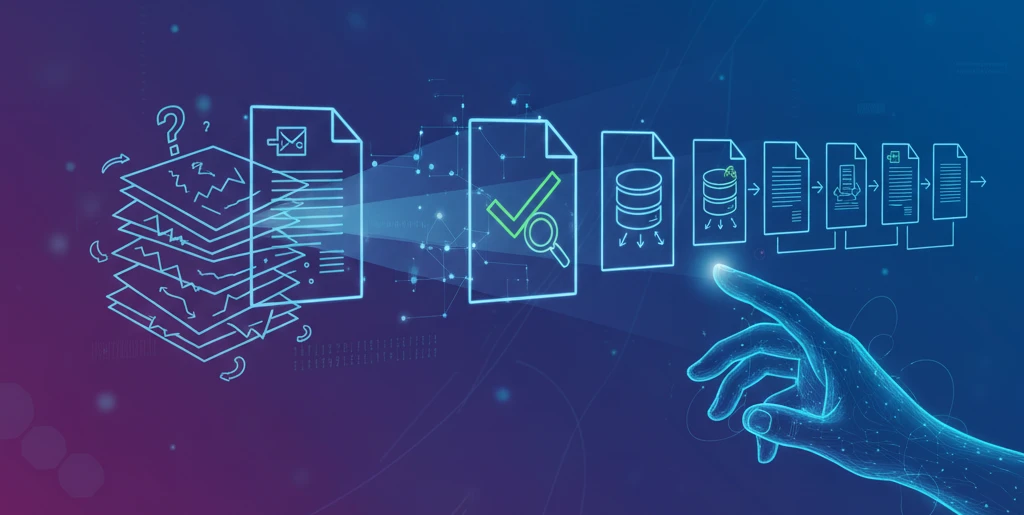
This is where intelligent document processing has emerged as a breakthrough. Powered by AI and machine learning, intelligent document processing software can read, interpret, classify, and extract data from any document type. It combines OCR, NLP, predictive modeling, and computer vision to understand unstructured content the way humans do. With the growing adoption of AI-based document processing, enterprises can automate repetitive workflows, improve accuracy, and reduce operational costs.

The rise of automation and AI in document processing has fundamentally changed how organizations handle information. IDP platforms can process structured, semi-structured, and unstructured documents, enabling document processing automation across every business function. From BFSI and healthcare to insurance, retail, manufacturing, and logistics, industries are leveraging intelligent automation for enterprises to accelerate turnaround times and strengthen compliance.

Today, leading organizations choose intelligent document processing solutions not just to eliminate manual work but to create intelligent document ecosystems that continuously learn and improve. With modern IDP software and adaptive machine learning capabilities, businesses can achieve higher accuracy, greater visibility, and automated decision-making powered by real-time insights.

As the shift toward cognitive automation accelerates, enterprises adopting the best intelligent document processing solutions are transforming their operations into responsive, data-driven environments. Intelligent document processing is no longer a back-office utility. It is a strategic capability that supports agility, competitiveness, and enterprise-wide digital transformation.


Experience accuracy, speed, and compliance with Experion’s intelligent document processing solutions


What is Intelligent Document Processing (IDP)?

Intelligent-Document-Processing-Solutions

Intelligent Document Processing (IDP) is an advanced approach to extracting, understanding, and organizing information from business documents using AI, machine learning, natural language processing, and computer vision. Unlike traditional OCR tools that only capture text, intelligent document processing solutions interpret meaning, context, and intent. This makes IDP capable of handling highly variable documents that cannot be managed through rules or templates alone.

In essence, IDP is the next evolution of document processing automation, designed for enterprises that handle high volumes of unstructured data. It transforms manual workflows into automated document processing systems that operate with high accuracy and speed. By combining multiple AI techniques, IDP moves beyond simple extraction to deliver clean, enriched, and validated data ready for downstream business applications.

This is what positions IDP as one of the best intelligent document processing solutions for organizations seeking to scale operations, improve compliance, and enhance decision-making. While traditional OCR was suitable for fixed formats, intelligent document processing AI brings adaptability, reasoning, and self-learning capabilities that allow it to handle diverse document types across industries.

Components of Intelligent Document Processing Software (IDP Software)

Modern intelligent document processing software uses a combination of advanced technologies that work together to mimic human understanding of documents. Key components include the following:

  1. Optical Character Recognition (OCR)

OCR forms the foundation of AI-based document processing. It converts scanned images, PDFs, and handwritten text into machine-readable characters. Advanced OCR systems now include handwriting recognition, multi-language support, and layout interpretation.

  1. Natural Language Processing (NLP)

NLP enables the system to understand context, relationships, and semantics. It identifies key phrases, intents, entities, and meanings inside documents. NLP is crucial for extracting insights from emails, contracts, letters, reports, and unstructured documents.

  1. Machine Learning Models

Learning algorithms empower IDP to adapt over time. Through supervised and unsupervised training, ML models learn to classify documents, detect patterns, reduce errors, and improve extraction accuracy. This self-improving mechanism is why intelligent document processing automation keeps becoming more accurate with use.

  1. Computer Vision

Computer vision helps the system interpret visuals such as tables, stamps, signatures, logos, and complex layouts. It can detect sections of documents, identify formatting patterns, and interpret multi-page structures.

Together, these technologies make IDP software capable of delivering complete document process automation that goes far beyond simple data capture.

How Does Document Processing Automation Integrate Into Business Workflows?

A strong, intelligent document processing platform is designed to fit into enterprise operations seamlessly. IDP connects with core business systems such as ERP, CRM, ECM, RPA tools, HR systems, and financial platforms.

Integration occurs through:

  • APIs and connectors that allow IDP to read and write data into existing systems.
  • Automated document workflows that route information to the right process owners or systems.
  • Document processing automation pipelines that triage documents, validate data, and trigger decisions.
  • RPA bots that perform structured tasks while IDP handles cognitive extraction.

This synergy allows enterprises to automate end-to-end document-driven processes efficiently.

Structured vs Semi-Structured vs Unstructured Documents

IDP’s biggest advantage is its ability to manage all three document types:

Structured Documents

These follow fixed, predictable layouts.
Examples: tax forms, bank statements.
IDP extracts fields with near-perfect accuracy.

Semi-Structured Documents

Layout varies across vendors or formats.
Examples: invoices, receipts, purchase orders.
IDP uses ML and NLP to detect fields even when layouts differ.

Unstructured Documents

These contain free-flow text or unpredictable patterns.
Examples: contracts, emails, medical narratives, legal documents.
IDP uses AI in document processing and NLP models to interpret context and categorize information.

This flexibility makes intelligent document processing solutions and software essential across industries with complex document ecosystems.


Build a future-ready document ecosystem powered by intelligent automation


How Does Intelligent Document Processing Automation Work?

From Document Ingestion to Intelligent Extraction and Insights

Intelligent-Document-Processing-Solutions-works

At the heart of modern enterprise transformation lies a clear need to turn unstructured information into usable, validated data. Intelligent document processing automation achieves this by orchestrating multiple AI capabilities into a seamless end-to-end workflow. Below is the step-by-step process behind automated document processing using IDP technologies.

Step-by-Step Breakdown of the Automated Document Workflow

  1. Document Ingestion and Preprocessing

Everything starts with capturing documents from multiple channels.
An intelligent document processing platform can ingest documents from the following:

  • Emails
  • Scanners
  • Cloud repositories
  • Mobile apps
  • Customer portals
  • Document management systems

Once ingested, preprocessing begins. This includes noise removal, image correction, de-skewing, and converting files into optimal formats for extraction. Preprocessing improves OCR accuracy and ensures consistent performance across varied document types.

  1. OCR and Text Recognition

Next, OCR transforms scanned images and PDFs into machine-readable text. Unlike traditional OCR, advanced AI-based document processing tools recognize handwriting, detect multi-language content, and interpret layouts.

This is the foundation for all subsequent extraction and classification tasks.

  1. Document Classification

Using NLP and machine learning, IDP classifies documents into categories such as the following:

  • Invoice
  • Contract
  • Purchase order
  • Medical form
  • Tax document

Classification is critical for routing documents to relevant workflows and applying appropriate extraction templates. IDP software can recognize document intent even when layouts vary widely.

  1. NLP and Content Understanding

Once classified, the system uses NLP to interpret context, semantics, keywords, and relationships inside documents. This helps the IDP system extract meaningful insights, detect entities, and understand how information flows across different sections.

NLP enables AI in document processing to perform tasks like the following:

  • Understanding clause types in contracts
  • Identifying patient details in medical records
  • Extracting financial values from invoices
  • Recognizing compliance-sensitive phrases

This cognitive capability is what differentiates intelligent document processing solutions from template-based tools.

  1. Data Extraction and Classification

IDP systems extract key-value pairs, tabular data, signatures, dates, totals, entity names, and more.

Machine learning enables the system to detect fields even when they appear in unexpected positions. For example, document process automation can pull the “Invoice Total” value even if the vendor changed its layout.

Extraction often includes the following:

  • Named entity recognition
  • Table parsing
  • Key-value mapping
  • Semantic tagging

The self-learning nature of intelligent systems ensures accuracy improves over time.

  1. Validation and Error Handling

A strong, intelligent document processing solution includes rule-based and AI-based validation layers:

  • Cross-checking extracted data with external systems
  • Matching totals with line-item calculations
  • Flagging inconsistent or missing information
  • Triggering human review when confidence scores fall below thresholds

This validation ensures accuracy, compliance, and end-to-end reliability.

  1. Exporting to Business Applications

Once validated, structured data is exported into business platforms such as the following:

  • ERP systems
  • CRM platforms
  • Core banking systems
  • Claims management systems
  • Supply chain tools
  • HRMS platforms

This integration completes the automated document workflows, enabling real-time updates, faster decisions, and seamless downstream processing.

  1. Continuous Learning with Machine Learning

One of the strongest advantages of intelligent document processing automation is the learning loop. The system continuously improves extraction accuracy based on:

  • User corrections
  • Additional training data
  • Pattern recognition
  • Feedback mechanisms

Over time, this transforms the IDP system into a highly accurate, self-evolving intelligence layer within the enterprise.


Unlock hidden insights in your documents with intelligent automation


Types of Documents Processed Using Intelligent Document Processing

A modern intelligent document processing solution & software can interpret a wide range of document formats, both structured and unstructured. Below are the most common types handled across industries:

Invoices and Receipts

IDP captures vendor details, invoice numbers, totals, tax information, and payment terms with high precision. Automated extraction reduces AP processing time dramatically.

Contracts and Legal Documents

Using NLP and entity recognition, IDP identifies clauses, obligations, dates, and legal entities. This accelerates contract review and improves compliance.

Customer Onboarding Forms

Whether handwritten or digital, IDP extracts customer identity, address, declarations, and signatures. It supports KYC verification and faster onboarding cycles.

Financial Statements

IDP captures financial metrics, balances, transactions, and tabular data from balance sheets, statements, and audit documents.

Healthcare Records

Medical forms, insurance claims, lab reports, and prescriptions can be processed quickly and accurately. IDP helps healthcare providers reduce administrative burden while improving record-keeping accuracy.


Demand for Intelligent Document Processing Solutions

demand

Why Are Modern Enterprises Prioritizing IDP?

Demand for intelligent document processing solutions has surged as organizations confront increasing volumes of documents and rising expectations for speed, accuracy, and compliance. Manual processing no longer aligns with the agility required in today’s digital economy. With employees spending countless hours reading, extracting, verifying, and routing information, enterprises face operational bottlenecks, high labor costs, and a growing risk of human error.

As businesses embrace cloud migration, digital onboarding, and omnichannel workflows, document processing solutions built on AI and machine learning have become essential. Organizations want faster approvals, near real-time insights, and automated decision pathways to improve customer experience. IDP is a cornerstone technology in this shift.

Industries such as banking, healthcare, insurance, logistics, manufacturing, and retail are accelerating adoption because IDP enhances compliance, reduces turnaround times, and supports digital transformation. This rapid market momentum has positioned IDP as one of the most critical enablers of intelligent automation for enterprises.


Key Technologies Behind Intelligent Document Processing

The AI Engines That Power Modern IDP Platforms

Modern intelligent document processing software relies on a stack of advanced technologies that work together to interpret documents as accurately as human experts. These technologies form the foundation of the best intelligent document processing solutions used across global enterprises.

  • Optical Character Recognition (OCR)

OCR is responsible for converting printed or handwritten text into machine-readable output. Advanced OCR in AI-based document processing handles noisy, low-resolution, multi-language, and handwritten content, ensuring maximum extraction accuracy.

  • Natural Language Processing (NLP)

NLP enables the system to understand context, meaning, sentiment, and relationships within documents. It is essential for extracting information from legal agreements, emails, medical narratives, and customer communications. NLP transforms raw text into structured, contextualized insights that drive downstream decisions.

  • Machine Learning and Deep Learning Models

ML and deep learning models train the system to recognize patterns, detect anomalies, classify documents, and improve decisions. Over time, these models adapt to new formats and continuously enhance accuracy. This learning loop is what differentiates IDP from traditional rule-based systems, making it a true example of intelligent document processing automation.

  • Integration with RPA and ERP Systems

IDP integrates seamlessly with enterprise systems such as RPA bots, ERPs, CRMs, and content management platforms. RPA handles structured tasks, while IDP manages cognitive extraction and interpretation. This synergy creates fully automated document workflows that eliminate manual intervention.

  • Computer Vision

Computer vision identifies layout features such as tables, stamps, images, signatures, barcodes, and logos. It enables the system to navigate complex multi-column or multi-page documents, making extraction more accurate and adaptable.

Together, these technologies turn IDP into a powerful engine for document process automation in modern digital enterprises.

How Are Generative AI and LLMs Shaping Next-Gen Document Processing?

The Future of AI in Document Processing Has Arrived

The arrival of Generative AI and large language models is redefining how organizations approach AI in document processing. Traditional IDP extracted and classified. The next generation will interpret, reason, summarize, and generate insights with human-like understanding.

Understanding Beyond Extraction

LLMs can read entire documents, identify context, and extract meaning accurately. Instead of relying on pre-configured templates, models can interpret narrative-heavy content such as contracts, legal notices, and medical reports. This elevates IDP from simple automation to cognitive intelligence.

Automated Summaries and Insights

Generative AI creates concise summaries, identifies anomalies, and highlights risks. It can summarize loan applications, extract obligations from contracts, or highlight missing information in onboarding forms. This adds intelligence to automated document processing that previously required human expertise.

Conversational Document Interaction

LLMs allow teams to query documents conversationally. Users can ask questions such as the following:

  • What is the renewal date for this contract
  • Extract all high-value transactions from this PDF
  • Provide the total outstanding amount in these invoices

This interaction turns IDP into an intelligent assistant rather than a passive tool.

Training and Adaptation

Generative AI makes training IDP easier by reducing the need for massive labeled datasets. It can learn formats quickly, making enterprise adoption smoother. As a result, intelligent document processing solutions & software become more accessible to industries with diverse document types.

Multi-Document Reasoning

LLMs can link information across documents to understand relationships and verify consistency. For example, comparing a purchase order with an invoice and a delivery note.

Enabling Hyperautomation

When combined with RPA, APIs, and workflow systems, Generative AI helps enterprises move into the realm of hyperautomation. IDP becomes the intelligence layer powering document-driven processes across the organization.

Generative AI transforms an IDP into a system that not only extracts data but also understands, reasons, and participates in decision-making. This shift is shaping the next wave of intelligent document processing platforms across industries worldwide.


Business Benefits of Intelligent Document Processing Solutions

Driving Accuracy, Speed, and Data Intelligence Across the Enterprise

Implementing intelligent document processing solutions unlocks measurable advantages across operational, financial, and compliance functions. By automating repetitive tasks and improving data quality, IDP becomes an essential pillar of modern digital transformation. Its benefits span accuracy, speed, governance, and strategic decision-making.

  • Enhanced Accuracy and Reduced Human Error

Manual data entry is prone to fatigue, inconsistency, and oversight. In industries like BFSI, healthcare, and insurance, such errors can lead to compliance breaches and operational disruptions.
Intelligent document processing software eliminates these risks with AI-powered extraction and validation.
Machine learning models continually refine themselves, ensuring extraction accuracy improves as volume increases. Enterprises experience fewer disputes, faster reconciliation, and improved customer satisfaction.

  • Faster Turnaround Times and Cost Efficiency

With document processing automation, organizations can process documents in seconds instead of hours or days. Automated classification, extraction, and routing reduce operational delays and accelerate business cycles.
Whether approving loans, onboarding customers, or processing claims, IDP speeds up response times dramatically.
This efficiency translates to direct cost savings: reduced labor requirements, fewer manual interventions, and lower administrative overhead.

  • Better Compliance and Auditability

Industries governed by strict regulations must maintain consistent, validated, and traceable records.
Intelligent document processing AI supports compliance by ensuring data accuracy, maintaining audit trails, and enforcing validation logic.
For example:

  1. Banking teams can automatically verify KYC documents.
  2. Healthcare teams can digitize records while meeting HIPAA requirements.
  3. Legal teams can review contracts at scale with embedded risk checks.

This compliance-ready automation reduces potential penalties and protects business integrity.

  • Improved Data Accessibility and Decision-Making

Most enterprises struggle with information trapped inside emails, PDFs, scanned images, and spreadsheets.
AI-based document processing unlocks these insights instantly, converting raw content into structured, searchable, and actionable data.

Leadership teams can make faster, data-driven decisions because:

  1. Information becomes available in real time
  2. KPIs are updated automatically
  3. Reports are generated without manual intervention

By feeding accurate data into analytics systems, IDP strengthens business intelligence across the organization.


From documents to decisions.

Bring AI-driven accuracy to your enterprise


Quantifiable ROI Examples

Measuring the Impact of Intelligent Document Processing Automation

Enterprises adopting intelligent document processing solutions typically see rapid ROI due to dramatic reductions in processing time and operational cost. Here are common impact metrics:

  1. Time Saved

Automating a document that previously took 10 to 15 minutes manually can reduce processing time to under 30 seconds.
Across thousands of documents per month, this can save several hundred employee hours.

  1. Accuracy Improvements

With machine learning improvement loops, IDP often delivers accuracy above 95 percent for structured documents and 85 to 92 percent for complex unstructured formats.
Human verification becomes exception-based rather than the norm.

  1. Reduced Costs

Organizations report:

  • A 40 to 70 percent reduction in operational costs
  • Lower error rates reducing chargebacks or rework
  • Increased employee productivity

This ability to automate end-to-end document workflows at scale positions IDP as a high-impact investment in intelligent automation for enterprises.


Use Cases of Intelligent Document Processing Solution and Software Across Industries

Transforming Document-Driven Operations with End-to-End Automation

Intelligent Document Processing is industry-agnostic and applicable wherever large document volumes exist. Below are the most prominent use cases.

  1. Banking and Financial Services

Banks rely heavily on document workflows for lending, compliance, and customer management.
Common applications include:

  • Automating loan applications and income verification
  • Processing KYC and onboarding documents
  • Fraud detection and risk monitoring
  • Digitizing financial statements for credit analysis

This shift results in faster credit decisions, improved compliance, and better customer experience.

  1. Healthcare

Healthcare organizations operate in highly document-intensive environments.
Intelligent document processing platform solutions support:

  • Extracting patient information from medical forms
  • Digitizing lab reports
  • Processing insurance claims
  • Managing discharge summaries
  • Organizing and indexing health records

IDP improves administrative efficiency, reduces errors, and supports patient-care coordination.

  1. Insurance

Insurance carriers depend on documents for claims evaluation, underwriting, and compliance.
IDP automates:

  • Claim form extraction
  • Damage assessments
  • Policy document management
  • Identity verification
  • Fraud detection workflows

Automated document processing accelerates claims settlement and enhances customer trust.

  1. Legal and Compliance

Law firms and corporate legal departments manage contracts, compliance reports, and risk documentation.
An intelligent document processing solution and software assist with:

  • Contract review and clause extraction
  • Regulatory documentation
  • Litigation support and case file management
  • Document comparison and version control

IDP reduces research time and minimizes risk exposure.

  1. Manufacturing and Logistics

Manufacturing and supply chain operations rely on consistent, accurate documentation.
IDP automates:

  • Invoice management
  • Shipment documentation
  • Quality inspection reports
  • Material receipts
  • Work orders

This enables faster supply chain operations and improved financial reconciliation.


Core Features to Look for in an Intelligent Document Processing Platform

Ensuring Enterprise Readiness, Scalability, and Accuracy

When evaluating the best intelligent document processing solutions, enterprises should seek platforms that offer adaptability, compliance, and robust integration capabilities. Key features include the following:

  • Multi-Format Document Support

A modern intelligent document processing platform must handle PDFs, images, scanned documents, emails, spreadsheets, and handwritten notes. Multi-format support ensures flexibility across different departments and use cases.

  • Data Validation and Exception Handling

Strong validation rules reduce error rates. Exception handling workflows ensure human review only when necessary, allowing intelligent document processing automation to operate efficiently and accurately.

Enterprises require systems that scale with growing document volumes. API readiness ensures seamless integration with ERP, CRM, ECM, HRMS, and intelligent automation for enterprise ecosystems.

  • Security and Compliance

Compliance with GDPR, HIPAA, PCI-DSS, and ISO standards is essential. Encryption, access control, and audit trails allow organizations to maintain data security and governance across automated document workflows.

  • Customizable AI Models

IDP should adapt to domain-specific needs such as financial terminology, medical coding, insurance forms, or legal clauses. Custom AI models increase extraction precision and reduce manual intervention.


How to Implement an Intelligent Document Processing Solution?

A Structured Roadmap for Enterprise Deployment

  1. Assess Existing Document Workflows

Identify high-volume, high-effort areas where document processing automation delivers the greatest impact. Map current processes, bottlenecks, and compliance requirements.

  1. Set Automation Goals and ROI Metrics

Define targets such as time saved, cost reduction, error reduction, and improved turnaround. This ensures IDP projects are aligned with measurable outcomes.

  1. Choose the Right Vendor or Partner

Work with a provider experienced in AI-based document processing, integrations, and enterprise-grade security. The partner should understand your industry and technology landscape.

  1. Integrate with RPA, ERP, and CRM

Connect IDP with existing ecosystems through APIs. RPA bots can handle structured tasks while IDP performs cognitive extraction. This maximizes the value of document process automation.

  1. Pilot Test and Continuously Train the Models

Start with a controlled pilot, refine extraction accuracy, and incorporate feedback loops. Machine learning-driven IDP software improves with each iteration, creating long-term efficiency.


Digitize smarter, not harder.

Transform documents into intelligence with Experion


Challenges and Best Practices With AI-Based Document Processing

Navigating Complexity with a Strategic Approach

  • Handling Diverse Document Formats

Different layouts, fonts, languages, and handwriting styles can challenge extraction. Use robust pre-processing and ML-driven recognition to improve consistency.

  • Data Privacy and Compliance

Sensitive records require strict access controls, encryption, and auditability. Align with regulatory frameworks like GDPR and HIPAA from day one.

  • Maintaining Accuracy Through Feedback

Continuous improvement requires human-in-the-loop validation for low-confidence outputs. This feedback helps refine intelligent document processing AI models.

  • Continuous Model Retraining

Document formats change. Business rules evolve. Retraining ensures that IDP remains accurate, reliable, and future-ready.


Future of Intelligent Document Processing Solutions

Intelligent-Document-Processing-Solutions-future

Beyond Automation to Autonomous Understanding

The future of IDP is driven by advanced AI capabilities, making document workflows increasingly autonomous and predictive.

  • AI-Driven Cognitive Automation

IDP will move beyond extraction to understanding sentiment, intent, and context. This will power intelligent decision-making at scale.

  • Integration With LLMs

Large language models will enhance AI in document processing by enabling narrative understanding, conversational querying, and multi-document reasoning.

  • Rise of Hyperautomation

IDP will become the intelligence layer powering enterprise-wide hyperautomation, connecting RPA, BPM, and analytics into cohesive, end-to-end digital ecosystems.

  • Predictive and Self-Learning Systems

Future IDP platforms will predict missing information, detect anomalies proactively, and refine extraction models automatically.


How Can Experion Help in Implementing Custom Intelligent Document Processing Solutions?

Engineering Custom IDP Systems That Transform Enterprise Productivity

Experion Technologies specializes in building custom intelligent document processing solutions tailored to enterprise workflows. Our expertise spans:

  • Designing end-to-end AI-based document processing architectures
  • Integrating IDP with ERP, CRM, HRMS, and RPA ecosystems
  • Developing custom extraction models using NLP, ML, and computer vision
  • Building intelligent document processing platforms with domain-specific accuracy
  • Delivering solutions across BFSI, healthcare, insurance, logistics, and manufacturing

Experion’s teams have the capability to support automation use cases such as onboarding, claims handling, invoice management, contract processing, and compliance documentation through secure, scalable IDP software initiatives.


Talk to our experts to automate your document workflows and enhance data accuracy


Conclusion

Driving the Intelligent Enterprise Through Document Transformation

Intelligent document processing is reshaping how enterprises operate. By automating extraction, classification, validation, and routing, IDP delivers enormous gains in speed, accuracy, and decision-making. As organizations embrace the shift to digital-first operations, intelligent document processing solutions become a strategic asset that elevates efficiency while reducing cost and risk.

The impact is undeniable. Organizations that invest in document processing automation today will lead in agility, customer experience, and data intelligence tomorrow. IDP is not just a technology upgrade. It is a foundational capability that empowers the next generation of intelligent, data-driven enterprises.

Key Takeaways

  • Intelligent document processing transforms manual workflows into automated, AI-driven processes.
  • IDP uses OCR, NLP, ML, and computer vision to understand any document format.
  • Intelligent document processing solutions deliver accuracy, speed, and compliance readiness.
  • Enterprises gain measurable ROI through reduced costs, improved turnaround, and fewer errors.
  • IDP supports multiple industries, including BFSI, insurance, legal, healthcare, manufacturing, and logistics.
  • Generative AI and LLMs are shaping the next wave of IDP with contextual intelligence and conversational interaction.
  • Experion Technologies delivers custom-built intelligent document processing platforms that integrate seamlessly with enterprise systems and deliver domain-level accuracy.

Enterprise Digital Transformation

In today’s hyperconnected economy, enterprise digital transformation is no longer an option, it’s an existential necessity. The modern business landscape is defined by rapid technological advancement, heightened customer expectations, and fierce competition. Organizations that still rely on legacy systems and siloed workflows are finding it difficult to innovate, scale, and respond to market changes swiftly.

Recent global studies indicate that more than 90% of enterprises have embarked on some form of digital transformation initiative, yet fewer than 30% achieve sustained success. The difference lies not in technology adoption alone, but in the ability to embed digital thinking into the very DNA of the enterprise. This is where a well-defined digital transformation strategy framework plays a crucial role, aligning technology modernization with culture, process, and customer-centricity.

As enterprises across sectors embrace this shift, the focus is moving from “doing digital” to “being digital.” Whether it’s through AI-driven automation, cloud-native architectures, or data-led insights, successful transformation demands a holistic approach that integrates people, platforms, and purpose.


What is Enterprise Digital Transformation?

What is Enterprise Digital Transformation

Enterprise digital transformation is the strategic reinvention of a business’s processes, technologies, and culture to achieve greater agility, scalability, and value creation in the digital age. It involves using emerging technologies, such as AI, IoT, cloud computing, and automation, to modernize legacy systems, optimize workflows, and deliver superior customer experiences.

Unlike fragmented IT upgrades or isolated automation projects, digital enterprise transformation takes a 360-degree view of how an organization operates. It spans across departments, finance, marketing, HR, operations, and ensures that digital innovation is embedded in every business layer. The goal isn’t just modernization; it’s building a continuously evolving enterprise capable of thriving amid disruption.

How It Differs from Basic Digital Adoption?

Enterprise-Digital-Transformation-difference

While many organizations claim to have undergone “digital transformation,” what they often achieve is digital adoption, the use of digital tools to enhance existing processes without fundamentally changing them.

Digital adoption focuses on efficiency, using software or automation to make current workflows faster.
Enterprise digital transformation, on the other hand, focuses on reinvention, rethinking business models, customer engagement strategies, and decision-making frameworks altogether.

For instance, adopting a cloud CRM improves operational efficiency. But integrating AI-driven analytics with that CRM to predict customer behavior, personalize offerings, and optimize campaigns, that’s true enterprise modernization.

Transformation requires more than just technology; it calls for leadership commitment, employee upskilling, and cultural realignment. It redefines “how” value is created, not just “where” technology is applied.


Where Vision Meets Engineering →
Explore Experion’s approach to building digital-first enterprises


The Role of Emerging Technologies

Emerging-Technologies

Modern digital transformation strategies are powered by a combination of technologies that work in harmony to deliver speed, intelligence, and flexibility.

  • Artificial Intelligence (AI): At the heart of AI digital transformation, AI enables predictive analytics, personalized experiences, and intelligent automation. From chatbots to fraud detection, AI brings cognitive intelligence to business operations.
  • Internet of Things (IoT): IoT connects enterprise assets, devices, and systems to collect real-time data, helping organizations monitor performance, predict failures, and improve service quality.
  • Cloud Computing: Cloud infrastructure provides scalability, agility, and cost optimization, enabling enterprises to deploy digital services rapidly and securely.
  • Advanced Analytics: By leveraging big data, businesses can uncover patterns, trends, and actionable insights that guide strategic decision-making.
  • Automation and RPA: Automation eliminates repetitive tasks, reduces human error, and enhances operational consistency across functions.

Together, these technologies form the backbone of digital enterprise transformation solutions, bridging data silos and unlocking new opportunities for innovation and efficiency.

Key Goals of Digital Transformation Services

  1. Agility
    Rapid response to market shifts, emerging customer needs, and evolving regulations is crucial. Enterprise digital transformation services enable organizations to pivot quickly, supported by flexible systems and data-driven insights.
  2. Scalability
    Digital platforms built on microservices and cloud-native architectures allow enterprises to scale operations effortlessly, meeting demand surges without infrastructure constraints.
  3. Customer Experience (CX)
    The new digital enterprise is experience-led. Personalization, omnichannel engagement, and intuitive design are no longer differentiators, they’re expectations.
  4. Innovation
    By embedding experimentation and rapid prototyping into their culture, organizations can innovate faster and launch new products or services more efficiently.


Core Pillars of Digital Transformation

True transformation is not just about deploying new technologies, it’s about rearchitecting the business around digital-first principles. The success of any enterprise digital transformation strategy rests on six foundational pillars:

  • Technology Modernization – Legacy systems often restrict innovation. Technology modernization through cloud migration, API integration, and modernization of core applications enables enterprises to move faster, reduce technical debt, and innovate continuously.
  • Data-Driven Decision Making – Data is the currency of the digital age. Using analytics and AI, enterprises can make smarter decisions based on real-time insights, predictive forecasting, and measurable outcomes. This approach moves organizations from reactive to proactive decision-making.
  • Customer-Centricity – A successful digital transformation in enterprise begins with the customer. Businesses must focus on understanding customer journeys, behaviors, and expectations to create hyper-personalized experiences across channels.
  • Process Automation – By implementing digital transformation services centered on workflow automation and resource optimization, enterprises improve efficiency, reduce costs, and eliminate human dependency in repetitive tasks.
  • Cultural Transformation – Transformation isn’t sustainable without people embracing it. Driving a digital mindset, fostering collaboration, and encouraging innovation across teams ensures long-term success.
  • Business Model Innovation – Digital enterprises constantly reinvent how they deliver value, whether through subscription-based services, platform ecosystems, or data-driven revenue models.


Transformation That Delivers Tangible Impact →
Learn how global enterprises are achieving scale, speed, and success


Roadmap: Enterprise Digital Transformation Framework

Transformation without a roadmap often leads to fragmented efforts. A robust digital transformation strategy framework offers structure, clarity, and alignment with long-term goals.

Step 1: Assess Current Digital Maturity

Every transformation journey starts with understanding where the enterprise stands. Conducting a digital readiness audit helps identify capability gaps, legacy challenges, and areas with the highest transformation potential.

Step 2: Define Clear Objectives and KPIs

Successful transformation initiatives have measurable goals, be it reducing operational costs, improving CX, or enabling faster innovation. Aligning digital transformation strategies with business KPIs ensures accountability and focus.

Step 3: Build a Transformation Strategy

Once goals are defined, the next step is to design a digital transformation strategy that aligns technology initiatives with enterprise vision. A well-crafted strategy outlines not only what to change but how to change it sustainably.

Key elements include:

  • Technology Stack Selection: Choosing the right mix of cloud, analytics, automation, and integration tools that can scale and evolve with business needs.
  • Governance and Ownership: Establishing a digital governance model that ensures alignment across business units and avoids duplication of efforts.
  • Budgeting and Risk Assessment: Allocating resources efficiently while mitigating implementation and data-security risks.

The most effective digital transformation strategies focus on incremental change through agile sprints, rather than large-scale overhauls that disrupt operations. Enterprises that adopt an iterative approach to transformation not only realize faster ROI but also maintain stakeholder confidence throughout the journey.

Step 4: Implementation and Integration

Execution is where strategy meets reality. The implementation phase involves migrating systems, integrating digital tools, and rolling out new processes, preferably using agile methodologies to ensure flexibility and responsiveness.

Key focus areas during implementation include:

  • Agile Development: Deploying transformation initiatives through iterative releases that allow continuous testing, feedback, and improvement.
  • System Integration: Connecting legacy systems with new platforms through APIs and middleware ensures data continuity and eliminates silos.
  • Change Management: Communicating with teams, training employees, and addressing cultural resistance are vital for successful adoption.

An enterprise’s ability to harmonize technology and people during implementation determines the overall effectiveness of its digital enterprise transformation.
Step 5: Continuous Monitoring and Optimization

Digital transformation isn’t a one-time event, it’s an ongoing journey of evolution. Once new systems and workflows are in place, continuous monitoring becomes essential.

Organizations use real-time analytics dashboards to measure KPIs such as operational efficiency, customer satisfaction, and digital adoption rates. Feedback loops allow teams to identify what’s working and where recalibration is needed.

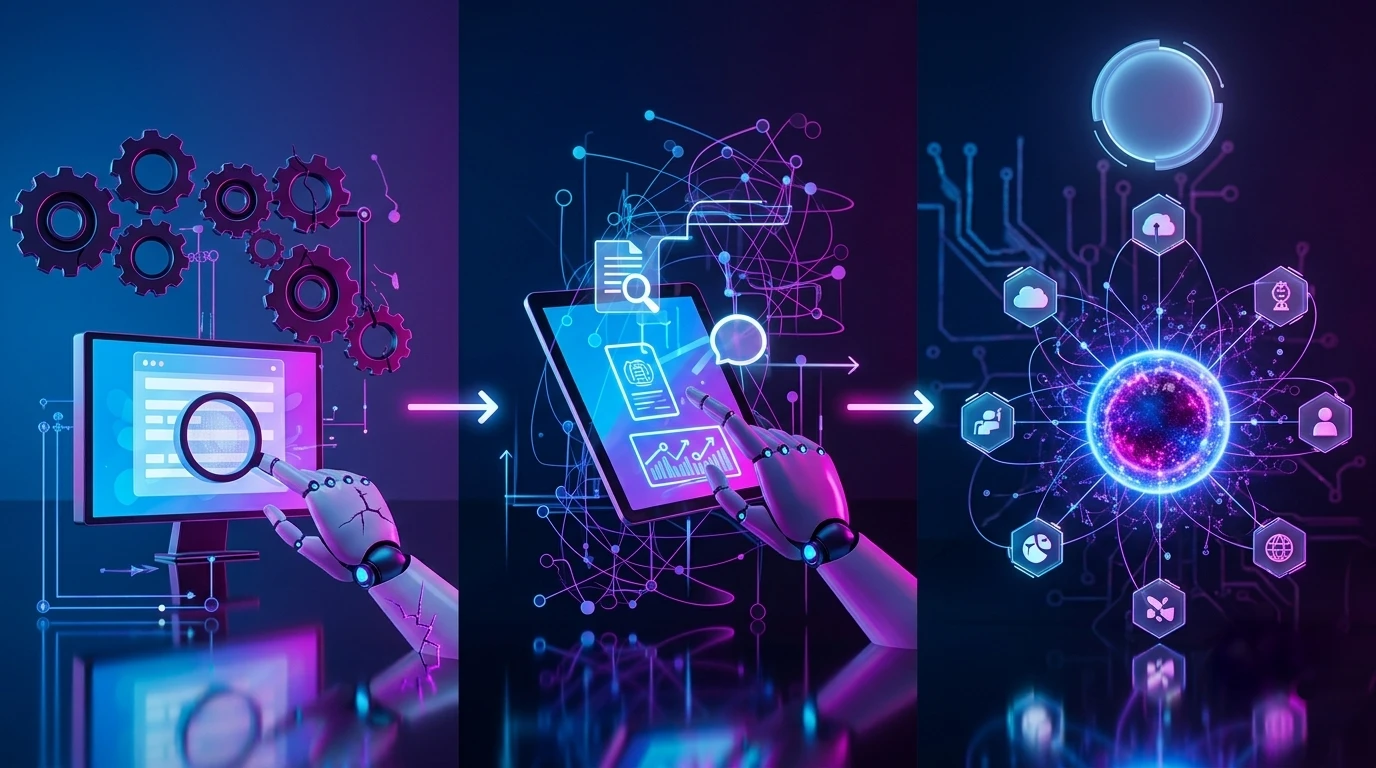
Optimization ensures the transformation stays aligned with changing business goals and emerging technologies. In this stage, many enterprises adopt AI digital transformation techniques, using predictive analytics to anticipate trends, personalize services, and identify new opportunities for automation.

Experion Technologies, through its enterprise modernization expertise, enables organizations to execute transformation seamlessly from strategy to implementation. Our team of engineers, architects, and domain experts design scalable digital transformation services that integrate emerging technologies with existing business ecosystems, ensuring agility, compliance, and measurable impact.


Key Technologies Powering Digital Transformation

At the heart of enterprise digital transformation lies technology. Each innovation plays a unique role in modernizing the enterprise architecture and unlocking operational excellence.

Cloud Computing

Cloud is the foundation of digital scalability. Migrating to cloud infrastructure provides enterprises with on-demand resources, cost efficiency, and flexibility.
Whether deploying public, private, or hybrid environments, cloud computing enables real-time collaboration, faster time-to-market, and business resilience, especially critical in distributed work models.

Artificial Intelligence & Machine Learning

AI and ML are the driving forces behind AI digital transformation. They empower enterprises with intelligent automation, predictive insights, and personalized customer engagement.
From automated underwriting in finance to dynamic pricing in retail and predictive maintenance in manufacturing, AI and ML redefine how businesses analyze data and make decisions.

Internet of Things (IoT)

IoT forms the digital backbone of connected enterprises. By linking physical assets, sensors, and devices, organizations gain access to real-time operational data.
This connectivity fuels enterprise modernization, helping industries like logistics, energy, and manufacturing optimize performance and prevent costly downtime.

Robotic Process Automation (RPA)

RPA eliminates repetitive, rule-based tasks, freeing employees to focus on high-value activities. Integrating RPA within digital transformation services accelerates process efficiency, improves accuracy, and enhances compliance across departments such as finance, HR, and operations.

Blockchain

Blockchain ensures transparency, traceability, and trust in business transactions. Its distributed ledger mechanism secures digital identities, streamlines supply chain visibility, and reduces fraud risk, making it a critical pillar in digital enterprise transformation solutions for finance and logistics sectors.

5G and Edge Computing

The combination of 5G and edge computing delivers ultra-fast, low-latency connectivity that enables real-time operations.
In sectors like healthcare and manufacturing, edge-enabled systems support data processing close to the source, improving response times and reducing dependency on centralized infrastructure.

Low-Code/No-Code Platforms

Low-code platforms democratize innovation. They allow non-technical users to build, customize, and deploy digital solutions rapidly, accelerating enterprise agility and empowering employees.
For large enterprises managing complex ecosystems, low-code tools complement traditional development by enabling faster prototyping and deployment cycles.


Move Beyond Adoption, Lead the Transformation →
See how Experion helps enterprises achieve sustainable digital evolution


Industry-Specific Digital Transformation Strategies

While the core principles of enterprise digital transformation services remain consistent, execution varies significantly by industry. Tailoring digital initiatives to sector-specific needs ensures relevance, efficiency, and measurable ROI.

  1. Manufacturing – The manufacturing sector is evolving through Industry 4.0—a convergence of IoT, automation, and data analytics.
  • Smart Factories: Connected production environments monitor equipment health and optimize workflows.
  • Supply Chain Digitization: End-to-end visibility through IoT and blockchain ensures greater transparency and efficiency.
  • Predictive Maintenance: AI algorithms forecast machine failures, minimizing downtime and operational costs.
  1. Retail and E-commerce – The retail industry is driven by hyper-personalization and unified commerce.
  • Omnichannel Platforms: Seamless customer journeys across online and offline touchpoints.
  • AR/VR Experiences: Immersive virtual shopping that boosts engagement.
  • Inventory Optimization: AI models ensure accurate demand forecasting and efficient stock management.
  1. Healthcare – The healthcare sector’s digital evolution has accelerated post-pandemic.
  • Telemedicine and Remote Care: Digital platforms connect patients and clinicians seamlessly.
  • Electronic Health Records (EHR): Centralized data systems ensure accessibility and continuity of care.
  • AI-Powered Diagnostics: Machine learning models assist in early disease detection and treatment planning.
  1. Financial Services – Banks, insurers, and fintechs are at the forefront of transformation.
  • Digital Banking Platforms: Cloud-native solutions deliver fast, secure, and omnichannel experiences.
  • Fintech Collaboration: APIs foster partnerships with digital payment and investment platforms.
  • Automated Compliance: RPA and AI streamline regulatory reporting and fraud detection.
  1. Other Key Industries
  • Logistics: IoT-powered fleet monitoring and blockchain for supply chain traceability.
  • Education: Digital learning ecosystems and AI-based assessments.
  • Government: Citizen-centric e-governance platforms enhancing transparency and accessibility.


Challenges in Enterprise Digital Transformation

Despite its potential, digital transformation comes with significant challenges. Understanding and mitigating these barriers is critical to success.

  • Legacy Systems and Technical Debt: Outdated infrastructure slows down modernization efforts.
  • Organizational Resistance to Change: Employees may resist new tools and processes without proper training or cultural alignment.
  • Data Silos and Security Concerns: Fragmented systems hinder collaboration and expose security vulnerabilities.
  • Skill Gaps and Workforce Upskilling Needs: Lack of digital skills can delay adoption and reduce efficiency.
  • Budget Constraints and Unclear ROI: Without clear metrics, enterprises struggle to justify investment or measure long-term value.

Organizations that overcome these challenges typically adopt a balanced approach—combining technology investment with strong leadership, continuous learning, and strategic execution.


Measuring Success in Enterprise Modernization

One of the biggest mistakes enterprises make in their transformation journey is not defining what success looks like. While adopting the latest technologies is impressive, digital transformation in enterprise is meaningful only when it creates measurable impact.

  1. Metrics for Performance Evaluation

Success in digital transformation should be assessed through a combination of operational, financial, and experiential metrics, such as:

  • Efficiency Gains: Reduction in manual work, turnaround time, and process redundancies.
  • Return on Investment (ROI): Cost savings, productivity improvements, and increased revenue streams.
  • Customer Satisfaction Scores (CSAT/NPS): Enhanced digital experiences reflected in customer feedback.
  • Digital Adoption Rate: Percentage of workflows transitioned to digital platforms.
  • Innovation Velocity: Frequency of new digital product or feature launches.

These metrics should be monitored through real-time data analytics and dashboards—providing transparency and enabling continuous course correction.

  1. Role of Data Analytics and Dashboards

Data-driven monitoring ensures that every digital initiative delivers tangible results. By integrating enterprise analytics platforms, leaders can visualize progress against KPIs, identify bottlenecks, and make informed decisions.

For instance, a financial institution may use dashboards to track the average time taken for digital loan approvals, while a retailer might analyze omnichannel conversion rates post-transformation.
In both cases, the insight loop helps optimize performance and sustain momentum.

  1. Continuous Improvement Through Feedback Loops

Transformation doesn’t end with deployment, it evolves through iteration. Gathering feedback from customers, employees, and stakeholders allows enterprises to refine strategies and enhance digital maturity over time.
Organizations that embed feedback-driven innovation outperform peers by staying agile, relevant, and customer-obsessed.


Every enterprise can go digital. Only some do it right 
Explore the framework for sustainable transformation


How Experion Can Help You With Enterprise Digital Transformation?

Experion Technologies partners with global enterprises to turn digital ambition into measurable impact. With two decades of product engineering and digital transformation services experience, Experion blends technology innovation with human insight to help businesses achieve sustainable transformation.

Our enterprise digital transformation services are designed to:

  • Modernize legacy systems with cloud-native architectures and API integration
  • Enable data-driven decision-making through AI and advanced analytics
  • Drive automation-first operations to enhance efficiency and reduce costs
  • Foster enterprise modernization by aligning people, processes, and technology
  • Ensure scalability through modular, future-ready digital ecosystems

Whether your organization is starting its transformation journey or optimizing an existing roadmap, Experion’s digital enterprise transformation solutions combine strategic consulting with engineering execution, helping you deliver innovation at scale, securely and sustainably.


Future Trends in Enterprise Digital Transformation

Digital transformation continues to evolve rapidly, shaped by emerging technologies, evolving business models, and changing consumer behavior. The next wave of digital transformation strategy will be characterized by deeper integration, intelligent automation, and sustainability-driven innovation.

  • Rise of AI-Driven Enterprises

AI will continue to move from being a supportive tool to a central driver of strategy. AI digital transformation will empower enterprises to make autonomous decisions, anticipate customer needs, and deliver hyper-personalized experiences.
From intelligent supply chains to predictive maintenance and generative AI-driven design, AI will redefine the competitive landscape across industries.

  • Sustainability and Green IT Initiatives

Enterprises are increasingly focusing on sustainable digital transformation, balancing technological innovation with environmental responsibility.
Cloud optimization, energy-efficient data centers, and carbon-tracking software are becoming integral parts of digital strategies aimed at achieving ESG goals.

  • Hyperautomation and Autonomous Systems

Hyperautomation, combining RPA, AI, and machine learning, will push automation beyond repetitive tasks to include cognitive decision-making.
Autonomous business systems capable of self-monitoring and optimization will become the new benchmark for efficiency and accuracy.

  • Increased Focus on Customer Experience and Personalization

As competition intensifies, the customer will remain the epicenter of digital transformation strategies. Future-ready enterprises will leverage behavioral analytics, voice-of-customer data, and real-time personalization to create seamless, predictive, and emotionally resonant digital experiences.

  • Integration of Generative AI in Business Workflows

The integration of generative AI will unlock new possibilities, from automated code generation to creative content production and intelligent product design.
For enterprises, this means faster innovation cycles, enhanced collaboration, and the ability to experiment without massive resource overhead.


Conclusion

Digital transformation is not a destination, it’s a continuous journey of reinvention. Every enterprise, regardless of size or industry, must embrace transformation not as a project, but as a strategic capability.

In an era where business resilience depends on agility, the organizations that succeed are those that combine human creativity with technological intelligence.
By adopting a structured digital transformation strategy framework, investing in the right technologies, and fostering a culture of innovation, enterprises can future-proof themselves against disruption.

Experion Technologies, as a global product engineering leader, continues to enable forward-looking enterprises to navigate this journey with confidence. Our enterprise digital transformation services are designed to empower organizations to unlock efficiency, scalability, and innovation, delivering Excellence in Every Step.

Key Takeaways

  • Enterprise digital transformation is the holistic reinvention of business models, processes, and culture through digital technologies.
  • A robust digital transformation strategy ensures alignment between technology initiatives and organizational goals.
  • Key technologies, AI, cloud, IoT, RPA, and analytics, form the foundation of digital enterprise transformation solutions.
  • Success depends on measurable outcomes, strong leadership, and continuous improvement.

AI in Logistics

The global logistics industry is in the midst of a fundamental transformation. Rising fuel costs, volatile demand cycles, increasing sustainability expectations, and evolving delivery models have made operational efficiency harder to achieve. With customer expectations shifting toward real-time visibility, zero delays, and transparent communication, traditional methods can no longer keep pace.

This is where artificial intelligence in logistics is emerging as a game-changer. By leveraging machine learning, computer vision, predictive analytics, and intelligent automation, businesses are not only solving long-standing inefficiencies but also reimagining how goods move, how fleets are managed, and how supply networks adapt to uncertainty.

In an ecosystem where disruptions are inevitable, from climate events to geopolitical shifts, AI logistics solutions bring agility and foresight. Modern enterprises are now embracing AI in transportation and logistics to manage massive data flows, uncover hidden inefficiencies, and optimize resources across complex global networks.
What makes AI adoption in logistics essential today is its transformative impact across every layer of the value chain, from warehouses and fleet operations to customer engagement and sustainability. The next generation of AI logistics software integrates IoT sensors, robotics, and predictive intelligence to deliver end-to-end operational visibility and real-time decision-making.

In short, AI and logistics are converging to create systems that think, learn, and act autonomously. This evolution is not just about automating processes; it is about creating intelligent ecosystems that respond dynamically to shifting market conditions. For businesses looking to stay ahead, AI logistics automation is no longer an option, it is a strategic imperative that defines competitiveness, efficiency, and growth in 2025 and beyond.


From route to result, make every mile smarter with Experion’s AI logistics solutions.


Understanding AI in Logistics

AI-in-Logistics-intro

Redefining the Backbone of Global Supply Chains

To understand the true value of AI in logistics, one must look beyond automation and analytics,  it is about transformation at scale. Artificial intelligence in logistics refers to the application of advanced algorithms, machine learning, and data intelligence to optimize planning, movement, and delivery within supply chains. It empowers logistics enterprises to make data-driven decisions faster and with greater precision, driving operational efficiency while enhancing customer experience.

In a world where every shipment, route, and asset produces data, AI in logistics and supply chain management becomes the brain that processes, interprets, and predicts outcomes from that data. Whether it is forecasting demand fluctuations, managing fuel consumption, or predicting potential disruptions, AI ensures logistics operations remain proactive rather than reactive.

Modern AI logistics platforms act as digital command centers, aggregating data from IoT devices, sensors, transportation management systems, and warehouse networks to build a single, intelligent view of the supply chain. They don’t just track shipments; they anticipate bottlenecks, optimize delivery schedules, and recommend alternative routes in real time.

Key Technologies Powering Artificial Intelligence in Logistics

  1. Machine Learning (ML):
    The foundation of machine learning logistics, ML models continuously learn from historical and real-time data to optimize decisions such as inventory forecasting, route planning, and demand prediction. ML identifies trends invisible to human analysis, allowing logistics managers to reduce costs and inefficiencies.
  2. Computer Vision and Image Recognition:
    AI-powered computer vision enhances accuracy in warehouse automation, quality inspection, and shipment verification. With cameras and sensors, logistics systems can detect damaged goods, automate barcode reading, and streamline sorting without manual intervention.
  3. Natural Language Processing (NLP):
    NLP enables chatbots and virtual assistants within AI logistics software to handle customer queries, automate documentation, and support multi-language communication across global networks. It plays a key role in improving service delivery and communication.
  4. Deep Learning:
    Deep learning algorithms process vast datasets from complex supply chain networks, identifying intricate patterns such as delivery delays, maintenance needs, or weather-related disruptions. It strengthens predictive accuracy and supports advanced automation.
  5. Deep Learning:
    Deep learning algorithms process vast datasets from complex supply chain networks, identifying intricate patterns such as delivery delays, maintenance needs, or weather-related disruptions. It strengthens predictive accuracy and supports advanced automation.
  6. Predictive Analytics:
    Predictive analytics lies at the heart of AI logistics solutions. By analyzing market trends, fleet performance, and operational data, it helps organizations plan ahead, reducing risks, optimizing inventory, and ensuring consistent delivery timelines.

How AI Integrates with IoT, Robotics, and Cloud Platforms?

AI-in-Logistics-cloud-platform

The convergence of AI, IoT, and cloud technologies has created a hyperconnected ecosystem in logistics. Smart sensors capture data on location, temperature, and condition of goods, while AI algorithms analyze this data in real time. Robotics automate repetitive processes, and cloud infrastructure ensures seamless data accessibility and scalability.

Through this integration, enterprises gain not just visibility but actionable intelligence. For instance, an AI logistics platform can combine GPS data from IoT sensors with traffic and weather data from cloud-based sources to recommend alternative routes instantly. Similarly, predictive maintenance models powered by AI and IoT monitor fleet performance, reducing downtime and improving delivery reliability.

This level of interconnected intelligence represents the future of AI and logistics, one where every component communicates, learns, and adapts to deliver unmatched agility and precision.


Build tomorrow’s logistics, today, accelerate with AI-driven innovation from Experion.


AI Applications in Logistics Management

Ai-Applications

Turning Data into Operational Excellence

The applications of AI in logistics management are as diverse as the industry itself. From predictive inventory planning to last-mile optimization, AI transforms each link of the supply chain into an intelligent, self-optimizing network. Below are key areas where AI for logistics is driving measurable value.

Predictive Demand and Inventory Planning

One of the most critical functions in logistics is managing supply and demand balance. AI-driven forecasting tools use historical sales data, seasonal patterns, and external factors such as market trends or economic shifts to predict future demand accurately.

Through machine learning logistics, organizations can minimize overstocking, prevent stockouts, and ensure optimal resource utilization. These insights not only improve financial efficiency but also reduce waste, aligning logistics with sustainability goals.

Warehouse Management and Automation

In the modern supply chain, warehouses are becoming intelligent ecosystems. Artificial intelligence logistics systems integrate robots, drones, and computer vision to handle picking, sorting, and packing with unmatched precision.

AI algorithms analyze inventory flow to determine optimal storage configurations and picking routes, while robotics ensure tasks are executed faster and with fewer errors. These capabilities are the cornerstone of logistics automation, improving throughput and reducing operational costs significantly.

Smart Transportation and Route Optimization

Perhaps one of the most visible benefits of AI in transportation and logistics is dynamic route optimization. AI-powered systems process live data from GPS, weather forecasts, and traffic patterns to identify the most efficient routes in real time.

This not only reduces fuel consumption and delivery times but also minimizes carbon emissions, supporting sustainability initiatives. When disruptions occur, such as road closures or weather delays, AI recalculates and adapts instantly. AI logistics software also factors in vehicle load, delivery windows, and driver schedules to ensure maximum utilization.

Predictive Maintenance for Fleet and Equipment

AI’s predictive capabilities extend beyond operations to maintenance. Sensors embedded in trucks, forklifts, and other equipment continuously feed data to AI logistics platforms, which analyze performance patterns to predict potential failures before they occur.

By adopting AI logistics automation for predictive maintenance, organizations minimize downtime, extend asset lifespan, and improve safety, while saving substantial costs on emergency repairs and unplanned outages.

Real-Time Visibility and Tracking

Visibility remains the ultimate goal of any logistics network. Through the integration of AI and IoT, logistics companies now achieve real-time tracking across their end-to-end operations. Smart sensors monitor shipments throughout their journey, providing data on temperature, humidity, and handling conditions.

When combined with AI supply chain analytics, this data enables anomaly detection, alerting teams immediately if deviations occur. The result is improved reliability, transparency, and trust between logistics providers and customers.

At Experion Technologies, our AI-driven logistics solutions empower enterprises with real-time visibility and intelligent control. By combining IoT integration, predictive analytics, and scalable cloud systems, we help organizations achieve operational excellence and customer satisfaction through data-driven innovation.


Benefits of AI Adoption in Logistics Operations

benefits

  • Unlocking Speed, Efficiency, and Intelligence Across the Supply Chain
    Adopting AI in logistics delivers transformative value across every layer of the logistics ecosystem. As enterprises embrace digital transformation, artificial intelligence in logistics is no longer about experimenting with automation, it’s about creating intelligent, self-optimizing networks that drive business growth and resilience.
  • Increased Operational Efficiency and Cost Savings
    AI streamlines decision-making through predictive analytics and real-time insights. Intelligent route planning, inventory forecasting, and fleet management reduce fuel usage, warehouse costs, and downtime. Organizations using AI logistics automation can achieve double-digit gains in efficiency by eliminating redundancies and enabling autonomous operations that scale seamlessly.
  • Data-Driven Decision-Making Across Logistics Networks
    In traditional operations, logistics decisions often rely on static reports or human estimation. AI logistics software replaces guesswork with insight. By analyzing millions of data points across supply chains, AI models reveal inefficiencies, identify emerging trends, and guide strategic planning. This data-driven foundation supports faster, smarter business decisions across procurement, warehousing, and transportation.
  • Improved Sustainability Through Optimized Resource Use
    Sustainability has become a non-negotiable component of modern supply chains. AI in logistics and supply chain plays a pivotal role in reducing environmental impact through optimized routing, load management, and energy-efficient operations. AI-driven demand forecasting helps minimize waste, while smart scheduling reduces idle time and fuel consumption, aligning profitability with planetary responsibility. The adoption of AI and logistics technologies is not just an operational upgrade, it represents a strategic evolution toward intelligence-driven growth, agility, and environmental stewardship.


Challenges and Limitations of AI Logistics

Understanding the Barriers to Transformation
Despite its benefits, implementing AI logistics solutions is not without complexity. Enterprises often face a mix of technological, organizational, and cultural challenges that can hinder progress if not addressed systematically.

Implementation Challenges

  • High Initial Investment Costs: Deploying enterprise-scale AI logistics platforms demands significant investment in infrastructure, sensors, software, and skilled resources. However, with a clear ROI strategy, these costs rapidly offset through automation and optimization gains.
  • Integration with Legacy Systems: Many logistics enterprises still operate on legacy ERPs or outdated warehouse management systems. Integrating AI logistics software with these fragmented environments requires meticulous planning and data harmonization.
  • Technical Expertise Requirements: Successful AI deployment depends on skilled professionals, data scientists, AI engineers, and domain specialists, working collaboratively to interpret insights and optimize models.
  • Change Management and Resistance: Introducing AI for logistics often triggers operational and cultural resistance. Employees may fear automation or lack understanding of how AI enhances, rather than replaces, human roles.

Data-Related Issues

  • Data Quality and Consistency: AI systems thrive on accurate, clean data. Inconsistent formats, incomplete records, and outdated information can skew models, leading to flawed predictions.
  • Data Silos Across Departments: Without centralized data strategies, valuable information remains isolated. Unified data lakes and AI supply chain integration are crucial to eliminate blind spots.
  • Privacy and Security Concerns: Logistics data often includes sensitive business and customer information. Ensuring robust encryption, access control, and compliance with regulations such as GDPR or CCPA is vital.
  • Need for Large Datasets: High-quality machine learning logistics models require vast, diverse datasets to achieve precision. Smaller organizations may struggle to collect or label sufficient data for training.

Technical Limitations

  • AI Decision-Making Transparency: The “black box” nature of AI models can make it difficult to understand how conclusions are derived, a critical issue for compliance-heavy industries like logistics.
  • Handling Edge Cases and Exceptions: Logistics scenarios often involve unpredictable real-world variables, extreme weather, customs delays, or strikes. AI models must be trained to handle these exceptions effectively.
  • Dependency on Technology: Overreliance on automation can introduce risks if systems fail or connectivity is lost. Human oversight remains an essential safeguard.

Organizational Barriers

  • Lack of AI Strategy and Vision: Many organizations adopt AI in isolation rather than as part of a unified transformation strategy. Success requires alignment between business objectives and AI adoption goals.
  • Skill Gaps and Insufficient Training: Without ongoing education, employees may lack the ability to interpret AI-driven insights or manage advanced tools.
  • Cultural Resistance: Fear of automation or disruption often slows implementation. Building a culture of collaboration between humans and AI ensures smoother integration.

Regulatory and Ethical Concerns

  • Data Privacy Regulations: Compliance with data protection laws like GDPR, HIPAA, and CCPA is a foundational requirement for any artificial intelligence logistics deployment.
  • Liability and Accountability: As AI logistics automation systems become more autonomous, clarifying accountability for errors or failures becomes essential.
  • Job Displacement Concerns: Automation raises fears about workforce reduction. However, when approached strategically, AI creates new roles focused on analytics, supervision, and strategic decision-making.
  • Algorithmic Bias: Ensuring fairness in AI decision-making is critical. Biased data can result in unintended prioritization errors or inequitable service outcomes.


Reimagine logistics with intelligence, let AI move your business forward with Experion.


Overcoming Implementation Challenges of AI for Logistics Operations

  • Building a Foundation for Scalable Intelligence
    Implementing AI logistics solutions successfully requires a holistic approach, one that balances technology adoption with human insight, governance, and continuous improvement.
  • Addressing Data Quality and Integration Barriers
    Clean, consistent data is the backbone of AI accuracy. Enterprises must establish robust data governance frameworks that unify inputs across warehouse management systems, ERP platforms, and IoT devices. Data lakes and APIs allow seamless integration between legacy systems and modern AI logistics software, ensuring transparency and reliability.
  • Managing Investment and Skill Gaps
    While upfront costs for AI logistics automation can be substantial, phased deployment helps manage financial exposure. Starting with pilot projects, such as predictive maintenance or route optimization, allows organizations to validate ROI before scaling. Parallelly, investing in employee training and AI literacy programs builds internal capability and confidence.
  • Aligning AI with Existing Workflows
    AI should complement, not disrupt, operational processes. Mapping existing workflows before deploying AI in logistics ensures that automation integrates smoothly without interrupting service delivery. Collaborative change management, clear communication, and leadership buy-in are crucial to driving adoption.
  • Ensuring Security and Privacy in Logistics Data
    Security-by-design principles must be embedded in every AI initiative. Encryption, access controls, anonymization, and compliance audits safeguard sensitive logistics and customer data. Partnering with a trusted provider experienced in AI logistics software development ensures adherence to both global regulations and industry best practices. By addressing these challenges proactively, enterprises create a resilient foundation for long-term AI adoption. Once the infrastructure and culture are aligned, organizations can scale from experimentation to full-fledged transformation, positioning themselves as leaders in the new era of AI and logistics innovation.


Future Trends: What’s Next for AI and Logistics

future-trends

  • From Intelligent Automation to Predictive, Self-Optimizing Networks
    As global supply chains become more interconnected and volatile, the next phase of AI in logistics will be defined by predictive intelligence, autonomous operations, and sustainability-driven innovation. Enterprises that harness these advances will not only increase efficiency but also future-proof their operations against disruption.
  • Autonomous Delivery Vehicles and Drones
    Autonomous vehicles and drones represent the frontier of AI logistics automation. These technologies are revolutionizing last-mile delivery, especially in urban areas where traffic congestion and delivery costs remain major challenges. Through AI logistics platforms, vehicles can dynamically adjust routes, avoid hazards, and optimize delivery clusters, significantly reducing fuel consumption and turnaround times.
  • AI-Powered Sustainability Analytics
    Sustainability has evolved from a corporate initiative into a competitive differentiator. AI logistics solutions now analyze fuel consumption patterns, emissions data, and load efficiency to identify areas for carbon reduction. Predictive analytics can simulate greener logistics models, helping enterprises meet both environmental and regulatory goals while maintaining profitability.
  • Generative AI for Logistics Planning and Simulation
    Generative AI is emerging as a transformative force within artificial intelligence logistics. It enables advanced scenario modeling, simulating market fluctuations, supply disruptions, or new routing strategies. Logistics planners can test hundreds of potential outcomes in seconds, empowering data-driven decision-making with near-perfect foresight.
  • Human-in-the-Loop Logistics
    The future of AI and logistics will not eliminate human involvement; instead, it will amplify it. Human-in-the-loop frameworks ensure that logistics professionals guide and validate AI-driven actions, maintaining ethical oversight, contextual understanding, and accountability. This collaboration between humans and machines enables adaptive, trustworthy automation.
  • Hyperconnected Supply Chains with AI + IoT Integration
    In the coming years, AI logistics platforms will be seamlessly connected with IoT, blockchain, and digital twins. Every asset, from warehouse robots to delivery trucks, will communicate in real time, enabling fully transparent, traceable, and responsive supply networks. This integration will mark the arrival of truly self-optimizing supply chains, ones that predict problems before they occur and reconfigure themselves automatically. These trends underscore one truth: the future of AI in logistics and supply chain management lies in continuous intelligence, an ecosystem that learns, evolves, and scales effortlessly with business growth.


How Experion Can Help in Implementing Artificial Intelligence in Logistics?

Building an AI-Powered Logistics Automation Platform

Driving Predictive Intelligence and Visibility for a Global Supply Chain Enterprise

A leading multinational logistics company partnered with Experion Technologies to modernize its operations using a custom-built AI logistics platform that unified visibility, automation, and analytics.

The Challenge

The client’s operations spanned multiple regions and transport modes, yet their legacy systems were siloed, leading to:

  • Limited visibility into shipment tracking and route optimization.
  • Inefficient warehouse processes with high manual dependency.
  • Inability to anticipate demand fluctuations and resource bottlenecks.
  • Rising costs associated with delays, idle assets, and fuel inefficiencies.

The Solution

Experion designed and deployed an enterprise-grade AI logistics software suite integrating machine learning, IoT, and predictive analytics.

Key capabilities included:

  • Real-time route optimization: Dynamic rerouting based on live traffic, weather, and delivery priorities.
  • Predictive demand forecasting: AI algorithms analyzed historical data and external trends to anticipate shipment volumes.
  • Automated warehouse operations: Robotics and computer vision optimized picking and sorting workflows.
  • AI-driven maintenance alerts: Predictive models detected anomalies in fleet performance, reducing downtime.
  • Unified data dashboards: A single command center provided actionable insights across all logistics functions.

The Results

Within the first year of deployment, the enterprise achieved measurable outcomes:

  • 35% improvement in delivery speed through optimized routing.
  • 30% reduction in operational costs via automation and predictive analytics.
  • 25% increase in fleet utilization through proactive maintenance and scheduling.
  • Enhanced visibility and compliance, with real-time tracking across all logistics assets.

The transformation elevated the client’s digital maturity, positioning them as an industry innovator. By partnering with Experion, they built a scalable, intelligent foundation that could expand across geographies and adapt to future market dynamics.

This success story exemplifies how AI in logistics and supply chain can redefine operational performance, turning reactive logistics operations into predictive, data-driven ecosystems.


AI as the Competitive Edge in Logistics

From Efficiency to Intelligence, The New Era of Logistics Leadership

AI in logistics has evolved from a technological advantage into a strategic necessity. As global trade networks grow in complexity, logistics enterprises must embrace intelligent, adaptive systems that can think, predict, and act at scale.

AI-driven logistics automation helps organizations move beyond short-term optimization to long-term resilience. Whether through predictive maintenance, intelligent routing, or sustainable operations, artificial intelligence in logistics is redefining what operational excellence looks like in 2025 and beyond.

Forward-looking enterprises are already harnessing AI logistics solutions to unlock efficiency, reliability, and competitive differentiation. The convergence of AI logistics software, IoT, and advanced analytics is shaping a future where supply chains are self-learning, self-correcting, and customer-focused.

At Experion Technologies, we specialize in building intelligent, future-ready logistics ecosystems that combine AI, cloud, and data engineering to deliver measurable business impact. Our AI logistics automation capabilities empower enterprises to transform complexity into clarity, driving agility, sustainability, and profitability in every delivery cycle.

Key Takeaways

  • AI in logistics is redefining how global supply chains operate, delivering visibility, agility, and cost optimization.
  • Artificial intelligence logistics solutions integrate IoT, robotics, and predictive analytics for end-to-end control.
  • AI logistics software drives smarter decision-making through real-time data insights and continuous learning.
  • Predictive analytics and machine learning logistics reduce downtime, improve accuracy, and support sustainability.
  • AI logistics platforms enable enterprises to transition from reactive management to proactive optimization.
  • Generative AI, automation, and digital twins will accelerate AI adoption in logistics management through 2025.

Experion’s AI-led solutions empower logistics enterprises to achieve operational intelligence, compliance, and resilience, turning technology into a competitive edge.


Ready to redefine your logistics efficiency?
Partner with Experion Technologies to build AI-powered logistics solutions that move faster, think smarter, and deliver stronger business outcomes.

Agentic Process Automation

Modern automation has evolved in waves. First came rules and scripts with traditional RPA. Then came intelligent automation where AI and ML added perception, classification, and adaptive branching. Now the frontier is agentic process automation, where AI agents understand goals, reason about context, plan across systems, and execute independently. This is why agentic AI process automation is becoming essential. It replaces brittle procedures with resilient, ai-driven automation that adapts to change and optimizes for outcomes.


Evolution of Automation: From Rules to Autonomy

Agentic-Process-Automation-Evolution

Traditional Automation vs Intelligent Automation

Traditional RPA focused on repeatable actions inside stable interfaces. It excelled at screen scraping, form filling, reconciliations, and simple handoffs. The limitation was fragility. If a field moved or an exception occurred, the run failed.

Intelligent automation layered in AI and ML to interpret documents, classify intents, and route exceptions. Vision models recognized invoices. NLP summarized emails. Scoring models flagged anomalies. This reduced breakage and extended coverage, but most flows still followed static paths. The system reacted to triggers rather than pursuing higher-level goals.

The Agentic Leap

Agentic automation brings a different paradigm. Instead of executing a script, an AI agent accepts an objective, evaluates constraints, decomposes the work, and chooses the best path. It coordinates tools, calls APIs, and collaborates with people to close the loop. The mindset shifts from “follow this procedure” to “achieve this result.” That is the step from scripted tasks to goal-driven outcomes, and it is the essence of agentic AI automation for enterprises.


Move from automation to autonomy, build your future with Experion


What is Agentic Process Automation?

What is Agentic-Process-Automation-steps

Agentic Process Automation is a model of ai process automation where autonomous AI agents handle complex workflows end to end. These agents can perceive signals, reason over knowledge, plan multi-step activities, execute actions, and learn from feedback. They operate across a multi agent system, where specialized agents cooperate to complete a business objective with minimal human intervention.

Agentic systems embrace four capabilities that elevate them beyond earlier waves of automation:

  • Perception
    Agents ingest structured and unstructured signals from CRMs, ERPs, emails, chats, documents, IoT, and data lakes. Vision models, NLP, and retrieval pipelines translate raw inputs into machine-usable context.
  • Reasoning
    Agents use LLMs with tool use, knowledge retrieval, and symbolic planners to weigh options. Reasoning chains allow the system to choose paths, justify decisions, and request missing inputs.
  • Planning
    Agents break goals into subgoals, schedule tasks, and assign work to other agents or systems. This enables parallelization, retries, and dynamic replans when conditions change.
  • Execution and Learning
    Agents call APIs, trigger integrations, update records, and converse with humans when needed. Telemetry and outcome data feed self-optimization so performance improves continuously.

This foundation allows agentic AI workflows to handle variability, recover from errors, and generalize to adjacent use cases without rewriting scripts.

Architecture of Agentic Process Automation

A reference agentic AI architecture typically includes:

learining-loop

  • Data Inputs and Knowledge Base
    Connectors for SaaS apps, enterprise systems, cloud APIs, document repositories, and IoT streams. A governed knowledge layer supports retrieval augmented generation, policy rules, and enterprise glossaries.
  • Reasoning and Decision Layers
    LLM powered autonomous agents with tool orchestration, retrieval, guardrails, and policy checks. Planners evaluate alternatives, run simulations, and select actions aligned to business constraints.
  • Task Execution and Learning Loops
    Orchestration for workflows, queues, and transactions. Observability captures results, latencies, and errors. Feedback loops tune prompts, tools, and policies to improve precision and reliability over time.


This stack supports single agents, swarms, or a multi agent system where specialists coordinate. It also aligns with a modern automation strategy that blends agentic AI with existing intelligent automation assets.

How It Differs from Existing Automation?

  • Autonomy
    Classic bots wait for triggers. Agentic AI automation pursues goals, seeks missing context, and adapts when steps fail. It is proactive rather than reactive.
  • Context Awareness
    Rule bots follow fixed flows. Agentic systems use retrieval, memory, and reasoning to understand intent, policy, and history. That context drives better choices.
  • Continuous Learning
    Static scripts degrade over time. Agentic AI process automation improves through telemetry, human feedback, and reinforcement. The more it runs, the better it performs.


Key Components of Agentic AI Automation

Agentic-Process-Automation-key-components

Building Blocks of Intelligent, Autonomous Enterprise Workflows

Agentic Process Automation (APA) is built on a layered ecosystem of technologies and principles that enable systems to perceive, reason, plan, and execute with minimal human input. These systems combine agentic AI automation, LLM powered autonomous agents, and intelligent automation techniques to create adaptive, scalable enterprise solutions. Each component plays a critical role in achieving continuous learning and contextual decision-making.

  1. Intelligent Agents

At the heart of agentic AI automation for enterprise are intelligent agents, self-sufficient software entities designed to accomplish specific tasks. These agents use perception and reasoning to interpret inputs, make decisions, and act. For instance, one agent might handle data retrieval from a CRM, another might analyze it using an AI-driven automation model, and a third might prepare reports or trigger external actions.

In an enterprise setting, these AI agents collaborate in a multi agent system (MAS), each possessing specialized capabilities but working toward shared goals. This architecture makes workflows dynamic, distributed, and resilient, allowing enterprises to scale automation horizontally without rigid dependencies.

  1. Cognitive Workflows

Unlike traditional automation scripts, agentic workflows replicate human-like thinking patterns. They can understand context, assess priorities, and select paths to achieve the desired outcome. Agentic AI workflows are designed not as static sequences but as adaptive cognitive systems.

This cognitive intelligence enables the automation of complex decision-making processes, such as determining loan eligibility, predicting equipment failures, or managing supply chain logistics. By blending context awareness with reasoning capabilities, agentic AI process automation can execute operations previously limited to human judgment.

  1. Self-Optimization

A defining feature of APA is its ability to improve autonomously. Through embedded learning loops, agentic automation captures operational feedback, measures outcomes, and adjusts future behavior accordingly.

For example, in a financial institution, if an AI agent detects recurring transaction anomalies that were incorrectly flagged, it can update its model parameters to reduce false positives. This continuous refinement ensures that systems remain relevant even as business data and workflows evolve. Over time, agentic AI automation becomes faster, more accurate, and more contextually aware.

  1. Collaboration Layer

Modern enterprises require humans and machines to operate as partners. The collaboration layer in agentic ai automation for enterprises bridges this interaction. Agents can communicate via natural language interfaces, ask for clarification, or request approval for high-impact decisions.

Moreover, this layer allows agents to coordinate with other enterprise systems like ERP, CRM, HRMS, and data warehouses. By integrating ai agents automation solutions manufacturing or customer service workflows, APA enables truly connected ecosystems that eliminate silos and foster cross-functional intelligence.

  1. Integration Engines

Behind the seamless functioning of agentic AI architecture lies a robust integration layer. This connects enterprise platforms, cloud services, and third-party APIs. These integration engines ensure that agentic systems can trigger workflows in Salesforce, update data in SAP, or fetch insights from Azure and AWS environments.

When designed well, integration ensures continuity between agentic ai systems and traditional intelligent automation tools, allowing businesses to modernize incrementally rather than overhaul existing systems.

  1. Security and Governance Layers

Autonomy introduces responsibility. AI process automation systems must operate within strict compliance frameworks. The governance layer monitors agent activities, enforces data access policies, and ensures accountability.

Security mechanisms such as encryption, audit trails, and role-based permissions protect sensitive enterprise data. Additionally, the governance layer enables transparency, a key differentiator between safe agentic ai automation and unregulated autonomy.


How Agentic Automation Works?

Agentic-Process-Automation-works

From Goal Definition to Self-Improvement

At its core, agentic AI process automation operates through a closed-loop lifecycle where AI agents define goals, interpret context, plan actions, execute workflows, and learn continuously from results. This is not a linear pipeline but a feedback-driven system that improves with every iteration.

  1. Goal Definition

Every agentic system begins with an objective, such as processing insurance claims, optimizing manufacturing output, or managing customer onboarding. These goals are defined in natural language and converted into structured representations through LLM powered autonomous agents.

Unlike rule-based automation, which relies on explicit step-by-step instructions, agentic systems can understand what needs to be achieved and determine how to do it.

  1. Context Understanding

Using natural language processing, vector databases, and knowledge retrieval systems, agents interpret both structured data (e.g., CRM records, IoT telemetry) and unstructured data (e.g., emails, PDFs, chat logs). This allows agentic ai systems to understand context, detect dependencies, and avoid redundant actions.

For example, in ai agents automation solutions manufacturing, an agent can read maintenance logs, compare them with sensor data, and decide whether a machine requires servicing, without human intervention.

  1. Task Planning and Delegation

Once context is established, agents decompose complex goals into sub-tasks. They prioritize actions based on impact, resource availability, and business logic. This multi agent system coordination ensures efficiency and fault tolerance.

In a agentic ai automation for enterprise setup, one agent might fetch analytics from a data warehouse while another validates compliance documentation. The agentic workflows framework then orchestrates these actions into a unified process, minimizing latency and maximizing throughput.

  1. Execution and Monitoring

Agents perform the defined tasks by interacting directly with enterprise systems, APIs, and users. The monitoring subsystem tracks metrics such as completion rate, accuracy, and turnaround time.

In ai logistics software or customer service automation, agents can update inventory, resolve tickets, or even communicate status updates autonomously. Continuous observability ensures that each task aligns with business KPIs and regulatory requirements.

  1. Feedback and Self-Improvement

After execution, the agent evaluates the outcome. Did the action achieve the intended result? What patterns led to success or failure? Using reinforcement learning and historical feedback, agentic ai process automation systems adjust internal parameters to improve next time.

This self-correcting behavior transforms automation from a one-time implementation into a living, evolving system. The more an agentic ai system operates, the smarter it becomes, learning business preferences, user behaviors, and operational nuances.

  1. The Role of LLMs and Generative AI

Large language models play a critical role in bridging human communication and machine logic. LLMs allow agentic ai workflows to interpret natural language instructions, summarize findings, or generate recommendations.

When combined with generative AI, these agents can draft responses, create documentation, or simulate future scenarios, turning ai-driven automation into a truly collaborative intelligence layer. This human-like reasoning capability is what differentiates agentic ai process automation from any automation technology that came before it.


Reimagine workflows, redefine intelligence, start your agentic automation journey today


Real-World Applications of Agentic AI Process Automation for Enterprises

Transforming Workflows Across Industries with Cognitive Autonomy

The rise of agentic AI process automation is redefining how industries approach efficiency, scalability, and intelligence. By combining AI agents, reasoning models, and cognitive feedback loops, enterprises are moving from static automation to dynamic ecosystems that think, decide, and evolve.

  • Finance: Smarter Compliance, Fraud Detection, and Risk Monitoring

Financial institutions are at the forefront of adopting agentic AI automation for managing high-volume, high-stakes operations. Autonomous AI agents can monitor real-time transaction streams, identify fraud patterns, and ensure regulatory compliance.

Instead of relying on fixed rules, these agents reason about context, analyzing historical data, user behavior, and external risk indicators. In agentic workflows, compliance tasks like Know Your Customer (KYC) validation, anti-money laundering checks, and regulatory filings can be managed autonomously. This reduces manual overhead while enhancing accuracy and governance.

  • Healthcare: Patient-Centric Intelligence

In healthcare, agentic AI automation for enterprises improves care coordination, diagnostics, and administrative efficiency. For example, AI agents can gather patient data from electronic health records (EHRs), insurance databases, and wearable devices to create comprehensive health summaries for clinicians.

Beyond data consolidation, agentic AI workflows can assist in medical coding, claims processing, and predictive diagnostics. The result is improved accuracy, faster response times, and enhanced patient outcomes. Experion’s deep domain expertise in digital health ensures that these intelligent workflows remain secure, HIPAA-compliant, and patient-focused.

  • Manufacturing: Predictive Maintenance and Process Optimization

AI agents automation solutions manufacturing are helping enterprises anticipate breakdowns, minimize downtime, and streamline operations. By integrating machine learning logistics data with sensor analytics, agents can detect anomalies before they become failures.

These agents analyze temperature, vibration, and production data, recommending corrective actions or automatically scheduling maintenance. The result is optimized production cycles, reduced costs, and greater safety. Over time, agentic AI automation transforms manufacturing floors into intelligent, self-healing ecosystems that sustain peak performance.

  • Retail and E-Commerce: Adaptive, Personalized Operations

Retailers are deploying agentic AI workflows to deliver hyper-personalized experiences and smarter inventory management. Agents can track consumer preferences, forecast demand, and dynamically adjust pricing or promotions based on market behavior.

In e-commerce, autonomous AI agents assist with customer service, handle inquiries, and resolve order issues using conversational AI and retrieval-based reasoning. This results in faster resolution times, improved satisfaction, and reduced operational costs.

  • IT and Operations: Self-Healing and Proactive Management

In IT environments, agentic process automation powers proactive monitoring and remediation. Agents can detect anomalies, execute root-cause analysis, and trigger corrective actions without human intervention.

For instance, in a cloud infrastructure environment, agents may identify latency in APIs or security threats in real time. By automatically reconfiguring instances or isolating vulnerabilities, agentic AI automation for enterprise ensures resilience and uptime.

Experion Technologies partners with global enterprises to design agentic AI automation frameworks that bring these capabilities to life. From predictive analytics to operational intelligence, we help organizations transition from automation to autonomy.


Benefits and Key Features of Agentic Process Automation

From Efficiency to Intelligence

The benefits of adopting agentic AI automation extend far beyond simple cost savings. These systems deliver operational intelligence, resilience, and continuous innovation.

  • Efficiency Gains

By enabling AI-driven automation, enterprises achieve faster and more accurate task execution. Autonomous AI agents reduce the need for manual intervention, freeing human teams to focus on strategy and innovation.

Workflows that once required multiple departments or approvals can now be executed instantly through agentic AI workflows that coordinate systems and decisions in real time.

  • Scalability Across Enterprise Environments

Traditional automation often struggles with scaling across complex infrastructures. Agentic automation thrives in distributed environments. Whether managing global logistics, finance, or customer support, autonomous agents adapt dynamically to workload fluctuations.

With cloud-based agentic AI architecture, scalability becomes native. Enterprises can deploy new agents on demand and orchestrate them seamlessly through existing ERP or CRM platforms.

  • Decision Accuracy and Contextual Intelligence

Because agentic AI process automation relies on reasoning, not static rules, it consistently improves decision quality. By cross-referencing live data, historical records, and contextual variables, AI agents make nuanced decisions aligned with business logic.

This capability reduces human error and enhances consistency across enterprise operations, critical for industries like healthcare, finance, and logistics where precision defines performance.

  • Multi-Agent Collaboration

Enterprises rarely operate in silos, and neither do AI agents. In multi agent systems, agents collaborate to solve problems collectively. For example, in supply chain management, one agent may forecast demand while another optimizes inventory routing and a third ensures regulatory compliance.

This collaboration delivers agility and transparency across the ecosystem, replacing fragmented workflows with unified, intelligent networks.

  • Natural Language Understanding

The integration of large language models (LLMs) allows agentic ai automation systems to interact with humans intuitively. Business users can assign goals or clarify exceptions in plain language. The system interprets these requests and executes accordingly, reducing technical complexity and improving accessibility across teams.

  • Cost Reduction and Resource Optimization

Enterprises investing in agentic ai automation for enterprises typically see a significant return on investment through reduced downtime, faster processes, and fewer manual errors. Automation across repetitive, high-volume workflows allows human resources to focus on creative and analytical roles that drive innovation.

  • Continuous Improvement

The hallmark of agentic ai process automation is its ability to learn continuously. By analyzing outcomes and feedback, these systems self-tune over time, improving efficiency, compliance, and adaptability.

This feedback-driven evolution means enterprises are not just automating processes, they are creating systems that evolve alongside their business.


Challenges and Considerations

  • Balancing Autonomy with Accountability

As transformative as agentic AI process automation is, its implementation presents new challenges in data, integration, governance, and culture. Enterprises must address these strategically to ensure sustainable adoption.

  • Data Quality and Context Understanding

The success of agentic AI automation depends heavily on data quality and contextual accuracy. AI agents make decisions based on real-time inputs, and inconsistent or incomplete data can lead to errors. Organizations must invest in robust data governance frameworks, ensuring that the information feeding their AI process automation systems is clean, structured, and regularly validated.

  • Security and Compliance

With autonomous agents making independent decisions, maintaining security and compliance becomes even more critical. Enterprises must define boundaries, permissions, and oversight mechanisms for agentic AI automation for enterprises. Governance frameworks need to incorporate audit trails, explainability features, and clear accountability models.

Regulatory standards such as GDPR, HIPAA, and ISO 27001 should guide how agentic ai systems manage sensitive data. Building compliance into the core architecture helps maintain trust and transparency.

  • Integration Complexity

Deploying agentic automation requires interoperability across legacy systems, cloud platforms, and third-party APIs. Many enterprises struggle with fragmented architectures that were never designed for autonomous communication.

A strategic integration roadmap that connects agentic AI workflows to existing intelligent automation frameworks ensures smoother implementation. This approach avoids costly disruptions while modernizing enterprise infrastructure incrementally.

  • Human Oversight and Cultural Change

The move from rule-based automation to agentic ai workflows changes organizational dynamics. Employees need to understand that autonomy enhances productivity rather than replaces human intelligence.

A balanced model of “human-in-the-loop” governance ensures oversight while leveraging automation’s full potential. Training programs, transparent communication, and gradual adoption foster trust and readiness for this paradigm shift.


Turn your operations into a living, learning ecosystem with Experion’s agentic AI solutions


The Future of Agentic Process Automation

From Intelligent Agents to Self-Evolving Enterprises

The evolution of automation is accelerating, and agentic AI process automation represents a pivotal moment in that journey. The future points toward systems that continuously learn, collaborate, and self-optimize across distributed digital ecosystems.

Integration with Multi-Agent Systems (MAS)

The next decade will see a rise in multi agent systems where autonomous AI entities cooperate to solve complex enterprise challenges. These systems will coordinate production lines, financial operations, or logistics networks in real time, exchanging data and insights to optimize performance.

Enterprises adopting agentic ai automation today are laying the groundwork for these future ecosystems where multiple intelligent agents work together seamlessly to achieve business objectives.

Evolution Toward Fully Autonomous Enterprises

As agentic ai automation for enterprise matures, organizations will transition from process-level automation to full operational autonomy. Systems will not just execute workflows but also identify new opportunities for optimization, risk reduction, and innovation.

In such enterprises, agents will predict disruptions, plan contingencies, and even allocate budgets, transforming business models into adaptive, self-managing ecosystems.

Agentic AI in Edge Computing and IoT Environments

With the proliferation of connected devices, agentic ai process automation will expand to the edge. Agents embedded within IoT networks can process data locally, making split-second decisions without relying on cloud latency.

For instance, in ai agents automation solutions manufacturing, local AI agents can detect production anomalies and trigger immediate corrective actions. This decentralization enhances speed, reliability, and efficiency across industrial operations.

Democratization of Automation through No-Code AI Tools

The future of agentic ai is not limited to technical experts. No-code and low-code AI platforms are making ai-driven automation accessible to non-technical users. Business teams will soon be able to deploy their own agentic workflows by defining goals in natural language.

This democratization will accelerate innovation, enabling every department to harness the power of agentic AI architecture without complex programming.


How Businesses Can Get Started with Agentic Workflows?

From Vision to Implementation

Implementing agentic AI process automation requires strategic alignment, technical readiness, and cultural adaptability. A structured approach ensures that automation efforts deliver measurable impact and scale efficiently.

  • Assessment: Identify High-Impact Processes

Organizations should begin by assessing workflows that are repetitive, data-intensive, and decision-heavy. Functions like claims processing, supply chain coordination, or IT operations are prime candidates for agentic ai automation.

This stage involves mapping dependencies, identifying automation bottlenecks, and estimating potential ROI.

  • Building the Technology Stack

A robust automation strategy begins with selecting the right tools and platforms. Enterprises need a foundation that supports LLM powered autonomous agents, cloud-based orchestration, and API integration.

Partnering with an experienced technology provider like Experion Technologies ensures access to scalable agentic AI automation for enterprises built with security, compliance, and future expansion in mind.

  • Pilot Implementation

Before scaling, organizations should pilot agentic ai workflows on targeted processes. These early use cases validate business value, refine configurations, and build stakeholder confidence.

A successful pilot creates momentum for enterprise-wide adoption and provides valuable insights into governance, performance, and ROI measurement.

  • Scaling and Governance

Once the pilot proves successful, enterprises can expand agentic ai process automation across departments and regions. A formal governance framework ensures compliance, transparency, and accountability at scale.

It is essential to establish clear oversight policies that define how AI agents interact with humans, data, and systems, balancing autonomy with control.


How Experion Looks into Agentic Process Automation?

Engineering the Future of Autonomous Enterprises

At Experion Technologies, we view agentic process automation as the next evolutionary milestone in digital transformation. Our approach blends deep expertise in intelligent automation, AI-driven automation, and enterprise integration to help organizations build adaptive, self-learning systems.

By combining agentic AI, large language models, and scalable architectures, Experion designs platforms that think, decide, and act, creating measurable value across business operations. We architect agentic ai automation for enterprises that connect strategy to execution, ensuring that every autonomous process aligns with organizational goals and governance requirements.

Our strength lies in translating innovation into impact. From developing ai agents automation solutions manufacturing to implementing agentic ai workflows in healthcare, finance, logistics, and retail, Experion delivers real-world systems that redefine what’s possible in enterprise efficiency.

Each deployment is anchored in our principles of security, scalability, and explainability, ensuring that autonomy always operates within the bounds of compliance and trust. Experion’s agentic AI architecture not only automates processes but also empowers businesses to anticipate challenges, adapt faster, and innovate confidently.


Build the autonomous enterprise of tomorrow, powered by Experion’s agentic AI


Conclusion

From Automation to True Autonomy

Agentic process automation represents the next major leap in enterprise efficiency, adaptability, and intelligence. Unlike traditional automation, which executes defined tasks, agentic AI process automation introduces systems that learn, reason, and improve, driving transformation at both operational and strategic levels.

Enterprises adopting agentic ai automation are not merely optimizing workflows; they are creating living ecosystems that evolve alongside their business goals. By connecting AI agents, data, and decision intelligence, organizations gain the agility to respond to changing markets and the resilience to thrive amid uncertainty.

The transition to agentic ai automation for enterprise is not just about technology; it is about leadership and vision. It calls for a mindset shift from efficiency to intelligence, from isolated automation initiatives to unified, autonomous ecosystems that accelerate innovation across every function.

At Experion Technologies, we help businesses realize this transformation through intelligent design, engineering excellence, and human-centered innovation. Our agentic AI automation solutions bring together the best of LLMs, AI agents, and cognitive architectures to help enterprises move faster, operate smarter, and achieve sustainable growth.

Key Takeaways

  • Agentic process automation builds upon RPA and intelligent automation to enable autonomous, goal-oriented workflows.
  • Agentic AI automation combines perception, reasoning, planning, and execution through self-learning AI agents.
  • Agentic ai workflows enhance decision accuracy, speed, and scalability across enterprise systems.
  • A well-architected agentic AI architecture integrates seamlessly with CRMs, ERPs, and cloud APIs.
  • AI agents automation solutions manufacturing, healthcare, and finance are delivering real-world impact.
  • Agentic AI process automation introduces continuous learning and feedback loops that improve outcomes over time.
  • Implementing agentic ai automation for enterprises requires robust governance, data quality, and security frameworks.
  • The future of agentic automation lies in multi-agent collaboration, edge intelligence, and democratized no-code AI deployment.
  • Experion Technologies helps enterprises build resilient automation ecosystems powered by LLM powered autonomous agents and intelligent orchestration.


Empowering Autonomous Intelligence for a Smarter Tomorrow

At Experion Technologies, we partner with enterprises to design and deploy intelligent automation ecosystems that combine agentic AI, machine learning, and enterprise engineering expertise. Our AI-driven automation solutions transform workflows into dynamic, autonomous systems that scale with your business.

We help organizations move beyond routine automation to build systems that perceive, reason, and act, unlocking new levels of agility, performance, and innovation.

Web Application Penetration Testing

Web applications are the lifeblood of today’s digital businesses. From eCommerce platforms and banking portals to enterprise dashboards and healthcare systems, they power customer experiences, transactions, and decision-making. Yet, as their reach and complexity grow, so do the risks.

According to Verizon’s Data Breach Investigations Report, 43% of all breaches are web application-related, with the average breach costing over $4.45 million.

Traditional firewalls and antivirus systems, though necessary, are no longer enough to defend against evolving cyber threats. Attackers exploit business logic flaws, weak APIs, and misconfigurations that go unnoticed in standard defenses.

That’s where Web Application Penetration Testing (WAPT) comes in — a proactive security assessment strategy designed to identify vulnerabilities before attackers do. It mimics real-world hacking scenarios to uncover and address potential weaknesses in your web ecosystem, strengthening both resilience and customer trust.


What is Web Application Penetration Testing?

Web-Application-Penetration-Testing

Web Application Penetration Testing (often called web app pen testing) is a simulated cyberattack conducted on a web application to evaluate its security posture. The objective is to identify vulnerabilities in your applications — whether in the source code, server configuration, or user interface — that could be exploited by attackers.

It goes beyond routine security scans. While automated vulnerability assessment tools highlight potential flaws, penetration testing services validate and exploit them to assess the actual risk and impact. This combination provides organizations with actionable insights to strengthen their application security.

Difference Between Vulnerability Scanning and Penetration Testing

A vulnerability scan is like a diagnostic check — it detects possible issues through automated scripts. Penetration testing involves a trained professional attempting to exploit weaknesses, much like a real attacker, to assess how deep a breach could go.

Vulnerability scanning tells you what might be wrong; penetration testing of web application tells you what could happen if someone tried to exploit it.

Common Standards Followed

Professional web application penetration testing services adhere to globally recognized frameworks and standards, such as:

Web-Application-Penetration-Testing--2

  • OWASP (Open Web Application Security Project): The de facto guide for identifying and mitigating common web app risks.
  • NIST SP 800-115: Defines a structured approach to information security testing.
  • ISO 27001: Ensures compliance with information security management best practices.

Together, these standards ensure that every application security audit follows a repeatable, reliable, and compliance-ready methodology.


Importance of Penetration Testing for Web Application

Increasing Complexity of Web Ecosystems

Modern web ecosystems are a tangle of microservices, APIs, and third-party integrations hosted across multi-cloud environments. Each connection expands the attack surface.
Application penetration testing services ensure that as businesses scale their digital infrastructure, they don’t scale their vulnerabilities along with it.

Real-World Examples

Consider the 2023 MOVEit file transfer breach — a single vulnerability led to the compromise of data from hundreds of global organizations. Or the Marriott breach, where insufficient access control exposed millions of customer records. Many such incidents could have been prevented through web application penetration testing and regular security testing methodology updates.

Web App Security Compliance and Risk Management

Industries governed by regulations like GDPR, PCI DSS, and HIPAA require stringent protection of personal and financial data. Regular web application penetration testing not only ensures compliance but also safeguards your organization from fines, lawsuits, and loss of customer trust.

Financial and Reputational Impact of Ignoring Pen Testing

Ignoring penetration testing for web applications is like skipping insurance on your most valuable digital assets. Beyond financial losses, a single breach can erode customer confidence and brand reputation overnight. Proactive testing builds assurance — for your users, partners, and investors.


Web Application Penetration Testing Methodology: How It Works?

A robust web application security penetration testing process follows a systematic and ethical hacking methodology.

Web-Application-Penetration-Testing--3

  1. Information Gathering:
    The tester collects data about the target application, including domains, IPs, APIs, and backend frameworks. This stage maps the potential attack surface.
  2. Threat Modeling:
    Analysts identify assets, data flows, and threat vectors using frameworks like STRIDE or PASTA to simulate attacker behavior.
  3. Vulnerability Analysis:
    Through automated web application penetration testing tools like Burp Suite or OWASP ZAP and manual code review, vulnerabilities are detected.
  4. Exploitation:
    Ethical hackers safely exploit identified flaws — from SQL injections to misconfigurations — to determine the actual business impact.
  5. Post-Exploitation:
    Here, testers assess data exposure, privilege escalation, and lateral movement possibilities.
  6. Reporting & Remediation:
    Finally, a comprehensive report is delivered with vulnerability details, risk ratings, exploitation evidence, and prioritized remediation steps.
  7. Re-Testing:
    Once fixes are implemented, a re-test validates their effectiveness — closing the loop in the web app security testing lifecycle.


Common Web Application Vulnerabilities Uncovered During Penetration Testing

During a web application penetration test, several recurring vulnerabilities surface, including:

Web-Application-Penetration-Testing--4

  • SQL Injection (SQLi): Attackers manipulate database queries to access sensitive data.
  • Cross-Site Scripting (XSS): Occurs when malicious scripts are injected into user-accessed web pages.
  • Broken Authentication & Session Management: Poor session handling enables account hijacking.
  • Insecure Direct Object References (IDOR): Unauthorized access to objects or data by altering parameters.
  • Cross-Site Request Forgery (CSRF): Forces authenticated users to perform unwanted actions.
  • Security Misconfigurations: Weak headers, default passwords, or exposed files.
  • Sensitive Data Exposure: Inadequate encryption of financial or personal data.

At Experion Technologies, we combine automation with expert analysis to ensure such vulnerabilities are not just detected — they’re eliminated.


Types of Web Application Penetration Tests

  1. Black Box Testing

The tester has no prior knowledge of the system — mimicking an external attacker. It’s ideal for assessing real-world exposure.

  1. White Box Testing

The tester has full access to the source code and internal architecture, allowing a deeper dive into logic flaws and backend vulnerabilities.

  1. Gray Box Testing

A balanced approach where limited information is shared. It offers the realism of black box testing and the efficiency of white box testing.

Black box vs white box testing ultimately depends on your goals — whether you’re testing perimeter defenses or internal resilience.

  1. Automated vs Manual Penetration Testing

Automated tools ensure speed and coverage, while manual testing brings creativity and contextual judgment.
For most enterprises, a hybrid approach works best — automated web application penetration testing for breadth and manual testing for depth.


Best Web Application Penetration Testing Tools and Frameworks

Automated Tools

  • Burp Suite: Comprehensive suite for crawling, scanning, and exploiting vulnerabilities.
  • OWASP ZAP: Open-source tool for detecting web app flaws.
  • Acunetix: Automates scanning for over 7,000 vulnerabilities.
  • Netsparker: Known for accuracy in identifying false positives.

Manual Tools

  • Nmap: Network mapping and discovery tool.
  • Metasploit: Exploitation framework for advanced attack simulation.
  • Nikto: Scans web servers for dangerous files and outdated components.
  • SQLmap: Automates SQL injection detection and exploitation.

Importance of Combining Tools with Human Expertise

Even the best tools can miss logical vulnerabilities or context-specific risks. Pairing them with skilled ethical hackers ensures your web application penetration testing service covers every possible angle — from code to configuration to behavior.


Business Benefits of Penetration Testing

Web-Application-Penetration-Testing--5

  • Higher ROI through Prevention: A breach can cost millions; a web application penetration test is a fraction of that cost.
  • Customer Trust & Brand Reputation: Secure applications inspire confidence.
  • Regulatory Compliance: Meet OWASP penetration testing, GDPR, and PCI DSS standards.
  • Operational Continuity: Avoid downtime caused by attacks.
  • Enhanced Security Posture: Continuous learning from pen test insights strengthens long-term resilience.

By investing in penetration testing for web applications, organizations future-proof their growth while maintaining regulatory and reputational integrity.


How Often Should You Perform Web Application Penetration Testing?

Security isn’t a one-time event. Experts recommend conducting application penetration testing services:

  • Quarterly, or
  • After major code changes or infrastructure upgrades, and
  • Before compliance audits or certifications.

In modern DevSecOps pipelines, continuous application security testing integrates penetration testing within the SDLC, allowing developers to address vulnerabilities before they reach production.


Selecting the Right Web Application Penetration Testing Services Provider

Key Factors to Evaluate

When selecting a vendor for web application penetration testing services, consider:

  • Certified ethical hackers (CEH, OSCP, CISSP).
  • Experience across industries and compliance frameworks.
  • Clear, structured security testing methodology.
  • Action-oriented reporting and remediation guidance.

Questions to Ask Before Hiring a Vendor

  • Which frameworks (OWASP, NIST, ISO 27001) do you follow?
  • Do you offer both automated and manual testing?
  • What’s your approach to post-remediation verification?
  • How do you handle sensitive data during testing?

Benefits of Engaging a Professional Penetration Testing Company

Partnering with an established cybersecurity firm ensures not only vulnerability discovery but also strategic defense building — from coding best practices to infrastructure hardening.
At Experion, our web application penetration testing aligns with global standards and client-specific objectives, ensuring every assessment translates into measurable business security gains.


Future of Web Application Penetration Testing

Web-Application-Penetration-Testing--6

AI in Web Security and Automation Threat Detection

AI-powered tools are revolutionizing how security teams detect and predict threats. Machine learning models can now identify anomalous patterns faster than humans, enabling automated web application penetration testing at scale.

Shift-left Security in Development Cycles

The “Shift Left” movement emphasizes embedding security early in the development lifecycle — integrating testing within CI/CD pipelines rather than waiting for post-deployment assessments.

The Rise of Continuous Pen Testing and Red Teaming

Continuous testing environments, supported by red teaming simulations, allow organizations to maintain always-on security, adapting quickly to emerging threats.


Emerging Trends in Web Application Penetration Testing

  • AI and Machine Learning in Security Testing: Predictive threat modeling and intelligent vulnerability scoring.
  • API Security Testing: Ensuring the integrity of data exchange in connected applications.
  • Cloud-Native Application Testing: Adapting testing frameworks for containerized and serverless environments.
  • DevSecOps Integration: Continuous pen testing as part of agile release cycles.
  • Mobile and Progressive Web Apps (PWA): Testing hybrid applications for platform-specific vulnerabilities.

As digital ecosystems evolve, penetration testing for web application environments will become a continuous, AI-augmented discipline — not an annual checkbox.


Conclusion

Web applications power the modern digital enterprise — but they also attract some of the most sophisticated attacks.
By investing in web application security penetration testing, organizations don’t just protect data — they preserve trust, continuity, and credibility.

Proactive defense through penetration testing of web application ecosystems is the smartest strategy for businesses that value resilience as much as innovation.

Vulnerability Management Software

As digital transformation accelerates, organizations face an expanding attack surface across cloud, network, and application environments. Every new integration or deployment introduces potential exposure. According to recent studies, the average global cost of a data breach in 2025 has exceeded $5 million, and nearly 60% of these incidents stem from unpatched vulnerabilities.

This reality makes vulnerability management in software a strategic priority for every CXO. It is not just a cybersecurity function but a business-critical capability that aligns with governance, innovation, and operational continuity, ensuring that digital growth is never compromised by security risk.


Understanding Vulnerability Management Software

Vulnerability-Management-Software-understanding

From Detection to Intelligent Defense

Vulnerability management software enables organizations to identify, assess, prioritize, and remediate security weaknesses across their digital ecosystem. It acts as the central nervous system of cybersecurity operations, continuously sensing, analyzing, and responding to potential risks.

Unlike traditional reactive approaches or point-in-time audits, the best vulnerability management software is proactive, contextual, and driven by risk intelligence. It integrates seamlessly with DevSecOps pipelines, supports continuous monitoring, and ensures security is embedded in every stage of the digital lifecycle.

A mature risk based vulnerability management software program not only resolves vulnerabilities but also enhances compliance readiness, operational resilience, and long-term business continuity.


Visibility is the foundation of defense, you can’t protect what you can’t see.
Partner with Experion to gain complete visibility into your attack surface


The Vulnerability Management Lifecycle

Vulnerability-Management-Cycle

A Continuous Cycle of Awareness, Action, and Assurance

A comprehensive software for vulnerability management operates as a continuous loop, identifying, analyzing, remediating, and validating exposures across diverse IT environments.

  1. Discovery — Seeing the Unseen

Security begins with visibility. Discovery builds an accurate and dynamic inventory of assets across on-premises, cloud, and hybrid environments.
Experion’s network vulnerability management software uses automated scanning and continuous asset intelligence to detect unauthorized systems, shadow IT, and configuration drift.

  1. Assessment — Understanding Exposure

Once assets are identified, vulnerability assessment determines weaknesses within applications, networks, and configurations. Experion combines static, dynamic, and API testing for comprehensive insight. The result is not just a list of issues but a risk-based vulnerability map aligned with business priorities.

  1. Prioritization — Aligning Security with Value

Large enterprises face thousands of vulnerabilities, but not all carry equal risk. Experion’s risk based vulnerability management software uses CVSS scores, asset criticality, and threat intelligence to prioritize remediation for maximum business impact.

  1. Remediation — Executing with Precision

Remediation turns analysis into action. Our vulnerability management software integrates with ITSM systems, enabling automated workflows between security and IT operations. When immediate patching isn’t possible, we apply virtual patching and configuration hardening to reduce risk without disrupting uptime.

  1. Validation — Ensuring Every Fix Holds

Validation ensures vulnerabilities are truly resolved. Through re-scanning, testing, and CI/CD integration, Experion embeds assurance into deployment processes, ensuring compliance and risk maturity remain intact.

  1. Continuous Monitoring — Achieving Adaptive Resilience

True resilience is continuous. With AI-driven analytics and observability dashboards, our vulnerability management in software solutions monitor evolving threats, configuration drift, and compliance in real time, turning security into a predictive capability.


Resilience is not a milestone. It’s a state of awareness.

Connect with Experion to establish continuous threat observability


The Business Value of Vulnerability Management Software

  • Security as a Catalyst for Confidence and Growth

Forward-looking enterprises view vulnerability management software not just as protection but as a strategic enabler of growth, customer trust, and compliance maturity.

  • Fewer Incidents, Greater Uptime

Proactive detection and remediation reduce the likelihood of breaches and ensure uninterrupted services. Higher uptime translates to improved business continuity, reliability, and customer confidence, critical metrics for digital-first organizations.

  • Cost Efficiency

Fixing vulnerabilities early in the lifecycle costs exponentially less than post-incident recovery. Experion’s software for vulnerability management automates scanning and patching to reduce recovery costs, regulatory fines, and operational disruptions.

  • Regulatory Compliance and Audit Readiness

Our vulnerability management software supports compliance across frameworks such as ISO 27001, GDPR, HIPAA, and PCI DSS. By integrating control validation and reporting, enterprises can achieve continuous audit readiness and demonstrate accountability.

  • Trust and Reputation

Every remediated vulnerability strengthens credibility. A visible, proactive security posture reassures customers, investors, and regulators that data protection is a core business commitment.

  • Accelerated Innovation

With security integrated into DevSecOps pipelines, organizations can innovate confidently. Experion’s network vulnerability management software helps development teams release faster while maintaining compliance and integrity.


Connect with Experion to transform security into a business growth engine


Best Practices for Vulnerability Management

Building a Culture of Continuous Security

A successful vulnerability management strategy is not defined by how many vulnerabilities are found, but by how effectively an organization can detect, prioritize, and resolve them. For CXOs, it’s about turning a technical process into a repeatable business discipline, one that combines automation, intelligence, and accountability.

Here are key best practices that drive resilient, enterprise-scale vulnerability management programs:

  1. Automate Scanning, Prioritization, and Remediation

Manual vulnerability management cannot match the pace of modern IT change. Enterprises today need automation across every phase, from discovery to remediation.
Automated vulnerability management systems continuously scan for weaknesses, rank their severity based on context, and initiate patch workflows or configuration updates without manual intervention.
Experion’s approach uses AI-powered orchestration and integrated patch management pipelines to accelerate response times and minimize exposure windows.

  1. Integrate Vulnerability Management into DevSecOps and CI/CD Pipelines

Security should move at the same speed as innovation. Embedding vulnerability management (VM) into DevSecOps ensures that every build, commit, and deployment passes through automated security checks.
In continuous integration and delivery (CI/CD) environments, Experion helps clients integrate automated scanners and static analysis tools that test code for vulnerabilities before release, enabling “secure by default” delivery at scale.

  1. Use Risk-Based Prioritization Instead of Severity Alone

Not all vulnerabilities pose equal risk. A high-severity issue on a test server is less critical than a medium-severity flaw in a production payment system.
Risk-based vulnerability management combines severity scores with exploitability, business context, and asset importance to determine what matters most. This approach allows security teams to allocate resources intelligently, protecting business-critical systems first while maintaining operational efficiency.

  1. Conduct Regular Rescans and Trend Analysis

Security is a moving target. Continuous vulnerability management means verifying that previously remediated issues remain closed, and that new vulnerabilities are identified quickly.
Trend analysis across scan data helps leaders understand patterns, whether vulnerabilities stem from configuration gaps, outdated components, or recurring process failures. These insights enable long-term improvement and inform strategic decision-making.

  1. Establish Governance, SLAs, and Accountability

Vulnerability management thrives on clear ownership and measurable outcomes.
Enterprises should establish governance frameworks that define Service Level Agreements (SLAs) for remediation based on risk level, for example, critical vulnerabilities fixed within 48 hours.
Experion’s governance model brings together security, IT operations, and compliance teams under a single reporting structure, ensuring accountability at every level.

  1. Train IT and Development Teams Continuously

Technology alone cannot solve the human gap. Building awareness of secure configuration, patch management, and secure coding is essential for sustainable progress.
Through Experion’s cybersecurity training and coaching programs, organizations cultivate teams that not only respond to vulnerabilities but actively prevent them through smarter design and disciplined operations.

In essence, effective vulnerability management depends on automation, integration, and education, three pillars that enable enterprises to manage risk as a living, evolving practice.


The cost of prevention is always lower than the price of recovery.
Connect with Experion to implement best-in-class vulnerability management practices


Trends and Innovations in Vulnerability Management Software

Vulnerability-Management-Software-Innovations


Adapting to an Intelligent, Cloud-Native Security Landscape

The world of vulnerability management software is evolving rapidly. As organizations move toward hybrid and cloud-native architectures, the velocity of change has created new challenges in maintaining visibility, control, and compliance. Traditional tools can no longer keep pace with dynamic, containerized environments, today’s landscape demands intelligent, automated, and adaptive software for vulnerability management that learns, responds, and scales continuously.

Below are the key innovations shaping the next generation of risk based vulnerability management software and redefining how enterprises approach cyber defense.

  1. AI and Machine Learning for Precision and Efficiency

Artificial Intelligence (AI) and Machine Learning (ML) are transforming vulnerability management in software by improving accuracy, prioritization, and efficiency. Through advanced data analytics, AI can identify false positives, predict exploitability, and recommend optimized remediation strategies.
At Experion, we embed AI-driven analytics into our vulnerability management dashboards, allowing security teams to focus on the vulnerabilities that matter most, reducing noise while strengthening resilience and response precision.

  1. Self-Healing Systems and Automated Remediation

The emergence of self-healing infrastructure marks a significant milestone in vulnerability management software innovation. Modern enterprises are moving toward systems that autonomously detect and resolve vulnerabilities in real time. Using orchestration, automation, and Infrastructure-as-Code (IaC), vulnerabilities can be patched or isolated within minutes instead of weeks.
Experion’s automation-first frameworks integrate risk based vulnerability management software with IT operations to ensure that remediation is not a reactive process but an embedded system capability, accelerating time-to-fix and improving uptime.

  1. Real-Time Continuous Scanning for Dynamic Environments

Static, point-in-time scans are no longer effective in cloud and microservices ecosystems, where assets are ephemeral and constantly evolving. Continuous scanning provides the agility required to detect and respond to threats in real time.
Experion’s network vulnerability management software continuously monitors workloads, APIs, and containers, ensuring every new instance is evaluated the moment it’s created, closing gaps before attackers can exploit them.

  1. Container and Kubernetes Vulnerability Management

As enterprises adopt containerization and Kubernetes orchestration, securing these environments has become a top priority. Vulnerability management in software now extends beyond code to include container images, registries, and orchestration pipelines.
Experion integrates container scanning tools directly into DevSecOps workflows, providing visibility across build, deployment, and runtime stages. This proactive approach ensures containers are secure before deployment and remain compliant throughout their lifecycle.

  1. Integration with Threat Intelligence and Supply Chain Security

The best vulnerability management software now merges with threat intelligence platforms to correlate vulnerabilities with real-world exploits. This allows security teams to prioritize based on actual attack likelihood rather than static severity scores.
Additionally, Software Bill of Materials (SBOM) management has emerged as a critical component for securing software supply chains. Experion helps enterprises link vulnerability data with real-time threat feeds and SBOM tracking, offering end-to-end visibility across dependencies and third-party components.

  1. Infrastructure-as-Code (IaC) Vulnerability Checks

Infrastructure-as-Code has revolutionized how organizations build cloud infrastructure, but it also introduces risks if misconfigured. Automated IaC vulnerability scanning tools evaluate Terraform, CloudFormation, and Kubernetes manifests for compliance before deployment.
Experion’s software for vulnerability management integrates IaC checks within CI/CD pipelines, ensuring that every environment, from development to production, is secure from inception.


Challenges in Vulnerability Management Software

Vulnerability-Management-Software-Challenges

Why Many Programs Fall Short and How to Fix Them?

Despite increased investments in cybersecurity, many organizations still struggle to achieve consistent results from their vulnerability management software initiatives. The reasons are rarely about technology alone, they often stem from misalignment, lack of automation, and limited visibility at scale.

  1. Tool Fragmentation

Enterprises frequently rely on multiple scanners and siloed tools that fail to communicate effectively. This creates data redundancy, inconsistent reporting, and missed vulnerabilities. Instead of managing risks, teams end up managing dashboards. The best vulnerability management software integrates all discovery and remediation workflows into one unified platform.

  1. Alert Fatigue

Automated scanning tools can generate thousands of alerts daily, many of which are false positives. Without intelligent filtering, security teams face alert fatigue, missing the truly critical risks that demand immediate attention.

  1. Legacy and Technical Debt

Aging infrastructure and unsupported software increase exposure. These systems, often too critical to replace, become permanent weak links in the security chain, requiring specialized software for vulnerability management to isolate and mitigate risks effectively.

  1. Remediation Bottlenecks

Security teams often identify vulnerabilities faster than IT teams can patch them. Without proper SLA tracking, ownership assignment, or automation, unresolved issues accumulate. Risk based vulnerability management software bridges this gap by automating ticketing, prioritization, and escalation.

  1. Cloud Complexity

Multi-cloud deployments, containers, and ephemeral workloads add new layers of risk. Traditional tools struggle to manage this dynamism. Modern network vulnerability management software adapts in real time, tracking vulnerabilities across APIs, containers, and hybrid networks.

  1. Cultural Silos

The biggest challenge is cultural. When security is viewed as solely the IT team’s concern, accountability gaps arise. Sustainable programs succeed when leadership, DevOps, and cybersecurity teams share ownership of vulnerability reduction.

Experion Technologies addresses these challenges by creating intelligent, unified, and automated vulnerability management software ecosystems. Our solutions integrate discovery, assessment, and remediation into a single workflow, contextualized with business priorities and governed by measurable KPIs. This transforms vulnerability management from a technical task into a continuous governance capability that enhances resilience and compliance.


The Future: From Reactive Defense to Predictive Resilience

These innovations represent a paradigm shift in vulnerability management software, from manual response to predictive intelligence, from visibility to foresight, and from compliance to resilience. As AI, automation, and cloud-native technologies converge, organizations can move from reactive vulnerability patching to continuous, proactive risk elimination.

By embracing intelligent, adaptive, and automated vulnerability management systems, enterprises can not only identify risks but neutralize them in real time, transforming security from a defensive shield into a strategic enabler of trust and innovation.


Case Study: Automated Vulnerability Management with Experion Technologies

Scaling Security Through Automation and Governance

A global engineering and construction enterprise faced a rising attack surface, fragmented tools, and mounting compliance pressure. Their vulnerability data was scattered, creating blind spots and inefficiencies across security and IT operations.

The Challenge

  • Multiple scanners generating redundant data without centralized visibility.
  • Irregular patching cadence and inconsistent vulnerability remediation cycles.
  • Manual, time-consuming workflows that delayed response to high-severity risks.

Experion’s Approach

  • Deployed a hybrid vulnerability management software solution combining automation with human oversight.
  • Integrated ITIL-aligned workflows to orchestrate scanning, ticketing, and patching.
  • Hardened infrastructure through CIS benchmark alignment, TLS/SSL audits, and secure configuration management.
  • Established real-time compliance dashboards and continuous reporting mechanisms.

The Results

  • 70% reduction in vulnerabilities within one year.
  • Accelerated remediation cycles supported by SLA-based governance.
  • Expanded coverage from endpoints to applications and networks.
  • Improved audit readiness and reduced manual compliance effort.

Through this engagement, Experion transformed a fragmented process into a centralized, data-driven security governance model, reinforcing trust, operational agility, and measurable risk reduction.


Experion’s Cybersecurity & Vulnerability Management Capabilities

Cybersecurity

Securing Digital Trust Through Intelligent Engineering

At Experion Technologies, we deliver intelligent cybersecurity ecosystems that integrate automation, analytics, and governance to protect global enterprises operating in complex digital environments.

Our key offerings include:

  • Vulnerability Management and Continuous Monitoring
  • Threat Detection and Response (TDR)
  • Cloud Security and DevSecOps Integration
  • Compliance and Risk Governance (ISO 27001, NIST, SOC 2, GDPR, HIPAA)
  • Identity and Access Management (IAM)
  • Incident Response and Security Automation

By combining AI-driven automation, deep domain expertise, and engineering excellence, we help organizations transform cybersecurity from a cost center into a competitive advantage. Our risk based vulnerability management software not only reduces exposure but accelerates innovation by aligning security with business goals.


Security, when engineered intelligently, becomes a catalyst for growth.
Connect with Experion to build a resilient cybersecurity foundation


From Compliance to Confidence

Turning Vulnerability Management into a Strategic Enabler

Vulnerability management has evolved beyond compliance checklists. Today, it drives trust, agility, and innovation. Organizations that adopt automated, risk based vulnerability management software gain a competitive edge through faster response times, reduced exposure, and increased confidence among customers and regulators.

At Experion Technologies, we partner with enterprises to move beyond reactive protection. Our intelligent, automated systems learn continuously, adapting to new threats while maintaining compliance. In the digital era, resilience is not just protection, it is progress.

Key Takeaways

  • Vulnerability management is a continuous discipline, not a one-time audit.
  • Unified visibility and automation drive measurable, sustainable outcomes.
  • Cultural alignment across teams is as critical as deploying the right tools.
  • Software for vulnerability management enhances compliance, uptime, and customer trust.
  • Risk based vulnerability management software ensures effort is spent where it matters most.
  • Network vulnerability management software delivers visibility across endpoints, clouds, and hybrid environments.
  • Experion Technologies enables enterprises to reduce risk, achieve compliance, and strengthen digital resilience through intelligent, automated vulnerability management solutions.