





10 Use Cases of RPA in Banking and Financial Services

Today, the Banking and Financial Services industry stands at the forefront of technological innovation. The relentless pursuit of efficiency, accuracy, and cost-effectiveness has led institutions in this sector to explore cutting-edge solutions.  Among these, Robotic Process Automation (RPA) has emerged as a transformative force, addressing the industry’s evolving needs and challenges. 

The Banking and Financial Services industry operates in a dynamic environment characterized by constant change, evolving customer expectations, and stringent regulatory requirements. In this context, technology plays a pivotal role in not only meeting these challenges but also in staying ahead of the curve. As institutions strive to streamline operations, reduce costs, and enhance customer experiences, RPA has emerged as a powerful tool driving transformation. 

What is RPA?

Robotic Process Automation (RPA) involves the use of software robots or “bots” to automate repetitive and rule-based tasks, mimicking human interactions with digital systems. In Banking and Financial Services, RPA holds immense potential for optimizing various processes, enhancing operational efficiency, and ensuring compliance with regulatory standards.  

The integration of Banking and Financial Services automation testing ensures the robustness and reliability of these automated processes. Banking and Financial Services involve a myriad of tasks, ranging from routine transactions to complex regulatory reporting. The robustness of an RPA implementation ensures that these processes can adapt to different inputs, handle exceptions gracefully, and continue functioning seamlessly under diverse circumstances. 

Automation testing is instrumental in assessing the robustness of RPA implementations. It involves creating test cases that simulate real-world scenarios, including unexpected inputs, variations in data, and potential system failures. By subjecting the RPA processes to these scenarios, automation testing helps identify weaknesses and vulnerabilities in the automation, allowing for adjustments and improvements before deployment. 

Key benefits of implementing RPA in Banking and Financial Services

Improved Accuracy and Error Reduction:

RPA mitigates the risk of human errors in routine and data-intensive tasks, ensuring precision in financial transactions, regulatory reporting, and compliance procedures. This is critical in an industry where accuracy is paramount. 

Enhanced Operational Efficiency:

By automating manual, time-consuming tasks, RPA empowers financial institutions to redirect human resources towards more value-added activities. This results in a noticeable increase in overall productivity and operational efficiency. 

Streamlined Customer Onboarding:

RPA expedites the customer onboarding process by automating Know Your Customer (KYC) procedures, reducing the time required for account setup, and ensuring compliance with regulatory requirements. This not only enhances efficiency but also improves the customer experience. 

Seamless Data Integration:

Facilitating seamless integration with existing banking systems, RPA enables efficient data transfer across various departments. Real-time access to critical information becomes achievable, promoting smoother operations and decision-making processes. 

Fraud Prevention and Security:

Implementing RPA in Banking enhances security measures by automating fraud detection and prevention processes. Bots can quickly analyze large datasets to identify anomalies and potential security threats. 

Regulatory Compliance:

RPA ensures compliance with evolving regulatory frameworks by automating the monitoring and reporting of transactions. This not only reduces the risk of non-compliance but also expedites the speed of regulatory audits, ensuring a proactive approach to regulatory requirements. 

Cost Reduction:

Automation of repetitive tasks results in significant cost savings by reducing the need for manual intervention. Financial institutions can allocate resources more efficiently and allocate budget to strategic initiatives. 

Enhanced Customer Experience:

RPA contributes to an enhanced customer experience by reducing processing times for transactions, minimizing errors, and ensuring quicker responses to customer inquiries. This directly translates into improved customer satisfaction and loyalty. 

Scalability and Flexibility:

RPA systems are designed for easy scalability, accommodating increasing workloads efficiently. This adaptability is crucial in the dynamic environment of the banking industry where flexibility is key to success. 

Data Analytics and Business Intelligence:

RPA generates valuable data insights by collecting and analyzing data from various sources. This enables financial institutions to make informed decisions, gain a competitive edge, and stay ahead in the data-driven landscape.


Conclusion 

As Banking and Financial Services industry continues to evolve, embracing technological solutions like RPA becomes imperative for staying competitive and meeting the growing demands of customers and regulators alike. The benefits of implementing RPA are not just operational; they extend to creating a more resilient, secure, and customer-centric financial ecosystem. As institutions embark on their RPA journey, the possibilities for innovation and efficiency are boundless, shaping the future of banking and financial services. 
Implementing Continuous Testing in Software Development

In the relentless pursuit of excellence within the dynamic digital landscape, the imperative for organizations to deliver cutting-edge software efficiently has become non-negotiable. At the forefront of this transformative journey is Continuous Testing (CT), a revolutionary approach that extends across the entire Software Development Life Cycle (SDLC). CT isn’t just a methodology; it’s a strategic powerhouse, orchestrating a symphony of high-quality software delivery. In tandem with current software testing trends, let’s dive into the dynamic world of CT and explore how it’s reshaping software development. 

Continuous Testing is more than just a buzzword; it’s a strategy that utilizes automated tests throughout the SDLC. From initial planning to deployment and maintenance, CT provides swift feedback on software quality. This early bug identification empowers developers to rectify issues promptly, preventing potential pitfalls down the development road. 

As a vital component of DevOps and Continuous Delivery (CD), CT guarantees high-quality, reliable software releases while mitigating the risks of costly delays and production outages.  

Unlocking the Benefits

Continuous Testing brings a myriad of advantages to organizations: 

  • Improved Software Quality: Early bug detection leads to a substantial enhancement in overall software quality. 
  • Reduced Costs: By averting delays and production issues, CT contributes to a cost-effective software development process. 
  • Increased Agility: The ability to swiftly and efficiently release new features and updates makes organizations more agile in the competitive digital landscape. 
  • Improved Customer Satisfaction: High-quality, reliable software releases naturally translate into heightened customer satisfaction. 

Implementing Continuous Testing: A How-To Guide 

Automate your tests

CT is not possible without test automation. Automated tests can be run quickly and frequently, which is essential for providing rapid feedback on the quality of the software. 

Integrate your tests into your CI/CD pipeline

Your CT tests should be integrated into your continuous integration/continuous delivery (CI/CD) pipeline. This will ensure that your tests are run automatically every time you commit code changes or deploy your software. 

Use a variety of testing tools and techniques

CT involves using a variety of testing tools and techniques to ensure that your software is tested thoroughly. This may include unit testing, integration testing, system testing, and acceptance testing. 

Monitor your test results

It is important to monitor your test results closely to identify any potential problems with your software. You can use a variety of tools to monitor your test results, such as test management systems and dashboards. 

Collaborate with your team

CT is most effective when it is a collaborative effort between developers, testers, and other members of the team. Everyone should be involved in the process of developing, executing, and monitoring CT tests. 

Tips for Implementing Continuous Testing Successfully 

  • Start small. Don’t try to automate all of your tests at once. Start by automating your most important tests, and then gradually add more tests over time.
  • Get buy-in from the whole team. CT is most effective when everyone is involved, including developers, testers, and other members of the team. 
  • Use the right tools. There are a variety of CT tools available, so choose the tools that are right for your team and your needs. 
  • Monitor your progress. It’s important to track your progress and make adjustments to your CT process as needed. 
  • CT can be a challenging journey, but it is a rewarding one. By implementing CT, organizations can significantly improve the quality and efficiency of their software development process. 

Case Study: Engineering a Transformative Future: Experion’s Impactful Collaboration with a Century-Old Industry Leader 

Client Overview: 

Our client is a distinguished engineering, procurement, consulting, and construction company with a remarkable 100-year legacy of innovation, particularly in sustainable infrastructure development. 

Project Objective: 

The client sought to revolutionize engineering task management by introducing a sector-agnostic platform. The primary goals were to simplify engineering activities, leverage historical project data, and provide a collaborative unified platform. The overarching objective was to enhance consistency, visibility in engineering execution, and ultimately boost profitability. 

Experion’s Approach: 

Experion mission was to modernize QA & QE practices, eliminating existing limitations like manual testing at feature, component, and UI levels. Experion went the extra mile to support our valued customer, implementing our cutting-edge Continuous Testing strategy with a ‘Shift Left’ flavour. We automated their tests and seamlessly integrated them into a streamlined CI/CD pipeline for an optimized development & testing experience 

Business Impact: 

  • Revolutionized in-sprint testing with 75% coverage, keeping defect leakage under 2%. 
  • Implemented 150+ API Automation suites for key use cases. 
  • Automated 1000+ GUI scenarios, covering 80% of critical business cases. 
  • Detected critical API and DB defects early, preventing production issues. 
  • Slashed manual execution time from 160 to 24 hours. 
  • Markedly reduced production-reported issues, ensuring happy end user responses. 

Experion’s collaboration not only met but exceeded the client’s expectations, delivering a transformative solution that significantly impacted their engineering processes, testing efficiency, and overall business performance. 

Wearable Technology in Healthcare

By 2030, the World Health Organization predicts a potential deficit of 10 million healthcare workers, predominantly in low- and lower-middle-income nations. This is precisely where wearable devices can become literal lifesavers. They offer a practical solution to remotely monitor health, providing timely assistance and potentially saving lives in the process. 

From fitness trackers to smartwatches, wearable devices have become integral in monitoring and managing personal health. Researchers in Munich, Germany, recently developed a colorimetric tattoo that can indicate changes in the components of interstitial fluid under the skin. This means a permanent tattoo can now serve as a dynamic display, showing the concentration of specific substances circulating in the body. This is one of the many advancements that not only expands diagnostic possibilities but also seamlessly combines convenience with medical science, offering an exciting glimpse into the future of healthcare technology and product engineering. Healthcare product engineering services can act as the foundation for the development of wearable technologies in the healthcare sector, bringing about advancements that enhance monitoring, diagnostics, and overall healthcare delivery. 

Examples of Wearable Medical Devices

Wearable healthcare technology encompasses devices designed to be worn on the body, typically on the wrist, for the purpose of monitoring various health metrics. These devices utilize biosensors to collect data such as heart rate, blood pressure, sleep patterns, and overall activity. 

Wearable Fitness Trackers:

Wearable fitness trackers are devices designed to monitor and track various aspects of physical activity and health. These compact devices typically come in the form of wristbands or smartwatches and incorporate sensors to gather data. Common features include step counting, heart rate monitoring, sleep tracking, and calorie expenditure estimation. Accelerometers and gyroscopes help in detecting motion, while optical sensors are employed for heart rate monitoring. These trackers sync with smartphones or computers to provide users with detailed insights into their fitness levels, helping them set and achieve personal health goals. 

Wearable ECG Monitors:

Wearable ECG (Electrocardiogram) monitors are devices that allow individuals to continuously monitor their heart’s electrical activity. These devices often come in the form of patches, smart clothing, or compact devices that can be worn on the chest. Electrodes on the device pick up electrical signals generated by the heart, and the monitor records these signals over a specific period. This information can be crucial for individuals with heart conditions, as it provides real-time data that can be shared with healthcare professionals for diagnosis and monitoring. 

Wearable Blood Pressure Monitors: 

Wearable blood pressure monitors are devices designed to measure and track blood pressure levels throughout the day. These devices typically use optical sensors or inflatable cuffs to measure blood pressure. The collected data is then transmitted to a connected device, such as a smartphone, for analysis and tracking. Continuous monitoring helps individuals understand how various activities and stressors impact their blood pressure, providing valuable information for managing hypertension and overall cardiovascular health. 

Biosensors:

Biosensors are devices that detect specific biological markers or molecules in the body. Wearable biosensors are integrated into wearable devices, such as smartwatches or patches, to continuously monitor various physiological parameters. These sensors can detect biomarkers like glucose levels, sweat composition, or specific proteins. The data collected by biosensors can be used to gain insights into an individual’s health, detect early signs of disease, or monitor specific conditions. 

Continuous Glucose Meters:

Continuous Glucose Meters (CGMs) are wearable devices primarily used by individuals with diabetes to monitor their blood glucose levels continuously. CGMs typically consist of a small sensor inserted under the skin that measures glucose levels in the interstitial fluid. The sensor sends this data to a connected device, providing real-time glucose readings. CGMs help individuals with diabetes make informed decisions about insulin dosage, diet, and lifestyle to better manage their blood sugar levels and improve overall health. 

Benefits of Wearable Medical Devices

The growing popularity of wearable medical devices can be attributed to advancements in sensor technology, enabling the miniaturization of sensors and batteries. These devices serve multiple functions, including accurate monitoring of fitness levels, heart rate, general wellness, and disease management. Additionally, they offer features such as medication reminders and the storage of essential patient health information. 

Real-time Access to Patient Health Data:

Remote patient monitoring (RPM) gets easier with wearable devices. In regions like India, where millions of people reside in underserved rural areas, accessing healthcare services poses challenges related to distance, travel, and cost. Wearable medical devices bridge this gap by offering real-time data tracking, enabling patients to receive proper care remotely. This is particularly beneficial for areas where healthcare services are limited or inaccessible.  

Improved Medication Adherence:

Wearable devices play a pivotal role in enhancing patient well-being by sending regular medication reminders. These devices continuously track patient data, allowing for personalized disease management programs. That means no more struggle to keep track of multiple medications, often leading to missed doses. If health data surpasses predefined limits, patients receive alerts on their mobile devices. This proactive approach ensures medication adherence, allowing healthcare professionals to promptly address changes in patients’ health conditions.   

Enhanced Efficiency and Medical Staff Capacity:

Wearable medical devices prove instrumental in optimizing healthcare efficiency. These devices empower medical professionals to remotely monitor patients, whether they are in the hospital or at home. Real-time measurement of patients’ physiological data facilitates bed management, enables continuous monitoring of vital signs, and enhances overall operational efficiency. 

Improved Patient Outcomes:

Wearable devices contribute significantly to informed health decision-making for both patients and healthcare providers. Integration with Electronic Health Records (EHR) ensures that primary care and chronic care patients have quick access to comprehensive health information. This connectivity minimizes medical errors, enhances patient safety, and allows for early identification of potential health issues. The result is improved patient outcomes and a proactive approach to healthcare management.  

The utilization of wearable health monitoring devices is driven by their ability to streamline the tracking of health information, providing a time-saving and convenient solution. Many of these devices can effortlessly relay data to healthcare practitioners. While most wearable devices excel in accurately measuring metrics like heart rate, sleep patterns, and activity levels, there are limitations, such as the inability to precisely measure blood pressure. However, many devices can connect to dedicated medical tools, facilitating the transfer of data to smartphones. 

Conclusion 

Prioritizing the accuracy of health information is crucial, considering the significance of personal well-being. Hence, choosing the best in medical technology is imperative for optimizing the overall performance of wearable medical devices. With innovative product engineering services, we can bring our lifesaving ideas to life. However, ensuring patient adherence to wearables remains a primary challenge in remote patient monitoring (RPM).  

In summary, wearable technology in healthcare has advanced significantly, providing individuals with valuable insights into various aspects of their health and wellness. These devices empower users to take proactive steps in managing their well-being and offer healthcare professionals valuable data for more personalized and effective care.  

Data Processing Services

In the ever-evolving landscape of digital business, harnessing the power of data is not just an option—it’s a necessity. Enter the realm of Data Processing Services, a cornerstone of efficiency and innovation that propels businesses into the future. In this blog, we’ll delve into the essence of what is Data Processing Services, exploring their significance, functionalities, and why they stand as the backbone of success in the era of data analytics and artificial intelligence (AI). 

Understanding Data Processing Services

At its core, Data Processing Services involve the collection, manipulation, and transformation of raw data into meaningful and actionable insights. These services play a pivotal role in optimizing and refining data to ensure it aligns seamlessly with business objectives. The result? A streamlined, organized, and accessible data reservoir that serves as the lifeblood for informed decision-making. 

Why Data Processing Services Matter for Your Business

  • Enhanced Data Quality: Data Processing Services act as gatekeepers, ensuring the accuracy and reliability of your data. Through thorough validation and cleansing processes, these services eliminate inconsistencies and discrepancies, providing a solid foundation for analytics and AI applications. 
  • Optimized Data Storage: Efficient storage is crucial in the era of big data. Data Processing Services streamline the storage of vast datasets, optimizing their structure and format. This not only saves storage space but also facilitates quicker retrieval and analysis. 
  • Empowering Data Analytics Services: The synergy between Data Processing Services and data analytics is undeniable. By preparing and refining raw data, these services empower analytics tools to extract meaningful patterns, trends, and insights. The result is informed decision-making that drives business growth. 
  • Enabling AI Services: Artificial Intelligence thrives on data, and Data Processing Services lay the groundwork. By ensuring data is clean, organized, and ready for analysis, these services fuel AI algorithms, enabling businesses to leverage machine learning for predictive analysis, automation, and more.

The Intersection of Data and AI Services

As businesses increasingly rely on data and AI services, the importance of robust Data Processing Services becomes even more pronounced. The seamless integration of clean, structured data is the linchpin for successful AI applications. From natural language processing to image recognition, the accuracy and efficiency of AI algorithms hinge on the quality of the data they process. 

The Future Landscape: Data Processing and Beyond

Looking ahead, the evolution of Data Processing Services continues to align with the ever-expanding horizons of AI and data analytics. The ability to swiftly process vast datasets, adapt to diverse data formats, and ensure real-time responsiveness positions businesses at the forefront of innovation. 

In a digital age where data reigns supreme, businesses that prioritize the seamless processing of their information are better equipped for success. Data Processing Services not only refine data for current needs but also lay the groundwork for future advancements in AI and analytics. As you navigate the intricate landscape of business intelligence, remember: the key to unlocking your business’s full potential lies in the meticulous processing of your most valuable asset—data. 

Agile Product Lifecycle Management

The Agile product lifecycle emerged in the late 20th century as a response to the limitations of traditional software development methodologies, like the well-known waterfall model. These rigid approaches struggled to accommodate the dynamic nature of software development, often leading to delays, wasted effort, and customer dissatisfaction. At the heart of Agile lies the belief in continuous improvement. Teams can work in short sprint cycles, allowing them to gather feedback, make adjustments, and deliver value to customers incrementally. This iterative approach fosters a culture of experimentation and learning, leading to better products and more satisfied customers. Product engineering services play a critical role in enabling organizations to reap the full benefits of Agile PLM, leading to accelerated product development, improved product quality, enhanced collaboration, reduced costs, and increased agility. By partnering with experienced product engineering service providers, organizations can effectively implement Agile Product Lifecycle Management (PLM) and achieve their strategic product development goals.  

Robust software development services are significant in the creation, deployment, and maintenance of software applications. They encompass a wide range of activities, from designing and developing software solutions to testing, deploying, and maintaining them throughout their lifecycle.  

Agile Product Lifecycle Management is an iterative product development approach emphasizing flexibility, adaptability, and continuous improvement. It is a way of managing projects that breaks down work into smaller cycles called sprints. A working product is released at the end of each sprint, which is tested and improved upon in subsequent sprints.  

Core Principles of Agile

PLM software is gaining traction across industries, empowering businesses to streamline product development and lifecycle management. Industries such as manufacturing, aerospace, medical, energy, and retail are embracing PLM software to enhance their product development and lifecycle.  

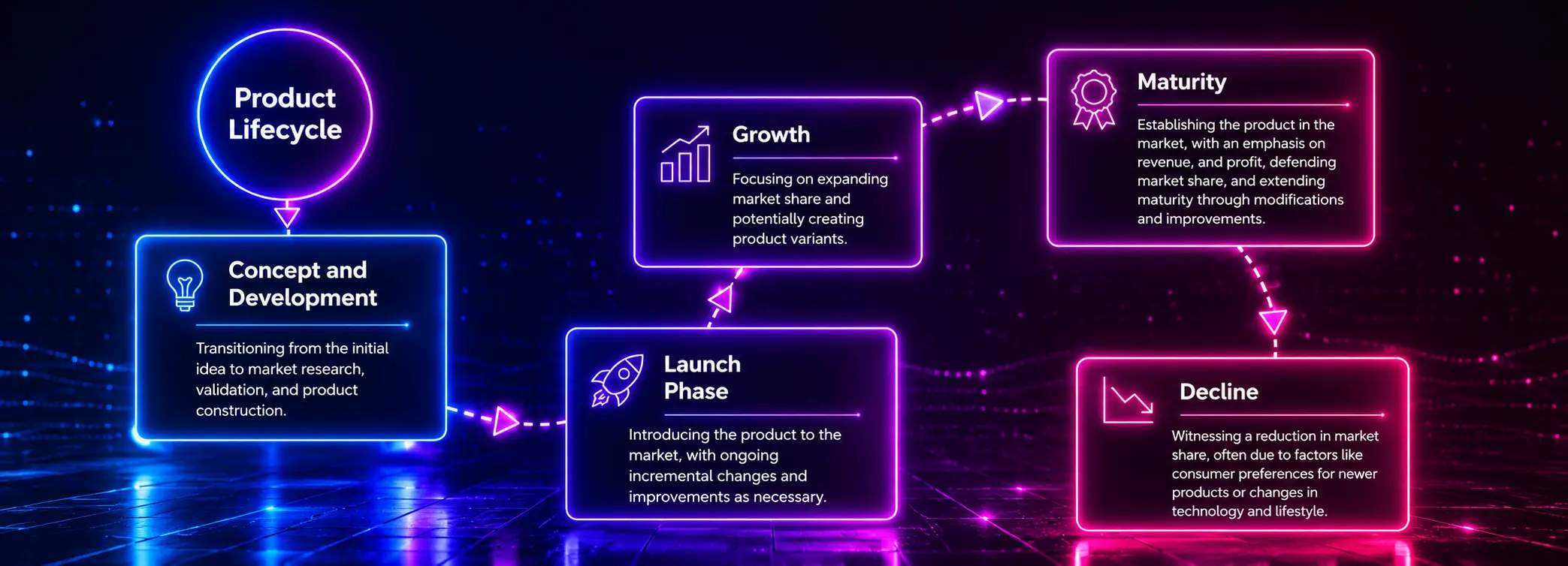
The product lifecycle is a conceptual framework that delineates the various stages a product undergoes from its inception and development through to its growth, maturity, and eventual decline or replacement. This model is instrumental in guiding business strategies and decision-making processes, influencing choices related to promotion, pricing, marketing development, and cost management. By recognizing the current stage of a product’s lifecycle, businesses can tailor their approach to effectively address the unique challenges and opportunities in each phase.

Agile Product Lifecycle Management  

From inception to design, manufacturing, and end-of-life, PLM software provides comprehensive support, enabling organizations to bring their products to market more efficiently and effectively. Let’s see how: 

Individuals and interactions over processes and tools: Agile values the human element in software development. Teams can prioritize collaboration, communication, and trust over rigid processes and tools. 

Working software over comprehensive documentation: Agile teams focus on delivering functional software rather than spending excessive time on upfront documentation. They believe that working code is the best form of documentation. 

Customer collaboration over contract negotiation: Agile emphasizes building close relationships with customers. Teams involve customers throughout the development process, gathering feedback and ensuring that the final product meets their needs. 

Responding to change over following a plan: Agile embraces change as a natural part of the development process. Teams are flexible and adaptable, ready to adjust their plans as requirements evolve. 

Benefits of Agile

  • Increased customer satisfaction: Agile’s iterative approach and emphasis on customer collaboration lead to products that better meet customer needs, resulting in higher satisfaction levels. 
  • Improved team productivity: Agile fosters a culture of collaboration and shared responsibility, leading to more efficient and effective teamwork. 
  • Reduced risk: Agile’s emphasis on incremental delivery and continuous feedback allows teams to identify and address potential issues early, reducing the risk of costly mistakes. 

Best Practices for Adopting Agile

  • Embrace short iterations: Break down projects into manageable sprints of two to four weeks. 
  • Involve customers in the process: Gather feedback from customers throughout the development cycle. 
  • Emphasize cross-functional collaboration: Form teams with members from different disciplines to ensure diverse perspectives. 
  • Conduct regular retrospectives: Reflect on each sprint to identify areas for improvement. 
  • Commit to continuous learning: Stay up-to-date with the latest Agile methodologies and tools. 

Tools to Enhance Agile Adoption

Agile planning tools: Scrum.org, AgileCraft 

CI/CD tools: Jenkins, CircleCI, TravisCI 

Project management software: Asana, Trello, Jira 

User feedback and testing tools: UserTesting, Qualtrics, Hotjar 

CRM tools: Salesforce, Hubspot, Pipedrive 

Collaborative tools: Slack, Microsoft Teams, Google Workspaces 

How to improve Agile PLM

One of the core principles of agile is that the scope of a project is fluid. This means that the team can constantly reassess and refine the product vision based on customer feedback and market trends. As a result, agile product managers spend less time defining the product in advance and more time working with the development team to bring it to life one iteration at a time. 

Avoid a ‘Lift-and-Shift’ Approach 

Simply migrating existing on-premises PLM solutions to the cloud without re-engineering processes can hinder the realization of the full potential of cloud PLM. Instead, take the opportunity to re-evaluate and refine your PLM processes to align them with cloud-based capabilities. 

Undergo a Comprehensive Transformation 

Embrace a holistic transformation approach rather than incremental changes when adopting cloud-based PLM. This ensures that your organization fully leverages the benefits of cloud PLM, including access to cutting-edge technologies like digital twins, digital threads, AI, IoT, and high-performance computing. 

Adopt Out-of-the-box Processes 

Many leading cloud PLM solutions offer out-of-the-box processes that are based on industry best practices. Utilizing these pre-built processes can streamline your PLM operations, ensure alignment with industry standards, and simplify the implementation of updates. 

By embracing these strategies, organizations can effectively harness the power of cloud-based PLM to enhance their product development agility, deliver innovative products to market faster, and gain a competitive edge.


Conclusion

The Agile product lifecycle has become the gold standard for software development, embraced by organizations of all sizes and industries. Its emphasis on adaptability, collaboration, and continuous improvement has led to the delivery of high-quality products that meet customer needs, resulting in greater success and satisfaction. As the pace of technological change continues to accelerate, Agile principles will remain essential for organizations seeking to thrive in the ever-evolving software landscape.  

Magento vs WordPress – Which Ecommerce Platform Suits You?

Back in the day, making your own unique website could cost a fortune, requiring expensive software developers. However, the landscape has evolved significantly, and thanks to the rapid advancements in technology, you now have the opportunity to craft stunning, high-performance ecommerce websites without breaking the bank, all by harnessing the capabilities of dedicated ecommerce platforms. The ecommerce app development sector is constantly evolving, offering retailers new opportunities to enhance their online presence and boost sales. In a world of more people embracing online commerce day by day, having a robust and flexible platform is essential for businesses to thrive.  

Magento and WordPress, two powerful platforms, have significantly impacted the digital landscape across different industries. While Magento specializes in robust ecommerce solutions, WordPress has found its niche in versatile content management, serving as pillars of support for businesses and individuals in the online realm. Hiring an ecommerce development company is a strategic move for businesses looking to establish a robust online presence and optimize their digital sales channels. Let’s take a closer look at the specific factors to consider when deciding between Magento and WordPress for your business needs. 

What is Magento? 

Magento is a specialized ecommerce platform designed with a robust set of built-in ecommerce features such as product management, shopping cart functionality, and payment processing. On the other hand, WordPress is a versatile content management system (CMS) that requires a plugin like WooCommerce to add ecommerce capabilities.  

Pros: 

  • Powerful features: Magento is renowned for its robust set of ecommerce features. It provides advanced inventory management, product catalog options, and a wide range of marketing tools. It’s ideal for large or complex online stores with extensive product offerings. 
  • High scalability: Magento can handle large volumes of products and traffic. It’s suitable for businesses that expect rapid growth and expansion. 
  • Customizability: Magento allows for deep customization, enabling you to tailor your online store to your specific needs. In that way, you can create a highly unique and personalized shopping experience. 
  • Strong security features: Security is a priority for Magento. It offers built-in security features to protect your online store against cyber threats and data breaches. 

Cons: 

  • Complexity: Magento is known for its steep learning curve. It can be challenging for beginners to set up and manage. Technical expertise is often required for effective usage. 
  • Technical expertise: To harness the full potential of Magento, you’ll likely need developers or technical experts to handle the setup, customization, and maintenance. 
  • Cost: Magento can be expensive, not only in terms of software licensing but also because of the technical resources required for development and maintenance. 

What is WordPress? 

WordPress is a free and open-source content management system (CMS) that powers over 43% of all websites on the internet. WordPress is used in ecommerce by adding ecommerce functionality to existing WordPress websites using plugins. The most popular ecommerce plugin for WordPress is WooCommerce, which is a free and open-source plugin that allows users to create and manage online stores. It is known for its ease of use and flexibility, making it a popular choice for businesses of all sizes, including ecommerce businesses. 

To create an ecommerce website with WordPress, you will need to install a dedicated ecommerce plugin, such as WooCommerce or Easy Digital Downloads. These plugins add all the features you need to sell products online, including product management, shopping cart, checkout process, and payment processing. You can also customize the look and feel of your store using a WordPress theme. Thousands of free and premium WordPress themes are available now, in which many are specifically designed for ecommerce websites. 

Pros: 

  • User-friendly: WordPress is well-known for its user-friendly interface and is accessible to users with varying levels of technical expertise. 
  • Affordable: WordPress itself is free, and many of its themes and plugins are also affordable or free, making it a cost-effective choice for small businesses and startups. 
  • Wide range of themes and plugins: WordPress offers a vast library of themes and plugins, including the popular WooCommerce for ecommerce functionality. This flexibility allows you to easily extend and customize your online store. 

Cons: 

  • Requires plugins: While WordPress is highly flexible, it relies on plugins like WooCommerce for ecommerce functionality. This means that to create a robust online store, you’ll need to install and configure additional components. 
  • Performance concerns: If not configured properly, WordPress can suffer from slower performance and instability, especially with a large number of plugins or high traffic. 
  • Security risks: WordPress is a common target for cyberattacks, and security is a concern if you don’t actively maintain and secure your website. Regular updates and security measures are crucial.  

Magento vs. WordPress: Key Differences 

Now, let’s delve into the main differences between Magento and WordPress to help you make an informed choice: 

Ease of Use: WordPress boasts a more user-friendly interface compared to Magento. Setting up an online store, adding a blog, and managing the site’s pages are straightforward tasks in WordPress. 

Themes and Templates: Both platforms offer an array of themes and templates, but Magento’s enterprise-class themes are known for their advanced features, though they come at a higher cost. 

Plugins and Apps: WordPress has a larger library of plugins and integrations due to its generality, while Magento excels as a dedicated e-commerce solution. 

E-commerce: Magento offers advanced e-commerce features out of the box, making it ideal for medium to large stores. WordPress requires the addition of plugins and themes to match Magento’s capabilities. 

SEO: WordPress has an advantage in SEO, thanks to powerful plugins like Yoast and the ease of adding keyword-rich content. 

Security Features: Magento’s specialization in e-commerce provides inherent security benefits. It offers tight quality control over its third-party plugin ecosystem. 

Price: WordPress is more cost-effective compared to Magento. Magento’s advanced e-commerce features come at a premium price, even with open-source installations. 

Support & Community: WordPress boasts a larger community, while Magento offers robust official helpdesk support for its premium product. 

Choosing the Right Platform 

Magento is a suitable choice for businesses that: 

  • Require a comprehensive ecommerce platform with advanced features. 
  • Manage a large or complex product catalog. 
  • Plan to rapidly expand their business. 
  • Have the budget to hire web developers or ecommerce experts for setup and maintenance. 

WordPress, on the other hand, is a good fit for businesses that: 

  • Are starting small and do not need extensive ecommerce features. 
  • Seek an easy-to-use and cost-effective platform. 
  • Have budget constraints. 
  • Wish to create a content-rich website alongside their online store. 

Large and successful ecommerce businesses, such as Nike, Samsung, The North Face, Warby Parker, Birchbox, Victoria’s Secret, and The Home Depot, all of which utilize Magento for their online operations.


Conclusion 

In conclusion, when it comes to choosing between Magento and WordPress for your ecommerce needs, Magento often stands out as the superior choice. With its robust and specialized features, high scalability, and strong security measures, Magento excels in catering to the demands of large and complex online stores. While WordPress is a versatile platform known for its user-friendliness, it typically requires additional plugins like WooCommerce for full ecommerce functionality.  

What is Penetration Testing?

What is Penetration Testing?

Penetration testing, often referred to as pen testing, is a comprehensive security assessment methodology used to evaluate the security of a computer system, network, or application. It involves simulated attacks by authorized professionals to identify vulnerabilities and weaknesses that could be exploited by malicious hackers. The primary goal is to uncover and rectify security flaws before they can be compromised by cybercriminals. 

Types of Penetration Tests

Penetration tests come in several flavors, each designed to assess different aspects of an organization’s security posture. Here are some common types of pen tests: 

  • Open-box Pen Test: Also known as a “white-box” test, this approach provides the tester with full knowledge of the system’s architecture and source code. This enables a deep analysis of vulnerabilities and their potential impact on the system. 
  • Closed-box Pen Test: In contrast to the open-box test, a closed-box test, or “black-box” test, simulates an attack by a threat actor with no prior knowledge of the target system. This helps evaluate an organization’s ability to detect and respond to unknown threats. 
  • Covert Pen Test: This type of test emulates a stealthy, subtle attack where the tester tries to avoid detection, mimicking advanced persistent threats (APTs). Covert pen tests assess the organization’s ability to detect and respond to subtle breaches. 
  • External Pen Test: Focusing on external-facing assets, such as web applications, external pen tests aim to uncover vulnerabilities that malicious actors might exploit from outside the organization. These tests simulate attacks like SQL injection or cross-site scripting. 
  • Internal Pen Test: Internal pen tests concentrate on the inside of an organization’s network and systems, mimicking threats that could originate from within the organization. This helps identify weaknesses in internal security measures. 

Benefits of Penetration Testing

Penetration testing offers numerous benefits that contribute to an organization’s overall cybersecurity posture: 

  • Identifying Weaknesses: Pen tests help organizations uncover vulnerabilities and weaknesses that may not be apparent through traditional security assessments. 
  • Evaluating Controls: They determine the effectiveness of existing security controls, such as firewalls, intrusion detection systems, and access controls. 
  • Regulatory Compliance: Many industries and regions have specific data privacy and security regulations. Penetration testing helps organizations ensure compliance with standards like PCI DSS, HIPAA, and GDPR. 
  • Quantitative and Qualitative Insights: Pen tests provide both qualitative and quantitative data on an organization’s security posture. This data can be used to make informed decisions about budget priorities for improving security. 
  • Preventing Cyber Incidents: By identifying and mitigating vulnerabilities before malicious actors exploit them, pen tests help organizations prevent costly and reputation-damaging cyber incidents. 

The Importance of Penetration Testing in the Cybersecurity domain 

The world of cybersecurity and penetration testing is inextricably linked. Cybersecurity is the overarching field dedicated to safeguarding digital assets, data, and systems from cyber threats. Penetration testing is a pivotal component within cybersecurity, as it proactively identifies vulnerabilities and security gaps, serving as an essential tool for securing an organization’s digital infrastructure. 

Consider the DevSecOps Consulting Services as a prime example of how penetration testing integrates into the broader context of cybersecurity. DevSecOps focuses on the integration of security practices into the DevOps pipeline, ensuring that security is not an afterthought but an integral part of the development process. Penetration testing is a critical aspect of this approach, helping DevSecOps teams identify and address security issues throughout the development cycle. Organizations rely on DevSecOps consulting services to incorporate penetration testing into their DevOps workflows seamlessly, enhancing their security posture. 

To better understand the real-world impact of penetration testing, let’s explore a hypothetical scenario in the financial industry. A leading bank, keen on enhancing its security posture, decided to undergo a comprehensive penetration test. The objective was to ensure that its digital assets, including customer data, financial transactions, and critical infrastructure, were secure. 

The bank opted for an external penetration test, focusing on its online banking platform, mobile apps, and website. The pen testing team, equipped with the latest tools and methodologies, initiated the test. 

During the assessment, they discovered a critical vulnerability in the web application, which could potentially allow attackers to execute arbitrary code on the server. This could result in unauthorized access to customer accounts, financial theft, and a severe breach of customer trust. 

The bank’s security team promptly addressed the issue, patching the vulnerability and enhancing their security controls. Subsequent penetration tests confirmed that the flaw had been remediated successfully. This proactive approach prevented a potential cyber incident that could have led to financial losses, regulatory penalties, and damage to the bank’s reputation. 

In this scenario, penetration testing not only protected the bank’s assets but also supported its compliance with financial industry regulations. It showcased the significance of incorporating penetration testing into cybersecurity practices, reinforcing the organization’s digital defenses. 

In conclusion, penetration testing is a vital component of modern cybersecurity strategies. In a world where digital transformation services are prevalent, organizations must stay one step ahead of cyber threats. Penetration testing helps them do just that by identifying and mitigating vulnerabilities, assessing the robustness of security controls, and ensuring regulatory compliance. By proactively addressing security flaws, organizations can protect their digital assets, maintain customer trust, and navigate the ever-evolving landscape of cybersecurity with confidence. Whether you’re in DevSecOps consulting services or any other industry, penetration testing is an invaluable tool in the fight against cyber threats.