




Top Software Development Models and Methodologies

The importance of software development models cannot be overstated in today’s technology-driven world. These models serve as roadmaps that guide the entire software development process, from inception to deployment. Software development services are significant for businesses as they are intertwined with the growth of software development models, contributing to their adaptation and evolution to meet changing industry demands. They provide structure, methodologies, and best practices that streamline development, enhance collaboration, and ensure the delivery of high-quality software products. Whether it’s the precision of the Waterfall Model, the adaptability of Agile methodologies, or the risk management of the Spiral Model, choosing the right model from the top software development models is paramount to project success. By aligning development efforts with these models, organizations can increase efficiency, reduce errors, and ultimately meet the evolving needs of their customers and stakeholders.

DevSecOps

DevSecOps is a software development approach that integrates security practices into the DevOps (Development and Operations) process. It aims to make security an integral part of the software development lifecycle rather than a separate phase that comes after development is complete. In DevSecOps, security considerations are woven into every stage of the software development pipeline, from planning and coding to testing and deployment. This approach emphasizes automation, collaboration, and continuous monitoring to identify and mitigate security vulnerabilities and threats early in the development process. Its set of practices integrates security into the software development lifecycle (SDLC) by automating security checks and processes, integrating security testing into the CI/CD pipeline, fostering a culture of shared responsibility among developers, operations teams, and security teams, moving security earlier in the development process, and continuously monitoring for security threats and vulnerabilities. DevSecOps helps organizations build secure software more quickly and reliably, while reducing the risk of security breaches.

NoOps

NoOps, short for “No Operations,” is an approach to software development and deployment that aims to minimize the need for traditional IT operations tasks such as server provisioning, configuration management, and manual scaling. The goal of NoOps is to automate these operations to the extent that developers can focus solely on writing and deploying code without being directly involved in managing infrastructure. This cloud-native software development and deployment automates and streamlines all aspects of application lifecycle management (ALM), including infrastructure provisioning, application deployment, and monitoring. It relies heavily on automation, self-service, serverless computing, CI/CD pipelines, and automated monitoring and alerting systems to reduce manual intervention, improve efficiency, and deliver a number of benefits, including increased productivity, reduced costs, improved agility and scalability, and enhanced security and reliability.

It’s important to note that while the concept of NoOps suggests a reduction in the need for traditional operations roles, it doesn’t necessarily mean there are no operations responsibilities at all. Rather, the focus shifts to building and maintaining automation tools and ensuring that applications and infrastructure are designed with resilience and scalability in mind.

Low-code and No-code

Low-code and no-code are software development approaches that aim to simplify the application development process by reducing the amount of manual coding required. These approaches are

particularly valuable for organizations looking to accelerate software development and make it more accessible to individuals with varying levels of technical expertise.

Here’s a brief overview of both low-code and no-code development:

Low-Code Development:

Low-code development is a rapid application development (RAD) approach that allows developers to create applications with minimal hand-coding by using a visual development environment and pre-built components. It is a powerful tool that can be used to accelerate the development of software applications, particularly for businesses that need to develop applications quickly and efficiently without having to invest in a large team of developers.

No-Code Development:

No-code platforms take simplification a step further by enabling users with little to no coding experience to build applications.These platforms offer a highly visual interface and require little to no coding. Users can often create applications using simple logic and configuration. It empowers non-technical users, such as business analysts or citizen developers, to create applications to meet specific needs.

Key advantages of low-code and no-code development include faster development, cost efficiency and rapid prototyping. While low-code and no-code platforms simplify development, they may not be suitable for highly complex or specialized applications.

In addition to the new models listed above, there are also a number of existing models that are being adapted to meet the needs of modern software development.

Waterfall Model

The Waterfall Model is a traditional and linear approach to software development that consists of a sequence of clearly defined phases, each building upon the deliverables of the previous one. It is called the ‘Waterfall’ model because the progress goes in one direction, like a waterfall, and each phase must be completed before the next one begins.

The Waterfall Model is a sequential software development model that consists of six phases: requirements, system design, implementation, testing, deployment, and maintenance. It is a well-established and widely used model, particularly well-suited for projects with well-defined requirements.

Spiral Model

The Spiral Model is a software development process model that combines components of both iterative development and the Waterfall Model. It was proposed by Barry Boehm in 1986 and is designed to address the limitations of the Waterfall Model. It embraces the concept of iteration, allowing for multiple cycles aka ‘spirals’ within a project. Feedback loops are integral in this model, with each spiral culminating in a thorough review, enabling stakeholders to provide required input for subsequent iterations. The model promotes progressive elaboration, gradually refining and enhancing the software product with each spiral. Its adaptability makes it well-suited for projects with evolving or ambiguous requirements, while its maturity levels ensure a comprehensive and refined final product. This model is often used for large and complex software development projects where risk management, flexibility, and the ability to accommodate changing requirements are critical. It offers a structured yet adaptive approach to development. However, it can also be more resource-intensive and time-consuming due to the repeated cycles and emphasis on risk assessment and management.

Rational Unified Process (RUP)

The Rational Unified Process (RUP) is a comprehensive software development model and framework created by Rational Software, now a part of IBM. RUP is designed to provide structure and guidance to software development teams, with a strong focus on iterative development, best practices, and software engineering principles. RUP is use-case driven, focusing on capturing end-user perspectives. It’s architecture-centric, promoting robust system architecture early on. It encourages component-based development and the reuse of software components. RUP incorporates industry best practices like code reviews and continuous integration for quality assurance. This comprehensive approach enhances software development efficiency and quality. However, it can also be perceived as relatively heavyweight and complex, which may make it less suitable for small or straightforward projects.

Lean Software Development

Lean software development is a set of principles and practices derived from lean manufacturing and lean thinking. It is rooted in the idea of doing more with less and focusing on what truly matters to customers. It focuses on efficiency and delivering what customers truly value. It eliminates wasteful activities, like excessive paperwork and delays, to make operations smoother. In this model, work is pulled by teams based on customer demand, rather than being pushed onto teams without considering capacity or priorities. Everyone on the team is empowered to make decisions and work together. Lean makes software development more efficient and customer-friendly.


Conclusion

Software development models have evolved to meet the dynamic demands of the industry. The future holds continued innovation, with models integrating AI, automation, and data-driven decision-making. As software complexity grows, models will focus on scalability, security, and sustainability. Collaboration and customer-centricity will remain central to model development, ensuring successful software delivery in the digital age.

Usability Testing – The Complete Guide

Usability testing is a method for evaluating a product by testing it with actual users who will use the product. This is achieved by observing the users’ behavior as they interact with your product. Through this process, we can identify areas where they struggle, experience frustrations, or encounter difficulties in completing specific tasks.

Usability testing holds significant importance because it allows designers and developers to uncover numerous design issues and gain insights into user behavior and preferences while using the product. Additionally, it helps identify opportunities for improving the design by addressing issues in the early stages of the design process.

Usability Testing – The Complete Guide

When to Conduct Usability Testing

Usability testing can be conducted in various phases:

1.Before Design

Usability studies in the pre-design phase are suitable when you have an early concept of the product and a tangible prototype for users to test. For example, if you’re developing an app and have a clear idea of its purpose, usability testing can be initiated. However, ensure that a prototype is available for user testing to identify potential usability issues.
Another scenario for pre-design testing is when you plan to redesign an existing product by addressing current user pain points.

2.During Design

Usability testing can also occur during the design phase, playing a crucial role in the iterative design process. It enables the evaluation of the usability of design concepts, identification of potential issues, and informed design decision-making.

3.Post Launch

After the product launch, usability testing helps understand how users interact with the product in the real world. It provides insights into whether users encounter difficulties while using the product.

Core Elements of Usability Testing

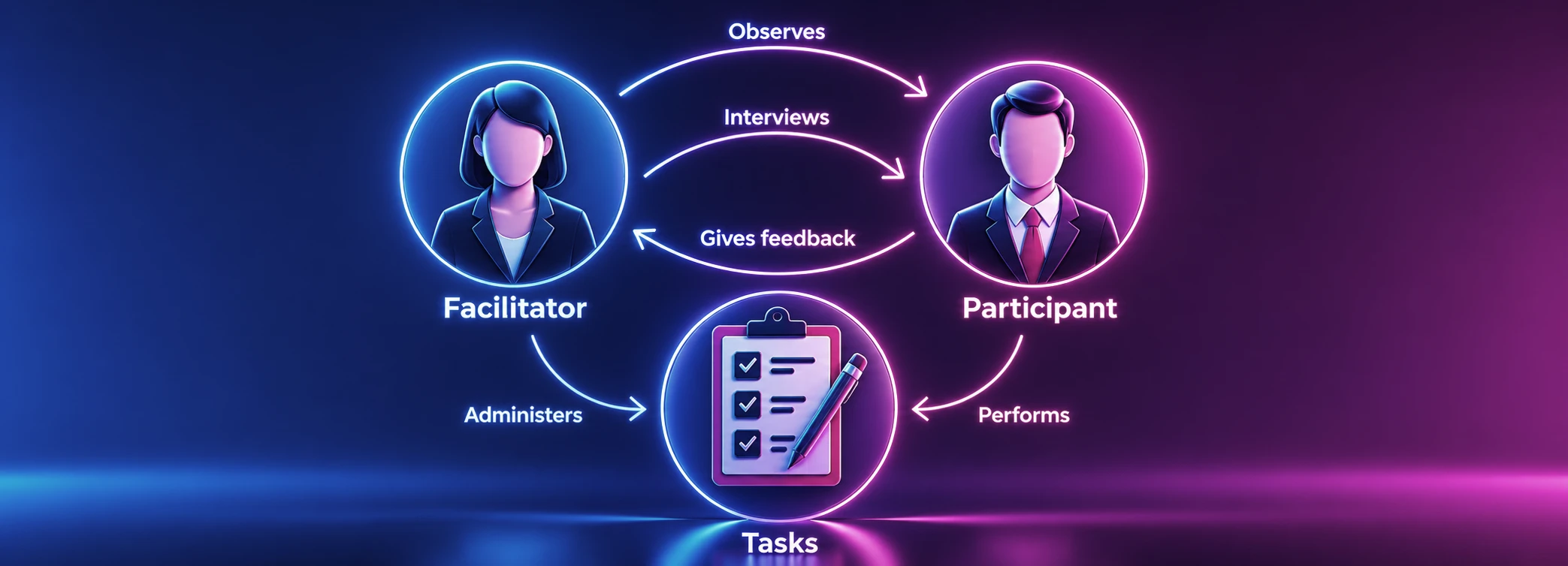
There are many diverse types of usability testing, but the core elements in the most usability tests are;

Usability Testing – The Complete Guide

Usability testing comprises various elements, but the core components include:

1. Facilitator

The role of a facilitator in usability testing is pivotal for ensuring a smooth and productive testing session. The facilitator sets up the testing environment with the necessary equipment, software, and materials. They also welcome participants and establish rapport to create a positive testing environment that encourages honest feedback.

The facilitator explains the testing process to participants, emphasizing its purpose, and guides them through each task. During testing, the facilitator encourages participants to vocalize their thoughts and feelings as they interact with the design. Observations are made on participants’ behavior, comments, and any difficulties they encounter. The facilitator ensures the testing session stays on track and that participants complete required tasks within the allotted time. They can provide additional guidance if participants encounter difficulties. After the session, the facilitator thanks the participants and addresses any questions or concerns.

2. Participants

Participants should represent realistic users of the product or service under study. They may be current users of the product or have a similar background to the target user group. Participants are often encouraged to ‘think aloud’ during usability testing, narrating their actions and thoughts to understand their behaviors, goals, thoughts, and motivations.

3. Tasks

In usability testing, tasks are the primary components that participants perform to assess the product’s usability. These tasks simulate real-world scenarios and user interactions. The choice of tasks depends on the goals and objectives of the usability test.
Common usability testing tasks include onboarding processes (e.g., registration) and scenario-based tasks (e.g., booking a flight, or purchasing a product).

Usability Testing Environment 

Usability Testing – The Complete Guide

The above image demonstrates a typical in-person usability testing environment consisting of a participant seated on the left side and a facilitator on the right side. The facilitator explains tasks to the participant, who uses a laptop with screen recording software and a webcam to capture facial expressions and behaviors. The facilitator guides the participant through tasks, takes notes, and listens to participant feedback.

 Remote Usability Testing  

There are two types of remote usability testing:

1. Moderated

In moderated testing, participants and facilitators are in different physical locations. Facilitators interact with participants through screen-sharing software like Teams, Go-To-Meeting, or Skype. This approach allows facilitators to build rapport, guide participants, and ask questions in real time.

2. Unmoderated

Unmoderated testing lacks facilitator interaction. Instead, facilitators use remote testing tools to assign tasks to participants. Participants complete tasks at their convenience. After completing a task, the testing tools provide recordings and task data to researchers. Unmoderated testing offers the advantage of flexibility and participant comfort, allowing for honest feedback.

How To Conduct Remote Usability Testing

1. Setting up the environment

  • Begin by building rapport with participants to ensure their comfort, which encourages honest feedback.
  • Express gratitude to participants for their valuable time in participating in the usability study.
  • Seek permission to video record the testing session.
  • Explain the tasks participants will perform.
  • Remind participants to provide honest feedback for design improvement, emphasizing that they are not being tested.
  • Avoid forcing participants to complete tasks; the facilitator’s role is to gather information for a more user-friendly product.

2. Data capture

  • Gather basic participant information, such as age and location.
  • Record the device used for interacting with the design.
  • Track the time taken to complete each task.
  • Document participant comments while using the product.
  • Observe participant actions and gestures.
  • Note questions participants ask during task completion.
  • Record suggestions and recommendations from participants.

Participants Data Capturing Form

Usability Testing – The Complete Guide

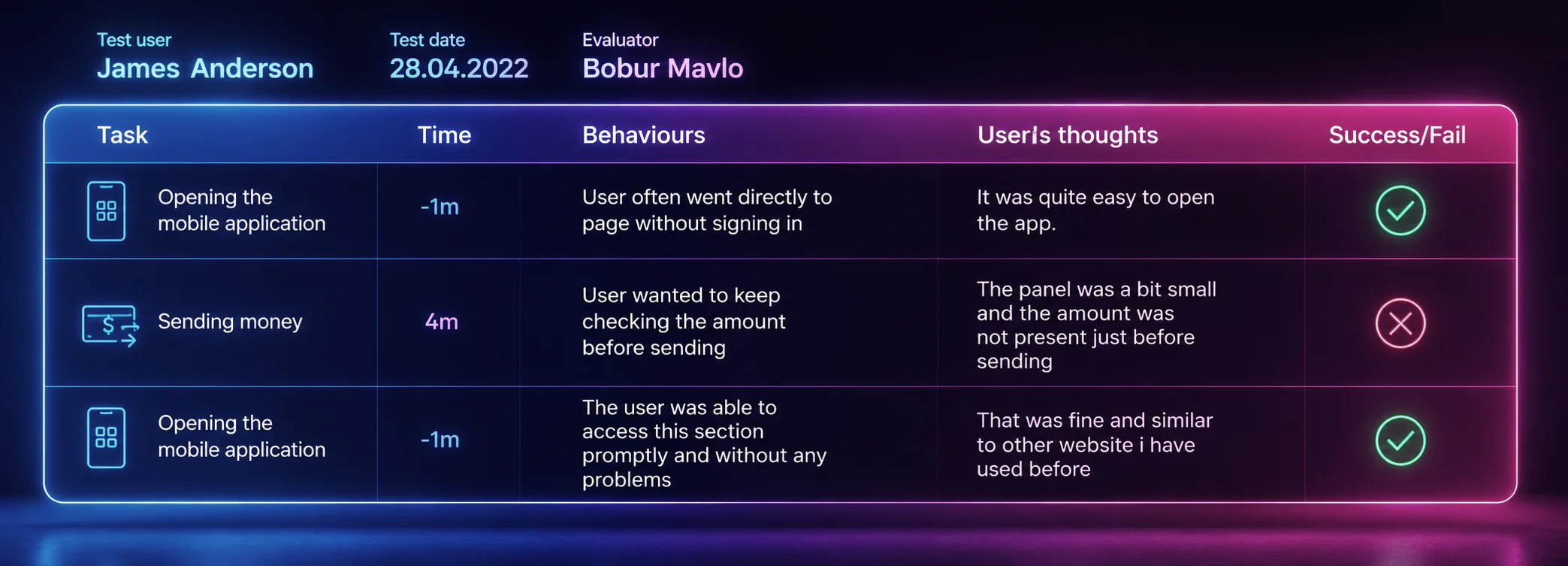
This is an example of a user testing form. Through this form the facilitators are capturing the user’s feedback against each task they are asked to perform.

The above image includes task details such as:

  • Recording the time taken by the user to complete each task.
  • Opening mobile applications, sending money, changing passwords, etc.
  • Observing and documenting user behavior during each task.
  • Collecting user feedback and thoughts on each task.
  • Assessing whether each task was successfully completed or resulted in a failure.

Based on the findings from usability testing, the design team should iterate on the design and repeat the testing process to evaluate the effectiveness of the changes. This iterative process leads to a more user-friendly product.

In conclusion, usability testing serves as an indispensable tool for product evaluation. By involving real users in the process, it uncovers areas of struggle, frustration, and difficulty within the product’s design. This practice not only aids designers and developers in identifying and rectifying issues but also provides profound insights into user behavior and preferences. Early problem detection through usability testing reveals valuable opportunities for enhancing the design, ultimately creating a more user-centric and effective product.

Impact of Teradata on Enterprise Data Warehousing Strategies

Teradata’s reach extends globally, collaborating with thousands of experts and partners from diverse sectors and industries. When choosing Teradata as your data warehousing solution, it can efficiently manage the data in your enterprise data warehouse.

Imagine you work for a multinational corporation with an extensive network of operations spanning across continents. Your organization deals with an enormous amount of data daily, from sales figures and customer interactions to supply chain logistics and financial records. Keeping this data organized, accessible, and insightful is not just a priority; it’s a necessity for making informed decisions. Teradata will be a game-changer here.

Teradata’s journey in the world of data began more than 40 years ago when it came into being as a collaborative effort between Caltech and Citibank back in 1979. In its early years, Teradata’s primary focus revolved around crafting data analytics hardware solutions. Over time, however, it evolved, with a significant shift in emphasis towards software development. Today, while Teradata still occasionally delves into hardware, like the introduction of VantageCore IntelliFlex in 2016, its main heartbeat is in the realm of software innovations. Around 2018, Teradata made a pivotal pivot, steering its focus towards the exciting world of cloud analytics. This transition has proved to be a game-changer, propelling Teradata to the forefront of cloud-based data analytics. Today, it continues to flourish and make waves, drawing upon its wealth of experience and expertise in the ever-evolving data analytics and cloud technology.

What is Teradata?

Teradata plays a vital role in making Enterprise Data Warehousing work seamlessly by providing the infrastructure and tools needed to manage your data effectively, helping your business make data-driven decisions and thrive in the competitive toy market. Teradata provides a robust platform to store, organize, and analyze all your sales, inventory, and customer data in one place. It’s as if Teradata transforms your data into a high-tech repository where you can quickly access, search, and retrieve any piece of information you need. What sets Teradata apart is its unparalleled enterprise-grade scalability, allowing businesses to expand across all dimensions simultaneously. This means you can effectively manage the massive data workloads that the cloud-based future demands.

Why Teradata

Full Suite for Data Warehousing:

Teradata provides a comprehensive suite of services tailored for data warehousing. This means it’s equipped with the necessary tools and capabilities to efficiently store, manage, and analyze large volumes of data, making it a one-stop solution for data-driven organizations.

Open Architecture:

Teradata’s system is built on an open architecture, ensuring it remains adaptable to technological advancements. As faster devices and technologies become available, they can seamlessly integrate with the existing architecture, enabling organizations to stay current with hardware innovations without a complete system overhaul.

Managing Large Data Volumes with Speed and Precision:

Teradata’s specialty is handling large volumes of data with exceptional speed and precision. So, as you’re your business grows and you accumulate more data, Teradata ensures your data warehouse remains efficient and responsive, just like an expert librarian who keeps a library well-organized and easily accessible, no matter how many books you add. Teradata’s exceptional scalability allows it to handle vast amounts of data, with support for 50+ petabytes. This ensures that organizations can continue to grow their data assets without constraints, making it an ideal choice for businesses with ever-expanding data requirements.

Integration with BI Tools:

Teradata’s compatibility with a wide range of Business Intelligence (BI) tools makes it easy for users to access and analyze data. This flexibility empowers organizations to leverage their preferred BI tools for insights and reporting while relying on the robust data management capabilities of Teradata.

Single Point of Control:

Teradata simplifies database administration with a single point of control. Database administrators (DBAs) can efficiently manage the entire database ecosystem from one central location. This streamlines maintenance, optimization, and troubleshooting tasks.

Integrates On-Premises and Cloud Data for Advanced AI Insights:

It has the unique ability to utilize and seamlessly integrate data from both on-premises and cloud sources. This integration, in turn, opens the doors to a plethora of machine learning and artificial intelligence models, all geared towards delivering profound insights. It also offers flexibility in deployment options, allowing organizations to choose the setup that best suits their needs. Whether it’s on-premises, in the cloud, or a hybrid solution, Teradata ensures that users can access the same data consistently across different deployment environments.

Vantage and Cloud

Teradata offers two distinct offerings: Teradata Vantage and Teradata Cloud, each serving unique purposes.

Teradata Database is synonymous with the term Teradata Vantage. Teradata Vantage is a versatile analytics platform renowned for its adaptability, capable of deployment on-premises, in the cloud, or within hybrid environments. It boasts a wide array of functionalities encompassing data warehousing, data lakes, machine learning, and graph analytics.

On the other hand, Teradata Cloud represents a cloud-native iteration of the powerful Teradata Vantage. Managed comprehensively by Teradata itself, this solution is available through a subscription model. It is particularly appealing to organizations seeking to sidestep the complexities associated with in-house infrastructure management, offering a hassle-free alternative.


Conclusion

Teradata is a powerful player in the field of data analytics and management. While the specifics of its future developments may continue to evolve, it is likely to continue adapting to the changing landscape of data technology. This adaptation may include advancements in advanced analytics, data governance, and security, as well as a focus on industry-specific solutions, data integration, and global expansion to meet the diverse needs of its customers. Teradata’s future success will depend on its ability to innovate and stay relevant in the dynamic world of data management and analytics.

Impact of CESOP on European Payment Service Providers

In a world where e-commerce continues to flourish, European tax authorities have been facing a significant challenge: e-commerce VAT fraud. To combat this issue and ensure fair and efficient taxation within the European Union (EU), the EU has introduced the Central Electronic System of Payment Information, or CESOP. This regulation, which is set to go into effect in 2024, requires payment service providers (PSPs) to report specific payment data to local tax authorities for cross-border payments in euros. In this blog, we will delve into the details of CESOP, its objectives, and how it impacts PSPs, as well as its technological and operational implications. 

Understanding CESOP

CESOP, short for Central Electronic System of Payment Information, is a regulatory framework designed to address the problem of e-commerce VAT fraud within the EU. It obliges PSPs to report comprehensive payment data, including payer and payee information, for cross-border transactions involving euros. This data encompasses details such as names, addresses, VAT identification numbers, and bank information. The primary goal of CESOP is to equip tax authorities with the essential information needed to combat VAT fraud effectively. 

Key Points of CESOP

  • Cross-Border Payments in Euros: CESOP focuses on cross-border transactions conducted in euros. This specificity is crucial as it enables tax authorities to target the most common currency used in cross-border e-commerce within the EU. 
  • Fighting E-commerce VAT Fraud: E-commerce VAT fraud has been a longstanding issue, costing the EU billions of euros annually. CESOP aims to turn the tide by providing authorities with the necessary tools to identify and combat fraudulent activities effectively. 
  • Comprehensive Data Reporting: PSPs are required to report a wealth of information, including the names and addresses of both the payer and payee, VAT identification numbers, and bank details. This comprehensive data is critical for tracking and verifying cross-border transactions. 
  • Commencement Date: CESOP is set to become operational from January 1, 2024, marking the beginning of mandatory data reporting for PSPs. 

Benefits for Payment Service Providers (PSPs)

While CESOP imposes additional responsibilities on PSPs, it also offers several benefits for these financial institutions: 

  • Demonstrating Commitment: Compliance with CESOP regulations allows PSPs to demonstrate their commitment to combating VAT fraud. This can enhance their reputation and credibility in the financial industry. 
  • Fairness and Efficiency: CESOP contributes to ensuring fairness and efficiency within the EU’s VAT system. By reducing fraudulent activities, it helps maintain a level playing field for all businesses. 
  • Supporting Tax Evasion Reduction: PSPs play a pivotal role in supporting the EU’s mission to reduce tax evasion. By providing accurate and timely data, they contribute to the EU’s efforts to collect legitimate tax revenue. 

Who’s Impacted by CESOP?

CESOP’s reach extends to various stakeholders within the financial and e-commerce sectors: 

  • Banks: Banks are required to update their systems to accommodate data collection and reporting in accordance with CESOP. This involves revising customer onboarding procedures, updating reporting systems for quarterly data submission, implementing data validation processes, and training staff on CESOP compliance. 
  • Merchants: Merchants engaged in cross-border transactions must provide the necessary data, including VAT identification numbers and customer bank details, to PSPs. 
  • Marketplaces: Online marketplaces that facilitate e-commerce transactions are also affected by CESOP. They are responsible for submitting essential seller data to PSPs to ensure compliance with the regulation. 

Navigating the Technological and Operational Impact of CESOP Across Borders

The implementation of CESOP brings about significant technological and operational changes for payment service providers (PSPs), particularly banks, across a range of regions. Technologically, PSPs are required to adapt their systems to efficiently collect and report payment data as mandated by CESOP. This adaptation involves developing or updating data collection interfaces and seamlessly integrating them with their existing infrastructure. Ensuring the accuracy and completeness of the data collected is paramount, as any errors or omissions could compromise CESOP’s effectiveness in combating VAT fraud. 
Moreover, PSPs need to establish secure electronic reporting mechanisms to transmit sensitive financial information to the CESOP portal while upholding stringent data security and privacy standards. On the operational front, customer onboarding processes at banks must be revised to include the collection of essential data, such as payer and payee information, VAT identification numbers, and other pertinent details. To meet CESOP’s requirements, banks must also update their reporting systems to enable the quarterly submission of payment data, implement rigorous data validation processes to maintain data accuracy, and provide comprehensive training to staff to ensure full compliance. 

The impact of CESOP extends beyond the European Union (EU). While EU member states are at the forefront of compliance efforts, non-EU members, such as Iceland, Liechtenstein, and Norway, participating in the European Economic Area (EEA) are expected to align with CESOP regulations to maintain seamless cross-border financial operations with EU countries. Additionally, although the United Kingdom is no longer an EU member, it may choose to adopt similar regulations to facilitate smooth cross-border transactions with EU states. CESOP’s reach, therefore, spans regions connected to the EU, emphasizing its significance in the broader European financial landscape.  


Conclusion 

CESOP represents a significant step forward in the fight against e-commerce VAT fraud within the European Union. By requiring payment service providers to report detailed payment data for cross-border transactions in euros, CESOP equips tax authorities with valuable tools to combat fraudulent activities effectively. While the regulation places additional responsibilities on PSPs, it also offers benefits, such as the opportunity to demonstrate their commitment to fighting VAT fraud and supporting fairness and efficiency in the EU’s VAT system. 
As CESOP comes into effect in 2024, PSPs, including banks, merchants, and marketplaces, must adapt their operations and technology to ensure compliance. By doing so, they play a pivotal role in supporting the EU’s mission to reduce tax evasion and maintain a level playing field for businesses across borders. CESOP’s impact extends not only to EU member states but also to countries in the European Economic Area and potentially the United Kingdom, emphasizing its significance in the broader European financial landscape. 

How Cloud Engineering Transforms Modern IT Infrastructure

Modern IT infrastructure is like the foundation of a strong and efficient digital world. It’s the technology and systems that help computers, phones, and the internet work smoothly. Without it, our digital lives wouldn’t be as quick and reliable as they are today. Cloud engineering services play a pivotal role in enabling organizations to undergo a successful cloud transformation. As businesses recognize the tremendous advantages of migrating their operations to the cloud, a Cloud Solution Provider (CSP) becomes an essential partner in this journey. These dedicated providers offer expertise and support in implementing and optimizing cloud-based solutions, empowering businesses to unlock the full potential of cloud technologies. With their guidance, organizations can harness the scalability, agility, and cost-efficiency of the cloud, driving innovation and staying ahead in the digital landscape.


What is Cloud Computing

Cloud computing represents a transformative paradigm shift in the way we store, access, and utilize data and software applications. At its core, cloud computing enables users to save their data and applications on remote servers accessible via the internet. This eliminates the need for physical storage devices and local processing power. Essentially, the cloud becomes a virtual space where information resides.


Types of Cloud Computing

Cloud computing comprises three primary service models: 

Software-as-a-Service (SaaS): SaaS provides users with licensed software applications on a subscription or on-demand basis. This model, exemplified by offerings like Microsoft Office 365, enables users to access software from any device with an internet connection. It streamlines software distribution and updates, making it incredibly convenient for businesses and individuals alike. 

Infrastructure-as-a-Service (IaaS): IaaS offers a comprehensive suite of IT infrastructure components over the internet. This includes servers, operating systems, and storage resources. Leading IaaS providers such as IBM Cloud and Microsoft Azure empower organizations to forgo the capital expenses associated with purchasing and maintaining hardware and software. Instead, they can harness the flexibility and scalability of cloud-based resources on a pay-as-you-go basis. 

Platform-as-a-Service (PaaS): PaaS is the most intricate layer of cloud computing. It goes beyond delivering software; it provides a platform for creating and delivering software via the internet. While it shares similarities with SaaS, the fundamental difference lies in its role as a development environment. Prominent examples include Salesforce.com and Heroku, which offer platforms for building and deploying cloud-based applications.


Advantages of Cloud Computing

Cloud computing presents a wealth of advantages for individuals and businesses alike. Some key benefits include: 

Universal Accessibility: One of the most compelling advantages of cloud computing is the ability to access data and applications from anywhere with an internet connection. This level of accessibility allows users to seamlessly transition between devices, carrying their files and settings effortlessly. 

Data Security and Backup: Cloud services facilitate data security and backup. Files stored in the cloud are less vulnerable to loss due to hardware failures, as they are stored redundantly on multiple servers. In case of a local hard drive crash, cloud-based data remains accessible, serving as a reliable backup. 

Cost Savings: Cloud computing offers substantial cost-saving potential for businesses. Instead of investing in expensive server centers and maintaining IT infrastructure, companies can rely on fast internet connections and cloud services. This shift can significantly reduce operational expenses. 

Software Updates: Cloud-based software can be updated more swiftly and seamlessly than traditional methods involving physical media like discs or flash drives. For instance, Adobe Creative Cloud provides users with easy access to software updates and fixes via the internet. 

Scalability: Cloud services are highly scalable, allowing businesses to adapt to changing demands and scale resources up or down as needed. This scalability fosters agility and cost efficiency. 

Collaboration: Cloud computing promotes collaboration by enabling multiple users to access and edit documents in real-time. Services like Google Drive and Dropbox have become indispensable for collaborative work environments.


Challenges and Considerations

Despite its many advantages, cloud computing also poses certain challenges and considerations: 

Security Concerns and Data Loss: Storing sensitive data in the cloud can raise security concerns, as breaches can occur despite cloud providers’ robust security measures. Organizations must prioritize data encryption, two-factor authentication (2FA), and other security protocols to protect their data. Additionally, adequate backup and recovery strategies are essential to mitigate the risk of data loss, especially if encryption keys are compromised. 

Susceptibility to Disasters: Cloud data centers, while highly redundant, are not immune to natural disasters, power outages, and internal bugs. Disaster recovery plans are vital to ensure data availability during unforeseen events. 

Learning Period: Cloud technology requires a learning period for both employees and managers. Unintentional mistakes in configuring access controls or data sharing can have far-reaching consequences due to the interconnected nature of cloud systems.


What Cloud Computing Can Do For Your Business

Businesses adopt cloud computing in various ways. Some opt for a pure cloud model, where all applications and data reside in the cloud, providing maximum flexibility and scalability. Others can choose a hybrid approach, keeping critical data and applications on private servers while utilizing the cloud for supplementary resources. 

The applications of cloud computing extend across industries, with prominent use cases in streaming platforms.  

Audio and video streaming platforms store media files remotely, leveraging cloud computing to deliver seamless content to users. An example is Netflix. They gradually shifted from traditional data centers to utilizing cloud services, particularly Amazon Web Services (AWS). This move allowed Netflix to scale its streaming service rapidly, improve performance, and enhance user experiences, making it one of the early adopters and success stories of cloud computing. Popular platforms like Google Drive, Dropbox, OneDrive, etc. offer cloud-based storage solutions that facilitate file sharing and accessibility.


Security Measures

Protecting digital assets and data stored on cloud-based services requires a multifaceted approach. Key security measures include: 

When it comes to securing data in the cloud, several strategies play a crucial role. Two-Factor Authentication (2FA) is a fundamental step, requiring users to provide two forms of identification before accessing cloud services, enhancing user verification. Virtual Private Networks (VPNs) establish encrypted connections between users’ devices and cloud servers, ensuring data remains protected during transmission across potentially insecure networks. Data encryption, both in transit and at rest, serves as a foundational security practice, rendering data unintelligible to unauthorized access. To further safeguard cloud environments, Firewall Services are deployed to actively monitor and filter network traffic, preventing unauthorized access and malicious activities.


Conclusion

Cloud computing has revolutionized the way we store, access, and utilize data and software applications. Its three primary service models—SaaS, IaaS, and PaaS—offer unmatched flexibility and scalability. Businesses and individuals alike benefit from cloud computing’s universal accessibility, cost savings, and enhanced collaboration capabilities. However, cloud computing is not without its challenges, notably security concerns and data loss risks. Robust security measures and disaster recovery plans are imperative to mitigate these risks. In the business world, cloud computing has become a cornerstone of digital transformation, enabling organizations to streamline operations, scale resources, and enhance collaboration. Whether through streaming platforms or data storage solutions, cloud computing is ubiquitous and continues to shape our digital landscape. As technology evolves, so too will the landscape of cloud computing, ushering in new innovations, challenges, and opportunities.  

Digital Quality Engineering: A Comprehensive Guide

For organizations, having high-quality solutions is crucial, especially in this period of rapid change, where the digital transformation wave is sweeping across industries, and reshaping the way organizations operate and meet customer expectations.

This blog explores the indispensable role of Quality Engineering (QE) in the context of digital transformation, going beyond the basics to provide a comprehensive understanding of its significance. We will delve into how QE practices ensure smooth transitions, accelerate development, and elevate the overall customer experience, expanding upon the crucial aspects that drive success in this transformative journey.


Understanding Digital Transformation

Digital transformation isn’t merely about adopting new technologies; it represents a comprehensive overhaul of business processes, organizational culture, and customer interactions. Its objective is to harness the power of technology to optimize operations, enhance decision-making, and create exceptional customer experiences. This all-encompassing approach leverages data, analytics, cloud computing, artificial intelligence, and other digital tools to drive efficiency and innovation, reshaping businesses for the digital age.


The Need for Quality Engineering in Digital Transformation

Today’s organizations grapple with challenges like shortened development cycles, frequent updates, and the imperative of maintaining a seamless user experience. Quality Engineering emerges as the linchpin in addressing these challenges, ensuring the reliability, security, and performance of software and systems undergoing transformation. 

Quality Engineering is a multi-faceted discipline encompassing various principles and practices that enable organizations to achieve their digital transformation objectives: 

  • Continuous Testing: Continuous testing involves running tests at every stage of software development, from design to deployment. This ongoing process detects issues early, reducing the time and cost of fixing bugs and ensuring a more streamlined development cycle.
  • Test Automation: Test automation utilizes specialized tools and scripts to execute test cases automatically. This not only speeds up the development process but also increases test coverage, leading to more robust and reliable software.
  • Shift-Left Testing: In shift-left testing, testing activities are moved to the beginning of the SDLC, ensuring that issues are identified and resolved as early as possible. This approach minimizes the need for extensive rework later in the development process, saving resources and time.
  • Performance Testing: Quality Engineering focuses on performance testing to assess how software applications perform under various conditions. It helps identify and address performance bottlenecks, ensuring that the application can handle expected loads without degradation.
  • Security Testing: Security testing is a critical aspect of QE, aiming to identify and mitigate vulnerabilities that could compromise sensitive data. By prioritizing security, organizations can safeguard their digital assets and maintain trust with their customers.

Quality Engineering is a multi-faceted discipline encompassing various principles and practices that enable organizations to achieve their digital transformation objectives. Two key tenets of QE that deserve special mention are: 

Extreme Automation:

One of the pillars of Quality Engineering is extreme automation. Automation not only accelerates the testing process but also ensures repeatability and consistency in testing activities. QE leverages automation frameworks to streamline the execution of test cases, reducing manual intervention and human error. This not only saves time and resources but also allows teams to focus on more complex and strategic aspects of quality assurance. By embracing extreme automation, organizations can achieve higher test coverage, earlier defect detection, and faster feedback loops, all of which are essential for successful digital transformation.

AI and Cognitive Technologies:

In the digital age, Quality Engineering is also empowered by artificial intelligence (AI) and cognitive technologies. AI-driven testing tools and algorithms can analyze vast datasets to identify patterns, anomalies, and potential issues that may go unnoticed by human testers. Cognitive technologies, including machine learning and natural language processing, enhance test automation and predictive analytics. AI-powered chatbots and virtual assistants are revolutionizing customer support and user experience testing. By integrating AI and cognitive technologies into QE practices, organizations can not only improve the efficiency of testing but also gain valuable insights into user behavior, enabling them to make data-driven decisions that enhance digital offerings. 

Accelerating Time-to-Market

In today’s dynamic market, speed is a critical differentiator. Organizations must rapidly deliver products and features to meet customer demands and stay ahead of the competition. QE practices, such as test automation and continuous testing, significantly reduce testing and validation timelines. This accelerated time-to-market not only maintains competitiveness but also empowers organizations to capitalize on emerging opportunities, ensuring they are not left behind in the fast-paced digital race. 

Enhancing Customer Experience

Customer experience lies at the heart of digital transformation. Quality Engineering serves as the custodian of customer satisfaction by ensuring that digital solutions are user-friendly, responsive, and reliable. Through rigorous usability testing, performance testing, and user acceptance testing, QE contributes to the delivery of products that consistently exceed customer expectations. Recently, our innovative approach led to a 30% reduction in defect rates and a 25% faster time-to-market for one of our renowned clients. By integrating cutting-edge AI and automation into their development process, we helped them achieve unparalleled efficiency and product quality.

Ensuring Security and Compliance

In the digital realm, security and compliance are non-negotiable. As organizations digitize their operations, the threat landscape evolves, requiring vigilant protection. QE integrates security testing into the development process, identifying vulnerabilities early on and reducing the risk of data breaches and cyberattacks. Furthermore, it helps ensure that digital solutions align with industry regulations and standards, safeguarding both the organization and its customers. 

Continuous Improvement

Digital transformation is an ongoing journey, not a destination. Quality Engineering does not come to a halt after a successful implementation. It encompasses post-implementation phases that include monitoring, feedback collection, and continuous improvement. Through vigilant performance monitoring, insightful user feedback analysis, and comprehensive regression testing, QE teams ensure that digital solutions remain robust and responsive to evolving needs, maintaining their relevance and effectiveness.


Conclusion 

In the age of digital transformation, Quality Engineering is more than just a support function; it is the bedrock upon which successful digital initiatives are built. By incorporating QE practices, organizations can navigate the complex digital landscape with confidence, delivering high-quality solutions that accelerate time-to-market, enhance customer experiences, fortify security, and ensure compliance. This strategic approach not only drives current success but also positions organizations for a future of sustained innovation and competitiveness in an ever-evolving digital world. 

Impact of 5G on Product Engineering and IoT Solutions

The implementation of 5G technology has the potential to significantly contribute to digital transformation services and the economic growth of nations across the globe. The evolution from 1G to 5G has indeed brought about a revolutionary transformation in wireless technology, with significant implications for product engineering services. Each generation of wireless technology has brought improvements and innovations that have reshaped the way we communicate and interact with technology.

The deployment of the first 5G networks across the globe has ushered in a new era of connectivity and innovation. 5G networks empower product engineering services by facilitating machine-to-machine communication with lower prices, reduced battery consumption, and minimal latency compared to 4G. With features like Ultra-Wide Band (UWB) networks, 5G offers astounding bandwidths, enabling massive machine communication and extreme mobile broadband. Its low latency, high reliability, and energy efficiency make it a game-changer for product engineering and IoT. Engineers are at the forefront of designing and optimizing products that leverage the capabilities of 5G, enabling a new era of connectivity that promises to reshape industries and improve our daily lives in ways we have yet to fully comprehend.

The key components of 5G, including a dynamic Radio Access Network (RAN), a flexible Core Network (CN), network slicing, and the use of both high-frequency millimeter wave (mmWave) and lower-frequency sub-6 GHz bands, have together redefined how we communicate and interact within the digital world. Massive MIMO and small cells have hugely improved data speeds and coverage, while Network Function Virtualization (NFV) and Software-Defined Networking (SDN) enhance network flexibility and efficiency. This transformation extends to various sectors, from enabling real-time applications like autonomous vehicles and remote surgery with ultra-low latency to supporting the massive connectivity needs of the Internet of Things (IoT). With improved security, automation, and global standards, 5G has paved the way for innovative services and applications, shaping the future of technology in unimaginable ways.

Meeting the Demands of IoT Applications

IoT applications come with diverse performance requirements, ranging from data rate and latency to reliability and energy efficiency. 5G networks are poised to meet these demands efficiently, enabling the seamless operation of IoT devices across various industries.

The era of IoT brings a massive influx of data, often referred to as ‘Big Data.’ IoT-enabled devices continuously generate vast amounts of data that require storage, tracking, and analysis. They provide the bandwidth and low latency needed to harness the full potential of IoT-generated data.

Ultra-Reliability and Low Latency for Critical IoT

One of the standout features of 5G is its ultra-reliable and low latency communication (URLLC) capabilities. URLLC enables 5G networks to support critical systems, such as autonomous vehicles and industrial automation, with unprecedented reliability and responsiveness. In the near future, self-driving cars will take over our streets. These cars drive themselves using smart technology, and it’s like having extra free time during your commute. You can read, work, or just enjoy the ride while the car does all the work. It’s a new way of getting around that makes life easier and more interesting. This reliability is a cornerstone of 5G’s potential, offering a robust foundation for IoT solutions.

Applications in Smart Cities and Smart Homes

5G can turn our homes and the city we livein into a futuristic hub where everything is instant and interconnected, bringing the future closer than ever. 5G’s URLLC opens up new possibilities for enterprise IoT use cases, particularly in smart cities and smart homes. With 5G, your smart devices can communicate and respond in the blink of an eye, creating a seamless and connected living experience. In smart cities, 5G-powered IoT devices can efficiently manage traffic, reduce congestion, and enhance road safety. Moreover, in smart homes, the low latency and high reliability of 5G enable seamless online gaming and augmented/virtual reality experiences, creating immersive living environments.

Healthcare and Disease Management

The dense urban populations of cities underscore the need for improved healthcare services. 5G-enabled IoT solutions can monitor the health of city populations, providing invaluable data for emergency services and reducing overcrowding in healthcare institutions. This technology can elevate the quality of life for individuals with disabilities and chronic illnesses while also optimizing preventative healthcare measures.

Impact on Download Speeds and Streaming

5G revolutionizes download speeds, enabling lightning-fast data transfer from the internet to devices. This high-speed connectivity enhances user experiences, making it ideal for applications like video streaming, online gaming, and more.


Conclusion

In the future, 5G technology will revolutionize product engineering. With the tremendous speed and low latency of 5G networks, engineers and designers can collaborate in real time from anywhere in the world. This means faster development cycles and more innovative products. Imagine engineers remotely testing and fine-tuning products through augmented reality, or robots in factories instantly receiving updates and optimizing their operations. 5G is set to supercharge the entire product engineering process, making it more efficient, responsive, and dynamic than ever before.

In conclusion, 5G technology stands as a catalyst for innovation and transformation across industries. Its ultra-reliable, low latency capabilities, coupled with vast bandwidth and connectivity, make it the ideal choice for critical IoT applications. As 5G continues to evolve and expand, it promises to shape the future of product engineering and IoT solutions, driving progress and improving the quality of life for people around the world.

Key Principles of Modern Platform Engineering

In the fast-paced digital realm, where innovation constantly pushes the boundaries of what’s possible, a subtle yet powerful revolution is quietly taking place. Picture a world where lines of code weave stories of transformation, and digital platforms are not just tools but dynamic catalysts of change. This is the world of modern platform engineering, where elegance in design, developer empowerment, and a focus on automation converge to create a symphony of innovation. 

Elegance in Design

At the core of any robust platform lies an elegant design that seamlessly blends functionality with aesthetics. In the realm of modern platform engineering, microservices architecture reigns supreme. It encapsulates discrete functionalities that can be developed, deployed, and scaled independently. This orchestration of services optimizes efficiency and resilience, enabling platforms to gracefully evolve alongside technological advancements. 

Developer-Centric Philosophy: Empowering the Innovators

Modern platform engineering services resonates with a developer-centric ethos. By providing developers with self-service capabilities, platforms foster rapid innovation. Through the adoption of DevSecOps practices and self-service APIs, developers gain the agility to ideate, iterate, and create. The result is a virtuous cycle of innovation where developers become the architects of transformative change. 

Automation as an Art Form

The symphony of modern platform engineering is composed of automation. It orchestrates the deployment, scaling, and management of services. Automated provisioning and monitoring ensure that platforms remain robust and responsive, minimizing downtime and maximizing the user experience. This intricate choreography of operations liberates engineers to focus on crafting, refining, and pushing the boundaries of software. 

Resilience and Antifragility: Fortifying Against Disruption

In the face of chaos, modern platforms don’t just survive; they thrive. Resilience isn’t merely about bouncing back; it’s about learning, adapting, and growing stronger in the face of adversity. Antifragility takes it a step further, transforming disruptions into opportunities for improvement. Modern platform engineering employs strategies such as redundancy, graceful degradation, and fault tolerance to build systems that flourish under pressure. 

Scalability Beyond Horizons: Elevating Capacity and Performance

In an era of elastic demands, scalability isn’t a mere feature; it’s an absolute necessity. Modern platforms aren’t constrained by static boundaries; they have the ability to scale up or down to meet fluctuating workloads. Whether it’s vertical scaling for increased power or horizontal scaling for distributing the load, the seamless expansion of capacity keeps platforms agile and users satisfied. 

Security as a Core Tenet

Security is not an afterthought in modern platform engineering; it’s a central mission. Platforms are designed with security as a core principle, embracing concepts like zero-trust architecture, encryption at rest and in transit, and continuous security testing. Robust security isn’t a hindrance; it’s a bedrock that fosters trust, protecting users and their valuable data. 

Continuous Learning and Evolution

Modern platform engineering recognizes that mastery is a journey, not a destination. It embraces a culture of continuous learning, adapting, and evolving. Through regular retrospectives, performance assessments, and continuous integration and delivery, platforms refine themselves over time, embracing change as an opportunity to excel. 

Empathy-Driven Excellence: Crafting User-Centric Platforms

Modern platforms are more than just constructs of code; they are experiences that touch the lives of users. An empathy-driven approach ensures that platforms cater to users’ needs, seamlessly integrating into their workflows. User experience design and feedback loops empower platform engineers to create not just functional tools, but intuitive, delightful experiences. 

As we traverse the landscapes of modern platform engineering, these key principles illuminate the path toward excellence. They define a world where artistry and technology converge, where engineering isn’t just about building platforms; it’s about crafting orchestras of innovation that resonate with the pulse of progress. In this symphony of ideas and execution, modern platform engineering isn’t just a discipline; it’s an art form that propels us forward into a future limited only by the boundaries of our imagination.