





Fraud Detection Software

Fraud Detection Software

In the ancient Greek tale, the mighty city of Troy fell not to the might of swords but to the cunning of deception—a wooden horse, seemingly a gift, hid their downfall within. Today, the digital world faces its own Trojan Horses, where threats are veiled in the guise of legitimacy. Fraudulent activities—fake accounts, disguised transactions, and manipulated data—seek to infiltrate systems, much like the Greeks infiltrated Troy.

Fraudulent activities can strike without warning, affecting businesses of all sizes. Picture this: a multinational retailer is processing hundreds of transactions every minute during a Black Friday sale. Among the legitimate purchases, there’s an unnoticed pattern – a series of small, irregular transactions being made with stolen credit card details. Before the business can intervene, the fraudulent activity escalates, resulting in financial losses and a breach of customer trust. This scenario isn’t just a hypothetical – it’s the reality many companies face today. As digital transactions surge, the urgency for robust fraud detection solutions becomes paramount. Businesses need more than just basic security measures; they need sophisticated fraud detection software that can anticipate, analyze, and prevent fraudulent behavior in real-time.


What is Fraud Detection Software?

Fraud Detection Software

Fraud detection software is a powerful solution tailored to uncover and combat deceptive activities across industries. It combines advanced algorithms, machine learning, and artificial intelligence to analyze vast amounts of data and detect anomalies or suspicious patterns. Fraud detection systems go beyond traditional monitoring methods by adapting to evolving fraud tactics, offering businesses a comprehensive shield against potential threats.

Applications Across Industries

Fraud detection software plays a critical role in safeguarding businesses and individuals from deceptive activities across various industries. Let’s delve deeper into how it serves each sector:

  1. Finance

Fraud detection software in the financial sector is designed to combat a variety of sophisticated fraudulent activities that threaten monetary transactions and institutional credibility. Key applications include:

  • Detection of Unauthorized Transactions: Advanced algorithms monitor transactional data in real-time, identifying anomalies such as unusual spending patterns, transactions from unverified locations, or suspiciously high withdrawal amounts. These mechanisms protect customers and financial institutions alike.
  • Prevention of Account Takeovers: The software flags attempts to access bank accounts using stolen credentials or devices, ensuring the integrity of user accounts. Behavioral biometrics and device fingerprinting add additional layers of security.
  • Credit Card Fraud Mitigation: Machine learning models analyze millions of transactions to identify potential credit card fraud. Features like instant alerts for unusual activity and dynamic authentication mechanisms enhance security.
  • Regulatory Compliance: Fraud detection systems also ensure adherence to Anti-Money Laundering (AML) and Know Your Customer (KYC) requirements, helping institutions meet stringent regulatory standards.
  1. E-Commerce

In the fast-paced e-commerce landscape, fraud detection software protects both merchants and customers from various threats that compromise trust and financial security.

  • Identifying Unusual Purchasing Patterns: The software analyzes transaction histories to detect bulk purchases or high-value transactions from unverified accounts, which are often indicators of fraud. Predictive analytics enhances the capability to thwart fraud attempts before they occur.
  • Detection of Fake Accounts: Fraudulent actors often create multiple fake accounts for abuse, such as loyalty program exploitation or posting fake reviews. Fraud detection tools use IP tracking, device identification, and behavior analytics to prevent account creation from suspicious sources.
  • Chargeback Fraud Prevention: Chargebacks, where customers claim refunds for purchases they actually received, are a common issue. Fraud detection software can differentiate between legitimate refund requests and fraudulent claims, protecting merchants from financial loss.
  1. Insurance

The insurance sector is particularly vulnerable to fraud due to the high monetary value of claims and the complexity of policy evaluations. Fraud detection systems aid insurers by:

  • Uncovering False Claims: Using data mining and pattern recognition, the software identifies red flags in submitted claims, such as inflated medical expenses or falsified accident details. Cross-referencing claims against historical data adds another layer of validation.
  • Screening Fraudulent Policy Applications: Fraud detection systems verify applicant information and detect inconsistencies, such as mismatched identities or manipulated financial documents, ensuring only legitimate policies are issued.
  • Minimizing Financial Risks: By preemptively identifying and rejecting fraudulent activities, insurers can reduce payouts to illegitimate claims, safeguarding their bottom line while maintaining fair practices for genuine policyholders.
  1. Healthcare

In healthcare, fraud detection software is instrumental in protecting both patient data and financial resources.

  • Prevention of Medical Billing Fraud: Fraudulent practices like upcoding (billing for more expensive procedures than performed) or billing for unrendered services can lead to significant financial losses. Fraud detection tools analyze billing codes and service patterns to detect such irregularities.
  • Protection Against Unauthorized Access: With sensitive patient information stored in electronic health records (EHRs), fraud detection software identifies unauthorized attempts to access these records. Multi-factor authentication, access logs, and anomaly detection ensure patient privacy.
  • Compliance with Healthcare Regulations: Tools align with regulations like HIPAA to monitor and report suspicious activities, ensuring healthcare providers stay compliant and secure.

The adaptability of fraud detection tools allows them to cater to the unique challenges of each industry, ensuring tailored protection and operational efficiency.

How Does Fraud Detection Software Work?

Fraud detection software works by combining advanced analytics, machine learning models, and AI-driven techniques to monitor and analyze data. This multilayered approach ensures accuracy and adaptability in identifying fraudulent activities.

How AI is Implemented in Fraud Detection Software?

AI plays a transformative role in fraud detection by enabling systems to learn from historical data and respond to emerging threats in real time. In contrast to rigid rule-based systems, AI-driven technology learns and adjusts to stay ahead of emerging fraud tactics.

Key AI Techniques in Fraud Detection:

  • Machine Learning: Employs algorithms trained on historical transaction data to recognize patterns indicative of fraud, such as unusually high purchase frequencies or transactions originating from flagged regions.
  • Deep Learning: Uses neural networks to analyze complex relationships within datasets. For example, deep learning can detect synthetic identities created to exploit financial systems by analyzing intricate behavioral patterns.
  • Natural Language Processing (NLP): Processes unstructured data, such as emails, customer reviews, or social media posts, to identify language patterns that suggest fraudulent intent.

AI-driven fraud detection systems can also incorporate reinforcement learning, allowing them to refine their detection capabilities by learning from feedback, such as false positives or overlooked fraud cases.

How Fraud Detection Software Prevents Fraud

Fraud detection software employs multiple layers of defense to mitigate risks:

  1. Early Identification of Suspicious Patterns: By comparing real-time transactions against historical data, the software detects unusual behaviors, such as deviations in purchase amounts or frequency, flagging them for review.
  2. Real-Time Monitoring and Blocking: Continuous transaction surveillance enables immediate intervention, such as blocking a suspicious credit card transaction before it is processed.
  3. Risk Scoring and User Authentication: Risk scoring dynamically evaluates each transaction’s likelihood of being fraudulent. High-risk activities may trigger additional authentication, such as OTP verification or biometric checks.
  4. Behavioral Analytics: Tracks user behavior, such as login times, IP addresses, and device types, to distinguish legitimate customers from fraudsters. For instance, a sudden change in device usage or location may prompt a security alert.
  5. Document Fraud Detection: Advanced software uses image recognition and machine learning to detect forged documents, altered signatures, or tampered invoices, safeguarding organizations from contractual and billing fraud.

These proactive measures ensure that businesses remain resilient against fraud, minimizing losses while protecting their reputation.


Tools for Developing Fraud Detection Software

Fraud Detection Software

Developing a sophisticated fraud detection solution requires a diverse set of tools, each serving a specific purpose in the detection process.

Programming Languages

Choosing the right programming language is crucial for building effective fraud detection systems:

  • Python: Celebrated for its simplicity and versatile library ecosystem, Python excels in data manipulation (via Pandas), machine learning (through Scikit-learn), and deep learning (leveraging TensorFlow and PyTorch).
  • R: Ideal for statistical modeling and exploratory data analysis, R provides specialized packages for visualizing fraud trends and creating predictive models.

Machine Learning Frameworks

Machine learning frameworks form the foundation of fraud detection models:

  • TensorFlow: Powers large-scale neural networks that analyze transactional data for deep learning tasks.
  • PyTorch: Offers flexibility for rapid prototyping, making it suitable for anomaly detection and behavioral analysis.
  • Scikit-learn: Features a comprehensive suite of algorithms for building classification models and regression analyses, enabling businesses to implement reliable rule-based and predictive systems.

Data Visualization Tools

Visualization tools help decision-makers interpret complex data insights:

  • Tableau: Converts raw data into interactive dashboards that reveal trends, such as spikes in fraudulent transactions during specific time frames.
  • Power BI: Offers customizable dashboards and advanced visualization techniques to uncover outliers and anomalies in large datasets.

Big Data Platforms

Handling vast datasets requires robust big data platforms:

  • Apache Spark: Processes streaming data in real time, enabling immediate fraud detection and intervention.
  • Hadoop: Analyzes historical transaction data to uncover long-term trends and patterns associated with fraudulent behavior.

API Integrations

API integrations expand the capabilities of fraud detection systems by incorporating external data sources:

  • Financial Data APIs: Provide transaction history and credit scores to enhance risk assessment models.
  • Social Media APIs: Detect sudden spikes in suspicious activity, such as multiple fake accounts or irregular behavioral patterns.
  • Geolocation APIs: Identify discrepancies in user locations, such as logins from geographically distant regions within short time intervals.

These tools collectively empower businesses to create sophisticated fraud detection solutions tailored to their specific needs.


Key Features to Look for in Fraud Detection Software

Fraud Detection Software

Selecting fraud detection software that aligns with your business objectives requires evaluating its key features:

  • Scalability: The software should accommodate growing data volumes and increased transaction frequencies without sacrificing performance.
  • Real-Time Detection and Reporting: Timely identification and response to fraud prevent financial losses and maintain customer trust.
  • Ease of Integration: Seamless compatibility with existing systems, such as payment gateways and CRM tools, ensures uninterrupted workflows.
  • Customizability: The ability to configure rules, thresholds, and alerts enables businesses to adapt the software to their unique requirements.

Our services at Experion are designed to drive innovation, helping businesses stay ahead in a tech-driven world.


Types of Fraud Detection Software

Fraud detection systems can be broadly classified based on the methodologies they employ to identify fraudulent activities. Each approach has unique strengths and limitations, making them suitable for specific scenarios.

  1. Rule-Based Systems

Rule-based fraud detection systems rely on predefined rules and conditions established by experts or regulatory requirements. These systems are particularly effective for detecting well-known fraud patterns and enforcing consistent controls.

How They Work:

Rules are created based on known fraudulent behaviors, such as:

    • Transactions exceeding a certain threshold.
    • Multiple failed login attempts within a short period.
    • Credit card usage in geographically distant locations within an improbable timeframe.

Advantages:

    • Simplicity: Easy to implement and understand.
    • Consistency: Enforces clear, predictable fraud detection mechanisms.
    • Regulatory Compliance: Helps organizations adhere to specific industry standards and protocols.

Limitations:

    • Static Nature: Cannot adapt to new, emerging fraud tactics.
    • High Maintenance: Rules need constant updating to stay relevant.
    • False Negatives: May miss sophisticated fraud attempts that don’t fit predefined patterns.
  1. Anomaly Detection Systems

Anomaly detection systems leverage statistical models and data analytics to spot patterns or behaviors that stand out from the usual norm. This makes them highly effective for uncovering previously unseen fraud tactics.

How They Work:

These systems create a baseline of “normal” behavior for users, transactions, or systems. Deviations from this baseline, such as unusually large withdrawals or atypical login times, trigger fraud alerts.

Advantages:

    • Dynamic Insights: Can detect new and unexpected fraud patterns.
    • Real-Time Monitoring: Provides instant alerts for abnormal activities.
    • Versatility: Applicable across various domains, such as finance, e-commerce, and insurance.

Limitations:

    • False Positives: Unusual but legitimate activities, such as a customer making a large purchase, can be flagged incorrectly.
    • Dependency on Data Quality: Requires accurate and comprehensive data for reliable baselines.
    • Limited Context: May not fully understand the context of deviations, leading to potential overreaction.
  1. Predictive Analytics and Machine Learning-Based Systems

These systems use historical data and advanced algorithms to predict and detect fraudulent activities. By leveraging machine learning, they can adapt to evolving fraud tactics and provide more accurate results.

How They Work:

    • Historical data is used to train machine learning models.
    • Features such as transaction frequency, location, amount, and device type are analyzed.
    • The model predicts the likelihood of fraud based on patterns observed in past data.

Advantages:

    • Adaptability: Continuously improves and evolves as it processes more data.
    • High Accuracy: Provides reliable detection with fewer false positives compared to anomaly detection systems.
    • Scalability: Can process vast amounts of data, making it suitable for large enterprises with complex operations.

Limitations:

    • Complexity: Requires significant expertise and computational resources to implement and maintain.
    • Data Dependency: Needs a substantial amount of high-quality, labeled data for effective training.
    • Black-Box Nature: The decision-making process can sometimes be opaque, making it challenging to interpret the results.

Choosing the Right System

The choice of a fraud detection methodology often depends on the organization’s specific needs and the type of fraud they are combating. While rule-based systems are suitable for straightforward, well-defined fraud patterns, anomaly detection systems excel in identifying unusual activities. Predictive analytics and machine learning systems are the most advanced, offering scalability and adaptability for businesses seeking robust and future-proof solutions.

An integrated approach combining these methodologies often provides the best balance of accuracy, adaptability, and operational efficiency.

Key Benefits of Using Fraud Detection Software

Fraud detection software offers several advantages, making it an indispensable asset for modern businesses:

  1. Enhanced Security: Mitigates diverse fraud threats, such as phishing, identity theft, and account takeovers, providing robust protection.
  2. Reduced Financial Loss: Identifies and prevents fraudulent activities, minimizing costs associated with chargebacks, refunds, and fines.
  3. Improved Operational Efficiency: Automates fraud detection, reducing the time and resources required for manual reviews.
  4. Enhanced Customer Experience: Builds customer trust by ensuring secure and seamless transactions.
  5. Regulatory Compliance: Ensures adherence to legal and industry standards, such as GDPR and PCI DSS, avoiding penalties and reputational damage.
  6. Data-Driven Insights: Analyzes fraud trends to improve prevention strategies and enhance overall decision-making.


How to Choose the Right Fraud Detection Software

Choosing the right fraud detection software involves aligning your selection with your organization’s goals and challenges.

Assessing Business Needs

    • Industry Challenges: Identify fraud risks unique to your industry, such as chargeback fraud in e-commerce or identity theft in finance.
    • Transaction Volume: Consider scalability requirements for handling high transaction frequencies.
    • Fraud Types: Determine the specific fraud types your business faces and select software tailored to address those threats.
    • Risk Tolerance: Define acceptable risk levels to balance security measures and user convenience.

Vendor Reputation and Support

    • Experience: Opt for vendors with expertise in your industry.
    • Support: Ensure the availability of responsive customer support.
    • Certifications: Verify compliance with security standards, such as ISO 27001 and SOC 2.

Budget Considerations

    • Initial Costs: Evaluate setup and licensing expenses.
    • Ongoing Costs: Account for maintenance, upgrades, and support fees.
    • ROI: Consider potential savings from fraud prevention and improved operational efficiency.

Future-Proofing

    • Scalability: Ensure the software can handle increasing data volumes and complexity.
    • Flexibility: Choose customizable solutions to adapt to emerging fraud tactics.
    • Updates: Regular updates from the vendor ensure protection against evolving threats.

By evaluating these factors, businesses can choose fraud detection software that not only addresses current challenges but also prepares them for future threats.


How Experion Global Can Help You


At Experion, we don’t just provide services; we deliver solutions that drive impact. Whether you’re looking to enhance efficiency, elevate customer experiences, or embrace innovation, our team of maestros is here to make it happen. Here’s how we can help:

  1. Turning Your Vision into Reality

Every great idea deserves a partner who can bring it to life. At Experion, we specialize in product engineering that aligns with your goals, ensuring your vision takes shape with precision and purpose.

  • Custom Software Development: Personalized solutions designed to align seamlessly with your specific business requirements.
  • Agile Product Engineering: Fast, flexible, and efficient processes to get your product to market quicker.
  • Innovation at Scale: From concept to deployment, we leverage cutting-edge technologies to ensure your solutions are future-ready.
  1. Empowering Businesses Across Industries

With expertise across healthcare, retail, finance, and more, we understand the nuances of your industry. This allows us to craft solutions that not only solve problems but create opportunities.

  • Digital Healthcare Solutions: Redefining patient care and operational efficiency.
  • E-commerce Development: Building platforms that deliver seamless shopping experiences.
  • Enterprise Solutions: Streamlining your business processes for maximum productivity.
  1. Partnering for Long-Term Success

We don’t stop at delivering projects; we ensure you succeed in the long run. With a collaborative approach and a focus on measurable outcomes, our commitment extends beyond just technology.

  • Data-Driven Insights: Helping you make smarter decisions with analytics at your fingertips.
  • Scalable Solutions: Technology that grows with your business.
  • Ongoing Support: Our team is always a step ahead, ensuring your operations run smoothly.

The Experion Edge

What sets us apart? It’s our people, our process, and our passion for excellence. At Experion, you work with a team of innovators who are as invested in your success as you are.

  • Experienced Maestros: A team of skilled professionals dedicated to quality and innovation.
  • Customer-First Approach: Your goals guide every step of our journey together.
  • Proven Track Record: 300+ customers in 36 countries and counting.

Key Takeaways

  • Fraud detection is critical for safeguarding industries against evolving threats.
  • Rule-based systems are effective for known patterns but need regular updates.
  • Anomaly detection identifies unusual activities but can lead to false positives.
  • Machine learning adapts to new fraud tactics, ensuring high accuracy.
  • Finance relies on fraud detection to combat account takeovers and unauthorized transactions.
  • E-commerce fraud systems prevent fake accounts, chargebacks, and suspicious purchases.
  • Insurance fraud detection minimizes risks by identifying false claims and policies.
  • Healthcare systems prevent billing fraud and protect sensitive patient data.
  • Combining methodologies enhances fraud detection effectiveness and adaptability.
  • Experion delivers innovative fraud detection solutions, driving secure breakthroughs.

Augmented Reality App Development

AR technology is no longer just a futuristic concept—it is reshaping industries, enabling brands to deliver unparalleled interactivity and personalization. From revolutionizing how customers shop online to redefining education with interactive learning tools, AR is becoming an integral part of our digital ecosystem.

In this blog, we delve into the exciting world of augmented reality app development, exploring its key features, processes, and potential to drive innovation. Whether you’re a business seeking to enhance user engagement or a developer aiming to create cutting-edge applications, this guide offers valuable insights into the immense possibilities AR holds.


What is Augmented Reality App Development?

Augmented Reality App Development

Augmented Reality (AR) app development involves creating applications that overlay digital content, such as 3D objects, images, videos, or animations, onto the real-world environment. This technology enables users to interact with their physical surroundings enriched with virtual elements, using devices like smartphones, tablets, or specialized AR glasses.

Unlike Virtual Reality (VR), which immerses users completely in a simulated environment, or Mixed Reality (MR), which blends elements of AR and VR for a hybrid experience, AR keeps users rooted in the real world while enhancing it with digital interactions. This unique blend offers an engaging and practical way to deliver information, entertainment, or utility.

Some standout examples of augmented reality application development include Pokémon GO, which gamified AR for outdoor exploration; IKEA Place, which allows users to visualize furniture in their homes; and Snapchat filters, which use facial recognition to create fun, interactive overlays. These applications demonstrate how AR application development has revolutionized gaming, shopping, and social interactions, offering businesses and developers limitless possibilities for innovation.


Why Invest in Augmented Reality App Development?

  • Enhanced User Experience

AR apps redefine user interaction by seamlessly integrating digital content with the physical world. This immersive approach creates memorable and engaging experiences. For instance, in retail, augmented reality mobile app development enables customers to virtually try on clothing or visualize furniture in their homes before making a purchase. Such tailored interactions increase customer satisfaction and boost sales.

  • Industry Applications

The impact of custom AR app development is visible across diverse industries:

  1. Retail: Virtual Try-Ons, Product Visualization, and Interactive Showrooms
    AR technology is transforming the shopping experience in the retail industry. One of the most significant advancements is the ability to virtually try on products before purchasing them. For instance, cosmetic brands and eyewear companies are integrating AR in their mobile apps, allowing customers to see how makeup or glasses will look on their face using their phone’s camera. Similarly, AR product visualization helps customers see how furniture, decor, or even clothing will look in their homes or on their bodies in real time. Companies like IKEA have already leveraged this feature, allowing users to view how furniture pieces would fit in their spaces before making a purchase. Additionally, interactive AR showrooms let customers explore products in 3D, giving them a more tactile and detailed experience than traditional online browsing.
  2. Healthcare: AR-Guided Surgeries, Patient Education, and Medical Training
    Augmented reality is also transforming healthcare by improving precision in surgeries, enhancing patient education, and offering advanced training for medical professionals. Surgeons use AR-guided surgeries to overlay critical information, such as imaging or 3D models, onto the patient’s body during procedures. This technique can improve the accuracy of complex surgeries by providing real-time visualization of underlying anatomy. For example, AR applications are used for neurosurgeries, where real-time scans of the brain are superimposed onto the patient’s body, allowing for better navigation and minimal invasiveness. Additionally, AR in medical training gives students the ability to practice procedures and anatomy visualizations interactively, improving understanding without requiring physical resources or cadavers. Patient education also benefits from AR as it helps patients better visualize their medical conditions or treatment options, leading to a greater understanding of their health status.
  3. Education: AR-Powered Learning Modules
    In the education sector, AR-powered learning modules offer new opportunities for interactive and engaging learning experiences. Traditional textbooks and diagrams are transformed into 3D models that students can explore and interact with, fostering deeper understanding and retention of knowledge. For example, AR apps can bring historical events to life or provide real-time simulations of scientific processes, making complex topics like biology, physics, or astronomy easier to grasp. In a classroom setting, AR enables students to manipulate virtual objects, participate in immersive educational games, or conduct virtual field trips to places like the Great Wall of China or outer space, all while staying engaged and excited about learning. Studies show that this type of learning increases retention by combining visual, auditory, and kinesthetic learning styles, which are especially effective for students with diverse learning needs.
  4. Real Estate: Virtual Property Tours
    In the real estate industry, AR technology has changed how properties are viewed and purchased. Virtual property tours allow potential buyers or renters to explore properties remotely, eliminating the need for multiple in-person showings. These tours offer highly detailed, interactive views of homes, allowing users to move through rooms, zoom in on specific features, and get a real sense of the space—all from their device. This technology not only saves time but also enhances the decision-making process by allowing clients to explore properties across different locations without ever leaving their home. Some AR real estate apps even allow buyers to modify the design of spaces—like changing wall colors or furniture arrangements—helping them visualize how a property can be customized to meet their needs.
  5. Entertainment: AR Gaming and Storytelling
    The entertainment industry has embraced AR to offer immersive experiences that captivate and engage audiences in novel ways. One of the most popular applications is AR gaming, where players interact with the real world while engaging in virtual gameplay. Popular games like Pokémon GO have integrated AR to allow users to catch virtual creatures in real-world environments, merging the digital and physical worlds. These games encourage players to be physically active while exploring their surroundings. Beyond gaming, AR is enhancing interactive storytelling by allowing audiences to engage with narratives in new formats. For instance, viewers can use AR apps to interact with 3D characters or objects that appear in their living rooms, adding layers of engagement to TV shows, movies, or live performances. This immersive approach to entertainment is growing rapidly, providing fresh avenues for content creators to experiment with storytelling and audience interaction.
  • Market Trends

The global adoption of augmented reality app development is on a steep rise. The AR market is projected to surpass $97 billion by 2028, driven by the growing demand for AR app development solutions in both business and entertainment sectors. Industries increasingly leverage augmented reality mobile app development to enhance operations, customer engagement, and marketing efforts.

Furthermore, advancements in AR application development, such as cloud anchors, spatial mapping, and markerless AR, are setting new benchmarks for innovation. By investing in custom AR app development, businesses position themselves at the forefront of this technological wave, ready to deliver exceptional experiences and capture new market opportunities.

Embracing AR is not just a trend—it’s a strategic decision that transforms how businesses interact with their customers, making it a must-have for organizations looking to thrive in the digital era.


Features of an Augmented Reality App

Augmented Reality App Development

3D Object Recognition

AR applications leverage 3D object recognition to detect and interact with real-world objects. This capability is critical for tasks such as identifying furniture in AR shopping apps or interacting with tools in AR-guided industrial training. By recognizing objects, AR apps can offer contextual information or enable virtual manipulation, enhancing user engagement and utility.

Gesture and Voice Recognition

Gesture recognition allows users to interact with AR applications using hand movements, creating an intuitive and immersive experience. For example, an AR app can detect a wave to select an option or a pinch motion to zoom. Voice recognition complements this by enabling hands-free commands, making AR apps more accessible and user-friendly. This is especially valuable in industries like healthcare, where touchless operation is essential.

Location-Based AR

Location-based AR integrates GPS and geospatial data to provide personalized and location-specific AR experiences. Navigation apps use this feature to guide users through interactive 3D directions, while tourism apps overlay historical data or points of interest onto real-world views, enhancing the exploration experience.

Camera and Motion Tracking

AR apps rely on advanced motion tracking and camera input to align digital objects with real-world environments. This technology ensures that virtual elements interact realistically with the user’s surroundings. For example, AR-based fitness apps use motion tracking to monitor body movements and guide users through exercises effectively.

Multi-User Support

Multi-user AR enables collaborative interactions in shared virtual spaces. In gaming, this feature allows multiple players to participate in the same AR game session. Similarly, team-based AR applications in fields like design or training facilitate real-time collaboration, increasing productivity and interactivity.

Real-Time Rendering

Real-time rendering ensures that AR apps deliver smooth, high-quality visuals without lag. This feature is crucial for applications like AR gaming, where seamless graphics are vital to maintaining immersion, or for educational tools that need to display detailed visualizations dynamically.

At Experion, we specialize in crafting custom AR app development solutions tailored to unique business needs. Whether it’s enhancing customer engagement through immersive experiences or optimizing operational workflows with innovative AR solutions, we ensure that our augmented reality mobile app development services drive measurable results.


Augmented Reality App Development Process

Augmented Reality App Development

Step 1: Ideation and Conceptualization

The journey of augmented reality app development begins with defining the app’s purpose, target audience, and desired features. This stage involves understanding the specific business challenges AR can address and ensuring the app aligns with broader organizational goals. Detailed brainstorming, market research, and competitor analysis play crucial roles in shaping the concept.

Step 2: Design and Prototyping

This step focuses on crafting a seamless and intuitive UI/UX design tailored to AR interactions. The design process involves creating wireframes and prototypes to simulate user interactions and identify potential usability issues early on. Prototypes allow stakeholders to visualize the app’s functionality and refine the concept before moving into full-scale development.

Step 3: Development

Selecting the right development framework is critical platforms like Unity, ARKit (iOS), and ARCore (Android) offer tools to build robust AR applications. Development involves integrating AR capabilities such as motion tracking, environment mapping, and real-time rendering. Addressing technical challenges like ensuring smooth graphics, efficient performance, and accurate object placement is a priority during this phase.

Step 4: Testing and Optimization

Testing ensures that the app functions seamlessly across different devices and scenarios. This involves usability testing to evaluate user experience, performance testing to measure efficiency, and compatibility testing to confirm support for various hardware configurations. Optimization focuses on resolving issues like latency, ensuring smooth interactions, and refining overall functionality.

Step 5: Launch and Maintenance

Releasing an AR app involves meeting app store guidelines for publication on platforms like Google Play or the Apple App Store. Post-launch, regular updates are essential to incorporate user feedback, adapt to technological advancements, and maintain compatibility with newer devices or operating systems.


Challenges in AR App Development

Technical Challenges
Developing augmented reality applications comes with significant technical obstacles. One of the most pressing challenges is real-time rendering, where the app must render digital content in real-time and seamlessly overlay it on the physical world without lag or visual glitches. Similarly, environment tracking is crucial to ensure digital content interacts correctly with the real world, especially in dynamic environments where lighting, movement, and positioning can change. Achieving accurate object recognition is another hurdle, as AR apps need to identify and understand the objects in a user’s surroundings to display the correct information. These challenges demand highly optimized algorithms, powerful processing, and rigorous testing to ensure smooth and immersive experiences. Developers also need to account for varied environmental conditions, from low-light settings to complex urban environments, where AR interactions may be more challenging to achieve.

User Experience (UX) Challenges
While the potential for immersive user experiences in augmented reality app development is high, balancing immersion with practicality is often difficult. For AR to be effective, it must enhance the real-world environment without overwhelming or distracting users. Overcomplicated interactions or unnecessary digital layers can confuse users, leading to a poor experience. Additionally, contextual relevance is essential: AR apps should avoid irrelevant or disjointed virtual elements that disrupt the natural world. Developers must consider factors such as how intuitive the user interface is, the ease of navigation, and how naturally the app integrates with the real-world environment. Another UX challenge is ensuring that AR applications do not become tiresome or overwhelming. Excessive use of animations, 3D models, or visual overlays can fatigue users, detracting from the experience rather than enhancing it. Striking the right balance between interactive content and user comfort is crucial.

Hardware Limitations

Hardware limitations represent a significant barrier in augmented reality app development. Not all smartphones, tablets, or AR glasses have the required processing power, cameras, or sensors to support AR applications fully. For instance, some older devices may struggle with rendering 3D objects or tracking movements accurately. AR glasses, while promising, are still an emerging technology and remain relatively expensive and not widely adopted.

To overcome this, developers must ensure their AR apps are optimized for a wide range of devices. This includes accounting for performance constraints on lower-end smartphones and ensuring cross-platform compatibility. Apps must be designed to provide a consistent experience across different device capabilities, which can sometimes mean sacrificing advanced features or reducing graphics quality.

Privacy and Data Security

Privacy and data security are paramount concerns in AR app development. AR apps often collect and process sensitive data, such as users’ location, visual surroundings, and interactions with physical objects. This data can be used to enhance the user experience, but it also raises potential privacy risks. Users may be concerned about how their data is collected, stored, and shared with third parties.

Moreover, ensuring compliance with privacy regulations such as the GDPR (General Data Protection Regulation) in Europe or CCPA (California Consumer Privacy Act) is essential. AR app developers must be transparent about what data they collect and how it is used. They also need to implement robust security measures, such as encryption and data anonymization, to protect user information and avoid data breaches. Addressing these concerns head-on and providing clear privacy policies are critical steps in building trust with users.

In conclusion, while augmented reality app development offers immense opportunities, overcoming the technical, user experience, hardware, and privacy challenges is essential for creating successful and sustainable AR applications. By addressing these issues thoughtfully, developers can unlock the full potential of AR technology and provide users with seamless, immersive experiences.


Best Practices for a Successful AR App

1. Design Intuitive Interactions

A successful augmented reality app prioritizes user-friendly design. AR applications should focus on creating clear, simple, and intuitive interactions. Overcomplicated interfaces or controls can deter users, while thoughtful design fosters engagement. For example:

  • Use clear navigation and tooltips to guide users.
  • Keep interactions natural, leveraging gestures or voice commands where appropriate.
  • Ensure visual elements blend seamlessly with real-world environments for a cohesive experience.

2. Enable Cross-Platform Compatibility

To reach a broader audience, AR apps must work efficiently across multiple platforms, including Android, iOS, and web-based applications. Leveraging frameworks like Unity and Unreal Engine ensures compatibility and reduces development efforts. Cross-platform support not only maximizes user reach but also ensures the app performs well on various devices, catering to different hardware capabilities.

3. Leverage Analytics

Analytics play a vital role in the continuous improvement of AR apps. By tracking user behavior, engagement metrics, and technical performance, developers can identify areas for enhancement:

  • Collect data on how users interact with AR features.
  • Identify and resolve pain points, such as navigation issues or performance bottlenecks.
  • Use insights to add or refine features, keeping the app aligned with user expectations.

4. Optimize Performance

AR apps require robust performance optimization to provide seamless experiences. Prioritizing real-time rendering ensures smooth visuals, even for dynamic or resource-intensive interactions. Key strategies include:

  • Leveraging device-specific features like LiDAR for better spatial mapping.
  • Minimizing app latency to keep AR interactions responsive.
  • Using lightweight, optimized assets to reduce load times without compromising quality.


The Future of Augmented Reality App Development

Augmented Reality App Development

The future of AR development is propelled by rapid technological advancements, enabling richer and more immersive experiences. Here are some of the most exciting trends shaping AR’s trajectory:

5G Connectivity

The widespread adoption of 5G networks is a game-changer for AR. With its ultra-low latency and high bandwidth, 5G enables smoother, more responsive AR applications, even for data-intensive use cases like:

  • Real-time multiplayer AR games.
  • Remote AR-assisted training or support.
  • Complex, location-based AR experiences.

AI-Powered Interactions

Artificial intelligence (AI) is transforming AR apps by enabling smarter, more context-aware interactions. AI enhances AR capabilities in multiple ways:

  • Advanced object recognition allows apps to interact more naturally with real-world items.
  • AI-driven personalization tailors AR content to individual users.
  • Sophisticated natural language processing (NLP) supports voice-based commands and conversations.

Wearable AR Devices

Emerging wearable technologies, such as AR glasses (e.g., HoloLens, Magic Leap), are set to redefine how we experience AR:

  • Wearables free users from holding devices, enabling hands-free, immersive interactions.
  • Industries like healthcare, manufacturing, and retail are exploring use cases for AR glasses, from virtual surgeries to inventory management.
  • As wearables become more affordable, they are likely to revolutionize consumer markets, offering everyday applications like navigation or entertainment.

Opportunities for Businesses and Developers

The convergence of AR with technologies like cloud computingIoTand blockchain presents unprecedented opportunities. For instance:

  • Businesses can integrate AR with IoT devices for interactive smart home controls.
  • Blockchain-based AR apps can secure transactions in virtual marketplaces.
    AR is not just a trend—it’s becoming a staple for industries aiming to offer innovative, engaging user experiences.


How Experion Global Can Help You


At Experion, we combine technical expertise with creative innovation to craft custom AR app development solutions tailored to your business needs. From concept to execution, we specialize in developing applications that leverage cutting-edge AR technologies to create immersive, impactful experiences. Our team excels in delivering AR solutions for various industries, including retail, healthcare, education, and entertainment. With Experion, you can turn your vision into reality and stay ahead in the competitive market of augmented reality mobile app development.


Conclusion

Augmented reality application development is transforming industries by integrating the virtual and physical worlds to deliver immersive, interactive, and highly engaging digital experiences. From enabling 3D product visualization in retail to revolutionizing healthcare procedures with AR-guided surgeries, augmented reality mobile app development is paving the way for innovative business solutions. Its applications extend to education, making learning more interactive, and to real estate, simplifying property tours through virtual experiences.

By investing in custom AR app development, businesses can unlock untapped potential to engage users in ways never imagined before. AR apps enhance operational efficiency, elevate customer satisfaction, and help organizations gain a competitive edge in the digital-first era. With augmented reality application development, businesses can achieve goals ranging from brand differentiation to deeper customer engagement, all while staying aligned with the latest technological advancements.

Key Takeaways

  1. Elevated User Experience: AR apps create captivating and intuitive interactions by overlaying digital content onto the real world, enriching customer experiences.
  2. Cross-Industry Applications: Industries such as retail, healthcare, real estate, education, and entertainment are leveraging AR to redefine customer engagement and operational strategies.
  3. Advanced Features: AR apps today boast cutting-edge functionalities like 3D object recognition, gesture and voice controls, real-time rendering, and location-based experiences, ensuring seamless interaction.
  4. Emerging Technologies: Tools such as LiDAR sensors, spatial mapping, and cloud anchors are pushing the boundaries of augmented reality mobile app development, enabling precision and scalability.
  5. Strategic Development Process: From ideation to testing and post-launch updates, a structured AR app development process ensures that applications are both innovative and functional.
  6. Overcoming Challenges: Despite hurdles like hardware limitations, real-time rendering, and data privacy concerns, adopting best practices ensures AR apps are intuitive, secure, and efficient.
  7. Technological Synergy: Advances in 5G connectivity, AI integration, and wearable AR devices are expanding the scope of AR solutions, offering smarter and more personalized applications.
  8. Future-Proof Business Strategies: Companies embracing augmented reality app development position themselves as industry leaders, ready to meet evolving market and consumer demands.
  9. End-to-End Expertise: With Experion Technologies, businesses can leverage proven expertise in custom AR app development to build tailored solutions that drive growth, engagement, and innovation.

Building a Modern Data Framework: Key Elements and Best Practices

Data modernization is not just about moving data from legacy systems to modern platforms; it’s about creating a robust framework that supports analytics, AI, and secure, efficient operations. In an era where data drives decision-making and customer experiences, the Banking, Financial Services, and Insurance (BFSI) sector is increasingly recognizing the need for data modernization. Despite the clear benefits, many financial institutions struggle with legacy systems and data quality issues. This blog outlines the key elements and best practices for building a modern data framework in the BFSI sector.


Key Elements in Data Modernization Roadmap

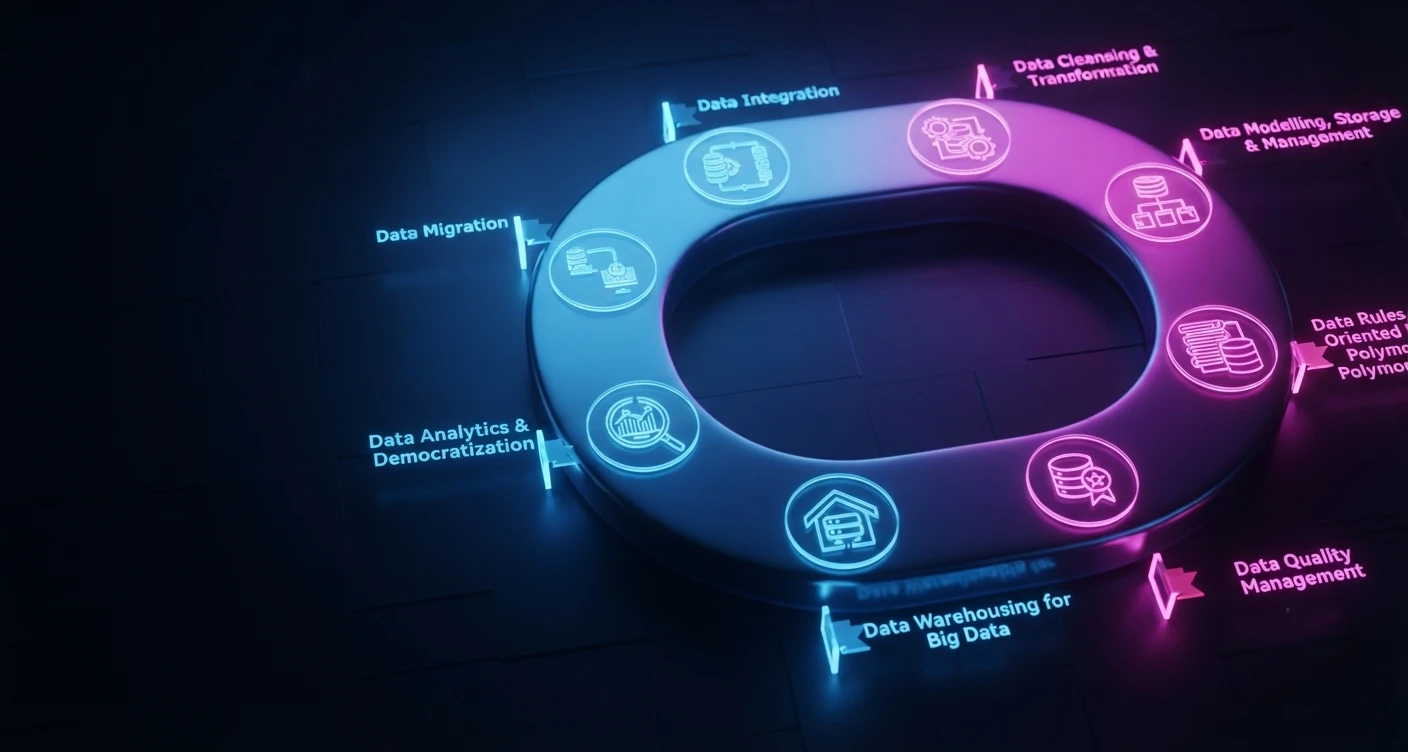
The data modernization process focuses on developing a modern data framework that includes a series of steps and techniques, with modern technologies at its core. A strong data modernization strategy includes a few critical elements that enable financial enterprises to increase ROI by creating an accessible, scalable, and compliant data ecosystem. The diagram below exhibits them all in one place. The institute can either consider these milestones and achieve them individually, or alternatively, logically group the elements and accomplish them together.

Building a Modern Data Framework: Key Elements and Best Practices

  1. Data Migration

The goal of data migration is to move all your data from legacy platforms to a modern data infrastructure. A solid data migration strategy ensures a smooth transition of clean data from an old to a new and modern data platform with no or little business disruption. And here’s where the cloud migration comes in.

The size of the cloud migration market is estimated at USD 232.51 billion in 2024 and is expected to grow at a CAGR of ~28% during the forecast period (2024–2029).

Globally, many finance institutes have already switched to cloud platforms or are accelerating their migration owing to benefits such as scalability, agility in integration, and adoption of emerging technologies in the BFSI ecosystems. In recent years, cloud adoption has been a significant consideration for IT cost-reduction strategies.

Data migration is a critical step in the data modernization process. There are obstacles, but they are worth crossing. Completing this step simplifies the remaining milestones.

  1. Data Integration

Building a unified data view through data integration further enables the use of the data for meaningful consumption in analytics and AI frameworks. In a well-structured data modernization strategy, appropriate cloud-hosted ingestion tools can be in place, allowing data integration solutions to be scalable, robust, and easily accelerated. Modern extract-transform-load (ETL) tools empower real-time integrations, ensuring the quickest data availability. This is crucial in BFSI, where up-to-date information is critical; a prime example is the live and accurate integration of financial transactions. This allows institutes to offer more cutting-edge services, thus increasing customer satisfaction.

  1. Data Cleansing & Transformation

Data transformation is essential for harnessing the full potential of data assets, enhancing efficiency, and driving business value. Transformation can involve various operations, including data cleansing. This cleaning process eliminates errors, inconsistencies, and missing values from a large volume of ingested data, resulting in high-quality, reliable data for analytics and AI/ML solutions. Data transformation can also include standardization, aggregation, encoding categorized data, binning, smoothing, time-series decomposition, text preprocessing, etc. The choice of transformation depends entirely on the organization’s use case, the nature of the data, or the specific goals that the analysis or modeling task aims to accomplish. Comprehensive data transformation allows everyone in the organization to better understand the data and makes it easier to work with.

  1. Data Modelling, Storage & Management

Banks and financial services institutions collect a lot of data from customers’ online and offline transactions, social engagements and interactions, feedback, surveys, and more. Data modeling is a discipline widely applicable to any intersection of people, data, and technology. It is a well-defined approach to creating an illustrated data model to organize its attributes, establish relationships between objects, identify constraints, and define the context to manage the data. With data integration in place and connecting to various systems, it is imperative that a data model be established before moving to data consolidation and storage. Legacy data frameworks have followed this essential step, and their modern counterparts cannot eliminate it either.

As the organization grows, the volume of data also increases. A well-laid-out data storage management plan removes the snag of having big data stashed across multiple systems, with users creating multiple copies (which is not ideal), and empowers BFS organizations to store data efficiently and securely, in compliance with laws, making the data easy to find, access, share, process, and recover if lost. An organization can choose in-house infrastructure, cloud, or a hybrid platform for their data storage. A data framework may consist of one or more data layers, each serving distinct purposes and storing data uniquely. Depending on the organization’s vision, one may choose a relational database, a data lake, a lakehouse, a data mesh storage architecture, or a combination of these.

  1. Data Rules, Object-Oriented DBMS, and Polymorphic Data Store

A large amount of invalid or erroneous data can disrupt end services and create unpleasant experiences for both customers and the organization. Therefore, a rule-based data validation approach, when systematically combined within the data integration framework, consistently produces superior quality data. It is often necessary to store a segment of data as an object, in addition to traditional structured data storage systems like databases. Object-oriented DBMSs combine the features of object-oriented and database management systems to store complex data. They enforce object-oriented features like encapsulation, polymorphism, and inheritance, along with database concepts like ACID properties. Banking organizations may consider having an ODBMS while developing high-volume transactional websites. It could also be useful for a risk management application because it provides a real-time view of the data.

  1. Data Quality Management

Failing to ensure data quality can have a ripple effect across a bank. Low data quality impacts privacy compliance, leading to more mistakes and, more often, significant failures for a business operating within one of the world’s most highly regulated industries and dealing with a vast volume of sensitive data. Privacy compliance is only the beginning. Regional banks and credit unions must also adhere to various reporting compliance regulations, including laws covering fair lending, customer data protection, enabling customers to make informed decisions, accurate disclosure, anti-money laundering, and capital adequacy. Failure to do so can lead to severe fines and reputational damage.

Beyond compliance, inadequate data quality can lead to poor decision-making. This is particularly important when it comes to managing risk. Banks need the highest quality data at their disposal to manage risk effectively, which is one of the most critical functions the organization must undertake. A comprehensive data quality management (DQM) framework should be in place on all data platforms, especially in the BFSI sector. We broadly recommend five key steps to cover all the bases of DQM:

  • Assessing the quality of organizational data is the starting point. Techniques such as data profiling can be used to inspect and understand the data’s content and structure.
  • Create a data quality strategy to improve and maintain the data’s quality. It is a continuous process and can be based on an enterprise-level set of rules or specific use cases. The organization can decide whether to use a feature-rich DQ tool or a custom module.
  • Perform initial data cleaning, an action to improve the data. It can be as simple as identifying missing entries, completing them, or removing duplicate entries.
  • Implementation of the Data Quality Framework is where the strategies come into action. It should be a seamless integration, whether with the data integration process or the business process. DQM should eventually become a self-correcting, continuous process.
  • Monitor the data quality processes, ensuring DQM is not just a one-time event. Constant monitoring and maintenance, as well as timely review and updates, are the only ways to maintain high data standards.
  1. Data Warehousing
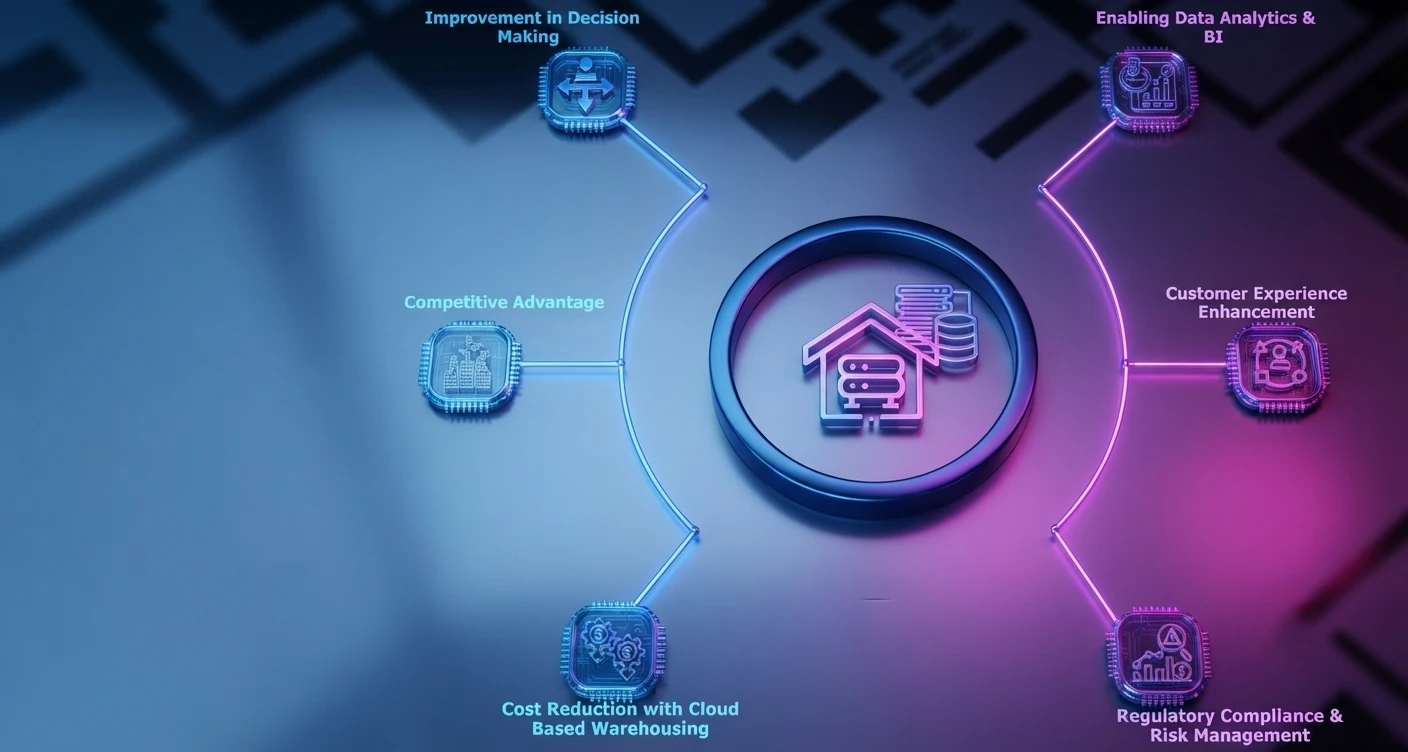
    A data warehouse centralizes and consolidates large amounts of data from disparate sources. Its analytical capabilities allow organizations to derive valuable business insights from their data to improve decision-making and provide better services and experiences. The banking sector can instantly reap numerous benefits from a well-designed data warehouse, including the following key advantages:

    Building a Modern Data Framework: Key Elements and Best Practices

    To handle the massive amounts of data generated by banks, technologies like Hadoop and Spark have become the go-to choices for storing and processing unstructured and semi-structured data. They provide a scalable and cost-effective solution for data warehousing. More and more institutes are moving towards cloud data warehousing solutions like Snowflake, Azure Synapse Analytics, Amazon Redshift, or Google BigQuery to leverage all the benefits they offer in terms of scalability, efficiency, and accessibility.
  2. Data Analytics & Data Democratization
    The organization does not immediately benefit from having a large, consolidated volume of data in a data warehouse until it uses that data to provide insights, improve services, and enhance experiences for both customers and organizational users. One popular use case where data analytics plays a critical role is in loan disbursement. In a traditional banking platform, loan disbursement often involves document submission, verification, and due diligence from the bank side, and each of these steps contributes to delays. However, to gain a competitive advantage, neo-banks are leveraging data analytics on real-time data, allowing them to make decisions almost instantly.In essence, data analytics is crucial for banks to enhance operations, explore potential opportunities, identify target demographics for upcoming campaigns, or simply upsell their products. Here are some other key use cases where data analytics will soon become indispensable for banks:

    • Providing 360-degree insights on a customer.
    • Understanding the operations and services through data, performing predictive analytics, and upgrading features to reduce operational costs.
    • Understanding target customer demographics, categorizing them based on data insights, and providing them with a personalized experience.
    • Examining risks associated with credit, claims, and fraud, and improving risk management practices.
    • Understanding market trends, embracing emerging practices, and staying ahead of the curve.

    Data democratization is an enablement process to make data available to everyone in an organization. If a marketing manager wants to access some of the reports created through data analytics, and if that involves IT, it delays decision-making. Democratization of data eliminates siloed or outdated practices. It encourages users to truly use the data, empowering them to identify new opportunities, create revenue streams, and drive growth. Data democratization can safely unlock access to data stored in a data warehouse, lake, or lakehouse. The modern data framework can avoid distributed data access, a challenge on legacy platforms, by connecting them through a single interface.


Conclusion

By following these key elements and best practices, financial institutions can build a modern data framework that not only supports their current needs but is also scalable and future-proof. This strategic approach ensures data is managed efficiently, securely, and used to drive meaningful business outcomes. Embracing data modernization helps BFSI organizations stay competitive, comply with regulatory requirements, and deliver superior customer experiences in an increasingly data-driven world.

Implementing a modern data framework is a journey that requires careful planning and execution. However, the benefits of such a transformation—enhanced agility, better decision-making, and improved operational efficiency—make it a worthwhile investment for any forward-thinking financial institution.

Ecommerce Integration

In the world of online retail, having a seamless, connected experience isn’t just a nice-to-have; it’s essential for thriving. In November 2024, Gelato made waves in ecommerce by introducing integration with Amazon, allowing sellers to expand their reach without the hassle of managing inventory, production, or shipping. This partnership highlights how useful ecommerce integration can be in streamlining operations and opening up new opportunities. Ecommerce integration is a powerful solution that bridges your store with key systems like inventory management, shipping, payments, and CRM, allowing your business to run smoothly from start to finish. Imagine an online store where every part of your operation—from order processing to customer support—works in perfect harmony. That’s the beauty of integration.

Implementing ecommerce integration with the right integration software or platform can transform your business, aligning all operations, enhancing customer satisfaction, and paving the way for sustained growth.

What’s Inside This Guide?

  • Core Components of integration: APIs, connectors, and tools that connect your systems.
  • Real Advantages: The clear-cut benefits that make integration a game-changer.
  • Challenges and Fixes: Practical ways to handle common integration hurdles.
  • Best Practices for Success: Expert tips to help you maximize your integration efforts.
  • Real-Life Success Stories: Inspiring examples of how businesses big and small have thrived with integration.


What is Ecommerce Integration?

Ecommerce Integration

Ecommerce integration involves linking your online store with various systems and tools to optimize operations and improve the customer experience. It involves the exchange of data between different software applications, such as your website, inventory management system, accounting software, shipping carriers, and payment gateways.

Why does this matter?

  • Meet Rising Customer Expectations: In a digital world where speed and convenience are everything, integration ensures your store delivers a seamless, satisfying experience—meeting and even exceeding customer demands.
  • Effortless Operations: Integration automates key tasks, reducing manual work and freeing up your team’s time. This efficiency means more time to focus on growth and innovation.
  • Enhanced Customer Satisfaction: Real-time inventory updates, seamless checkouts, and timely order tracking keep customers happy and informed, reducing abandoned carts and boosting loyalty.
  • Data-Driven Decision Making: Integration pulls data from across your systems, giving you insights to make informed choices in inventory, marketing, and customer engagement.
  • Ready for Growth: As your business grows, integration enables you to scale smoothly, maintaining efficiency without adding complexity.

Why Do You Need Ecommerce Integration?

In the fast-paced digital marketplace, ecommerce integration is a powerful asset for online businesses, delivering key advantages through connected, automated processes. With the help of ecommerce integration platforms, software, and API integrations, you can achieve:

  • Increased Efficiency: Automate essential tasks like order processing, inventory updates, and shipping label creation, freeing up time and reducing the risk of manual errors.
  • Improved Accuracy: Keep product details, pricing, and stock levels updated across systems with real-time data synchronization, ensuring customers always have access to the latest information.
  • Enhanced Customer Experience: Streamlined checkouts, prompt order fulfillment, and responsive customer support contribute to a smooth, positive shopping experience, strengthening customer loyalty.
  • Better Decision-Making: Access comprehensive data from across your systems to make informed choices about inventory management, marketing strategies, and customer targeting.
  • Scalability: Grow your business seamlessly as ecommerce integration software enables you to scale operations without losing efficiency or accuracy.

How Ecommerce Integration Can Help Your Business

By leveraging ecommerce integration solutions like ecommerce integration platforms and API integrations, your business can unlock new levels of performance and satisfaction:

  • Reduced Manual Work: Automation replaces repetitive data entry, minimizing human error and saving valuable time across departments.
  • Improved Order Accuracy: Real-time inventory updates help avoid overselling or stockouts, ensuring a smooth and accurate order process.
  • Streamlined Shipping: Automation tools simplify shipping label creation and carrier selection, reducing costs and improving delivery times.
  • Enhanced Customer Satisfaction: Accurate product information, fast order processing, and efficient support create a seamless shopping experience.
  • Boosted Sales: Using integrated customer data, you can refine marketing campaigns and create personalized recommendations, driving revenue and engagement.
  • Improved Financial Management: Integration with accounting systems enables automated financial reporting, ensuring accuracy and compliance.


Key Systems and Tools in Ecommerce Integration

Ecommerce Integration

Effective ecommerce integration is about connecting essential tools and systems to create a cohesive, efficient operation that meets customer needs and drives growth. Let’s explore these key systems and how they contribute to a thriving ecommerce environment:

ERP (Enterprise Resource Planning)

The ERP system is the backbone of business operations, functioning as a central hub that synchronizes different aspects of the business:

  • Centralized Hub: ERP acts as a centralized system for all critical business data and processes, ensuring seamless coordination across departments like finance, HR, supply chain, and manufacturing.
  • Inventory Control: ERP maintains accurate inventory levels across all sales channels, ensuring real-time stock availability and preventing stockouts or overstock situations. By syncing with inventory management, it provides up-to-date data on stock status and availability.
  • Order Processing: Automating order processing from start to finish, ERP handles everything from order placement to shipment, reducing manual efforts and minimizing processing errors. Integration with order management tools also ensures seamless fulfillment.
  • Financial Management: ERP oversees financial transactions, accounting, and reporting. Integration with financial software keeps transaction records organized, simplifies tax preparation, and aids in compliance.

CRM (Customer Relationship Management)

A CRM system is essential for understanding and building relationships with customers, creating a personalized experience that drives retention and loyalty.

  • Customer Data Management: CRM stores detailed customer profiles, including contact information, purchase history, and preferences. This database serves as the foundation for understanding customer behavior and trends.
  • Personalized Marketing: Using customer data, CRM enables targeted marketing campaigns. By segmenting customers based on demographics, past purchases, or behaviors, CRM helps tailor communications, improving conversion rates and customer engagement.
  • Customer Support: CRM enhances customer support by providing a complete view of customer interactions and purchase history. Support teams can access this information to provide quicker, more personalized responses, resolving issues more effectively.

Inventory Management

Inventory management tools help businesses keep their stock organized and avoid costly errors in supply levels.

  • Stock Level Tracking: Real-time stock tracking ensures visibility into inventory levels, enabling accurate forecasting and preventing stockouts or overstock situations. This transparency across locations is crucial for maintaining a smooth supply chain.
  • Purchase Order Management: This feature automates and manages purchase orders, ensuring a consistent supply of products. Integrating with suppliers, it helps maintain optimal stock levels and automates reordering based on sales trends or stock thresholds.
  • Warehouse Management: Inventory tools streamline warehouse operations, optimizing storage, picking, and packing. This efficiency minimizes fulfillment times and reduces the chance of shipment errors, enhancing the overall customer experience.

Payment Gateways

Payment gateways act as a secure link between a customer’s bank and the ecommerce store, ensuring seamless and protected financial transactions.

  • Secure Transactions: Payment gateways encrypt sensitive customer information, such as card details, to protect against fraud and ensure secure payment processing.
  • Multiple Payment Options: Supporting various payment methods—credit cards, debit cards, digital wallets, and even Buy Now, Pay Later (BNPL) options—caters to diverse customer preferences, improving checkout conversion rates.
  • Fraud Prevention: Payment gateways employ fraud detection measures, like verifying transaction authenticity and flagging unusual behavior, to protect both the business and its customers.

Shipping and Fulfillment Systems

Shipping and fulfillment systems streamline the process of delivering products to customers, optimizing costs and enhancing satisfaction.

  • Order Fulfillment Automation: Fulfillment systems automate the packing, labeling, and shipping processes. By integrating with inventory management, they help ensure that the correct items are packed and shipped promptly, minimizing delays and errors.
  • Real-Time Tracking: These systems provide real-time tracking updates for both the business and customers. Order tracking not only reassures customers but also reduces customer service inquiries about shipment status.
  • Rate Shopping: Fulfillment tools compare shipping rates from various carriers, helping businesses select the most cost-effective shipping options without sacrificing delivery speed or reliability.

Marketing Automation Tools

Marketing automation is vital for reaching and engaging customers consistently across channels, boosting brand presence, and nurturing relationships.

  • Email Marketing: Automated email tools personalize campaigns based on customer data, such as abandoned cart emails, product recommendations, and loyalty rewards. By segmenting lists and automating responses, these tools keep customers engaged with the brand.
  • Social Media Marketing: Social media management tools allow businesses to schedule posts, monitor engagement, and analyze performance. Integration ensures that social media channels reflect real-time promotions or stock updates, fostering consistent brand messaging.
  • Ad Campaign Management: Marketing automation includes tools for managing and optimizing ad campaigns, such as Google Ads and social media ads. By analyzing customer behavior, these tools refine ad targeting, ensuring campaigns reach the right audience and deliver better ROI.

By effectively integrating these systems—ERP, CRM, inventory management, payment gateways, shipping, and marketing automation—businesses can create a streamlined, cohesive ecommerce operation. This holistic integration enhances efficiency, reduces errors, and ultimately leads to better customer experiences and stronger growth.


Benefits of Ecommerce Integration

  1. Enhanced Efficiency

Ecommerce integration brings automation to the core of business operations, enabling companies to streamline repetitive tasks, reduce errors, and focus more on strategy. Let’s take a closer look at how this works with real-world scenarios:

  • Automation of Repetitive Tasks: With integration, tasks like order processing, inventory management, and shipping are automated. For example, when a customer places an order, the system can automatically check inventory levels, initiate the order fulfillment process, and create a shipping label—all without manual intervention. This is particularly valuable during peak shopping seasons, where automated processes prevent bottlenecks and keep operations running smoothly.
  • Reduced Manual Error: Automating data entry and calculations drastically reduces the risk of human error. Imagine a scenario where a business manually enters order details across multiple systems; there’s a high chance of discrepancies in product quantities, addresses, or customer information. Integration minimizes these errors, ensuring accurate and consistent data across systems, leading to higher customer satisfaction.
  • Increased Productivity: Integration frees up your team to focus on strategic tasks rather than mundane, time-consuming ones. For example, instead of manually tracking orders, team members can analyze sales data or brainstorm customer engagement strategies, ultimately driving business growth.
  1. Improved Data Accuracy

Accurate data is essential for making informed decisions, managing inventory, and delivering a personalized customer experience. Ecommerce integration maintains consistent data across all customer touchpoints, providing a unified experience.

  • Real-Time Inventory Updates: Integration keeps inventory updated in real time. For instance, if a store sells out of a product online, the inventory level adjusts immediately to prevent overselling. This real-time accuracy means customers don’t face frustrating “out of stock” situations, while the business avoids complex inventory management issues.
  • Accurate Product Information: With ecommerce integration, product details such as descriptions, pricing, and images remain consistent across platforms. For example, if a fashion retailer updates product descriptions or adjusts prices on their website, this information reflects instantly across all sales channels, minimizing customer confusion and enhancing trust.
  • Reliable Customer Data: Integrated CRM systems maintain accurate customer profiles by capturing up-to-date purchase histories, preferences, and contact information. For instance, if a customer updates their shipping address, this information automatically syncs across systems, ensuring a seamless experience during checkout.
  1. Better Customer Experience

A seamless, satisfying shopping experience is central to customer retention. Ecommerce integration enhances every step of the customer journey.

  • Faster Order Processing: With automated workflows, orders move from placement to fulfillment much faster. Imagine a scenario where a customer places an order for next-day delivery. Integrated systems automatically prioritize the order, initiating the fulfillment process instantly to meet the delivery promise, thereby building customer trust.
  • Accurate Order Tracking: Real-time order tracking updates allow customers to stay informed on their order’s journey. For example, a customer purchasing electronics can track their package from warehouse dispatch to doorstep delivery. This transparency reassures the customer and reduces order-related inquiries.
  • Efficient Customer Support: Integration enables customer support teams to access order histories, shipping status, and customer preferences quickly, allowing them to resolve inquiries faster. Suppose a customer calls to inquire about a delayed shipment; an integrated system provides the support agent with instant access to tracking details, allowing them to provide accurate updates and solutions.
  1. Scalability

Integration supports business growth by enabling seamless expansion and resource optimization, making it possible to scale without operational strain.

  • Flexible Infrastructure: Integration provides a flexible framework that can handle increased demand as the business grows. For instance, during holiday sales, an integrated system can handle a surge in orders without compromising processing speed or accuracy, providing a consistent customer experience.
  • Seamless Expansion: When businesses add new products, channels, or markets, integrated systems support this growth without major adjustments. A beauty brand expanding into international markets can, for example, use integration to manage localized product pages, pricing, and shipping logistics for each new market, ensuring a smooth entry without creating separate operational silos.
  • Efficient Resource Allocation: Integration allows businesses to allocate resources where they’re needed most. For example, a growing company can automate routine tasks like restocking alerts, allowing warehouse staff to focus on high-priority items or seasonal products.
  1. Insights and Analytics

Ecommerce integration provides valuable insights, helping businesses make data-driven decisions and understand their customers better.

  • Data-Driven Decision Making: Access to integrated data enables informed decisions based on actionable insights. For instance, if sales data shows a high demand for a specific product, management can prioritize restocking efforts and adjust marketing strategies to maximize revenue potential.
  • Performance Tracking: With real-time performance metrics, businesses can identify areas for improvement. Suppose a company tracks its abandoned cart rate and finds it’s unusually high. With an integrated system, they can analyze where customers are dropping off (e.g., at the checkout page) and implement targeted solutions to improve conversion rates.
  • Customer Behavior Analysis: Integrated data offers insights into customer preferences and buying patterns, which businesses can use to tailor marketing strategies. For example, if analytics show that certain customers frequently purchase outdoor gear, the company can create targeted campaigns for new arrivals in that category, increasing engagement and conversion rates.


Types of Ecommerce Integration

Ecommerce Integration

Choosing the right type of ecommerce integration depends on your business’s specific needs, technical resources, and future scalability requirements.

Experion’s unique approach to ecommerce integration empowers brands to thrive in an ever-evolving market landscape.

API-Based Integration

API-based integration uses Application Programming Interfaces (APIs) to enable seamless communication between different systems. APIs act as a bridge, allowing systems to exchange data in real time, following specific protocols and formats. This type of integration is ideal for companies seeking robust flexibility and scalability.

  • Flexibility & Customization: APIs allow businesses to tailor the integration to meet specific needs, from syncing inventory across multiple locations to setting up advanced order routing systems. For example, large enterprises can integrate ERP systems with ecommerce platforms, automating complex workflows.
  • Data Volume & Speed: API-based integration can handle large amounts of data with high frequency, often updating in real time or near real time. This is critical for ecommerce businesses dealing with rapid changes in inventory or needing immediate order updates.

Plug-and-Play Solutions

Plug-and-play solutions offer pre-built integrations that connect popular ecommerce platforms with other systems, such as CRMs, payment gateways, or marketing tools. These integrations are often available as apps or extensions within an ecommerce platform’s marketplace.

  • Ease of Use: Designed for quick deployment, plug-and-play solutions are ideal for businesses without extensive technical resources. Installation is often simple, requiring only basic configuration to start syncing data.
  • Speed & Accessibility: This type of integration can be completed in hours, not weeks. For example, an online store can integrate a shipping app to automatically print labels or a CRM app to collect customer information, instantly enhancing capabilities without major setup.

Custom Integrations

Custom integrations involve creating unique, tailored solutions to meet specific business requirements. This approach provides maximum flexibility, often essential for companies with highly specific workflows or complex system architectures.

  • Tailored Precision: Custom integrations allow for the exact configuration needed to align with unique business processes. For example, a company could develop a custom solution to sync an ecommerce site with an ERP and a CRM, automating an order-to-fulfillment process that triggers specific alerts, reports, and customer follow-ups.
  • Data Complexity & Custom Workflows: Custom solutions handle intricate data flows and enable complex workflows, such as dynamically adjusting pricing across channels or managing intricate inventory reallocation processes. This level of specificity is critical for large, multi-channel businesses or industries with regulatory compliance needs.

Middleware Solutions

Middleware acts as an intermediary layer, connecting various systems and handling data transformation, mapping, and routing. Middleware solutions are ideal for businesses with multiple integrations, enabling them to streamline and centralize data flows across systems.

  • Centralized Data Flow: Middleware can aggregate and route data across different systems, helping businesses manage integrations without requiring direct point-to-point connections. For example, it can consolidate orders from multiple ecommerce sites into a single ERP.
  • Complex Data Mapping & Transformation: Middleware handles the data formatting and mapping between different systems, ensuring compatibility and reducing the need for custom code. This is particularly beneficial for businesses with diverse tech stacks, allowing seamless data exchange between platforms.


Challenges in Ecommerce Integration

  • Data Security: Ensuring data privacy and compliance with industry standards, especially with sensitive customer information.
  • System Compatibility: Overcoming issues when systems don’t natively connect, requiring additional tools or custom work.
  • Maintenance and Updates: Keeping integrations in sync with platform updates to avoid disruptions.
  • Cost and Time: Balancing integration costs and timelines with the business budget, as custom or complex integrations can be resource-intensive.


Best Practices for Successful Ecommerce Integration

  1. Set Clear Goals: Start by defining what you want to achieve, whether it’s faster order processing, better inventory management, or a seamless customer experience. Knowing your objectives makes it easier to measure success!
  2. Pick the Right Tools: Choose integration tools that align with your business needs and are easy to scale. Look for platforms and apps that work well with your systems and are reliable in the long run.
  3. Test Before You Go Live: Run tests to make sure everything works as expected. Testing helps catch any issues early so you can launch smoothly without surprises.
  4. Keep Security in Mind: Protect customer data and ensure your integration meets security standards. A secure setup builds trust and keeps sensitive information safe.
  5. Monitor and Tweak Regularly: Once live, keep an eye on performance and make adjustments as needed. Regular monitoring and updates ensure your integration keeps running efficiently as your business grows.


Ecommerce Integration Trends to Watch

Ecommerce Integration

As the ecommerce landscape evolves, several integration trends are shaping the future of online retail. Here’s an overview of key developments:

AI and Machine Learning in Integrations

AI and ML are breathing new life into ecommerce, crafting shopping experiences that feel personalized, seamless, and even a bit magical. These technologies analyze customer behavior, predict preferences, and automate tasks, enhancing efficiency and customer satisfaction. For instance, AI-driven CRM systems can provide insights for personalized marketing and sales strategies, allowing businesses to tailor their offerings to individual customer needs.

Omnichannel Integrations

Omnichannel integration focuses on providing a seamless customer experience across multiple channels, both online and offline. By integrating various sales and communication platforms, businesses ensure consistent interactions, whether customers are shopping via a website, mobile app, or in-store. This approach enhances customer satisfaction and loyalty by offering a unified shopping journey.

Headless Commerce

Headless commerce decouples the front-end presentation layer from the back-end ecommerce functionality, offering greater flexibility in delivering custom experiences. This architecture allows businesses to use APIs to deliver content across various devices and platforms, facilitating faster updates and personalized customer interactions. By adopting headless commerce, companies can create tailored shopping experiences that adapt to emerging technologies and customer expectations.

IoT Integration

The Internet of Things (IoT) is being integrated into ecommerce to enhance inventory and supply chain management. IoT devices enable real-time product tracking, monitor storage conditions, and streamline reordering processes through automation. This integration leads to smarter inventory control, reduced waste, and improved operational efficiency, ultimately benefiting both businesses and customers.

Staying abreast of these trends enables businesses to leverage advanced technologies, meet evolving customer expectations, and maintain a competitive edge in the dynamic ecommerce environment.


How Experion Supports Your Ecommerce Integration

Experion simplifies ecommerce integration, making it easy for your business to operate smoothly, grow, and deliver memorable customer experiences. Here’s how we do it:

Custom API Integrations
We build custom API connections that bring your essential tools—like payment gateways, CRMs, and shipping providers—together seamlessly. These integrations keep everything in sync, so your data flows smoothly and accurately.

Scalable Microservices Architecture
Our microservices approach ensures flexibility and scalability, allowing your ecommerce platform to grow without constraints. This modular setup keeps your system resilient and adaptable to evolving needs.

Powerful Data Analytics
Our data analytics integration dives deep into customer behavior, offering insights that fuel smarter, data-driven decisions. From personalizing recommendations to optimizing operations, we help you connect meaningfully with your audience.

Unified Cloud-Based POS Systems
Unite online and in-store sales with our cloud-based POS systems or solutions, providing real-time sync across all channels. This integration streamlines inventory management and creates a seamless customer experience.


Conclusion

Seamless ecommerce integration isn’t just a tech upgrade; it’s the backbone of a thriving business. With Experion by your side, your entire operation—from processing orders to engaging customers—becomes a smooth, interconnected experience. Our tailored API integrations, adaptable microservices, and cloud-based POS solutions ensure your business doesn’t just keep pace; it leads, evolving effortlessly to meet changing demands.

Financial Risk Management Software

Managing risks proactively helps organizations avoid potential losses and navigate uncertain economic conditions. Financial risk management software is a powerful tool that enables companies to monitor, assess, and mitigate financial risks, providing a more secure and strategic approach to financial decision-making.


What is Financial Risk Management Software?

Financial Risk Management Software

Financial risk management software is designed to identify, assess, and monitor financial risks that could impact a company’s operations or profitability. By integrating various tools and data analytics, this software allows risk managers and financial decision-makers to make informed decisions, helping them mitigate risks before they lead to losses. Risk management software supports organizations in achieving a proactive risk management strategy, enabling them to maintain financial health and compliance with regulatory requirements.

Through data analysis, real-time monitoring, and integration with other financial tools, custom financial risk management software provides tailored solutions for companies to address their unique risk challenges and adapt quickly to shifting market conditions.


Types of Financial Risks Addressed by Financial Risk Management Software

  1. Credit Risk
    Credit risk is the risk of financial loss due to a client’s inability to meet their financial obligations. Delays in payment or outright defaults can disrupt cash flow and impact a company’s overall liquidity. Financial services risk management software helps organizations monitor credit exposure by analyzing client creditworthiness, tracking outstanding balances, and setting risk thresholds. With these tools, businesses can predict potential defaults, segment clients by risk levels, and implement proactive strategies to mitigate potential losses. This not only stabilizes cash flow but also builds resilience against client-related financial disruptions.
  2. Market Risk
    Market risk arises from changes in market conditions, including fluctuations in stock prices, interest rates, and foreign exchange rates. This risk can be especially volatile and challenging to manage, as it depends on external economic factors beyond a company’s direct control. Risk management software helps organizations track and analyze these market trends, enabling them to make informed adjustments to investment portfolios or business strategies. By monitoring market risks in real-time, companies can protect their financial assets, avoid excessive exposure to unstable markets, and better plan for economic shifts.
  3. Liquidity Risk
    Liquidity risk occurs when a company doesn’t have sufficient cash flow to meet short-term financial obligations. Insufficient liquidity can disrupt operations, delay growth opportunities, and in extreme cases, threaten a company’s solvency. Financial risk management software addresses this risk by providing tools to monitor liquidity levels and predict cash flow needs. Companies can use the software to forecast short-term and long-term liquidity requirements, ensuring they maintain adequate cash reserves. This visibility helps companies optimize capital allocation, improve cash flow stability, and mitigate the risk of sudden liquidity shortages.
  4. Operational Risk
    Operational risk involves potential losses resulting from internal failures, including process inefficiencies, system outages, human errors, and fraud. Operational risk, unlike other financial risks, is often more manageable because it primarily hinges on internal processes and policies. Financial risk management software helps organizations identify, assess, and manage these risks by tracking process performance, highlighting vulnerabilities, and establishing safeguards. For example, companies can implement controls that reduce fraud risks or use automated systems to streamline high-risk processes, enhancing both security and efficiency.


Key Features of Financial Risk Management Software

Financial Risk Management Software

  • Data Analysis and Modeling
    Effective risk management relies on predictive analytics and simulation tools that provide organizations with insights into potential future risks. Financial risk management software includes advanced data analysis and modeling capabilities, enabling companies to perform “what-if” scenarios and simulate the impact of various risk factors. Through historical data, machine learning algorithms, and statistical modeling, this feature helps companies identify trends, quantify risks, and plan risk-mitigation strategies. For instance, in a scenario where market interest rates might change, the software can model potential outcomes on the organization’s financial position, allowing decision-makers to prepare for multiple contingencies.
  • Real-Time Risk Monitoring
    One of the most powerful aspects of financial services risk management software is its ability to provide real-time risk monitoring. Continuous tracking and instant alerts allow organizations to detect emerging risks as they arise, giving them the ability to respond quickly and reduce negative impacts. Real-time monitoring is especially useful for dynamic risks, such as fluctuations in market conditions or changes in liquidity levels. The software alerts users when certain thresholds are breached, enabling swift action to adjust investments, secure additional liquidity, or mitigate exposure before a potential loss escalates.
  • Compliance Management
    Adhering to industry regulations and standards is an ongoing challenge for many organizations, especially those in highly regulated sectors like finance, healthcare, and energy. Financial risk management software simplifies compliance by incorporating features that help track regulatory updates, monitor adherence to standards, and document compliance activities. This feature minimizes the administrative burden of compliance management, automates record-keeping, and reduces the risk of costly penalties from regulatory violations. By staying current with industry regulations, companies not only avoid fines but also enhance their reputation for reliability and accountability.
  • Reporting and Dashboards
    Effective reporting and clear visualizations are essential for financial risk management, as they enable decision-makers to access key insights quickly and efficiently. Financial risk management software provides interactive dashboards and comprehensive reporting capabilities that allow executives to view real-time metrics, assess risk exposure, and evaluate risk trends at a glance. Customizable dashboards give risk managers flexibility in presenting data, while automated reporting allows them to generate detailed analyses that support strategic decision-making. These insights help executives make informed decisions based on a clear, accurate picture of the organization’s risk landscape.
  • Integration with Other Financial Tools
    To create a holistic view of risk, financial services risk management software is designed to integrate seamlessly with existing financial systems, such as ERP (Enterprise Resource Planning), CRM (Customer Relationship Management), and analytics platforms. By consolidating data from multiple sources, the software enables better data accuracy and streamlines workflows, reducing the need for manual data transfers and the potential for errors. This integration also enhances the ability to identify cross-functional risks, as it brings together data from sales, operations, finance, and other departments. With all relevant data accessible in a single platform, risk managers can perform more comprehensive analyses and create more effective risk strategies.


Tools Used for Developing Financial Risk Management Software

Financial Risk Management Software

Programming Languages
Programming languages such as Python, R, and Java are foundational for developing financial risk management software, thanks to their flexibility, efficiency, and extensive libraries tailored to data processing and analysis. Python is extensively used for data modeling and machine learning, thanks to libraries like Pandas, NumPy, and SciPy. R is popular for statistical analysis, providing precise control over data insights and predictive analytics. Java is known for its robustness and is often used in backend development, ensuring reliability and scalability in large, data-intensive environments.

Data Analytics and Visualization Tools
Data analytics and visualization tools like TableauPower BI, and D3.js help developers create interactive and visually accessible dashboards. These tools are essential for transforming complex risk data into easily interpretable visual insights, which are crucial for decision-making. Tableau and Power BI allow real-time data integration and support custom reporting, while D3.js provides a more customizable framework for creating interactive web-based visualizations. Together, these tools offer the visualization power needed to represent large volumes of risk data in actionable formats.

Big Data Processing Tools
Handling vast amounts of data is critical for effective financial risk management. Big data processing tools like Hadoop and Apache Spark enable the efficient storage, processing, and analysis of large datasets. Hadoop offers a reliable framework for distributed storage and processing, allowing data to be processed in parallel across multiple nodes, which is particularly useful in high-volume environments. Apache Spark enhances this capability by providing fast, in-memory data processing, enabling companies to analyze massive datasets quickly and perform complex risk assessments with high accuracy and speed.

Machine Learning Frameworks
Machine learning frameworks, such as TensorFlowScikit-Learn, and PyTorch, are instrumental in developing predictive models and advanced analytics for risk management. TensorFlow and PyTorch, known for their flexibility and support for neural networks, are used for building sophisticated predictive models that can identify and forecast potential risks. Scikit-Learn is widely used for simpler machine learning models and supports essential algorithms for classification, regression, and clustering, making it an ideal tool for general risk assessments. These frameworks allow organizations to leverage machine learning for real-time risk prediction, trend analysis, and automated decision-making.

Cloud Computing Platforms
Cloud platforms like AWS (Amazon Web Services)Azure, and Google Cloud are essential for managing the data storage and processing demands of financial risk management software. These platforms provide scalable resources, allowing companies to handle large datasets, manage real-time data streams, and access their systems from anywhere. With integrated tools for analytics, machine learning, and security, cloud platforms enable companies to maintain high availability, flexibility, and secure storage for sensitive financial data, all of which are vital for global, data-driven risk management solutions.

Blockchain for Security and Transparency
Blockchain technology, including tools like Ethereum and Hyperledger, adds a layer of transparency, security, and traceability to financial risk management systems. By using blockchain, financial institutions can store data in a decentralized manner, reducing the risk of fraud, tampering, and unauthorized access. Ethereum and Hyperledger allow for secure, distributed ledgers that track transactions, making it easier for organizations to maintain transparent records and demonstrate compliance. This is particularly valuable for companies needing enhanced data security, such as those dealing with sensitive financial or regulatory information.

APIs for Integration
APIs (Application Programming Interfaces) are essential for seamless data exchange between financial risk management software and other enterprise systems, including ERP, CRM, and analytics platforms. RESTful and GraphQL APIs are commonly used to enable efficient, flexible integration. RESTful APIs support data sharing across applications with standardized protocols, while GraphQL offers a more customizable data query structure, allowing for optimized data retrieval. APIs ensure that risk management software can communicate smoothly with other financial tools, facilitating automated workflows, enhanced data accuracy, and a cohesive ecosystem for financial data management.

At Experion, we leverage these cutting-edge tools and technologies to develop custom financial risk management software that meets the unique needs of your business, ensuring robust functionality, security, and seamless integration across your financial ecosystem.


Strategies for Effective Financial Risk Management

  • Regular Risk Assessments
    Regularly assessing financial risks is fundamental for maintaining alignment with the evolving market landscape. This process involves systematically evaluating a company’s risk profile, from credit and market risks to operational vulnerabilities, and identifying areas that may be susceptible to emerging threats. By continuously updating these assessments, organizations can adapt quickly to new risks, ensuring proactive responses and safeguarding financial stability. Regular risk assessments help to prioritize risk management efforts, enabling companies to allocate resources effectively to the most pressing threats.
  • Data-Driven Decision Making
    In today’s fast-paced financial environment, leveraging real-time data and analytics is crucial for making timely, informed decisions. By incorporating live data streams, financial risk management software empowers decision-makers to respond strategically to changes in market conditions, customer behavior, or regulatory requirements. Data-driven insights support precise risk evaluations and proactive decisions, providing an essential edge for organizations to address emerging risks with agility and confidence. Companies can track key metrics and performance indicators, optimizing responses based on current, accurate data.
  • Automation of Routine Processes
    Routine processes, such as compliance reporting and monitoring, can consume significant time and resources if performed manually. Automating these tasks improves efficiency, enhances accuracy, and reduces the likelihood of human error. Financial risk management software can automate tasks like regulatory reporting, data aggregation, and trend analysis, allowing risk management teams to focus on more strategic responsibilities. This not only ensures compliance with minimal effort but also improves the consistency and reliability of routine processes.
  • Stress Testing and Scenario Analysis
    Running stress tests and scenario analyses allows companies to evaluate their financial resilience under adverse conditions. These simulations model the impact of various hypothetical scenarios, such as economic downturns, market crashes, or sudden shifts in interest rates, providing insights into potential vulnerabilities and the strength of existing risk management strategies. By identifying weak points in advance, companies can make adjustments to their risk frameworks, optimize capital reserves, and improve overall preparedness for future challenges.
  • Regulatory Compliance Management
    Keeping up with changing regulations is essential for avoiding legal issues and maintaining stakeholder trust. Financial risk management software often includes compliance tracking features, ensuring that companies stay current with relevant laws, industry standards, and best practices. These tools streamline the process of tracking regulatory updates, managing documentation, and enforcing compliance protocols, reducing the risk of non-compliance penalties. By simplifying compliance management, organizations can foster transparency and build confidence among investors, partners, and clients.
  • Cybersecurity Measures
    As financial data becomes increasingly digital and accessible, robust cybersecurity is crucial for protecting sensitive information from cyber threats. Financial risk management software incorporates advanced security measures, including encryption, multi-factor authentication, and routine security audits. These protocols help prevent unauthorized access and safeguard data integrity, ensuring that risk management processes are conducted securely. Regular security assessments and continuous monitoring further strengthen data protection, enabling organizations to stay ahead of evolving cyber risks.
  • Effective Communication and Collaboration
    Successful financial risk management relies on coordinated efforts across departments, including finance, IT, and risk management teams. Encouraging open communication and collaboration fosters an integrated approach to risk management, ensuring that teams are aligned on strategies and goals. Collaborative tools within financial risk management software facilitate seamless information sharing, streamline workflows, and support faster responses to complex financial risks, helping the organization to act cohesively and make well-informed decisions.


Benefits of Using Financial Risk Management Software

  1. Enhanced Accuracy in Risk Assessment
    Financial risk management software leverages data-driven insights, reducing the likelihood of human error and enhancing the precision of risk assessments. By analyzing real-time data and historical trends, the software provides a comprehensive view of an organization’s risk profile, allowing for more accurate assessments. This precision in risk analysis enables companies to better allocate resources, implement targeted mitigation strategies, and improve financial planning for both short- and long-term objectives.
  2. Informed Decision-Making
    Real-time insights offered by financial risk management software empower executives and risk managers to make proactive, data-informed decisions. By tracking market conditions, credit exposures, and operational risks in real time, the software enables companies to respond swiftly to financial risks. This responsiveness positions the organization to adjust strategies quickly, reduce exposure to adverse events, and capitalize on emerging opportunities, ultimately strengthening its competitive edge and financial resilience.
  3. Improved Efficiency
    By automating manual and repetitive tasks, financial risk management software significantly reduces the workload on risk management teams. The automation of processes such as data collection, regulatory reporting, and routine monitoring frees up valuable time and resources, allowing teams to focus on high-priority and strategic tasks. This increase in efficiency translates to faster, more effective risk management operations, ensuring the organization’s risk framework remains agile and capable of adapting to evolving risks.
  4. Regulatory Compliance
    Financial risk management software simplifies compliance by providing dedicated tools to track regulatory changes, manage compliance documentation, and monitor adherence to industry standards. With built-in alerts and automated reporting, the software helps companies stay compliant with minimal manual intervention. By streamlining compliance efforts, organizations can reduce the risk of regulatory penalties, maintain their reputation for reliability, and demonstrate a commitment to transparency, ultimately enhancing trust with stakeholders.
  5. Cost Savings
    Identifying and addressing risks early is key to minimizing potential losses. Financial risk management software helps companies detect risks sooner, allowing them to implement preventative measures before they escalate into costly problems. By reducing the impact of financial losses and avoiding fines from regulatory non-compliance, organizations achieve substantial cost savings. Additionally, the software’s efficiency gains lower operational costs over time, contributing to a more cost-effective risk management strategy.


Future Trends in Financial Risk Management Software

Financial Risk Management Software

  • AI and Machine Learning for Risk Prediction: Advanced algorithms will enhance risk forecasting, allowing organizations to anticipate potential risks with greater accuracy.
  • Cloud-Based Solutions for Accessibility and Security: Cloud computing will enable more secure, accessible risk management solutions, especially for organizations with distributed teams.
  • Increased Focus on Cybersecurity Risks: With the rise in cyber threats, future software will likely incorporate more sophisticated security measures to protect against data breaches and fraud.
  • Emphasis on Sustainability-Related Financial Risks: As sustainability becomes a priority, risk management software will integrate tools to monitor and address environmental and social risks.


How Experion Can Help You With Financial Risk Management Software


Experion offers custom financial risk management software solutions designed to meet the unique needs of your organization. Our team of experts combines advanced analytics, data security measures, and seamless integration capabilities to build robust software that aligns with your goals and regulatory requirements. We leverage industry-leading tools and frameworks to create solutions that not only mitigate risk but also empower your business with insights for growth.

Our Approach:

  • Strategic Planning and Design: We work closely with stakeholders to develop a customized risk management solution that aligns with your objectives and mitigates key financial risks.
  • Enhanced Security: From data encryption to multi-factor authentication, our solutions integrate advanced security features to safeguard your financial data.
  • Seamless Integration: Our software is designed to work seamlessly with your ERP, CRM, and other systems, ensuring smooth data exchange and process efficiency.
  • Ongoing Support and Maintenance: We offer continuous support to keep your software secure, up-to-date, and fully aligned with evolving regulations and business needs.


Conclusion

Financial risk management software is essential for businesses seeking to safeguard their financial health and ensure resilience against various financial risks. This software empowers organizations with tools for accurate risk assessment, proactive decision-making, and regulatory compliance, making it a strategic asset in an increasingly volatile market.

With the right software, businesses can not only protect against financial losses but also gain a competitive edge by acting on real-time insights and maintaining regulatory compliance. Exploring solutions tailored to your organization’s specific risk management needs will help you build a stronger, more resilient financial foundation.

Key Takeaways

  • Proactive Risk Management: Financial risk management software helps organizations stay ahead of potential risks with real-time data and predictive analytics.
  • Enhanced Compliance: Built-in compliance management ensures businesses remain in alignment with industry regulations, reducing legal and financial exposure.
  • Data-Driven Decisions: Real-time monitoring and analytics enable informed, strategic decisions that improve financial resilience.
  • Operational Efficiency: Automated processes and integration with other financial tools streamline operations and free up valuable time for high-priority tasks.
  • Security and Transparency: Strong cybersecurity measures and blockchain capabilities ensure safe and transparent data handling.
  • Scalable Solutions: Cloud and big data tools ensure that risk management software can grow alongside your business needs.
  • Future-Ready: Trends in AI, machine learning, and sustainability risk tracking make financial risk management software a critical investment for forward-looking businesses.

EV Fleet Management Software

Electric vehicles (EVs) are rapidly gaining traction as a sustainable and cost-effective transportation solution. As EV adoption continues to grow, fleet managers face unique challenges in optimizing their operations. Traditional fleet management strategies are insufficient to address the specific needs of electric vehicles, such as battery health monitoring, charging infrastructure management, and energy consumption optimization. Utilizing an EV management system empowers fleet managers to reduce emissions and contribute to environmental targets. Let’s look at the challenges first.

Challenges Faced by Fleet Managers in Managing EVs

  1. Battery Health and Range Worries: Keeping batteries in top shape and easing concerns about running out of charge are vital to keeping the fleet moving smoothly.
  2. Managing Charging Setups: Building and maintaining a dependable charging setup—balancing schedules, power loads, and costs—can be quite a juggling act.
  3. Real-time Tracking and Insights: Keeping an eye on each vehicle’s location, battery level, and energy use in real time helps keep routes efficient and downtime low.
  4. Driver Habits and Training: Guiding drivers on energy-saving driving techniques and smart charging habits can go a long way in conserving power and extending vehicle life.


What is EV Fleet Management Software?

EV Fleet Management Software

EV Fleet Management Software is designed to address the above-mentioned challenges and empower fleet managers to make informed decisions. By leveraging advanced technologies such as IoT, AI, and cloud computing, this software offers a comprehensive suite of features to optimize EV fleet performance:

  • Real-time Vehicle Tracking: Monitor the location and status of each vehicle in your fleet.
  • Battery Health Monitoring: Track battery performance, identify potential issues, and optimize charging cycles.
  • Charging Infrastructure Management: Schedule charging sessions, optimize energy consumption, and integrate with various charging providers.
  • Energy Consumption Analysis: Analyze energy usage patterns, identify areas for improvement, and reduce operational costs.
  • Driver Behavior Insights: Track driver behavior, provide feedback, and promote eco-driving practices.
  • Predictive Maintenance: Use data-driven insights to predict maintenance needs and minimize downtime.
  • Integration with Existing Systems: Seamlessly integrate with existing fleet management and telematics systems.

By adopting EV Fleet Management Software, fleet managers can unlock the full potential of their electric fleet, reduce operational costs, and contribute to a more sustainable future.

Fleet Electrification: Transitioning to Electric Vehicles

Fleet electrification is the transition from traditional fuel-powered vehicles to electric vehicles (EVs) within a fleet. This shift brings multiple benefits, such as reduced emissions, lower operating costs, and an enhanced brand image.


Feature Traditional Fleet Management Fleet Electrification Tools
Vehicle Tracking


GPS tracking, geofencing, route optimization Adds real-time battery monitoring, charging station locations, and availability
Fuel Management Manages fuel cards, tracks fuel consumption Tracks energy use, optimizes charging schedules, and provides cost analysis
Maintenance Schedules maintenance, tracks service history Adds battery health monitoring and predictive maintenance capabilities
Driver Behavior Analyzes driving behaviors (e.g., speeding, harsh braking) Provides energy-efficient driving tips and regenerative braking analysis


Integrating Telematics and EV-Specific Metrics for Fleet Electrification

Telematics combined with EV-specific metrics is a powerful approach to optimize electric fleet operations. Here’s a brief overview:

Real-time Tracking & Battery Health:

  • GPS & SOC Tracking: Pinpoint EV locations and monitor battery levels for effective route planning.
  • Battery Health: Track battery degradation to optimize charging and predict maintenance needs.

Energy Consumption & Efficiency:

  • Usage Analysis: Identify patterns to improve driving styles and charging efficiency.
  • Regenerative Braking: Evaluate braking for optimal energy recovery.
  • Charging Monitoring: Track rates and energy losses for infrastructure optimization.

Predictive Maintenance & Alerts:

  • Maintenance Forecasting: Use data to predict issues and reduce downtime.
  • Alerts: Get real-time notifications for critical issues like low battery or system failures.

Driver Behavior & Coaching:

  • Eco-Driving Scores: Evaluate driving to encourage energy-efficient habits.
  • Driver Training: Offer feedback to improve driving efficiency.

Charging Infrastructure Management:

  • Station Optimization & Load Balancing: Locate charging stations based on fleet demand and manage load distribution.

Benefits of Integration:

  • Lower Costs: Minimize energy, maintenance, and downtime expenses.
  • Improved Efficiency: Optimize vehicle use, routing, and charging processes.
  • Sustainability: Reduce emissions and promote eco-friendly practices.
  • Informed Decisions: Use real-time data for smarter fleet management and infrastructure planning.

By integrating telematics with EV metrics, fleet managers can enhance operations and achieve environmental and cost benefits.


Why EV Fleet Management Software is Essential for Electric Fleets?

Enhanced Operational Efficiency

EV Fleet Management Software revolutionizes fleet operations by automating critical tasks and optimizing resource utilization. Key benefits include:

  • Automated Scheduling: The software intelligently schedules charging sessions based on factors like vehicle usage, battery health, and energy costs, ensuring maximum uptime and minimizing downtime.
  • Optimized Route Planning: By analyzing real-time traffic data, vehicle locations, and charging infrastructure availability, the software optimizes routes to minimize energy consumption and reduce travel time.
  • Energy Consumption Monitoring: The software tracks energy usage patterns, identifies areas for improvement, and provides actionable insights to reduce energy costs and increase efficiency.

Sustainability & Environmental Benefits

EV Fleet Management Software plays a pivotal role in promoting sustainable transportation and reducing environmental impact:

  • Reduced Emissions: By optimizing energy consumption and reducing idle time, the software helps minimize greenhouse gas emissions.
  • Optimized Charging: The software enables efficient charging practices, such as scheduling charging during off-peak hours to reduce grid load and lower energy costs.
  • Contribution to Environmental Goals: By adopting EV Fleet Management Software, organizations can actively contribute to global sustainability initiatives and demonstrate their commitment to environmental responsibility.

Cost Savings

EV Fleet Management Software offers significant cost savings through various mechanisms:

  • Reduced Energy Consumption: By optimizing charging schedules and route planning, the software helps minimize energy consumption, leading to lower electricity bills.
  • Predictive Maintenance: The software analyzes vehicle data to predict potential maintenance issues, allowing for proactive maintenance and reducing unexpected downtime.
  • Increased Vehicle Lifespan: By optimizing charging cycles and battery health management, the software extends the lifespan of EV batteries, reducing replacement costs.


Key Features of EV Fleet Management Software

EV Fleet Management Software

Battery Management

Efficient battery management is essential for ensuring the longevity and performance of EV fleets. Key components include:

  • Battery Health Monitoring: Tracks battery degradation over time to optimize charging cycles, helping fleet operators balance charging frequency with battery lifespan. This feature provides insights into battery wear, alerting operators to potential issues before they impact vehicle performance.
  • State of Charge (SOC) Tracking: Continuously monitors the current charge level, helping fleet managers ensure that vehicles have enough power to complete their planned routes without interruptions. SOC tracking also helps prevent deep discharge cycles, extending battery life.
  • Temperature Management: Regulates battery temperature by controlling cooling and heating systems. This feature ensures that the battery remains within an optimal temperature range, minimizing the risk of overheating or overcooling. This improves performance and prevents early degradation due to thermal stress.

Charging Infrastructure Management

As the backbone of EV operations, charging infrastructure management allows fleets to integrate seamlessly with charging networks and optimize energy use:

  • Charging Station Integration: Connects the fleet to various charging networks and providers, enabling centralized control of all charging sessions. Fleet operators can access nearby stations, manage session bookings, and ensure compatibility across different locations.
  • Charge Scheduling: Optimizes charging times based on factors such as electricity rates, demand patterns, and fleet schedules. Charge scheduling reduces costs during peak hours and maximizes vehicle availability, particularly during high-demand periods.
  • Real-time Charge Monitoring: Tracks charging status, energy consumption, and estimated time of completion for each vehicle. This feature allows fleet managers to monitor real-time charging progress, anticipate completion times, and manage vehicle availability efficiently.
  • Load Balancing: Distributes charging loads across multiple vehicles to prevent grid overload and minimize peak demand charges. Load balancing optimizes energy use, ensuring that charging is done within grid capacity limits and reducing energy costs.

Route Optimization

Route optimization enhances efficiency by selecting the most energy-efficient paths, taking into account various real-time factors:

  • Energy-Efficient Routing: Calculates routes based on factors like current battery range, charging station locations, traffic, and weather conditions. This feature minimizes energy consumption by optimizing routes to maximize battery life, extend range, and avoid areas with heavy traffic.
  • Dynamic Route Adjustments: Re-calculates routes in real-time to adapt to unexpected changes, such as traffic congestion or detours. Dynamic adjustments allow drivers to stay on the most efficient path, reducing downtime and ensuring timely deliveries or service calls.
  • Predictive Maintenance: Uses data from previous trips to predict maintenance needs based on usage patterns and historical trends. By anticipating issues, fleet managers can proactively schedule maintenance, reducing breakdowns and increasing fleet uptime.

Maintenance Tracking

Proactive maintenance tracking ensures that vehicles remain in top condition and downtime is minimized:

  • Vehicle Health Monitoring: Continuously tracks essential vehicle parameters such as tire pressure, fluid levels, and engine performance. This feature alerts fleet operators when values fall outside normal ranges, helping maintain vehicle safety and reliability.
  • Maintenance Scheduling: Automatically creates a maintenance calendar based on vehicle usage, mileage, and manufacturer recommendations. Scheduled maintenance ensures timely servicing, extending vehicle lifespan and preventing costly breakdowns.
  • Work Order Management: Generates and manages work orders for each maintenance task. Fleet managers can track work order status, monitor service timelines, and ensure efficient repairs, minimizing vehicle downtime and improving overall operational efficiency.

Data Analytics & Reporting

Through analytics and reporting, businesses gain insights that drive improvements in fleet performance and sustainability:

  • Energy Consumption Analysis: Analyzes energy usage patterns across the fleet, identifying trends and opportunities for energy savings. This data can inform charging schedules and route optimizations to minimize costs and reduce environmental impact.
  • Emissions Reduction Reporting: Quantifies greenhouse gas reductions achieved by using EVs, supporting fleet managers in meeting sustainability goals and providing data for environmental reporting.
  • Fleet Performance Metrics: Provides insights into overall fleet efficiency, including metrics on vehicle utilization, driver behavior, and fuel economy. These insights help fleet managers identify underperforming vehicles and optimize fleet usage.
  • Customizable Reports: Generates reports tailored to specific business needs or regulatory requirements, allowing managers to track KPIs and share relevant data with stakeholders. Customizable reports provide targeted insights, facilitating data-driven decision-making.

Experion’s EV fleet solutions make it possible for every mile to contribute to a cleaner, more efficient world.

Benefits of Implementing EV Fleet Management Software

Improved Range Planning

EV fleet management software enhances range planning, ensuring vehicles are optimally prepared for each journey:

  • Accurate Range Predictions: Provides precise range estimates by factoring in battery health, weather, traffic, and vehicle load, helping drivers confidently plan trips with a clear understanding of battery capacity.
  • Optimized Charging Schedules: Plans charging schedules based on daily operational requirements, ensuring vehicles maintain sufficient range throughout the day and minimizing delays due to unexpected charging needs.
  • Dynamic Route Adjustments: Adjusts routes in real-time to account for range limits and find the most efficient paths, reducing range anxiety and supporting timely deliveries.

Reduced Downtime

Reduced downtime translates to better fleet availability and cost efficiency:

  • Predictive Maintenance: Analyzes vehicle data to predict maintenance needs, allowing proactive scheduling and minimizing the risk of unexpected breakdowns.
  • Efficient Troubleshooting: Remote diagnostics enable quick identification and resolution of issues, reducing the need for in-person inspections and expediting repairs.
  • Optimized Charging Processes: Manages charging operations to minimize delays and eliminate potential charging issues, keeping vehicles ready for use with minimal downtime.

Scalability for Fleet Expansion

The software is built to expand seamlessly as your fleet grows:

  • Flexible Platform: Easily accommodates more vehicles and charging infrastructure as your fleet expands, adapting to increased operational demands.
  • Scalable Data Management: Handles large volumes of data generated by a growing fleet, ensuring seamless data collection and analysis even with expanding fleet operations.
  • Integration with Existing Systems: Integrates seamlessly with current fleet management tools and other business applications, creating a cohesive management ecosystem as the fleet scales.

Enhanced Compliance & Reporting

The software supports regulatory compliance and informed decision-making through robust reporting features:

  • Regulatory Compliance: Helps ensure adherence to local, state, and federal regulations for EV fleets, simplifying compliance management and reducing the risk of penalties.
  • Detailed Reporting: Generates comprehensive reports on metrics such as energy consumption, emissions, and vehicle performance, supporting sustainability and operational transparency.
  • Data-Driven Decision Making: Provides actionable insights from data, enabling fleet managers to make informed adjustments that boost efficiency and reduce costs.


Overcoming Challenges in EV Fleet Management

EV Fleet Management Software

Charging Infrastructure Limitations

One of the key challenges in EV fleet management is ensuring sufficient access to charging infrastructure. EV Fleet Management Software helps address this by:

  • Optimizing Charging Schedules: Schedules charging sessions efficiently, ensuring maximum utilization of limited charging resources to keep vehicles ready for operations.
  • Real-time Monitoring of Charging Stations: Tracks the availability and status of charging stations, helping drivers locate accessible charging points quickly and reducing downtime.
  • Load Balancing: Distributes charging demand across multiple vehicles, preventing grid overload and maximizing the effectiveness of available charging stations.

Integration with Existing Fleet Systems

Integrating new EV fleet software with existing fleet management systems can be complex. Modern software solutions, however, are designed for flexibility and interoperability, with key integration capabilities such as:

  • Data Synchronization: Ensures seamless data flow between EV management software and other systems, preventing inconsistencies and errors.
  • API Integration: Uses APIs to facilitate communication and data exchange, allowing smooth integration with current fleet tools.
  • Customizable Workflows: Adapts to existing processes, enabling a seamless transition without disrupting established workflows.

Data Security

Protecting sensitive data is paramount in EV fleet management. Effective EV Fleet Management Software addresses security concerns by implementing robust measures:

  • Strong Encryption: Encrypts data both in transit and at rest, safeguarding sensitive information from unauthorized access.
  • Access Controls: Implements strict access control measures, ensuring that only authorized personnel can access critical data.
  • Regular Security Audits: Conducts regular audits to identify and mitigate potential vulnerabilities.
  • Compliance with Data Privacy Regulations: Ensures adherence to data privacy laws like GDPR and CCPA, enhancing trust and regulatory compliance.


Key Trends Driving the Future of EV Fleet Management Software

EV Fleet Management Software

AI and Predictive Analytics

Artificial Intelligence (AI) and predictive analytics are revolutionizing EV fleet management by enabling proactive maintenance and informed decision-making. By analyzing vast datasets from vehicle sensors, telematics, and external sources, AI can predict potential issues before they escalate, reducing downtime and maintenance costs. For instance, AI-driven predictive maintenance can forecast battery degradation, allowing timely interventions to extend battery life and enhance vehicle reliability. According to a recent study, 55% of fleet managers expect AI to improve predictive maintenance and asset management, highlighting its growing importance in the industry.

Telematics Integration

Advanced telematics integration offers a complete perspective on both fleet and driver performance. Telematics systems collect real-time data on vehicle location, speed, battery status, and driver behavior, offering actionable insights to optimize operations. For example, real-time analytics enable fleet managers to respond swiftly to changing conditions, improving efficiency and safety. The seamless integration of telematics data with other fleet management systems is becoming a cornerstone of modern fleet management, allowing for detailed information about fleets and enhancing decision-making processes.

EV Ecosystem Expansion

The expansion of the EV ecosystem encompasses the growth of public and private charging networks, vehicle-to-grid (V2G) technology, and smart city integration. The proliferation of charging infrastructure ensures that EV fleets have ample access to power sources, reducing range anxiety and enhancing operational efficiency. V2G technology allows EVs to supply power back to the grid during peak demand, creating a symbiotic relationship between vehicles and energy systems. Additionally, integrating EV fleets with smart city initiatives facilitates optimized traffic management and energy distribution. For instance, AI-powered EV fleet management solutions can interact with traffic management systems, urban mobility solutions, and public charging stations, contributing to the development of smart cities.

These trends are collectively shaping a more efficient, intelligent, and interconnected future for EV fleet management, driving advancements that benefit both operators and the broader community.


Choosing the Right Partner for Developing EV Fleet Management Software


Selecting the ideal partner to develop EV fleet management software is crucial for creating a solution that meets your operational needs and keeps up with evolving technology. These important elements will assist you in making your decision:


Expertise in EV and Fleet Management Technology

Look for a partner with proven experience in EV and fleet management technology. The ideal provider should demonstrate a solid understanding of EV-specific challenges—such as battery management, charging infrastructure, and range optimization—as well as traditional fleet management competencies. This expertise ensures that your software solution is designed with an in-depth understanding of industry needs.

Advanced Capabilities in AI and Data Analytics

AI and data analytics are essential components of modern fleet management. Choose a partner skilled in implementing predictive analytics, machine learning, and real-time data analysis. These capabilities enable proactive maintenance, optimized routes, and data-driven decision-making, which are vital for maximizing efficiency and minimizing downtime.

Robust Telematics and Connectivity Solutions

To achieve seamless telematics integration, the partner should have expertise in connecting software with telematics systems, enabling real-time monitoring of vehicle location, performance, and driver behavior. Look for providers experienced with telematics platforms that provide end-to-end visibility into your fleet operations, helping you track and manage vehicles more effectively.

Strong Focus on Security and Compliance

Data security is paramount in fleet management, especially with the amount of sensitive information processed. Your development partner should prioritize strong encryption, access controls, and regular security audits to protect data. They should also ensure compliance with regulations such as GDPR and CCPA, as well as specific EV-related standards to avoid regulatory issues.

Flexible and Scalable Platform Design

Choose a partner capable of building a flexible, scalable solution to support fleet expansion. As your fleet grows, your software should easily accommodate new vehicles, data volumes, and expanded functionality. Scalable architecture helps future-proof your investment, ensuring it can adapt to emerging industry trends and business requirements.

Customer Support and Ongoing Maintenance

A reliable software partner should provide comprehensive support and maintenance services. From technical support to regular updates, ongoing assistance is essential to ensure that the software remains effective as technology and industry needs evolve. Ask about their post-launch support structure to make sure you’re covered beyond the initial development phase.

Proven Track Record and Client Success Stories

Finally, consider a partner with a proven track record and satisfied clients in the EV and fleet management space. Client success stories and case studies can offer insight into their ability to deliver impactful solutions that align with customer needs. This background can provide confidence that they have the experience and expertise necessary to meet your specific requirements.

Choosing the right development partner is about aligning with a team that understands your goals, shares your vision, and has the technical and industry expertise to bring it to life. With the right partner, your EV fleet management software can become a strategic asset that drives efficiency, sustainability, and growth.


Conclusion

EV fleet management software is a powerful tool for driving efficiency, sustainability, and cost savings in today’s evolving transportation landscape. By enabling precise control over battery health, charging schedules, route optimization, and maintenance tracking, this software empowers fleet managers to streamline operations and reduce downtime. Beyond operational benefits, EV fleet management software plays a key role in supporting environmental goals, reducing emissions, and contributing to a cleaner, greener future.

For fleet managers seeking better control and a positive environmental impact, adopting an EV fleet management solution is a step toward modernizing operations. The long-term benefits—ranging from optimized resource usage to enhanced fleet performance—translate into substantial ROI, making EV fleet management software an investment that pays off both financially and sustainably.

Explore EV fleet management solutions to see how they can elevate your fleet’s performance while aligning with future-forward goals. With the right tools, managing an electric fleet becomes not just efficient, but a strategic advantage for your business and the planet.

Key Takeaways

  • As electric vehicle fleets grow, effective management is essential to boost efficiency and sustainability.
  • Monitoring battery health helps extend battery life and reduces range anxiety.
  • Efficiently scheduling and managing charging sessions helps cut down on energy costs.
  • Real-time tracking and analytics allow fleet managers to optimize routes and reduce vehicle downtime.
  • Driver training on eco-friendly practices improves energy use and extends vehicle life.
  • Predictive maintenance reduces breakdowns, lowering maintenance costs and increasing uptime.
  • Integrating EV management software with existing systems enhances overall fleet efficiency.
  • Advanced data analytics help track fleet performance, monitor energy use, and reduce emissions.
  • EV fleet management software supports compliance with environmental goals and regulations.
  • Choosing a skilled development partner ensures software can evolve with the fleet’s needs and technological advancements.

Cloud POS System

The retail industry is seeing a strong shift toward cloud based POS systems as businesses prioritize flexibility and digital connectivity. This trend is fueled by the growing demand for efficient, scalable solutions that support seamless integrations with existing software, allowing for smoother operations across locations. As more retailers adopt this approach, cloud POS systems are setting the standard for streamlined management, enhanced customer experience, and adaptability in an evolving market landscape.

Why a Reliable POS System Matters?

A reliable and robust POS  (Point of Sale) system is crucial for businesses to streamline operations, improve customer service, and boost sales. By using POS integration software, companies can easily connect with other business tools, enhancing operational efficiency and enabling POS integrations that support inventory, CRM, and accounting.

Key benefits include:

  • Efficient Sales Processing: Quickly and accurately process transactions.
  • Inventory Management: Maintain real-time inventory levels to avoid stockouts.
  • Customer Relationship Management (CRM): Build customer loyalty through personalized experiences.
  • Data-Driven Insights: Utilize sales data to make informed business decisions.
  • Scalability: Effortlessly scale with the demands of business growth and change.


What is a Cloud POS System?

Cloud POS System

A Cloud POS System is a cutting-edge solution for managing sales transactions using cloud-based technology. Unlike the old systems, a cloud-based POS operates on remote servers, so you can access it from any device with internet. This flexibility is a game-changer for businesses that want smooth POS integration across locations. Cloud POS systems make it easy to manage operations, cut IT costs, and offer a better customer experience—perfect for today’s fast-paced business world.

Basic Features of a Cloud POS System

  • Sales Processing: Efficiently handle sales transactions, including payments and returns.
  • Inventory Management: Track inventory levels, manage stock, and generate low-stock alerts.
  • Customer Relationship Management (CRM): Store customer information, track purchase history, and implement loyalty programs.
  • Reporting and Analytics: Generate detailed reports on sales, inventory, and customer behavior.
  • Payment Processing: Enable transactions through credit cards, debit cards, and mobile payment solutions.
  • Employee Management: Manage employee schedules, track time and attendance, and control access to the system.

How Cloud POS Differs from Traditional POS Systems

Feature Cloud POS System Traditional POS System
Access Accessible from any device with internet Access is limited to on-site systems
Data Updates Real-time updates across all locations Updates may require manual syncing
Hardware Requirements No specific hardware needed; works on standard devices Requires specific on-site hardware
Scalability Easily scalable across locations Limited scalability; often location-bound
Maintenance & Updates Automatic updates managed by provider Manual updates needed; maintenance on-site
IT & Support Costs Lower costs; minimal IT support required Higher costs due to hardware and IT maintenance
Data Security High-level security protocols managed by provider Security handled on-site; potentially less robust
Flexibility Remote access supports multi-location management Limited to physical locations; lacks remote access

Types of Businesses Benefiting from Cloud POS

  • Retail Stores: From small boutiques to large department stores, Cloud POS systems streamline operations and improve customer experiences.
  • Restaurants: Cloud POS systems help manage table reservations, food orders, and payments efficiently.
  • Salons and Spas: Cloud POS systems can track appointments, manage inventory, and process payments seamlessly.
  • Mobile Businesses: Cloud POS systems enable businesses to operate on the go, such as food trucks and pop-up shops.


Key Features of a Cloud POS System

Real-Time Data Access and Synchronization

A Cloud POS system enables instant data updates across devices, with all sales, inventory, and customer information stored in a centralized cloud database. Changes made at one location are immediately reflected across all connected devices, allowing managers and employees to access and monitor the system remotely from any internet-enabled device.

Multi-Location Management

With a unified dashboard, managing multiple store locations becomes straightforward. Inventory levels are synchronized across all sites, and consolidated reports provide a comprehensive overview of business performance, making multi-location oversight efficient and organized.

Seamless Integration with Business Tools

Cloud POS systems easily integrate with essential tools, including inventory management for optimal stock levels, CRM systems for customer relationship insights, and accounting software for streamlined financial processes. Integration with payment gateways also offers flexibility in accepting multiple payment methods.

Robust Security Features

Security is built-in, with data encryption to protect sensitive information, regular automated backups, and role-based access controls to limit access to specific information. Regular security audits help identify and address vulnerabilities, maintaining high standards of data security.

Scalability and Flexibility

Designed to grow with your business, Cloud POS systems are adaptable to changing needs. They offer customizable workflows and reporting to fit specific business requirements, and continuous updates ensure the system remains future-proof and equipped with the latest technology.


Benefits of Using a Cloud POS System

Cloud POS System

  1. Cost-Effectiveness

Imagine you’re setting up a new store. With a cloud-based POS, there’s no need for an expensive setup—no major investments in bulky hardware or software licenses. Instead, you start with a subscription model, spreading out the costs monthly or annually. The result? Lower initial expenses and your budget stays intact for other essentials like marketing or store enhancements.

Outcome: Start-up costs are reduced, making it easier for new businesses to open up or expand without financial strain.

  1. Easy Updates and Maintenance

Picture your team seamlessly working without interruptions, even as software updates roll out automatically in the background. The cloud provider handles these updates and security patches, so you don’t need a dedicated IT person to maintain and troubleshoot. You save on IT expenses and avoid downtime, keeping daily operations running smoothly.

Outcome: Minimal IT involvement means fewer disruptions, continuous system improvements, and a hassle-free experience for your staff and customers.

  1. Mobility and Remote Access

Running multiple locations? With cloud access, you can check sales and inventory from your laptop while you’re away, or even approve a new order on your phone. This freedom means you can be present across locations without physically being there, streamlining management.

Outcome: Enhanced flexibility and productivity, as you manage your business from anywhere, ensuring operations stay efficient and timely.

  1. Improved Customer Experience

Imagine a busy Saturday—your team handles checkouts swiftly, reducing wait times and making returns hassle-free. Having customer data on hand lets staff suggest products based on past purchases, adding a personal touch customers appreciate and remember.

Outcome: Happier customers, smoother checkouts, and an experience that boosts satisfaction and brings them back for more.

  1. Data-Driven Decision-Making

You have instant insights into which products are trending and which locations need stock replenishments. Real-time analytics allow you to adjust store promotions on the fly, optimize inventory, and identify top-performing employees. This data empowers you to make informed decisions, maximizing sales and profitability.

Outcome: Proactive, informed choices that increase sales, enhance customer satisfaction, and streamline operations for higher profitability.


How Cloud POS Systems Enhance Business Operations?

Cloud POS System

Inventory Management and Stock Control

  • Real-time Inventory Tracking: Monitor stock levels across all locations in real-time.
  • Automated Reordering: Set up automatic reordering points to avoid stockouts and overstocking.
  • Barcode Scanning: Quickly scan products to expedite checkout and inventory updates.

Sales Tracking and Reporting

  • Detailed Sales Reports: Generate detailed reports on daily, weekly, and monthly sales.
  • Product Performance Analysis: Analyze product performance to identify best-sellers and slow-moving items.
  • Sales Forecasting: Leverage past data to forecast upcoming sales trends.

Employee Performance Monitoring

  • Time and Attendance Tracking: Oversee employee work hours and assess productivity levels.
  • Sales Performance Analysis: Track individual employee sales performance to identify top performers.
  • Access Controls: Implement role-based access controls to limit access to sensitive areas of the POS system.

Customer Relationship Management and Loyalty Programs

  • Customer Profiles: Create detailed customer profiles, including purchase history and preferences.
  • Loyalty Programs: Set up loyalty programs to incentivize returning customers.
  • Personalized Marketing: Send targeted marketing campaigns based on customer behavior.

Enhanced Checkout Process

  • Contactless Payments: Accept contactless payments like Apple Pay and Google Pay for faster and safer transactions.
  • Mobile POS: Process sales on mobile devices, enabling flexibility and omnichannel retailing.
  • Self-Checkout: Empower customers to scan and pay for their own items, reducing wait times.

With efficient POS integration, businesses can connect seamlessly to essential tools, enhancing functionality across sales, inventory, and customer management. Experion’s approach to POS system integration enables smooth connectivity across your business operations, driving efficiency and growth.


Challenges and Considerations for Cloud POS System

Internet Dependency

  • Stable Connection: A reliable internet connection is crucial for the smooth operation of a Cloud POS system.
  • Network Outages: Network outages can disrupt sales and hinder business operations.
  • Backup Plans: Implementing backup plans, such as offline mode capabilities or mobile POS devices, can mitigate the impact of internet disruptions.

Data Privacy and Compliance

  • Data Security: Safeguarding sensitive customer and business data is essential.”
  • Compliance: Adhering to data privacy regulations like GDPR and CCPA is essential.
  • Secure Cloud Providers: Choosing a reputable cloud provider with robust security measures is crucial.

Customization Limitations

  • Pre-built Templates: Cloud POS systems may offer limited customization options compared to on-premise solutions.
  • Unique Business Needs: Businesses with highly specific needs may require additional development or integration.
  • Flexibility and Scalability: Ensure the chosen Cloud POS system can adapt to future business growth and evolving needs.

Staff Training and Adaptation

  • Learning Curve: Staff may need time to adapt to a new POS system and its features.
  • Training and Support: Provide adequate training and ongoing support to minimize disruptions.
  • User-Friendly Interface: A user-friendly interface can accelerate the learning process and reduce training time.


Choosing the Right Cloud POS System


Evaluating Business Needs and Budget

  • Identify Key Requirements: Determine the specific features and functionalities your business needs, such as inventory management, employee management, and customer loyalty programs.
  • Assess Budget: Consider the initial setup costs, monthly subscription fees, and any additional hardware or software costs.

Features to Prioritize

  • Inventory Management: Robust inventory tracking, automated reordering, and barcode scanning.
  • Mobility: Mobile POS capabilities for flexibility and on-the-go sales.
  • Integrations: Seamless integration with other business tools like accounting, CRM, and payment gateways.

Security and Support Services

  • Data Security: Strong encryption, regular security audits, and data backup procedures.
  • Reliable Support: 24/7 customer support and timely issue resolution.

Popular Cloud POS Providers and Comparisons

  • Square: Known for its ease of use and mobile POS capabilities.
  • Lightspeed: A comprehensive POS solution with advanced features for retail and restaurant businesses.
  • Toast: A popular choice for restaurants, offering features like table management and kitchen display systems.
  • Clover: A versatile POS system that can be customized to fit various business needs.

When comparing providers, consider the following factors:

  • User-friendliness: How simple is it to learn and navigate the system?
  • Customization options: Can the system be tailored to your specific business needs?
  • Scalability: Can the system adapt as your business expands?
  • Pricing: Are the pricing plans transparent and affordable?
  • Customer support: What is the responsiveness and effectiveness of the customer support team?


Future Trends in Cloud POS System

Cloud POS System

  1. AI and Machine Learning Integrations
  • Personalized Recommendations: AI-powered systems can analyze customer purchase history and preferences to offer personalized product recommendations.
  • Automated Inventory Management: Machine learning algorithms can predict demand patterns and optimize inventory levels, reducing stockouts and overstock.
  • Predictive Analytics: AI can analyze historical data to forecast future sales trends, enabling businesses to make informed decisions about inventory, staffing, and marketing.
  1. Increased Use of Mobile POS Devices
  • Omnichannel Retail: Mobile POS devices empower businesses to sell anywhere, from the sales floor to pop-up shops.
  • Enhanced Customer Experience: Mobile POS enables faster checkout processes and personalized service.
  • Inventory Management on the Go: Real-time inventory updates and stock checks can be performed using mobile devices.
  1. Cloud POS and IoT Integration
  • Smart Inventory Management: IoT sensors can track inventory levels and trigger automatic reordering when stock is low.
  • Real-time Customer Insights: IoT devices can collect data on customer behavior, such as dwell time and product interactions, to inform marketing strategies.
  • Predictive Maintenance: IoT sensors can monitor the health of POS hardware and predict potential failures, reducing downtime.
  1. Growing Importance of Data Analytics for Decision-Making

Advanced Analytics: Unlocking the Power of Data

Cloud POS systems are becoming increasingly sophisticated, capable of generating detailed reports on a wide range of metrics, including:

  • Sales Performance: Analyze sales trends, identify top-selling products, and track seasonal variations.
  • Inventory Management: Monitor inventory levels, track stock turnover rates, and optimize order quantities.
  • Customer Behavior: Gain insights into customer preferences, purchase habits, and loyalty patterns.
  • Employee Performance: Evaluate employee productivity, sales performance, and customer satisfaction ratings.

Data-Driven Insights: Making Informed Decisions

Utilizing data analytics enables businesses to make strategic decisions that enhance growth and profitability. Some key applications include:

  • Personalized Marketing: Tailor marketing campaigns to specific customer segments based on their preferences and purchase history.
  • Optimized Pricing Strategies: Analyze price sensitivity and competitor pricing to optimize pricing strategies.
  • Improved Inventory Management: Reduce stockouts and overstock by forecasting demand and optimizing inventory levels.
  • Enhanced Customer Experience: Use customer data to identify opportunities for improving customer service and loyalty programs.

Predictive Forecasting: Anticipating Future Trends

Predictive analytics, powered by machine learning algorithms, enables businesses to forecast future trends and make proactive decisions. Key benefits include:

  • Forecasting Sales: Predict future sales volumes to optimize staffing and inventory levels.
  • Identifying Trends: Detect emerging trends and opportunities to capitalize on them.
  • Risk Mitigation: Anticipate potential risks, such as supply chain disruptions or economic downturns, and develop contingency plans.

As technology advances, Cloud POS systems will only become smarter, giving businesses more flexibility, efficiency, and powerful insights. Embracing these trends now helps businesses stay ahead and succeed in today’s digital landscape.


How Experion Helps You with Cloud POS System


Experion’s Cloud POS systems are designed to transform retail operations with a blend of innovation and ease. By using Experion’s cloud expertise, businesses gain real-time data access, advanced security, and effortless management from any location—enabling you to stay connected and efficient wherever you are. Our solutions scale with your business growth, ensuring long-term adaptability and seamless integration with essential business tools. With Experion, you’re not just adopting technology; you’re embracing a future of streamlined operations and elevated customer experiences.


Conclusion

Transitioning to a Cloud POS system equips businesses with the agility and resources they need to thrive in a competitive landscape, ensuring operations are efficient, scalable, and ready to meet the demands of modern commerce.

For retail and service-oriented businesses, the benefits extend beyond just transaction management—Cloud POS systems offer data-driven insights that can shape smarter decisions and foster more personalized customer interactions. The added flexibility, combined with lower IT overhead and maintenance costs, makes Cloud POS systems not only a cost-effective choice but a future-proof investment.

Key Takeaways

  • Real-Time Data Access: Access live sales, inventory, and customer data from anywhere.
  • Enhanced Customer Experience: Faster checkout and personalized service options.
  • Easy Integration: Connect seamlessly with inventory, CRM, and accounting tools.
  • Remote Management: Can manage multiple locations from a single platform.
  • Cost Savings: Lower startup costs with a subscription model.
  • Automatic Updates: Regular updates without IT intervention.
  • Scalability: Easily adapts to business growth.
  • Robust Security: Data encryption and access controls protect information.
  • Data-Driven Insights: Analytics improve decision-making.
  • Future-Proof: Adapts to technology advancements and changing business needs.

Customized Automation Frameworks for Exceptional Quality

In the rapidly evolving automotive industry, where infotainment systems have become a crucial part of the driving experience, ensuring robust, flexible, and efficient testing is paramount. At Experion, we go beyond traditional testing methodologies to deliver superior results. Our engineering expertise allows us to customize tools and enhance testing frameworks, addressing the complex and unique demands of modern infotainment systems. By tailoring our approach, we solve the specific testing challenges of each customer, ensuring the highest quality and performance in automotive applications.


The Evolution of HMI in Automobiles

Customized Automation Frameworks for Exceptional Quality

Gone are the days when cars were controlled solely through manual buttons and knobs. Today vehicles are equipped with sophisticated Human-Machine Interface systems (HMI) that control everything from media playback to climate control, all managed through sleek, integrated touchscreens. The evolution of the dashboard has transformed from a simple set of physical controls into a dynamic, digital interface that enhances both functionality and user experience. These systems are often built using frameworks like QT, Android, iOS, and other custom solutions, offering flexibility in design and functionality to meet the diverse needs of the automotive industry.


But how do we ensure these complex systems function flawlessly?

We have a detailed test approach that ensures comprehensive coverage of all aspects of the infotainment system, including HMI functionality. This is where automation frameworks like Squish come into play. Squish, specifically designed to automate QT applications, plays a critical role in testing and validating HMI applications across various platforms. Its versatility allows for thorough testing of complex user interactions and system responses. On top of this, our engineering capabilities further enhance Squish’s effectiveness by customizing and optimizing it to meet the specific testing requirements of our customers, ensuring reliable and high-performance results.

  • Tailoring Solutions for Unique Usecases: Whether it’s validating multilingual screens, ensuring compatibility across different screen resolutions, or addressing specific testing requirements, our team is adept at engineering these frameworks to meet unique client challenges. Our capabilities go far beyond some of the above-mentioned adaptations. We customize these frameworks to automate and validate HMI systems, ensuring a seamless user experience across all platforms and configurations.
  • Engineering Beyond the Ordinary: Our enhancements are not limited to customizing Squish frameworks. We bring the same level of innovation to other popular automation frameworks like Appium and Selenium. Appium is widely used for mobile application testing, we have engineered it to handle the complex scenarios specific to automotive apps. Similarly, our usage of Selenium extends beyond conventional web automation, making it an indispensable tool for custom applications that require precise and reliable testing.


Leveraging Appium and Selenium to deliver high performing applications

  • Appium: The vanilla Appium framework offers capabilities for mobile app automation. However, to meet the intricate demands of modern automotive applications, we’ve enhanced Appium, elevating it to an advanced level of automation. Our enhancements ensure that Appium can handle complex scenarios, providing comprehensive test coverage and improving the reliability of mobile apps integrated into vehicle systems.
  • Selenium: Similarly, Selenium, a cornerstone in web application testing, is integral to our automation strategy. While Selenium is renowned for its web testing capabilities, our team has customized it to handle a variety of sophisticated web scenarios. Our engineering modifications enhance Selenium’s ability to execute precise and comprehensive testing, ensuring seamless performance across various web interfaces and applications.


The Experion Advantage: Unmatched Engineering Expertise

What sets Experion apart is our ability to go beyond the standard functionalities of these frameworks. We understand that no two clients are the same, and neither are their automation needs. Our QA team excels at transforming vanilla frameworks into tailored solutions that address specific challenges, whether in the automotive industry or other sectors.

From adapting frameworks to handle various screen configurations and languages to more advanced customizations like integrating AI-driven test automation, our team can enhance framework to align perfectly with our clients’ unique requirements. This flexibility ensures that our clients can rely on us to deliver automation solutions that are not only robust and reliable but also precisely tailored to their specific use cases.