Headless Commerce: How Retail Moves Faster Without Disrupting What Works

Ask almost any retail marketing team for its wishlist and it will sound surprisingly ordinary.

Change the homepage promotion while it is still relevant. Update prices and offers across regional websites in hours, not days. Bring a newly launched product online the moment it reaches stores. Create different experiences for the app, website, social channels, and every new touchpoint that appears next.

The strange part is not the strategy. It is that a homepage banner can still end up in release-window purgatory.

Marketing waits for development. Development waits for the platform. Regional teams wait for approvals. By the time everyone is ready, the moment that made the idea valuable may already have wandered off.

This is the gap headless commerce is designed to close.

By separating the customer-facing layer from the systems managing products, inventory, pricing, payments, and checkout, headless architecture allows the experience to change without unsettling the machinery underneath. Think of it as being able to redesign the shop window without rebuilding the stockroom every time.

The technology is important. But the real story is about giving a business room to move.


The Storefront Should Not Be a Straitjacket

Traditional commerce platforms bring the front end and back end together in one tightly stitched system. That can feel convenient at first. Everything is in one place, managed through one platform.

The trouble begins when every small tug pulls at the entire garment.

A campaign page becomes part of a wider technology release. A new mobile experience has to work around decisions made for the website. Regional teams struggle to localize quickly. Introducing a new search, content, or personalization capability turns into a larger exercise than anyone expected.

Headless commerce loosens that knot.

Through APIs, the same commerce services can support websites, mobile applications, dealer portals, regional microsites, social experiences, and channels that may not even exist yet. Teams can build and improve the customer-facing experience while the core commerce engine remains dependable beneath it.

This matters because people rarely fall for a brand at the checkout.

They arrive through a tutorial, a review, a buying guide, a video, an expert opinion, or a community story. They circle the product before they purchase it. Content is no longer decoration placed around commerce. More often, it is where commerce quietly begins.

Paired with a composable content platform, headless architecture allows marketing teams to shape those journeys across channels without waiting for engineering to unlock every door. A tutorial can lead naturally to the right product. A regional campaign can reflect local inventory and pricing. The app can behave like an app, rather than a smaller imitation of the website.

The engine hums underneath. The experience above it is free to change shape.


Architecture Is Only Half the Story

There is, however, a less glamorous truth.

Headless commerce does not automatically make a business faster. Without the right discipline, it can replace one large monolith with a drawer full of loose wires.

APIs need ownership. Experiences need consistency. Regional freedom needs a common design language. Frequent releases need automated quality engineering. A global platform needs observability, reliability, and people who know what to do when something breaks at an inconvenient hour in another time zone.

The same is true of AI.

An API-first commerce environment makes it easier to connect personalization engines, intelligent search, conversational shopping assistants, and emerging AI agents. But intelligence cannot thrive on architecture alone. It also needs accurate product information, live inventory, trusted pricing, customer permissions, and clear commercial rules.

Headless creates the openings. The operating model determines what can safely pass through them.


What Headless Looks Like at Global Scale

At global scale, headless commerce matters when it makes launches faster, experiences more consistent, and complexity easier to manage.

Experion saw this challenge while working with an iconic global automotive brand operating across 44 countries, 67 locales, and 27 languages.

The problem was larger than an aging ecommerce platform. Multiple vendors, inconsistent regional experiences, slow launches, complicated testing, and the sheer weight of global coordination were making every change harder than it needed to be.

Experion brought six vendors into a unified digital factory with one roadmap, one service model, and a shared foundation across experience, commerce, analytics, quality, and reliability. Reusable design systems and templates gave regional teams greater speed without allowing the brand to splinter into dozens of disconnected versions of itself.

The effect was felt far beyond the technology stack. Total cost of ownership fell by 40%, while new experiences reached the market 25% faster. Better journeys, experimentation, and personalization helped lift conversions by 20%. And with hundreds of thousands of visitors arriving each day, 100% peak-time availability ensured that speed did not come at the expense of stability.

That is where Experion’s role becomes important.

Not simply in building a headless platform, but in connecting architecture, experience design, content operations, engineering quality, and global delivery so that the business can actually use the freedom the technology creates.

The architecture may remain invisible to customers, but its impact does not. They notice when the page is fast, the offer is relevant, the product is available, and the journey holds together from discovery to purchase.

That is the measure that matters.


Build for the Moment Before It Passes

Headless commerce is not a ceremonial technology upgrade, nor is it a reason to dismantle every existing platform.

Its value begins with a more practical question: where is the current commerce environment slowing the business down?

For some retailers, the answer may be content. For others, it may be localization, mobile experiences, experimentation, checkout, or the difficulty of introducing new technology without disturbing everything around it. The right approach may be fully headless, composable, or deliberately hybrid. The architecture matters less than the business constraint it removes.

The future of digital retail will not belong to the brands with the longest technology shopping lists. It will belong to those that can keep the core steady while everything around it continues to move.

That is the promise of headless commerce: a dependable core, an experience free to evolve, and less of the moment lost to waiting.

Progressive Web App Development

With the rise of mobile apps, users’ expectations for effortless digital experiences are higher than ever. Businesses face immense pressure to provide accessible solutions across all platforms. This demand has resulted in the rise of Progressive Web Apps (PWAs). A PWA can load fast, work offline, be installed from the browser without an app store, and still show up in Google search results. In fact, Statista recorded a 47% year-over-year jump in PWA adoption across commerce and media.


Key Takeaways

  • A progressive web app is a website built using HTTPS, a service worker, and a web app manifest. Together, these features allow it to be installed and behave like a native app.
  • PWAs let users experience the reach of the web and the experience of a native app. All of this is achieved using one codebase, instant updates, and no App Store approval process.
  • The core capabilities include offline functionality, home-screen installation, push notifications, background sync, and access to some device hardware.
  • Businesses build progressive web apps for faster load times, lower cost than maintaining two native codebases, better SEO, and better engagement in markets with poor connectivity.
  • The right progressive web app development company comes down to a real, working PWA portfolio, depth in your specific framework, and a track record on Core Web Vitals.
  • Some of the challenges that cause issues for developers building their first PWA include Safari browser’s limitations, poor app discoverability, and improper caching strategies.


What is a Progressive Web App (PWA)?

Progressive Web App

A PWA is a website engineered to behave like an installed app. A PWA can be added to your home screen, and when you click the icon, it launches in its own app-like window. These applications can work offline and even send push notifications.  There’s no separate app-store binary to maintain. The same URL that serves the browser version also powers the installed one.

In short, it is a set of web capabilities layered onto a site, unlocking app-like behavior with standards every modern browser already supports.

The Three Non-Negotiables

The primary factors behind a Progressive Web App:

  1. HTTPS: HTTPS is a fundamental requirement since it ensures a secure connection. Browsers only enable PWA features on secure origins.
  2. A service worker: This is a background script that handles network requests. It works in the background to enable all PWA features, such as offline caching, push notifications, and background sync.
  3. A Web app manifest: A JSON file that contains all the details of the app’s appearance and how it behaves when installed, including its name, icons, theme color, etc.

What makes progressive apps different from a regular responsive site? Despite being able to adapt its layout according to the screen size, a responsive site still needs a live connection. It lives inside a browser tab. A PWA adds an installable, resilient shell on top of the same responsive foundation. The two aren’t competitors. One builds on the other.


How Progressive Web Apps Work?

A PWA runs on browser APIs that have quietly matured over the last decade, to the point where a browser can now do a lot of what used to require a native operating system underneath it.

Service workers and offline caching strategies

The service worker is the engine. It runs in its own thread, separate from the page, and can intercept every network request the app makes. That’s where offline support gets built, usually with one of three caching strategies.

Cache-first serves from the cache immediately and only touches the network if nothing’s cached. This is good for static assets like fonts and icons. Network-first tries the network first and falls back to cache only if the request fails, which suits content that changes often, like a news feed. Stale-while-revalidate serves the cached version instantly while quietly fetching a fresh copy for next time. It’s a reasonable default for most app shells.

Most production PWAs don’t pick just one. They mix all three depending on what’s being requested.

Web app manifest and add-to-home-screen behavior

The manifest is what turns a website into something installable. Once a browser sees a valid manifest alongside a registered service worker, it can offer to install the app. On Android, that usually shows up as an “Add to Home Screen” banner. Once installed, the app opens in its own window, without the browser’s address bar, sitting in the app drawer next to everything else.

Push notifications, background sync, and hardware API access

Service workers also unlock push notifications, even when the app isn’t open, and background sync, which queues actions like a form submission or message when a user goes offline and sends them once they’re back on. Hardware access varies by browser. Some PWAs can already access camera, location, Bluetooth, and file-system APIs, and that list keeps growing with every browser release.

App shell architecture

Most PWAs are built around an “app shell,” a minimal, cached skeleton of navigation and layout that loads almost instantly, with the actual content streamed in after. It’s why a well-built PWA feels fast even on a bad connection. The shell was already sitting in the cache before the user tapped the icon.


How Can Progressive Web Applications Drive Success?

Progressive Web Apps enable businesses to deliver app-like experiences all without the hassle of maintaining separate web and mobile applications. As seen in numerous cases, these applications have proven their ability to improve accessibility, expand reach, increase user engagement, and accelerate feature delivery.

Spotify is a great example. Its installable web player lets users launch the application directly from their browser or desktop without downloading a separate desktop app. The result is a consistent experience across supported platforms.


Essential Features Every PWA Website Should Have

  • Offline functionality: Core content and features still work off cached resources, even with no connection.
  • Push notifications: Timely, targeted messages that bring people back instead of letting the app go quiet.
  • Responsive UI: Holds up across phone, tablet, and desktop without feeling like a different product on each.
  • App-like navigation: No full-page reloads for every tap, closer to how a native app actually feels.
  • Fast page loading: Good caching and resource management, so first load and repeat visits both feel quick.
  • Secure HTTPS: Non-negotiable at this point; it’s also what lets service workers register in the first place.
  • Background synchronization: Actions taken offline queue up and complete automatically once the connection’s back.
  • Home screen installation: Installs straight from the browser, no app store step in between.
  • Automatic updates: The latest version rolls out on its own, no manual updating required.
  • Device integration: Camera, location, file system, biometrics, whatever the browser will safely expose.
  • Search engine friendliness: Still fully crawlable and indexable, which is the one thing native app content can’t claim.


PWA vs. Native App vs. Responsive Website

No single one is better. Organizations can choose the criteria or trade-offs that best match their product. The comparison table below shows a quick snapshot of the three.

Criteria PWA Native App Responsive Site
Distribution URL / optional store App stores only URL
Offline support Yes (service worker) Yes No
Install friction None High N/A
Dev cost One codebase Per-platform One codebase
Device API depth Good, improving Full Limited
Update cycle Instant Store review Instant

We transformed a legacy MVC platform for a leading UK-based learning technology provider, migrating legacy features to a Progressive Web Application (PWA) built on a modern stack.


Learn how we delivered this transformation


Business Benefits of Progressive Web Apps Development

The business case for progressive web apps doesn’t need much hand-waving anymore. It shows up in the numbers.

Faster load times translate directly into conversion, and that relationship is one of the better-documented ones in web performance. Lower total cost of ownership follows naturally from having one codebase instead of separate iOS and Android teams.

There’s a solid SEO angle too, since PWA pages are crawlable and indexable in a way that native app content simply isn’t. In markets with unreliable connectivity, offline caching and lighter payloads can be the difference between people using the product and giving up on it. And push notifications plus a home-screen icon give you a way back into someone’s day without depending on an app-store listing.

Pinterest’s PWA rebuild is one of the more widely cited examples here: the company reported around a 60% increase in core engagement metrics after the switch, according to its own case study. Alibaba saw something similar on its mobile site, where users who installed via the “Add to Home Screen” prompt came back and converted more often than typical mobile visitors.


What Progressive Web Application Development Services Include?

Progressive Web App

Discovery, feasibility, and PWA-readiness audit

Not all websites can migrate instantly. This phase involves evaluating your current website, tech stack, and business objectives. The result is the determination of the best migration strategy for your business.

UX and design system for cross-device parity

The essence of a PWA is the consistent experience it can deliver across all devices-be it a smartphone, a tablet, or even a desktop. The UX phase focuses on creating reusable design components and app-like interactions.

Front-end engineering and service worker implementation

The application’s front end is built using modern frameworks. Service workers, Web App manifests, and efficient caching strategies enable home screen installation and faster load times.

Backend, API, and offline data-sync layer

Backend integration ensures that the business communicates with third-party services and business systems. Offline synchronization is done intelligently so that users can work continuously, and data is automatically synced once the device reconnects.

Lighthouse and Core Web Vitals optimization

Developers need to keep improving their websites and applications constantly. Page speed and visual stability can be optimized by utilizing performance auditing tools. Google Lighthouse is an open-source auditing tool developed by Google. It can be used to evaluate the performance of web applications. By improving Core Web Vitals, one can deliver a faster user experience.

QA across browsers, plus store submission

Quality Assurance allows the PWA to be tested thoroughly across major browsers and devices. Testing is crucial to ensure the application’s reliability and other core PWA features. If needed, the Progressive Web App can also be packaged for distribution through Google Play using Trusted Web Activity (TWA). Thus, the PWA can also be published on the app store just like a native Android app.

Post-launch monitoring and iteration

Development does not simply end at launch. Regular updates ensure the PWA remains secure and compatible with evolving standards. Continuous monitoring of application performance, cache efficiency, and Core Web Vitals helps identify optimization opportunities.


From architecture to post-launch optimization, Experion can deliver Progressive Web Apps built for measurable business outcomes.


How to Choose a Progressive Web App Development Company?

Proven PWA portfolio

Enquire for a live, installable application that the pwa app development company actually shipped. Test them yourself to evaluate performance, offline functionality, responsiveness, and overall user experience.

Depth in your target framework and backend stack

Identify a development partner with proven expertise in the technologies your project needs. Some prominent ones include React, Next.js, Angular, Vue, or another modern stack. Strong backend capabilities are important to ensure seamless API integrations, scalability, and long-term maintainability.

Domain experience in your industry

Prior domain expertise and industry knowledge can greatly reduce development time. A company with experience in sectors such as healthcare, fintech, retail, logistics, or SaaS is more likely to understand your regulatory requirements and business workflows.

Custom Progressive Web App Development Capability vs. Template-driven delivery

The best Progressive Web App Development Companies are focused on delivering solutions tailored to your business needs. They rarely rely on generic templates. Custom development ensures that all user experiences align with business objectives.

Performance engineering and Core Web Vitals discipline

Ask how they actually measure and improve performance during a build, not just what they say they do in theory. If they can’t point to specific Core Web Vitals numbers from past projects, that’s worth noting.

Security, compliance, and data-residency posture

Ask directly how offline-cached data gets encrypted and where it’s stored, especially if the app will handle anything sensitive. Security bolted on at the end tends to leave gaps that a proper build wouldn’t have.

Engineering process transparency

Look for a real CI/CD pipeline, actual code review, and documentation that isn’t an afterthought. None of this guarantees quality on its own, but its absence is a decent early warning sign.

Post-launch support and browser-update maintenance

Ensure that post-launch support is also included. Progressive Web App Features and browser APIs often evolve as the tech ecosystem grows. It is only through regular maintenance that PWA remains compatible with new browser updates and performs consistently across different devices over time.

Communication cadence and time-zone overlap

Worth confirming upfront, especially with a distributed team: how often you’ll hear from them, who your actual point of contact is, and whether working hours overlap enough to keep things moving.

Red flags to walk away from

Some red flags include: Vague answers about caching strategy. No working PWA they can show you. Pricing based purely on screen count with no real discussion of what the project needs. Any of these on their own isn’t necessarily disqualifying, but together they’re a pattern worth taking seriously.


Top Progressive Web App Frameworks

The progressive app frameworks you use shape future SEO performance, website load time, and maintainability. The right choice depends on your business goals.

React + Workbox

This is one of the most popular combinations. The ecosystem and hiring pool are much bigger than the alternatives. Workbox handles the tedious part, wiring up service workers for offline caching, so teams aren’t writing that logic from scratch.

Next.js (SSR/SSG advantages for SEO)

React with server-side rendering and static generation bolted on. If SEO actually matters for the project, this is usually where teams land, since content gets indexed properly instead of waiting on client-side JavaScript to render it.

Angular

Comes with PWA tooling built in and forces more structure than the others. That is an advantage once an application gets big and messy, less so for a small project that doesn’t need the ceremony.

Vue + Nuxt

Vue stays lightweight and easier to onboard new developers into, and Nuxt adds the SSR layer Vue doesn’t have natively.

Ionic (hybrid + PWA from one codebase)

Worth a look specifically when a business needs both a PWA and an actual app store listing, since one codebase covers both.

Svelte / SvelteKit

Compiles most of the work away at build time instead of shipping a framework runtime to the browser. Less JavaScript sent down usually just means the app loads faster, without much else changing.

Choosing a framework

Framework Learning curve SEO readiness Best-fit project type
React + Workbox Moderate Good with SSR add-ons General-purpose apps, large ecosystems
Next.js Moderate Excellent Content-heavy, SEO-critical sites
Angular Steep Good Large enterprise applications
Vue + Nuxt Low to moderate Excellent Mid-size apps, faster onboarding
Ionic Moderate Fair Apps needing a native app-store presence too
Svelte/SvelteKit Low Good Performance-critical, lightweight apps


Facing a dilemma on which framework to choose?
Our PWA experts to recommend the best one for your project


Common PWA Pitfalls and Limitations

No honest progressive web app development company will tell you PWAs fit every use case, or that they come free of constraints.

iOS/Safari constraints on push, storage eviction, and install prompts

Support for progressive web apps has improved over the years. However, iOS and Safari still have some limitations compared to other browsers. Certain features such as background sync and push notifications behave differently. It often requires platform-specific implementation. Only an experienced development team can design around these differences. Ultimately, they need to ensure consistent performance across both Apple and Android devices.

Discoverability

Discoverability is its own limitation. There’s no app store curating and surfacing PWAs, so discovery depends entirely on your own SEO and install prompts, with no algorithm doing part of that job for you.

Over-caching and stale-content bugs

Over-caching is probably the pitfall that shows up most often once something’s live. Without a proper invalidation strategy, users end up seeing stale content, or worse, a broken app shell right after a deploy.

Treating PWA as a retrofit instead of an architectural decision

Plenty of teams try to bolt PWA features onto a site that was never built for them. A manifest and a service worker can technically be added after the fact. Offline support that actually holds up, and load times that feel fast rather than just adequate, are a different story. Those come from decisions made early. Treat PWA as part of the architecture from day one, and the app tends to hold up better as it grows, instead of accumulating workarounds every time something needs to change.


Emerging Trends in Progressive Web App Development

Web technologies continue to evolve, and progressive web application development is becoming more powerful. To deliver more engaging user experiences, businesses are leveraging key trends today.

  • AI-powered PWAs: AI is enabling personalized user experiences through predictive content and on-device recommendations.
  • Offline-first architecture: Developers are designing PWAs to work offline. This is being done by default to ensure uninterrupted access and seamless performance, even in low-connectivity environments.
  • Edge computing: Data is processed closer to users. Effectively, this reduces latency and enhances the user’s overall experience.
  • Voice-enabled PWAs: With the voice-enabled functionality, PWAs are becoming more accessible. Hands-free navigation and user interactions across supported devices are some of the most differentiating features.
  • WebAssembly (Wasm): This technology lets browsers execute performance-intensive activities like games, scientific simulations, etc., at near-native speed. It complements JavaScript to handle such complex tasks.
  • Advanced push notifications: Modern PWAs leverage contextual triggers to provide timely notifications to improve user engagement.
  • Device APIs: Modern browsers can expose more device capabilities like file systems, Bluetooth, NFC, geolocation, and biometric authentication. This lets PWAs deliver more interactive experiences that were possible only with native mobile apps.
  • Headless commerce PWAs: More businesses are pairing PWAs with headless commerce platforms to get a storefront that isn’t locked to one channel; the same experience holds up whether someone’s shopping on the site or on their phone. Splitting the frontend from the backend is really what makes this work.
  • PWAs for enterprise applications: Organizations have now adopted PWAs for their internal business applications. As a result, field teams and remote workers alike are empowered with offline tools.
  • Progressive enhancement strategies: The intent behind this trend is to build a PWA with a strong foundation that can work across all browsers and devices. Later on, advanced features such as device integrations can be added if the need arises.


Why Partner with a Custom PWA Development Company?

The difference between a template build and a custom one usually comes down to a handful of things: whether the app mirrors how your teams and customers actually work, Whether the architecture can absorb growth without a rewrite two years in. How cleanly it integrates with your existing CRM or ERP. Whether the security posture matches what your industry actually requires. And whether the code is documented well enough that a future team can extend it without a treasure hunt through undocumented decisions.

Transform Your Business with Experion’s PWA Development Services

We build cross-platform, offline-first PWAs meant to hold up under production load, integrate with existing enterprise systems, and hit the Core Web Vitals thresholds that increasingly affect search visibility. Whether you’re retrofitting an existing platform or starting PWA-first from day one, the process is built around avoiding the specific pitfalls covered above, not a generic checklist.


Combine the reach of the web with the speed of native apps.
Start your PWA journey with us


Conclusion

A good PWA gives you the reach and searchability of the open web along with the speed and reliability people expect from an installed app. The result is an application that can load fast, work offline, and stay fully indexable.

The gap between a PWA that checks the boxes on paper and one that actually moves engagement numbers comes down to decisions made early, real performance engineering, and maintenance that keeps up as browsers keep changing what’s possible. A development partner that treats PWA as an architectural commitment, not a feature bolted on late, is what makes that gap close.

Product Sustenance and Support

Launching a software product is not the end of the journey. It is the beginning of a much longer one.

A product must adapt to evolving technologies, consumer demands, laws, security risks, operating systems, cloud platforms, and third-party services once it is on the market. Modern technologies might become challenging to maintain. Features that once set the product apart could now be considered standard.  Mature items are particularly affected by this issue. Even though they have years of operational data, significant business logic, and steady clients, they still have problems with sluggish releases, expensive infrastructure, recurrent bugs, out-of-date frameworks, and knowledge concentrated among a small number of engineers.

Such a product might be costly and disruptive to replace. It can be just as dangerous to keep on without a defined plan for progress. Product support and sustainability are crucial in this situation. Fixing problems is only one aspect of maintaining a product. It is the ongoing engineering work needed to maintain a product’s dependability, security, scalability, and commercial value.


Key Takeaways

  • Product sustenance goes beyond routine maintenance.
  • It combines support, security, modernisation, optimisation, and feature evolution.
  • Mature products can often be improved without complete replacement.
  • Proactive monitoring and automation reduce operational risk.
  • Business and technical outcomes should be measured together.
  • AI and cloud technologies are reshaping product support.


What is Product Sustenance and Support?
Product Sustenance and Support

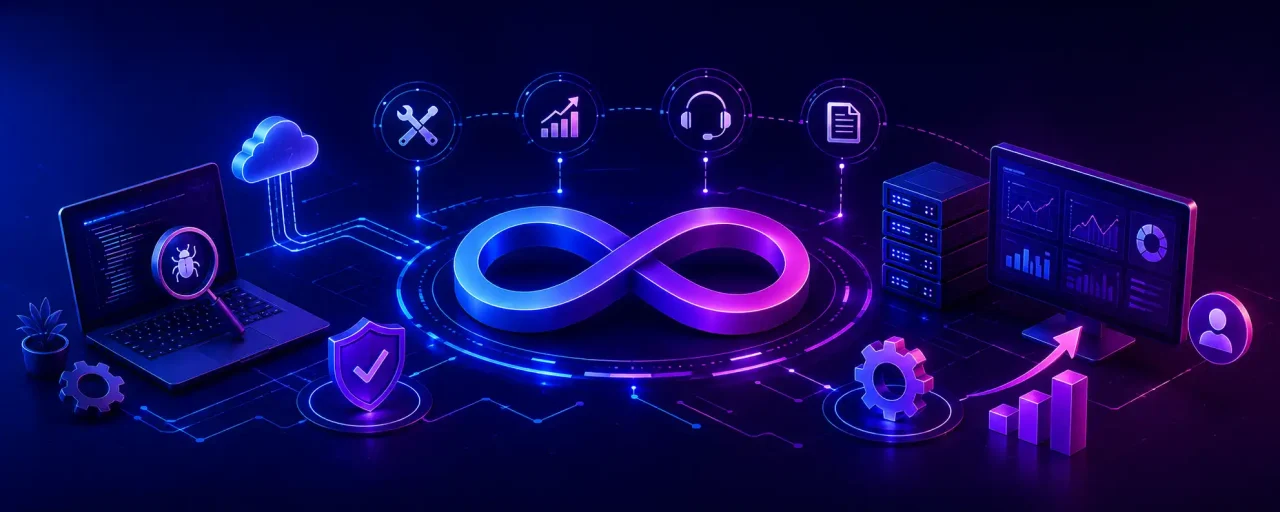
The continuous process of preserving, enhancing, safeguarding, and developing a software product following its initial release is known as product sustenance and support.
Defect resolution, performance optimization, infrastructure management, security patching, feature enhancement, technology upgrades, customer support, release management, and documentation are all included.

Thus, the maintenance of software products is at the nexus of engineering, operations, product management, security, and user experience.
Despite their frequent interchangeability, nourishment, maintenance, and support are not the same.
Technical modifications made after a product is released, such as bug repairs, compatibility updates, patches, and minor enhancements, are typically referred to as software maintenance.
Users and real operations are the main emphasis of product support. It covers ticket management, incident response, troubleshooting, and assisting clients in making efficient use of the product.
These domains are integrated into a more comprehensive lifecycle strategy through product sustenance. It inquires not only about the software’s functionality but also about its continued security, scalability, commercial relevance, and readiness for new requirements.


Understanding the Product Lifecycle

Every software product moves through a lifecycle. These stages may overlap, and products can return to growth after modernisation or repositioning.

Different Stages

Product Development

The first stage in creating a product is identifying a market opportunity, business problem, or customer need.
During ideation, teams define the target market, value proposition, business plan, and expected outcomes. The concept is transformed into requirements, architecture, user journeys, and interfaces through design. Development turns these designs into working software, while testing verifies usability, functionality, security, and performance.
At this point, the first substantial operational data and client input are also generated.

Product Growth

The product gains more consumers, enters new markets, and accommodates additional use cases as it grows.
The evolution of features quickens. Integrations, reporting, mobile experiences, localization, and administrative tools can all be added by teams.
Additionally, infrastructure, architecture, and support operations are strained by growth. Systems built for lower volumes could start to exhibit scalability or performance issues.
Product sustenance engineering now aids in striking a balance between feature delivery, automation, testing, and performance enhancement.

Product Maturity

A mature product typically has years of entrenched business logic, a consistent workflow, and an established customer base.
Retention, efficiency, dependability, and selected innovation become more important.
Additionally, technical debt becomes more apparent at this point. The product can rely on out-of-date libraries, manually deployed software, tightly connected design, or inadequately described code.
Good software product maintenance and support services lower the risks associated with aging while preserving the product’s value.

Product Decline

When a product’s uptake declines, consumers depart, operating expenses increase, or the underlying technology becomes more challenging to maintain, it enters decline.
Stronger rivals, out-of-date user interfaces, few integrations, poor performance, or technology that no longer meets business requirements can all contribute to decline.
The decision to retire, replace, modernize, consolidate, or reposition the product must subsequently be made by the organization.
At this point, sustainability aids in maintaining vital business logic, stabilizing operations, and establishing a controlled route towards modernization or retirement.

Role of Product Sustenance in Every Stage

Product sustenance is important at every stage of the lifecycle. It promotes maintainable architecture, documentation, testing, and operational preparedness during development.

It facilitates controlled feature extension, performance, and scale during growth. It lowers technical debt and boosts productivity as it matures. It safeguards consumers and business continuity while the product is updated or replaced during decline or transformation.


Why Product Sustenance Matters More Than Ever?

  • Customer Retention and Trust

Customers quickly lose confidence in products that are repeatedly unavailable, slow, insecure, or difficult to use.
Trust is built through consistent performance, reliable updates, and responsive support.

  • Increasing Customer Expectations

Users now expect fast, accessible, mobile-friendly, and intuitive digital experiences across industries.
A mature product does not need to follow every design trend, but it must continue reducing friction.

  • Rapid Technology Evolution

Programming languages, databases, frameworks, cloud platforms, browsers, devices, and APIs evolve constantly.
Without regular product sustenance services, a product can gradually become disconnected from the wider technology environment.

  • Security Threats

Even when the product itself remains unchanged, new vulnerabilities appear.
Dependency updates, access reviews, vulnerability scanning, safe configuration, testing, and monitoring are all necessary components of ongoing security management.

  • Regulatory Compliance

Products in healthcare, finance, insurance, education, retail, and other regulated sectors must adapt to changing privacy, accessibility, reporting, and security obligations.

  • Business Continuity

Essential processes are supported by numerous established products. Revenue, productivity, consumer confidence, and service quality can all be impacted by downtime.
Through capacity planning, monitoring, resilience, backups, and disaster recovery, sustainability enhances continuity.


Product Sustenance vs. Product Maintenance

Area Product Maintenance Product Sustenance
Focus Bug fixes Continuous improvement
Approach Reactive Proactive
Enhancements Small changes Product evolution
Technology Keeps current systems running Supports upgrades and modernisation
Scope Limited Complete lifecycle support
Objective Resolve issues Optimise long-term business value

Conventional maintenance frequently starts after a problem arises. A flaw is reported, looked into, resolved, and made available.
Product sustainability searches for recurrent reasons. Teams boost monitoring, update dependencies, modernize unstable components, increase test coverage, and lower the likelihood of future failures.
Because addressing individual flaws does not address issues like slower releases, inadequate scalability, increased infrastructure costs, security holes, or antiquated architecture, businesses are increasingly opting for sustainability.


Core Components of Product Sustenance Engineering Services

Bug Fixes and Defect Management

Defects should be prioritised according to severity, customer impact, security exposure, and business criticality.
Teams should also examine why the issue occurred. Repeated defects may indicate unstable architecture, weak testing, or unclear requirements.

Performance Optimisation

Performance problems often emerge as users, data, integrations, and features increase.
Teams may improve application code, database queries, caching, background processing, and infrastructure configuration.

Security Management

Security work includes patching, dependency scanning, vulnerability management, access reviews, penetration testing, encryption, logging, and incident response planning.

Feature Enhancements

Mature products still need to evolve.
Enhancements may come from customer feedback, regulatory changes, operational needs, or market demand. They should be introduced without destabilising existing workflows.

Technology Upgrades

Technology upgrades prevent the product from becoming dependent on unsupported frameworks, databases, APIs, or operating systems.

Cloud Optimisation

Cloud environments require active management.
Teams can review compute, storage, networking, database usage, and licensing to improve performance and reduce unnecessary costs.

Infrastructure Support

Infrastructure support includes availability, capacity, backups, recovery, deployment environments, monitoring, and network configuration.

Customer Support Integration

Support tickets reveal recurring usability problems, missing features, and confusing workflows.
Connecting support insights with engineering priorities helps teams address root causes rather than repeatedly treating symptoms.

Documentation Management

Accurate documentation reduces dependency on individual employees.
Architecture diagrams, runbooks, deployment instructions, integration details, business rules, and release notes should be maintained continuously.


Different Types of Product Sustenance Services

Corrective Maintenance

Faults discovered after release, such as flawed workflows, mistakes, unsuccessful integrations, and inaccurate computations, are addressed by corrective maintenance.

Adaptive Maintenance

Adaptive maintenance helps the product work within a changed environment, such as a new operating system, API, browser, regulation, or payment standard.

Perfective Maintenance

Improved performance, usability, workflows, reporting, or features are some of the ways that perfective maintenance enhances an already functional product.

Preventive Maintenance

Preventive maintenance reduces future risk through refactoring, dependency updates, improved testing, security hardening, and documentation.


Key Challenges Without Software Product Sustenance

  • Increasing Technical Debt: When short-term delivery choices lead to long-term complexity, technical debt increases. Teams eventually devote more time to identifying vulnerable areas than to making improvements.
  • High Maintenance Costs: Aging systems may require specialised skills, expensive licences, manual deployment, and inefficient infrastructure.
  • Security Risks: Unsupported components and delayed patches increase exposure to known vulnerabilities.
  • Poor Customer Experience: Recurring defects, slow performance, and confusing workflows gradually weaken customer confidence.
  • Downtime: Without monitoring and resilience, small failures can become significant service disruptions.
  • Compatibility Issues: Changes in browsers, devices, APIs, databases, and operating systems can affect functionality.
  • Compliance Risks: Outdated processes and weak audit records can create regulatory exposure.
  • Developer Productivity Decline: Poor documentation, tightly coupled code, and limited automation make development slower and riskier.


Signs Your Product Needs Sustenance Support

When consumer complaints and support issues start to rise, a product could require organized assistance.
Clear warning indicators include old technology, security flaws, sluggish performance, frequent outages, and growing infrastructure costs.
Difficult releases, manual testing, limited scalability, frequent production problems, inadequate documentation, and reliance on a small number of engineers are additional signs.
The organization will have more possibilities for modernization the sooner these problems are resolved.


Benefits of Product Sustenance and Support
Product Sustenance and Support

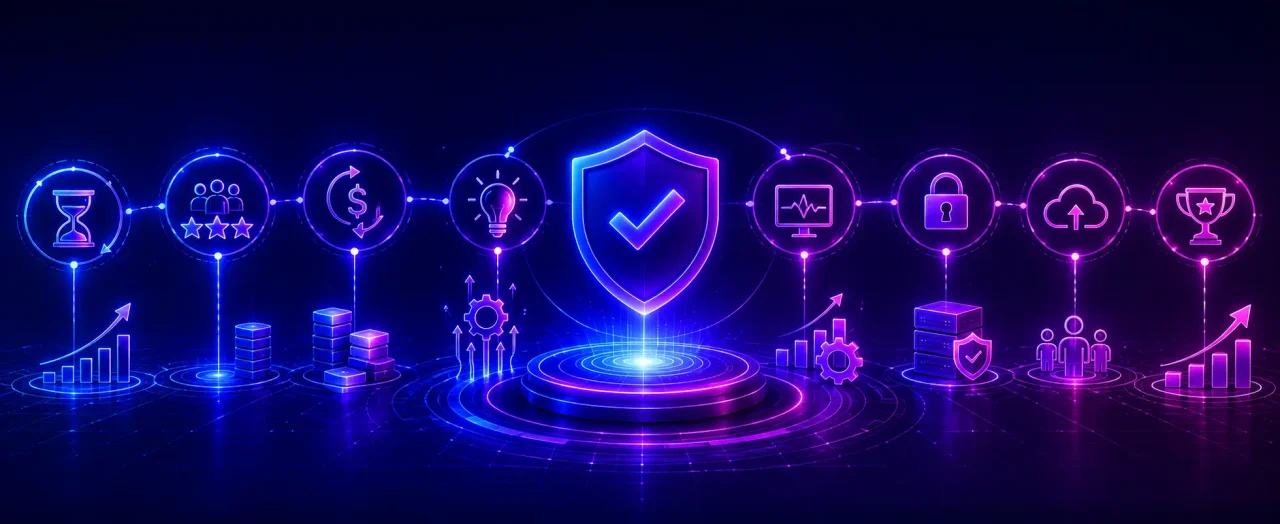
  • Longer Product Lifespan: Sustenance helps organisations preserve valuable software while modernising the highest-risk components.
  • Better Customer Satisfaction: reliability, faster resolution, and continuous enhancement create a better user experience.
  • Reduced Operational Costs: Automation, cloud optimisation, and defect prevention reduce the cost of operating the product.
  • Faster Innovation: Removing technical constraints allows teams to release new features more efficiently.
  • Improved Product Stability: Testing, monitoring, and preventive engineering reduce recurring incidents.
  • Enhanced Security: Continuous vulnerability management helps the product respond to evolving threats.
  • Increased Scalability: Architecture and infrastructure improvements prepare the product for additional users and data.
  • Higher ROI: A product that remains useful and reliable continues generating value from the original investment.
  • Better Brand Reputation: Customers often associate product quality directly with the organisation behind it.


Product Sustenance Best Practices

  • Monitor Product Health Continuously: Monitoring should cover availability, response time, errors, integrations, infrastructure, and critical user journeys.
  • Automate Testing: Regression, integration, API, security, and performance testing make mature products safer to change.
  • Keep Dependencies Updated: Regular upgrades are easier and less risky than waiting several years between major changes.
  • Invest in Documentation: Documentation should be updated as part of delivery, not postponed until a later date.
  • Adopt DevSecOps: Security checks should be integrated into design, development, testing, deployment, and monitoring.
  • Perform Regular Code Reviews: Code reviews improve quality, knowledge sharing, security, and consistency.
  • Prioritise Customer Feedback: Support requests, reviews, interviews, and usage analytics should influence the product roadmap.
  • Use Predictive Monitoring: Predictive monitoring can identify behaviour that may indicate an upcoming failure or capacity issue.


Experion approaches sustenance as part of the wider product engineering lifecycle, combining modernisation, cloud, quality engineering, integration, managed support, and ongoing optimisation.


Modern Technologies Used in Product Sustenance

Artificial Intelligence

AI can analyse logs, incidents, code, support tickets, and performance data.
Predictive maintenance identifies signs that a component may fail. Intelligent monitoring filters meaningful anomalies from normal variation. AI-assisted root cause analysis can connect alerts, logs, and deployment events to suggest likely causes.

Machine Learning

Machine learning can support failure prediction and anomaly detection by identifying unusual patterns in application behaviour, traffic, transactions, or infrastructure usage.

Cloud Platforms

Cloud platforms provide scalable infrastructure, managed services, automated backups, and stronger monitoring capabilities.

Containerisation

Containers package applications with their dependencies and create more consistent deployment across environments.
They can also support gradual modernisation of legacy products.

Observability Platforms

Observability combines logs, metrics, traces, and events to show how issues move across the product environment.

CI/CD

Continuous integration and delivery automate testing, validation, deployment, and rollback.
This allows teams to release smaller changes more safely and frequently.


Product Sustenance for Different Industries

  • Healthcare: Healthcare products require privacy, security, reliability, interoperability, and regulatory compliance.
  • Banking and Financial Services: Financial products demand high availability, transaction accuracy, fraud controls, and secure integration with complex ecosystems.
  • Retail and Ecommerce: Retail platforms must handle seasonal demand, payment systems, inventory updates, and rapidly changing customer journeys.
  • Manufacturing: Manufacturing platforms often connect with equipment, factories, suppliers, and enterprise systems.
  • Logistics: Logistics products depend on real-time data, mobile applications, external partners, and location services.
  • Education: Education platforms must support different devices, accessibility requirements, seasonal demand, and student data protection.


Product Sustenance for Legacy Software

Legacy software often contains years of valuable business logic. Age alone is not a reason to replace it.

Common Legacy Challenges

Typical problems include unsupported technologies, outdated frameworks, weak documentation, tightly coupled architecture, manual deployment, limited testing, and difficult integrations.

Modernisation Approaches

  • Refactoring: Refactoring improves the internal structure of code without significantly changing how the product behaves.
  • Replatforming: Replatforming moves the product to a more modern environment while preserving much of the existing application.
  • Rearchitecting: Rearchitecting changes the structure of the product, such as breaking a monolith into modular services.
  • Containerisation: Containerisation can create deployment consistency and provide an intermediate step towards cloud-native architecture.
  • Cloud Migration: Cloud migration can improve scalability, resilience, and observability, but simply moving an old application to the cloud may not solve its deeper problems.


Outsourcing Product Sustenance Services

Why Companies Outsource?

In order to free up internal teams to concentrate on strategic product development, organizations frequently outsource software product support.
Monitoring, issue response, testing, infrastructure, upgrades, and specific improvements can all be handled by a specialist partner.
Cost effectiveness, access to specialized talents, increased support coverage, quicker problem solving, and the capacity to scale the team as needed are all benefits of outsourcing.

What to Look for in a Partner?

Domain experience, technological know-how, security procedures, explicit SLA guarantees, open communication, committed support teams, and a successful worldwide delivery model are all characteristics of a strong partner.
Instead of handling each support request as a separate ticket, the partner should also comprehend the product plan.


Measuring Product Sustenance Success

Business KPIs

Useful business measures include customer retention, customer satisfaction, Net Promoter Score, revenue growth, product adoption, and feature usage.

Technical KPIs

Technical measures include uptime, Mean Time to Resolution, deployment frequency, incident rate, response time, error rate, and performance.

Operational KPIs

Operational measures include support ticket volume, average resolution time, SLA compliance, infrastructure costs, and documentation coverage.
The strongest measurement model connects technical improvements with customer and business outcomes.


Common Mistakes to Avoid

The organization has fewer options if it waits for systems to fail.
Ignoring technological debt, putting off upgrades, keeping inadequate documentation, depending solely on reactive maintenance, ignoring security updates, failing to measure KPIs, and leaving out user feedback from the roadmap are some other typical errors.
Treating sustenance as low-value labor is another error. Decisions about product support have a direct impact on architecture, future development, revenue, customer retention, and security.


Future Trends in Product Sustenance and Support

Product Sustenance and Support

  • AI-Driven Product Maintenance: AI will increasingly support incident classification, code analysis, test generation, log summarisation, and issue diagnosis.
  • Shift-Left Security: Security testing will move earlier into design and development.
  • Predictive Analytics: Operational data will help predict capacity issues, failures, support demand, and customer churn.
  • Self-Healing Systems: Some systems will automatically restart services, adjust resources, reroute traffic, or restore configurations when known failures occur.
  • Autonomous Monitoring: Monitoring platforms will group alerts, identify likely impact, and recommend actions.
  • Digital Twins: Digital twins may help teams test infrastructure and architecture changes before applying them to live environments.
  • Hyperautomation: AI, workflow automation, testing, infrastructure management, and support operations will become more connected.
  • Sustainable Software Engineering: Teams will pay greater attention to energy usage, cloud efficiency, and unnecessary data storage.
  • Cloud-Native Product Sustenance: To enhance recovery, releases, and scalability, cloud-native sustenance will make use of containers, orchestration, managed services, automated infrastructure, and observability.

From platform scaling and new product development to legacy modernization, sustenance engineering, and managed maintenance, Experion’s product engineering methodology can support the entire lifecycle.


Conclusion

The mere fact that a software product was well-designed and constructed does not guarantee its continued success.  Its surroundings shift. Consumer expectations are rising. Threats to security change with time. Technologies are no longer supported. Rules change. New demands are introduced by business models.

Product sustenance offers a methodical approach to handling this transition.
It enhances security, performance, scalability, usability, and cost effectiveness while safeguarding day-to-day operations. It enables businesses to maintain important business logic without being constrained by antiquated technology.

The most effective sustenance strategies link product development with support. The roadmap is informed by customer concerns. Architecture is shaped by operational data. Delivery now includes security. Instead than waiting for a catastrophe, modernization occurs gradually.

Product Sustenance and Support is more than just a means of extending software life for companies that manage mature or business-critical products. It is a means of guaranteeing that the product will continue to provide value.