




Software Development Partner

Today, every business is becoming a digital business. From healthcare and banking to retail, companies depend on digital solutions to compete, scale, and serve customers better. But building reliable software takes more than coding. It requires product thinking, architecture, UX, security, quality engineering, cloud readiness, and continuous innovation.

That is why many organizations now choose a software development partner instead of relying only on internal teams. A software development partner is not just an outsourced vendor. It is a strategic technology partner that understands business goals, brings specialized skills, and helps build future-ready solutions.

The right software development partnership can accelerate innovation, reduce hiring pressure, optimize costs, and improve scalability. Whether you need a custom software development partner, app development partner, AI software development partner, or nearshore software development partner, the right team can shape your digital roadmap.


Key Takeaways

  • A software development partner helps businesses design, build, test, deploy, and maintain digital products faster.
  • The right software development company offers engineering, QA, cloud, AI, modernization, and long-term support.
  • A good software development outsourcing partner focuses on business outcomes, not just delivery.
  • Choosing the right software development partner requires evaluating expertise, communication, security, pricing, and reliability.
  • A strong software technology partner helps businesses innovate faster while reducing operational risks.


What is a Software Development Partner?

what-is-software-developement-partner

A software development partner is a strategic company that helps businesses design, build, test, deploy, and maintain software solutions. Unlike a vendor that only executes tasks, a software partner works closely with internal teams to understand business goals, customer needs, technical challenges, and long-term growth plans.

It may support end-to-end product development, legacy modernization, cloud-native platforms, AI/ML integration, and ongoing maintenance. For many businesses, software development partners act as an extension of their teams, bringing specialized expertise and structured delivery processes.

How Does it Differ from Traditional Outsourcing? 

Traditional software development outsourcing usually just focuses on getting things done quickly. A company defines the requirement, an external team executes the work, and the final output is delivered. This way of doing things can be good for tasks, but it does not always help the product do well in the long run.

A software development partner is different. They work with you for a time, and you both have the same goals. You are both responsible for what happens. You can see how things are going. The software development partner helps with planning, designing, and making sure things are done well. They also help with dealing with problems and making things better all the time.

The right software development partner does not just give you code. They help you solve problems. They ask questions like why you need something, how it will help the people using it, if it will work when it gets bigger, and if it will help your company grow. This way of thinking about what you want to achieve is what makes a real software development partnership different from working with someone who does what you tell them.


Need a software partner who can help you scale smarter and innovate faster?
Let’s start the conversation


Why Do Businesses Need a Software Development Partner? 

Businesses need technology teams that can move quickly without compromising quality. Building a team with all the skills in house can be really costly and take a lot of time. That is where a software development services company comes in. It gives organizations access to engineers and other professionals like architects and designers and QA specialists and DevOps experts and data engineers and AI professionals without the usual hiring delays.

A good software development firm can also make hiring easier. Companies do not have to spend months looking for people with skills. They can just work with a technology partner that already has what they need. This is really helpful when businesses need to grow or launch a new product or update their systems or enter a new market.

Software development partners can also help businesses develop products faster. They have delivery frameworks that work and components that can be used again and again and agile practices and teams that work together. All this can help make development cycles shorter. It is also cost-efficient because businesses can choose how they want to work with their partner based on the project and the time they have and the money they want to spend.

Importantly a software development outsourcing partner lets the people inside the company focus on what the company does best. The external experts take care of the technology. Making sure it works and can grow and is supported. This allows internal teams to focus on their core strengths, and the software development partner does the rest. 


Key Services Offered by a Software Development Company

So what does a software development partner actually do? A software development partner helps with the software lifecycle. This means they support a business across the software lifecycle, from idea to launch and beyond. They do maintenance on the software after it is launched. The things that a software development partner does can be different depending on what a business needs. Usually a software development partner that has a lot of experience will be able to do a lot of different things for you.

Custom Software Development

A custom software development partner makes software that is made for a company. This software is designed to work with the way the company does things, what the customers want, and what the company wants to achieve. It is different from software that you can buy in a store. Custom software is made to work with the way a company does things every day. It can grow with the company.

Product Engineering Services

Product engineering includes product strategy, architecture, UX design, development, testing, deployment, and continuous improvement. It is ideal for companies building platforms, SaaS products, enterprise applications, or customer-facing digital solutions.

Digital Transformation

A software development company helps businesses modernize operations through automation, cloud adoption, data platforms, customer portals, enterprise integrations, and digital-first experiences.

Web Application Development

Web application development focuses on creating secure, responsive, high-performing applications for customers, employees, partners, or internal business operations.

Mobile App Development

An app development partner designs and develops mobile applications for iOS, Android, and cross-platform environments, ensuring usability, performance, security, and smooth integration with backend systems.

Data and AI/ML Integration

An AI software development partner can help organizations use data more effectively through analytics platforms, recommendation engines, predictive models, intelligent automation, generative AI features, and machine learning workflows.

Cloud Development & Migration

Cloud services include cloud-native development, infrastructure modernization, migration planning, DevOps, containerization, scalability optimization, and cost management.

Legacy System Modernization

Legacy modernization helps businesses replace outdated systems, improve performance, reduce maintenance costs, and integrate older applications with modern digital ecosystems.

QA and Testing Services

Quality assurance covers manual testing, automation testing, performance testing, security testing, usability testing, regression testing, and continuous quality engineering.

Ongoing Maintenance and Support

Post-launch support ensures applications remain secure, stable, updated, and aligned with changing user expectations and business needs.


Benefits of Choosing the Right Software Development Partner

The right software development partner can really help businesses get their ideas out there faster. One of the things about this is that it helps businesses come up with new ideas and make them happen quickly. When businesses work with teams and use methods that have been proven to work, they can try out new things, make sure they are good, build them, and get them to people faster.

Better quality products are another thing that comes from working with a good software development partner. Companies that have a lot of experience making software follow rules for building, checking code, testing, and keeping track of changes. They make sure to write down what they do. This means there are fewer issues, and the products are more reliable.

Being able to grow or shrink as needed is really helpful for companies that are getting bigger. A business might need a team when they are first thinking about an idea, a bigger team when they are building it, and a team to help after it is out. A software development services company can change the size of the team based on what the business needs at the time.

Not taking on much risk is also important. Experienced software development partners can see problems with technology, operations, and security early on. They help businesses avoid making decisions about how to build something by not being clear about what they want, not writing down what they do, and putting out products that do not work well.

In the end the right software development partner gives businesses an edge over others by combining knowledge of technology with understanding of the business. The right software development partner helps businesses by giving them the technology expertise and business understanding they need to succeed. The software development partner can really make a difference for businesses by helping them with technology and business.


Looking for a technology partner to turn your software vision into real business impact?

Connect with Experion


How to Choose the Best Software Development Company Partnership?

When you want to find the best software development company to work with, you need to be clear about what you want. First you have to think about what you’re trying to do. Are you making a product updating an old one using artificial intelligence or trying to get more people to help with development? If you know what you want, it is easier to find the software development company.

Next, evaluate the company’s technical expertise. Check if they have experience with the things that are important to you, like cloud platforms, artificial intelligence, and user experience. A good software development company should be able to tell you not just what they can do. Why they think it is a good idea.

It is also important to look at the company’s work and the results they got. This will show you if they can handle projects that’re similar to yours and if they can get good results.

You should also think about how the company communicates with you. Do they tell you what is going on in a way that makes sense? Do they have a plan for if something goes wrong? Do they work with you to ensure everyone is on the same page? It is also important to like the company’s culture because you will be working with them for a time.

Before you agree to work with the company, you need to understand how they charge for their work. Different companies charge in different ways, so you need to know what you are getting into. Finally, ensure the company has strong security, privacy, and data protection practices.


Experion combines domain-led consulting, product engineering expertise, agile delivery, and long-term support models to help businesses build scalable and future-ready digital solutions.


Common Mistakes to Avoid When Hiring a Software Development Partner

When you are looking for a software development outsourcing partner, do not just choose the one that’s the cheapest. This can cause a lot of problems, like quality missing deadlines, poor communication, and having to do expensive work all over again. The cost is important. What you get for your money is even more important.

Lots of people make the mistake of ignoring communication problems. Even if a team is really good at the stuff, they can still fail if they do not keep you updated, if they take too long to make decisions, or if they do not understand what you want. You should also not start working on a project without figuring out what needs to be done, what is most important, how you will measure success, and who is in charge.

Not doing your homework can be really risky. Before you commit to a partner, you should check out their architecture capabilities, how mature their engineering is, how they test things, how they handle security, and how their team is set up.

What happens after you launch your software is often forgotten. You need to keep an eye on it, update it, fix problems, make it better, and see what users think. If you do not check what other people say about a partner, you might choose one that looks good on paper but does not actually deliver.

  • You need to define the scope of your project
  • You need to set priorities
  • You need to figure out how you will measure success
  • You need to know who is in charge

You should really think about these things when you are choosing a software development outsourcing partner.


Industries That Benefit from a Software Development Partner

Healthcare and life sciences companies use software development partners to build secure patient platforms, interoperable systems, compliance-ready applications, and data-driven care solutions.

Banking and financial services organizations benefit from digital onboarding, payment platforms, lending systems, risk management tools, customer portals, and regulatory technology solutions.

Retail and e-commerce businesses need scalable commerce platforms, mobile apps, inventory integrations, personalization engines, loyalty systems, and omnichannel customer experiences.

Education organizations use software partners to create learning platforms, student engagement tools, AI chatbots, analytics dashboards, and administrative automation systems.

Engineering and construction firms benefit from project management platforms, asset tracking, field operations tools, documentation systems, and collaboration software.

Transportation and logistics companies rely on software solutions for route optimization, fleet management, shipment tracking, warehouse visibility, and operational efficiency.

Manufacturing businesses use software development partners for automation, IoT integration, predictive maintenance, production planning, and supply chain intelligence.


Types of Software Development Partnership Models

Staff Augmentation

Ideal for filling specific skill gaps within an existing team. This model works well when a company has internal leadership but needs additional developers, testers, designers, or specialists.

Dedicated Development Teams

A long-term, managed team that works as an extension of the business. It is suitable for continuous development, evolving requirements, and predictable delivery capacity.

Project-Based Outsourcing

Best for well-defined projects with clear scope, timelines, and deliverables. It works well for one-time builds or specific development initiatives.

The “Hybrid” Approach

The hybrid approach combines internal teams, external specialists, and dedicated partner teams, giving businesses flexibility while maintaining strategic control.


In-House Team vs Software Development Partner

Model Pros Cons
In-House Strong internal control, deeper company context, easier day-to-day collaboration Higher hiring costs, slower scaling, limited access to niche skills
Software Development Partner Access to specialized talent, faster delivery, flexible scaling, mature processes Requires strong communication and partner governance
Hybrid Model Balanced control and flexibility, access to external expertise, scalable delivery Needs clear ownership, coordination, and defined workflows

In-House

An in-house team is ideal when software is central to the business and requires constant internal ownership. However, recruitment, retention, training, and scaling can be challenging.

Software Development Partner

A software development partner provides flexibility, specialized expertise, and faster access to delivery capacity. It is especially useful for complex builds, modernization, and innovation programs.

Hybrid Model

A hybrid model combines the best of both worlds. Internal teams retain strategic control while software development partners support execution, specialized tasks, and scalability.


Understanding Pricing Models, Contracts and Total Cost of Software Partner Engagement

Pricing models demystified

A fixed price works well when the scope is clearly defined. Time and materials give more flexibility but need active oversight. Dedicated teams offer predictable monthly costs, while milestone-based pricing works well for phased delivery.

What’s included and what’s not

Businesses should clarify whether QA, DevOps, infrastructure, documentation, project management, and knowledge transfer are included in the proposal. This avoids surprises later.

Red flags in pricing proposals

Be cautious of unusually low quotes, vague change request policies, unclear assumptions, and no mention of ramp-up or ramp-down terms.

Key contract clauses every company should insist on

A strong contract should cover IP ownership, source code transfer, NDA terms, data protection, SLAs, exit clauses, and support responsibilities.

Total cost of engagement (TCE) calculator concept

Total cost should include direct development costs, onboarding, coordination, infrastructure, documentation, and risk buffers. This helps compare proposals more accurately.


Emerging Trends in Software Development Partnerships

AI-Assisted Development

AI is helping teams write code, test faster, analyze requirements, and improve productivity. An AI software development partner can help businesses use these capabilities responsibly.

Remote Global Teams

Remote delivery is now common, with businesses choosing offshore, onshore, or nearshore software development partner models based on cost, collaboration, and time zone needs.

Product-Led Engineering Models

Product-led engineering focuses on user value, business outcomes, experimentation, and continuous improvement instead of only delivering features.

Cybersecurity-First Development

Security is now built into the development process through secure coding, vulnerability checks, compliance practices, and data protection measures.

Cloud-Native Architecture

Cloud-native architecture supports faster releases, better scalability, improved resilience, and more efficient infrastructure management.

Data-Driven Product Decisions

Analytics, user behavior insights, and product metrics help businesses improve features, performance, and customer experiences after launch.


Questions to Ask Before Signing a Contract with a Software Development Services Company

Before choosing a software development services company, ask about similar projects delivered, team structure, change request handling, communication cadence, code quality practices, and post-deployment support.

These questions help reveal how the technology partner manages delivery, accountability, risk, and long-term collaboration.


How Would Experion Be the Best Software Development Services Partner?

Experion Technologies brings together product engineering, digital transformation, cloud, data, AI/ML, mobility, QA, and modernization capabilities to help businesses build scalable digital solutions.

With experience across healthcare, financial services, retail, education, logistics, manufacturing, and engineering, Experion supports clients from consulting and design to development, testing, deployment, and long-term maintenance.

Experion has the expertise to support businesses as a software technology partner by combining domain understanding, agile engineering, and outcome-focused delivery to help businesses modernize platforms, reduce complexity, and create future-ready digital experiences.


Ready to build with a software development partner who understands your business goals?

Let’s talk


Conclusion

Choosing the right software development partner can shape business success in powerful ways. The right partner brings more than development capacity. It brings strategy, innovation, scalability, reliability, and long-term accountability.

As digital transformation becomes central to growth, businesses need software development partners who can think beyond code and contribute to business outcomes. Whether you are looking for a custom software development partner, technology partner, tech partner, AI software development partner, or software development outsourcing partner, the decision should be based on expertise, trust, communication, security, and long-term value.

A strong partnership can help businesses launch faster, reduce risks, scale confidently, and stay competitive in an increasingly digital world.

Spend Analysis Software

Most enterprises struggle to get a clear view of organizational spend despite using multiple ERP systems. Procurement data is distributed across spreadsheets and finance tools, making visibility difficult.

Modern spend analytics software helps enterprises classify and analyze procurement data from across the organization. AI-powered spend analysis platforms enable automated spend classification and supplier intelligence. This blog evaluates how modern spend analysis solutions work and what businesses should evaluate when choosing a spend analysis platform.


Key Takeaways

  • Spend analysis software consolidates, classifies, and structures procurement spend data across systems, so category managers and finance teams work from the same numbers.
  • AI spend analysis software dramatically improves classification accuracy compared to rules-based tools, and, unlike rules engines, it gets better as it processes more data.
  • Generative AI spend analytics software adds something different: Natural language access to spend data, which means non-technical users can query dashboards and get answers without waiting for a report.
  • The right spend analysis platform depends heavily on your data environment, integration requirements, and how fast you need value, not just which vendor has the best feature list.
  • The best tools connect analysis to action: savings tracking, supplier consolidation, and contract compliance monitoring.


What is Spend Analysis Software in Procurement?

Spend Analysis Software og

Spend analysis is the process of consolidating procurement expenditure data, cleaning it, classifying it, and making it usable. In the Source-to-Pay (S2P) lifecycle, spend analysis sits at the foundation before sourcing strategy, negotiations, or meaningful supplier conversations. If the spend data isn’t clean and categorized, everything downstream is built on guesswork.

The functions of a good spend analysis in procurement include:

  • Visibility – The starting point. Before you can negotiate better, consolidate suppliers, or flag compliance issues, you need to know what you’re spending, with whom, and across which categories.
  • Analysis – Where patterns emerge. Which suppliers are being used by three different business units under slightly different names? Which categories have 40 vendors when five would do? Where is spending going off-contract? Classification turns transactions into a structured view of those questions.
  • Action – Spend analysis that produces a dashboard nobody acts on has no value. The tools worth using connect category-level insights directly to sourcing decisions, renegotiation triggers, and supplier consolidation targets.
  • Data quality – It is really important as it affects how well traditional methods work. Most procurement organizations pull spend from SAP, Oracle, Coupa, and other systems – each with its own supplier naming conventions, currency handling, and category codes.

‘IBM,’ ‘IBM Corp.,’ ‘International Business Machines,’ and ‘IBM United Kingdom Ltd.’ can all sit in the same dataset and be treated as four separate suppliers. Manual classification at that scale is slow, inconsistent, and expensive.

Manual vs. Automated Spend Analysis Software

Dimension Manual Analysis Automated Spend Analysis Software
Speed Weeks to months Hours to days
Accuracy 60–70% classification accuracy 90–97% with AI enrichment
Scalability Breaks down at volume Handles millions of line items
Frequency Quarterly or annual Continuous, real-time
Insight depth Category-level only Category, supplier, contract, risk
Cost High analyst hours Lower OpEx over time


Core Functions of a Spend Analysis Platform

  • Pulling and consolidating spend data from disparate ERPs, P2P systems, procurement cards, and invoice tools
  • Normalizing supplier names and building parent-child hierarchies so you view total group-level spend, not subsidiary fragments
  • Classifying spend against a taxonomy: UNSPSC, custom, or both
  • Flagging off-contract purchases and maverick spend
  • Surfacing consolidation and savings opportunities
  • Feeding category management and sourcing strategy with structured, reliable data


Why Spend Analysis Matters?

Poor spend visibility has a direct cost: it’s just usually invisible on the P&L.

  • Maverick spend:
    Purchases made outside approved contracts are termed asmaverick spend. This means you’re not getting negotiated pricing, and you’re probably not tracking the volume that would get you better pricing next time. Duplicate suppliers create other inefficiencies.
    For example, A large manufacturer discovered that it had 14 active vendors for industrial fasteners across three business units. Consolidated, that spending would have given them real leverage. Fragmented, it gave them 14 mediocre relationships.
  • Compliance and Risk Management
    Compliance and risk issues do not arise until they become an issue. Suppliers who are not properly mapped and monitored can’t be screened for ESG criteria, financial instability, or sanctions exposure. Contract compliance gaps do not surface until someone asks why actuals are 20% above the negotiated rate.
  • Growing importance of ESG and Sustainable Reporting
    With accurate, structured spend data, procurement teams can track supplier diversity metrics, contribute to Scope 3 emissions reporting, and demonstrate progress on sustainability commitments. These areas are increasingly part of enterprise reporting obligations.


How AI is Transforming Spend Analytics Software?

The Shift from Traditional Analytics to AI Spend Analysis Software

Rules-based classifications work well on small datasets. However, enterprise spend data is neither small nor clean. Rule engines do not handle ambiguity well and require constant manual maintenance as new suppliers, categories, and data sources emerge. At scale, the maintenance burden alone often exceeds the team’s capacity to manage it.

AI spend analysis software takes a different approach.  ML models are trained on large volumes of historical transactional data, learning the contextual signals that indicate category, risk, and anomaly status.

Once trained, these AI models handle edge cases that would require manual exceptions in a rules-based system, and they improve as they process more data.

AI spend analytics software: Overview of capabilities

An overview of the AI spend analytics software platform:

  • NLP-based supplier normalization that identifies ‘Microsoft Corp.,’ ‘Microsoft Ltd.,’ and ‘MSFT Azure’ as the same entity
  • Multi-level taxonomy classification with confidence scoring, so low-confidence classifications get flagged for review rather than misclassified.
  • Predictive spend forecasting at the category and supplier level, built on historical patterns.
  • Third-party data enrichment from sources like Dun & Bradstreet, diversity certification databases, and ESG rating providers
  • Recommendation engines that surface savings opportunities continuously, rather than waiting for a quarterly review

Machine Learning Spend Analytics Software: Core Capabilities

These are the 3 areas where ML spent analytics software makes a difference:

  1. Automated data cleansing: Deduplication and supplier normalization used to take analyst teams weeks. ML models complete it in hours, and they build parent-child hierarchies that let you see true group-level spend rather than fragmented subsidiary data.
  2. Smart categorization: ML models trained on procurement data can classify spend lines with accuracy above 95% and, more importantly, they learn from manual corrections. When a category manager reclassifies a transaction, that signal feeds back into the model.
  3. Anomaly detection: Rather than waiting for month-end reports, ML-powered anomaly detection flags unusual patterns. This includes duplicate invoices, off-contract purchases, and suspicious spend spikes.


Talk to an Experion procurement specialist and find out where your spend data is costing you.

Book a free assessment


Practical use cases and limitations

Where AI spend analysis software genuinely matters:

  • High-volume classification tasks
  • Supplier normalization
  • Anomaly detection
  • Spend forecasting.

These are pattern-recognition problems at scale, which is exactly what ML handles well.

However, human judgment is still essential: interpreting what a pattern means in context, understanding supplier relationship nuance, and making strategic decisions that models can surface but can’t own.

A model can flag that spend in a category jumped 18%, but deciding whether that’s a problem, a planned ramp, or a negotiation opportunity requires someone who understands the business.


What to Look for in Gen AI Spend Analytics Software

What is Generative AI Spend Analytics Software?

Generative AI spend analytics software takes the classification and analysis that ML handles and makes it conversational.

Instead of navigating dashboards and applying filters, a procurement manager can ask, ‘Which of our logistics vendors increased rates more than 10% in the last two quarters?’ and get a structured answer.

That sounds simple, but it removes a real barrier. Most procurement analytics tools are designed for people who know what they’re looking for. Generative AI spend analysis software makes spend data accessible to business users who have the right questions but not the technical skills to pull the answers themselves.

Use cases of Gen AI Spend Analysis Software

  • Conversational procurement dashboards: Natural language queries replace static filters, making self-service analytics genuinely accessible.
  • Automated procurement reporting: LLMs can generate narrative summaries of spend trends, category performance, and supplier activity
  • AI-generated supplier summaries: Combine internal spend data with external market intelligence to generate supplier profiles on demand.
  • Spend variance explanations: Automatically explain why spend in a category increased or decreased, attributing changes to price, volume, or supplier mix
  • Smart procurement recommendations: Context-aware suggestions for renegotiation targets, consolidation plays, or alternative sourcing options.


Key Features of the Best Spend Analysis Software

Data Ingestion & Integration

The platform needs to connect to wherever your spending data lives. For most enterprises, that means SAP, Oracle, Coupa, Ariba, Jaggaer, Workday, NetSuite, bank card feeds, and possibly several legacy systems alongside them.

Look for pre-built connectors that support real-time APIs, not just batch imports.

AI-Driven Classification & Enrichment

The platform needs to connect to where your spending data lives. For most enterprises, that means SAP, Oracle, Coupa, Ariba, Jaggaer, Workday, NetSuite, bank card feeds, and several legacy systems. Look for pre-built connectors with real-time API support, not just batch imports – if your spend data is a week old, so are your insights.

Dashboards, Drill-Downs & Self-Service Analytics

A category-level summary for the CPO.

A line-item drill-down for the category manager.

Finance requires budget vs. actual by cost center.

A good platform serves all three without requiring custom reports for each. Role-based views and self-service drill-down capability are what separate a useful tool from one that creates a bottleneck through the analytics team.

Opportunity Identification & Savings Tracking

This is where spend analysis connects to procurement results. Tail-spend consolidation tools, payment-term optimization, and pricing benchmarks give category managers actionable insights.

Savings tracking – connecting identified opportunities to actual realized value – closes the loop and gives the function something concrete to report.

Generative AI Copilots

The best spend analysis platforms now embed a conversational interface directly into the analytics environment.

Users can query spend data in natural language, receive automatically generated narrative summaries, and receive proactive alerts written in plain language rather than raw data outputs.

This is a meaningful differentiator in vendor selection.

Security, Audit & Governance

Procurement spend data is sensitive. Enterprise platforms should be SOC 2 Type II certified and GDPR-compliant, with full data lineage tracking and role-based access controls. Data lineage matters particularly when integrating multiple source systems.


Experion’s AI and procurement technology specialists can support the development of spend analysis platforms that integrate seamlessly with leading ERP and P2P ecosystems—helping enterprises move from fragmented data to unified, real-time spend intelligence.


Spend Analysis Tools for Procurement: How to choose the right one

H3: Assessment Checklist

Before you sit through vendor demos, answer these questions about your own environment:

  • What AI spend analytics software capabilities do you actually need right now versus in two years?
  • Will the primary users be analysts comfortable with data tools or business users who need a consumer-grade interface?
  • How quickly do you need to see value, and what does your data quality situation look like going in?


H3: Step 1 – Define Your Spend Data Landscape

Map every source that contributes to procurement spend:

  • ERPs
  • P2P tools
  • Procurement cards
  • Expense systems
  • Supplier invoicing portals.

Know the volume, the refresh cadence, and the quality of what’s coming out. Platforms perform very differently on clean, structured data versus what most enterprises actually have.


Start with one category, one data source, one clear output.
Our team can transform your raw data to insight within weeks


Step 2 – Prioritize AI & Automation Capabilities

Not every platform uses AI the same way. Some have genuine ML classification with feedback loops. Others have applied the ‘AI’ label to a rules engine with a few statistical layers on top. Ask vendors for classification accuracy benchmarks on datasets similar to yours in size, category complexity, and language mix.

Step 3 – Evaluate Time-to-Value (Speed of Implementation)

Some cloud-native spend analysis solutions can deliver usable insights within 4 to 6 weeks of data onboarding. Others involve 6 to 12 months of implementation before the first dashboard goes live. Know what your organization can absorb, and factor in implementation complexity when calculating the total cost.

Step 4 – Check Scalability and Taxonomy Flexibility

The volume of spend data will grow, and your taxonomy requirements will evolve. Make sure the platform can scale without requiring re-implementation and that it supports custom category structures if your hierarchy doesn’t map cleanly to classification systems such as UNSPSC (United Nations Standard Products and Services Code).

Step 5 – Validate Vendor Roadmap on Generative AI

Gen AI spend analytics software capabilities are changing fast. Some vendors have real, funded development roadmaps.

Others have a chatbot wrapper around a static report. Ask for specifics: What LLM infrastructure are they using, what’s the timeline for conversational analytics, and what does the product look like in 18 months?

Step 6 – Pricing Models & TCO Considerations

Licensing is only part of the cost. Factor in implementation, data integration effort, training, and ongoing support. SaaS subscription models are typically more predictable; enterprise licensing can be a better value at very large transaction volumes.

Get total cost of ownership estimates, not just the headline price.


Benefits of a Unified Procurement Spend Management Software

Improved Procurement Spend Management

One of the most immediate effects of a properly deployed spend analysis platform is simple: everyone is working from the same numbers. The procurement team, finance, and business unit leads stop arguing about whose figure is right and start talking about what to do. That sounds minor. In practice, it removes a significant source of friction from every strategic conversation.

Enhanced Supplier Negotiations

When you walk into a supplier negotiation knowing your total group-level spend, the pricing trend over 24 months, and how that supplier’s rate compares to alternatives – you negotiate differently. Spend data that’s accurate and current changes the dynamic. Suppliers know when you know your numbers.

Increased Operational Efficiency

Automated spend analysis software significantly reduces the time procurement analysts spend on data pulling, cleaning, and report building. That time can be used in market analysis, supplier relationship management, and sourcing strategy.

The teams that have done this consistently report that it changes what analysts spend their days doing, not just how fast they do the same tasks.

Better  Strategic Sourcing Decisions

Category managers make better sourcing decisions when they can see the full picture: which categories are competitive and worth running an RFP, which have unhealthy single-source concentration, and which are fragmented across too many vendors to negotiate effectively. Spend analysis makes those patterns visible. The decisions still require judgment—but they’re better-informed ones.

Reduced Procurement Risks

Spend visibility is an early warning system. Supplier concentration risk, ESG compliance gaps, pricing anomalies, contract leakage- these tend to be invisible.

Artificial intelligence spend analysis software adds continuous monitoring that flags issues before they escalate, a different operating mode from discovering problems during the quarterly review.


Future Trends in Procurement Spend Management Software

Rise of Generative AI Procurement Assistants

LLM-powered procurement assistants are moving from pilot projects to production deployment in enterprise environments. The near-term direction is clear: these tools will handle a growing share of the analytical work – drafting supplier briefings, explaining spend variance, simulating contract scenarios – leaving human judgment for the decisions that actually require it.

Autonomous Procurement Analytics

The next step beyond automated spend analysis software is continuous monitoring that runs without human intervention. Systems that track spend patterns, identify deviations, trigger alerts, and execute defined workflows without waiting for someone to run a report. Early versions are already in production at some organizations. The technology isn’t speculative.

Real-Time Predictive Spend Intelligence

Backward-looking spend reports are useful. Forward-looking spend forecasts are more useful. Future spend analysis platforms will incorporate commodity price signals, macroeconomic indicators, and supplier financial health data to give procurement teams a view of what’s likely to happen next quarter, not just what happened last quarter.

AI-Powered Supplier Collaboration

Spend intelligence will start to operate at the supplier relationship level—shared data, joint cost-reduction programs, and synchronized demand signals. This changes the nature of strategic supplier relationships from transactional to genuinely collaborative. The data infrastructure to support that is where spend analysis platforms are heading.

Hyperautomation in Procurement Operations

Spend analysis doesn’t operate in isolation. As it integrates more tightly with intelligent document processing, AP automation, contract management, and sourcing tools, the procurement process becomes increasingly continuous. The procurement cycle that takes weeks today is progressively collapsing into something faster with far less manual coordination.


Still reconciling spend data across spreadsheets before every sourcing decision? There’s a faster way.
See how it works


Industries Benefiting from AI Spend Analytics Software

Manufacturing

The split between direct and indirect spend is a constant challenge in manufacturing.

AI spend analytics software gives category managers visibility across both, enabling better raw material sourcing decisions, more disciplined MRO (Maintenance, Repair, and Operations) spend management, and supply chain risk monitoring across multi-tier supplier networks. This is where most of the risk actually lives.

Healthcare

Healthcare procurement has a specific compliance dimension: GPO contract adherence. When facilities are purchasing outside contracted arrangements, the financial impact is real and often invisible until year-end. Spend analysis in procurement provides health systems with visibility into where local purchasing decisions undermine enterprise-negotiated pricing.

Retail and eCommerce

For retailers, spend analytics has a direct COGS connection. Tracking supplier rebates, managing promotional procurement, and monitoring pricing variances against negotiated rates all affect margin. For eCommerce players specifically, real-time spend visibility matters during high-velocity periods. Black Friday spend patterns look very different from Q2, and the platform needs to handle both.

Banking and Financial Services

Vendor risk management is the primary use case here.

Financial institutions have strict regulatory requirements around third-party concentration risk, and spend analysis platforms provide the data infrastructure to monitor and report on that. Spend concentration analysis is the process of understanding how dependent the institution is on specific vendors.

Logistics and Supply Chain

Fleet, fuel, carrier, and maintenance spend are among the most volatile cost categories in logistics.

Spend analysis platforms help operators identify where volume consolidation or renegotiation can offset cost increases beyond their control—such as fuel prices, driver shortages, and route changes.

Government and Public Sector

Public procurement is subject to transparency and audit requirements that the private sector doesn’t face. Spend analysis platforms support compliance reporting, supplier diversity tracking, and audit readiness.


The Rise of AI and Machine Learning Spend Analysis Software

  • Beyond Rules-Based Systems: Rules-based classification engines were built for a different era – smaller datasets, fewer source systems, cleaner data. At enterprise scale, they break. The maintenance burden of keeping rules current as suppliers, categories, and systems change often exceeds what the procurement analytics team can absorb. Machine learning spend analysis software handles this differently.
  • Key Capabilities:
    • Automated Data Cleansing: Normalizes inconsistent supplier names, removes duplicates, and resolves fragmented records across ERPs, P2P systems, and card feeds. The supplier master that nobody has had time to clean gets cleaned.
    • Smart Categorization: Maps spend to UNSPSC or custom enterprise taxonomies with accuracy above 95%, and unlike rule engines, the model improves when analysts correct it. Feedback loops, not manual rule updates.
    • Anomaly Detection: Flags maverick spend, duplicate invoices, pricing inconsistencies, and unusual purchasing patterns as they occur. Not in next month’s report.
  • The Benefit: The cumulative effect is a different operating mode: continuous spend intelligence rather than a quarterly exercise that’s already out of date by the time it circulates.


Implementation Best Practices

Getting the technology right is maybe half the implementation challenge. These are the process elements that determine whether it actually works:

  • Data mapping and taxonomy alignment – Map your data sources first. Understand what’s coming in, from where, and what quality to expect before you choose a taxonomy. The most common cause of poor classification accuracy is taxonomy structures that don’t match the source data.
  • Clean-first approach: ETL, deduplication, and vendor master normalization must occur before the platform sees your data. No AI model makes dirty source data produce reliable output.
  • Start with high-impact categories: Apply Pareto logic. Focus the first phase on the categories that represent the bulk of addressable spend. Getting those right early builds trust in the platform across the organization.
  • Procurement, finance, and IT need to co-own this: Implementations that sit entirely with IT rarely produce the right taxonomy decisions. Implementations that sit entirely within procurement struggle with data engineering. Both need to be in the room.
  • Pilot with a real category, not a test dataset: Validate classification logic and dashboard usability in production conditions before rolling out enterprise-wide. What looks good on a demo dataset can behave differently on actual spend data.
  • Users need to trust the numbers: Spend analysis tools for procurement fail when teams suspect the data is wrong and default back to their own spreadsheets. Training, communication, and visible accuracy from day one are not optional.


Choosing the Right Spend Analysis Solution for Your Enterprise: Cloud Platforms, On-Premises, and Embedded Tools

Organizations evaluating procurement analytics platforms often encounter terms such as spend analysis platformspend analysis solution, and spend analysis tools. While these terms are related, they are not always interchangeable.

Spend Analysis Platform vs. Solution vs. Tools

Type Description Best Suited For
Spend Analysis Platform A comprehensive system offering data aggregation, classification, dashboards, supplier analytics, AI capabilities, and reporting in one environment Large enterprises with complex procurement ecosystems
Spend Analysis Solution A broader term that may include a combination of software, services, consulting, and integrations designed to improve spend visibility Organizations seeking end-to-end procurement transformation
Spend Analysis Tools for Procurement Individual tools focused on specific functions such as dashboards, supplier analysis, or category tracking Smaller teams or organizations with targeted requirements


Real World Use Cases & Industry Applications

Spend analysis software delivers value differently across industries, as compliance requirements vary significantly.

  • Manufacturing: Manufacturing often results in two types of spends-
  • Direct Spend: This includes raw materials directly tied to manufacturing output.
  • Indirect Spend: Includes maintenance, logistics, and operational purchases.

Spend analysis helps manufacturers improve inventory planning, reduce maverick purchasing, and strengthen supplier negotiations.

  • Healthcare
    Most health systems have GPO contracts that offer competitive pricing on clinical supplies. The problem is that facility-level purchasing routinely bypasses those agreements, and without spend visibility, the leakage stays invisible until the annual compliance report lands. Spend analysis makes that gap visible in real time by facility, by category, by department. It also surfaces equivalent clinical products being purchased at materially different price points across sites – a conversation supply chain and clinical leadership can have when the data is in front of them. Without it, it doesn’t happen.
  • Financial services
    Regulators expect financial institutions to understand their material third-party dependencies. That requires spend data, not just vendor lists. Spend concentration analysis tells you what a vendor register doesn’t: actual financial dependency, the activities tied to it, and categories where there’s no competitive alternative. Unusual payment patterns and off-panel purchases get flagged before they become audit findings.
  • Retail
    In retail, spend analysis connects directly to margin. Tiered rebate agreements mean volume thresholds unlock better percentages, but tracking whether purchases are actually hitting those thresholds requires spend data that’s current and accurate. Without it, organizations routinely miss tiers they could have reached. The income stays with the supplier. For eCommerce retailers, the timing problem amplifies everything. Q4 spend patterns look nothing like baseline, and outdated data means decisions that hurt margin are made on stale numbers.
  • Public sector
    Every significant public procurement decision is potentially subject to scrutiny – and the burden is on the organization to document and justify it, not assemble evidence after an inquiry arrives. Spend analysis creates the structured data foundation that makes compliance reporting manageable: transparency disclosures, diversity spending summaries, and category-level breakdowns. For supplier diversity mandates specifically, accurate spend data tagged with certification status is the only way to report credibly against statutory targets.
  • ESG and Sustainable Procurement Tracking
    You can’t estimate your supply base’s Scope 3 emissions footprint without knowing who you’re buying from, what you’re buying, and at what volume. Spend analysis is the data foundation – without it, calculations rely on sector-average proxies that ignore your actual supplier mix entirely. The same logic applies to supplier diversity. Meaningful programs need supplier-level spend data tagged with certification status. Otherwise, diversity commitments stay targets on a slide rather than numbers you can report against.


How Can Experion Help?

Experion implements AI spend analysis software tailored to enterprise procurement environments. That means handling the parts that generic platforms don’t address well. The messy integration work, the taxonomy decisions that require domain knowledge, and the gap between a vendor’s demo environment and a real ERP data landscape.

Engagements usually include end-to-end spend analysis platform implementation, ERP and P2P integration, data migration, and taxonomy configuration.


Conclusion

Spend analysis software incorporates strategic value. As procurement activities face pressure to deliver savings, manage supplier risks, and contribute to ESG reporting, accurate spend visibility is crucial. AI spend analytics software, ML spend analysis software, and generative AI spend analytics software with conversational interfaces offer more insights than traditional systems. Classification accuracy, shorter implementation timelines, and the generation of actionable insights have improved significantly.

Organizations that have incorporated spend analysis software are negotiating from better positions and managing supplier risk more proactively.

Senior Living Software

Introduction: The Digital Evolution of Senior Living

Senior Living Software-og

According to the 2020 Census Report, by 2030, the U.S. will have more adults over 65 than children under 18. This demographic shift is termed the “Silver Tsunami”.

This reality is already visible across the senior care industry through rising occupancy demand, staffing strain, and the increasing complexity of care needs in assisted living and independent living communities.

With this sudden boom of the senior population, caregivers have more on their plates than ever before. They spend more time managing documentation than on their primary work of caregiving. At the same time, families expect transparency and personalized care experiences for their loved ones.

To meet these growing demands, senior living communities are adopting health tech solutions. Solutions that can help communities improve operational efficiency and deliver more personalized experiences. Specifically designed for senior living communities, a modern senior living platform is an integrated set of tools including EHR, CRM, scheduling, procurement, resident engagement, and billing.

The right senior living software solutions balance two things that often feel in tension: clinical precision and a genuine home-like environment.


Key Takeaways

  • Senior living management software reduces administrative burden and supports regulatory compliance across care settings.
  • Customized senior living EHR software outperforms general healthcare EMRs for documentation accuracy and survey readiness.
  • Senior living CRM software shortens the lead-to-move-in cycle and improves occupancy forecasting.
  • Staff scheduling software for senior living reduces agency dependency and helps maintain mandated care ratios.
  • Resident engagement, procurement, billing, and analytics modules work best when integrated on a single platform.
  • The right software choice depends on community size, care level mix, budget, and existing systems.


Why Does Your Community Need Dedicated Senior Living Management Software?

Communities that switch from manual processes to integrated senior living management software typically see documentation time drop by 30-40% within the first quarter.

The case for dedicated software comes down to four problems in communities still running on fragmented systems:

  • Manual paperwork and fragmented systems: When a caregiver finishes a shift, they often spend 45 minutes at a nursing station documenting what happened six hours ago from memory.
  • Scheduling inefficiencies: Senior living staffing software powered by smart scheduling helps efficiently assign staff. When supervisors can see coverage gaps, they fill them with their own staff instead of agency nurses at three times the hourly rate.
  • Communication gaps between caregivers and families: Families who are unable to contact staff or receive vague updates become a source of grievances, negative reviews, and early move-outs.
  • Limited visibility into operations and resident care: Without consolidated reporting, leadership is always looking backward. By the time a trend in fall incidents or medication errors surfaces in a manual audit, it’s already a survey risk.

Different senior living communities, such as assisted living, independent living, and memory care, all operate under different regulatory frameworks. The best senior living software is configurable enough to serve each care setting without forcing operators to run separate platforms.


The Core Pillars of a Comprehensive Senior Living Solution

Resident  Health & Senior Living EHR Software

Senior living EHR (Electronic Health Record) software is different from a traditional hospital EMR (Electronic Medical Record).

General-purpose EMRs handle episodic, physician-driven encounters such as hospital visits and diagnoses. Meanwhile, senior living EHR handles long-term resident care. Nurses and CNAs document ADL assistance, behavioral observations, medication rounds, and functional assessments.

Key capabilities of purpose-built senior living EHR include:

  • eMAR with barcode verification – Reduces medication errors at the point of administration.
  • ADL tracking and functional decline alerts – Identifies patterns before they become clinical crises.
  • Real-time vitals and incident reporting – Immediate documentation with automatic notifications to the care team.
  • HL7/FHIR interoperability – HL7 and FHIR are healthcare data standards that help different healthcare systems exchange patient information securely. It maintains continuity of care when residents move between healthcare providers.
  • Survey readiness – Every care interaction is audit-logged and available in organized reports when surveyors arrive.

Senior Living CRM Software – Managing the Long Sales Cycle

The average family takes 90 to 120 days from first inquiry to signed move-in agreement. Senior living CRM software structures that process: it tracks every touchpoint, automates follow-up sequences, schedules tours, and scores leads based on engagement.

Features to look for include:

  • Lead scoring
  • Multi-touch nurture automation
  • Referral source attribution
  • Family engagement tools,
  • Integration with marketing platforms

CRM data connects to occupancy dashboards. In effect, leadership can gain insights

into which referral sources actually convert.

Senior Living Property Management Software

Senior living property management software helps senior living communities handle maintenance work orders, preventive maintenance scheduling, unit inspection workflows, and turnover tracking.

Thereby reducing the time it takes to turn a vacant unit from weeks to days.

For independent living communities, lease management adds unit pricing, lease renewals, rent escalations, and occupancy reporting. When property management data is integrated with the resident record, operators get a complete picture in one place.

Senior Living Scheduling Software & Staff Management

Caregiver turnover in senior care averages 65% annually in many markets. Mobile-first staff scheduling software for senior living addresses the major causes: Inflexible scheduling, mandatory overtime, and last-minute shift changes.

Key features include:

  • Self-scheduling portals – Staff view open shifts and submit availability without calling a supervisor.
  • Shift swap management — Peer-to-peer swaps within approved parameters, reviewed for ratio compliance.
  • Credential tracking and expiration alerts — Prevents a lapsed CNA certification from appearing on a schedule.
  • Shift optimization – Automated coverage recommendations based on census, acuity, and historical patterns.
  • Payroll integration and Payroll Based Journal reporting — Approved schedules flow directly into payroll and CMS payroll-based journal submissions.

Senior Living Resident Engagement Software

Engaged residents have longer lengths of stay, lower hospitalization rates, and generate more family referrals. Senior living resident engagement software provides activity directors with the infrastructure to deliver programming consistently: digital activity calendars, RSVP and attendance tracking, family communication portals, and wellness tracking that feeds into the clinical record. When a resident stops attending programs they used to enjoy, that’s a clinical signal — and the engagement platform is what surfaces it.

Senior Living Procurement Software

A 100-bed community can spend $2M+ annually on food service, medical supplies, housekeeping, and maintenance, most of it informally, without visibility or controls. Senior living procurement software brings structure to that spend:

  • Approved vendor catalogs with pre-negotiated pricing.
  • Digital purchase orders (PO) with role-based approval workflows.
  • Three-way matching – PO, receiving record, and invoice are reconciled before payment is approved.
  • Spend analytics by category, department, and vendor.

For multi-site operators, centralized procurement management creates the leverage to negotiate volume-based contracts and enforce purchasing policy consistently.

Billing & Financials

Billing in senior care is complex — private pay, medicaid, long-term care insurance, and VA benefits (assistance for eligible veterans) often coexist in a single community. A well-designed billing module handles:

  • AR/AP (Accounts Receivable/Accounts Payable) management – automated charge capture, payment posting, and aging reports.
  • Census-driven billing — charges auto-populate when care levels change, eliminating revenue leakage.
  • Medicaid and insurance workflows — state-specific claim submission, denial management, and remittance processing.
  • Private pay invoicing — automated monthly statements with payment portal integration.
  • Multi-site financial rollup – consolidated P&L across all communities accessible in real time.

The month-end close that once took a week can happen in a day when billing is integrated with the rest of the platform.

Analytics & Reporting

Strong analytics within a senior living platform gives different roles different visibility:

  • Occupancy dashboards – Real-time and trended data by unit type, care level, and move-in/move-out velocity.
  • Staffing ratio reporting – Live nurse-to-resident ratios by shift and wing, with compliance alerts before ratios breach mandated thresholds.
  • Clinical quality metrics – Fall rates, medication error trends, hospital readmission rates, and incident patterns tracked over time.
  • Financial performance – Revenue per occupied unit, labor as a percentage of revenue, agency spend, and budget vs. actual by department.
  • Custom report builder – Role-specific dashboards so a director of nursing, executive director, and ownership group each see what matters to their decisions.


At Experion, our senior living software development teams are well-positioned to embed analytics architecture from day one – so the data your platform collects become intelligence your leadership team can act on.


Enhancing the Resident Experience through Technology

Technology in senior care often gets discussed purely in operational terms. But the resident experience is where it shows up most visibly.

  • Beyond care delivery: Senior living resident engagement software creates the digital layer of a community’s social life — resident-facing activity boards, interest-based programming, and communication tools that reduce isolation.
  • Family transparency: Families who can log in to a portal, view activity participation, read care notes, and message the care team directly are far less anxious — and far less likely to call the front desk three times a week. That transparency also accelerates the sales process.
  • Integrated wellness tracking: Senior living solutions that connect physical activity data, dining participation, and social engagement to the clinical record provide care teams with a longitudinal picture of resident well-being that point-in-time assessments miss entirely.

Types of Senior Living Communities That Use These Platforms

Senior living software isn’t one-size-fits-all. Different care settings need different configurations depending on the level of care delivered.

Assisted Living Facilities

The documentation volume in assisted living is high: daily care coordination, medication administration, incident tracking, and care plan updates that must hold up in a state survey. (A state survey is an official inspection conducted by the state government.)

Assisted living software built for this setting handles that density without creating a documentation burden that drives caregivers out.

Independent Living Communities

Independent Living residents chose a community, not a care program.

Software for independent living puts lifestyle management at the center: activity programming, dining preferences, amenity scheduling, and the family communication tools that make the community worth recommending.

Memory Care Communities

Memory care requires safety monitoring that other settings don’t:

Door and wander alerts, behavioral documentation, and care workflows designed for residents who can’t reliably communicate their needs.

The software needs to surface the right clinical triggers fast and support workflows that memory care teams actually use day to day.

Continuing Care Retirement Communities (CCRCs)

A CCRC campus may house residents at IL (Independent Living), AL (Assisted Living), memory care, and skilled nursing levels simultaneously.

The platform challenge is keeping a single resident record that follows a person across care levels while supporting distinct clinical and operational workflows at each level — and then rolling it all up into unified billing and reporting for the organization.


Partner with us to develop customized senior living software for your community


Top Benefits of Implementing Senior Living Software Solutions

  • Operational efficiency — Documentation time drops, manual processes shrink , and staff spend more time on care.
  • Cost reduction – Agency labor costs fall when scheduling is proactive, procurement controls stop budget leakage, and billing cycles shorten.
  • Compliance assurance – Documentation is audit-ready by default. Care plan deviations trigger alerts rather than showing up during surveys.
  • Staff satisfaction — Tools that work on mobile, don’t require double entry, and give staff control over their schedules reduce daily friction.
  • Revenue growth — Faster move-in cycles, better occupancy retention, and referral generation from satisfied families.
  • Family trust — Families that have visibility into care stay calmer, complain less, and refer more.
  • Improved Resident Care Quality – Real-time clinical data and early-warning alerts support better decisions before situations escalate.
  • Increased Occupancy and Revenue Growth – Better sales tools, faster onboarding, and a resident experience worth talking about all contribute to census.


Ready to cut admin time and reduce agency spend?

Let’s talk about what the right senior living platform looks like for your community


How to Evaluate Senior Living Software Vendors ?

Short checklist

  • Integration capabilities – Does the EHR connect natively to CRM, scheduling, billing, and payroll, or does each connection require custom middleware?
  • Compliance and security – HIPAA-ready, SOC 2 certified, with full audit trails and documented breach notification procedures.
  • Usability – Does it work for a CNA on a tablet during a shift, or only for an administrator at a desktop?
  • Implementation and support – Who specifically manages the implementation on the vendor’s side, and what does the first 90 days look like?
  • Pricing model – Per-resident, per-user, or bundled; and what happens to the price when you add communities or care levels?

Top Questions to Ask Any Vendor

  1. Who owns the data if we end the contract?
  2. What is your uptime SLA, and how do you handle downtime incidents?
  3. Can we talk to three current clients, communities of our size with the same care mix?
  4. Who leads implementation on your team, and what does the onboarding timeline look like?
  5. How do you handle state-specific regulatory updates when requirements change?
  6. What’s on your product roadmap for the next 12 months?
  7. How does your system handle Medicaid billing in our state specifically?
  8. What integration support do you provide for our existing payroll and pharmacy systems?
  9. What training is included, and how is it delivered for frontline staff?
  10. Have any of your clients undergone a state survey while using your platform? What were the outcomes?


Senior Living Solutions: Implementation Roadmap

A failed software implementation has adverse effects, as it disrupts the entire care delivery system and erodes staff trust, which is hard to rebuild. The following is a phased approach:

Stakeholder interviews and requirements

Talk to the people who will use the system before choosing it.

For example, a nursing assistant, charge nurses, activity directors, billing staff, and administrators all have different workflows and frustrations.

Map the current workflow before deciding on what the new system needs to do.

Vendor shortlist & demos

Compare two to four vendors against your documented requirements. Run demos using real scenarios from your community. This could be a care plan update, a shift swap, or a billing reconciliation.

Data migration plan

Clean your data before migrating it. Legacy systems accumulate years of inconsistencies.

A migration plan defines what moves, what gets archived, and how records are validated post-transfer. Skipping this step creates problems that appear weeks after go-live.

Pilot and training

Pilot on one wing or department before rolling out elsewhere.

Use real staff and real workflows. The edge cases that break the system are much easier to fix when they affect 20 people rather than 200.

Go-live and Hypercare

The first 30 days after launch need dedicated support from both the vendor and an internal point of contact. Staff will be able to detect scenarios the pilot didn’t cover. A clear escalation path means those get resolved quickly instead of becoming workarounds.

Continuous improvement and quarterly reviews

Software implementation lacks a finish line.

Quarterly reviews need to be conducted. This is to check adoption rates and surface feature gaps, and to adjust for any regulatory changes to keep the platform delivering value.

Common Integration Scenarios

The value of a senior living platform grows when it connects to the adjacent systems that staff already use.

Integration operators prioritize:

  • EHR to Pharmacy: Medication orders go directly to the pharmacy, and fill confirmations are automatically returned to the eMAR (Electronic Medication Administration).
  • CRM to Marketing Automation: Lead data syncs to email nurture sequences; campaign results tie back to which sources actually generate move-ins.
  • Scheduling to Payroll: Approved schedules convert to time records without manual entry, and overtime flags appear before the hours are worked.
  • Billing to Medicaid Portals: Claims are automatically submitted and reconciled, with state-specific formatting handled by the system.
  • EHR to Hospital Systems: FHIR-based data exchange supports care transitions without relying on faxes or phone calls.


Use Cases

Assisted Living Community: Fewer Medication Errors After EHR Adoption

A 90-bed assisted living community in the Midwest went live with senior living EHR software that included eMAR and barcode verification. Six months later, reported medication errors had dropped by 62%.

Nurses said the difference came from real-time verification at the medication cart – the system caught discrepancies that paper MARs missed because they required a nurse to catch them manually.

The community’s next state survey had no medication-related deficiencies.

Independent Living Community: Occupancy Gains Through CRM and Engagement

A regional operator with three independent living communities deployed both a senior living CRM and a resident engagement platform during the same implementation. Lead-to-tour conversion improved by 28% after automating follow-up sequences that previously depended on individual counselor habits.

On the retention side, linking activity attendance data to family portals correlated with longer stays: residents whose families used the portal regularly stayed about 4 months longer on average.


 How to Choose the “Best Senior Living Software” for Your Community?

Requirements vary depending on the facility.

The best senior living software for a 60-bed assisted living facility in a rural market has different requirements than the right platform for a 12-community portfolio with mixed care levels and centralized finance.

A practical decision framework:

Factor What to Assess
Community size Single-site vs. multi-site

This determines reporting complexity, user management, and pricing structure.

Care level mix IL only, AL only, or continuum

Drives how deep the clinical modules need to go.

Budget Total cost including implementation, training, and annual licensing

Not just the monthly SaaS fee.

Existing systems What you’re replacing vs. what stays and needs to integrate
Staff tech comfort Mobile-first or desktop-primary

Affects training time and adoption risk.

Growth plans Whether the platform’s architecture supports adding communities or care levels


One thing that gets underweighted in vendor evaluations: ease of use for frontline staff. A platform that your CNAs won’t consistently adopt will underperform a simpler system they actually use. Involve frontline staff in the selection process.

Scalability matters most if growth is on the horizon. Ask about architecture, not features. A platform that handles five communities well may not handle fifty, and finding that out two years into a contract is an expensive lesson.


How Could Experion Offer Support in Developing Senior Living Software?

Experion builds custom senior living software for operators who have outgrown what off-the-shelf platforms offer or whose workflows don’t cleanly map to a vendor’s standard product.

Our teams have hands-on experience across the full operational stack of senior care, and we build those modules to function as a unified platform rather than a collection of integrated third-party tools with their own quirks and data models.


Future Trends in Senior Living Platform

  • AI-powered fall risk prediction – Models trained on vitals, movement data, and incident history can flag high-risk residents before falls happen; this capability is already embedded in some senior living EHR platforms.
  • Remote patient monitoring – Wearables and in-room sensors feed continuous health data into the EHR without requiring staff collection. Hence, the data is there when the care team needs it.
  • Voice-enabled resident interaction – Conversational interfaces let residents request assistance or contact family without needing to navigate a screen. This is useful for residents with mobility or vision limitations.
  • Telehealth integration – Virtual physician visits and remote specialist consultations embedded directly in the EHR. This means fewer transport-related hospitalizations for residents who don’t need to leave the community.
  • Predictive staffing Demand forecasting built from census trends, seasonal patterns, and historical data builds better schedules before any gaps appear.
  • IoT and smart building integration – IoT enables devices in a senior living facility to collect data and send it to the resident’s EHR. A smart bed can detect when a person is trying to get out of bed at night. Environmental sensors can track room temperature and pressure. A door sensor can alert caregivers if the resident wanders outside. Hence, caregiving staff need not manually check everything.
  • FHIR interoperability – As healthcare data exchange standards mature, senior living EHR systems will connect more cleanly to hospital networks, payer systems, and specialist platforms.


Whether you’re replacing a legacy system or building from scratch, Experion’s team is ready to map out your next step


Conclusion – The Right Technology Makes Every Part of Your Operation Better

Senior living software is the operational infrastructure of your senior living community. It determines whether it can grow without incurring proportional overhead, deliver care consistently, retain good staff, and compete seriously for families’ business, making one of the most consequential decisions of their lives.

The communities gaining ground in this market tend to share a few things: tight operations, staff with the tools to do their jobs without daily frustration, and a clear data picture to make decisions before problems become crises.

Software doesn’t create any of that on its own. But the right senior living software solutions remove enough friction that the people doing the actual work can deliver on what your community promises.

Warranty Management Software

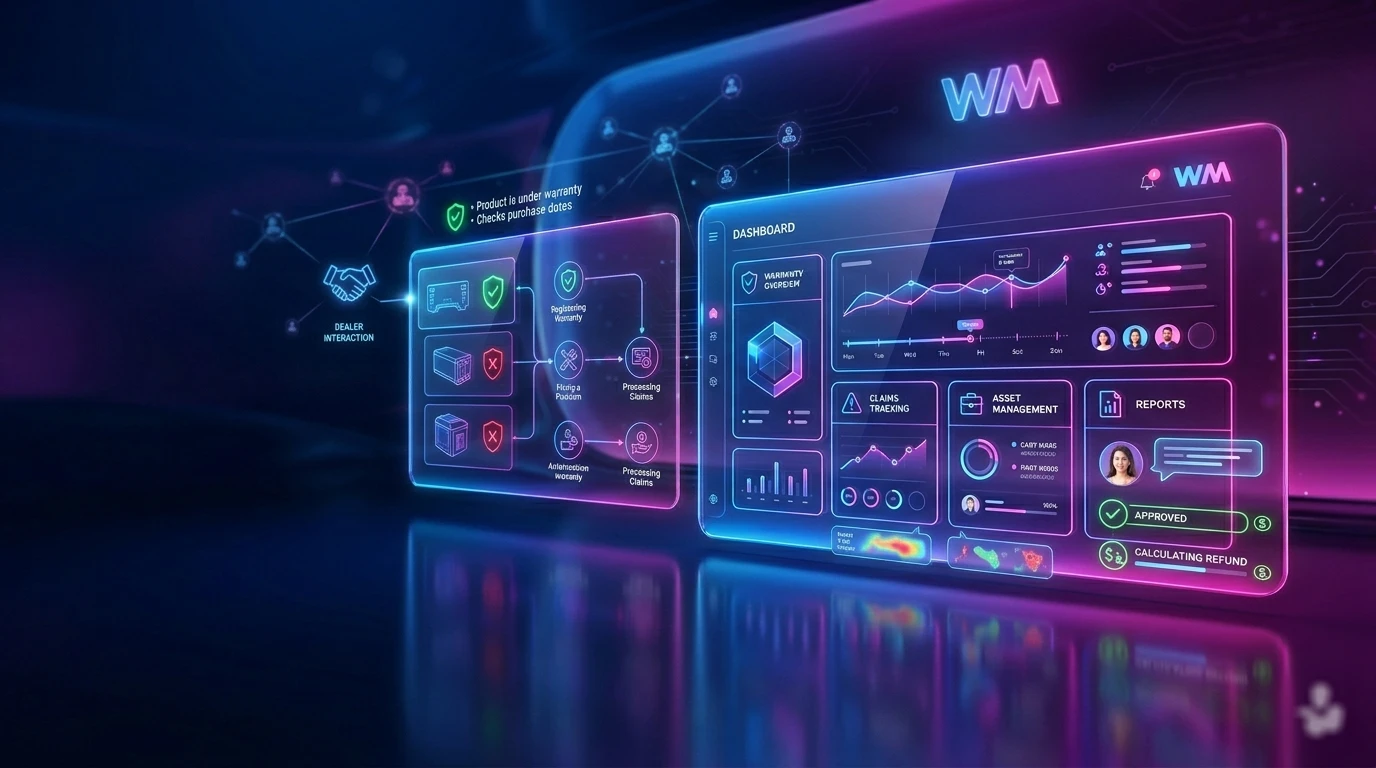
Warranty management has become far more complex than simply recording a purchase date and approving a repair request. Today’s businesses deal with multi-channel sales, distributed dealer networks, extended warranty programs, global supply chains, service-level expectations, and rising product complexity. Customers expect claims to be resolved quickly, with real-time updates and minimal paperwork. Dealers and service centers expect faster approvals and reimbursements. Finance teams need visibility into warranty costs, reserves, fraud risk, and supplier recoveries.

At the same time, warranty-related expenses are increasing. Fraudulent claims, repeated repairs, replacement costs, parts returns, and poor service coordination can quietly drain margins. Manual warranty management often makes the problem worse because data is scattered across emails, spreadsheets, call logs, service tickets, and disconnected systems. That is why businesses are investing in warranty management software, warranty claim management software, warranty tracking software, and custom warranty management software development to automate processes, reduce claim cycle times, and improve post-sales service visibility.

Warranty Management Software-og

What is Warranty Management Software?

Warranty management software is a tool that helps companies manage warranties for products or services. It takes care of everything from registering a warranty to fixing a problem with a product. This software makes it easy to handle warranty claims send replacements and pay people back. It also supports customer communication and analytics to help teams monitor warranty performance. 

The main reason to use a warranty management system is to make things more organized and faster. Instead of manual processing, the software creates a structured digital workflow. For example, it checks whether a product is still under warranty, verifies purchase dates, and supports dealer communication. It also assigns service centers, approves claims, and calculates reimbursement amounts. This way, every step of the process can be automated. 

A good warranty management software brings together customers, dealers, service teams, money people, suppliers and company leaders. It helps companies manage warranties fix products and meet needs for certain industries. For example, a warranty parts return management software can help with car warranties, home warranties or returning warranty parts. This makes it a useful tool for many different types of businesses.


Ready to simplify warranty operations?

Build a smarter warranty management software solution with Experion


Difference between manual warranty handling vs automated systems

Manual warranty handling needs a lot of work from people. People may submit claims by email, phone, spreadsheets, paper forms, dealer portals, or customer support tickets. They can use spreadsheets or paper forms or they can go through dealer portals or they can send in customer support tickets. The teams have to check the product numbers by hand they have to check the purchase dates the coverage periods, the claim history, if the repair is eligible and the approval rules. This slows the process, creates duplicate work, increases errors, and reduces visibility. 

Automated warranty management systems are different. They make the whole process digital. Customers can send in claims through a portal or a warranty management app. The system can check if the product is covered automatically it can check for claims it can start the approval process it can assign a service center it can track spare parts it can send updates on the status and it can make reports. This makes warranty handling more transparent and easier to scale. 


Why Do Traditional Warranty Processes Fail? 

Traditional warranty processing usually starts after a customer reports a problem. A support executive then gathers product information, checks the warranty manually, and sends the claim to another team. They wait for approval contact a dealer or service center and coordinate repair, replacement or reimbursement. In many companies, this process still uses spreadsheets, emails, manual forms, and separate systems. This approach can work for a number of claims. It fails quickly as businesses expand. When there are multiple products, regions, dealers, suppliers, service partners, and approval levels, manual processing becomes slow, costly, and prone to mistakes. The warranty process gets complicated with products and regions. It is also hard to manage with dealers and service partners. Manual processing of warranty claims is error prone.

Common Problems in Manual Systems

Claims handled through emails and spreadsheets often get delayed, duplicated, or lost. Teams may struggle to find the right customer record or product history when a claim is raised. Approval workflows become inconsistent because each claim depends on who receives it and how quickly they respond.

Delayed approvals frustrate customers and dealers. Lost customer records make it difficult to verify entitlement. Duplicate or fraudulent claims may go unnoticed when there is no automated validation engine. Poor coordination with dealers and service centers creates confusion over responsibilities, repair status, parts availability, and reimbursement timelines.

Manual systems also lack real-time claim tracking. Customers have to call repeatedly for updates, dealers may not know whether a claim has been approved, and internal teams may not have a clear view of pending work. Slow reimbursements further damage dealer relationships. Inaccurate warranty cost forecasting affects financial planning because businesses do not have reliable data on claim frequency, defect trends, and future liabilities.

Business Impact

The business impact of inefficient warranty management can be significant. You have to do a lot of things over which costs a lot of money. It also increases resolution time and leads to inconsistent service quality. This makes customers unhappy when they have to wait long for something to get done or when nobody tells them what is going on.

Dealers also get frustrated when they do not get their money on time or when they are not sure what is going on with a claim.

Over time if warranty service is slow and not the same it can hurt how people think about a brand. If customers have a poor claim experience, they may hesitate to buy again, even if they liked the original product. Traditional warranty management can also cause a company to lose money when fake claims or paying someone by mistake goes unnoticed.


How Does Warranty Claims Management Software Reduce Claims Processing Time?

Warranty claims management software reduces claim processing time by automating repetitive tasks and eliminating unnecessary handoffs. When a customer or dealer submits a claim digitally, the system can immediately capture required information such as serial number, invoice details, product photos, purchase date, issue description, and warranty plan.

The warranty validation engine can then check whether the product is eligible for coverage, whether the warranty period is active, whether the claim matches the terms and conditions, and whether there is any suspicious claim history. If the claim meets predefined rules, it can move automatically to approval, repair assignment, or replacement authorization.

Automated workflows reduce waiting time between departments. Multi-level approvals can be routed to the right person based on claim value, product type, region, dealer, or warranty category. Service centers can receive assignments instantly. Customers can receive SMS or email updates without needing to call support.

By replacing manual checks with rule-based automation, businesses can reduce claim handling time, improve accuracy, and create a smoother experience for customers and partners.


How is Warranty Tracked Using Software?

The warranty is tracked by software that looks at a lot of things like the product details, customer information, purchase records, what the warranty covers, if anyone has made a claim before and what service has been done. When someone buys a product, the warranty software can automatically add it to the system using invoice records, online sales data, QR codes, or the product’s serial number. 

Once the product is in the system it stores information like when the warranty starts and ends what kind of coverage it has the product model, batch number, who sold it who bought it what service has been done and if anyone has made a claim. If someone wants to make a claim the warranty software checks all this information to see if it is okay.

Companies can see everything that happens with a warranty from when it starts to when someone makes a claim gets it approved gets it fixed or replaced gets their money back and when it is all done. This helps decision-makers see which products are still under warranty, which claims are pending, which sellers are involved, how much each claim costs, and where product issues keep recurring.


Key Benefits of Warranty Management Software Solutions

Warranty management software solutions create value across operations, finance, customer experience, and long-term strategy.

Operational Benefits

One of the biggest operational benefits is faster claim approvals. Automated validation rules reduce manual checking and help teams approve eligible claims quickly. Automated workflows ensure that claims move to the right person, dealer, technician, or service center without unnecessary delays.

Centralized customer and product records make it easier to access purchase history, warranty status, repair history, and claim documentation. This reduces administrative workload and allows teams to focus on exceptions rather than routine processing.

Financial Benefits

A warranty management software solution can help lower warranty costs by reducing errors, duplicate claims, and unnecessary payouts. Supplier recovery tracking improves the ability to claim reimbursements from vendors when defects are linked to supplier parts or components.

Fraud detection reduces losses from suspicious claims, duplicate serial numbers, repeat abuse patterns, and invalid documents. Accurate reserves forecasting helps finance teams plan better by using real claim data, product failure trends, and projected liabilities.

Customer Benefits

Customers benefit from faster service turnaround, easy claim submission, and real-time updates. Instead of navigating long phone calls or unclear processes, they can submit claims through a customer portal or warranty management app.

Real-time notifications reduce anxiety and improve transparency. A better post-sales experience increases customer trust and strengthens the relationship beyond the initial purchase.

Strategic Benefits

Warranty data can reveal valuable product quality insights. By analyzing failure trends, defect patterns, repair frequency, and cost by product or region, companies can improve design, manufacturing, supplier selection, and service planning.

Warranty management systems also improve vendor accountability by showing which suppliers, components, or batches are linked to recurring issues. Better service experiences can improve retention, loyalty, and brand reputation.


Turn warranty complexity into faster claims, lower costs, and better customer experiences with Experion


Core Features Every Buyer Should Look For in a Warranty Management Software

In a nutshell, warranty management software works by capturing warranty data at the point of sale or activation, validating claims against predefined rules, routing requests through digital workflows, coordinating repairs or replacements, tracking reimbursements, and generating analytics. The best warranty management software should support both day-to-day claim operations and long-term business intelligence.

  1. Warranty Registration and Activation: The system should let people register automatically when they buy something. It should also let them register by using a QR code or the serial number, on the product. Additionally there should be a website where customers can do things themselves like register their warranty without needing help from someone. This ensures warranties are activated accurately and reduces dependency on manual entry.
  2. Claim Management: A strong warranty claim management software platform should allow digital claim submission, claim validation rules, automated approval workflows, and multi-level approvals. This helps standardize claim handling across regions, dealers, and product lines.
  3. Warranty Validation Engine: The validation engine should check coverage period, product eligibility, purchase date, and terms and conditions logic. This is essential for reducing invalid claims and improving approval accuracy.
  4. Repair / Replacement Management: The platform should support service center assignment, technician scheduling, spare parts usage tracking, and replacement authorization. This is especially important for product warranty management software and warranty service management software use cases.
  5. Vendor / Dealer Management: Dealer claim submission portals, distributor claim workflows, and supplier reimbursement recovery features are critical for businesses with large partner networks.
  6. Fraud Detection: The system should identify duplicate claims, flag suspicious or repeated serial numbers, prevent misuse, and detect customer abuse patterns. Fraud prevention should be built into the workflow rather than treated as an afterthought.
  7. Reporting & Analytics: Buyers should look for claim trends, failure reasons, product defect heatmaps, and cost analysis by region, product, or vendor. These insights help improve products and reduce future warranty expenses.
  8. Customer Communication: SMS and email updates, claim status notifications, and escalation alerts help keep customers informed throughout the process.
  9. Integration Capabilities: ERP integration, CRM integration, inventory systems, finance systems, and IoT device integration are essential for enterprises that need connected warranty operations.
  10. Mobile Access: A modern warranty management app should support field technician access, dealer mobile portals, and customer uploads of photos or videos.


Advanced Features Enterprises Should Look for in a Software for Warranty Management

  1. AI-based claim scoring: Enterprise warranty management requires more than basic claim tracking. Advanced software for warranty management should include AI-based claim scoring to prioritize claims, identify fraud risk, and accelerate approvals.
  2. Predictive warranty reserve forecasting: Helps finance teams estimate future liabilities based on historical data, product behavior, and claim patterns.
  3. Automated root cause analysis: Can help quality teams identify recurring defects and failure patterns faster.
  4. OCR invoice scanning: Reduces manual document review by extracting purchase details from invoices.
  5. Chatbots for claims support: Can guide customers through claim submission, status checks, and documentation requirements.
  6. IoT-triggered proactive service alerts: Valuable for smart products, vehicles, industrial machinery, and connected devices.
  7. Multilingual support and multi-country tax or compliance support: Important for global businesses.
  8. SLA monitoring dashboards: Help teams track service performance and escalation risks.


Types of Businesses That Need Warranty Management Software

Warranty management software helps businesses that sell products or equipment with warranties. Any company that offers a warranty on its products may benefit from this software. Manufacturers use it to manage product defects and get back money from suppliers. They also use it for repairs and replacements. Retailers use warranty management software to handle customer claims.

They manage warranties and coordinate with service providers. Original Equipment Manufacturers or OEMs need warranty management systems. These systems help them manage dealer networks and track parts returns. They also ensure suppliers are accountable. Automotive brands use special automotive warranty management software for vehicles.

This software handles vehicle claims and submissions from dealers. It also manages workflows at service centers. Tracks parts replacements. The software helps with reimbursement cycles. Healthcare equipment providers require reliable warranty management systems. These systems ensure critical equipment is serviced quickly. They help with compliance documents and fast resolution. Industrial machinery companies use warranty management software to track assets.

They monitor field repairs and spare parts. The software helps them manage warranty costs across regions. Home warranty management software is important for managing household systems. It helps with appliances and repair partners. The software also handles customer service requests. It is useful for businesses that offer home warranties. Warranty management software makes it easy to manage warranties. It helps businesses provide service to their customers.


Build vs Buy: Should You Purchase or Develop Custom Warranty Management Software?

Choosing between ready-made warranty software and custom warranty management software development depends on business complexity, growth plans, budget, and integration needs.

Buy Ready-Made Software If:

Buying ready-made software may be the right option if you need faster deployment, your workflows are fairly standard, and lower initial cost is a priority. A packaged warranty management software solution can help businesses digitize basic claim handling quickly.

This works well when claim rules are simple, integrations are limited, and the organization does not need deep customization.

Build Custom Software If:

Custom warranty management software development is a better fit when your business has complex multi-brand warranty logic, dealer network workflows, unique approval hierarchies, or competitive differentiation needs.

It is also the stronger choice when legacy systems need deep integration with ERP, CRM, finance, inventory, eCommerce, or service management tools. Custom software allows businesses to design workflows around their real operating model rather than forcing teams to adapt to rigid software.

Hybrid Model

A hybrid model combines both approaches. Businesses can buy a core platform and customize modules around specific requirements such as dealer portals, supplier recovery, advanced analytics, mobile apps, or fraud detection. This can reduce implementation time while still supporting business-specific needs.


Common Challenges and How to Overcome Them

One big problem that companies face is that they do not really understand their processes before they try to put them into action. Companies often try to digitize existing workflows without assessing whether those workflows are actually working well. To solve this problem the company should start by taking a look at their processes and figuring out where things are going wrong.

Another issue that companies have is getting people to use the system. Dealers and service centers and technicians and other teams might not want to use the system if it is too hard to use or if they do not get enough training. The company can solve this problem by having a plan for getting people started with the new system making sure the system is easy to use and providing training that is tailored to each person’s role. 

Integration is also a challenge. When it comes to warranties companies need to have access to a lot of information such as data about products, customers, invoices, spare parts, reimbursements and service history. To deal with this companies should identify what they need to integrate with and create a clear plan for how they are going to do it.

The quality of the data is also important. If customer records are incomplete or serial numbers are wrong or product data is inconsistent it can make it harder for the system to work accurately. Companies should make sure that they have a plan, in place to clean up their data and make sure it is accurate and reliable. Warranty operations, process understanding, integration complexity, data quality, and user adoption should all be planned carefully.


Warranty Management Software Pricing Models

The cost of warranty management software can be different depending on how it is set up, how many claims are processed, how many people use it, which systems it needs to integrate with, and what customizations are required.

Cloud-based systems use a subscription plan where companies pay every month or every year. They charge based on how many people’re using the system like the people who work for the company, the people who sell the products or the people who fix things. They also charge based on how many claims or warranty issues are handled. 

Big companies that need to use the system a lot need features and need a lot of help usually use a special kind of plan called an enterprise license. If a company wants a system that is made for them they have to pay for it to be built from scratch, which can be very expensive.

There are things that can affect the cost like how many people use the system how many claims are made what other systems it needs to work with, how complicated the work is and what kind of reports are needed.

Companies should think about how much the system will cost them in the long run not just how much it costs to start using it. Warranty management software costs can add up so companies need to think about the cost of using the system including the warranty management software.


ROI of Warranty Management Software

The ROI of warranty management software comes from reduced operational costs, lower fraud losses, faster claim cycles, improved customer satisfaction, and better financial control.

Measurable Returns

Measurable returns include reduced claim handling time, lower fraud payouts, reduced call center workload, faster supplier recoveries, and higher customer retention.

For example, automation can reduce the time spent validating claims manually. Self-service portals can reduce support calls. Fraud alerts can prevent duplicate payouts. Supplier recovery tracking can help businesses recover costs that might otherwise be missed. Faster claim resolution can improve customer satisfaction and increase repeat purchases.


Integration Requirements Enterprises Often Miss

Companies often underestimate the importance of connecting warranty management with core business systems. It is necessary to integrate warranty management with the business system for things like invoices and products and information about purchases and financial records. It is also important to integrate warranty management with the system that manages customer relationships so that we can see what happened with the customer before and provide support.

We need to have systems that handle money so that we can give refunds and credits and set aside money for things that might go wrong and get money back from suppliers. We also need systems that keep track of inventory so that we know when we have parts and when we need to use them and when we need to replace them.

For businesses that have partners across multiple locations it is very important to have a special website that these partners can use. It is also important, for companies that sell things online to have systems that allow customers to register their warranties online and get help after they buy something.

The tools that help us manage services are important because they help us coordinate with the people who fix things and make schedules and do repairs and work in the field.

If we do not have all of these connections it can limit how much work can be done automatically and it can force teams back into manual processes, limiting the value of warranty management software.


Security & Compliance Considerations

Warranty management systems handle sensitive customer information, product data, invoices, service documents, and financial records. Security must be a core requirement.

Role-based access control ensures that users only see the data and actions relevant to their role. Data encryption protects information during storage and transmission. Audit trails help track who viewed, changed, approved, rejected, or escalated a claim.

GDPR and regional privacy compliance are important when customer data is collected across countries. Backup and disaster recovery protect business continuity. Secure customer document storage is essential for invoices, photos, identity documents, and claim attachments.


Let’s build a custom warranty management system software that works exactly the way your business does


Implementation Roadmap for Warranty Management System

A structured implementation roadmap helps companies reduce risk and achieve faster value from a warranty management system.

Phase 1: Discovery

The discovery phase includes current process audit, pain point mapping, and KPI definition. Teams should document how claims are submitted, validated, approved, repaired, reimbursed, and reported today.

Phase 2: Design

The design phase includes workflow architecture, UI/UX planning, and integration blueprint creation. This is where businesses define user journeys for customers, dealers, service agents, technicians, finance teams, and administrators.

Phase 3: Development

The development phase includes core modules, APIs, and automation rules. This may involve warranty registration, claim management, validation engines, repair workflows, dealer portals, reporting dashboards, and mobile access.

Phase 4: Testing

Testing should cover claims scenarios, load testing, and security testing. Businesses should test standard claims, exception cases, fraudulent claims, dealer submissions, reimbursement workflows, and integration failures.

Phase 5: Rollout

The rollout phase includes pilot launch, team training, and full deployment. A pilot helps identify usability issues before scaling the system across all users and regions.

Phase 6: Optimization

Optimization includes analytics tuning and process improvements. Once real data starts flowing through the system, businesses can refine rules, dashboards, approval workflows, and fraud detection models.


Common Mistakes Companies Make

One common mistake is choosing the cheapest software only. Low-cost tools may not support complex workflows, integrations, analytics, or scale.

Another mistake is ignoring integrations. Without ERP, CRM, finance, inventory, dealer portal, and service tool connectivity, teams may still need manual workarounds.

Many companies underestimate workflow complexity. Warranty rules can vary by product, region, customer type, dealer, supplier, warranty plan, and purchase channel. Not having a dealer onboarding strategy can lead to poor adoption. Not having fraud prevention rules can increase revenue leakage.

Lack of reporting requirements is another issue. If analytics are not defined early, businesses may miss important insights. Poor user training can also weaken adoption and reduce ROI.


KPIs to Track After Deployment

After deploying warranty management software, businesses should track average claim resolution time to measure speed. Claim approval rate helps assess process efficiency and claim quality.

Fraud detection rate shows how well the system identifies suspicious claims. Repeat product failures reveal quality issues and recurring defects. Cost per claim helps finance teams monitor warranty expenses.

Supplier recovery amount measures how much cost is recovered from vendors or suppliers. Customer satisfaction score helps evaluate the post-sales experience and overall service quality.


Future Trends in Warranty Management Software

The future of warranty management software will be shaped by intelligence, automation, and connected products. Artificial intelligence will help with scoring claims and detecting fraud and recommending approvals and routing exceptions accurately. Intelligent warranty management software can support these capabilities through automation and data-driven decision-making.

Predictive maintenance and warranty linkage are going to become more important as products that are connected to the internet generate real-time performance data. This means businesses can fix problems before they become issues and cost a lot of money. For example businesses do not have to wait for something to break before they fix it.

Blockchain technology may also be used to verify that a claim is real. It can check if someone really owns a product and what has been done to it in the past. People will also be able to file claims on their devices and get quick answers. Warranty management software will work with all sorts of devices like cars and appliances and medical devices.

Companies will be able to make special warranty offers that are just right for each customer. They can look at how a customer uses a product and what they like and do not like and make a warranty offer that’s just right, for them. This is what the future of warranty management software will look like.


Why Custom Warranty Management Software Can Be a Competitive Advantage?

Custom warranty management software can become a competitive advantage because it allows businesses to design workflows around their exact operating model. Tailored workflows reduce friction for customers, dealers, service centers, and internal teams.

Faster dealer operations improve partner satisfaction and reduce delays. Better customer experience strengthens loyalty and brand perception. Unique pricing and warranty programs allow businesses to differentiate their offerings in the market.

Full ownership of data and roadmap is another major advantage. Companies can decide which features to build, which integrations to prioritize, and how analytics should support business decisions.


Why Choose a Software Development Partner?

When building a warranty management system, businesses should consider working with a software development partner. This software development partner will have the know-how and the strategic capabilities that you need to make this system work. The software development partner has domain expertise which means they can take what you do with warranties and turn it into a workflow that makes sense.

The system they build will be able to handle claims, users and products as your business grows. This is because the architecture of the system is scalable. The software development partner will also be able to connect your warranty management system to important systems like ERP, CRM and finance systems. They can also support integrations with eCommerce platforms and IoT devices.

The software development partner will make sure that the system is easy to use for everyone, including customers, dealers and the people who work for you. They will also be there to help you after the system is launched. A good software development partner can even help you get your system up and running faster. This is because they have experience and know how to do things right the first time. They have engineering practices that work and components that they can use again so you do not have to start from scratch with your software development partner.


Conclusion

Warranty management is not an office task anymore. It impacts how customers feel how a business runs, its profits how happy dealers are and how much people trust the brand. With products getting more complicated and customers wanting service companies need more, than just spreadsheets and manual approvals. They require a connected, smart and flexible warranty management software.

Whether you want ready-made warranty software, a customized system, a warranty app, or a complete warranty management software solution the aim is the same: to process claims faster, reduce costs, improve visibility, prevent fraud, and deliver a stronger post-sales experience. 

Real Estate Software Development

Real estate development encompasses land acquisition, planning permissions, and the construction of buildings. However, in today’s digital landscape, to attain a competitive advantage, real estate development needs to adopt the right technology. This includes systems that can manage operations, handle pipelines, and decide how fast a deal moves from inquiry to close.

The real estate industry has already embraced technology in a significant way: AI-driven property matching, blockchain title transfers, IoT-enabled buildings, and AR property tours are already in full swing.

This blog covers what real estate software development actually delivers, where the highest-value use cases are, what a good development process looks like, and how to evaluate whether a development partner knows what they’re doing.


Key Takeaways

  • Fragmented technology stacks have hidden costs – Most firms do not set out to build a disjointed system, but it grows incrementally. The true cost only becomes visible when the portfolio scales and every manual workaround compounds.
  • Generic CRMs are structurally misaligned with real estate: Properties are not accounts, and offers are not opportunity stages. Real estate workflows cannot be adapted to tools built for other industries.
  • Deal velocity is increasingly a systems problem – Closing faster is no longer a function of negotiation skill. Firms that consistently outperform competitors have platforms that surface qualified leads earlier and automate follow-up before a rival has responded.
  • Data security requires first-principles treatment – Real estate platforms handle sensitive personal and financial data at significant volume. Security architecture needs to be a primary design requirement from the beginning.
  • Emerging technologies are in production: AI-driven lead scoring, blockchain title transfers, IoT building management, and digital twin modeling are operational realities at leading firms.
  • Vendor selection carries more weight than the feature specification: Software that works in isolation but falls short of actual operating requirements results from technical proficiency without real estate domain expertise. Strict review is necessary for portfolio depth and independent reference clients.


Why Invest in Custom Software Development for the Real Estate Industry?

Most real estate businesses don’t plan to end up with a fragmented tech stack. It happens gradually. A CRM is added first, followed by property portal subscriptions, accounting tools, marketing platforms, and eventually a growing collection of spreadsheets to bridge operational gaps. This process works at a certain size and pace.

But as the portfolio expands, the team doubles, or a competitor starts moving noticeably faster, the patchwork suddenly stops holding.

Here are some of the benefits custom software development for the real estate industry offers:

  • Scale without rebuilding: A system built for your business grows as the portfolio grows. You’re not renegotiating tier pricing or waiting for a vendor to add the feature you need.
  • Market-specific features: Luxury residential, commercial leasing, industrial development, and affordable housing don’t operate the same way. Generic platforms are built for the median user. Custom software is built for your specific process and clients.
  • Real integrations: MLS feeds, IDX data, financial ERPs, payment gateways, and document platforms. These can be connected properly and not through third-party connectors that break when an API updates.
  • Faster operations: When the system matches the workflow, processes flow faster. This leads to fewer manual steps, fewer handoff errors, and fewer hours spent on tasks the software should handle.
  • Actionable Data: Fragmented SaaS tools mean fragmented data. Meaningful reporting requires manual reconciliation. A custom platform centralizes everything, enabling real analytics without a dedicated analyst pulling it together every week.
  • Team-specific views: Agents, site managers, finance teams, and executives need different information. Custom role-based dashboards give each group what’s relevant to them.
  • Stronger Compliance and Documentation Management: Real estate software helps manage contracts, approvals, regulatory documentation, lease agreements, and audit trails more efficiently, reducing compliance risks.
  • Enhanced Customer Experience: Modern platforms support virtual property tours, AI-powered property recommendations, online booking, chat support, and real-time communication. This leads to a smoother customer journey.
  • Faster Deal Closures: Centralized workflows and follow-ups enable sales teams to respond to inquiries quickly and move deals through the pipeline faster.


Key Real Estate Software Development Services

Real estate software spans a wide range of functional domains. The appropriate starting point depends on where operational friction is creating the most cost: in deal velocity, asset management, project coordination, or portfolio reporting. Below are the core categories that real estate software development services address.

Property Management Systems (PMS)

For businesses managing residential or commercial tenancies at scale, property management software handles the full tenancy lifecycle – from application to lease-end. The manual overhead in this area tends to be high, so the efficiency gains from automation are usually immediate.

  • Automated rent collection with real-time reconciliation and arrears tracking
  • Maintenance request intake, contractor assignment, and job completion tracking
  • Tenant screening with credit checks and rental history verification
  • Billing automation for rent, utilities, and charges with itemized invoicing
  • Lease tracking with renewal alerts, escalation schedules, and document storage

Real estate management software development in this area typically shows up in the numbers in the first quarter of use: lower arrears, faster maintenance turnarounds, and fewer hours spent on admin.

Real Estate CRM Software Development

A CRM built for real estate does more than store contacts. It determines how quickly deals move and how reliably follow-up happens across a high-volume pipeline. The problem with adapting a generic CRM is that the data model is not built for real estate. Properties aren’t accounts. Viewing appointments isn’t a task. Offers aren’t opportunities. Forcing real estate data into these structures creates constant friction.

Real estate CRM software development builds around how the sales pipelines operate in the industry:

  • Client portals: Buyers, sellers, and investors get personalized dashboards – relevant listings, document history, and communication logs. They don’t need to contact agents for routine status inquiries.
  • Lead scoring: AI models assess inquiry patterns and browsing behavior to rank leads by conversion likelihood. Hence, agents can spend time on the ones worth chasing.
  • Omnichannel communication: WhatsApp, email, SMS, and portal messages are all consolidated in one place. No more checking four inboxes and missing a follow-up that was sitting in the wrong one
  • Automated workflows: Sequences triggered by deal stage, property activity, or elapsed time ensure follow-ups happen reliably. An inquiry comes in, a follow-up goes out, and a task gets created. The deal moves.

Custom real estate CRM software development is one of the clearest ROI cases in this space.

Real Estate Management Software Development

Beyond individual tenancy management, real estate management software covers the portfolio layer: multi-property dashboards, owner reporting, vendor management, and financial consolidation across different asset types.

For firms running mixed-use or multi-geography portfolios, this is where having everything in one system saves the most time.

Immersive Technologies

AR and VR have moved beyond being novelties. In luxury residential and commercial leasing, they’re practical sales tools. A buyer in another city can do a detailed walkthrough without flying in. A developer can sell off-plan units before a building is finished. This integration is implemented in buyer-facing apps and listing platforms.

Modern real estate platforms have also begun adopting technologies such as 3D Gaussian splatting and tools like SuperSplat to create photorealistic digital property experiences. These technologies generate highly realistic 3D environments from images and scans. It makes virtual property tours more immersive than traditional renders.

Real Estate Investment and Analytics Platforms

Investment teams need more analytical depth than generic BI tools provide. Custom investment platforms bring valuation models, cap rate calculators, acquisition risk assessments, and portfolio performance tracking into a single environment. This is built around specific asset classes and investment strategies. The goal is to compress the time between data and decision and reduce the amount of manual analysis in spreadsheets.

Listing and Marketplace Platforms

Real estate has core data systems that enable property listing distribution and search accuracy. Among them are MLS (Multiple Listing Service) and IDX (Internet Data Exchange).

  • MLS helps agents and brokers share property listings.
  • IDX is the set of rules and technology that allows approved MLS listing data to be displayed on public-facing real estate websites.

Whether the platform is public-facing or internal, it needs to handle high-volume search, rich media, and real-time data sync with MLS and IDX feeds without slowing down. Key features include advanced search with saved alerts, virtual tour integration, agent dashboards with lead capture, and map layers with GIS and neighborhood data.

Project Management Software for Real Estate

General project management tools aren’t built for construction.

Applications such as Asana and Monday handle tasks. What real estate development needs is milestone tracking tied to regulatory and financial events, contractor coordination with document management, budget monitoring at the work-package level, and compliance tracking across permits and inspections.

  • Site tracking: Progress across multiple concurrent sites visible in one dashboard, with budget allocation and vendor performance updated in real time.
  • Compliance management: Digital storage and automated alerts for permits, safety certifications, inspection records, and regulatory deadlines. Missing a permit filing is expensive. Software that surfaces the deadline two weeks early is worth the investment.

On build vs. buy: for straightforward project coordination, off-the-shelf tools are sufficient. For development companies managing complex multi-site projects with construction-specific financial structures and regulatory obligations, custom project management software for real estate is the stronger choice. The question is whether the business’s operational complexity exceeds what any generic tool can sensibly handle. The best project management software is the one built around how your sites, contractors, budgets, and compliance obligations actually work together.

Mobile Apps for Real Estate Businesses

Real estate is a business field. Agents are at viewings, and site managers are on-site. Property managers are doing inspections. If the software only works well at a desk, it doesn’t work well for most people using it. Software development for real estate should factor in mobile accessibility with the following features:

  • Buyer and seller apps with push notifications, saved searches, and in-app messaging.
  • Agent apps with CRM access, calendar integration, and document signing
  • Inspection apps with photo capture, condition grading, and automated report generation
  • Document management with offline access for low-connectivity construction sites


Features to Include in Your Real Estate Software

The right feature set comes from actual business requirements. However, certain capabilities consistently emerge as gaps in existing real estate systems. These are worth addressing in the initial build rather than retrofitting later.

  • Property listing management: Centralized database with status tracking, media management, and multi-portal syndication.
  • Document and contract management: Version-controlled storage for leases, sale agreements, inspection reports, and compliance documents, with workflow-driven approval routing.
  • E-signature: Integrated digital signing removes printing and scanning from the transaction process entirely.
  • Analytics dashboards: Real-time KPIs at the portfolio, property, and transaction levels. Executive views for leadership, operational views for team managers.
  • AI-based property recommendations: Matching buyers and tenants to listings based on behavior and stated preferences, not just filter criteria.
  • GIS and map integration: Spatial views for listings, demographics, transport links, and market analysis.
  • Secure payment integration: PCI-compliant rent collection and transaction processing with full audit trails.
  • Role-based access control: Agents, managers, investors, tenants, and contractors each see what they need.
  • Cloud storage: Scalable, redundant infrastructure with disaster recovery and data residency controls where required.
  • Third-party API integrationsMLS/IDX, accounting platforms, payment gateways, DocuSign, Google Maps. These APIs should be connected from day one.
  • Property inspection tools: Digital checklists, photo capture, condition grading, and automated reporting for field teams.
  • Audit trails: Full activity logging across all users and system events. This is necessary for compliance, disputes, and governance.


Experion is well-positioned to help organizations build custom real estate CRM software and enterprise property management systems tailored to their integration requirements and business goals.


Technologies Under Real Estate Software Solutions Development

The tech stack chosen at the beginning of the project determines what the platform can handle and how much it costs to maintain. The following are the core layers:

Frontend:

The frontend delivers user-friendly experiences across web and mobile applications.

  • For web interfaces that handle complex views, React and Angular are the primary choices.
  • For mobile applications, React Native covers both iOS and Android from a single codebase.

Backend:

The backend powers business logic, integrations, workflows, and real-time system operations.

  • JS is well-suited to platforms where multiple data streams need to run in parallel. This includes data streams such as live listings, in-app messaging, or real-time notifications.
  • Python is commonly used when the platform has significant data processing or machine learning requirements.
  • Java and .NET can be used in enterprise environments where existing infrastructure or internal IT policies make them the practical choice.

Database:

Different types of data have different database requirements:

  • PostgreSQL handles structured transactional data such as leases, financial records, and user permissions.
  • MongoDB works better for unstructured data models, such as property listings and documents.
  • Redis manages caching and session data to keep load times acceptable even as user volumes grow.

Cloud Infrastructure

Modern real estate platforms are built using cloud-native architectures.

  • AWS, Azure, and Google Cloud each have strengths depending on the existing enterprise environment.

The more important question is architecture: a cloud-native build that scales with the portfolio is a different investment from one that simply hosts on cloud servers. The former handles growth without re-engineering; the latter hits ceilings.

Third-Party Integrations

Common integrations include

  • MLS and IDX feeds
  • Payment gateways
  • E-signature services
  • Accounting platforms

A strong integration architecture needs proper error handling and API version management.

AI and Machine Learning

Common applications of AI and ML capabilities include:

  • Lead scoring models
  • Automated valuation tools
  • Predictive maintenance systems
  • Recommendation engines

The effectiveness of this system depends on the underlying infrastructure – clean data pipelines, well-structured training data, and models that can be updated as market conditions shift.

Security

The following are the foundations for any platform handling financial transactions and personal data:

  • End-to-end encryption
  • Multi-factor authentication (MFA)
  • Role-based access control (RBAC)
  • Regular penetration testing


Ready to modernize your real estate operations?

Partner with Experion Technologies to build  future-ready digital solutions


Challenges in Real Estate Software Development

  • Data security and privacy: Real estate handles a vast amount of personal and financial data. GDPR, CCPA, and local regulations have specific obligations around storage, access, and breach response. Security architecture has to be a first-order concern from the beginning.
  • Integration with legacy systems: Most real estate businesses have existing tools they can’t immediately replace – accounting systems, heritage CRMs, and older databases. New software has to work alongside these without creating brittle dependencies that break on every update.
  • Managing large property datasets: High-volume operations generate a lot of structured and unstructured data. The platform architecture has to handle growth in data without performance degradation.
  • User adoption challenges: Technically strong software that teams don’t use delivers zero ROI. Real estate workforces span a wide range of digital comfort levels.
  • Regulatory compliance: Tenancy law, financial reporting requirements, data privacy rules, and environmental obligations differ across jurisdictions. Software needs to be flexible enough to accommodate this.


Best Practices to Overcome These Challenges

  • Agile development approach: Agile development involves iterative builds, regular demos, and feedback loops. An agile process can handle changing requirements without derailing the project.
  • Scalable architecture: Building on cloud infrastructure from day one means the platform scales as data and user volume grow, without expensive re-architecture later.
  • Strong cybersecurity measures: End-to-end encryption, multi-factor authentication, and regular penetration testing. These are the baseline requirements for any platform handling financial data and personal records.
  • User-centric UI/UX : Involving real end users in the design process before development starts saves significant rework later.
  • Continuous testing and optimization: Incorporate automated test suites and performance monitoring from the beginning. Problems caught early cost less to fix than problems caught in production.


Custom Real Estate Software Development Services: What Businesses Should Expect

The following are the stages of custom software engagement. Knowing what to expect at each stage helps you evaluate vendors more accurately and manage the project better.

Requirement Analysis and Consultation

Before any design work begins, a quality partner interviews stakeholders, maps existing workflows, identifies integration requirements, and defines success in measurable terms. The output is a detailed requirements specification that will guide the entire build.

UI/UX Design for Real Estate Applications

Good design for real estate software has to work in all scenarios. This includes:

  • An agent updating a deal on their phone between viewings
  • A property manager reviewing and prioritizing maintenance requests on a tablet
  • An investor reviewing portfolio performance on a desktop.

These are different use cases with different constraints. UI/UX design should involve real users in wireframe reviews and prototype testing before development starts.

Backend and Frontend Development

The architectural decisions made here include:

  • Database design
  • API structure
  • Technology stack
  • Scalability approach

A good development partner brings reasoned recommendations to these decisions, not just execution of whatever is specified. They should be able to explain every significant architectural choice clearly and stand behind those explanations under scrutiny.

Third-Party API Integrations

MLS and IDX feeds, payment gateways, e-signature platforms, accounting tools, mapping APIs, and communication services – these need to be integrated reliably and maintained over time. The integration architecture, built for resilience, handles API updates and version changes without breaking dependent workflows.

Cloud and DevOps Support

CI/CD pipelines established from the outset of the engagement enable reliable, frequent deployments throughout development and in production.

Monitoring and alerting infrastructure should be operational before launch and not configured after the first production incident.

QA Testing and Security Compliance

Comprehensive testing covers functional correctness, integration reliability, performance under realistic load conditions, and security vulnerability assessment. For platforms handling financial transactions and personal data, security testing is a regulatory obligation and a commercial necessity.

Ongoing Maintenance and Software Upgrades

A launch isn’t the end of the engagement. Maintenance, performance monitoring, security patching, and feature roadmap execution turn a software project into a business asset that improves over time. SLA commitments for support should be agreed upon before the contract is signed.


Real-World Use Cases of Custom Software Development for Real Estate Industry

The best way to understand what custom software development for the real estate industry actually delivers is through the specific business problems it solves.

  • Residential property management A property manager overseeing 500+ units across three cities replaces spreadsheets, a legacy accounting system, and a generic helpdesk with one platform. The Result? Rent arrears drop. Maintenance resolution time falls. The team handles 35% more units without additional headcount.
  • Commercial real estate operations: A commercial landlord running a mixed-use portfolio automates lease renewal workflows and service charge reconciliations. Processes that took two weeks run in hours. Tenant queries that used to go through the operations team are handled through a self-service portal.
  • Real estate brokerage firms: A high-volume residential brokerage deploys custom real estate CRM software with AI lead scoring and automated follow-up sequences. Lead response time drops from hours to minutes. Hence, senior agents can spend more of their time on qualified conversations.
  • Construction and infrastructure companies: A developer managing 12 concurrent projects gets real-time visibility across all sites – budget, progress, contractor performance, and compliance status – from one dashboard. Project overruns decrease in the first year of use.
  • Real estate investment firms: An investment firm uses a custom analytics platform to run acquisition modeling, track portfolio KPIs, and generate investor reports automatically. Data preparation that used to take days runs from live dashboards.
  • Smart city and proptech platforms: Real estate developers are increasingly investing in custom software platforms. A smart city developer integrates IoT sensors, digital twin modeling, and sustainability analytics into this property operations platform. These systems can thus help reduce energy consumption. The data produced supports green certification requirements and becomes a leasing differentiator.


Looking to build a scalable real estate platform?

Connect with Experion Technologies to discuss your custom software requirements


Choosing the Right Custom Real Estate Software Development Company

The development partner you choose will have more influence on the outcome of this investment than any other decision. The market for software development services for real estate is vast, and the quality difference between the best and worst vendors is significant.

  • Technical depth: The team should understand cloud architecture, data security, scalable API design, and the specific technologies proposed for your project. Ask for the engineers’ backgrounds. A good custom real estate software development company can explain their architectural choices in plain language and defend them when questioned.
  • Real estate domain knowledge: Technical competence without industry knowledge produces software that works in theory and fails in practice. The partner needs to understand how real estate transactions work, what MLS data looks like, how tenancy law varies across jurisdictions, and what investment reporting actually requires.
  • Relevant portfolio: Ask to see real estate-specific work at a comparable scale and complexity to your requirements. Look for delivered outcomes, not just feature lists. Speak to reference clients, not only the ones the vendor suggests.
  • Communication model: What is the sprint cadence? Who owns the relationship on their side? How are issues escalated? Poor communication on a software project doesn’t show up until it’s expensive to fix. Clarify this before signing anything.
  • Post-launch support: Building the software is roughly half the engagement. Ongoing maintenance, security patching, and feature development need defined SLA commitments before contract signature.

On the other hand, red flags include: Vague timelines with no milestones, no real estate portfolio you can verify, an inability to explain the proposed architecture in plain terms, estimates that seem implausibly low for the stated scope, and, finally, no reference clients willing to talk.


Emerging Trends in Real Estate Software Development Solutions

AI & Machine Learning

AI in real estate has progressed well beyond basic automation. Some applications include:

  • Automated Valuation Models – AI-powered valuation platforms can assess property values with complex algorithms. These algorithms analyze market data and property characteristics to generate accurate pricing insights. AI models, training data, dynamic pricing, and market analysis form the basis for accurate valuations.
  • Predictive Maintenance Systems – These systems use IoT sensors and ML algorithms to monitor infrastructure in real time. Before malfunctions occur, these systems can identify trends that indicate potential issues with plumbing, electrical, HVAC, and elevator systems. Through proactive property management, this lowers maintenance costs, minimizes downtime, and raises tenant satisfaction.
  • AI-driven Lead Scoring – By examining consumer behavior, search patterns, engagement history, demographics, and communication activity, real estate firms employ AI-based lead scoring algorithms to find high-intent tenants. Sales teams can reduce time spent on low-quality prospects, increase conversion rates, and focus on the most promising leads.
  • Autonomous Scheduling tools – AI-powered scheduling tools, such as bots, can automate property viewing appointments, meeting coordination, follow-ups, and calendar management. Automated reminders and dynamic rescheduling can reduce administrative workloads.

Blockchain Smart Contracts

Blockchain applications in real estate include:

  • Title verification
  • Tamper-resistant transaction records
  • Smart contract execution at closing
  • Fractional ownership models.

The technology is mature enough for production deployment in specific use cases. Mainstream adoption across all markets remains dependent on regulatory frameworks continuing to evolve.

IoT & Smart Buildings

Building sensor networks has made property management systems genuinely useful in ways they weren’t before. A system that flags an HVAC unit degrading before it fails is more valuable than one that logs the failure after it happens. The same infrastructure that enables predictive maintenance also tracks energy consumption in real time, automates building controls, and feeds the ESG reporting that investors and regulators now expect from commercial landlords and build-to-rent operators.

Predictive analytics for investment

Investment teams have been doing the same modeling work in spreadsheets for years – yield scenarios, acquisition risk, rental demand, and exit timing.

While these models provide valuable insights, they are spread across numerous files and disconnected systems. Predictive analytics platforms solve this problem by bringing investment data, market intelligence, financial modeling, and forecasting into a unified system. Using AI and machine learning, these platforms can analyze historical trends, market conditions, customer behavior, and economic indicators to predict future property performance and investment outcomes.

Digital Twin Technology

Digital twins are virtual replicas of physical properties or entire developments.

This technology can be used to simulate construction scenarios, test design modifications, and model operational performance before physical changes are made.

For large-scale developers, investing in digital twin technology for complex projects is justified.

Voice Search and Conversational AI

Voice-activated property search and conversational AI interfaces are changing how buyers and tenants engage with property platforms. Voice assistant adoption continues to grow. Hence, platforms designed exclusively for typed search inputs will begin to show limitations in reach and user experience.

Sustainability and Green Building Analytics

The emphasis on environmental conservation and sustainable development is higher than ever before. Custom real estate software development that can incorporate these features will stand out. Carbon tracking, energy benchmarking, green certification management, and green lease compliance are now becoming requirements.

RPA  (Robotic Process Automation)

Certain tasks in real estate operations are high-volume, rule-based, and error-prone when handled manually. RPA bots can be configured to handle certain day-to-day operations like:

  • Invoice Processing
  • NAV calculations
  • Regulatory filing preparations
  • Lease data extraction

Automating these processes reduces operational risk and reallocates staff time to work that requires professional judgment.

Our engineering teams are well equipped to support your real estate software development goals.


How Can Experion Support Real Estate Software Development?

Experion Technologies can support real estate software development through its custom property management platforms. A unified cloud-based system allows landlords and agents to manage the entire property lifecycle- from listing, leasing, maintenance, and tenant services.

Our team brings both the engineering depth and the real estate domain knowledge required for the work.


Conclusion: Future-Proofing Your Real Estate Business

Real estate has always rewarded people who move with precision and speed. For a long time, that came from market knowledge and relationships. But the firms that consistently outperform their competitors today also have better systems, and the gap between them tends to widen over time. The shift from disconnected tools to a unified platform shows up in concrete ways: faster deal cycles, lower staff overhead, better data quality, and a system that scales with the business instead of constraining it. The ROI case is straightforward.

In modern real estate, technology isn’t back-office infrastructure. It is the operational foundation that drives customer experience. The software decisions made today will determine how competitive, efficient, and scalable a firm is in the years ahead.

Financial Modeling Software

For decades, spreadsheets have been the default tool for financial modeling. They are familiar, flexible, and easy to start with. But as businesses grow, financial complexity grows with them. Revenue streams multiply. Departments create their own versions of budgets. Forecasts need to change in real time. Leaders expect instant answers to “what-if” questions. In this environment, traditional Excel-based financial modeling can quickly become fragile.

Manual spreadsheet models are often prone to errors, broken formulas, inconsistent assumptions, limited version control, and poor collaboration. A single incorrect cell reference can distort an entire forecast. A missed update can leave leadership making decisions based on outdated numbers. And when multiple teams work on separate files, finance teams often spend more time reconciling data than analyzing it.

This is why financial modeling software has become an essential part of modern finance operations. Today’s businesses need more than static models. They need intelligent financial modeling software platforms that can automate budgeting, connect live data sources, enable scenario planning, support compliance, and help leaders understand the financial impact of every decision before they make it.

Whether you are a fast-growing startup, a mid-sized enterprise, a financial services firm, or a large organization managing complex operations, the right financial modeling software can transform financial planning from a manual exercise into a strategic advantage.

Financial Modeling Software-og

Key Takeaways

  • Financial modeling software helps businesses build, manage, and analyze financial models with greater accuracy, speed, and scalability.
  • It reduces the limitations of spreadsheet-based modeling by improving automation, version control, collaboration, and real-time data visibility.
  • Modern financial modelling software supports forecasting, budgeting, valuation, scenario planning, sensitivity analysis, and advanced reporting.
  • AI financial modeling software and AI tools for financial modeling are changing how finance teams forecast trends, detect anomalies, and simulate business outcomes.
  • Businesses should evaluate financial modeling software solutions based on ease of use, customization, integrations, security, scalability, vendor support, and total cost of ownership.
  • For many enterprises, custom financial modeling software may be a better option when off-the-shelf tools cannot support specific workflows, industry rules, or complex data ecosystems.


What is Financial Modeling Software?

Financial modeling software helps businesses create and manage models. It supports financial planning and decision-making. This software turns data into forecasts, budgets, valuations, and business scenarios for companies. The main goal of financial modeling software is to help businesses make decisions. It does this by providing a way to analyze financial data.

Financial modeling software is a tool that automates and manages financial models. In simple terms, financial modelling helps companies answer important business questions, such as:

  • What will revenue look like over the next 12 months?
  • How will rising costs affect profitability?
  • Can the business afford a new investment?
  • What happens if sales decline by 15%?
  • How much funding does a startup need to reach profitability?
  • What is the financial impact of entering a new market?

Traditional financial modelling is often done in spreadsheets. But when models become larger, require collaboration, or depend on real-time data, spreadsheets can become difficult to manage. Financial modeling software is different. It is built to handle complexity.

A financial modeling software platform can connect to other systems like ERP, CRM, accounting tools and business intelligence applications. It can update assumptions automatically, track changes, run scenario simulations, and create dashboards for decision-makers. 


Build scalable financial modeling software that keeps your business ready for what’s next


Types of Financial Models Supported

Most financial modeling software solutions support different types of models, including:

  1. Forecasting models: These models help estimate future revenue, expenses, cash flow and profitability based on past data, assumptions and business drivers. Financial modeling software helps you make forecasts.
  2. Budgeting and planning models: These support budgets, department budgets, workforce planning and capital expenditure planning. Financial modeling software makes budgeting easier.
  3. Valuation models: These are commonly used in investment banking, private equity, mergers and acquisitions and corporate finance to estimate business value. Financial modeling software helps with valuation.
  4. Scenario and sensitivity analysis models: These help companies test assumptions. Financial modeling software makes it easy to test scenarios.


Key Business Problems Financial Modeling Software Platforms Solve

Businesses are moving to financial modeling software because financial planning has become too important to depend on manual processes. Finance teams need to provide timely insights. Many organizations still use disconnected spreadsheets, manual data entry and static reporting cycles. This creates business challenges.

  • Inaccurate Forecasting Due to Manual Errors

Manual financial modeling increases the risk of errors. Experienced finance professionals can make mistakes. Financial modeling software reduces these risks.

  • Lack of Real-Time Financial Visibility

Reports are often outdated. A modern financial modeling software platform connects directly with source systems. This gives decision-makers access to financial insights.

  • Time-Consuming Budgeting Cycles

Annual budgeting can be a time-consuming process. Financial modeling software solutions simplify this process.

  • Poor Cross-Department Collaboration

Finance does not operate alone. Financial modeling software enables role-based access and real-time collaboration.

  • Data Synchronization Issues

Disconnected financial data leads to reporting issues. Financial modeling software helps synchronize data.

  • Difficulty in Scenario Planning and Risk Assessment

Businesses operate in dynamic markets. Financial modeling software makes it easier to run simulations and assess risk.


Financial Forecasting vs. Financial Modeling

Financial forecasting and financial modeling are not the same. Financial forecasting predicts financial outcomes. For example, a company may forecast revenue or expenses. 

Financial modeling is broader. It involves building a representation of a company’s financial performance. A financial model may include forecasts, budgets, valuations and risk assessment. Financial modeling software helps with modeling. In short, forecasting predicts what may happen. Financial modeling helps explain why it may happen, what could change the outcome, and how different decisions may affect the future.

Understanding financial forecasting vs. financial modeling is important when choosing software. Some tools are designed mainly for forecasting and budgeting. Others provide broader modeling capabilities for valuation, capital planning, scenario analysis, and strategic decision-making.


Core Features to Look for in a Financial Modelling Software

Choosing the top financial modeling software depends on your business size, industry, complexity, and planning needs. However, there are several core features every buyer should evaluate.

Forecasting and Budgeting Automation

A good financial modeling software platform should do the work for you when it comes to forecasting and budgeting. This means it should support revenue forecasting, expense planning, workforce planning, and cash flow analysis. It should also be able to consolidate budgets across departments and business units. 

Financial modeling software is especially useful when it supports rolling forecasts. This means teams can update forecasts continuously instead of only once a year. It is also very useful to be able to link your results to things that drive your business, like how many customers you get, how much you charge them, how many people you hire and how many sales you make.

Scenario and What-If Analysis

One of the things about modern financial modeling software is that it lets you plan for different scenarios. You should be able to evaluate best-case, worst-case, and most likely scenarios.

For example, businesses may need to understand what happens if demand drops, production costs rise, or hiring plans are delayed. Financial modeling software can help you understand what might happen if things change so you can make decisions and be ready for whatever happens.

Real-Time Data Integration

Your financial models are only as good as the data you put into them. The best financial modeling software should connect with core business systems such as HR, accounting, ERP, CRM, and analytics platforms.

It should also connect with these systems in real time, so teams have access to the most up-to-date information. This makes it so you do not have to update things by hand, and it helps you make sure your financial models are accurate.

Advanced Analytics and Reporting

Financial modeling software should not just build models; it should also help teams understand what those models mean. 

It should be able to make custom dashboards so you can see how your business is doing at a glance. It should also be able to track the metrics that are most important to the business, like how much money you are making and how much you are spending. And it should be able to make reports that are easy to understand so you can share them with the people who need to see them like your boss or the people who invest in your company.

Collaboration and Workflow Management

Today, finance is a team effort. Financial modeling software should be able to support users so many people can work on the models at the same time.

It should also include role-based controls so only authorized users can make changes. It should be able to help you keep track of who did what and when they did it. This is especially important for companies, where many people are working on the budget and financial plans.

AI and Predictive Capabilities

AI is becoming more and more important in modeling. AI tools can analyze historical data, identify patterns, and make predictions about future outcomes. 

They can also help identify anomalies and improve forecast accuracy. They can even make recommendations based on what they have learned from your data.

Compliance and Audit Trails

For some companies, regulatory compliance is very important. Financial modeling software should be able to help with this by keeping track of who did what and when they did it.

It should also be able to make sure that you are following all the rules and that you can prove it. This is especially important for companies operating in regulated industries. Financial modeling software should help track changes so teams can review what happened, when it happened, and why. 


Types of Financial Modeling Software by Use Case

Different businesses need different types of financial modeling software solutions. Understanding the main categories can help buyers choose the right platform.

  1. Corporate FP&A Platforms
    Corporate financial planning and analysis platforms are designed for enterprise budgeting, forecasting, reporting, and performance management. They are commonly used by CFOs, finance teams, and business leaders.
  2. Investment Banking & Valuation Tools
    These tools support valuation models, discounted cash flow analysis, merger and acquisition models, leveraged buyout models, and comparable company analysis. They are often used by investment bankers, analysts, private equity firms, and corporate finance teams.
  3. Startup Financial Planning Tools
    Financial modeling software for startups is usually designed to help founders plan runway, funding requirements, hiring, revenue growth, unit economics, and cash flow. These tools are often simpler and more affordable than enterprise FP&A platforms.
  4. Cloud-Based Financial Modeling Tools
    Cloud-based financial modeling tools allow teams to collaborate from anywhere, access real-time data, and scale more easily. They are useful for distributed teams and growing businesses that need flexibility.
  5. Industry-Specific Solutions
    Some businesses need specialized financial modeling software. Banking, insurance, SaaS, manufacturing, healthcare, and commercial real estate often require industry-specific assumptions, metrics, compliance rules, and reporting structures.

For example, commercial real estate financial modeling software may include property-level cash flow, lease assumptions, occupancy rates, debt schedules, cap rates, and investment returns.


Benefits for Enterprises and Vendors Using Financial Modeling Software Solutions

Financial modeling software solutions help enterprises make faster, more confident decisions by improving forecast accuracy, reducing manual effort, and bringing finance, operations, and leadership teams onto a shared planning platform.

With automation, real-time data, and scenario planning, businesses can shorten budgeting cycles, minimize errors, assess risks earlier, and scale financial models as operations become more complex.

At Experion, we build secure, scalable, and user-friendly financial software solutions that modernize planning, forecasting, analytics, and decision workflows.


Financial Modeling Software vs Excel: A Practical Comparison

Excel is flexible and familiar, but it can become difficult to manage as financial models grow in size, complexity, and number of users. Financial modeling software offers stronger scalability, automation, collaboration, version control, and auditability.

While Excel may seem cost-effective at first, hidden costs often appear through manual effort, formula errors, delayed reporting, version confusion, and rework. Financial modeling software may require upfront investment, but it can deliver greater long-term value through improved accuracy, efficiency, and governance.


Key Evaluation Criteria for Buyers

Choosing the best financial modeling software requires buyers to look beyond features and evaluate how well the platform fits their finance operations.

Key factors include ease of use customization options, integration with ERP, CRM, accounting, HR, and analytics systems, pricing and licensing models, security controls, data governance, and vendor support.

The right platform should be easy to adopt, flexible enough to match business-specific planning needs, secure enough to protect sensitive financial data, and supported by a vendor that understands both finance workflows and technology implementation.

Questions Buyers Should Ask Vendors to Get the Best Financial Modeling Software

  1. How scalable is the solution as the business grows?
  2. What integrations are supported out of the box?
  3. Can the platform connect with our ERP, CRM, and accounting systems?
  4. How does the platform ensure data accuracy?
  5. What version control and audit trail features are available?
  6. How customizable are the models, dashboards, and workflows?
  7. What is the expected implementation timeline?
  8. What support and training are included?
  9. How does the pricing model work?
  10. Can the platform support future AI and predictive analytics requirements?


Transform financial planning into faster, smarter decision-making with Experion


Who Should Use Financial Modeling Software?

Financial modeling software is valuable for a wide range of users and organizations.

  1. CFOs and Finance Teams
    CFOs, FP&A teams, controllers, and finance managers use financial modeling software to improve forecasting, budgeting, reporting, and strategic planning.
  2. Startups and SMEs
    Financial modeling software for startups helps founders manage cash flow, plan fundraising, estimate runway, and understand growth scenarios. SMEs can use these tools to improve budgeting and financial discipline.
  3. Enterprises Managing Complex Financial Data
    Large enterprises need financial modeling software solutions to manage multi-department, multi-location, and multi-entity financial planning. They often require advanced integrations, governance, and compliance features.
  4. Consultants and Financial Analysts
    Consultants, analysts, and advisory firms use software for financial modeling to build client models, evaluate business cases, perform valuations, and run scenario analysis.


Implementation Guide: How to Get Started

Implementing a financial modeling software platform requires more than buying a tool. It requires a clear strategy, clean data, stakeholder alignment, and structured change management.

  • Define Business Objectives
    Start by identifying the primary purpose of the software. Are you focused on forecasting, budgeting, valuation, scenario planning, investor reporting, or enterprise FP&A? Clear goals help define the right features and implementation scope.
  • Assess Current Financial Processes
    Review existing spreadsheets, data sources, workflows, reporting cycles, and pain points. Identify where errors occur, where manual effort is highest, and where leadership lacks visibility.
  • Data Preparation
    Good financial modeling depends on good data. Businesses should identify data sources, clean historical data, standardize definitions, and resolve inconsistencies before implementation.
  • Vendor Selection Process
    Create an RFP checklist that includes functionality, integrations, security, pricing, implementation support, scalability, and customization requirements.
  • Deployment & Training
    Successful adoption requires training, communication, and change management. Finance teams should understand not only how to use the tool, but also how it improves their work.


Common Challenges & How to Overcome Them

Like any major technology implementation, financial modeling software can come with challenges.

  • Resistance to Change
    Finance teams may be comfortable with spreadsheets. To overcome resistance, businesses should involve users early, provide training, and show how the software reduces manual work rather than replacing expertise.
  • Data Migration Issues
    Moving from spreadsheets to software can expose data quality problems. Businesses should plan enough time for data cleaning, validation, and testing.
  • Integration Complexities
    Connecting financial modeling software with existing systems can be complex. A phased integration approach can reduce risk and help teams validate data flow step by step.
  • Cost Concerns
    Some stakeholders may focus only on upfront cost. Building a clear ROI case can help show long-term savings from reduced manual effort, faster planning, and improved decision-making.
  • Ensuring User Adoption
    User adoption improves when the platform is intuitive, workflows are clear, and teams receive proper training. Leadership support is also essential.


Cost Breakdown & ROI Analysis

The cost of financial modeling software depends on business size, user count, functionality, integrations, customization, and support requirements.

  1. Initial Investment vs Long-Term Gains
    Initial costs may include software licensing, implementation, data migration, integrations, customization, and training. Long-term gains may include faster budgeting, fewer errors, improved forecast accuracy, better decisions, and reduced dependency on manual processes.
  2. Hidden Costs
    Buyers should consider hidden costs such as the following:
    Training and onboarding
    Integration with existing systems
    Custom model development
    Data migration
    Ongoing support
    User licenses
    Change management
  3. ROI Metrics
    Businesses can measure ROI through several metrics:
    Time saved during budgeting and forecasting cycles
    Improvement in forecast accuracy
    Reduction in manual errors
    Faster management reporting
    Reduced financial risk
    Better capital allocation
    Improved productivity across finance teams


Industry Use Cases

Financial modeling software can be applied across many industries, but the use cases often differ based on business model and regulatory environment.

  • Banking & Financial Services
  • Banks and financial institutions use financial modeling software for risk modeling, capital planning, regulatory reporting, loan portfolio analysis, profitability modeling, and stress testing.
  • SaaS & Technology
  • SaaS companies use financial modeling to track recurring revenue, churn, customer acquisition cost, lifetime value, runway, hiring plans, and growth scenarios.
  • Manufacturing
  • Manufacturers use financial modeling software to analyze production costs, supply chain risks, inventory levels, pricing, capital expenditure, and demand forecasts.
  • Healthcare
  • Healthcare organizations use financial models to plan operating costs, reimbursement scenarios, staffing, patient volume, compliance requirements, and capital investments.


Future Trends in Financial Modeling Software

The financial modeling software market is evolving rapidly as businesses demand more automation, intelligence, and agility.

Financial planning is increasingly being shaped by artificial intelligence. AI-enabled financial modeling software is expected to become better at predicting future outcomes. It can identify patterns and make planning recommendations. This means that people who work with money can stop looking at what happened in the past and start thinking about what will happen next.

Businesses want to be able to see what would happen if they made changes right away. They want to be able to test ideas like changing prices or investing in something new and see how it will affect them. They will look at things like what customers are doing and what is happening in the market. They will also look at how their own businesses are running and what is happening in the economy.

More financial modeling software will be cloud-based because it is easier to scale, supports remote collaboration, can be deployed quickly, and stays up-to-date.

There is growing interest in autonomous finance. This means models can update automatically and reports can be generated with minimal manual effort. Warnings can be sent out when something might go wrong. While people are still needed to make decisions, artificial intelligence can help with routine planning tasks.

Artificial intelligence is changing the way we do modeling. It is making new things possible.

  1. Soon, finance teams may be able to ask questions such as what happens if revenue increases next quarter? and receive answers quickly.
  2. Artificial intelligence can also help document assumptions and explain why results differ from expectations. 
  3. It is also important to make sure that artificial intelligence is being used in a way that’s transparent and safe.
    Some businesses might be thinking about building their own financial modeling software. This is not something that every business needs to do. Many companies can use tools that are already available. However, if a business has specific needs, it might make sense to create its own software. Artificial intelligence financial modeling software is a tool for businesses to use.


Ready to move beyond spreadsheets?

Build smarter financial modeling software with Experion


Build vs Buy: Should You Develop Custom Financial Modeling Software? 

When Custom Development Makes Sense

Custom financial modeling software may be the right choice when:

  • Existing tools cannot support your workflows
  • You need industry-specific modeling logic
  • You require deep integration with internal systems
  • You want a unique user experience
  • You need stronger control over data, security, and governance
  • You are building a financial modeling software platform for customers
  • You need AI or predictive capabilities tailored to your business

Pros and Cons vs. Off-the-Shelf Solutions

With off-the-shelf tools, businesses can get started quickly, and the initial cost may be lower. These tools usually have all the things you need for budgeting, forecasting and reporting.

Custom software gives businesses more flexibility, differentiation, and control. However, custom software requires careful planning, development investment, thorough testing, and long-term maintenance and support. maintaining it and supporting it for a long time.

Cost and Timeline Considerations

Custom development timelines depend on scope, integrations, complexity, compliance requirements, AI capabilities, and user experience needs. Businesses should begin with a clear discovery phase, define the minimum viable product, and then scale based on user feedback.


How Does Financial Modeling Software Impact Business Growth? 

Financial modeling software does more than improve finance operations. It can directly influence business growth.

  • Faster Strategic Pivots
  • Better Capital Allocation
  • Improved Stakeholder Confidence


Conclusion

Financial modeling software is becoming essential because business decisions are becoming faster, more data-driven, and more complex. Spreadsheets still have a place, but they are no longer enough for organizations that need real-time forecasting, scenario planning, collaboration, governance, and scalable financial intelligence.

The right financial modeling software can help businesses improve accuracy, reduce risk, accelerate budgeting cycles, and make stronger strategic decisions. From financial modeling software for startups to enterprise FP&A platforms, and from commercial real estate financial modeling software to AI financial modeling software, the market offers a wide range of options for different needs.

For decision-makers, the key is to choose a solution that aligns with business goals, integrates with existing systems, supports future growth, and enables finance teams to become strategic partners.

Telemedicine App Development

Imagine receiving medical consultations from the comfort of your home. A smartphone and a stable internet connection are the only things needed. This is the essence of telemedicine.

Gone are the days when every health concern required an in-person hospital visit. Today, many medical providers recommend telemedicine consults for non-emergency cases where visiting a clinic may not be necessary.

In the last few years, telemedicine use has increased. The global telemedicine market is expected to reach $380 billion by 2030. The COVID-19 pandemic and the subsequent widespread lockdown propelled this growth.

A telemedicine app is the front end for a remote clinical meeting – video calls, secure messaging, appointment scheduling, and e-prescriptions in one place. Patients, providers, and administrators share the same platform.

The terms “telehealth” and “telemedicine” are used interchangeably. Telemedicine refers specifically to remote clinical services: diagnosis, treatment, and prescriptions delivered by licensed providers. Telehealth is a broader term covering nonclinical services too – patient education, wellness programs, remote monitoring, and administrative functions. Understanding this distinction matters because it shapes your compliance requirements and feature scope.

Telemedicine App Development-og

Key Takeaways

  • Telemedicine app development in 2025 is not simply video calling with a privacy policy. It requires clinical workflow design, EHR integration, and compliance engineering from day one
  • A well-built platform primarily serves three distinct user groups: patients, providers, and administrators. Each has different needs that can’t be treated as an afterthought.
  • Development follows a defined sequence. Skipping steps doesn’t save time; it shifts the cost downstream.
  • Costs run from $30K for a basic MVP to $400K+ for an enterprise custom solution, depending on complexity
  • The vendor decision matters as much as the technical build. The wrong development partner costs more in remediation than you saved on development fees.
  • HIPAA and GDPR are not simply legal formalities but architectural requirements with serious financial penalties.


Table of Contents

  1. Core Features of a Modern Telemedicine App
  2. How to Develop a Telemedicine App: Step-by-Step
  3. Telemedicine App Development Cost
  4. Telemedicine App Development Solutions for Different Healthcare Businesses
  5. Telemedicine Mobile App Development Technologies
  6. Compliance and Security in Telemedicine Software Development
  7. Best Practices for Successful Telemedicine App Development Solutions
  8. Challenges in Telemedicine Application Development
  9. Future of Telemedicine Software Development Services
  10. Real-World Use Cases
  11. How to Choose a Telemedicine App Development Company
  12. How Experion Technologies Is a Trusted Telemedicine App Development Partner
  13. Conclusion

Core Features of a Modern Telemedicine App

The platform needs to cater to three distinct user groups: patients, doctors, and system administrators.

The Patient App Experience

Most patients do not read documentation or attend training sessions. If they can’t figure out how to book an appointment in under two minutes, many of them won’t come back. So the patient side of the platform has to be both secure and completely frictionless.

  • Simple Registration & Profiles: A streamlined onboarding process is essential. Most telemedicine apps support multi-factor authentication (MFA), biometric login using fingerprint or facial recognition, secure patient profile management, structured medical history records, and storage of insurance and emergency contact information.
  • Doctor Search and Appointment Scheduling: Patients should be easily able to search for healthcare professionals based on:
    a. Specialization
    b. Availability
    c. Consultation fees
    d. Languages spoken
    e. Ratings and reviews

In addition, there should be real-time scheduling systems that allow efficient scheduling and a view of doctor availability across multiple time zones.

  • High-Definition Video Consultation & Chat: Secure communication includes HD video consultations, file and report sharing, and end-to-end encryption. Numerous platforms use WebRTC technology to deliver secure video consultations through web applications.
  • Secure Payment Integration: Integrated payment systems simplify the consultation process for healthcare providers. Telemedicine apps support
    a. Credit and debit cards
    b. Digital wallets
    c. UPI and localized payment methods
    d. Insurance claim processing
    e. Automated invoice generation
  • Notifications and Reminders

Automated notifications help improve patient appointment engagement through various means, such as appointment reminders, prescription alerts, follow-up notifications, payment confirmations, and health monitoring alerts.

  • Doctor and Patient Ratings and Reviews: Let patients choose doctors based on previous reviews and user experiences.
  • Emergency Service Integration: Some advanced telemedicine platforms integrate with emergency response systems, allowing patients to quickly access emergency contacts or ambulance services during critical situations.

The Doctor App Experience

A well-designed doctor’s interface lets the healthcare professional focus more on patient care and less on manual processes.

  • Verified Professional Profiles: The doctor’s profile should display all of their medical qualifications, clinical specializations, certifications, licenses, and years of experience. Verified profiles improve trust and credibility.
  • EHR/EMR Integration: Direct access to Electronic Health Records (EHR) to review medical histories and log diagnostic notes during a consultation.
  • E-Prescribing Tools: Digital prescription systems enable doctors to generate and share prescriptions electronically with pharmacies or patients directly. This reduces paperwork and improves the efficiency of prescription management.
  • Calendar Management: Dynamic scheduling dashboards to manage clinical hours, track completed sessions, and avoid double-booking.
  • Consultation notes: Platforms should allow doctors to securely record clinical observations, diagnoses, treatment plans, and follow-up recommendations during or after consultations.
  • Specialist Referrals: This feature allows a general practitioner to refer a patient to a specialist.

The Admin Dashboard

The admin dashboard acts as the operational backbone of the telemedicine platform.

  • User Management: Admins handle many functions – patient account management, role-based permissions, secure data backups, and doctor credential verification.
  • Analytics and Billing: These tools help generate financial invoices, track consultation volumes, and monitor overall app performance metrics.
  • Content moderation: Admins should also be able to manage inappropriate content, fake profiles, and user-reported issues.
  • Compliance monitoring: Healthcare platforms must continuously monitor compliance with regulations such as HIPAA, GDPR, and regional healthcare laws.

Advanced Features

  • Remote Patient Monitoring: Wearable and device integrations that stream biometric data (blood glucose, cardiac metrics, and blood pressure) directly into patient records. This is where telemedicine shifts from episodic care to ongoing clinical management.
  • Multi-language support: Supporting multiple languages improves accessibility and serves diverse populations across different regions.
  • Voice assistance: AI-powered voice assistants can help users book appointments and set medication reminders. Voice support improves accessibility for elderly users and patients with disabilities.
  • Group Consultations: Some platforms also support multi-user consultations, in addition to patient consultations. These may be their family members, caregivers, etc.


How to Develop a Telemedicine App: Step-by-Step?

Step 1: Market Research & Compliance Planning

Define your target population clearly before anything else. Analyze competitor platforms to identify gaps your platform can fill. Most importantly, consult with regulatory experts before design begins to map your specific compliance requirements.

HIPAA obligations vary based on your data architecture. Discovering a structural compliance gap six months into development is expensive.

Step 2: UI/UX Prototyping

Healthcare apps have a user problem that most product teams skip past: your users might be scared, in pain, or have never opened a smartphone app before.

The standard checklist – large tap targets, high-contrast visuals, simple navigation, and low cognitive load – exists for real reasons. An anxious patient waiting for test results won’t work around a cluttered interface. An elderly user with a tremor can’t reliably hit a 32px button. These aren’t edge cases; they’re your core users.

WCAG 2.1 (Web Content Accessibility Guidelines) is the baseline standard for accessibility across visual, hearing, and cognitive impairments. Most teams treat it as a compliance audit before launch. It should be in the design brief from day one, sitting next to the wireframes.

Step 3: Architecture Design & Tech Stack Selection

A production-ready telemedicine technology stack typically includes:

Layer Recommended Technologies Purpose
Frontend React Native, Flutter Cross-platform telemedicine mobile app development for iOS and Android
Backend Node.js, Python (Django/FastAPI), .NET Business logic, APIs, authentication, scheduling, and data processing
Database PostgreSQL, MongoDB Structured patient records and flexible medical document storage
Video Infrastructure Twilio Video, Agora, WebRTC Secure HD video consultation and real-time communication
Cloud Infrastructure AWS HealthLake, Azure Health APIs, Google Cloud Healthcare API Scalable healthcare cloud hosting and compliant data management
Security Layer AES-256 Encryption, OAuth 2.0, Two-Factor Authentication Protection of sensitive healthcare and patient information
Interoperability Standards HL7 FHIR, DICOM Secure EHR/EMR integration and medical imaging compatibility

In case consultations grow, the platform should be able to match accordingly. Hence, the architecture should be cloud-native and microservice-ready. A well-planned telemedicine application development architecture improves performance and enables faster future feature expansion.

Step 4: MVP Development & Third-Party Integrations

Begin by developing the Minimum Viable Product (MVP). Start with the three core workflows: video consultation, appointment scheduling, and payment processing.

A focused MVP reaches clinical users faster and generates real feedback quickly. It reduces the investment risk of building features that nobody needs. EHR integrations should run in parallel as a workstream.

Step 5: QA Testing and Security Audits

Simply performing functional testing is not enough, especially when it comes to a platform that handles medical data. Penetration testing, vulnerability scanning, load testing under concurrent user conditions, and user acceptance testing with actual clinical staff are all required before launch.

Load testing is particularly important to ensure stable video consultation performance during concurrent usage spikes.

Step 6: Deploy and maintain the app

Deployment is only the beginning of the telemedicine app development lifecycle. Continuous monitoring, maintenance, and optimization are essential for long-term platform stability.

Post-launch activities typically include:

  • Performance monitoring
  • Security patching
  • Infrastructure scaling
  • Bug fixing
  • Analytics tracking

Healthcare regulations, user expectations, and technology standards evolve continuously.


Whether you are building for a multi-speciality hospital network or a single-speciality clinic, Experion can provide telemedicine app development services architected around your specific care model.


Telemedicine App Development Cost

The overall cost depends on feature complexity, platforms supported, integration requirements, compliance architecture, and your development team’s location. Here’s a realistic breakdown:

App Type Key Features Estimated Cost
Basic MVP Video consult, scheduling, payments $30,000 – $60,000
Mid-Complexity Platform Full features, EHR integration, RPM $60,000 – $150,000
Enterprise Custom Solution Multi-specialty, AI features, full compliance $150,000 – $400,000+

Key cost drivers include the depth of EHR integration, compliance architecture requirements, number of platforms (iOS, Android, and web), real-time video infrastructure, and third-party API licensing.

Another factor is Build vs. Buy: white-label telemedicine platforms are cheaper upfront but underdeliver for organizations with specific clinical workflows, scaling ambitions, or compliance requirements. Custom telemedicine app development solutions deliver better long-term economics for any organization planning to grow.


Not sure what your telemedicine platform will cost?

Get a free estimate from Experion


Telemedicine App Development Solutions for Different Healthcare Businesses

There’s no universal telemedicine platform. What a hospital network needs looks very different from what a paediatric practice or a corporate wellness program needs. Getting this right means understanding the care model before scoping the features.

Hospitals and Clinics

Multi-provider scheduling, department-level analytics, deep EHR integration, and multi-location management are crucial for hospital networks. Platform uptime must be maintained, as it is a clinical operations requirement. When a hospital’s telehealth system goes down, patient care is affected.

Mental Health and Therapy Platforms

Mental health platforms carry risks that most healthcare apps don’t. A leaked medication list is damaging. A leaked therapy transcript – or a crisis flag tied to someone’s name – is a different kind of harm.

HIPAA is a starting point. These apps deal with mood tracking data, asynchronous messages between sessions, and crisis escalation flows. Each has its own exposure surface. Who can see a patient’s mood logs? How does a crisis flag get routed without leaking context to the wrong clinician? These aren’t hypothetical questions.

Therapist credentialing is easy to deprioritize in early builds. It shouldn’t be. Verifying licenses, tracking expiry, logging who reviewed what – these feel like admin problems until something goes wrong, at which point they become legal ones.

Fitness and Wellness Apps

Though these apps sit at the telehealth end of the spectrum, the core requirements overlap. These include wearable integrations, personalized recommendation engines, and nutrition or fitness tracking alongside optional practitioner consultations.

Elderly Care and Chronic Disease Management

Accessibility is the primary design constraint, not an afterthought. Large fonts, simplified navigation, voice assistance, and caregiver access features determine whether elderly patients actually use the platform. RPM integrations for blood pressure, glucose levels, and cardiac metrics are central to the clinical value.

Pediatric Telemedicine Platforms

Parental consent workflows, a child-friendly UI, paediatric-specific clinical templates, and growth-tracking modules make this a genuinely specialized build. For these platforms, generic telemedicine development experience isn’t enough – the clinical requirements are specific, and the regulatory obligations around minors add additional complexity.

Corporate Healthcare Solutions

Corporate healthcare solutions require

  • HR system integrations
  • Anonymized aggregate health analytics for employers
  • Seamless insurance billing
  • Low-friction appointment booking.

Employee adoption is the metric that determines whether a corporate telehealth program survives its first contract renewal. Speed to appointment matters more here than almost anything else.


Telemedicine Mobile App Development Technologies

Native vs Cross-Platform Development

Most mobile app developers face this dilemma: Native vs. cross-platform development. Native development – Swift for iOS, Kotlin for Android – gives you the highest performance ceiling and the deepest device integration. It also doubles your development effort and your maintenance cost going forward.

For most telemedicine mobile app development projects, cross-platform development frameworks like Flutter or React Native deliver 80 to 90 percent code reuse with performance good enough for clinical use. The cases where native is worth the premium are platforms with complex hardware integrations or very demanding real-time requirements.

Cloud Infrastructure for Telehealth Apps

Cloud infrastructure such as AWS HealthLake, Azure Health APIs, and Google Cloud Healthcare API are built especially for this. It natively supports FHIR, including HIPAA-eligible service configurations, and significantly reduces compliance engineering overhead compared to building on generic cloud infrastructure. The cloud platform choice is a long-term architectural decision; migrating later is expensive.

AI and Machine Learning Integration

Some features include:

  • Symptom checkers that route patients to appropriate care levels before any physician is involved
  • Drug interaction flagging during e-prescribing
  • Ambient documentation AI that converts consultation audio to structured clinical notes

IoT and Wearable Connectivity

Apple Watch, Fitbit, CGM devices, and connected blood pressure monitors – these extend clinical value beyond the consultation window in ways that genuinely change care models for patients with chronic disease. This is where telemedicine starts to look less like a digital replacement for in-person visits and more like something new.

Cybersecurity Technologies in Telemedicine

Cybersecurity is the most critical aspect of telemedicine software development. Since healthcare platforms handle highly sensitive patient data, they are a prime target for cyberattacks.

Key cybersecurity technologies used in telemedicine platforms include:

  • Zero-trust security architecture: In a zero-trust security architecture, every user, device, and API request is continuously authenticated and validated before access is granted.
  • AES-256 encryption for data in transit and at rest: Advanced Encryption Standard (AES-256) protects patient data in transit and at rest. Hence, sensitive medical records, video consultations, prescriptions, and messages remain protected from interception or breaches.
  • OAuth 2.0 for API authentication: OAuth 2.0 provides secure authorization for APIs without exposing user credentials.
  • DDoS protection: Distributed Denial-of-Service (DDoS) attacks can overwhelm healthcare systems and disrupt access to critical medical services. Robust DDoS protection mechanisms help ensure platform availability and business continuity.


Compliance and Security in Telemedicine Software Development

HIPAA Compliance Requirements

Any US-market telemedicine platform that handles Protected Health Information (PHI) must be HIPAA-compliant.

In engineering terms, that means:

  • End-to-end encryption
  • Role-based access controls limiting PHI to authorized personnel,
  • Detailed audit logs of every access event
  • Business Associate Agreements with every third-party vendor in the stack
  • Documented breach notification procedures.

Non-compliance penalties often reach $1.9M per violation category annually.


Is your telemedicine platform HIPAA-ready?

Get a free compliance review from Experion


GDPR and Regional Data Regulations

If European patients use your application, you are subject to GDPR obligations.

  • Explicit consent before data collection
  • Defined data residency,
  • The right to erasure
  • Breach notification within 72 hours.

Australia’s Privacy Act, Canada’s PIPEDA, and India’s DPDP Act have comparable requirements.

The safest architectural strategy is to build to the most stringent applicable standard from the start. Retrofitting compliance into a platform that wasn’t designed for it is significantly more expensive.

End-to-End Encryption

Patient data, whether in transit or at rest, requires AES-256 encryption or its equivalent. Video sessions must be encrypted end-to-end, and server-side recording should not happen without explicit patient consent documented in the system.

Secure Payment Processing

PCI DSS compliance is required for any platform processing card payments. Tokenizing payment data and physically separating payment infrastructure from clinical data systems significantly reduces the risk of breaches. These two systems should not share infrastructure.

Authentication and Access Control

Telemedicine platforms should support Multi-Factor Authentication (MFA) for all users, biometric login on mobile devices, and granular Role-Based Access Control (RBAC) that restricts PHI access strictly to authorized roles.

Healthcare organizations must adopt the principle of least privilege, granting users only the minimum level of access required to perform their responsibilities.

Data Backup and Disaster Recovery

A reliable telemedicine platform should include automated daily backups, geographically distributed data redundancy, and tested disaster recovery plans with defined Recovery Time Objectives (RTO).

In clinical operations, a four-hour RTO is the standard. Unlike traditional software outages, failures in healthcare systems carry real-world consequences, where availability and reliability become patient-safety concerns.


Best Practices for Successful Telemedicine App Development Solution

  • Prioritize user-friendly design – Ensure that you design keeping in mind the least tech-savvy user on your platform. Complexity kills adoption faster than any technical failure.
  • Ensure HIPAA/GDPR-style compliance as applicable – Treat compliance as architecture. HIPAA requirements need to be incorporated into the data model and the access layer from day one.
  • Use scalable architecture – Build infrastructure for high volume early on. Healthcare platforms scale in unpredictable bursts. Perhaps it could be a major employer signing on, a news story, or even a health crisis. Regardless of the volume, the platform needs to hold up.
  • Focus on accessibility for all age groups – WCAG 2.1 accessibility standards expand your usable patient population and improve the experience for everyone else, too.
  • Plan for continuous updates and support: Plan the post-launch roadmap before launch. Telemedicine platforms need ongoing iteration as regulations change, devices evolve, and clinical workflows shift.
  • Test with real clinical staff: Run user acceptance testing with them. A physician will find workflow problems in one session that QA engineers will never find.


Challenges in Telemedicine Application Development

Data Privacy and Security Risks

Healthcare data has a higher black-market value than financial data, and telemedicine platforms are specifically targeted for it. Phishing, ransomware, and API exploitation are the most common vectors. Security is a continuous operational discipline.

Video Streaming Performance Issues

Variable network quality – particularly in rural areas where telemedicine often matters most – can make a consultation clinically useless. Adaptive bitrate streaming, audio-only fallback modes, and low-bandwidth optimization need to be in the architecture from the start.

Regulatory Compliance Challenges

Healthcare regulations vary across states and countries in ways that aren’t always obvious until you’re mid-build. A platform fully compliant in California may need structural changes to serve patients in Germany. Factoring in the most stringent applicable standard from the beginning is the safest architecture decision.

User Adoption and Accessibility

Healthcare technology adoption is slow, and the reasons are usually practical rather than irrational. Physicians are already overwhelmed with documentation. Elderly patients may never have used a smartphone for any medical purpose. Intuitive onboarding, in-app guidance, and genuinely responsive support are as important as the features themselves for real-world adoption.

Integration with Legacy Healthcare Systems

Many hospitals still run EHR systems that are decades old and were never designed for API-based integration. This is consistently the most technically complex part of telemedicine application development. It’s also the most frequently mis-scoped.

Get an honest assessment of your EHR integration complexity before finalizing any budget or timeline.


Future of Telemedicine Software Development Services

  • AI-powered symptom checking: Report your symptoms to the system. It then utilizes natural language processing and machine learning to analyze your symptoms and route you to appropriate care. These platforms use a combination of chatbots and live video. The software allows integration with existing EHR systems and integrates with the medical database.
  • Remote diagnostics and wearable integration: In a traditional setting, patient diagnosis involves collecting vital signs and tests to identify disease. In telehealth apps, the data is collected using wearable tech with remote health monitoring. Let’s take the example of a wearable device such as a smartwatch. The smartwatch is connected to the smartphone and collects data on vitals such as heart rate, sleep patterns, etc. This allows healthcare professionals to monitor their health.
  • Personalized care recommendations: Future telemedicine applications can use patient history and lifestyle data to deliver personalized recommendations. Customized wellness plans, medication reminders, personalized diet, and fitness recommendations can improve overall health outcomes.
  • Growth of telemedicine app development solutions in hybrid healthcare models: The future of healthcare is expected to follow a hybrid care model. It combines in-person treatment with virtual healthcare services. Hospitals are increasingly adopting telemedicine app development solutions that support both physical and remote consultations within a unified ecosystem.
  • AR/VR in Remote Consultations: Augmented and Virtual Reality technologies are entering telemedicine software development. Potential use cases include AR-assisted surgical collaborations, virtual therapy sessions, and medical simulations and training. AR and VR can make remote healthcare interactions more interactive and clinically effective.
  • Blockchain for Medical Records: Blockchain technology is used in healthcare to create blockchain-based medical records. These records are tamper-proof audit trails and enable cross-institutional data sharing without centralized custodians.
  • Predictive Healthcare Analytics: Predictive analytics can help analyze historical and real-time patient data. This analysis can identify potential health risks before conditions become severe. Predictive healthcare systems can assist with early disease detection and risk assessment. This proactive approach can improve patient outcomes while reducing healthcare costs.


Real-World Use Cases

  • Rural hospital expanding specialist access via telemedicine mobile app

E-Sanjeevani is India’s National Telemedicine Service. It connects patients at local wellness centres with specialists at hub hospitals. Launched in November 2019, it provides specialized care in rural and isolated areas. The platform became especially important during and after the COVID-19 pandemic, accelerating nationwide telemedicine adoption.

  • Mental health startup scaling with custom telemedicine application

A notable real-world use case of telemedicine in mental healthcare is the rise of digital mental health startups. It helps connect patients with licensed psychologists and therapists remotely.

These platforms help users:

  • Find trusted and verified mental health professionals.
  • Book online therapy sessions conveniently
  • Reduce the need for frequent in-person consultations.
  • Maintain confidentiality through secure video consultations.

A custom telemedicine app development solution is especially valuable in mental healthcare, as many users prefer discreet, accessible treatment options. Features such as anonymous onboarding, secure messaging, appointment scheduling, digital prescriptions, mood tracking, and virtual counselling sessions are useful.

  • Chronic disease management via RPM-enabled platform

A diabetes care provider integrated continuous glucose monitors with a patient-facing telemedicine platform, so clinical teams could see real biometric data during consultations rather than relying on patient recall. The result was a measurable HbA1c improvement in 73% of their managed patient cohort.

  • Corporate employee wellness program via telehealth app

A Fortune 500 company replaced its employee health benefits hotline with a custom telehealth app. Absenteeism dropped. Employee satisfaction scores for healthcare benefits went up. The app paid for itself in reduced insurance claims within two years.


How to Choose a Telemedicine App Development Company?

Choosing a software development partner with the proper expertise shapes every major outcome in this project.

What to look for:

  • Healthcare domain expertise and compliance track record – Search for companies with experience building healthcare or telemedicine solutions. Their expertise should not just be limited to general mobile or SaaS applications. Enquire about specific clinical workflows they have built or patient engagement scenarios they have handled.
  • Portfolio of HIPAA-compliant applications: Request for real-world examples of compliant healthcare applications along with verifiable client references.
  • EHR integration experience: Integration complexities vary across EHRs such as Epic, Cerner, and Athenahealth. Development teams should have demonstrated hands-on interoperability experience with the specific healthcare systems your organization already uses.
  • Post-launch support model and SLA commitments: Telemedicine platforms often require ongoing monitoring and compliance maintenance. Evaluate whether the vendor provides long-term support agreements and incident management services.

Key questions to ask before signing:

  • Can you connect me with a client who had similar requirements to ours?
  • Who owns compliance engineering: your internal team or a subcontractor?
  • How do scope changes get handled mid-build, and what does that cost?
  • What does your support model look like 12 months after launch?

Red flags to avoid:

  • No healthcare-specific client references
  • Fixed-price bids submitted before the discovery is complete
  • Compliance is framed as a final phase rather than an architectural foundation
  • No dedicated security testing capability


How is Experion Technologies a Trusted Telemedicine App Development Partner?

With extensive experience as a telehealth app development company, Experion’s technical team specializes in developing functional, practical solutions. Having a proven track record across the US, UK, and APAC markets, our team focuses on building intuitive healthcare ecosystems that improve accessibility and patient engagement.

One notable example of our telehealth software development expertise is the teleconsultation platform we developed for a leading health and wellness organization. The solution enabled virtual consultations, appointment scheduling, online payments, and remote diabetes management through mobile applications for both patients and doctors. The platform helped improve healthcare accessibility during the COVID-19 period.


Conclusion

Telemedicine isn’t a future capability that healthcare organizations should start planning for. It’s a critical infrastructure that healthcare organizations need to be running well right now. The organizations that invested early have gained benefits in patient reach, clinical capacity, and operational efficiency. Virtual-first care is becoming the baseline expectation and not a differentiator.

The fundamentals include: Building for compliance, designing for the patient, and architecting for large scale. What changes with each passing year is how much harder it becomes to catch up with organizations that got started earlier.

Choosing the right telemedicine app development company is the most important decision in this process. The right development partner helps healthcare organizations build future-ready telemedicine ecosystems from the ground up.

SaaS Application Development

Software as a Service, more commonly known as SaaS, has changed the way businesses build, buy, use, and scale software. Instead of installing applications on individual systems or maintaining expensive on-premise infrastructure, companies can now access powerful software solutions through the cloud, often through a simple subscription-based model.

From customer relationship management platforms and accounting tools to healthcare portals, HR systems, learning platforms, logistics dashboards, and AI-powered business applications, SaaS has become the foundation of modern digital operations.

The growing demand for cloud-based software solutions is not accidental. Businesses today need flexibility, faster deployment, lower infrastructure dependency, and the ability to serve users across locations, devices, and markets. This is where SaaS Application Development becomes a strategic investment.

Whether a startup wants to launch a new SaaS app or an enterprise wants to modernize legacy systems into cloud-based platforms, SaaS application development services help businesses build products that are accessible, scalable, secure, and commercially viable.

In this blog, we explore what SaaS application development means, how it works, the application development process, key features, benefits, challenges, technologies, costs, trends, and how to choose the right SaaS application development company.

SaaS Application Development-og

What is SaaS Application Development?

SaaS Application Development is the process of creating cloud-based software applications that people can use over the internet. This is different from software that you have to install on your computer or company server. With SaaS app development, the application is hosted on cloud infrastructure. You can access it through a web browser or mobile app.

In simple terms, SaaS app development allows businesses to create software products that users can access and pay for through a subscription model. They do not have to worry about installing it or buying hardware or doing updates themselves.

A SaaS application usually has cloud hosting, user management, subscription billing, security controls, dashboards, integrations, analytics and continuous upgrades.

SaaS Application Development can be used by people or small businesses or big companies or specific industries.

SaaS application development is valuable because it allows businesses to sell software through a recurring access model. Instead of selling software once, businesses can offer it through monthly or annual subscriptions. This means businesses can make money from their software all the time. It also lets the people who own the software make it better based on what users do and what they say they want.


Build a scalable SaaS product with Experion’s expert application development services


How Is SaaS Application Development Different from Traditional Software? 

Traditional software needs to be installed on your computer. You have to do updates yourself. You might have to download patches and make sure they work with your computer. You might even need to ask your company’s IT team for help.

SaaS application development is hosted in the cloud. You just log in on the internet. You can use the latest version of the software. The SaaS provider takes care of updates, security, and performance. 

This makes SaaS Application Development better because it is faster and cheaper and easier to make bigger. Businesses do not have to wait long to make changes or invest heavily in infrastructure before launching the product.

Subscription-Based Delivery Model

The Subscription-Based Delivery Model of Software as a Service is really important. People do not have to buy the software at once; they can pay for it every month or every few months or even once a year to use the platform.

This way of doing things is good for the people who use the software and the people who own the software. The users of Software as a Service do not have to pay a lot of money at the beginning. SaaS providers benefit from recurring revenue. The people who own the Software as a Service can also make levels of service based on how much people use it, what features they want, how many people are using it, how much storage they need, what kind of support they need or what big companies need.

This is one reason why Software as a Service is so popular now. It helps providers continuously improve the user experience. 


Turn your SaaS idea into a secure, cloud-ready product built for growth


Why Do Companies Choose to Build SaaS Apps? 

Companies choose to build SaaS apps because they can be developed quickly, scaled efficiently, and made easy for users to access. 

  1. Lower Upfront Investment  They Do Not Have to Spend a Lot of Money at First
    SaaS apps do not need a lot of money to be spent on hardware. They do not need to be installed on computers in the office. They do not need a complicated setup. Because the apps are in the cloud, companies can start with what they need. Add more as they grow. For companies this means they can start without needing a lot of money. For companies it means they do not have to rely so much on the equipment they have in the office, and they can make new things faster.
  2. Faster Deployment  They Can Be Put Out Quickly. SaaS apps can be deployed quickly through the cloud. The people making the apps can use ways of working, and they can make the apps automatically, and they can make sure everything works together. This speed is very important when there is a lot of competition because it can make or break a product.
  3. Easy Scalability  They Can Be Made Easily. A SaaS app can scale based on user volume, traffic, data, and feature requirements. Whether the app is used by 500 people or 500,000 people, it can be made to work well without any problems. Being able to make the app bigger is especially important for SaaS companies that want to sell their apps in places or to big companies or when they know they will have a lot of people using the app at the same time.
  4. Automatic Updates and Maintenance
    Users do not need to manually install updates. The SaaS provider handles improvements, bug fixes, security patches, and new feature releases in the background. This improves customer experience and ensures all users have access to the latest version of the application.
  5. Accessibility from Anywhere – A SaaS app can be accessed from different devices, browsers, and locations. This supports remote work, distributed teams, mobile users, and global customer bases. In a world where business operations are no longer confined to a physical office, this accessibility is a major advantage.
  6. Better Collaboration Across Teams – SaaS platforms often allow multiple users to work together in real time. Features such as shared dashboards, role-based access, notifications, comments, and workflow automation help teams collaborate more efficiently. This makes SaaS application development solutions useful across industries such as healthcare, finance, retail, education, logistics, real estate, and professional services.


Core Features of a Successful SaaS Application

A successful SaaS application needs more than a good idea. It needs a strong product foundation, reliable infrastructure, and features that support usability, security, scalability, and monetization.

  • Multi-Tenant Architecture
    Multi-tenancy allows multiple customers or organizations to use the same application infrastructure while keeping their data separate and secure. This improves resource efficiency and makes the platform easier to maintain.
  • User Authentication and Role Management
    Secure login, password management, multi-factor authentication, and role-based access control are essential for SaaS platforms. Different users may need different levels of access depending on their role, department, or subscription plan.
  • Subscription Billing Integration
    Subscription billing is at the heart of most SaaS business models. A SaaS app may need recurring billing, invoice generation, tax calculation, payment gateway integration, plan upgrades, downgrades, free trials, coupons, and usage-based pricing.
  • Infrastructure and Cloud Setup
    SaaS cloud application development requires reliable cloud infrastructure. This includes servers, storage, networking, monitoring, databases, backup systems, and deployment environments.
  • Dashboard and Analytics
    Users expect visibility into performance, activity, progress, or outcomes. Dashboards and analytics help users make decisions, track metrics, and understand the value they are getting from the platform.
  • API Integrations
    Modern SaaS products rarely operate in isolation. They often integrate with CRMs, ERPs, payment gateways, marketing tools, data platforms, communication systems, and third-party APIs.
  • Data Backup and Recovery
    Data protection is critical. A SaaS application must include backup, recovery, disaster management, and business continuity planning to reduce the risk of data loss.
  • High Uptime Performance
    Users expect SaaS products to be available whenever they need them. High uptime, performance monitoring, load balancing, and fault-tolerant architecture are essential.
  • Mobile Responsiveness
    A strong SaaS web application development strategy must include responsive design. Users should be able to access core features seamlessly from desktops, tablets, and mobile devices.


SaaS Application Development Process

The SaaS application development process is a structured journey that turns a product idea into a working, scalable, and market-ready platform. While every product is different, most SaaS projects follow a lifecycle that includes research, planning, design, development, testing, deployment, and ongoing improvement.

  1. Market Research and Idea Validation
    Before developing SaaS applications, businesses must validate the idea. This begins with identifying real customer pain points. A SaaS product should solve a problem that users are willing to pay for. Competitor analysis is also important. It helps identify what existing platforms offer, where they fall short, and how your SaaS application can stand out. The final step is defining a unique value proposition. This answers a simple but powerful question: why should customers choose your SaaS app over others?
  2. Planning and Requirement Gathering
    Once the idea is validated, the next stage is planning. This includes defining product goals, user personas, core features, technical requirements, business rules, and success metrics. Feature prioritization is important at this stage. Not every idea needs to be built in the first version. A clear roadmap helps separate must-have features from nice-to-have enhancements. User journey mapping helps teams understand how different users will interact with the product, from onboarding to daily usage and renewal.
  3. UI/UX Design
    A SaaS application must be easy to use. Even the most powerful product can struggle if users find it confusing. UI/UX design focuses on creating a clean and intuitive interface, user-friendly navigation, and frictionless workflows. Designers create wireframes and prototypes to visualize the product before development begins. Good design improves adoption, reduces support requests, and increases customer satisfaction.
  4. MVP Development
    An MVP, or Minimum Viable Product, includes the core features required to test the product in the market. MVP development allows businesses to launch faster, validate demand, and gather real user feedback. For example, a SaaS platform for project management may first launch with task creation, user roles, notifications, and dashboards before adding advanced automation or AI features. MVP development is especially useful for startups that want to develop SaaS application ideas without overspending before product-market fit is established.
  5. Full Product Development
    After the MVP is validated, the product can move into full-scale development. This stage includes advanced feature rollout, performance optimization, workflow enhancements, integrations, and security improvements. At this point, the SaaS application development lifecycle becomes more comprehensive. Teams focus on scalability, maintainability, compliance, user experience, and business growth.
  6. Testing and QA
    Testing is a critical part of SaaS application development services. A SaaS product must work reliably across browsers, devices, user roles, and usage conditions. Functional testing ensures features work as expected. Security testing checks vulnerabilities. Load testing measures how the platform performs under heavy traffic. Cross-browser testing ensures compatibility across different environments. Without strong QA, even a promising SaaS app can lose user trust quickly.
  7. Deployment and Launch
    Deployment involves moving the application to a production environment. This includes cloud hosting setup, CI/CD pipelines, environment configuration, monitoring tools, and release planning. A smooth launch strategy may include beta users, phased rollouts, documentation, customer onboarding, support workflows, and performance monitoring.
  8. Maintenance and Upgrades
    SaaS development does not end at launch. Maintenance is an ongoing part of the product lifecycle. It includes bug fixes, feature updates, security patches, performance improvements, and customer support enhancements. Continuous improvement is one of the biggest advantages of SaaS application development. Product teams can keep refining the platform based on user data and market needs.


Accelerate your SaaS journey with custom development solutions from Experion


Technologies Used in SaaS Application Development

Choosing the right technology stack is essential for building a reliable, scalable, and secure SaaS application. The best stack depends on product complexity, performance requirements, budget, integrations, security needs, and long-term roadmap.

Frontend Technologies

Frontend technologies shape what users see and interact with.

React is widely used for building dynamic, component-based interfaces.

Angular is suitable for large-scale enterprise applications with complex structures.

Vue.js is lightweight, flexible, and useful for building interactive user interfaces quickly.

Backend Technologies

The backend powers business logic, data processing, authentication, APIs, and integrations.

Node.js is popular for scalable, real-time applications.

Python is often used for data-heavy platforms, AI-enabled SaaS products, and rapid development.

Java is known for enterprise-grade reliability and performance.

.NET is commonly used for secure, scalable business applications, especially in Microsoft ecosystems.

Databases

Databases store and manage application data.

PostgreSQL is a powerful relational database known for reliability.

MySQL is widely used for structured data and web applications.

MongoDB is a NoSQL database suitable for flexible and document-based data models.

Cloud Platforms

Cloud platforms are central to SaaS cloud application development.

AWS offers a wide range of cloud services for compute, storage, databases, security, analytics, and AI.

Microsoft Azure is strong for enterprise cloud environments and Microsoft-based ecosystems.

Google Cloud is useful for analytics, AI, machine learning, and scalable infrastructure.

DevOps Tools

DevOps tools help automate deployment, improve reliability, and support continuous delivery.

Docker enables containerization.

Kubernetes helps manage containers at scale.

Jenkins supports continuous integration and delivery pipelines.

At Experion, our engineering teams combine cloud-native architecture, modern DevOps practices, scalable technology stacks, and domain-led product thinking to build SaaS application development solutions that support real business outcomes.


Benefits of SaaS Application Development

SaaS Application Development is really useful for startups and big companies. It helps startups get their products out to people fast. SaaS Application Development also helps big companies do things in a way that makes their work easier and gets more done in less time. SaaS Application Development is very good at making things more efficient for these companies.

For Startups

  • Faster Go-To-Market – For startups, being fast is key. Building a SaaS app helps founders launch quicker, try out ideas and make changes based on what real customers think.
  • Recurring Revenue Model – A SaaS product also works well with a model where customers pay regularly, which can bring in money and make the startup more attractive to investors.
  • Easier Product Iterations – Startups can make changes easily because they can update their product all the time.
  • Lower Infrastructure Costs – They also save money on infrastructure because they can use cloud resources and only pay for what they need.
  • Global Customer Reach – Importantly, SaaS helps startups reach customers all over the world without having to set up offices or stores everywhere. They can focus on making their product and reaching more customers.

For Enterprises

  • Workflow Automation – For companies, SaaS application development services can really help make workflows better, cut down on manual work and get different departments working together more smoothly.
  • Centralized Data Management – SaaS products for companies usually help workflows manage data in one place, make reports follow rules and work with other tools.
  • Reduced IT Burden – A custom SaaS application can also make things easier for the IT team by moving the infrastructure updates and support to an environment that is managed by someone else.


Common Challenges in SaaS Application Solution Development

While SaaS offers major advantages, building a successful SaaS application also comes with challenges.

  • Data Security Concerns
    SaaS platforms often manage sensitive user, business, financial, or operational data. Security must be built into the architecture from the beginning. This includes encryption, access control, secure APIs, compliance readiness, vulnerability testing, and monitoring.
  • Managing Scalability
    A SaaS app can start out really small. It can grow really fast. If the SaaS app is not built to handle a lot of users, it can become slow. Have problems when a lot of people are using it at the same time. To make sure the SaaS app works well, it needs to have an architecture that can handle a lot of users. The SaaS app needs things like cloud resource planning, caching, database optimization and load balancing to work. These things are really important for the SaaS app.
  • User Retention Issues
    Acquiring users is only the beginning. SaaS businesses need to retain them. Poor onboarding, confusing UX, limited value, weak support, or performance issues can increase churn.
  • Downtime Risks
    Downtime can damage customer trust and revenue. SaaS products must include monitoring, alerting, redundancy, backup, and recovery strategies.
  • Subscription Billing Complexity
    Billing can become complicated when products include multiple plans, user-based pricing, usage-based pricing, discounts, trials, tax rules, renewals, and enterprise contracts.
  • Integration Challenges
    Users often expect SaaS applications to connect with existing tools. Poorly planned integrations can create data inconsistencies, security risks, and maintenance complexity.


Best Practices for SaaS Application Development

Successful SaaS application development requires a balance of product strategy, engineering quality, user experience, and business planning.

  1. Build Customer-First Products
    A SaaS product should be built around real customer problems. Product decisions should be guided by user research, feedback, usage patterns, and measurable outcomes.
  2. Focus on Security from Day One
    Security cannot be added at the end. It must be part of architecture, development, testing, deployment, and maintenance.
  3. Use Scalable Architecture
    Choose architecture that supports future growth. This includes multi-tenancy, modular design, cloud scalability, API-first development, and performance optimization.
  4. Prioritize Performance Optimization
    Slow SaaS platforms frustrate users. Performance should be monitored continuously across page load times, API response times, database queries, and server usage.
  5. Offer Smooth Onboarding
    Onboarding is critical for activation. Tutorials, guided flows, tooltips, documentation, and support can help users experience value quickly.
  6. Continuously Collect Feedback
    User feedback helps product teams identify gaps, prioritize improvements, and reduce churn.
  7. Track Analytics for Improvement
    Product analytics can reveal how users interact with the platform, where they drop off, which features create value, and what improvements are needed.


Cost of SaaS Application Development

The cost of SaaS Application Development depends on several factors. There is no single fixed price because every SaaS product has different requirements, features, integrations, and complexity.

Factors Affecting Cost

  • Feature complexity: A simple SaaS MVP costs less than a full enterprise platform with advanced automation, analytics, and integrations.
  • Team size: The cost depends on the number of developers, designers, testers, architects, DevOps engineers, and project managers involved.
  • Technology stack: Some technologies may require specialized expertise.
  • Design quality: A polished, research-led UI/UX design process may increase cost but improve adoption.
  • Integrations required: Payment gateways, CRMs, ERPs, analytics tools, and third-party APIs can add complexity.
  • Development timeline: Faster timelines may require larger teams.
  • Security compliance needs: Healthcare, finance, and enterprise SaaS products may require additional compliance, testing, and documentation.

Estimated Cost Ranges

A basic MVP SaaS product may cost less because it focuses on core features, simple workflows, and early market validation.

mid-level SaaS platform may include dashboards, integrations, subscriptions, analytics, mobile responsiveness, and stronger admin capabilities.

An enterprise SaaS solution may require complex architecture, custom workflows, advanced security, compliance, multi-region deployment, AI features, and large-scale integrations.

For an accurate estimate, businesses should consult a SaaS application development services company that can evaluate product goals, technical requirements, and the long-term roadmap.


Key SaaS Metrics to Track

Building a SaaS application is only one part of the journey. To grow sustainably, businesses must track the right metrics.

  1. MRR, ARR, and Expansion Revenue
    Monthly Recurring Revenue and Annual Recurring Revenue show the predictable revenue generated from subscriptions. Expansion revenue tracks growth from existing customers through upgrades, add-ons, or increased usage.
  2. Churn Rate: Logo vs. Revenue Churn
    Logo churn measures how many customers leave. Revenue churn measures how much recurring revenue is lost. A SaaS business may lose a few small customers but still grow if larger customers expand their subscriptions.
  3. CAC, LTV, and LTV:CAC Ratio
    Customer Acquisition Cost shows how much it costs to acquire a new customer. Lifetime Value shows the total revenue expected from a customer over time. The LTV:CAC ratio helps measure whether the business model is sustainable.
  4. NPS, CSAT, and Product Engagement Scores
    Net Promoter Score, Customer Satisfaction Score and product engagement metrics help evaluate user happiness, loyalty, and product value.


How to Choose the Right SaaS Application Development Company?

When you are trying to find the right SaaS application development company, it is a big deal. The right company can help you avoid making mistakes and build a product that is good with technology, easy for users and ready for business. You should look for a company that has experience in your industry. A team that knows your domain can make decisions about your product and workflow.

They need to know what they are doing with technology. The company should be good at cloud architecture, security, scalability, APIs, DevOps, frontend development, backend development and database design.

It is also important that they can make a product that’s easy to use. A SaaS product needs to be simple for users, not work well technically. You should know how much things cost. A good company will explain the costs clearly so you do not get surprised. It is good if the company can adapt to changes quickly. SaaS products often change based on what users say.

What happens after the product is launched is important too. SaaS applications need to be updated, monitored and maintained all the time.

Finally, you should check out the company’s work, case studies, how they approach engineering and if they can be a good partner for your product for a long time.


Partner with Experion to create SaaS applications that scale, perform, and deliver value


Future Trends in SaaS Application Development

The SaaS market is changing fast. Companies that are investing in SaaS application development need to pay attention to trends that can affect how competitive they are in the future.

  • AI-Powered SaaS Platforms
    AI is becoming a part of modern SaaS products. AI can do things like make recommendations and use chatbots. It can also do analytics and automation. This makes SaaS platforms more intelligent and personalized for the SaaS market. The SaaS market is getting smarter with AI.
  • Low-Code and No-Code SaaS Tools
    Low-code and no-code platforms are making it easier for companies to build workflows and applications quickly. For complex and big SaaS products, companies still need to do custom engineering that is strong. The SaaS market has a lot of options.
  • Vertical SaaS Solutions
    Vertical SaaS focuses on industries like healthcare or insurance. It also includes logistics, fintech, real estate and education. These solutions have workflows and are more relevant to the industry than generic tools. The SaaS market has a lot of SaaS solutions.
  • Advanced Cybersecurity Measures
    As more companies use SaaS, they will expect it to be more secure. This includes managing identities using zero-trust architecture, encrypting data, automating compliance and detecting threats. The SaaS market needs to be secure.
  • Hyper-Personalized User Experiences
    Users want SaaS products to fit their needs and preferences. They want the SaaS market to adapt to their roles and behaviour. When SaaS products are personalized users are more engaged and happy. The SaaS market is about the users.
  • Predictive Analytics Integration
    Predictive analytics can help users forecast what will happen in the future. It can help them identify risks and make decisions. The SaaS market uses analytics to optimize operations.
  • Sustainability and Green Hosting
    Companies are starting to think about sustainability when they make technology decisions. They want to use hosting and energy-efficient infrastructure. They want to use the cloud in a way. This may affect how SaaS products are developed in the future. The SaaS market is changing.


Why Custom SaaS Development Beats Off-the-Shelf Software?

Off-the-shelf software can be useful for standard needs, but it often becomes limiting as businesses grow. Custom SaaS development gives companies greater control, flexibility, and differentiation.

With custom SaaS application development, workflows can be tailored to specific business processes instead of forcing teams to adapt to rigid software.

Custom platforms also scale better because they can be designed around future growth, user volume, integrations, and business expansion.

Businesses also gain ownership of features. They can decide what to build, improve, automate, or remove based on their own strategy.

Branding is another advantage. A custom SaaS app can reflect the company’s identity, customer experience goals, and market positioning.

Most importantly, custom SaaS development creates competitive differentiation. When your software is built around your unique value proposition, it becomes harder for competitors to copy your operating model.


How Can Experion Help With SaaS Application Development Services?

Experion Technologies works with businesses to create custom SaaS products that’re secure, scalable, easy to use and designed to make a real impact on their business. They help with every step of building a SaaS product, from coming up with an idea and planning the product to designing the user experience, building the architecture, developing the product, deploying it to the cloud, testing it and supporting it after it’s launched.

Experion brings together experts who understand industries, know how to build great products, can develop cloud-based solutions, work with data and use modern technology practices. This helps businesses create SaaS platforms that really work in the world. They have experience working in industries, including healthcare, insurance, retail, logistics, financial services, education and enterprise technology.

They help organizations build platforms that make them more efficient, improve the customer experience and give them better visibility into their operations.

Some of their success stories include:

  1. Building platforms that run in the cloud
  2. Updating systems
  3. Creating enterprise applications that can grow with the business
  4. Automating workflows
  5. Connecting business systems
  6. Supporting the long-term growth of products

If you’re a startup building a SaaS app, a big company updating internal systems or a business looking for help with SaaS application development to speed up digital transformation, Experion can guide you from an idea to a product that’s ready for the market with confidence.


Conclusion

SaaS is reshaping how businesses operate, deliver value, and scale software products. It offers the flexibility of cloud delivery, the commercial advantage of recurring revenue, and the user convenience of anytime-anywhere access.

However, successful SaaS Application Development requires more than coding. It needs the right product strategy, scalable architecture, secure engineering, thoughtful design, strong testing, continuous improvement, and a reliable development partner.

Businesses that invest in SaaS application development today are not just building software. They are creating digital products that can evolve with customers, markets, and technology.

Whether you are planning to build a new SaaS application, modernize an existing platform, or explore custom SaaS application development solutions, choosing the right strategy and the right partner can make all the difference.

With the right approach, SaaS can become a powerful engine for growth, innovation, and long-term business value.

Financial Consolidation Software

Ask any CFO what their finance team dreads most. The month-end close will show up almost immediately. Not because the numbers are unreliable, but because getting to the right numbers takes two weeks of email chains, spreadsheet juggling, and manual reconciliations across a dozen entities in multiple currencies.

Financial consolidation software changes that dynamic. It does not replace human judgment in the process; instead, it eliminates the low-value manual work that buries it. This blog covers what financial consolidation and reporting software does, how to identify the right platform for your organization, where automation delivers the highest returns, and when custom financial close software makes more strategic sense than buying off the shelf.

Financial Consolidation Software-og

Key Takeaways

  • Financial consolidation software is the operational backbone of a modern finance function.
  • The best financial consolidation software combines automated data ingestion, multi-entity roll-up, intercompany elimination, and real-time consolidated reporting into a single auditable system.
  • Financial close and consolidation software routinely cuts close cycles from 10-15 days to under five. It provides measurable downstream benefits for audit preparation, regulatory filings, and board reporting.
  • Financial close automation software is now accessible to mid-market companies, not just the largest enterprises, and implementation timelines have compressed considerably.
  • Choosing between custom financial consolidation software and a purpose-built commercial platform is a genuine strategic decision. It depends on your entity structure, ERP landscape, and the degree of your consolidation logic’s proprietary nature.


What is Financial Consolidation Software?

Before the internet, consolidation meant mailing trial balances between offices through courier. Later, it meant emailing Excel files. Today, most finance teams still do the same version of the latter. But with more tabs, anxiety, and a closing date that arrives far too soon.

Now, all these tasks can be accomplished with financial consolidation software. It aggregates financial data across multiple entities, eliminates intercompany transactions, and handles multi-currency translation. The resultant consolidated financial statements are compliant with GAAP, IFRS, and other local statutory requirements. Thus, spreadsheet-based consolidation is replaced with an auditable process.

The Problem with Manual Consolidation

Manual consolidation is a time-consuming process. It takes up a lot of time and carries a hidden cost.

  • Version Control Failure – This happens when someone overwrites a formula, and the mistake is often undetected until the audit stage.
  • Currency Translation errors – When consolidation involves multiple geographies, applying the correct exchange rate at the right level – whether transactional, functional, or reporting – is critical. A single incorrect rate applied to a single entity can silently distort the group P&L, sometimes by large amounts.
  • Intercompany mismatches – This occurs when subsidiary A books a receivable that subsidiary B has not yet booked as a payable. In effect, reconciling that difference results in two days of back-and-forth. By the time these issues are resolved, the financial close cycle can extend to 12–14 days or more.

For a 20-person finance team that spends 2 weeks each month on manual consolidation, the direct labor costs run into the hundreds of thousands annually.


Modernize your financial close with intelligent consolidation solutions.

Get in touch with our experts!

Defining Financial Consolidation and Reporting Software

Financial consolidation and reporting software can handle the full consolidation workflow:

  • Pulling trial balance data from source systems
  • Applying intercompany elimination rules
  • Translating foreign currency balances
  • Running minority interest calculations
  • Producing a consolidated balance sheet, income statement, and cash flow statement.

On the other hand, the ERP’s reporting module handles single-entity or single-instance reporting reasonably well.  The moment you need to consolidate across multiple ERP instances, different charts of accounts, or mixed accounting standards, the native reporting layer breaks down.

That is the gap that financial statement consolidation software fills, and it is a significant one.


Why Do Businesses Need Financial Consolidation Software?

Common Challenges Without Automation

One of the most common challenges without automation is the resultant manual Excel errors. Often, this includes formula overwrites, broken cell references, and version conflicts where two analysts work on different copies of the same file.

The damage often surfaces late in the close, when the numbers do not tie, and the investigation starts from zero.


Financial Close vs. Consolidation: What’s the Difference?

These terms are used interchangeably, but they describe two distinct things, and buying software for one without the other is one of the most common implementation mistakes.

Financial close is the process, the sequence of accounting tasks that must be completed before a period can be locked. Bank reconciliations, accrual entries, intercompany confirmations, sub-ledger close, management review, and sign-off. Financial close management software manages this workflow.

Consolidation is the output: taking closed, entity-level financial data and combining it into a single set of group-level financial statements. Financial consolidation software runs this calculation.

If you buy consolidation software without close management, you automate the calculation but not the coordination. The close still runs late; the bottleneck just moves. This is why companies need financial close and consolidation solutions that address both layers. A clean, well-managed close feeds accurate data into a fast consolidation, yielding accurate, timely, and auditable group financials.


Key Features of the Best Financial Consolidation Software

Multi-Entity Consolidation

The core function is to consolidate financial data across a defined legal-entity structure, while respecting ownership hierarchies, minority interests, and equity-method investments. The best financial consolidation software handles complex ownership structures – including partial ownership, joint ventures, and tiered holding arrangements. It does not require manual adjustments for each period.

Chart-of-accounts alignment across subsidiaries is the operational challenge underlying this. When subsidiary entities use different account structures, the software must automatically map local accounts to the group chart, not through a monthly manual exercise.

Intercompany Eliminations

Intercompany elimination is the process of removing transactions that occur between entities within the same corporate group when preparing consolidated financial statements.

The core idea: when a parent company consolidates its subsidiaries into one set of financial statements, any money that moved internally – between sister companies or between parent and subsidiary – must be stripped out. Otherwise, the group would be double-counting its own activity.

Automated intercompany elimination is, for most organizations, the single feature that delivers the largest time savings in the close cycle. The software matches intercompany receivables against payables, intercompany revenue against cost, and intercompany loan balances.

It then flags mismatches for investigation rather than requiring a manual matching process. For organizations with high intercompany transaction volumes, moving this step from manual to automated can reclaim two to three days of close cycle time immediately.

Currency Translation & Multi-GAAP Support

Financial reporting consolidation software must apply the correct exchange rate methodology at the account level: spot rates for balance sheet items, average rates for income statement items, and historical rates for equity accounts.

GAAP (Generally Accepted Accounting Principles) refers to the standardized accounting rules and financial reporting frameworks organizations follow when preparing financial statements.

Multi-GAAP (Generally Accepted Accounting Principles) support matters for organizations that report under both IFRS and US GAAP simultaneously or maintain local statutory accounts alongside group reporting.

This is not a rare requirement; most multinationals deal with it every period.


Partner with Experion to turn manual reconciliations into faster consolidation processes


Automated Financial Close

Automated financial close software enforces controls that manual processes cannot reliably maintain. The consolidation does not proceed until intercompany tie-outs are clear. Foreign Exchange (FX) rates come from a configured feed, not a cell someone typed. Sign-off workflows enforce segregation of duties by design.

For SOX-compliant organizations, these are not optional features – they are what the auditors will look for.

Financial Reporting & Dashboards

Financial reporting and consolidation software should produce consolidated statements, management packs, and variance analyses directly from the consolidated data model – not through an export step into a separate formatting tool.

Drill-down from the consolidated P&L to the source transaction is what makes a dashboard genuinely useful rather than a polished summary of numbers nobody fully trusts.

AI-Powered Anomaly Detection

Modern financial consolidation software increasingly includes machine learning that flags unusual variances at the entity level before they reach the consolidated statements.

A subsidiary whose revenue is 40% below the prior-year average gets surfaced automatically. The finance team investigates before the close rather than after, and that shift changes everything about how close the week feels.

Multi-ERP Integration

Pulling data reliably into your financial reporting consolidation software from SAP, Oracle, NetSuite, Microsoft Dynamics, and other ERP instances is often the most technically demanding aspect of any consolidation implementation.

Native API connectors, which establish a direct, structured data feed between the ERP and the consolidation platform, are substantially more reliable than flat-file imports, which introduce data quality and latency risks at every step.


Experion can enable enterprises to transform manual financial consolidation into streamlined, automated processes with custom solutions tailored to their reporting, compliance, and integration requirements. Talk to our experts today.


Financial Close Checklist Management and Automation

This is the capability most buyers underestimate before implementation, and most wish they had prioritized earlier.

Most consolidation failures do not happen in the calculation layer. They happen in the workflow layer, the coordination around who is doing what, in what sequence, and whether it is done and reviewed.

A well-defined financial close checklist management and automation system assigns every task to a named owner, sequences tasks by their dependencies, tracks completion status in real time, and automatically escalates overdue items. The close manager stops spending the close week sending status emails and starts spending it resolving the three things that are actually late.

Automated close software eliminates the “who’s done what” ambiguity that quietly consumes the final two or three days of every close. Most finance teams do not realize how much time ambiguity costs until they have a system that removes it.

Audit trails and compliance tools

For publicly listed companies, financial reporting is subject to strict audit requirements. One of the most important frameworks is the Sarbanes-Oxley Act (SOX), which was introduced to strengthen financial transparency, internal controls, and accountability in corporate reporting.

Under SOX and external audit requirements, organizations must maintain period-lock controls, role-based access, and change logs. Every change to a consolidation entry should be logged with a timestamp and user ID. Periods should lock after sign-off. Access to elimination entries and journal adjustments should be restricted by role. These controls are what separate financial consolidation software from a sophisticated spreadsheet and what external auditors review first.


Financial Close Management Software: Running a Tighter Close Cycle

What Does Financial Close Management Software Actually Manage?

The close cycle is not just running the consolidation. It includes bank reconciliations, sub-ledger close procedures, accrual entries, intercompany confirmations, management review, and final sign-off – all of which must happen in a defined sequence within a defined window.

Financial close management software tracks all of this: task ownership, due dates, completion status, reviewer assignments, and escalation paths. Without it, the consolidation calculation may run perfectly while the close still finishes late – because the workflow coordination that surrounds it was managed entirely by email. That is a coordination problem. Software is the right fix for it.


Convert manual close processes into faster, automated financial operations


The Best Financial Close Software Criteria

The best financial close software is the one that most closely matches your actual close process, integrates reliably with your source systems, and can be maintained by your finance team without constant IT involvement.

  • Workflow flexibility: Can the checklist be configured to reflect your real process, or are you adapting your process to fit the vendor’s template?
  • ERP connectivity: How reliably does data flow from source systems?
  • Escalation logic: When a task is overdue, does the right person get notified automatically?
  • Reporting integration: Does the close management layer connect directly to the consolidation output, or is there a manual handoff between two disconnected tools?

Financial Close Software Solution: Build the Right Process First

A financial close software solution is only as effective as the process it automates. Organizations that implement close automation without first mapping and cleaning up their close workflow often end up automating their existing inefficiencies. That is an expensive way to arrive at a faster version of a bad process.

The right financial close software solution starts with a process mapping exercise: every close task documented, ownership assigned, dependencies identified, and time standards set for each step. That process design drives the software configuration – not the other way around. For organizations with genuinely complex close workflows, custom financial close software provides full workflow control without the constraints imposed by a vendor’s pre-built template.


Software for Consolidation of Financial Statements: What Compliance Demands

GAAP and IFRS Consolidation Requirements

ASC 810 under US GAAP and IFRS 10 under international standards establish specific rules for when an entity must be consolidated, how control is defined, and how non-controlling interests are measured. These rules govern not just whether you consolidate but exactly how.

Financial statement consolidation software enforces compliance at the rules layer, not just the reporting layer. It not only formats the output correctly, but it applies the consolidation logic correctly and maintains an audit trail proving it did so consistently. When consolidation logic is manually applied, compliance depends on whoever ran the close that month. When it is system-enforced, compliance is baked into the process.

Automated Financial Close Software and Audit Readiness

Automated financial close software produces the evidence trail that auditors need: version history showing what the numbers looked like at each stage of the close, change logs recording every adjustment with a timestamp and user ID, and period-lock controls preventing retroactive changes after sign-off.

Organizations that have moved to automated financial close software consistently report audit preparation time dropping by 30-50%. Auditors’ questions are answered by the system, not through a manual reconstruction exercise that pulls the finance team away from everything else during audit season.

Financial Consolidation and Reporting Software for Regulatory Submissions

For organizations subject to regulatory consolidation requirements beyond standard financial statements: Basel III/IV, IFRS 9, Solvency II, and local STAT filings across multiple jurisdictions, general-purpose financial consolidation software often falls short. Platforms built for regulated industries carry pre-configured regulatory templates, data quality checks specific to the regulatory context, and submission-ready output formats. General-purpose tools require significant customization to achieve the same. This customization adds cost, timeline, and ongoing maintenance.


Types of Financial Consolidation Software Solutions

Standalone Financial Reporting Consolidation Software

Mid-market organizations commonly use standalone platforms with moderate complexity. This typically includes fewer than 20 subsidiaries, reasonably aligned charts of accounts, and limited currency exposure.

However, limitations become more visible as organizations scale. Challenges often emerge when businesses expand into:

  • 50+ entity structures
  • Multi-GAAP reporting environments
  • Complex intercompany eliminations
  • Highly customized reporting frameworks
  • Operational data dependencies outside finance systems

At that stage, prebuilt configuration models may struggle to accommodate specialized consolidation requirements.

Integrated Financial Close and Consolidation Solutions

ERP-native modules – SAP Group Reporting, Oracle FCCS – offer deep integration with source data. The cost is flexibility. They work well when your entity landscape runs predominantly on that same ERP stack. Best-of-breed platforms like OneStream, Tagetik, and BlackLine sit in the middle: tighter integration than standalone tools and more flexibility than ERP-native modules. They are the common choice for large enterprises running mixed ERP environments where no single vendor’s module can reach everything.

Custom Financial Consolidation Software

Some consolidation problems do not fit a standard product.

Common scenarios where custom financial consolidation software delivers stronger outcomes include:

  • Investment holding structures with complex waterfall allocations
  • Financial services firms managing regulatory consolidation across multiple jurisdictions.
  • Organizations with proprietary management reporting frameworks
  • Enterprises with highly customized consolidation logic or approval workflows
  • Businesses operating across mixed ERP and operational systems
  • Companies requiring industry-specific compliance and reporting models

In these environments, forcing complex workflows into a generic platform can create operational inefficiencies, excessive customization overhead, and long-term scalability limitations.

However, the tradeoff is significant. Custom builds require more upfront investment and genuine internal ownership. But when the integration work required to connect a commercial platform to your systems would exceed the cost of building something purpose-fit, or when your consolidation logic is proprietary in a way that matters commercially, custom is often the right answer.

Standalone Integrated/Best-of-Breed Custom
Setup Time Weeks Months Months-Quarters
Scalability Moderate High Maximum
Integration Depth Moderate High Fully configurable
Compliance Flexibility Standard frameworks Standard + configurable Fully configurable
5-Year TCO Low-Medium Medium-High High upfront, lower ongoing
Best Fit Mid-market, standard structures Complex enterprise, mixed ERP Unique structures, proprietary logic


Core Architecture: What Powers Financial Close and Consolidation Software

Understanding how financial consolidation software works under the hood helps you evaluate platforms more rigorously and avoid the expensive surprises that often surface 6 months into an implementation.

Data Layer: The data layer connects to source systems, including ERP instances, sub-ledgers, HR systems, and treasury platforms. These integrations operate via native APIs or structured imports. The quality and latency of these connections determine how real-time your financial close actually is. A platform that relies on overnight flat-file imports is not a real-time system, regardless of what the marketing materials say.

Rules Engine: The rules engine contains the consolidation logic, including intercompany elimination rules, minority interest calculations, equity method adjustments, and FX translation policies. In off-the-shelf platforms, this is configurable within defined parameters. In custom financial consolidation software, it is built to your exact specifications without those limits.

Workflow Layer: The workflow layer is the component for financial close checklist management and automation. Core capabilities typically include task assignment, dependency sequencing, approval workflows, and escalation paths. This is the most common reason close timelines slip even after a software implementation. It is also the most frequently underinvested layer.

Reporting Layer: The reporting layer produces GAAP- or IFRS-compliant statements, management packs, segment reports, and board presentations directly from the consolidated data model. This eliminates the need for a separate export step or reformatting in a third tool.

Audit and Control Layer: The audit and control layer maintains version history, change logs, access controls, and period-lock functionality. For SOX-compliant organizations, this is the first layer your external auditors will examine.


Transform fragmented financial data into a unified, audit-ready close process with Experion Technologies


Benefits of Financial Consolidation Software for Enterprise Finance Teams

  • Faster close cycles: Moving from 15 days to under 5 is realistic for most organizations that make the switch. But the bigger gain is predictability. A close that reliably finishes in four days is worth more than one that averages seven with high variance. Boards plan around close dates.
  • Reduced manual error rates: Intercompany mismatches that once took a day to track down are caught automatically before the consolidation runs. Formula errors that survived three rounds of review are eliminated at the source.
  • Improved audit readiness: When auditors arrive, the finance team is not spending three weeks reconstructing support for their numbers. Drill-down audit trails surface evidence on demand, and locked periods prevent the retroactive adjustments that create audit complexity.
  • Real-time visibility: CFOs and business unit leaders get the most recent financial data. That changes the quality of decisions made during the month. That is where the competitive value of faster financial information actually sits.
  • Scalability: Adding a new subsidiary, entering a new geography, or integrating an acquisition does not require rebuilding your consolidation process. The platform absorbs the new entity within the existing framework — typically in days, not months.
  • Compliance confidence: For organizations subject to IFRS 10, ASC 810, or complex local GAAP, the consolidation rules are applied consistently. Not dependent on who ran the close this quarter.


Industry Use Cases: Where Financial Consolidation Software Delivers the Highest ROI

Multi-Entity Holding Groups

Holding companies with diverse subsidiary portfolios face a consolidation challenge that is both technical and organizational. Each subsidiary may run its own accounting system, use its own chart of accounts, and apply a different local GAAP. Financial statement consolidation software handles the mapping, translation, and elimination layers that make group-level reporting possible – without a team of consolidation specialists manually reconciling each entity every month.

Private Equity and Investment Firms

In private equity and investment management, speed-to-report is closely tied to operational credibility.

Firms that can produce consolidated portfolio reports, investor updates, and LP (Limited Partner) reporting packs faster than their peers. They often demonstrate stronger financial discipline during fundraising, audits, and exit processes.

This registers during fundraising and exit processes. Financial close and consolidation solutions designed specifically for private equity environments help firms:

  • Automate fund and portfolio-level consolidation.
  • Streamline LP reporting and investor communication
  • Improve visibility into portfolio performance
  • Reduce manual spreadsheet dependency
  • Accelerate quarter-end and year-end reporting cycles
  • Support audit-ready financial reporting and compliance

By reducing manual coordination and improving reporting speed, these platforms help investment firms strengthen operational efficiency while giving stakeholders faster access to reliable financial data.

Manufacturing and Supply Chain

Manufacturing finance functions carry a consolidation burden that grows with every acquisition and every new market entered. Automated financial close software that connects directly to plant-level ERP data eliminates the monthly data extraction and manual mapping that consumes disproportionate finance team capacity.

Key challenges include:

  • Plant-level P&L consolidation
  • Cost center roll-ups for centralized reporting
  • Transfer pricing compliance
  • Segment reporting across product lines and geographies

Financial Services and Banking

Financial services organizations face the most demanding consolidation environment. This includes:

  • Regulatory reporting across frameworks like Basel III/IV and IFRS 9
  • Intercompany loan eliminations across dozens of legal entities
  • Multi-jurisdiction GAAP requirements
  • Capital adequacy calculations must be audit-ready at all times.

A general-purpose consolidation platform with finance modules added on is rarely sufficient here.

Conclusion

For the modern enterprise finance function, closing the books quickly, accurately, and with full auditability is a strategic capability. Boards make decisions based on financial data, and regulators audit financial records. Investors assess organizations partly on the quality of financial controls and the reliability of financial reporting.

Financial consolidation software enables that capability to work at scale. The right platform: off-the-shelf, integrated, or custom-built – removes manual coordination overhead, enforces controls that protect against reporting risk, and gives finance leadership the time to focus on what actually matters: understanding results and informing decisions.

The best financial close software does not just run the consolidation faster. It makes the numbers trustworthy. That distinction matters in every board meeting, every audit, and every regulatory filing.

Utility Billing Software

According to reports, US households spent over $5,000 on utilities in 2025.

That statistic may have caught your attention. What may not have caught your attention is what happens on the other side of those bills. Billing departments, municipal offices, and property management teams are still running critical operations on aging platforms and tools. These were never designed for utility billing in the first place.

The consequences are monumental – Invoices go out with incorrect rates applied. Revenue leaks through unbilled consumption. Compliance gaps surface during audits. All of these issues could have been closed in minutes by a proper utility billing system. This is exactly where utility billing software changes the equation.

Utility Billing Software-og

Key Takeaways

  • Utility billing software automates the complete billing lifecycle – meter data ingestion, rate calculation, invoice generation, payment processing, and compliance reporting – within a single platform.
  • Cloud based utility billing software reduces infrastructure costs and scales on demand. This makes it the preferred deployment model for most mid-size and large organizations today.
  • Municipal utility billing software must support citizen self-service, regulatory compliance, and multi-department management. Off-the-shelf tools consistently fall short in these areas.
  • Property management utility billing software handles sub-metering (Ratio Utility Billing System), RUBS allocation, and automated tenant reconciliation, with a direct effect on net operating income.
  • Choosing the best utility billing software comes down to four factors: how deeply it integrates, how flexibly it handles rate structures, what compliance certifications it carries, and whether the analytics layer is actually useful or just decorative.


What Is Utility Billing Software and Why Do You Need It?

Defining a Modern Utility Billing System

A utility billing system manages every step between a meter read and a collected payment. Data is collected from meters, processed through rate calculations, and converted into an invoice that reaches customers. Payments are then collected, and audit-ready documentation is produced. It is an end-to-end cycle.

At first glance, it seems similar to standard invoicing software. However, generic invoicing tools bill fixed amounts. Utility billing software handles consumption-based calculations that are constantly changing. It factors in tiered rate structures, time-of-use (TOU) pricing, demand charges, seasonal adjustments, and mid-cycle rate changes – often across thousands of accounts at once.

 How Do Energy Billing Systems and Water Billing Software Work?

Everything starts with meter data that feeds into the platform. Meter data is the amount of water, electricity, or gas a customer has used.

Traditionally, meter data includes manual reads, where a technician reads the meter and records the usage. More advanced systems use AMR (Automatic Meter Reading) devices, which send data remotely only when scanned by a device.

The most advanced option includes AMI (Advanced Metering Infrastructure) smart meters, which send data in real time.

Once the data reaches the system, the billing engine applies the correct rate schedule and accounts for credits, payment arrangements, and even disputed amounts. The result is a fully calculated bill.

Once processed, delivery happens through the customer’s preferred channel. This includes paper statements, email, or the self-service portal.

The platform tracks payments per account and automatically flags missed payments or unusual usage.

For organizations that manage water, electric, and gas billing in parallel, modern utilities software runs all three on a single platform. Each utility follows its own pricing rules, which the system can process simultaneously.


Explore how Experion can modernize your utility billing systems


Utilities Billing Software vs Generic Billing Tools

The difference between customized utility billing software and a standard ERP billing module becomes obvious when you try to configure real-world scenarios.

Utility billing is dynamic. Charges depend on the usage. Real-world scenarios, such as tiered water rates and Time-of-Use (TOU) pricing for commercial electric customers, are difficult to incorporate into a generic billing tool. Utility industry software is built around the problems utilities actually face. It supports complex rate structures, processes huge volumes of meter data, detects consumption anomalies, and generates regulatory reports.

It also handles multiple departments across various accounts. Generic tools weren’t designed for any of these situations. Hence, adapting them costs more in time and ongoing maintenance than deploying customized software.

Pain Points Solved by Utility Bill Management Software

Organizations that transition to dedicated utility bill management software consistently identify three operational improvements.

  • Billing accuracy: Automated rate calculation eliminates the manual errors introduced by manual billing processes.
  • Real-time visibility: Utility bill tracking software gives billing teams, finance departments, and operations leadership a current view of consumption data, revenue, and account exceptions.
  • Dispute reduction: Itemized invoices supported by clear consumption data and auditable rate calculations reduce inbound dispute volume materially. Utility bill analysis software provides the documentation to resolve exceptions efficiently when they do arise.


Who Needs Utility Billing Software?

Utility Billing Software for Municipalities

Municipal billing departments manage complex billing portfolios. A mid-size municipality may administer tens of thousands of accounts across water, electric, and sanitation services. Each account is different. Customers would have their own rate tiers, unique payment histories, active service agreements, or even outstanding dues.

On top of this, municipal systems also operate under public accountability requirements. Every bill needs to be explainable and compliant with regulatory reporting mandates. Commercial billing tools are not designed to address this. This is where purpose-built software becomes essential. Purpose-built municipal utility billing software includes

  • Citizen self-service portals for payment and account management.
  • Automation of delinquency workflows, such as sending reminders for missed payments, applying penalties, or managing payment plans.
  • Consolidation of billing across departments, so water, electricity, and sanitation charges can be managed within a single platform.
  • Most importantly, they maintain complete audit trails, ensuring every calculation and update is recorded.

Utility Billing Software for Property Managers

Property management organizations face the operational challenge of accurately and transparently recovering utility costs from tenants. This spans multiple properties and potentially hundreds of individual units. All of this needs to be done within monthly billing cycles.

Without dedicated tooling, cost recovery depends on manual allocation calculations and invoice generation processes that consume significant staff time and introduce reconciliation errors. Property management utility billing software automates the complete cost recovery workflow.

It supports:

  • Direct sub-metering – Where individual unit consumption is metered and billed independently.
  • RUBS (Ratio Utility Billing System) allocation – Where building-wide utility costs are distributed proportionally based on configured factors such as square footage or occupancy.
  • Automated reconciliation – Ensures that the total billed to the tenant matches the actual utility cost.
  • Integration with property management platforms, including Yardi and AppFolio
  • Itemized tenant invoices that reduce dispute volume and compress billing cycle timelines.

Utility Industry Software for Utilities Providers

For electric and water utilities operating at a large scale – serving hundreds of thousands of accounts – the requirements go beyond simple calculations. This is where purpose-built utility billing platforms differentiate themselves.

They support:

  • Advanced Metering Infrastructure (AMI) integration for processing high-volume time-based consumption data. This enables precise billing based on real-time or near-real-time consumption.
  • Capabilities like demand response billing (where pricing changes based on peak usage behavior)
  • Net metering for solar customers requires handling bidirectional energy flows, dynamic pricing signals, and settlement calculations that generic systems are not designed to manage.
  • Regulatory reporting – Utilities must generate structured reports aligned with regulatory bodies such as the Federal Energy Regulatory Commission (FERC) and state-level Public Utility Commissions (PUCs). These reports often require standardized data formats, traceable calculations, and historical auditability across billing cycles.


Managing municipalities or tenant accounts?

Get billing built around your rate structures


Types of Utility Billing Software Solutions

Cloud-Based Utility Billing Software

Most new utility billing systems are now deployed on cloud-based platforms. Organizations don’t need to maintain their own servers since the vendor manages the software.

SaaS model eliminates server maintenance, upgrade cycles, and the need for separate disaster recovery infrastructure. Updates happen automatically. Organizations can scale the system as their needs grow. The vendor incorporates new meter integration standards and regulatory changes.

However, organizations in areas with unreliable connectivity or with data residency requirements need to ask vendors specifically about private cloud or hybrid deployment options before assuming standard SaaS will work for them.

On-Premise vs SaaS Utility Bill Software

“On-premise” refers to higher upfront capital expenditures, ongoing internal IT overhead, and full control over data and infrastructure.

For large utilities with dedicated IT teams, heavily customized billing logic, or strict data sovereignty requirements, that trade-off can make sense.

For most municipalities and property managers, SaaS billing software for utilities delivers a better total cost of ownership. The control advantages of on-premise rarely outweigh the operational advantages of SaaS at the mid-market scale.

Specialized Utility Billing System

Beyond the deployment model, utility billing platforms differ based on the type of utility they are designed for.

  • Water utility billing software is built for volumetric billing, where customers are charged for the amount of water they use. It supports tiered pricing to encourage conservation and integrates with systems such as AMI/SCADA for leak detection.
  • Energy billing systems are more complex. They handle demand charges, TOU rates that vary by hour or season, net metering, and electric regulatory reporting.
  • Municipal utility billing software adds citizen-facing functionality and government compliance requirements to the core billing engine.

Each type of system is designed for the specific challenges of the utility it serves.


As billing operations grow more complex, organizations need technology platforms that can support compliance, streamline processes, and improve billing accuracy. Experion brings the engineering expertise to help design and build solutions aligned with these evolving requirements.


Key Features of Best-in-Class Utility Billing Software

Core Billing Engine Capabilities

The billing engine is the most critical part of any utility billing system. Strong platforms support complex pricing models such as multi-rate, tiered, and time-of-use structures. These rules are configured once and applied automatically across all accounts.

It should also include automated meter data management integration that pulls consumption data directly from AMR and AMI systems.

Another key function is the provision of full audit trails that document every calculation, adjustment, and rate change. For any organization that faces regulatory scrutiny, that documentation isn’t optional.

Cloud-Based Utility Billing Software Advantages

Cloud-based utility billing software offers several practical advantages that directly impact day-to-day operations.

  • With role-based access control, organizations ensure that employees only access the data and functions relevant to their responsibilities
  • Multi-location visibility from a single dashboard allows teams to manage billing operations across different regions or service areas
  • Vendors also provide SLA-backed uptime guarantees, ensuring the system stays reliable.

Additionally, the fact that disaster recovery is built in and security patches are vendor-managed saves internal IT teams real hours every month.

AI-Powered Utility Bill Analysis Software

This is where modern platforms stand out from legacy systems.

  • Monitors Anomalies: AI-powered utility bill analysis software continuously monitors consumption data, catching anomalies. This could be a meter that stopped reporting, an account consuming well above seasonal norms, or even a rate misclassification. All of this is reported before invoices go out.
  • Predictive Analytics: Beyond detection, predictive analytics helps utilities plan. By analyzing historical data, the system can forecast revenue, anticipate demand patterns, and support better operational decision-making.
  • Benchmarking: Utility bill tracking software benchmarks performance across accounts, properties, or service territories. This gives operations teams the data they need to identify inefficiencies before they become costly.

Customer & Tenant Self-Service Portals

When customers can check their balance, view consumption history, download invoices, set up payment arrangements, and raise disputes online, the call volume that reaches billing staff drops. For a municipality fielding citizen calls at scale, the staff-time savings alone justify the investment in the self-service portal.

Advanced Utility Bill Tracking Software Capabilities

Real-time usage tracking gives organizations a current picture of consumption across their portfolio. Access to historical data supports dispute investigation, trend analysis, and regulatory documentation.

For property managers running a multi-property portfolio, account-level tracking across all locations is what enables accurate cost recovery.

Integration & API Capabilities

A billing platform is only as useful as the data it can collect and the systems it can connect to. Utility billing does not operate in isolation; it depends on data from multiple sources.

This includes CRM platforms, ERP systems, payment gateways, GIS tools, SCADA systems, and smart meter platforms. Vendors with open APIs give you flexibility as your tech stack evolves.

Closed ecosystems create long-term dependency problems. This isn’t a nice-to-have – ask vendors specifically about their API architecture before shortlisting.


Industry Applications: Where Utility Billing Software Delivers Maximum Impact

Municipal Utility Billing: Modernizing Public Service Delivery

Cities replacing legacy billing systems typically have three issues they want fixed:

Billing disputes, low payment collection rates, and the shift toward digital-first citizen services. Modern municipal utility billing software addresses all three.

Online portals, automated billing notifications, and self-service account management reduce friction for citizens and reduce the administrative burden on staff. At the same time, compliance with public utility commission requirements is configured into the platform.

For example, one regional municipality that moved from a manual billing process to a cloud-based utility billing system reported a 40% drop in billing disputes in the first year. The primary drivers were itemized invoices and the transparency provided by the customer portal.

Water Utility Billing Software in Action

Leak detection is one of the clearest ROI cases for advanced water utility billing software.

Proactive Customer Alerts: When interval consumption data from AMI meters feeds continuously into the analytics layer, the system can detect unusual patterns. These include continuous low-flow readings overnight or accounts running well above seasonal norms. Customers receive an alert before they’re hit with unexpectedly high bills. At the same time, utilities recover losses that a monthly manual billing cycle would never catch.

Automated Rate Management: Seasonal rate management and drought-response billing rules are configured once in the billing engine and applied automatically as conditions change. This eliminates manual recalculation and reduces the risk of incorrect rates being applied.

Energy Billing Systems for Electric Utilities

Electric billing is more complex. Charges are not based solely on consumption. It depends on when energy is used, how much is drawn during peak periods, and whether the customer also generates power.

Modern energy billing systems handle this through a unified rate engine. The engine automatically applies different pricing models. This includes demand charges based on peak consumption windows, time-of-use (TOU) pricing that varies by hour and season, and real-time pricing models.

It also supports net metering calculations for customers who feed solar generation back into the grid. In addition, compliance is also built into the platform. Electric utility bill software handles everything within a single rate engine, with FERC and state PUC reporting built into the compliance module.

Property Management: Recovering Utility Costs at Scale

Unrecovered utility costs hit property managers directly in net operating income. If utilities are not billed accurately by tenants, the loss is deducted straight from the property’s profitability.

Utility bill management software turns cost recovery from a manual monthly exercise into an automated one. With submetering, tenants are billed based on actual consumption per unit. When individual meters are unavailable, RUBS distributes costs proportionally according to predefined rules.

Itemized tenant invoices – showing consumption data, rate calculations, and building-wide allocations – reduce disputes and the staff time that resolving them requires.


Benefits of Using Utility Bill Management Software

The operational benefits are well-documented, but they compound in ways that aren’t always obvious upfront.

  • Billing accuracy improves because automated rate calculation eliminates the human error introduced by manual processes.
  • Operational costs fall as manual meter reads, paper billing, and dispute handling decrease.
  • Customer and tenant experience gets better when bills are clear, consistent, and accessible through a self-service portal.
  • Billing cycles that took days in legacy systems run in hours.
  • Compliance reporting that previously required manual data gathering is generated automatically from the platform’s audit trail.

For large organizations, the financial effect of these improvements—reduced revenue leakage, faster payment collection, and lower cost per bill—is the business case for investment. The numbers typically make themselves.


See what modern utility billing looks like for your operation

Talk to an Experion specialist

.

The Future of Utility Billing Software

Smart Meter Integration and Real-Time Billing

Modern utility systems are moving toward smart meter integration, where usage data flows continuously instead of being collected once a month.

Advanced AMI networks produce interval consumption data at a granularity that older billing systems weren’t built to handle. Modern platforms ingest this data at scale, enabling near-real-time consumption alerts for customers and live operational dashboards for billing teams. The monthly billing cycle isn’t going away, but the expectation that customers wait until month-end to know what they’ve consumed already has.

AI and Predictive Analytics in Utility Bill Tracking Software

Utility billing management software goes beyond just calculating bills. They help organizations predict, prevent, and optimize.

Revenue forecasting models now accurately predict collection rates and cash flow. Machine learning identifies patterns in dispute types and automates resolution for common cases, eliminating the need for human intervention. Personalized consumption insights – “Your water usage is 28% above last month, which may indicate a leak” – reach customers proactively through the self-service portal before a high bill triggers a call.

Cloud-Native and Mobile-First Utility Platforms

Field technicians and remote billing administrators need platform access from wherever they’re working, not just from a desktop in the office.

Progressive web apps make this possible by bringing full billing functionality to any device.

At the same time, API-first architectures enable integrations that weren’t possible with legacy platforms. This includes smart home systems, EV charging networks, and solar net metering programs. Systems that are becoming increasingly important as energy ecosystems evolve.

Sustainability Reporting and ESG Billing Features

ESG (Environmental, Social, Governance) disclosure requirements are becoming a real operational consideration for utilities and large property portfolios. Billing platforms that track carbon emissions per account, benchmark consumption against sustainability targets, and generate ESG-ready reports are moving from optional to expected in enterprise evaluations.

Blockchain for billing security

Some enterprise vendors are piloting blockchain-based transaction records to improve billing security and auditability for high-value commercial accounts. It’s still early, and the practical use cases are narrow. Though this is worth watching, it is not a decision factor yet for most organizations.


Choosing the Right Partner: Utility Billing Software and Services

There’s a real difference between buying utility billing software and engaging a vendor for utility billing software and services.

Software-only procurement puts implementation risk on the buyer’s internal team. In contrast, a services engagement includes vendor support across the full implementation lifecycle.

This typically covers data migration, rate configuration, meter integration, staff training, and post-go-live support. The key advantage is that the risk is shared with a vendor that has prior experience handling similar deployments.

The service model deserves as much scrutiny as the product itself. Ask specifically:

  • Who owns data migration, and what’s the rollback plan if something breaks?
  • What does the first 90 days post-go-live actually look like?
  • Who handles ongoing rate structure updates once you’re live – the vendor or your team?

The answers tell you whether a vendor is invested in a successful deployment or primarily in a signed contract.

For regulated industries, compliance certifications (SOC 2 Type II, GDPR, HIPAA, where applicable, and ISO 27001) are requirements, not differentiators.

API integration depth determines whether the platform fits into your existing technology stack over time.


Implementation and Best Practices for Utility Billing

Successful implementations treat data migration as a project in its own right. Historical billing data, customer account records, and rate schedules need cleaning and validation before they move. The quality of this work has more impact on go-live smoothness than almost anything else in the deployment.

Train Teams on the “Why,” Not Just the “How”:
Staff training should address not just how to use the new platform but also why the process is changing and what the end-to-end workflow looks like. Billing team resistance is a consistent implementation risk, and it’s almost always rooted in insufficient change management.

Run Parallel Billing Cycles:

Running parallel billing cycles before go-live – comparing outputs from the old and new systems – catches configuration errors before they reach customers.

Don’t Overlook Mobile Access:

Overlooking mobile access is one of the most common oversights in billing software for utility deployments. Field crews and remote billing staff need platform access that a desktop-only configuration doesn’t provide.


Conclusion: Why is Utility Billing Software a Strategic Investment?

Billing accuracy, revenue recovery, dispute volume, and regulatory compliance are financial and operational metrics with measurable business impact. Each is directly influenced by the quality of the billing infrastructure supporting it. Organizations operating on legacy systems or manual processes carry quantifiable costs. This is in terms of revenue leakage, staff overhead, and compliance exposure. Modern utility billing software eliminates or substantially reduces it.

The right utility billing software solution accommodates the organization’s specific rate structures, integrates with its existing systems architecture, scales with account volume growth, and is supported by a vendor with a verifiable track record of enterprise deployment success. For utilities, municipalities, and property management organizations evaluating platform modernization, the financial case for investment is established.